Article Contents:
- What lies behind the principle of slatted walls
- Materials for wall slatted panels: an honest breakdown
- MDF: versatility as the main advantage
- Solid wood: when nature becomes interior
- Veneer on MDF: the best of both worlds
- Aluminum: metal as the poetry of space
- PVC and WPC: for wet and open spaces
- Types of slatted wall constructions: from simple to architectural
- Rigid panel modules
- Flexible slat systems
- Modular slat constructions
- Multi-level relief constructions
- Wall chiaroscuro: the physics of beauty
- Slat wall acoustics: invisible benefits
- Slat walls in different interior styles
- Scandinavian minimalism and boho-nordic
- Loft and Industrial Style
- Classic and neoclassic
- Organic biophilic design
- Japanese wabi-sabi
- Slat wall panels in specific rooms
- Living room: accent or atmosphere?
- Bedroom: the warmth of nature above the headboard
- Hallway: first impression decides everything
- Study and library: intellectual space
- Children's room: nature from the first years
- Bathroom: wood by the water
- Installation of slatted panel walls: from theory to practice
- Foundation Preparation
- Marking and installation of battens
- Panel Installation
- Finishing
- Slatted panel walls and the overall interior ensemble
- Care for slatted walls: how to preserve beauty for a long time
- Comparative table of materials for wall slatted panels
- Slatted Wall Trends in 2025–2026: What's Relevant Today
- FAQ: Popular Questions About Slatted Panel Walls
- About the Company STAVROS

There are interiors you walk into and immediately understand — every detail has been thought through. Not necessarily expensive. Not necessarily ornate. Simply — precise. This is exactly the feeling that walls made of slatted panels evoke: the surface ceases to be a neutral background and transforms into an architectural statement, a rhythm, the character of the space.
Over the past five years, slatted wall panels have moved from decorative exoticism to mainstream — and this is no accident. The same principle of parallel slats with gaps simultaneously solves several problems: visually transforms the space, creates a play of light and shadow, improves acoustics, conceals utilities, and sets the tone for the entire interior. This is why slatted walls are found today in Scandinavian studio apartments, in five-star hotel lobbies, in home theaters, and in restaurants with a claim to real design.
This article is a comprehensive guide for those who want to understand the topic thoroughly: what slatted wall panels are, what they are made of, how to choose the right option, how to install them, how to integrate them into a specific interior — and why wood remains the undisputed leader in this segment.
What's Behind the Principle of a Slatted Wall
First and foremost, it's important to understand: a wall made of slatted panels is not just cladding. It is an architectural volume. The slats protrude from the load-bearing plane by 16–40 mm, creating a three-dimensional surface with real depth. The gap between the slats is the heart of the entire structure: it is what provides the play of light and shadow, it is what turns a flat wall into a living relief.
The principle is simple and ingenious at the same time. Parallel slats of the same cross-section are fixed to a load-bearing base — a profile, battens, or directly on the wall — at a set pitch. Three parameters determine the final visual character of the surface: the width of the slat, the gap pitch, and the height of the slat. Change these three variables — and you get fundamentally different results: from an elegant textile-like pattern to a monumental architectural relief.
The orientation of the slats adds another dimension. Vertical slats elongate the room in height — a particularly valuable technique for apartments with standard ceiling heights of 2.5–2.7 m, where any vertical accent radically changes the perception. Horizontal slats visually widen the wall, suitable for narrow corridors and elongated rooms. Diagonal direction creates dynamism and movement — a bold choice for hallways and foyers.




Materials for Slatted Wall Panels: An Honest Breakdown
Material selection is the first and most important decision. It determines not only aesthetics but also performance characteristics, durability, installation cost, and the project's final budget. Let's examine each option without embellishment.
Our factory also produces:
MDF: Versatility as the Main Advantage
MDF (Medium Density Fiberboard) ranks first in terms of usage volume for slatted wall panels—and for good reason. A density of 750–850 kg/m³ ensures a homogeneous structure without knots, resin pockets, or other defects of natural wood. MDF is excellent for milling: slats of any profile—rectangular, trapezoidal, with rounded edges, with a chamfer—turn out perfectly precise.
The MDF surface accepts any coating exceptionally well: matte and satin enamel, tinting varnish, decorative film, natural veneer. Matte enamel remains the most popular finish—it creates a deep, noble tone and hides minor installation defects. Color possibilities are practically limitless: from classic white to anthracite, from delicate powder to rich emerald.
MDF Plank PanelsThey are produced in lengths of 2400–3000 mm, slat widths of 30–100 mm, and a supporting base thickness of 9–12 mm. The main limitation: standard MDF is not intended for rooms with constant high humidity. For kitchen areas and bathrooms, moisture-resistant MDF of the HMR category is used.
Get Consultation
Solid Wood: When Nature Becomes Interior
If MDF is the workhorse of the slatted world, thenWooden plankSolid oak slats are its true aristocracy. Each plank carries a unique grain pattern that cannot be reproduced by any synthetic material. Oak provides a large, noble structure with pronounced vessels; ash offers a fine, almost graphic pattern; walnut gives chocolate tonal transitions; pine features lively amber streaks with a warm, homely character.
Oak density is 700–750 kg/m³. This ensures high mechanical strength and resistance to household wear. Under transparent oils and varnishes, oak reveals a warm golden tone; stains and tinting oils produce Scandinavian gray, deep wenge, tobacco cognac, or strict graphite. The possibility of restoration is one of the main arguments: after 15–20 years, it's enough to sand and recoat the panels without dismantling the structure.
Working with solid wood requires a professional approach: mandatory acclimatization of the material in the room for at least 48 hours, compensation gaps at the ends, proper fastening systems. Wood 'breathes'—and this must be considered in the installation technology.
Veneer on MDF: The Best of Both Worlds
Veneered slat panels occupy an intermediate but very interesting niche. The base is dense MDF or HDF. The front surface is a thin layer of natural veneer, 0.6–1.5 mm. The result: visual identity to natural wood at a significantly lower cost and greater geometric stability compared to solid wood.
Veneer can be sliced (cross-cut, emphasizing annual rings) or peeled (longitudinal cut with long parallel fibers). Species include oak, walnut, ash, cherry, teak. Finish options: oil, varnish, wax, patina. An ideal solution for residential interiors where the aesthetics of natural wood are important, but the budget does not allow for pure solid wood.
Aluminum: metal as the poetry of space
Aluminum slat wall systems are the choice for those betting on high-tech, loft, or brutal industrial style. Perfectly straight lines, cold metallic shine or matte satin surface, absolute geometric stability—aluminum does not burn, rot, or fear moisture. Aluminum slats with integrated LED strips in a profile groove are especially effective: the wall becomes a source of soft, diffused light.
Aluminum systems require precise installation and specialized fasteners. The cost is higher than MDF or PVC, but the service life and performance characteristics justify the investment in the long term—such structures last 30 years or more.
PVC and WPC: for wet and open spaces
PVC slats are the unequivocal choice for rooms with constant high humidity: bathrooms, combined bathrooms, balconies. Modern PVC panels offer realistic textures of wood, stone, and concrete in matte finishes—strikingly different from Soviet-era plastic tiles. Wood-polymer composite (WPC) is the optimal solution for facades, terraces, and open spaces: it is not afraid of UV rays, frost, or precipitation, and lasts from 25 years.
Types of slat wall constructions: from simple to architectural
Rigid panel modules
A classic solution: slats are fixed to a rigid load-bearing base (MDF, plywood, metal profile) and form a monolithic module of standard size—600×2400 mm or 600×2700 mm. Several modules are joined end-to-end to form a continuous slatted surface. Installation is fast, precise, and does not require special equipment.
Rigid panels are the best choice for flat walls in standard rooms. There's only one limitation: curved surfaces won't be conquered without prior preparation.
Flexible slat systems
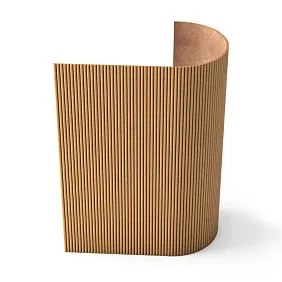
Flexible panels on an elastic fabric or polymer base are the answer for designers working with non-standard architecture. Such a structure bends along a radius, wraps around columns, arches, rounded corners, and elliptical partitions, joining seamlessly. The slats do not deform, maintaining precise spacing and pattern clarity. The bending radius depends on the material and thickness of the slat—the manufacturer specifies it in the technical documentation.
Modular slat constructions
Modular systems offer maximum flexibility at the cost of maximum labor intensity. The installer assembles the structure from individual slats directly on-site, precisely selecting the spacing, width, height, and angle of each plank. Perfect for non-standard rooms—with low ceilings, slanted walls, attic planes, uneven angles. The result is an original architectural work where every detail is tailored to the specific space.
Multi-level relief constructions
The highest level of slat design mastery—constructions where slats protrude from the supporting plane to different depths. Some planks—by 20 mm, others—by 40 mm, others—by 60 mm. The surface transforms into a sculptural bas-relief: with side lighting, it gains dramatic volume, comparable to professional stucco. Such constructions require a clear authorial concept and professional installation, but the result justifies every penny spent.
Light and shadow on the wall: the physics of beauty
Why is a slatted wall so mesmerizing? Because it lives. Not metaphorically—literally: the surface changes throughout the day as the sunlight moves.
When the light source is positioned at an angle to the surface—a sconce on the adjacent wall, a floor lamp in the corner of the room, window light at a certain time of day—the rays fall on the slats, and each plank casts a shadow onto the supporting base and onto the adjacent slat. A system of clear shadows forms, which moves along with the light source.
This effect is determined by three design parameters:
-
Rail height — the higher the rail protrudes above the base, the deeper the shadows
-
Gap width — the wider the gap, the more pronounced the contrast between light and shadow
-
Rail orientation — vertical rails respond maximally to side lighting; horizontal ones — to lighting from above and below
With central overhead lighting (chandelier, ceiling-mounted fixtures), the rails appear as a uniform textured plane — the shadow pattern is minimal. Side lighting reveals the structure in all its depth. That is why, when designing slatted walls, a competent designer always designs the lighting system in parallel — these are inseparable solutions.
Acoustics of a slatted wall: the benefit you can't see
A slatted wall is not just about beauty. It is a functional acoustic element that is often overlooked when discussing decorative materials.
A flat wall reflects sound waves directly and intensely. In rooms with several parallel flat surfaces, multiple echoes occur — that very uncomfortable 'humming' in open-plan living rooms, restaurants, and meeting rooms.
A slatted wall works differently. The rails scatter sound waves in multiple directions, disrupting direct reflection. Each plank acts as a separate diffusing element: small in size relative to the sound wavelength, it alters its trajectory, 'breaking' the wavefront. The cumulative effect is a reduction in reverberation intensity and a more comfortable sound field.
The effect is greatly enhanced when using sound-absorbing material behind the rails. Acoustic wool or porous foam is placed in the space between the load-bearing plane and the decorative slatted structure — and the wall begins to absorb a significant portion of the sound energy that passes through the gaps. Slatted walls with acoustic filling reduce reverberation time by 30–50% compared to a flat drywall surface.
Slatted walls in different interior styles
Scandinavian minimalism and boho-nordic
Light oak slats with a neutral gray-beige tint on a fabric base are a classic of Scandinavian interior. Narrow planks 30–50 mm, small gap 10–15 mm, matte oil coating. In this context, a slatted wall creates a sense of natural warmth without excessive decor. Perfectly pairs with natural linen textiles, light wood furniture, muted ceramics.
Loft and industrial style
Dark MDF slats with a wide gap, concrete background behind them, aluminum details — that's the loft aesthetic. Here, what's visible through the gaps is important: textured concrete or aged brick works as a 'second layer' of the wall, creating visual depth. Built-in LED strip in the profile illuminates the concrete background — an effect called backlighting in photography: the edge of the slat glows, creating an almost cinematic image.
In such an interior, the slatted wall organically rhymes withwooden planksin other parts of the space — on the bar counter, in furniture fronts, on the ceiling.
Classicism and neoclassicism
In a classic interior, a slatted wall works in tandem with profile elements: moldings, pilasters, cornices, decorative niches. Wide MDF slats under white matte enamel, framed bywooden skirting boardin the panel color — this is a modern interpretation of a classic theme. The regular rhythm of the slats in this context is read as orderliness, status, and architectural maturity of the space.
The lower part of the slatted wall is often separated from the upper part by a decorative molding — this visually divides the wall into zones and creates a sense of a higher ceiling.wooden baseboardin the same wood species and tint as the slats, completes the composition from floor to ceiling.
Organic biophilic design
Biophilia — the love for living nature — is the leading architectural trend of recent years. In a biophilic interior, a wall made of solid oak slat panels becomes a literal embodiment of this philosophy: the living texture of wood at your shoulder, the natural scent, the tactile warmth of the surface. Complement such a wall with live plants in hanging planters, natural stone on the floor, and a jute rug — and you'll get a space that not only looks cozy but also physically feels natural.
Japanese wabi-sabi
Imperfection as a source of beauty is the essence of this style. Brushed oak slats with intentionally pronounced texture, open pores, slight tonal variations. Narrow planks with wide gaps, a dark background behind them. No perfectly smooth surfaces — only living, 'breathing' matter. A slat wall in the wabi-sabi interpretation is a meditation framed in wood.
Slat wall panels in specific rooms
Living room: accent or atmosphere?
In the living room, a slat wall can be of two types: accent (one wall, typically behind the sofa or TV) or atmospheric (the entire perimeter). An accent wall is simpler to implement and more budget-friendly; an atmospheric one creates complete immersion in the material and requires more delicate balancing with other surfaces.
An accent slat wall behind the TV is one of the most popular designer techniques in recent years. It creates a 'frame' for the screen and simultaneously serves as an independent decorative object. Built-in lighting behind the slats in this area forms soft ambient light, reducing eye strain during viewing.wooden skirting board purchasein the same material and tone as the slats — is an essential finishing touch.
Bedroom: the warmth of nature above the headboard
The wall behind the bed's headboard is the most intimate place in a bedroom's interior. This is precisely where a slat panel made of oak or ash works most effectively. The warm texture of wood creates a feeling of coziness and security. The rhythm of vertical planks visually raises the ceiling above the bed. If you add hidden lighting behind the slats — warm, 2700–3000 K — you get perfect evening light for reading and relaxation.
In the bedroom, it's important to choose materials with environmental safety certification. Solid oak or veneered panels with water-soluble oils are the optimal choice. The formaldehyde emission class should be no higher than E1.
Hallway: first impressions decide everything
The hallway is the architectural prologue of the interior. What a person sees upon entering the house sets the emotional tone for the entire space. A slatted wall in the hallway is a powerful tool for creating a first impression. Vertical slats in a narrow corridor raise the ceiling; a dark tone of slats against a light background creates depth even in a small vestibule.
A hallway with dark slatted panels, brass clothing hooks, and a concrete or wooden floor—an image that is both contemporary and timeless.
Furniture HandlesNatural wood on a shoe cabinet or a wardrobe with slatted fronts—a detail that ties everything together through a unified material language.
Study and library: an intellectual space
The study is a space where materials work for concentration and inspiration. A slatted wall made of dark oak or walnut creates an atmosphere of seriousness and depth. Combined with open bookshelves—a feeling of an intellectual space with history. The acoustic effect of the slatted construction is especially valuable here: in a quiet study with good acoustics, thinking is better.
Classic FurnitureHandcrafted with wooden elements, combined with slatted wall panels made of the same material—this is a space where intention is felt.
Children's room: nature from the first years
In a children's room, a slatted wall made of natural wood is not only beautiful but also beneficial: wood regulates air humidity, creates a natural micro-atmosphere, and is safe with properly chosen coatings. Choose light tones of oak or ash, matte water-soluble oils, emission class E0. A slatted wall in the children's room behind the play area is a background that stimulates imagination and creates a feeling of a warm, homely space.
Bathroom: wood by the water
A bathroom with wooden slats is a luxury that requires the right technical solution. Only thermally treated wood (teak, ash, larch with enhanced impregnation) or moisture-resistant HMR MDF. Ventilation of the space behind the slats is mandatory: an air gap of at least 20 mm. Under these conditions, a wooden slatted wall in the bathroom will last for many years and create the feeling of a luxury bathroom.
Installation of walls from slatted panels: from theory to practice
Installation is where the concept becomes reality. Poor installation will ruin the best material. Good installation will reveal even budget panels in all their glory.
Foundation Preparation
The first and most important stage. The base must be level, dry, and strong. Deviations of more than 3 mm per linear meter require leveling — with putty, self-leveling compound, or installation on a frame. The latter option is preferable: it not only levels the plane but also creates an air gap for laying acoustic material and routing utilities.
All wooden and MDF panels require acclimatization in the room — at least 48 hours at working temperature and humidity. Wood that has been adjusted to the temperature and humidity conditions of the room will move significantly less after installation.
Marking and installation of the frame
The frame is installed from 27×60 mm metal profiles or 40×50 mm wooden battens. Vertical frame posts are mounted with a spacing of 400–600 mm — this is the panel attachment spacing. All posts are aligned in the same plane using a laser or bubble level: any misalignment left at this stage will become an obvious defect in the finished slatted wall. Acoustic insulation is placed in the space between the posts.
Panel installation
Rigid modular panels are attached to the frame with mounting adhesive (finish acrylic or polyurethane), headless finish nails, or hidden clips. Hidden fasteners are the professional standard: visible screws on the front surface of the slat are unacceptable in quality installation.
Installation proceeds sequentially from one corner: the first panel is set strictly level — it determines the horizon of the entire structure. Subsequent modules are joined precisely with a tongue-and-groove or butt joint with alignment of the slat spacing. Expansion gaps at the ends (2–3 mm) and at the floor and ceiling (5 mm) are mandatory for wooden materials — they compensate for seasonal wood movement and prevent deformation.
Final finishing
After installing the panels, all visible joints with adjacent surfaces are covered with decorative moldings, cornices, orwith a wooden floor skirting boardto match the color of the slats. This creates a finished, neat look for the structure. For external corners — corner profiles are installed. Internal corners are covered with decorative corner pieces.
MDF panels, prepped for painting, are painted after installation — this way the seams between modules are completely masked. Solid wood is coated with oil or varnish according to the chosen technology.
Walls made of slatted panels and the overall interior ensemble
A slatted wall is not an isolated element, but part of a larger interior whole. For it to work most effectively, you need to establish the logic of material and color connections.
Wooden slats on the wall require support in other materials.and paint it to the desired shade — standard practice in modern design. It is important to use special wood finishes that allow the material to breathe.in the same wood species and finish as the wall slats — means creating a continuous material line from floor to wall.buy MDF skirting boardin white finish — if the slats are also white — means continuing the monochrome theme from plane to plane.
Balusters of the staircasemade from the same wood as the slatted walls in the hallway — this is an ensemble where all details speak the same language. Such consistency is a sign of a mature, authored interior.
The color of adjacent wall surfaces is the most important partner of the slatted structure. A dark slatted wall requires lighter adjacent surfaces — otherwise the space will 'collapse'. Light slats are organic with saturated tones on other walls: they provide the necessary 'air' and visual balance. Neutral tones on main walls give the slatted surface an opportunity to unfold without competition.
Care for Slatted Walls: How to Maintain Beauty for a Long Time
Slatted walls made from quality materials do not require special care — this is one of their practical advantages.
MDF with a finished paint coating is sufficient to wipe with a dry or slightly damp soft cloth to remove dust. For local damage — scratches, chips — the coating is restored by repainting without dismantling. Solid wood under oil is renewed every 1–3 years depending on the intensity of use: sanding with zero-grit sandpaper and applying a new layer of oil restores the surface without a trace of wear.
PVC and aluminum require minimal care: wiping with a damp cloth and a neutral detergent. Avoid abrasive cleaners on any surfaces — they scratch the finish.
The main enemy of wooden slatted walls is not mechanical wear, but moisture. Leaks, condensation on cold surfaces, systematically high humidity — all this causes irreversible damage to wood. Timely elimination of moisture sources and proper room ventilation are the best guarantee of a long life for the slatted structure.
Comparative table of materials for wall slatted panels
| Material | Moisture resistance | Room | Durability | Price (rel.) | Eco-friendliness |
|---|---|---|---|---|---|
| Standard MDF | Medium | Living spaces | 10–15 years | Low | Medium |
| Moisture-resistant MDF | High | Kitchen, bathroom | 15–20 years | Medium | Medium |
| Oak solid wood | Medium | Residential, offices | 30+ years | High | High |
| Veneer on MDF | Medium | Residential, commercial | 15–20 years | Medium | High |
| Aluminum | High | Any | 30+ years | High | Medium |
| PVC | Very High | Humid, balconies | 15–20 years | Low | Low |
| WPC (Wood-Plastic Composite) | Very High | Facades, street | 25+ years | Medium | Medium |
Trends in slatted walls for 2025–2026: what's relevant today
Combining materials in one plane. Wooden slats alternate with metal inserts; dark MDF neighbors with brass profiles; matte veneer contrasts with a terracotta concrete background. The surface tells a story through material.
Integration of lighting as part of the project, not an afterthought. LED strips are embedded in the slatted system profile at the material selection stage. Light becomes an inseparable part of the structure.
Brushed texture. Intentionally pronounced pores, open fiber structure, tactile roughness — the wabi-sabi aesthetic in wood. Machine or hand brushing creates a surface you want to touch.
Large pitch and wide slats. Wide slats 80–120 mm with a 40–60 mm gap are replacing frequent narrow planks. Such a wall looks monumental and architectural — especially in high-ceilinged spaces.
Reimagining the classics. Plaster slatted structures with molding, combining the modern rhythm of slats with the handiwork of a master, are experiencing a revival in the context of new eclecticism.
FAQ: popular questions about slatted panel walls
Can I install slatted wall panels myself?
Yes. Ready-made modular panels for mounting adhesive or clips are installed without special tools. It is important to thoroughly prepare the base and set the first panel strictly level — it determines the evenness of the entire structure. Assembled systems of individual slats require more experience and tool precision.
What slat width is suitable for a small room?
For rooms up to 15 m², a slat width of 30–50 mm with a gap of 8–15 mm is optimal. Wider planks visually weigh down a small space. Light tones and vertical orientation of the slats additionally visually increase the volume.
Is a batten frame needed or can it be glued directly to the wall?
On a flat, dry, and sturdy wall — it can be glued without a batten frame. A batten frame is needed: on an uneven base (variations over 3 mm/m), when wanting to lay acoustic material behind the slats, when running hidden utilities.
How long does it take to install a slatted wall?
For an accent wall area of 10–12 m² when using ready-made modular panels — 4–8 hours of work. Assembled systems of individual slats take 2–3 times longer to install.
How to choose the tinting of wooden slats?
Focus on the overall lighting concept of the interior. Light neutral tones (beige, gray-beige, natural) are universal and work with any furniture. Dark tones (wenge, graphite, dark walnut) require light adjacent surfaces and good lighting. Natural tone without tinting — under oil or wax — for organic and Scandinavian interiors.
Can MDF slatted panels be painted after installation?
Yes, this is even a recommended technology: panel installation, priming, painting — the seams between modules are hidden under a single layer of paint. Use acrylic enamels, apply with a brush or small-diameter roller.
Is a slatted wall in the bathroom really possible?
Yes, with the right material choice. For bathrooms: PVC with a matte surface, aluminum with anodized coating, thermally treated ash or teak with enhanced moisture protection. A mandatory condition is ventilation of the space behind the slats (air gap of at least 20 mm).
What do slatted panels look like after 10 years?
MDF with high-quality paint coating under normal operating conditions retains its appearance for 10–15 years. Solid oak under oil with regular coating renewal — 30 years or more, and over time it acquires a noble patina that new products do not have.
What baseboard should I choose for slatted wall panels?
Optimally — a baseboard in the same wood species and tone as the slats. This creates a continuous material connection from floor to wall. Alternative — a baseboard in neutral white, if the walls of adjacent surfaces are also white. A wide baseboard (70–100 mm) emphasizes the monumentality of the slatted wall.
About the company STAVROS
STAVROS is a Russian manufacturer of wooden architectural elements for interiors with a full production cycle. The STAVROS catalog featuresslatted wall and ceiling panelsmade of solid oak and MDF, wooden moldings, cornices, and architraves,skirting boardin various finishes — from MDF to solid wood,Wooden planksfor installation and decorative tasks,Furniture Handles— made of natural wood,Balusters and staircase elements, and alsoClassic Furniturehandcrafted. STAVROS works with both private clients and professional designers, architects, and construction companies across Russia. Expert support at every stage — from material selection and design to installation and maintenance — and strict quality control in production make STAVROS a reliable partner for projects of any complexity. Create walls from slatted panels that will delight you for decades — from materials you can trust.