Article Contents:
- Timeless Style: The Philosophy of Modern Classic in 2026
- Roots and Evolution of the Style
- Why Modern Classic is Relevant in 2026
- Key Principles of the Style
- The Role of Quality Furniture in Creating a Status Interior
- Material as a Marker of Quality
- Form and Proportions: Strict Geometry and Classic Silhouettes
- Color and Finish: Noble Restraint
- Where and How to Choose Quality Furniture
- Furniture Handles: Invisible Heroes of the Interior
- Handle as a Jewelry Piece for Furniture
- Shape and Size: Matching the Character of the Furniture
- Replacing Handles: A Simple Way to Update Furniture
- Polyurethane Molding: A Calm Background for Interior Masterpieces
- From Plaster to Polyurethane: Evolution of the Material
- Types of Molded Elements and Their Application
- Color and Coating Application Technique
- Installation: Easier Than It Seems
- Harmony of Wooden Furniture Elements and Wall Decor
- Unity of the Material Palette
- Repetition of Forms and Lines
- Scale and proportions
- Color coordination
- Details That Create Comfort: Attentiveness as a Philosophy
- Lighting: Architecture of Light
- Textiles: Softness and Tactility
- Artworks and Accessories
- Practical Side: How to Create a Modern Classic Interior
- Step One: Define the Base
- Step Two: Choose Furniture
- Step three: plan the wall finishing
- Step four: select the details
- Common Mistakes and How to Avoid Them
- Frequently asked questions about modern classic
- How does modern classic differ from simply classical style?
- Is modern classic suitable for small apartments?
- How much does it cost to create an interior in modern classic style?
- Can modern classic be implemented DIY?
- How to care for solid wood furniture?
- Is a designer needed to create a modern classic interior?
- What mistakes are most often made when choosing molding?
- Can modern classic be combined with elements of other styles?
- Conclusion: creating a home that will outlive trends
There are styles that live for decades, replacing each other in the cycle of fashion trends. And there is an approach that exists outside of time, combining the best of the past and present. Modern classic is not a compromise between tradition and novelty, but the art of creating a space where the elegance of ancestors meets the comfort of the present day. Why in 2026, in the era of minimalism and technology, are more and more people choosing this path? Because it answers eternal questions: how to create a home that is cozy, status-worthy, and yet comfortable to live in every day?
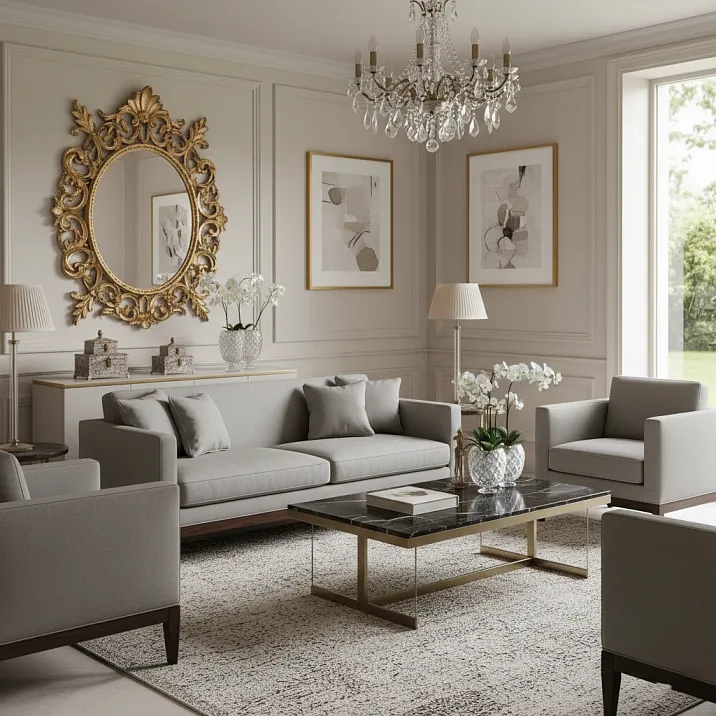
Imagine: you enter a living room where strict, impeccably crafted solid wood furniture coexists with elegant wall decor, whereClassic Furniturebecomes not just a functional object, but the center of the composition, around which the entire atmosphere of the room is built. There are no random details here — each element is selected with the same care as a jeweler selects a setting for a precious stone. This is modern classic: a system where discipline of forms combines with the freedom of creative self-expression.


Timeless style: the philosophy of modern classic in 2026
What is modern classic? It is not just a term from an interior designer's dictionary. It is a worldview that affirms: you can live beautifully without giving up the comfort of the technological age. You can value traditions without turning your home into a museum. You can create a space that looks expensive without turning it into a display of wealth.




Roots and evolution of the style
Classicism as an architectural and interior style originated in Europe in the 17th-18th centuries, inspired by ancient models. Symmetry, proportions, noble materials, restrained luxury — these were its principles. Then came Empire, Neoclassicism, each adding its own features, but the essence remained unchanged: harmony, order, respect for tradition.
The 20th century with its modernism and functionalism declared war on decorativeness. 'Form follows function' — proclaimed Le Corbusier. Ornament became considered a crime. But by the end of the century, it became clear: a person needs not only function but also beauty, not only convenience but also the warmth that materials with history, forms with a memory of the past provide.
Thus, in the 1990s, modern classic was born — an attempt to combine the best of both worlds. Classical proportions and materials, but without the excessive decorativeness of Baroque. Modern understanding of comfort and technology, but without the coldness of minimalism. The result? Interiors that do not become outdated, that look equally good after a year, after five, after twenty years.
Our factory also produces:


Why modern classic is relevant in 2026
We live in an era of information overload. Every day, thousands of visual images, news, and messages bombard us. Home becomes a refuge from this chaos. And modern classic is ideal for creating such a refuge. It offers visual peace: clean lines, balanced proportions, natural materials that are pleasing to the eye and tactilely comfortable.
Modern classic is also a response to the trend of conscious consumption. Instead of changing the interior every three years, following fashion trends, you create a space for decades. High-quality solid wood furniture serves for generations. Polyurethane molding decor does not lose its appearance and does not go out of fashion. This is an investment in durability, not a waste on the temporary.
Another factor is the desire for authenticity. In an era of mass production and cheap imitations, people value the real: real wood instead of laminate, real handmade work instead of stamping, thoughtful composition instead of a random set of things. Modern classic is built precisely on these principles.
Get Consultation
Key principles of the style
What makes an interior modern classic? A few unwritten rules, the observance of which creates a recognizable effect.
Quality over quantity. Better one solid oak chest of drawers with impeccable carving than three chipboard wardrobes. Better one wall decorative element executed masterfully than a dozen cheap decorations. Every item should be worthy of attention.
Restrained palette. Modern classic avoids loud colors. The foundation is neutral shades: white, beige, gray, brown. Accents are noble deep tones: emerald, sapphire, burgundy. But there are few accents, they do not dominate, but only emphasize the overall composition.
Natural materials. Wood, stone, metal, natural fabrics are the basis of the material palette. Plastic and synthetics are acceptable, but they are hidden, not put on display. The texture of the material is valued and emphasized, not masked.
Symmetry and proportions. The classical love for symmetry is preserved but not absolutized. Modern classic allows for asymmetrical accents, but the overall structure of the space remains balanced, proportional, harmonious.
Functionality. Unlike historical classics, where beauty often took precedence over convenience, the modern version prioritizes comfort. A sofa should not only be beautiful but also comfortable for sitting. A table should be of appropriate height. A wardrobe should be spacious and ergonomic.
The role of quality furniture in creating a status interior
Furniture is the skeleton of an interior, its structural foundation. Everything else—decor, textiles, lighting—is built upon this foundation. And if the foundation is weak, no decorations will save it. That is why choosing furniture in the modern classic style is a task of paramount importance.
Material as a quality marker
The first thing that distinguishes quality furniture is the material. In the era of modern classicism, solid wood remains the uncontested choice for those creating an interior for decades. Oak, beech, ash, walnut—these are species with dense wood that withstand loads, do not warp from humidity, and maintain their geometry for years.
Solid wood furniture possesses a unique property: it improves with age. The wood acquires depth of color, a patina that adds nobility. Scratches and wear that look like damage on plastic become marks of history on wood, adding character. This is furniture that is not thrown away but passed down through generations.
Construction also matters. Classic furniture uses traditional joinery techniques: mortise and tenon, dovetail, dowels. These methods have been tested for centuries—they provide strength without the use of metal fasteners, which loosen over time. Quality furniture creaks less than cheap furniture precisely because its construction is rigid, without play.
Form and proportions: strict geometry and classic silhouettes
Furniture in the modern classic style avoids excess. No overly curved lines, grotesque carvings, or cluttering of decorative elements. The silhouette is strict and laconic, but not primitive. These are not the square boxes of minimalism, but forms with subtle detailing, where every line is precise, every curve has meaning.
A chest of drawers in the modern classic style is a rectangular body on turned or milled legs, with paneled fronts and elegant handles. No unnecessary details, but what is there is executed flawlessly. A table—with a solid tabletop on stable supports, possibly with light edge decoration, but without being overloaded. A bed—with a high headboard, possibly with tufting or decorative overlays, but the overall silhouette remains strict.
The proportions of classic furniture have been tested for centuries. The height of a table, the depth of a chair seat, the ratio of a wardrobe's width to height—all of this follows canons that ensure not only beauty but also usability. Modern classicism preserves these proportions, adapting them to modern ergonomic standards.
Color and finish: noble restraint
The color palette of classic furniture gravitates toward natural wood tones. Light oak, dark walnut, honey-colored beech—these colors never go out of fashion because they are natural, and nature is always relevant. Painted furniture is also acceptable, but the colors chosen are restrained: white, ivory, graphite gray, deep blue or green.
The finish emphasizes the wood's texture, rather than hiding it. A lacquer finish can be glossy or matte—depending on the overall interior style. Gloss adds solemnity, matte adds intimacy and coziness. An oil-wax finish creates a velvety surface, pleasant to the touch, and preserves the wood's natural appearance.
Where and how to choose quality furniture
Buying quality furniture is an investment that requires attentiveness. Don't rush and buy the first thing you like. It's important to see the furniture in person, touch it, check the quality of assembly. Pay attention to the following:
-
Material of the body and fronts. Solid wood or veneer on MDF? Solid wood is more expensive but more durable. Quality veneer on MDF is an acceptable compromise for budget solutions.
-
Quality of surface finishing. The surface should be perfectly smooth, without tears, unevenness, or drips of lacquer.
-
Hardware. Drawer slides, door hinges—these are the elements that determine ease of use. Quality hardware operates silently, smoothly, and withstands thousands of open-close cycles.
-
Stability of construction. Try gently rocking the furniture. A quality construction stands monolithic, without play or creaks.
Furniture handles: the unnoticed heroes of the interior
They say the devil is in the details. In interiors, this is especially true. You can buy expensive solid wood furniture, but if it has cheap plastic handles installed, the entire premium effect collapses. And vice versa: simple furniture with quality, well-thought-out hardware rises several steps in perception.
The handle as the jewelry of furniture
Furniture Handles— is not just a functional element for opening doors and drawers. It is a tactile point of contact with the furniture, the detail you touch every day, many times. And it is precisely by the handle that the first physical impression of a piece of furniture is formed.
In modern classicism, handles play a dual role. On one hand, they must be comfortable: of the right shape, pleasant to the touch, securely fastened. On the other—they become a decorative accent that can either support the furniture's style or add an interesting contrast.
Wooden handles made from solid wood—the choice of those who value material unity and the philosophy of naturalness. When the furniture body and handles are made from the same wood species, it creates visual harmony and tactile integrity. Beech and oak are the most popular species for making furniture handles; they possess the necessary hardness and beautiful texture.
Metal handles—a classic that never goes out of style. Brass, bronze, matte chrome, blackened iron—each metal creates its own effect. Brass handles add warmth and nobility, chrome-plated ones add modernity and strictness, bronze with patina adds vintage charm.
Shape and size: matching the character of the furniture
The shape of the handle should match the character of the furniture. For massive furniture made of dark wood, large handles of expressive shape are suitable—bars, rings, elongated rails. For light, elegant furniture in light tones, it's better to choose small button handles or thin rails.
Size also matters. A handle that is too small on a large front looks absurd, like a button on a giant's coat. A handle that is too large on a compact drawer—like a giant trying to fit into children's clothes. Proportions must be observed.
There are classic forms, tested by time:
-
Bar pull handle — U-shaped form, convenient for gripping, versatile in application
-
Knob handle — round or square overlay, which is pulled with fingers
-
Recessed handle — set into the facade, creates a minimalist effect
-
Rail handle — long bar, a modern version of the bar pull
-
Ring handle — classic form, often used on dressers and secretaries
Replacing handles: a simple way to update furniture
One of the most budget-friendly and effective ways to update old or simple furniture is to replace the handles. A standard kitchen set with metal handles costing 50 rubles apiece looks cheap. Replace them with quality wooden or brass ones — and the same furniture is perceived completely differently. It becomes more status-worthy, more individual, more interesting.
When replacing handles, it is important to consider the center-to-center distance — the distance between the centers of the mounting holes. Standard distances: 32 mm, 64 mm, 96 mm, 128 mm, 160 mm. If the new handles have the same center-to-center distance as the old ones, replacement will not require additional drilling. If the distance differs, you will have to drill new holes or use overlay handles that will hide the old holes.
Replacing furniture handles is also an opportunity to experiment. Not all handles in a room have to be the same. You can use different but stylistically related models: for example, round knobs on a dresser, long rails on a wardrobe, but made from the same material and in the same color scheme.
Polyurethane molding: a calm background for interior masterpieces
Walls in a modern classic interior are not just vertical surfaces painted a neutral color. They are a background that should support the furniture, emphasize its status, but not compete with it for attention. And here one of the most elegant tools comes to the rescue —polyurethane moldings, which allows creating a structured, visually rich surface without overload.
From plaster to polyurethane: material evolution
Molding is the decoration of walls and ceilings with three-dimensional decorative elements. Historically, molding was made from plaster, which required high skill and significant time investment. Plaster molding is heavy, fragile, complex to install, and expensive to produce. It is justified in the restoration of historical buildings, but for modern housing, there is a more practical alternative.
Polyurethane is a modern polymer material that allows creating molded elements of any complexity by casting. Polyurethane molding is several times lighter than plaster, which simplifies installation and does not create load on structures. It is stronger — does not break from accidental impact. Moisture-resistant — not afraid of humidity fluctuations, which is critical for modern apartments with microclimate variations. And, importantly, it is significantly cheaper than plaster with a comparable visual effect.
After painting, polyurethane molding is almost impossible to distinguish from plaster. It has the same matte texture, the same relief, the same play of light and shadow. But at the same time, it is easier to work with, more durable, and more practical.
Types of molded elements and their application
Molding includes many types of elements, each solving its own task in the interior:
Moldings — these are profiled strips that are attached to walls or ceilings. They are used to create frames on walls (a classic technique — to divide a wall into panels with moldings), to decorate transitions between wall and ceiling, to frame doors and windows. In modern classic, moldings are used restrainedly: one or two profiles, laconic forms, minimal decor.
Cornices — wide profiled strips that are installed at the junction of wall and ceiling. They hide the technical corner, create a visual completion of the wall, give the room height. The higher the ceiling, the wider a cornice can be used. In rooms with low ceilings (2.5-2.7 m), it is better to limit yourself to a narrow cornice or do without it altogether, so as not to 'eat up' precious height.
Overlays — decorative elements that are attached to walls, doors, furniture. These can be rosettes, cartouches, corner elements, friezes. In modern classic, overlays are used as point accents: above a doorway, in the center of a wall panel, on furniture facades.
Pilasters and columns — vertical elements imitating architectural supports. They create rhythm in space, zone, add solemnity. In modern classic, pilasters are usually simplified, without an abundance of decor, more like graphic verticals than full-fledged architectural elements.
Color and coating application technique
Molding can be painted any color, but in modern classic, preference is given to two options: molding in the wall color or contrasting white molding on a colored wall.
The first option creates a monochrome surface, where the molding stands out due to relief, play of light and shadow, but not due to color. This creates a calm, refined effect. The wall, as it were, acquires sculpturality but remains a background.
The second option — contrasting molding — is more noticeable. White molding on a gray, blue, green background creates a clear graphic pattern. This is a classic technique that emphasizes the architecture of the wall, highlights decorative panels, creates formality and representativeness.
The technique of painting molding is simple but requires care. Molded elements are painted with acrylic or latex paint in two to three coats. It is important to paint all the recesses of the relief so that no unpainted areas remain. To accentuate the relief, the technique of patination is sometimes used: a darker shade of paint is applied into the recesses, which emphasizes the depth of the decor.
Installation: easier than it seems
One of the main advantages of polyurethane molding is ease of installation. The elements are glued with a special polymer adhesive (usually it comes with the molding or is recommended by the manufacturer). The wall surface must be clean, dry, primed. The adhesive is applied to the back of the element, the element is pressed against the wall and held for a few seconds. For additional fixation of large elements, finishing nails or screws can be used, which after installation are countersunk, filled, and become invisible.
Joints between elements are filled with putty (usually acrylic), sanded, and then the entire structure is painted. With quality workmanship, the joints become invisible, and the molding looks like a single piece.
Harmony of wooden furniture elements and wall decor
An interior is not the sum of individual items, but a composition where each element is connected to the others. Furniture and wall decor should work together to create a unified visual and conceptual space. How to achieve this harmony?
Unity of the material palette
The first and most obvious path is unity of materials. If the furniture is made of solid wood, then wooden elements should also be present in the wall decor. These can be wooden moldings, frames for mirrors and paintings, wall panels. When wood is repeated in different parts of the interior, it creates a sense of integrity, thoughtfulness, and a unified concept.
Important: the wood in the furniture and in the decor does not necessarily have to be from the same species and have an identical shade. Moreover, a slight difference in shades creates depth and makes the interior more interesting. The main thing is that the tonality is similar: warm wood tones (honey, amber, walnut) go together, as do cool tones (gray-brown, bleached).
Repetition of forms and lines
The second path to harmony is the repetition of forms. If the furniture has strict rectangular silhouettes, then it's better to choose laconic, geometric moldings for the walls. If the furniture features curved lines, decorative carving, then more ornamental elements can be allowed in the wall decor.
Rhythm is also important. If the furniture is arranged symmetrically (two armchairs on either side of a fireplace, for example), then the wall decor should support this symmetry. Molding panels on the walls, symmetrically placed light fixtures, a central composition above the fireplace or sofa — all of this creates visual order.
Scale and proportions
Furniture and decor should relate in scale. Large, massive furniture requires corresponding decor: wide moldings, large decorative overlays, large paintings in heavy frames. Light, elegant furniture pairs better with thin moldings, small decorative elements.
In a room with high ceilings (3 meters and above), multi-level compositions of moldings, large cornices, vertical decorative elements (pilasters, tall panels) can be used. In a room with low ceilings (2.5 meters), it's better to limit decor to a minimum so as not to overload the space and make it feel even lower.
Color coordination
Color is a powerful tool for creating harmony or, conversely, dissonance. In modern classicism, the rule of a limited palette applies: no more than 3-4 main colors in a room's interior. Furniture usually sets one of these colors (the shade of wood or the color of painted fronts). Walls are the second color (background). Molding can be the same color as the walls (monochrome) or contrasting (usually white). Textiles and accessories add the third-fourth color as accents.
It's important that the colors are connected to each other. This doesn't mean everything should be the same color, but there should be a logic to the selection. Cool gray-blue walls go well with dark wood of a cool shade (wenge, stained oak) and white molding. Warm beige walls go with furniture made of light oak or walnut and molding in the color of the walls or a tone lighter.
Details that create comfort: attentiveness as a philosophy
Modern classicism is a style where attention to detail is elevated to the level of philosophy. There are no trifles here. Every detail matters because it is from the details that the overall impression is formed. Let's talk about which details deserve special attention.
Lighting: the architecture of light
Light in an interior is not just a technical matter of sufficient brightness. It is a tool for creating atmosphere, revealing textures, and managing the perception of space. In modern classicism, lighting is multi-level.
General light — a chandelier in the center of the room or a system of recessed lights — provides basic illumination. A chandelier in a classic interior is not only a light source but also a decorative element. It should relate in scale to the room and the furniture.
Local lighting — sconces, floor lamps, table lamps — create light zones, making the space more intimate and cozy. Sconces on either side of a mirror, a floor lamp near an armchair for reading, a table lamp on a desk — these light sources are functional but also important for the composition.
Accent lighting — illumination of decorative elements, paintings, niches, molding. Directional light from a spotlight or hidden LED lighting behind a cornice creates dramatic effects, emphasizes relief, and highlights what is important.
Textiles: softness and tactility
Textiles in a modern classic interior are primarily natural fabrics: linen, cotton, wool, silk, velvet. Synthetics are allowed in blended fabrics to improve performance characteristics, but not as the main material.
Curtains are an important element of a classic interior. They not only protect from light but also create verticals, soften the geometry of windows, and add color and texture. In modern classicism, curtains are often multi-layered: a light sheer curtain plus heavy drapes. The color of curtains is usually neutral or echoes an accent color in the interior.
Pillows, throws, rugs — these elements add tactile comfort. A modern classic interior should be not only beautiful but also pleasant to the touch. A soft rug under bare feet, a textured pillow to sink into, a woolen throw — these things create a homely atmosphere.
Artworks and accessories
Walls in a classic interior are rarely left empty. Paintings, mirrors, decorative plates, wall sconces — all of this enlivens the space and adds individuality. But moderation is important here.
In modern classicism, the principle applies: better one large, quality painting than a dozen small posters. Better one mirror in a solid frame than a collection of cheap little mirrors. Quality over quantity — this principle applies to decor as well.
The placement of artworks follows the rules of composition. A painting above a sofa should be centered relative to the sofa. A group of several paintings should form a visually cohesive composition (usually achieved by arranging them in a grid or symmetrically).
Accessories — vases, figurines, books, candles — add life to the interior. But there shouldn't be too many of them. Modern classicism leans towards restraint. A few carefully selected items create an atmosphere better than an abundance of random trinkets.
Practical side: how to create a modern classic interior
Theory is good, but how to put all this into practice? Where to start? How to avoid typical mistakes? Let's create a step-by-step plan.
Step one: define the base
Start by defining the color palette and main materials. What wood tone appeals to you — light or dark, warm or cool? What wall color do you envision — neutral beige, elegant gray, calm blue? These decisions will determine everything else.
Create a moodboard — a collage of images you like. Clippings from magazines, photos from the internet, material samples. Lay everything out together and see if there's a visual connection, if the elements work together. This will help avoid a situation where each item is beautiful on its own, but together they don't form a cohesive whole.
Step two: choose furniture
Furniture is the foundation that defines the character of the interior. Start with key pieces: a sofa in the living room, a bed in the bedroom, a dining table. It is they that set the scale, color, and style. The rest of the furniture is selected to match them.
Don't buy everything at once. It's better to start with one or two quality pieces and gradually complement the interior than to fill the space with mediocre furniture in the hope of replacing it later. Quality furniture is expensive, but it lasts for decades and doesn't need replacement.
Step three: plan the wall finish
Decide if you will use moldings. If yes, then where exactly: only a ceiling cornice or also wall moldings? Molding panels, decorative overlays above doors? Draw a wall diagram with dimensions and sketch the placement of decorative elements on them. This will help understand if there will be visual overload.
Modern classic allows two approaches to walls: either a calm background (painted walls, possibly with texture, plus minimal moldings), or a more active wall architecture with molding panels. The choice depends on how expressive your furniture and decor are. If the furniture is expressive, it's better to choose calm walls. If the furniture is laconic, the walls can be more decorative.
Step four: select the details
When the basic elements are defined — color, furniture, wall finish — the most interesting part begins: selecting the details. Furniture handles, light fixtures, textiles, accessories. It's important not to rush here. It's better to leave a room under-decorated than to fill it with random items.
Details are selected gradually, while living in the space. You will understand what is missing, which areas seem empty, which colors call for an accent. And then you will add exactly what is needed, not what you happened to find in a store.
Typical mistakes and how to avoid them
Mistake one: mixing styles that are too different. Modern classic is about balance, not eclecticism. Classic solid oak furniture and a plastic Eames chair in the same room is not modern classic, but stylistic chaos.
Mistake two: excess decor. The desire to decorate every surface, fill every free centimeter of wall with moldings or paintings leads to visual overload. Modern classic values air, free space, pauses between elements.
Mistake three: skimping on the quality of key elements. Cheap furniture with good decor doesn't work. It's better to buy one quality sofa and gradually add the rest than to furnish a room with mediocre furniture all at once.
Mistake four: ignoring scale. Large furniture in a small room, small furniture in a huge space, too wide a cornice with low ceilings — all of this disrupts proportions and destroys harmony.
Frequently asked questions about modern classic
How does modern classic differ from just a classic style?
Classical style in interior design is strict adherence to the canons of classicism, empire, or neoclassicism. An abundance of moldings, gilding, heavy drapes, carved furniture. It is solemn, representative, but often inconvenient for everyday life. Modern classic takes principles from classicism (symmetry, proportions, quality materials) but adapts them to a modern lifestyle. There is less decor, more functionality, and modern technologies and materials are used. The result is an interior that looks elegant and prestigious, yet comfortable for living.
Is modern classic suitable for small apartments?
Yes, but with caveats. Modern classic is universal but requires space to unfold. In very small apartments (studios, one-room apartments up to 35 sq.m), full-fledged modern classic can be excessive. Here it's better to take individual style elements: quality furniture with simple forms, a restrained color palette, minimal molding decor. In apartments from 50 sq.m, modern classic is fully realized, especially if there are separate rooms with high ceilings.
How much does it cost to create an interior in modern classic style?
Modern classic is not a budget style. Quality solid wood furniture, natural finishing materials, thoughtful decor require significant investment. For a room of 20 sq.m (living room), the minimum budget for furniture and finishes will be 300-500 thousand rubles. This sum will include: a quality sofa and armchairs, a coffee table, a shelving unit or chest of drawers, wall finishes (painting plus moldings), lighting, textiles. If custom furniture, polyurethane moldings on all walls, expensive textiles are needed — the budget can rise to a million and above. But this is an investment for decades — such an interior will not become outdated and will not require updating for a long time.
Can modern classic be implemented as a DIY project?
Partially, yes. If you have basic repair skills, you can paint walls yourself, install polyurethane moldings, replace furniture handles. This will significantly save the budget. However, custom furniture manufacturing, complex finishes, lighting design are tasks better entrusted to professionals. A compromise option: do the basic finishes yourself, buy ready-made furniture from a trusted manufacturer, and delegate complex work (electrical, installing cornices, hanging a chandelier) to specialists.
How to care for solid wood furniture?
Solid wood furniture requires regular but simple care. Wipe surfaces with a soft dry or slightly damp cloth once a week — this removes dust and surface dirt. Once a month, use special wood care products — polishes or oils that nourish the wood and renew the protective coating. Avoid placing furniture near heating radiators and in direct sunlight — this causes wood to dry out and fade. Maintain indoor humidity at 40-60% — these are optimal conditions for wood. With such care, solid wood furniture lasts for generations, preserving its original appearance.
Is a designer needed to create a modern classic interior?
Strictly speaking, not necessarily. If you have a good sense of proportion, understanding of color and style, you can create a harmonious interior yourself. However, a designer saves time, helps avoid mistakes, and often suggests solutions you wouldn't think of on your own. A compromise option is a one-time consultation with a designer at the planning stage: they will help create a concept, select a color palette, and point out potential problems. Then you implement the project yourself. This is cheaper than full design supervision but provides a professional foundation for the work.
What are the most common mistakes made when choosing molding?
The most common mistake is the mismatch between the scale of the molding and the room. Wide cornices and large moldings in a room with low ceilings visually reduce the height even more. Small elements in a spacious room with high ceilings get lost and look ridiculous. The second mistake is excessive decoration. The desire to use all available molding elements (cornices, moldings, rosettes, pilasters, friezes) leads to clutter; the interior starts to resemble a museum or a cake with too many decorations. The third mistake is poor installation. Uneven joints, visible gaps, and poor painting ruin the effect of even the highest quality molding. If you are not confident in your skills, it is better to hire a professional for installation.
Can modern classic be combined with elements of other styles?
Yes, modern classic is a fairly flexible style that allows for the inclusion of elements from other directions, provided they do not conflict with the overall concept. For example, one piece of furniture in the Art Deco style (an armchair with geometric shapes and velvet upholstery) will fit perfectly into a classic interior, adding a unique touch. A modern minimalist lamp can create an interesting contrast to classic furniture. But it is important to maintain the proportion: the foundation should be modern classic (70-80% of the elements), with accents from other styles making up no more than 20-30%. And these accents should be high-quality, well-considered, and not random.
Conclusion: creating a home that will outlast trends
An interior in the modern classic style is not about chasing fashion, but about creating a space that will outlast any trends. In five years, when current fashionable styles become outdated, your interior will look just as relevant as it does today. In twenty years, when solid wood furniture acquires a noble patina, your home will only become more beautiful.
Modern classic is a philosophy of quality, attention to detail, respect for traditions, and at the same time an understanding of modern needs. It is the choice of those who value not a momentary effect, but a long-term result. Those who are willing to invest in quality materials and thoughtful design, understanding that this is an investment in quality of life.
Every detail in such an interior matters: from the choice of wood species for the furniture to the shape of the handles on the fronts, from the profile of the ceiling cornice to the color of the sofa cushions. And it is this thoroughness, this attention to detail, that creates that very feeling of comfort and completeness which distinguishes a home from a mere place of residence.
Decorative wall finishing for interiorsModern classic style is the art of creating a background that highlights the beauty of the furniture while itself being a work of art. It is a balance between restraint and expressiveness, between simplicity and sophistication.
For over two decades, the company STAVROS has been creating elements for interiors where tradition meets modernity. The assortment includes all the necessary components for creating an interior in the modern classic style: from solid wood furniture to polyurethane molding, from wooden handles to moldings and cornices.
Every STAVROS product is the result of the work of experienced craftsmen who understand that they are not just creating a product, but elements that make up a home. A home where people will live, raise children, welcome guests, and spend the best years of their lives. And this responsibility is reflected in every detail: in the choice of wood, in the precision of processing, in the quality of the finish.
By choosing STAVROS, you are not just choosing materials for renovation. You are choosing a partner in creating a home that will reflect your taste, your individuality, your understanding of beauty and comfort. A home that will delight you every day and that you will proudly pass on to the next generation.