












































































Article Contents:
- Evolution of Forms: Why the Round Handrail Remains the Foundation
- Advantages of the Classic Round Base in Sculpture
- From Classic to Asymmetry: Key Forms of 2026
- Organic Asymmetrical Silhouettes: Implementation Details
- Integration of Carved Balusters: Sculpture in Supports
- Choosing Carved Balusters for Sculptural Handrails
- Relief Decoration as the Linking Element of Sculpture
- Techniques for Integrating Relief Decoration
- Decorative Elements: Accents in the Sculptural Ensemble
- Top 5 Decorative Elements for 2026
- Materials and Technologies: The Foundation of Durable Sculpture
- Material Comparison
- Installation and Maintenance: The Practical Side of Art
- Installation Steps
- Trends 2026: From Eclecticism to Bio-Design
- Global influences
- Success Cases: Real Sculptures in Interiors
- Safety and Standards: Sculpture Without Risk
- Key Standards
- Ecology and Sustainability in 2026
- Personalization: Your Unique Sculptural Handrail
- Conclusion: STAVROS — The Sculptor of Your Home
- Facts About Sculptural Handrails
- Answers to popular questions
- What Is a Sculptural Handrail?
- How to Choose the Shape for 2026?
- How Much Does Installation Cost?
- Can It Be Used for Outdoor Stairs?
- How to care for it?

Imagine how the stairs of your homes and public spaces will come alive in 2026 under the hands of a master, transforming into true sculptures.Round Handrailbecomes the starting point of evolution, where the simplicity of the round form flows into complexcarved balusters, Relief Decorationand refineddecorative elementscreating harmony between safety and art. These sculptural handrails do more than support movement — they set the rhythm of the interior, evoking admiration at first glance and promising reliability for decades.
What if an ordinary staircase climb becomes a journey along waves of inspiration? In this article, we’ll explore how 2026 trends reinterpretRound Handrail, integrating it with carving and stucco, so your home speaks the language of sculpture. From classic to avant-garde — every stage of evolution is full of discoveries you can apply tomorrow.


Evolution of Forms: Why the Round Handrail Remains the Foundation
Round handrails have always been the benchmark of ergonomics; their 50–60 mm diameter fits perfectly in the palm, providing a secure grip without fatigue. In 2026, this form evolves into a base for sculptural interpretations, where smoothness combines withcarved balusters, highlighting smooth transitions from functionality to art. Imagine: as you ascend, the wood beneath your fingers comes alive, intricately carved along its entire length, with delicate patterns resembling leaves or waves.
But does a round shape not limit imagination? Quite the opposite — it serves as a canvas for artisans adding asymmetry and organic forms.Relief Decorationis integrated into the handrail, creating a relief that plays with light and shadow, enhancing the depth of the interior. Such elements do not merely decorate — they structure space, guiding the gaze and movement.
In 2026 trends, the round profile is enriched with decorative inserts: thindecorative elementsmade from solid wood or polyurethane, mimicking natural forms. This is not decoration for decoration’s sake, but a thoughtfully composed symphony, where every millimeter serves both safety and aesthetics.




Advantages of the Classic Round Base in Sculpture
-
Ergonomics first: A diameter of 40–50 mm allows the hand to naturally wrap around the handrail, minimizing slippage even in a hurry.
-
Universality of Installation: Easily combines withcarved balusters, from classic to modern, on straight and curved staircases.
-
Durability of Materials: Solid oak or ash, kiln-dried, withstands loads and humidity for decades.
These qualities make the round handrail an ideal foundation for sculptural experiments of 2026.
Our factory also produces:


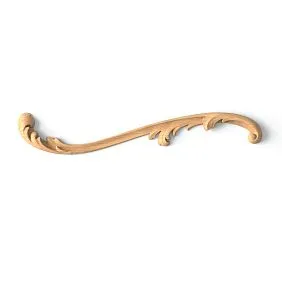


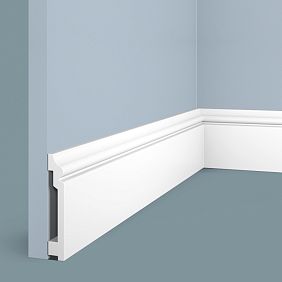
From Classic to Asymmetry: Key Forms of 2026
Sculptural handrails of 2026 move away from monotony, offering a spectrum from perfectly round to organically asymmetrical silhouettes. The classicRound Handrailwith a 50 mm diameter evolves into oval cross-sections of 50×70 mm, where the palm finds additional comfort in the elongated shape. Asymmetry adds dynamism: one side of the handrail may be flat, the other wavy, mimicking the natural relief of rocks or stems.
Integrationstucco decorationtransforms the handrail into a relief strip, where floral or geometric ornaments protrude 10–20 mm, creating tactile pleasure. The carved balusters beneath them enhance the effect, forming a unified ensemble where every detail breathes harmony.
Organic forms? In 2026, asymmetrical handrails resemble tree roots or abstract sculptures by Henry Moore — smooth curves without sharp angles, withdecorative elementsembedded into the body of the handrail. Such forms are ideal for eco-homes, where wood blends seamlessly with nature.
Get Consultation
Organic Asymmetrical Silhouettes: Details of Implementation
-
Wavy Profiles: Transitions from 40 mm in narrow sections to 70 mm in wide sections, withcarved balustersfor support.
-
Relief Inserts:Relief Decorationin the form of leaves or birds, adding volume without heaviness.
-
Hybrid materials: Array with polyurethane accents for lightness and wear resistance.
These innovations make handrails not utilitarian objects, but the centerpiece of interior composition.
Integration of carved balusters: sculpture in supports
carved balusters— are sculptural handrail posts from 2026, 800–1200 mm high, with carvings ranging from simple spirals to complex floral motifs. Underround handrail— they create rhythm, where each baluster is a miniature sculpture echoing the handrail’s form. In classic style — symmetrical vases, in modern — asymmetrical stems with leaves.
Moldings enhance the effect:Relief Decoration— they add snowy white accents contrasting with the warmth of wood. Decorative elements such as rosettes or medallions crown the tops, tying everything into a cohesive ensemble.
Isn’t it mesmerizing howcarved baluster BNL-2— 950 mm in size — comes alive under the hand, guiding upward? In 2026, such supports will be a must-have for luxury interiors.
Choosing carved balusters for sculptural handrails
| Baluster shape | Compatibility with handrail | Additional keys |
|---|---|---|
| Round classic | Round Handrail— 50 mm | carved balusters— "Classic" collection |
| Asymmetric organic | Wavy profile | decorative elements— for furniture |
| Carved with moldings | Oval 60×80 mm | Relief Decoration NPU-492L |
This table helps visualize the harmony of forms.
Molded decoration as the connecting element of sculpture
Relief Decoration— made of polyurethane revolutionizes handrails in 2026, adding light yet expressive relief. Appliqués in the form of birds or flowers, such as NPU-492L, are mounted onRound Handrail— creating a 3D effect without weight. The material’s lightness — just grams per meter — allows experimenting with asymmetry.
Combination withcarved balusters— creates plaster illusions on wood: ornaments transition from handrail to supports, forming an endless ribbon.decorative elements— enhance this, adding wooden inserts for texture.
Installation is simple: polyurethane adhesive fixes the decor in minutes, and wood-grain or white gloss paint adapts to the style. Question: is your interior ready for such a transformation?
Techniques for integrating relief decor
-
Relief friezes: along the entire handrail length, with a 200 mm step for rhythm.
-
Asymmetric panels: at turns, withrelief decor NPU-492L.
-
Combination with carving: balusters with relief capitals for classic style.
Such techniques elevate the design to a new level.
Decorative elements: accents in the sculptural ensemble
decorative elements— rosettes, pilasters, medallions — complete the sculptural handrail image. In 2026, they will be integrated intoRound Handrail— creating local bursts of form: a 15 mm leaf protrudes, catching light. Carved variants in solid wood combine with polyurethane for contrasting textures.
Undercarved balusterssuch elements form bases or capitals, visually increasing height. Organic forms — branches, birds — are ideal for asymmetry, adding narrative: the staircase tells a story.
Easy installation: self-adhesive or on dowels, with final tinting. These are not just ornaments — tools for personalizing space.
Top-5 decorative elements for 2026
-
Rosettes with 100 mm diameter for round profiles.
-
Wavy inserts withwith molded decoration.
-
Carved leaves for organic design.
-
Geometric medallions for minimalism.
-
Complex panels withdecorative inlays.
Each element enhances the sculptural potential.
Materials and technologies: the foundation of durable sculpture
Solid oak, ash, larch — choice forround handrails— dried to 8% moisture, sanded to velvet finish. Polyurethane forstucco decoration— lightweight, frost-resistant, imitating marble or wood.
Technologies 2026: CNC carving for precise detailing on balusters, 3D printing of asymmetrical prototypes. Finishes — wax-oil for natural sheen or lacquer for scratch protection.
Hybrids: wood with polyurethane inserts reduce weight by 40%, preserving the visibility of the sculpture. Isn't it a dream — eternal beauty without compromises?
Material Comparison
| Material | Strength | Weight | Price | Application |
|---|---|---|---|---|
| Solid Wood | High | Medium | High | carved balusters |
| Polyurethane | Medium | Low | Low | Relief Decoration |
| Ash | High | Medium | Medium | Round Handrail |
Choice determines style and budget.
Installation and care: the practical side of art
Installation of sculptural handrails begins with the frame: posts spaced 1–1.2 m,carved balustersare fixed into grooves.Round Handrailand attached to brackets with a 5–10 cm gap from the steps.
decorative elementsand molding — with glue or screws, with caulked joints. For asymmetry — templates for precision.
Care is simple: wipe with a damp cloth, oil once a year for wood. Avoid aggressive chemicals — and the sculpture will retain its original form.
Installation Steps
-
Marking posts and balusters.
-
Fixationof carved balusters BNL-2.
-
Installation of handrail withwith molded decoration.
-
Final sanding and finishing.
Easy even for beginners.
Trends 2026: from eclecticism to bio-design
In 2026, sculptural handrails blend styles: classicRound Handrailwith bio-organic — roots and vines fromstucco decorationEclecticism: baroque carving on minimalist balusters.
Bio-design dominates — forms inspired by nature, withdecorative elementsin the form of moss or droplets. Smart integration: relief lighting.
Asymmetry for dynamism: handrails "grow" upward, changing profile. The future — here and now.
Global influences
-
Scandinavia: Minimalism with organic elements.
-
Asia: Waves and bamboo imitation.
-
Art Deco return: geometry withcarved balusters.
Trends inspire experimentation.
Success cases: real sculptures in interiors
Classic in the Moscow villaRound Handrailwith asymmetricalcarved balustersand ornamental birds create a sense of flight. In the Petersburg loft, organic forms withdecorative elementsrevive the concrete.
These projects show: sculptural handrails adapt to any context, enhancing the character of the home. Your next interior?
Safety and standards: sculpture without risk
GOST requires handrails at a height of 900–1000 mm, grip not less than 40 mm. Sculptural forms undergo tests: asymmetry does not reduce grip, relief improves adhesion.
Relief Decorationdoes not protrude more than 25 mm, balusters — gaps of 100–120 mm. STAVROS certification guarantees compliance.
Safety is the foundation of art.
Key standards
-
Height 90–100 cm.
-
Diameterof round handrail40–60 mm.
-
Load 300 kg/m.
Compliance — the guarantee of peace.
Ecological and sustainable in 2026
Wood from FSC-certified forests, polyurethane without VOC. Solid wood is recyclable, ornamental plaster — recyclable.
Low carbon footprint: local production minimizes transport. Organic forms inspired by nature — the cycle closes.
Choice for conscious consumers.
Personalization: your unique sculptural handrail
fromof round handrailto full asymmetry withcarved balusters3D modeling accelerates the process.
AddRelief Decorationby photo — and your staircase will become yours.
Conclusion: STAVROS — sculptor of your home
Here are bornround handrails, carved balusters, Relief Decorationanddecorative elementspremium-class handrails. STAVROS guarantees quality, speed, and delivery across Russia. Choose STAVROS — and your staircase will become a masterpiece.
Facts about sculptural handrails
-
The first known handrail — in Ancient Egypt, 2500 BC, made of stone.
-
The market is expected to grow by 15% in 2026 thanks to bio-forms.
-
Oak withstands over 1000 load cycles without deformation.
Answers to Popular Questions
What are sculptural handrails?
It's evolutionof round handrailwith relief, carving, and asymmetry, combining art and function.
How to choose a shape for 2026?
For classic — round withcarved balusters, for modern — organic withwith molded decoration.
How much does installation cost?
From 5000 rub./linear m., includingdecorative elements.
Can it be used for outdoor staircases?
Yes, with protective coating — polyurethane and oak are frost-resistant.
How to care for it?
Wipe with wood oil every 6 months.


