Article Contents:
- Structural Pricing Architecture
- Pricing Segmentation
- Regional pricing characteristics
- Technological factors in cost formation
- Material-Based Pricing Factors
- Size Categories and Their Impact on Cost
- Artistic Complexity as a Pricing Factor
- Decorative Finishing and Its Impact on Price
- Seasonal Fluctuations and Market Conditions
- Geographic Features of Delivery and Installation
- Investment Appeal and Return on Investment
- Practical Recommendations for Cost Optimization
- Conclusion
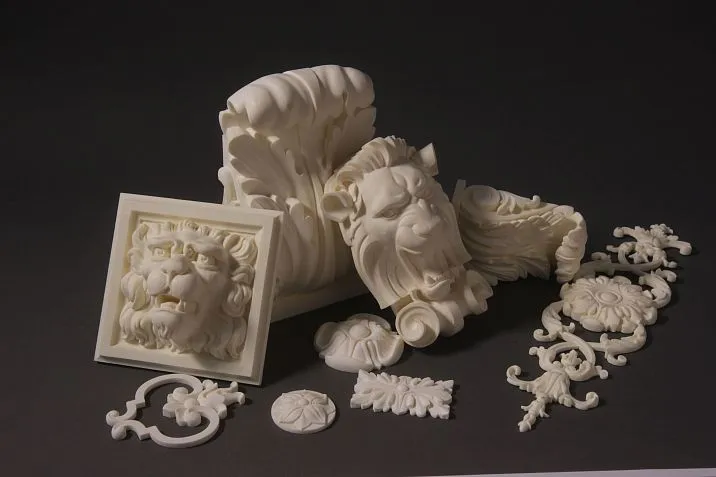
Pricing for three-dimensional decorative elements represents a complex system where each factor influences the final cost of the artwork. When potential buyers ask how much do reliefs costthey encounter a wide price range — from several hundred rubles for the simplest mass-produced items to tens of thousands for exclusive, artist-crafted works. This variation is explained by multiple variables: material used, artistic complexity, size of the item, production technology, and workshop prestige.
In the modern world of decorative art, reliefs occupy a special place, combining the functionality of an architectural element with the aesthetic value of an artwork. Understanding the principles of cost formation will help make an informed purchase decision and avoid paying for unnecessary options.



Structural Pricing Architecture
The formation of relief pricing represents a multifactorial system, where each element plays a specific role in the final price of the item. Understanding this structure will help clients make informed choices and optimize their investments.
Material costs form the basic foundation of pricing. New-generation polyurethane compositions cost 250 to 850 rubles per kilogram, depending on quality and special properties. High-strength architectural plaster is cheaper — 150-400 rubles per kilogram — but requires additional expenses for reinforcement and protective coatings.
Technological processes add a significant cost component. Computer 3D modeling of complex compositions is priced at 5,000–25,000 rubles per project. CNC processing of master models costs 1,500–3,500 rubles per hour of machine operation. Multi-component casting in vacuum chambers increases cost by 35–50% compared to standard casting.
The artistic component forms the largest part of added value. Work by a top-tier sculptor-artist is priced at 2,500–8,000 rubles per hour. Creating an original sketch for a complex composition may require 40–120 hours of specialist work.
Finishing varies from simple painting to complex multi-layer coatings. Basic painting adds 150–300 rubles per square meter. Artistic patination increases cost by 800–2,500 rubles per square meter. Gilding with 24-karat gold may add 15,000–45,000 rubles per square meter.




Pricing Segmentation
The market for decorative reliefs is clearly segmented by price categories, each offering a certain level of quality, exclusivity, and artistic value.
Budget Segment (300–2,500 rubles per item) is represented by mass-produced polyurethane items of simple forms. These are standard sockets with diameters of 15–30 cm, simple floral ornaments, geometric elements. Produced in large series by standard forms, ensuring low cost. Suitable for budget decoration of standard interiors.
Mid-range Segment (2,500–15,000 rubles per item) includes more complex compositions up to 1 square meter. This segment features thematic panels, portrait reliefs, complex floral compositions. Produced in limited series with elements of hand finishing. Material quality and execution are significantly higher than in the budget segment.
Premium Segment (15,000–75,000 rubles per item) is represented by large compositions of 1–5 square meters with high artistic value. Items in this category are often made to individual orders with elements of original work. High-quality materials with exclusive finishes are used.
Luxury Segment (from 75,000 rubles per item) includes unique artist-made works, monumental compositions, items made from premium materials. Each piece is created individually for a specific project. Production time may take several months. Such reliefs become central elements of exclusive interiors.
Our factory also produces:




Regional pricing features
The geography of production and consumption significantly affects the pricing of decorative reliefs. Regional factors create substantial differences in the cost of identical items.
The Moscow region traditionally demonstrates the highest prices on the market. Higher rental rates, high labor costs, and the prestige of being from the capital create an additional 25–40% markup over average Russian prices. However, this region also concentrates the best workshops with advanced technologies and highly skilled specialists.
Saint Petersburg, as a cultural capital, offers a unique combination of high quality and relatively moderate prices. The city’s rich artistic traditions and presence of specialized educational institutions ensure a high level of craftsmanship at prices 15–25% lower than in Moscow.
Regional centers (Yekaterinburg, Novosibirsk, Kazan, Rostov-on-Don) offer reliefs at prices 30-50% lower than in the capital, while maintaining a worthy quality of execution. Development of local production reduces logistics costs for regional customers.
Smaller cities often specialize in certain types of products, offering a narrow range at very attractive prices. However, the choice of styles and sizes may be limited by local capabilities.
Logistical expenses significantly affect the final cost. Delivery of large reliefs to remote regions may add 15-30% to the price of the item.
Get Consultation
Technological factors forming cost
Modern relief production methods significantly affect their cost. Each technology has its advantages and pricing characteristics, which must be considered when choosing.
Hand sculpting remains the most expensive method of production. A highly skilled sculptor creates the artwork from start to finish, ensuring maximum artistic value, but requires significant time investment. The cost of such works starts at 25,000 rubles per square meter and may reach 150,000 rubles for particularly complex compositions.
Casting using master molds significantly reduces cost while maintaining high quality. The one-time cost of creating the master mold is offset by mass production. Prices for such items vary from 3,500 to 25,000 rubles per square meter depending on complexity and run size.
CNC milling provides ideal precision in reproduction at moderate cost. The technology is especially effective for geometric ornaments and repeating elements. The cost of items is 2,500-15,000 rubles per square meter.
3D printing of master molds revolutionizes the production of complex reliefs. The ability to create molds of any complexity at relatively low cost makes previously unfeasible projects accessible. Prices for items made using 3D-printed molds range from 4,000 to 20,000 rubles per square meter.
The choice of technology is determined by the balance between desired quality, uniqueness of the item, and available budget. Understanding the specifics of each method helps make the optimal decision.
Material cost factors
The choice of material significantly affects the cost of the relief, its operational characteristics, and durability. Each material has its advantages and pricing characteristics.
Traditional plaster remains the most accessible material. High-quality architectural plaster costs 150-400 rubles per kilogram. However, the final cost of the item includes expenses for reinforcement, priming, and protective coatings. Ready-made plaster reliefs cost 1,500-8,000 rubles per square meter.
High-density polyurethane provides optimal price-to-quality ratio. The material costs 350-850 rubles per kilogram, but its superior operational characteristics justify the higher price. Polyurethane reliefs cost 2,500-12,000 rubles per square meter.
Composite materials with mineral fillers combine the advantages of natural and synthetic materials. Raw material costs 450-1,200 rubles per kilogram. Finished items cost 3,500-18,000 rubles per square meter.
Fiber concrete is used for exceptionally strong items operating under harsh conditions. High material cost (800-1,500 rubles per kilogram) is offset by exceptional durability. Prices for items start at 5,000 rubles per square meter.
Natural stone represents a category of premium materials. Raw material costs range from 2,500 to 25,000 rubles per cubic meter depending on the type. Hand processing of stone requires the highest level of craftsmanship, reflected in the price of finished items — from 35,000 rubles per square meter.
Additional costs include special additives, pigments, protective coatings, which may increase the material component by 20-50%.
Size categories and their impact on cost
The size of the relief significantly affects its cost, but the relationship is not always linear. Economies of scale and technological specifics create a complex pricing structure.
Miniature items (up to 0.1 m²) often have the highest specific cost due to high fixed costs for production preparation. Prices are 1,500-15,000 rubles per item, equivalent to 15,000-150,000 rubles per square meter. However, in absolute terms, such reliefs remain accessible to a broad range of buyers.
Small compositions (0.1-0.5 m²) offer the optimal cost-to-artistic impact ratio. Specific cost drops to 5,000-35,000 rubles per square meter. This is the most popular category for private interiors.
Medium panels (0.5-2 m²) provide further economies of scale. Cost per square meter is 3,500-25,000 rubles. Such items become central elements of interior compositions.
Large compositions (2-10 m²) offer maximum savings with the highest artistic impact. Specific cost drops to 2,500-18,000 rubles per square meter. Require professional design and installation.
Monumental works (over 10 m²) are produced according to individual projects. Cost is determined by composition complexity, installation conditions, and durability requirements. Prices are calculated individually and may range from 2,000 to 50,000 rubles per square meter.
It is important to understand that larger sizes require more complex logistics, special equipment for installation, and structural reinforcement. These additional costs may significantly increase the overall project cost.
Artistic complexity as a pricing factor
The level of artistic refinement significantly affects the cost of the relief. This factor often becomes decisive when choosing between different market offers.
Simple geometric forms — rosettes, meanders, simple ornaments require minimal artistic skills. Such items are produced using standard molds with minimal manual finishing. Their cost is 1,500-5,000 rubles per square meter.
Stylized medium-complexity plant motifs require understanding of natural forms and artistic stylization. Leaves, flowers, branches are executed with moderate detail. The cost of such works is 3,500-12,000 rubles per square meter.
Realistic natural compositions require detailed rendering of each element while maintaining natural proportions and textures. Each petal, each leaf vein must be anatomically accurate. The cost increases to 8,000-25,000 rubles per square meter.
Animal-themed images require deep knowledge of animal anatomy and understanding of characteristic poses and movements. Especially complex are images in motion — jumping horses, flying birds. Prices range from 12,000 to 40,000 rubles per square meter.
Portrait reliefs represent the highest category of complexity. Conveying individual facial features, character, and emotions requires exceptional skill. Such works are executed only by leading masters and cost from 25,000 to 80,000 rubles per square meter.
Multi-figure compositions with complex narratives, perspective, and character interaction represent the highest level of artistic complexity. Creating such works requires months of work by an experienced sculptor. Cost may reach 100,000 to 200,000 rubles per square meter.
The level of artistic detailing should correspond to the overall interior style and project budget. Sometimes moderate stylization creates a more harmonious result than maximum detail.
Decorative finishing and its impact on price
Final finishing of reliefs can dramatically alter their appearance and cost. The choice of finish type is often determined by interior style and project budget.
Basic acrylic painting represents the most accessible finishing option. Standard colors add 150–400 rubles per square meter to the cost of the item. Special shades or complex color transitions increase the cost to 800–1,500 rubles per square meter.
Patination creates an effect of noble aging and adds historical depth to the item. Simple single-color patination costs 500–1,200 rubles per square meter. Multi-layer patina using several shades and techniques costs 1,500–4,000 rubles per square meter.
Metallic coating imitates surfaces of noble metals with high accuracy. Bronze or copper finish adds 800–2,500 rubles per square meter. Silver imitation costs 1,200–3,500 rubles per square meter. Quality gold plating costs 2,500–8,000 rubles per square meter.
Electroplating represents a category of premium finishes. Using real electroplated gold increases the cost by 15,000–45,000 rubles per square meter depending on metal purity and application complexity. Such finishing is justified only for exclusive high-class interiors.
Flocking creates velvet-like surfaces of various colors and textures. Basic flocking costs 600–1,800 rubles per square meter. Using high-quality fibers of special colors may increase the cost to 3,000–5,000 rubles per square meter.
Combined finishing combines several techniques to create unique effects. For example, gold-plating raised elements with patination of recessed areas creates rich play of light and shadow. Costs of such finishes are calculated individually and may range from 5,000 to 15,000 rubles per square meter.
Artistic painting on reliefs transforms it into a polychrome artwork. Simple painting adds 2,000–8,000 rubles per square meter. Work by a high-class artist may increase the cost by 10,000–25,000 rubles per square meter.
The choice of finish should consider not only aesthetic preferences but also the conditions of the item’s use. Some finishes require special care or periodic renewal.
Seasonal Fluctuations and Market Conditions
The market for decorative reliefs is subject to seasonal fluctuations and macroeconomic factors, which affect pricing throughout the year.
Spring season (March–May) is characterized by increased demand for decorative elements due to the start of renovation work. Prices during this period are at peak levels, exceeding annual averages by 10–20%. Production lead times increase due to high workshop load.
Summer period (June–August) demonstrates stable demand at moderate prices. Most clients are on vacation, reducing market activity. Prices approach annual averages. This is the optimal time to place orders for large projects.
Autumn boom (September–November) is linked to the end of the dacha season and preparation for New Year holidays. Demand sharply increases, especially for small items as gifts. Prices rise by 15–25% compared to summer values.
Winter slump (December–February) is characterized by minimal demand and maximum discounts. Many workshops offer significant discounts to maintain production load. Savings may amount to 20–35% of peak prices.
Economic crises lead to market contraction and price reductions of 30–50%. However, product quality may suffer due to cost-cutting on materials and technologies. Market recovery typically takes 2–3 years.
Currency fluctuations affect the cost of imported materials and equipment. A sharp weakening of the ruble may increase prices by 15–30% over several months.
Changes in the construction industry directly affect demand for decorative elements. Growth in luxury construction stimulates the relief market, while downturns lead to price reductions.
Understanding market conditions helps clients optimally plan purchases and maximize returns on investments in decorative elements.
Geographical specifics of delivery and installation
Logistical costs and installation specifics significantly affect the total project cost, especially for large items and remote regions.
Local delivery within the production city is usually included in the item’s cost or amounts to a symbolic sum of 500–2,000 rubles. Most workshops offer free delivery for orders above a certain threshold.
Regional delivery is performed by transport companies at rates of 150–500 rubles per kilogram depending on distance. Fragile items require special packaging, which increases cost by 10–25%.
International delivery significantly increases the total project cost. In addition to transportation costs (800–2,500 rubles per kilogram), customs duties, insurance, and documentation fees are added.
Special transport is required for exceptionally large items. Renting a crane or manipulator adds 8,000–25,000 rubles to delivery cost. Coordinating the route with GIBDD may require additional expenses.
Professional installation of large reliefs requires specialists. Installation costs amount to 15–40% of the item’s cost depending on complexity and site conditions.
Preparation work — wall leveling, structural reinforcement, installation of lighting conduits — may require significant additional investments.
Cargo insurance is recommended for expensive items. The cost of insurance is 0.3–1.5% of the cargo value, depending on transportation conditions.
Careful logistics planning helps avoid unexpected expenses and ensures the preservation of items during transportation.
Investment attractiveness and return on investment
Purchasing quality reliefs can be considered not only as a decorative expense but also as a long-term investment with multiple returns.
Increase in property value — the most obvious economic effect. Unique artistic elements enhance the property’s appeal in the real estate market. The value increase may amount to 15–40% of the investment in decoration.
Savings on repairs are achieved due to the durability of quality reliefs. Unlike wallpapers or decorative paints, which require renewal every 5–8 years, reliefs retain their original appearance for 25–30 years with minimal maintenance.
Psychological value cannot be directly measured in monetary terms, but significantly affects quality of life. Daily appreciation of beauty positively impacts emotional state, indirectly influencing the owner’s productivity and success.
Social status is emphasized by the presence of unique artistic works. This can positively influence business relationships, career advancement, and social connections.
Collectible value of artworks may increase over time, especially works by recognized masters. History provides numerous examples when decorative elements became museum exhibits.
Tax advantages in some jurisdictions allow considering investments in artworks as tax-deductible assets or expenses for improving working conditions.
The payback period for investments in reliefs typically ranges from 10–15 years when considering all direct and indirect effects. For premium items, this period may shorten to 7–10 years due to a greater impact on property value.
Practical recommendations for optimizing costs
A reasonable approach to purchasing reliefs allows obtaining maximum artistic value at optimal costs. There are numerous ways to reduce expenses without compromising quality.
Planning purchases during the winter period may result in savings of 20–35% due to seasonal discounts. Most workshops offer significant discounts during periods of low demand.
Bulk orders of multiple items simultaneously reduce unit cost due to savings on fixed expenses. The discount may be 10–25% when ordering a set for one object.
Choosing the optimal material allows balancing cost and performance characteristics. High-density polyurethane is often a more cost-effective solution than traditional plaster, due to its durability and ease of maintenance.
Standardizing sizes for standard shapes may reduce costs by 30–50% compared to custom orders. Many workshops offer a wide range of ready-made solutions.
Simplifying artistic solutions without losing expressiveness. Sometimes stylized forms create a more harmonious result than highly detailed images, at significantly lower cost.
DIY installation of simple items may save 15–30% of the total project cost. Most manufacturers provide detailed instructions and technical support.
Phased implementation of large projects allows distributing expenses over time and adjusting plans during execution. Priority should be given to the most prominent elements.
Comparing offers from different manufacturers helps select the optimal price-to-quality ratio. It is important to compare not only prices but also materials, technologies, and production timelines.
Cost savings should not be achieved at the expense of material quality or executor qualifications. Low-quality, inexpensive items often require replacement within a few years, making them economically unviable in the long term.
Conclusion
The question of how much do reliefs costThere is no single answer due to numerous influencing factors. Price range from several hundred to hundreds of thousands of rubles reflects the diversity of materials, technologies, artistic solutions, and skill level.
Understanding pricing principles helps make informed decisions and obtain maximum value from investments. Quality reliefs are not merely decorative elements but long-term assets capable of providing aesthetic pleasure and economic benefit for decades.
The modern market offers solutions for any budget — from affordable mass-produced items to exclusive original artworks. The key is to clearly define your needs, capabilities, and expectations, then find the optimal balance between cost and quality.
Investments in reliefs should be considered within the context of an overall strategy for creating a unique interior. Properly selected decorative elements can dramatically transform a space, create a unique atmosphere, and highlight the owner’s individuality.
Advancements in manufacturing technology make fine art increasingly accessible. New materials, innovative production methods, and optimized manufacturing processes contribute to reduced costs while improving quality.
The future of the relief market is linked to further product personalization, development of eco-friendly technologies, and integration of digital solutions. These trends will influence pricing, creating new opportunities for clients and manufacturers.
Choosing reliefs is choosing a lifestyle, investing in beauty, comfort, and cultural development. Well-made investments pay off not only economically but also bring daily joy from appreciating beauty.
STAVROS Company, recognized as a leader in creating exclusive decorative solutions, offers the optimal combination of high quality and reasonable prices. Years of experience, use of advanced technologies, and an individual approach to each project ensure maximum investment value. The team of highly qualified specialists at STAVROS helps clients realize the most daring creative concepts within an affordable budget, creating pieces that will adorn interiors for many years.