












































































Article Contents:
- Why wide format changes everything
- Proportions the eye sees
- Styles requiring wide format
- Solid wood: material with soul
- Oak: classic for centuries
- Beech: warm elegance
- MDF and moisture-resistant MDF: when practicality is needed
- Profile: shape carrying meaning
- Classic European profile
- Modern straight profile
- Decorative profiles
- Sizes: find your own
- Proportion formula
- Ceiling height and baseboard selection
- Combination with floor coverings
- To parquet and solid wood planks
- To laminate
- To tile and ceramic tile
- Installation: where quality begins
- Preparation: foundation of success
- Mounting methods
- Corners: mastery in details
- Finishing: from natural to artistic
- Transparent finishes: beauty of wood
- Staining: change color while preserving texture
- Painting: pure color
- Integration into interior: composition integrity
- Baseboard and cornice: framing space
- Baseboard and doors: unity of carpentry
- Baseboard and other wooden elements
- Practical questions: what you need to know
- How much baseboard do you need?
- Can it be installed by yourself?
- How to care for it?
- What to do if the baseboard is damaged?
- Cost: investment in quality
- Where to find quality?
- Conclusion: a touch that changes everything

When construction is complete, walls are aligned, and flooring is laid — the moment arrives that defines the true character of the interior. Details. It is precisely these details that distinguish a masterfully executed renovation from merely good quality. And among these detailswide wooden baseboardplays a role far from insignificant. It does not merely cover the technological gap between floor and wall — it creates completeness, adds architectural expressiveness to the space, transforming the room from a collection of surfaces into a unified composition.
Why exactly wide? Because size matters. A narrow baseboard performs its function but remains unnoticed. Wide — works as an architectural element, changes the perception of ceiling height, adds solidity to the room. It says: here details are thought out, here quality is valued, here the language of classical architecture is understood. And when this element is made of solid wood — oak, beech, walnut — it brings into the home that very sense of natural warmth that no synthetic material can replace.
Wood breathes. It is alive, even when turned into a baseboard. It preserves the memory of the tree — growth rings, texture, play of light on fibers. Touching wooden surfaces, you feel a connection to nature, tradition, and the centuries-old experience of craftsmen who worked with this material. A wide wooden baseboard is not simply the purchase of a construction material. It is a choice in favor of authenticity.


Why wide format changes everything
Imagine a room with ceilings 2.7–3 meters high. A standard baseboard 60–70 mm high performs its function, but visually disappears. Now replace it with a wide one — 100, 120, 150 mm. The space instantly changes. The ceilings seem to rise, the walls gain structure, the room appears more expensive, thoughtfully designed, noble. Magic? No, architecture.




Proportions the eye sees
Human perception is structured so that it reads proportions subconsciously. Classical architecture developed golden rules: the height of the baseboard should be approximately one-twentieth of the wall height. For a standard height of 2.7 meters, this gives 12–15 centimeters. It is precisely within this range that the baseboard stops being merely a functional strip and becomes an architectural element.
A wide baseboard visually divides the wall into zones. The lower part — from the floor to the top edge of the baseboard — is perceived as the foundation, the room’s base. Everything above — as the main space. This hierarchy creates a sense of order, structure. The room stops being merely a box — it acquires architectural logic.
In homes with high ceilings — from 3.5 meters and above — a wide baseboard is critically important. Narrow ones simply disappear, cannot cope with the scale. A baseboard 150–200 mm corresponds to the size of the space, creating the necessary weight. This is no longer a detail — it is an element defining the character of the interior.
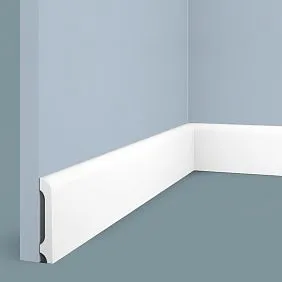
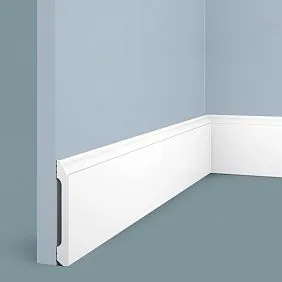
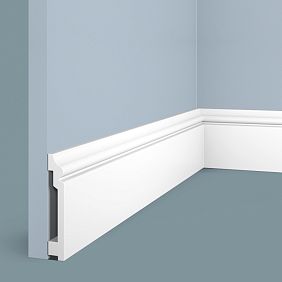
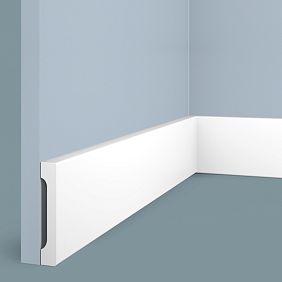
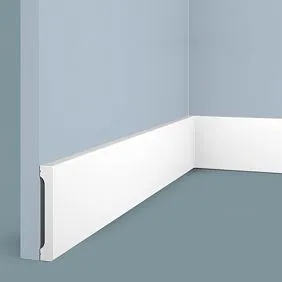
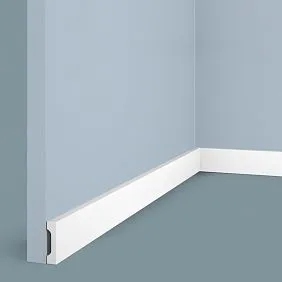
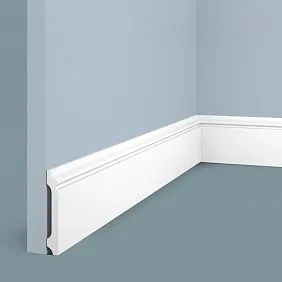
Our factory also produces:

Styles requiring wide format
Classic in all its manifestations — from strict classicism to lavish baroque — implies wide baseboards. They were the standard in palaces and mansions of the past, and modern classic interiors inherit this tradition.Wooden baseboardin wide format — a necessary element for those creating a classic interior.
Neoclassicism, popular today, simplifies historical classicism but preserves the essential — proportions. A wide baseboard here can be minimalist, without a complex profile, but size remains important. This is the very detail that distinguishes true neoclassicism from attempts to simulate it with narrow elements.
Even modern interiors increasingly use wide baseboards. Minimalism appreciates their ability to structure space without unnecessary decoration. Scandinavian style found in widewooden baseboards for floora way to add naturalness and warmth without compromising overall restraint. Loft uses them as a contrast between rough industrial surfaces and noble wood.
Get Consultation
Solid wood: material with soul
When people talk about wooden baseboard, they often mean different things. MDF veneered, laminate with wood grain pattern, plastic with wood texture — all of this is called wooden. But a true wooden baseboard is solid wood. Solid timber, sawn, processed, sanded, but retaining its natural essence.
Oak: classic for centuries
Oak is the first thing that comes to mind when thinking about quality wood. Density of 700–800 kg per cubic meter makes it exceptionally strong. Hardness of about 4 on the Brinell scale means that an oak baseboard withstands impacts, bumps, scratches without visible consequences. This is material for those who do renovations for decades.
Oak texture is expressive. On radial cuts, characteristic silver stripes — medullary rays — appear, creating a unique decorative effect. On tangential cuts — clear growth rings, telling the tree’s story. Each board is unique, its pattern cannot be replicated. Installing an oak baseboard brings a piece of forest, its energy, its calmness, into your home.
Oak color varies from light honey in young wood to dark brown in seasoned wood. Weathered oak, aged for decades in water, acquires a noble gray-black tone that cannot be achieved by any staining. This is material with history, literally having passed through time.
Stability of oak — its most important property. Wood reacts less to humidity changes than others. In winter, when radiators dry the air, and in summer, when humidity rises, an oak baseboard retains its geometry. It doesn’t warp, crack, or separate at joints. Install once — and forget for many years.
Oak: warm elegance
Oak often remains in the shadow of oak, but connoisseurs appreciate it for its unique qualities. Density does not fall short of oak, sometimes even exceeds it. But the main thing — uniformity of structure. Oak has no sharp transitions between early and late wood, fibers are evenly distributed. This creates a calm, even texture.
The color of oak — pink-beige, warm, cozy. This is an ideal base for interiors in light tones. Oak takes staining beautifully — from whitewashed wood to dark wenge, while preserving the visibility of texture. You can choose a shade to match parquet, doors, andbuy classic style furniture, creating a unified composition.
Oak has antibacterial properties confirmed by research. The wood contains substances that suppress the development of microorganisms. For children's rooms, bedrooms, and spaces where people with allergies live, this is a significant factor when choosing materials.
MDF and moisture-resistant MDF: when practicality is needed
Sometimes solid wood is excessive or unsuitable for operating conditions. Then MDF — wood fiberboard obtained by pressing small wood particles — comes to the rescue. The density of quality MDF is 760-780 kilograms per cubic meter — like solid wood, sufficient strength, less weight.
MDF is ideal for painting. Its surface is absolutely smooth, without texture, providing an ideal base for enamel coatings. You can achieve any color — white, black, pastel, bright — with a perfectly smooth surface. For modern interiors where color matters more than wood texture, MDF is the optimal solution.
Moisture-resistant MDF contains special binders that make it resistant to high humidity. It can be used in bathrooms, kitchens, hallways — places where regular MDF or solid wood may suffer from moisture. This is practicality without compromising appearance.
Profile: shape carrying meaning
Wide skirting board — this is not just a rectangular strip of increased height. The profile — the cross-sectional shape — determines the style, character, and visual impact of the element.
Classic European profile
Smooth curves, gentle transitions between planes, rounded edges — the language of classical architecture. Such a profile emerged in an era when every detail was hand-carved, when sharp angles were rounded not only for beauty but also because they quickly chipped.
The classic profile is universal. It suits parquet and solid boards, laminate and ceramic tiles. It works well in living rooms and bedrooms, offices and dining rooms. This is the choice of those who value time-tested solutions.
Wooden skirting board for floorwith a classic profile creates a sense of solidity, reliability.A wide skirting board with a classic profile usually has a height of 100-120 millimeters. This is enough for the profile to be fully expressed, for the play of planes to become noticeable, for light to create shadows that emphasize the form. On a narrow skirting board, the classic profile is lost — there is not enough space for the form to develop.
Straight modern profile
Clear lines, straight angles, minimal curves — this is the language of modern architecture. A straight profile looks graphic, emphasizes the geometry of space, does not distract with ornamentation. This is the choice for minimalism, Scandinavian style, loft, modern classic.
A wide skirting board with a straight profile creates a powerful horizontal line. A height of 120-150 millimeters turns it into a significant architectural element. Especially effective when the skirting board is painted in contrast — white against dark walls, black against light walls. Contrast enhances the graphic effect, making the skirting board an active element of the composition.
A straight profile demands precise installation. Any unevenness, gaps, or misalignment will be visible. But with proper installation, the result is flawless — a clean line that emphasizes the thoughtfulness of the interior design.
Decorative profiles with ornament
Grooves, protrusions, multi-level forms — for interiors where the skirting board must be not only functional but also a decorative element. A decorative profile creates a play of light and shadow, adds volume, enhances the classic character of the interior.
A wide skirting board allows for complex profiles. A height of 120-150 millimeters provides space for several grooves, protrusions, transitions. On a narrow skirting board, such a profile appears small and indistinct. A wide profile allows the form to unfold, become readable, impressive.
Decorative profiles are characteristic of classical, Empire, and Baroque interiors. They combine with
buy wooden corniceunder the ceiling, withdecorative rose outletson the walls, creating a complete classical composition.on the walls, creating a complete classical composition.
Dimensions: find your own
Wide — a relative concept. For some, it’s 100 millimeters, for others 200. How to determine the optimal height for a specific room?
Proportion formula
Classical architecture operates with clear proportions. Skirting board height = wall height / 20. For a 2.7-meter wall, we get 135 millimeters. This is a mathematical proportion that provides harmony, subconsciously perceived.
But the formula is a guideline, not a dogma. If you want a more active skirting board — increase to 1/15 of wall height. If, on the contrary, you prefer a more restrained look — 1/25. The key is to understand the principle: the skirting board must match the room’s scale.
Ceiling height and skirting board selection
Standard apartments with ceilings 2.5-2.7 meters work optimally with skirting boards 100-120 millimeters. This is enough to create an architectural effect, but not too much to avoid visually lowering already low ceilings.
Apartments with ceilings 3-3.2 meters allow using skirting boards 120-150 millimeters. Here, a wide skirting board is appropriate, it matches the scale, emphasizes height, creates an impression of solidity.
Country houses with ceilings from 3.5 meters and higher require skirting boards 150-200 millimeters. A smaller one will simply disappear in space, unable to cope with the scale. A wide skirting board here is not luxury, but necessity — it creates harmony between elements and volume.
Combination with floor coverings
Skirting board does not exist on its own — it works in conjunction with floor covering. The harmony of this combination determines the integrity of the interior.
To parquet and solid boards
Parquet andbuy wooden skirting board— natural partners. Both are solid wood, both have visible texture, both are natural and warm. The ideal option — skirting board of the same species as the parquet, with the same staining. Then it creates the impression of a single wooden surface, elegantly rising to the walls.
If the species are different, it is important to match the tone. Light parquet — light skirting board, dark — dark. You can play with contrast: to light oak parquet — dark walnut skirting board. But such solutions require a sense of proportion, so that the contrast does not look accidental.
Solid boards are usually wide — 120-200 millimeters. The skirting board must match this scale. A narrow one next to a wide board looks disproportionate. A skirting board 120-150 millimeters creates a visual balance.
To laminate
Laminate imitates wood, remaining an artificial material. A wooden skirting board next to laminate creates an interesting effect — it adds naturalness, enhances the covering. It is important to choose the skirting board by color to avoid conflict.
Modern laminates imitate various species — from light beech to dark wenge. You can choose a corresponding skirting board for each — stained in the desired shade. Textures may not match — this is normal, the skirting board does not have to be a copy of the laminate. Sufficient color match is enough.
The height of the skirting board under laminate is usually medium — 100-120 millimeters. This is a universal size, not overloading the interior, but providing sufficient expressiveness.
To tile and ceramic tile
Tile is cold, hard, mineral. A wooden skirting board next to it creates a warm contrast, softens the rigidity of stone. This is especially relevant in hallways and kitchens, where tile is used for practical reasons, but warmth is desired.
To wood-effect tile, it is logical to choose a wooden skirting board in the same tone. To monochromatic tile — a skirting board matched to wall color or contrasting with it. It is important to protect wood from moisture — treat with moisture-resistant lacquer, especially if it is in a bathroom or kitchen.
For humid rooms, the optimal skirting board is moisture-resistant MDF or oak — the most stable species. Beech absorbs moisture more actively, requiring careful protection.
Installation: where quality begins
Buying a quality skirting board — half the job. The other half — installing it so that the result delights for years. Installationof wooden floor skirting boardrequires precision, patience, understanding of material behavior.
Preparation: foundation of success
Walls must be flat. Irregularities exceeding 2 millimeters per meter will create gaps between the skirting board and the wall. Either level the walls, or be prepared to seal gaps with sealant. It is better to spend time on preparation than to fight with consequences.
Surface must be clean, dry, and strong. Old paint, wallpaper, whitewash — all must be removed down to a solid base. Dust is removed with a vacuum cleaner. Surface is primed — this improves adhesive bond of glue, prevents peeling.
Skirting boards must acclimate before installation — rest in the room for 2-3 days. Wood must adapt to room humidity and temperature. If installed immediately from a cold warehouse, it may deform after installation.
Methods of mounting
There are several methods, each with its own advantages.
Mounting with glue — the cleanest method, leaving no visible mounting marks. Uses polyurethane wood glue. Applied in zigzag pattern on the back of the skirting board, pressed against the wall, held for several minutes. Suitable for flat walls and skirting boards weighing up to 3-4 kg per meter.
Mounting with screws — classic, providing maximum reliability. Holes are drilled in the wall, dowels inserted, skirting board screwed on. Screw heads are countersunk, holes filled with wood putty or covered with decorative caps. Reliable method, but requires care.
Combined method — glue plus screws — provides maximum strength. Glue holds along the entire length, screws provide additional fixation, especially at joints. For wide, heavy skirting boards, this is the optimal option.
Corners: mastery in details
Corners are the most difficult part of installation. Here, the master's skill is revealed. A perfect joint, where two boards meet without a gap, is a sign of professionalism.
For internal corners, baseboards are cut at 45 degrees. A miter box or a circular saw is used. It is important that the cut is strictly perpendicular to the front surface — any tilt will create a gap. After cutting, the ends are fitted and adjusted if necessary.
External corners are more complex. Here, errors are immediately noticeable. Experienced masters make external joints not strictly at 45 degrees, but with a slight adjustment, taking into account possible wall irregularities. The ends are trimmed, fitted, and adjusted until perfect alignment is achieved.
Long straight sections are joined end-to-end. The joint is made in the least visible place — behind furniture or in a corner. The ends are sanded with sandpaper for perfect flatness, and the joint is sealed.
Finishing: from natural to artistic
A wide baseboard can be left natural or transformed into a decorative element. The choice depends on the interior design concept.
Transparent finishes: the beauty of wood
Varnish, oil, wax — these finishes protect wood without hiding its texture. On the contrary — they emphasize the grain pattern, making the color deeper.
Oil penetrates into the wood, creating protection from within. The surface remains velvety and pleasant to the touch. Wood treated with oil breathes and retains its ability to regulate humidity. The downside — oil requires renewal every 2-3 years.
Wax is often applied over oil. It provides additional protection, adds a slight sheen, and enhances water-repellent properties. A wax finish has a pleasant scent and creates a sense of naturalness.
Varnish creates a film on the surface. Modern water-based varnishes are safe, odorless, and dry quickly. They can be matte, satin, or glossy. Matte preserves the natural look, glossy highlights the texture. Varnish lasts 5-7 years without renewal.
Staining: change the color while preserving the texture
Stains allow you to change the color of wood while keeping the texture visible. You can turn light beech into dark walnut, give oak a gray tone, or create the effect of bleached wood.
Staining opens up wide possibilities. A baseboard can be matched exactly to the floor color or, conversely, made contrasting. A gray-stained baseboard fits beautifully into modern interiors. Dark brown — into classic ones.
The process begins with sanding — this opens the pores, allowing pigment to penetrate deeper. Stain is applied along the grain with smooth strokes. It is important to work quickly without stopping — otherwise, spots will form. After drying, the surface is coated with varnish or oil for protection.
Painting: pure color
Sometimes the texture needs to be hidden — when a uniform colored baseboard is desired, or when the concept requires smooth painted surfaces. In such cases, opaque paints — acrylic enamels — are used.
White baseboard — classic, never going out of style. It expands space, makes interiors lighter, and creates a sense of cleanliness. White is universal — it matches any floor and wall color. In Scandinavian interiors, whitewooden baseboards for flooring— is a mandatory element.
Black baseboard — a bold choice. It creates a graphic effect, clearly defining space. A black baseboard looks great on light walls — contrast emphasizes geometry.
Colored baseboards — for experimenters. Dark blue, emerald, terracotta — a baseboard can become an accent supporting the interior’s color palette.
Integration into interior: completeness of composition
A wide baseboard does not live in isolation. It is part of a system of wooden elements, and its beauty is revealed in combination with other details.
Baseboard and crown molding: framing space
A classic interior requires symmetry: baseboard at the bottom, crown molding at the top. Two horizontal elements frame the walls, creating a complete composition. The eye moves from the baseboard up the wall to the crown molding, encompassing the entire space.
Baseboard and crown molding must match each other — in wood species, profile style, and finish. They do not have to be identical — crown molding can be more complex, emphasizing its role as a finishing element. But the language of forms must be unified.
Baseboard and doors: unity of carpentry
Door frames, casing, baseboards — all these are carpentry items that should be in a unified style. If the doors are made of solid oak, it makes sense to choose oak baseboards. If the doors are white, the baseboards should also be white.
Accuracy is important where the skirting board meets the door frame. The end of the skirting board should fit perfectly without gaps. If the frame protrudes, the skirting board is trimmed to match the contour. The joint is filled with matching-colored sealant.
Skirting boards and other wooden elements
wooden planks on the wall, Decorative brackets for shelves, Balusters for staircase— All wooden elements should harmonize. Exact color match is not necessary, but tones should be in the same range — warm or cool. Then the interior looks thoughtfully designed and cohesive.
Practical questions: what you need to know
How much skirting board do you need?
Measure the room's perimeter, subtract the width of door openings, add 10–15% for trimming and potential defects. It’s better to buy with a surplus — buying more later from the same batch may not be possible, and the shade may differ.
Can it be installed by yourself?
Yes, if you have the tools and basic skills. You need a circular saw or at least a miter gauge for clean angled cuts. You need a level for marking. You need hands that grow from the right place. If you’re unsure — it’s better to hire a professional. A poorly installed expensive skirting board is worse than a professionally installed cheap one.
How to care for it?
Wooden skirting boards require minimal care. Wipe with a dry cloth to remove dust once a week. Every few months — with a damp, well-wrung cloth. No abrasives or aggressive chemicals. If the finish dulls — refresh it with wood polish.
What to do if the skirting board is damaged?
Minor scratches are sanded with fine-grit sandpaper, and the area is touched up. Deep chips are filled with wood putty, sanded, and stained to match. If the damage is severe — replace the section, as skirting boards are installed from individual boards.
Cost: an investment in quality
The price of a wide wooden skirting board depends on the wood species, profile width, and complexity of processing. Oak is more expensive than beech, which is more expensive than MDF. A 150-mm skirting board is more expensive than a 100-mm one. A decorative profile is more expensive than a simple one.
But this is not an expense — it’s an investment. A quality skirting board lasts for decades. It can be restored, repainted, or restained. When calculated per years of use, it proves more cost-effective than cheap alternatives that require replacement every 5–7 years.
Saving on skirting boards is a mistake. This is one of those details where quality is immediately visible. A cheap skirting board with a warped profile, poor geometry, and rough finish will spoil even an expensive renovation. A quality one will highlight your interior investment and add sophistication.
Where to find quality?
The market is flooded with offers. Chinese MDF sold as solid wood, pine misrepresented as oak, skirting boards with warped geometry, poorly dried — all are sold as quality products. How to avoid mistakes?
Buy from manufacturers, not resellers. The manufacturer controls quality at every stage and is responsible for the product. Review the portfolio — where the product has been used, what projects. Read reviews from professionals — architects, designers, builders.
Require documentation on the wood — certificates confirming species, moisture content, and grade. A quality manufacturer will provide all this without difficulty. Refusal is a reason to be cautious.
Inspect the product before purchase. Geometry should be precise, the profile consistent along the entire length, the surface smooth without chips or scratches. If possible — measure moisture content with a moisture meter. For solid wood, the norm is 8–12%.
Conclusion: a detail that changes everything
A wide wooden skirting board is not just a functional element covering the gap between the floor and the wall. It is an architectural detail defining the character of the interior. It is a choice in favor of quality, naturalness, classic beauty. It is an investment in space that will delight for decades.
Solid oak or beech, classic or modern profile, natural or painted finish — each choice reflects an understanding of how a home should be. A wide skirting board says: here they value details, here they understand architecture, here they do not cut corners on what creates atmosphere.
Correctly selected and professionally installedwide wooden baseboardtransforms a room from a collection of surfaces into a thoughtfully designed space. It creates completeness, adds solidity, connects the floor to the walls, forms architectural logic. Without it, the interior remains unfinished, like a sentence without a period.
STAVROS has been creating wooden interior elements for over twenty years, combining traditional craftsmanship with modern technology. Its own production in Saint Petersburg allows quality control at every stage — from wood selection to final finishing. Experienced masters, many of whom have dedicated decades to carpentry, infuse each element with knowledge, skills, and a touch of soul.
STAVROS offers a wide range of skirting boards in various profiles, sizes, and wood species. Classic with smooth curves and modern straight designs. Ornate with grooves and sleek smooth ones. Made from oak, beech, MDF, and moisture-resistant MDF — suitable for any usage conditions and interior concepts. Everyone will find a solution matching their project and budget.
Only premium materials are used. Wood undergoes kiln drying to a moisture content of 8-10%, ensuring stability and long service life. Processing is done on modern equipment, guaranteeing geometric precision and surface cleanliness. Quality is certified and backed by years of experience in a demanding market.
Custom manufacturing is possible. Need a non-standard height, special profile, or specific wood species — STAVROS can realize projects of any complexity. Designers will help develop a unique solution, technicians will calculate production, and masters will bring it to life in the material.
Delivery is organized throughout Russia. Baseboards are securely packaged and protected from damage during transportation. Delivery times are minimal — finished products are shipped promptly. Self-pickup is available from the warehouse in Saint Petersburg with consultation from specialists.
Showrooms in Moscow and Saint Petersburg are open for visits. Here you can see baseboard samples, evaluate the quality of processing, feel the wood texture, compare profiles. Consultants will answer questions, assist with selection, and explain installation and care.
ChoosingWooden skirting boards for floorsFrom STAVROS, you choose proven quality, professional service, and wide possibilities for implementing any interior tasks. The company helps create spaces where every detail is thought out, where quality is visible in the small things, where the interior works as a unified harmonious composition. A wide wooden baseboard from STAVROS — that’s the finishing touch that turns a good renovation into an outstanding interior.


