Article Contents:
- 1. What is the most expensive mirror in the world?
- 1. Hall of Mirrors – the most expensive modern mirror
- ✔ What makes this mirror unique?
- 2.1. Louis XV Mirror – symbol of royal luxury
- 2.2. Antique mirrors of the Palace of Versailles – reflection of royal glory
- 2.3. The Potosí Mirror – silver Incan mirror
- ✔ 24-karat gold – royal luster and status
- ✔ Wood of rare species – symbol of nobility and aristocracy
- ✔ Natural stone – reflection of eternity
- ✔ Noble metals – refined details and artistic finish
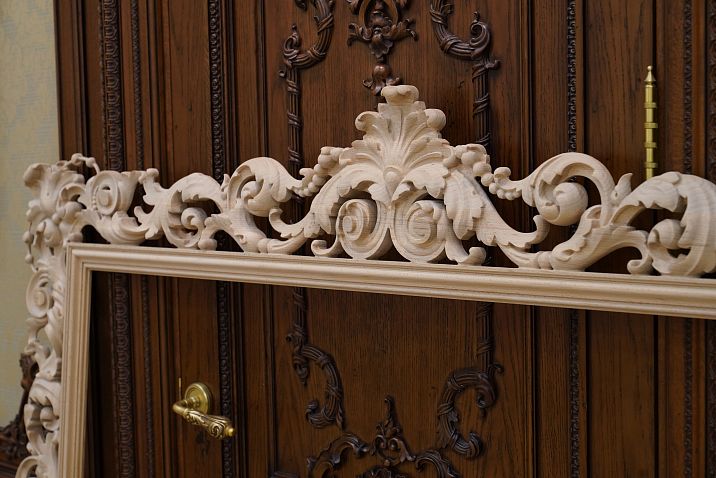
- ✔ Hand-carved details – masterful filigree work
- ✔ Engraving and embossing – exclusive details
- ✔ Inlay with precious stones and mother-of-pearl
- ✔ Antique mirrors from the Baroque and Rococo eras – museum exhibits
- ✔ Royal mirrors – value beyond time
- ✔ Auction sales of elite mirrors – investments in history
- ✔ Exclusive models inspired by historical mirrors
- ✔ Premium materials – oak, beech, bronze, marble, gilding
- ✔ Handcrafted and unique design
- ✔ Perfect mirror glass without distortions
- ✔ Delivery throughout Russia – major cities and small towns
Mirrors have always been more than just a functional item; they were a symbol of status, wealth, and refined taste. In different eras, they were adorned with gold frames, precious stones, intricate carvings, transforming them into works of art. Today, the most expensive mirrors in the world are not merely reflective surfaces, but exclusive designer objects worth millions of dollars, decorating royal palaces, private collections, and luxurious interiors of elite mansions.
Which mirror is considered the most expensive in the world? Who owns it? What materials is it made of, and why is its price so high? Let's explore the history, luxury, and secrets of the most expensive mirrors in history.


1. What is the most expensive mirror in the world?
For centuries, mirrors have been not only utilitarian items but also symbols of power, luxury, and refined taste. Majestic royal palaces, aristocratic mansions, and world-class museums house unique mirrors whose value is measured in millions of dollars.
Today, the most expensive mirror in the world is the 'Hall of Mirrors,' created by the legendary designer Fernando Mastrojanni. This work of art impresses with its unconventional design, rare materials, and conceptual aesthetics.




1. Hall of Mirrors – the most expensive modern mirror
Our factory also produces:


✔ What makes this mirror unique?
'Hall of Mirrors' is not just a mirror, but an art object combining architectural power, natural beauty, and refined aesthetics.
● Materials: bronze, quartz, cement, and glass. These materials are not only durable but also create a unique visual effect, as if the mirror were carved from a rock formation.
● Texture: the surface resembles mountain peaks, sandy dunes, and water waves, as if the mirror were part of nature itself.
● Handcrafted: each mirror in this series is handmade, meaning there are no two identical copies.
● Design breakthrough: the combination of brutality and elegance makes 'Hall of Mirrors' one of the most impressive pieces of modern art.
● Price: $80,000 per unit.
This unique object has become an icon in the world of object design and enjoys immense demand among collectors and connoisseurs of luxury.
However, if we speak of the most expensive mirrors in history, then true records for cost are set by antique models from the Baroque, Rococo, and Neoclassical periods, which adorned the palaces of European monarchs.
Get Consultation
2. Historical mirrors that astonish with their price
Some mirrors are valued at tens of millions of dollars. They possess exceptional artistic and historical value, as many of them witnessed grand events in world history.
2.1. Louis XV's Mirror – symbol of royal luxury
✔ Where is it located? In one of France's private collections.
✔ Materials: solid oak, covered with 24-karat gold leaf, mother-of-pearl inlay, bronze hardware, hand-carved details.
✔ Size: over 2 meters in height – the perfect combination of status and functionality.
✔ Estimated value: $8–12 million.
✔ Why so expensive?
● This is a unique historical mirror, commissioned by King Louis XV of France.
● It was located in the king's private chambers, reflecting the grandeur and splendor of the French monarchy.
● The specimen is in impeccable condition, making it especially valuable in the antique market.
Such a mirror is not merely an interior item, but a true treasure of the Baroque era.
2.2. Antique mirrors from the Palace of Versailles – reflection of royal glory
✔ Where are they located? In the Hall of Mirrors at Versailles (Galerie des Glaces) – one of the most majestic halls in the world.
✔ What makes them unique?
● 357 mirrors are installed in the hall, framed in gilded carved frames with bronze inlays and reliefs.
● Each mirror is part of a grand architectural ensemble created during Louis XIV's reign.
● These mirrors reflect historical events, including the signing of the Versailles Treaty in 1919.
✔ Price:
If one of these mirrors were auctioned, its value could reach tens of millions of dollars, but since they are part of the world's cultural heritage, they are not for sale.
✔ Why so expensive?
● These are not just mirrors, but part of French history.
● Their design is based on exclusive drawings created by the best craftsmen of the 17th century.
● This is the most famous mirror gallery in the world, attracting millions of tourists.
The Versailles mirrors are not only interior decor, but also a symbol of absolute power and grandeur.
2.3. The Potosí Mirror – Inca silver mirror
✔ Where is it located? In the British Museum.
✔ What is it made of?
● Fully made of pure silver mined from the mines of Potosí (Bolivia) – one of the main sources of silver during the Spanish colonial era.
● Weighs over 20 kg, making it unique even by modern standards.
✔ Estimated value: $15 million.
✔ Historical value:
● It is believed that this mirror belonged to Spanish conquistadors who brought it from South America to Europe.
● It was long in the possession of Spanish monarchs, and later entered the private collection of a British aristocrat.
This mirror is not only a witness to ancient civilizations, but also an artifact of the Age of Great Geographical Discoveries.
From modern designer mirrors to antique relics – mirrors can cost millions of dollars if they possess historical, artistic, and cultural value.
✔ The most expensive modern mirror – 'Hall of Mirrors' ($80,000), created by Fernando Mastriano.
✔ The most expensive antique mirror – Louis XV's mirror (up to $12 million), belonging to the French king.
✔ The most historically significant mirror – the Versailles mirrors (non-saleable value).
✔ The rarest silver mirror – Potosí Mirror ($15 million), associated with Spanish conquistadors.
Want to acquire a unique luxury mirror? Pay attention to exclusive STAVROS collections – this is your chance to experience true luxury and create the dream interior!
3. Why do elite mirrors cost millions?
Elite mirrors are not just interior decor, but true works of art embodying exceptional craftsmanship, historical value, and refined luxury. Their cost may exceed tens of millions of dollars, comparable to luxury yachts, antique paintings, and jewelry.
But what makes some mirrors so expensive? What details, materials, and technologies turn them into collectible items and symbols of royal luxury?
1. Premium materials – the foundation of exclusivity
The more valuable the materials, the more refined and expensive the mirror becomes. That is why elite mirrors are made exclusively from rare, noble, and durable materials, each of which highlights the uniqueness of the piece.
✔ 24-karat gold – royal brilliance and status
Gilding is used for decorating frames, inlaying, and creating patina effects.
● Gilded mirrors adorned the chambers of French kings and imperial palaces.
● A thin layer of gold imparts an antique elegance to the frame and protects the surface from the effects of time.
● Some mirrors are inlaid with gold ornaments or covered with sheet gold, making them unique.
✔ Rare wood species – symbol of nobility and aristocracy
Frames of elite mirrors are crafted from solid natural wood capable of lasting for centuries.
● Mahogany (red wood) – luxurious deep tone and ideal texture.
● Padauk – rare wood with an expressive pattern, found in collector’s antique mirrors.
● Oak and walnut – strong and durable materials used to make mirrors from the Baroque and Classical periods.
✔ Natural stone – reflection of eternity
Some mirrors are adorned with natural stone inlays or have marble, granite, or lapis lazuli frames.
● Marble and onyx – luxurious materials symbolizing eternity and elegance.
● Lapis lazuli, malachite, turquoise – semi-precious stones used in royal interiors.
● Granite – one of the strongest materials, making the mirror monumental.
✔ Noble metals – refined details and artistic finishing
Frames and decorative elements of expensive mirrors are often made of bronze, silver, and brass.
● Bronze imparts a palace-like grandeur to the mirror.
● Brass – symbol of the luxury of the Art Deco era.
● Silver and platinum are used to create elite frames with a cool gleam.
All these materials do not merely add luxury to the mirror but also make it an investment object capable of increasing in value over time.
2. Handcrafted and artistic finishing – true art
Creating an elite mirror is a long process requiring the highest level of craftsmanship. Masters may spend months to make one piece, meticulously handcrafting every detail.
✔ Hand-carved – master craftsmen’s delicate work
● Mirrors with carved frames can be found in Versailles, Buckingham Palace, and Saint Petersburg mansions.
● Italian and French masters create mirrors with intricate patterns, floral motifs, and classical elements.
● Wood carving can take up to half a year of work.
✔ Engraving and embossing – exclusive details
● Many elite mirrors feature hand-engraved designs, creating delicate patterns on glass or metallic parts.
● During the Baroque period, embossing was used to create raised images of gods, animals, and symbols of power on frames.
Engraving makes each mirror unique, as there are no two identical works.
✔ Inlay with precious stones and mother-of-pearl
● In the 17th-18th centuries, mirrors could be adorned with diamonds, rubies, and sapphires.
● Modern luxury mirrors are inlaid with mother-of-pearl, Swarovski crystals, and mosaic of semi-precious stones.
● Such details transform the mirror into a true jewelry masterpiece.
All these artistic elements require enormous time investment, making a luxury mirror exclusive and priceless.
3. Historical value and antiquity – mirror as a collectible item
Some mirrors possess multi-century history, inseparably linked to great rulers and events.
✔ Baroque and Rococo antique mirrors – museum exhibits
● Such mirrors are preserved in the Louvre, the Hermitage, and royal collections across Europe.
● Their cost can reach millions of dollars.
✔ Royal mirrors – value beyond time
● Mirrors belonging to Louis XIV, Catherine II, and Napoleon are considered unique historical artifacts.
● Such specimens are rarely offered at auctions, but when they are, their price exceeds tens of millions of dollars.
✔ Auction sales of luxury mirrors – investments in history
● At Sotheby’s and Christie’s, antique mirrors are sold at prices ranging from $500,000 to $20,000,000.
● Some collectors regard mirrors as long-term investments, as their value only increases over time.
Historical value makes such mirrors not merely furniture, but part of world culture.
Luxury mirrors are worth millions for several reasons:
✔ Use of rare and noble materials – gold, marble, precious stones.
✔ Handcrafted work – artisans create every detail by hand, making the mirror unique.
✔ Artistic treatment – carving, engraving, inlay transform the mirror into a work of art.
✔ Historical significance – antique mirrors associated with kings and aristocrats possess incredible value.
Want to purchase a truly luxurious mirror? Pay attention to STAVROS’s elite collections and create an interior worthy of kings!
4. Where to buy an expensive mirror?
STAVROS luxury mirrors – luxury in every detail
If you wish to purchase a truly luxurious mirror that not only decorates your interior but becomes its main accent, symbol of aristocracy and refined taste, pay attention to STAVROS’s original collections.
STAVROS mirrors are not merely furniture, but artworks created according to classical style canons, using the finest traditions of palace craftsmanship.
Why choose STAVROS mirrors?
✔ Exclusive models inspired by historical mirrors
Each STAVROS mirror is crafted in accordance with classical interior design traditions.
● Design inspired by mirrors from Versailles, royal palaces of France, Italy, and England.
● Each model is a unique blend of refined aesthetics and modern technologies.
✔ Premium materials – oak, beech, bronze, marble, gold leaf
STAVROS mirror frames are crafted from solid precious wood:
● Oak and beech – symbols of reliability and nobility, ideally suited for creating elite frames with carving and gold leaf.
● Bronze and brass – decorative elements adding status and elegance.
● Marble and onyx – used for finishing, imparting monumentality and grandeur to the mirror.
● 24-karat gold leaf – luxurious finish transforming the mirror into a collectible item.
✔ Handcrafted and unique design
Each mirror is handmade by master craftsmen, making it unique and irreplaceable.
● Wood carving, patination, inlay – every detail is handcrafted.
● Artistic painting, engraving, mother-of-pearl mosaic – elements that distinguish premium-class mirrors.
✔ Perfect mirror surface without distortions
STAVROS elite mirrors feature a perfectly smooth and clean reflective surface, manufactured to the highest quality standards.
● Anti-glare coating – creates a soft, diffused light effect.
● Optical precision – absence of distortions, ensuring perfect reflection.
● Protection against moisture and dust – extends the mirror’s lifespan and makes it ideal for any room.
✔ Delivery across Russia – major cities and small towns
● STAVROS mirrors are available for order in Moscow, Saint Petersburg, Kazan, Yekaterinburg, Novosibirsk, Krasnodar, Vladivostok, Kaliningrad, and other major cities.
● Delivery is possible even to small towns and villages, so any connoisseur of luxury can purchase an elite mirror.
Choose the best – buy a premium STAVROS mirror and create an interior worthy of true connoisseurs of luxury and elegance!