Article Contents:
- Anatomy of Russian interior: key principles of decoration
- Material base: wood as the main hero
- Color harmony: paints of Russian nature
- Functional zoning: each task has its own place
- Decorative elements: the soul of the Russian home
- Carved elements: art embodied in wood
- Architectural details: creating scale and proportions
- Functional decor: beauty in practicality
- Furniture in Russian style: traditions and modernity
- Principles of Furniture Selection
- Modern interpretation of traditions
- Accent Pieces
- Textiles and fabrics: softness of the Russian home
- Traditional Materials and Techniques
- Textile color palette
- Modern solutions
- Lighting: play of light and shadow
- Principles of lighting organization
- Role of natural light
- Stove and fireplace: the heart of the Russian home
- Traditional Russian stove
- Modern solutions
- Practical tips for creating an interior
- Space Planning
- Selection of main elements
- Implementation sequence
- Regional characteristics of Russian style
- North Russian traditions
- Middle Russian style
- Southern Russian Motifs
- Modern Trends and Innovations
- Ecological approach
- Technological Innovations
- Minimalism in Russian style
- Psychology of Russian interior
- Sense of security
- Connection with Nature
- Cultural Identity
- Economic aspects of project implementation
- Budget-friendly solutions
- Average budget
- Premium projects
- Practical care recommendations
- Care for Wooden Elements
- Textiles and soft furnishings
- Preventive maintenance
- Conclusion: Home as a Reflection of the Soul
Open the door to a world where every detail breathes history, and each element tells the story of centuries-old Russian architecture. Russian style in home interior This is not just a design solution, but a philosophy of creating a space that unites a family, preserves cultural heritage, and offers the feeling of genuine home warmth.
Why are modern people increasingly choosing Russian style for decorating their homes? The answer lies in the deep human need for rooting, connection to national traditions, and creating a space that will be passed down from generation to generation as a family heirloom.
Russian-style interior is an amazing balance between the simplicity of peasant life and the luxury of noble estates, between functionality and beauty, between tradition and modernity. It is a style that allows you to create a home with character, a home with soul, a home that becomes a true family hearth.


Anatomy of Russian interior: key principles of decoration
Creating an authentic Russian style in a home's interior requires understanding the foundational principles that have evolved over centuries and reflect the characteristics of national mentality, climate, and lifestyle of our ancestors.




Material base: wood as the main hero
In any traditional Russian interior, wood is the foundation — a material our ancestors considered alive, warm, capable of protecting the home and its inhabitants from negative energy. Modern interpretation of this principle implies maximum use of natural wood in wall, ceiling, floor, and furniture finishes.
Walls made of logs or beams set the main tone of the interior. The natural texture of wood, its natural shades ranging from light honey to dark brown, form the color palette of the entire space. It is important to preserve the natural beauty of the material, enhancing it with quality finishing and protective treatments.
Wooden decor elements Play a key role in creating an authentic atmosphere. Carved casings, beams, columns, cornices not only decorate the space but also create that distinctive rhythm characteristic of Russian interiors.
Our factory also produces:


Color harmony: paints of Russian nature
The palette of Russian style in interior design was shaped under the influence of the surrounding nature. It is based on warm, natural wood tones, complemented by bright but not glaring accents.
Red color — symbol of life force, joy, and prosperity — was traditionally used in textiles, ceramics, and decorative elements. This could be a rich crimson, deep burgundy, or warm terracotta shade.
Blue and turquoise colors were associated with sky and water, symbolizing purity and spirituality. These shades often appeared in painted ceramics, tiled stoves, and textile items.
Green hues of grass and foliage brought freshness and connection to nature into the interior. Golden tones symbolized sunlight and wealth.
Get Consultation
Functional zoning: each task has its place
Russian interiors of wooden houses always distinguished themselves by clear division of space into functional zones. The red corner with icons, the women's half with needlework, the men's zone for work — each part of the house had its designated purpose.
In a modern home, these principles can be adapted, creating zones for various activities: a space for family gatherings, a home office, a craft or reading nook. It is important that each zone is logically organized and harmoniously integrated into the overall concept.
Decorative elements: the soul of the Russian home
It is precisely the decor in Russian style that transforms an ordinary dwelling into a true home with national character. Each element carries symbolic meaning and performs a specific role in creating a cohesive image.
Carved elements: art embodied in wood
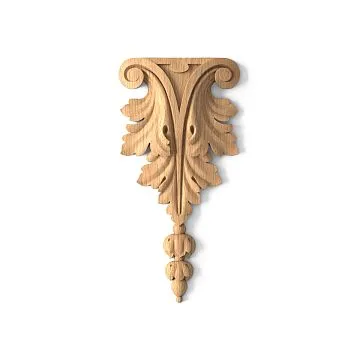
Carved Decorative Elements These are the hallmark of Russian style. Window casings, cornices, gables, balustrades create that unique pattern which makes each home distinctive.
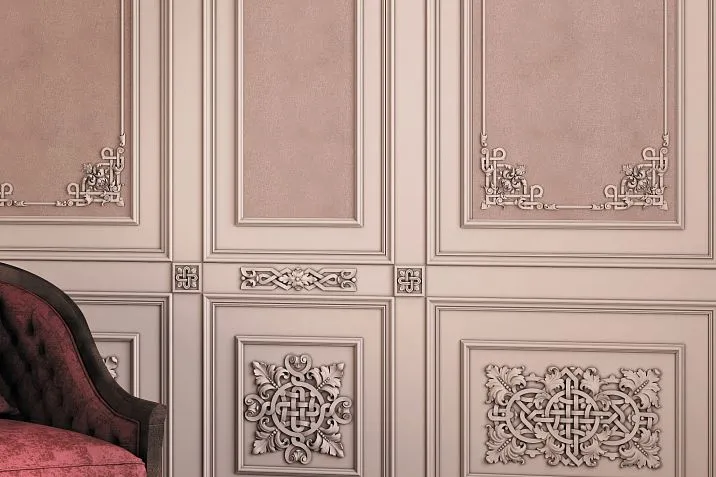
Modern technologies allow reproducing the most complex ornaments with jewel-like precision. Carved appliqués in Russian style can adorn furniture, doors, walls, creating rich play of light and shadow and adding depth and dimension to the interior.
The symbolism of carved elements has deep roots: solar signs protected against evil forces, plant ornaments attracted prosperity, geometric patterns symbolized order and harmony.
Architectural details: creating scale and proportions
Capitals in Russian Style and columns help organize space, create proper proportions, and highlight functional zones. Even in a small room, a properly placed column can dramatically alter the perception of space.
Brackets Russian style not only perform a practical function of supporting shelves, cornices, or balconies, but also become expressive decorative elements. Their elegant forms, executed in the traditions of Russian architecture, add aristocracy and refinement to the interior.
Functional decor: beauty in practicality
Russian masters always knew how to combine beauty with practicality. Carved boxes and chests served for storage, decorated tableware — for serving, painted spinning wheels — for needlework.
This principle remains relevant in modern interiors in Russian style. Beautiful rooms in wooden houses are created not only through decorative elements, but also thanks to thoughtful organization of functional items.
Furniture in Russian style: traditions and modernity
Furniture is the foundation of any interior, and Russian style imposes special requirements on it. It must not only be beautiful but also sturdy, functional, and capable of serving for decades.
Principles of furniture selection
Furniture in Russian interiors was traditionally made from solid wood — oak, pine, birch, and linden. Each type had its specific use: oak for sturdy furniture (tables, cabinets, benches), pine for everyday items, birch and linden for decorative elements.
Furniture forms were characterized by simplicity and functionality. Straight lines, clear geometric shapes, minimal decorative excesses — these are the principles of traditional Russian furniture. Decoration focused on individual elements — carved chair backs, appliqués on cabinet fronts, handles, and hardware.
Modern Interpretation of Traditions
Modern furniture for Russian style interiors can significantly differ from historical samples in functionality while maintaining stylistic unity. Built-in cabinets, modular systems, modern materials — all of these can organically fit into the concept of Russian interiors.
It is important to adhere to the principles of material naturalness and restrained forms. Even the most modern furniture should appear as if it could have been in a traditional Russian izba.
Accent Items
Individual pieces of furniture can become true works of art. A carved commode adorned with traditional motifs, a painted cabinet in the Хохлома style, a wrought-iron bed with a wooden headboard — such items become focal points in the interior.
Textiles and Fabrics: Softness of the Russian Home
Textile decoration plays a key role in creating a cozy atmosphere in Russian interiors. Traditionally, natural materials — linen, cotton, wool — were used, which not only looked beautiful but also possessed practical advantages.
Traditional materials and techniques
Linen is the foundation of Russian textiles. Its natural texture, strength, and ability to improve with each wash made it indispensable for everyday use. Linen curtains, tablecloths, towels formed the basis of textile home decoration.
Domestic fabrics with traditional ornaments — stripes, checks, simple geometric patterns — were used to create runners, blankets, and cushions.
Embroidery was a special kind of art. Each region had its traditional motifs and techniques. Floral ornaments, birds, geometric patterns carried deep symbolic meanings.
Textile Color Palette
In Russian interior style, textiles should support the overall color concept. The base consists of natural shades of linen and cotton — from white to natural beige-gray.
Vivid accents are created by traditional colors of Russian crafts: red (from crimson to dark cherry), blue (from sky-blue to deep indigo), green (from grassy to dark emerald).
Modern solutions
In a modern Russian-style interior, both authentic historical fabrics reproduced using traditional techniques and modern materials styled to resemble traditional samples can be used.
It is important to adhere to the principle of naturalness — avoid synthetic materials with unnatural sheen or texture. Even modern fabrics should appear natural and organically fit into the concept of a wooden house.
Lighting: play of light and shadow
Proper lighting can dramatically change the perception of a Russian interior. Traditionally, Russian homes were lit by candles, rushlights, and kerosene lamps, creating soft, warm light with numerous shadows.
Principles of Lighting Organization
In Russian interior style, homes should avoid bright, uniform lighting. Preference is given to localized light sources that create cozy lighting zones.
A central chandelier can be made as a wrought-iron piece imitating candles or a wooden wheel with several lamps. It is important that it does not dominate the space but harmoniously fits into the overall concept.
Desk lamps, floor lamps, and wall sconces should have shades made of natural materials — fabric, paper, wood. The shapes of the fixtures can replicate traditional Russian motifs or be styled after historical samples.
Role of Natural Light
Large windows are a characteristic feature of a Russian home. They not only provided natural lighting but also created a connection with nature. In a modern Russian interior, windows should be as open as possible, and curtains should be light and not obstruct light penetration.
Traditional shutters not only protected against cold but also allowed regulating the amount of light. In modern conditions, their function can be performed by natural material blinds or heavy curtains.
Stove and Fireplace: The Heart of the Russian Home
No Russian home can be imagined without a stove or fireplace — a source of heat and the center of family life. Even in a modern home with central heating, a stove or fireplace remains an important interior element.
Traditional Russian Stove
The Russian stove was not only a source of heat but also a place for cooking, drying clothes, even as a sleeping place. Its massive forms, clad in tiles or simply whitewashed, dominated the interior of the izba.
In a modern home, a Russian stove can be replaced by a large fireplace clad in natural stone or tiles. It is important to preserve the sense of solidity and robustness characteristic of traditional Russian stoves.
Modern solutions
Electric and gas fireplaces allow you to create an imitation of a real fire without the complexities of a chimney and firewood preparation. They can be built into a wall or installed separately, styled to resemble a traditional Russian stove.
The fireplace cladding should harmonize with the overall interior style. Natural stone, brick, and tiles are traditional materials for decorating a hearth in the Russian style.
Practical tips for creating an interior
Creating an authentic Russian style in your home's interior requires attention to many details. Here are practical recommendations for those who have decided to bring this idea to life.
Space planning
Start by analyzing the existing space. A Russian interior looks best in spacious rooms with high ceilings, but it can also be adapted for smaller rooms.
Define functional zones: a place for family gatherings (a living room with a fireplace), dining area, workspace, and relaxation zone. Each zone should have its own lighting solution and decorative treatment.
Choosing main elements
Determine which elements will be the main focus of your interior. If the walls are wooden, the furniture can be simpler. If the walls are neutral, you can emphasize carved furniture and decorative elements.
Decorative Inserts can radically transform the appearance of ordinary furniture, turning it into works of Russian decorative art.
Implementation sequence
Start with the main elements — wall, ceiling, and floor finishes. Then move on to large furniture and architectural details. Decorative elements and textiles should be added last.
Do not try to implement the entire concept at once. The Russian style in interior design develops gradually; each element must find its place and harmoniously fit into the overall picture.
Regional characteristics of the Russian style
Russia is a vast country with diverse cultural traditions. The Russian interior style in a home can vary significantly depending on the region, reflecting local characteristics of climate, available materials, and cultural influences.
Northern Russian traditions
The North of Russia is renowned for its rich wooden architecture. Here, traditions have formed for creating spacious, solid interiors with abundant carved decoration. Characteristic features include high ceilings, large rooms, and robust beam structures.
The color palette tends toward natural wood tones with occasional bright accents. Furniture is substantial, sturdy, and designed to withstand long northern winters.
Middle Russian style
Central regions of Russia have developed a more refined aesthetic. Here, Russian interiors combine solidity with elegance, simplicity with decorative richness.
Characterized by the use of moderately complex carved elements, harmonious combinations of wood with other materials, and a more varied color palette.
Southern Russian motifs
In southern Russia, the Russian-style interior takes on a lighter, more airy character. Wide verandas, tall windows, abundant light and air — these are characteristic features of southern Russian interiors.
The color palette may include brighter, sunnier tones. Furniture is often lighter in construction but richly decorated.
Modern Trends and Innovations
The Russian style in home interiors continues to evolve, absorbing modern trends and adapting to new needs. Contemporary designers find remarkable ways to combine tradition with innovation.
Ecological Approach
Growing attention to ecology makes the Russian style especially relevant. Using natural materials, traditional woodworking techniques, and natural dyes meets modern requirements for healthy living environments.
Modern ecological technologies — air purification systems, "smart" materials, energy-saving solutions — can be organically integrated into traditional Russian interiors.
Technological Innovations
Smart home systems, modern multimedia equipment, innovative materials — all of these can find a place in a contemporary Russian interior without compromising its authenticity.
It is important to properly integrate technology, concealing it behind traditional facades or styling it after historical examples.
Minimalism in the Russian style
The modern trend toward minimalism is also reflected in the Russian style. A direction called 'Russian minimalism' emerges, where traditional elements are used more sparingly, creating concise yet expressive interiors.
Psychology of the Russian interior
The Russian style in home interiors has a special impact on a person's psyche. This is not accidental — for centuries, our ancestors created spaces that responded to deep psychological needs of humans.
Sense of security
Massive wooden walls, low ceilings, small windows of traditional Russian izbas created a sense of security and shelter from the outside world. In modern Russian interiors, this feeling is recreated through proper spatial zoning, use of warm materials and colors.
Connection with nature
The abundance of wood, natural materials, and natural motifs in decor creates a sense of unity with nature. This is especially important for modern urban dwellers, disconnected from the natural environment.
Cultural identity
Living in a home decorated in the Russian style, a person feels connected to cultural roots and the history of their people. This creates a sense of stability and intergenerational continuity.
Economic aspects of project implementation
Creating an interior in the Russian style may require significant investments, but these investments are repaid through longevity, universality, and growing popularity of the style.
Budget-friendly solutions
It is not necessary to completely rebuild a house to create a Russian interior. One can start with individual elements — carved appliqués on furniture, Russian-style textiles, a few characteristic accessories.
decorative inlays for furniture allow for a radical change in the appearance of ordinary furniture at minimal cost.
Average budget
With an average budget, one can implement more extensive projects — clad walls with wood, install a fireplace, order custom-made furniture. The main expenses will be for quality materials and masterwork.
Premium projects
Projects without budget constraints allow creating true masterpieces — with hand-carved wood, exclusive furniture, antique elements. Such interiors become works of art and family heirlooms.
Practical care recommendations
The Russian style in home interiors requires a special approach to care and maintenance. Natural materials require regular attention, but with proper care, they serve for decades.
Care for wooden elements
Wooden surfaces require regular treatment with protective compounds. The frequency of coating renewal depends on usage conditions, quality of initial treatment, and wood species.
Carved decorative elements require especially careful care. Dust from carved recesses is removed with soft brushes, and coating renewal is carried out taking into account the complexity of the relief.
Textiles and upholstered furniture
Natural fabrics require delicate care. Linen and cotton items can be washed, but with temperature control. Wool fabrics are better suited for dry cleaning.
Preventive maintenance
Regular inspection of all interior elements allows timely detection of problems and taking measures to resolve them. Special attention should be paid to joints, fasteners, and high-load zones.
Conclusion: Home as a Reflection of the Soul
The Russian style in home interiors is more than a design solution. It is a way of creating a space that reflects deep human psychological needs for beauty, harmony, and connection with cultural roots.
Each element of such an interior — from carved casings to handwoven rugs — carries a fragment of folk wisdom accumulated over centuries. Living in such a home, a person feels themselves as an heir to a great cultural tradition, a guardian of values passed down from generation to generation.
Creating an interior in the Russian style is a creative process requiring deep understanding of traditions, refined taste, and the ability to combine historical heritage with modern needs. It is an investment not only in the beauty of the home, but also in the spiritual well-being of the family.
In today's world, where individuality and authenticity are increasingly valued, the Russian style in home interiors becomes a way to stand out, emphasize one's cultural identity, and create a space that will be passed down to children and grandchildren as a tangible embodiment of family values and traditions.
For many years, the company STAVROS has specialized in creating interiors in the Russian style. Our collection includes thousands of decorative elements executed in the best traditions of Russian architecture. We combine deep knowledge of historical traditions with modern manufacturing technologies, creating items that will become ornaments of your home for many years. Choosing STAVROS means choosing quality, authenticity, and boundless love for Russian culture.