












































































Article Contents:
- Why Handles Matter More Than It Seems
- Materials 2026: From Classics to Innovations
- Wood — Living Natural Warmth
- Metal — Strength and Variety of Finishes
- Ceramic and Stone — Decorative Luxury
- Shapes and Constructions: Ergonomics Meets Aesthetics
- Hinges and Rails — Universal Classic
- Buttons and Handles — Compact Elegance
- Integrated Profiles and Hidden Systems
- Color and Finish: Visual Harmony for the Kitchen
- Monochrome and Contrast
- Metallic Accents
- Unusual Solutions
- Hygiene and Maintenance: The Practical Side of Choice
- Antibacterial coatings
- Easy to Clean
- Style and Compatibility with Interior Design
- Modern classicism
- Scandinavian minimalism
- Industrial loft
- Provence and Country Style
- Integration with the Overall Kitchen Concept
- Coordination with Other Furniture Elements
- Coordination with Household Appliances
- Role of Lighting
- Practicality for Different Kitchen Zones
- Upper cabinets
- Base Cabinets and Pull-Out Drawers
- Corner and Tall Modules
- Installation and Mounting: Technical Details
- Center-to-Center Distance
- Door Panel Thickness and Screw Length
- Marking Accuracy
- Ecological sustainability and sustainable production
- Natural materials
- Recycling and reuse
- Durability as a Form of Eco-Friendliness
- Budget and Price Segments
- Economy Class
- Mid-range segment
- Premium and Luxury
- Trends 2026: What Designers Choose
- Return to Tactility
- Asymmetry and Non-Standard Forms
- Mix of Materials
- Personalization
- Combination with Other Interior Elements
- Connection with Decorative Elements
- Coordination with Floor Elements
- Frequently Asked Questions
- Conclusion

The kitchen has long ceased to be merely utilitarian space — today it is the heart of the home, where meals are prepared, conversations take place, work is done, and guests are even received. And if previously the choice of hardware came down to the question 'to hold', then in 2026,Furniture Handlesbecome a full-fledged design element capable of transforming the interior without major renovation. Practicality, hygiene, and aesthetics — these three pillars form the modern approach to selecting hardware for kitchen facades.


Why Handles Matter More Than It Seems
Opening and closing cabinet doors dozens of times a day, we rarely think about how much even such a small detail as the shape and material of the handle affects our mood and comfort. An uncomfortable grip requires extra effort, a slippery surface irritates wet hands, and a bulky structure catches clothing and hinders free movement around the kitchen. Conversely, a well-chosenfurniture handleworks unnoticed, like an extension of the hand — it is pleasant to grasp, easy to clean, and serves for years without losing its appearance.
Designers of interiors have long known: it is precisely the details that create the character of a space. One can buy expensive premium facades, but cheap plastic hardware will instantly diminish the entire look. Conversely — even simple smooth doors will shine with nobility if complemented by stylishmatte handles for furniturewith quality surface treatment. Matte textures do not show fingerprints, look modern and restrained, combine beautifully with natural wood, stone, and metal.




Materials 2026: From Classic to Innovations
Our factory also produces:


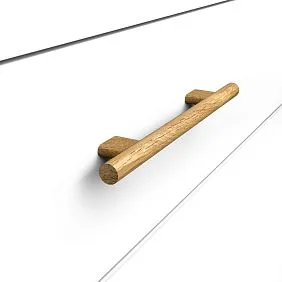

Wood — Living Warmth of Nature
Wooden handles are experiencing a true renaissance. In the era of total digitalization and synthetic materials, tactile contact with natural solid wood becomes almost therapeutic.Wooden furniture handleIt feels pleasant to the touch year-round — it does not chill in winter nor heat up in summer, possesses natural anti-static properties, and gracefully ages, acquiring a unique patina.
Modern technologies allow protecting wood from moisture, grease, and mechanical damage without losing its natural beauty. Oils with wax, water-based hard finishes, and thermo-treatment — all these methods make wooden hardware as practical as metallic, while preserving its ecological nature and visual warmth. Particularly striking are handles made from contrasting woods: dark walnut on light facades, whitewashed oak on graphite surfaces, red wood combined with brass inlays.
An interesting solution — combined models, where the wooden part serves as a base for metal or leather inlays. Such hybrid constructions combine the warmth of natural solid wood with industrial aesthetics, creating a stylish transition between classic and modern.
Get Consultation
Metal — Strength and Variety of Finishes
Stainless steel, brass, bronze, copper, aluminum — the palette of metallic handles is so wide that it allows realizing any design concept. In 2026, matte and satin finishes are especially in demand, looking noble and requiring no constant polishing. Matte black metal has become a new classic for minimalist kitchens, brass with patina — a choice for vintage lovers, and brushed bronze fits perfectly into the modern classic concept.
Practicality of metallichandles for cabinetsis unquestionable: they withstand intensive use, are easy to clean, resistant to temperature fluctuations and chemical exposure. Quality hardware made of stainless steel or brass serves for decades, retaining both functionality and appearance.
Powder coatings deserve special attention — a technology allowing to obtain a durable colored film on a metallic base. Graphite, anthracite, copper, gold tones — all this is accessible thanks to powder coating, which surpasses ordinary paint in resistance to abrasion and scratches.
Ceramics and Stone — Decorative Luxury
Ceramic handles with painted decoration, natural marble, artificial stone — these materials give the kitchen artistic flair and individuality. Of course, they require more careful handling than metal or wood, yet they create a unique visual accent. White ceramic buttons with blue underglaze painting in Gzhel or Delft porcelain style transform an ordinary set into an object of applied art.
Marble and granite handles combine perfectly with countertops made of the same material, creating visual unity in the space. Artificial stone based on quartz aggregate is cheaper than natural stone, yet does not compromise on strength and allows a more diverse color palette — from classic Carrara white marble to exotic green and red shades.
Shapes and Constructions: Ergonomics Meets Aesthetics
Hooks and Rails — Universal Classic
P-shaped and curved handles remain the most popular type of kitchen handles due to their convenience and functionality. The wide grip allows opening any door with any part of the palm, which is especially valuable when hands are occupied or dirty. The length of the handle varies from compact 96 mm to extended 400-500 mm rails that can run along the entire facade, emphasizing the horizontal lines of the cabinet.
Modern handles have moved far beyond standard office models: designers experiment with profile cross-sections (round, square, rectangular, oval), bend radius, and mounting methods. Asymmetric handles, where one side is higher than the other, and corner models installed at the junction of vertical and horizontal surfaces have emerged.
Thin, elegant rails 8-10 mm thick appear airy and suit light minimalist interiors, while heavy handles 20-30 mm in diameter create an impression of reliability and solidity. For Scandinavian style, handles made of light wood or metal with wooden inserts are typical; for loft style — rough black or brass constructions with rivets; for neoclassicism — elegant brass arcs with decorative rose sockets at the base.
Buttons and handles — compact elegance
Round, oval, square, multi-faceted — buttons come in endless varieties of shapes. Their advantage is minimal protrusion from the facade surface, making the kitchen safer and visually calmer. The downside is smaller gripping area, so buttons are better suited for light upper cabinet doors, while heavy lower cabinets should use handles or knobs.
Handles — an intermediate option between handles and buttons. They offer a comfortable grip but take up less width on the facade. Classic handles in the form of a loop on two bases, T-shaped models, and mushroom-style handles — each type solves its own task. For Provence-style kitchens, porcelain buttons with floral patterns are suitable; for high-tech — chrome hemispheres; for minimalism — flat black discs.
Integrated profiles and hidden systems
The trend for seamless facades without visible hardware continues to gain momentum. Instead of surface-mounted handles, recessed grooves are milled along the top or bottom edge of the door, into which fingers can be inserted to open. Such profiled handles are especially popular in premium German and Italian kitchens.
An alternative — push-to-open systems, where a light press on the facade activates a mechanism that pushes the door open by several millimeters. Electronic closers and dampers ensure smooth, silent closing. The downside of such solutions is higher cost and the need for periodic maintenance of mechanisms, while the plus is perfect linearity and futuristic aesthetics.
Color and finish: visual harmony of the kitchen
Monochrome and contrast
Black handles on white facades — a classic combination that never goes out of style. It creates clear graphic lines, emphasizes the geometry of the cabinet, and adds expressiveness. The reverse combination — white or light handles on dark doors — works more softly, creating an elegant minimalism.
A fully monochromatic solution, where hardware blends with facades in color, visually dissolving handles and making them almost invisible. This suits those who want a maximally calm interior without unnecessary accents. Grey handles on grey facades, white on white — this technique creates a sense of continuity and unity of surfaces.
Metallic accents
Gold, brass, copper, bronze — warm metallic tones add a touch of luxury and coziness to the kitchen. They pair beautifully with wooden elements, marble countertops, and ceramic backsplashes. Currently trending is matte, slightly aged, with a light patina — it looks noble and less flashy.
Cold metals — chrome, stainless steel, nickel — create a sense of freshness and cleanliness. They are ideal for modern kitchens with abundant glass, glossy, and technological materials. Shiny chrome handles reflect light, visually expanding the space, while matte steel gives the interior an industrial character.
Unusual solutions
Leather hinges instead of traditional handles, textile straps on buttons, colorful silicone caps — designers never tire of experimenting with textures. Such solutions make the kitchen more personalized, lively, and free from the sterility of standard cabinets. Leather handles are especially suitable for interiors with boho or scandi elements, where naturalness and tactile materials are valued.
Colored enamel finishes — another direction for those who are not afraid of bright accents. Emerald, sapphire, ruby handles turn kitchen cabinets into precious boxes. However, it's important to maintain moderation: if facades are already colored, choose neutral hardware, and conversely — on a restrained background, you can afford bright details.
Hygiene and maintenance: practical aspects of selection
Antibacterial coatings
In 2026, after pandemic years, hygiene issues remain relevant. Hardware manufacturers actively introduce antibacterial technologies: silver ions in coatings, copper alloys with natural antimicrobial properties, special lacquers with biocidal additives.to buy a furniture handleWith antibacterial effect — means protecting the family from bacterial spread through surfaces touched several times a day.
Copper and brass have a natural ability to destroy most pathogens within several hours. Studies show that microorganisms die significantly faster on copper surfaces than on stainless steel or plastic. Therefore, brass handles are not only beautiful but also functional from a sanitary standpoint.
Ease of cleaning
Smooth matte surfaces are easier to clean than textured or relief surfaces. Grease, soot, water splashes — all are inevitable companions of kitchen life, and hardware must be easily wiped clean with a damp cloth without using aggressive agents.Matte furniture handlesHardware made of stainless steel or aluminum with powder coating is sufficient to wipe with a soft sponge and soapy water — and they look brand new again.
Wooden handles coated with hard oil or lacquer are also low-maintenance. The main thing is not to use abrasive agents or stiff brushes that may damage the protective layer. Periodic treatment with wax or special wood oil extends service life and preserves the beauty of the texture.
Ceramic and stone handles require more delicate handling — they cannot be rubbed hard to avoid scratching the glaze or polish. But with proper care, they last for decades without losing their decorative qualities.
Style and compatibility with interior
Modern classic
For modern classic kitchens, characterized by restrained forms, quality materials, and attention to detail, brass or bronze handles with a light patina, wooden models of noble species, elegant simple-profiled handles are suitable. It is important to avoid excessive ornamentation — no scrolls, rococo, or baroque excesses, only clean geometry and flawless execution.
Color palette of hardware for modern classic — matte gold, warm brass, dark bronze, graphite metal. These shades harmonize beautifully with white, gray, beige facades, marble countertops, and wooden elements.Furniture HandlesThey become elegant accents that unify all interior components.
Scandinavian minimalism
Light wood, white surfaces, simple lines — the hallmark of Scandinavian style. Handles here should be highly functional and discreet. Ideal choices include thin matte steel or aluminum hinges, light oak or ash wooden rails, and natural-toned leather hinges.
Scandinavian philosophy values honesty of materials and the absence of unnecessary decoration.Buy kitchen handlesIn this style, it means finding a balance between simplicity and quality — no plastic or imitations, only natural materials with minimal processing.
Industrial loft
The rough aesthetic of industrial spaces requires corresponding hardware: black metal, aged brass, oxidized copper, even rust as a decorative element. Handles can be bulky, with visible fasteners, rivets, or screws — everything that emphasizes an industrial character.
P-shaped hinges from thick rods, handles from plumbing pipes, leather hinges with metal eyelets are popular. Such hardware turns the kitchen into an art object, where functionality and brutality merge into one whole.
Provence and country
Romantic styles of French countryside and American ranch favor ceramic knobs with painted designs, brass handles with botanical motifs, wooden handles with carving. Colors — pastel, muted: lavender, mint, cream, terracotta.
Such handles often become independent decorative elements of the facade, so they are chosen larger and more decorative than in minimalist styles. Harmony with other elements — textiles, tableware, lighting — is important to make the kitchen look cohesive and cozy.
Integration with the overall kitchen concept
Connection with other furniture elements
Thoughtful design implies that handles on kitchen cabinets match the hardware of tables, chairs, buffets. If the dining area has a table on wooden legs, it makes sense to choose wooden or combined handles for the cabinet set. Ifkitchen table legsmade of metal with black finish, cabinet hardware in the same color range creates visual unity.
Compatibility withfurniture legs and supportssince these elements are on the same visual plane — at eye and hand level. Material contrast is permissible, but the style must match: ultra-modern chrome handles won’t suit carved wooden supports, and ornate ceramic knobs won’t suit minimalist metal legs.
Coordination with household appliances
Handles on ovens, refrigerators, dishwashers — another element to consider. Modern built-in appliances often have metallic hardware, and if it contrasts with cabinet handles, it creates visual dissonance. Either choose appliances with panel installation options to match cabinet facade colors (so their handles are hidden), or select cabinet hardware to match appliance handles.
For example, if the oven and cooktop have chrome control elements, consider chrome or steel handles for the entire cabinet set. If the appliance has a black body with black handles — logically continue this theme in cabinet hardware.
Role of lighting
Reflective properties of materials change depending on lighting. Glossy chrome beautifully reflects highlights under bright overhead lighting, but may glare and irritate. Matte surfaces react more softly to light, creating a calm atmosphere. Brass and copper warm up under incandescent and warm-spectrum LED lights, acquiring a golden glow.
When planning a kitchen, it’s important to evaluate how the hardware will look under different lighting scenarios — daylight, evening, task (over countertops), decorative (under backsplash or shelves). Sometimes it’s worth installing sample pieces and observing them over several days before making a final decision.
Practicality for different kitchen zones
Upper cabinets
Here, lighter and more elegant hardware can be used — knobs, small hinges, thin rails. Upper cabinet doors are usually lighter and opened less frequently and with less force. It’s important that the handle doesn’t protrude too much at eye level — this creates a risk of injury and visually clutter the space.
Vertical hinges are convenient for tall wall-mounted cabinets, allowing grip at any height. If ceilings are high, use a push-to-open system for the topmost doors, which are hard to reach — a light press will extend the facade, allowing it to be opened calmly.
Lower cabinets and drawers
The lower part of the cabinet set experiences maximum loads — here tableware, food, heavy pots and pans are stored. Hardware must be strong and easy to grip. Wide P-shaped hinges, robust handles, integrated profiles — optimal choice.
For drawers, horizontal rails spanning the full width of the facade are often used — this distributes load evenly and allows smooth drawer pull. If the drawer is deep and heavy, a single handle in the middle may be insufficient — better to install two handles at the edges or one long handle across the entire width.
Corner and tall modules
Corner cabinets and drawers require special attention to handle placement. On hinged corner doors, the handle is placed closer to the free edge to avoid hitting adjacent facades when opening. For carousel and pull-out systems, recessed handles or profiles are convenient, as they do not interfere with the mechanism's movement.
Installation and mounting: technical nuances
Installation and mounting: technical nuances
Center-to-center distance
For buttons and single-point handles, there is no problem — just one hole is needed, which can be filled with putty and repainted if necessary. But if switching from buttons to brackets or vice versa, some minor repair work is required.
For buttons and single-point handles, there are no issues — just one hole is sufficient, which can be filled with putty and repainted if needed. But if transitioning from buttons to hooks or vice versa, one should be prepared for minor repairs.
Standard kitchen facade thickness is 16–19 mm, but heavier variants are also encountered, especially in classic cabinets. Mounting screws must match the thickness — too long screws will hit the back wall of the cabinet or damage the interior finish, while too short screws will not provide secure fixation.
Standard kitchen facade thickness is 16–19 mm, though heavier variants are also encountered, especially in classic cabinets. Mounting screws must match the thickness — too long screws will hit the back wall of the cabinet or damage the interior finish, while too short screws will not provide secure fastening.
When purchasing hardware, always confirm the kit contents: some manufacturers include screws of different lengths, others only provide standard ones, requiring additional purchase of screws. For framed facades, where the handle is mounted on a wide frame, longer screws or special adapters may be needed.
Incorrectly installed handles are immediately noticeable and spoil the impression even of the most expensive kitchen. Marking must be done with millimeter precision, using a level, ruler, and center punch for drilling. Ideally, create a cardboard or thin plastic template with drill holes, which is applied to each facade to ensure uniformity.
A poorly installed handle is immediately noticeable and spoils the impression even of the most expensive kitchen. Marking must be done with millimeter precision, using a level, ruler, and center punch to drill the hole. Ideally, create a cardboard or thin plastic template with drill holes, which is applied to each facade to ensure uniformity.
Handle height — a question of ergonomics and aesthetics. On upper cabinets, handles are usually placed at the bottom of the door (to pull down when opening), on lower cabinets — at the top (to pull up). But there are alternative options: for example, on tall drawers, it is more convenient to place the handle at waist level, regardless of whether it is an upper or lower section.
Wood, leather, natural stone, ceramic — materials that do not harm the environment during production and disposal.
Natural materials
Wood, leather, natural stone, ceramic — materials that do not harm the environment during production and disposal.Wooden furniture handlesLeather, as a by-product of the meat industry, can also be considered an eco-friendly material provided that tanning is done using plant-based, not toxic chromium methods. Ceramic and stone are absolutely inert materials, not releasing harmful substances during use.
Leather, as a by-product of the meat industry, can also be considered an eco-friendly material provided that tanning is done using plant-based, not toxic chromium methods. Ceramic and stone are absolutely inert materials that do not emit harmful substances during use.
Recycling and reuse
Metallic hardware is almost entirely recyclable. Aluminum, steel, brass, copper — all of these are valuable secondary raw materials that can be infinitely recycled without loss of quality. Buying metallic handles is a choice in favor of a closed-loop economy.
Wooden elements can be reused in other projects — for example, turning old handles into hallway hooks, mug holders, or decorative elements. This aligns with the philosophy of upcycling — transforming unwanted items into new useful objects.
Durability as a form of eco-friendliness
The most eco-friendly product is one that serves for decades without needing replacement. Quality hardware made of solid wood or stainless steel can outlast multiple cabinets, transferring from facade to facade during kitchen updates. Investing in quality hardware is not only about comfort and aesthetics, but also responsible consumption.Furniture Handles for CabinetsThis is not only a question of comfort and aesthetics, but also responsible consumption.
Budget and price segments
Economy class
For temporary solutions or rental apartments, this option is acceptable. But if this is about your own home and plans to live there for a long time, consider more durable materials.
This option is acceptable for temporary solutions or rental apartments. But if this is about your own home and plans to live there for a long time, it is worth considering higher-quality materials.
Mid-Range Segment
Prices range from 300 to 1500 rubles per unit. This is the optimal price-to-quality ratio: such hardware will last for years, looks respectable, is easy to install, and requires no special care.
Manufacturers in the mid-range segment often offer a wide variety of designs and finishes, allowing you to realize almost any stylistic concept without excessive spending.
Premium and luxury
Designer hardware made of exotic solid wood, forged bronze or brass with hand-applied patina, natural marble or crystal can cost from 3000 to 15,000 rubles and more per handle. These are handmade or limited-edition items with unique design and flawless quality.
Such handles turn the kitchen into a work of art. They are suitable for luxury interiors, where every detail is thoughtfully designed and made from the best materials. For a regular apartment, this is excessive, but in a country house or designer project — fully justified.
Trends 2026: What Designers Are Choosing
Return to Tactility
After years of dominance by smooth, glossy surfaces, people have grown tired of them and are craving textures. Hardware with noticeable relief — ribbed, sharkskin, wood, or stone textures — is becoming increasingly popular. Such handles are pleasant to hold, creating tactile variety and visual interest.
Asymmetry and Unconventional Shapes
Strict symmetry is giving way to more free compositions. Hooks of different lengths on adjacent doors, vertical placement of horizontal handles, diagonal installation — all these are techniques that enliven facades and make the kitchen unique.
Mix of Materials
Combined handles — wood + metal, leather + brass, stone + steel — allow combining several textures and colors in one element. This simplifies creating complex interiors where disparate materials need to be unified into a cohesive whole.
Personalization
More and more manufacturers offer customization options: choice of finish color, engraving of initials, production based on individual sketches.Buy kitchen handlesWith a monogram or unique pattern — a way to make the kitchen truly your own, unlike standard cabinets.
Combination with other interior elements
Coordination with Decorative Elements
in the interiordecorative polyurethane elements, woodenMoldingsorMoldingsHardware should support the overall style. For classic interiors with rich decoration, ornate brass or bronze handles are suitable; for modern spaces with minimalist moldings — simple geometric shapes.
Coordination with Floor Elements
Wooden baseboardorwooden planks on the wall— elements often used in modern kitchens for visual zoning and decoration. Wooden hardware from the same species or similar shade creates a harmonious unity among all horizontal and vertical lines.
If a dining table with woodenlegs of the tableor usedfurniture legsfor the island section of the cabinet, wooden handles will support this theme, tying the furniture into a unified ensemble.
Frequently asked questions
How to Choose the Right Handle Size for a Door?
The size should match the door's dimensions: for narrow facades up to 300 mm, buttons or short hooks 96-128 mm are suitable; for standard cabinets 400-600 mm — handles 128-192 mm; for wide modules 800+ mm — long rails 256-320 mm and more. Visually, the handle should occupy approximately one-third of the facade's width to appear proportionate.
Can Different Types of Handles Be Mixed on One Kitchen?
Yes, and this is even encouraged in modern design. For example, use buttons on upper cabinets, hooks on lower cabinets, and integrated profiles on pull-out drawers. The key is to maintain consistency in material or color to avoid visual chaos.
How Often Should Handles Be Replaced?
Quality hardware lasts for decades without replacement. But if you want to refresh the interior without a full renovation, replacing handles is a simple and effective method. You can do it as often as you like — even once a year — since the choice is vast, and the installation process takes just a couple of hours.
What to Do If Handles Have Loosened?
Usually, the issue is with loose screws — tighten them with a screwdriver. If the screw thread in the facade has broken, use thicker screws, fill the hole with epoxy resin or a wooden plug, and drill again. In the worst case — move the handle a few centimeters and patch the old holes with putty.
Which Handles Get Less Dirty?
Matte surfaces show fewer fingerprints than glossy ones. Dark colors are prone to dust but hide grease stains less. The optimal choice — matte stainless steel, dark bronze, or black metal. Wooden handles with oil finish also hide dirt well.
Should You Choose Handles from the Same Brand as the Cabinet?
Not necessarily. Many kitchen manufacturers use standard hardware from third-party companies. You can choose handles independently, as long as they match in style, size, and mounting method. Sometimes replacing factory hardware with more interesting options significantly improves the overall kitchen impression.
How to care for wooden handles?
Wipe with a soft, damp cloth, avoid aggressive cleaning agents and abrasives. Once a year, treat with wood oil or wax — this refreshes the finish and protects against moisture. If scratches appear — lightly sand with fine-grit sandpaper and reapply oil.
Which handles are suitable for a kitchen with children?
Safe, without sharp corners and protruding elements. Brackets and integrated profiles are preferable over buttons — they are harder to catch on clothing. Materials — durable and hygienic, easy to clean. It's better to avoid fragile ceramics and glass — children might accidentally break them.
Can handles be installed by yourself?
Yes, it is one of the simplest operations during kitchen assembly. You will need: a drill or screwdriver, a wood drill bit of the required diameter (usually 4-5 mm), a ruler, a pencil, and a level. Accuracy of marking is crucial — the rest is elementary. When installing in bulk, it's convenient to make a template for uniformity.
Which is more important — beauty or convenience?
Ideally — a balance of both qualities. The most beautiful handle that is inconvenient to use will annoy you daily. Conversely — functional but ugly hardware will spoil the impression of an expensive set. The modern market offers enough options to find both aesthetic and ergonomic solutions.
Conclusion
Choosing handles for kitchen furniture in 2026 is a balance between practicality, hygiene, and style. Modern materials and technologies allow creating hardware that lasts for decades, is easy to clean, and still looks current. From minimalist integrated profiles to decorative ceramic buttons, from matte stainless steel to warm wood — everyone can find a solution matching their taste and lifestyle.
Do not underestimate the impact of this small detail on the overall perception of the kitchen. Thoughtfully selected hardware unifies all interior elements, highlights the character of the space, and makes it convenient and pleasant for daily use.Buy furniture handleshigh quality — means investing in comfort and beauty for many years.
STAVROS company offers a wide range of furniture hardware made from natural materials: handcrafted wooden handles from solid oak, ash, beech, combined models with metal elements, as well as a full range of complementary products —furniture legstodecorative elementsEach item undergoes careful quality control, ensuring durability and flawless appearance. By contacting professionals with years of experience, you receive not just a product, but a comprehensive solution for creating your dream kitchen — functional, hygienic, and stylish.


