












































































Article Contents:
- Functional zoning: each room lives its own life
- Kitchen: territory of increased demands
- Conditions of use
- Ergonomics and Size
- Style and Aesthetics
- Bedroom: territory of peace and comfort
- Different priorities
- Decorativeness and individuality
- Tactile comfort
- Living room: balance of aesthetics and functionality
- Representative space
- Stylistic Diversity
- Bathroom: Moisture Resistance Above All
- Extreme humidity
- Style and compactness
- Entryway: First Impression
- Intensive use
- Style and practicality
- Study: solidity and functionality
- Work atmosphere
- Ergonomics for frequent use
- Children's room: safety and fun
- Special requirements
- Child's growth and ergonomics
- Psychology of color and shape: how hardware affects perception
- Color solutions for different rooms
- Form and style
- How to properly combine different hardware in one apartment
- Common stylistic thread
- Smooth transitions between zones
- Accents and dominants
- Practical Recommendations for Selection
- Analysis of each room's needs
- Testing and samples
- Price and quality balance
- Mistakes when choosing hardware for different rooms
- Uniformity for the sake of economy
- Ignoring operating conditions
- Mismatched Scale
- Stylistic Inconsistency
- Trends in furniture hardware: what's relevant
- Natural materials
- Minimalist forms
- Black matte metal
- Combined Solutions
- Frequently Asked Questions
- Can the same handles be used throughout the entire apartment?
- What handles are best for the kitchen?
- Can wooden handles be installed in the bathroom?
- How to choose the color of handles?
- How much do quality designer handles cost?
- Can different styles of hardware be mixed?
- How to care for handles in different rooms?
- Do handles need to be changed when replacing furniture?
- STAVROS Company: expert in furniture hardware

Is it worth installing the same handles on all furniture in the apartment? This question seems simple only at first glance. Many believe that uniform hardware will create a sense of interior integrity, but reality turns out to be much more complex and interesting.Designer furniture handles— is not a universal element that fits everywhere equally. Each room in the apartment has its own function, atmosphere, operating conditions, and the hardware must correspond to all these features. Let's figure out why handles for the kitchen and bedroom should be different, and how to correctly select hardware for each space.


Functional zoning: each room lives its own life
Modern housing is a complex system of spaces, each of which plays a specific role. The kitchen is a place of active activity, high temperatures, humidity, and intensive use. The bedroom is a territory of rest, tranquility, and intimacy. The living room is a zone for communication, receiving guests, and family evenings. The hallway is the first impression, a transit zone between the outside world and home comfort.
Each of these spaces imposes its own requirements on furniture and, accordingly, on hardware. Ignoring these differences means creating inconveniences in use, accelerating wear, and depriving the interior of individuality.
Uniform hardware throughout the apartment looks boring, faceless, as if the interior is assembled from a template, without considering the real needs of the residents. On the contrary, a thoughtful approach, where handles are selected for the specific conditions of each room, creates a sense of thoughtfulness, attention to detail, and professionalism in design.




Kitchen: territory of increased demands
Our factory also produces:


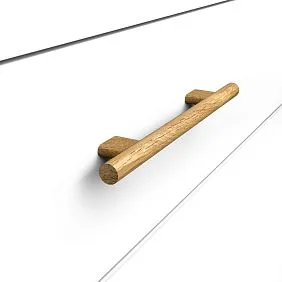

Conditions of use
Kitchen furniture operates in extreme conditions. Handles here are opened dozens of times a day, exposed to steam, grease splashes, moisture, cleaning agents, and temperature fluctuations. This requires special qualities from the hardware: strength, corrosion resistance, ease of cleaning.
Designer furniture handles, intended for the kitchen, should be practical. Smooth surfaces without complex reliefs where dirt can accumulate. Materials that are not afraid of moisture — stainless steel, aluminum, specially treated wood with a protective coating.
Wooden handles for the kitchen must be coated with oil or varnish, creating a water-repellent layer. Metal ones should have an anti-corrosion coating — chrome, nickel, powder coating. Otherwise, the hardware will quickly lose its appearance, become stained, and start to rust.
Get Consultation
Ergonomics and size
Kitchen fronts are usually standardized: module widths of 300, 400, 600, 800 millimeters. A corresponding handle is selected for each size. For narrow cabinets and drawers, compact knobs or short brackets are used. For wide fronts — long horizontal rails, providing a convenient grip and even load distribution.
Bracket handles are the most popular option for the kitchen. They are ergonomic, reliable due to two-point fastening, and easy to clean. The bracket length should be proportional to the front width: a tiny handle looks ridiculous on a 600-millimeter module, just as a giant rail looks out of place on a narrow door.
It is important that the handle is comfortable to grip: thick enough not to dig into the fingers, but not too massive. Smooth curves without sharp corners. The distance from the front surface to the handle should allow fingers to slide in freely.
Style and aesthetics
The kitchen is often the center of the home, a place where the family spends a significant amount of time. The style of the kitchen sets the tone for the entire dwelling. A modern minimalist kitchen requires corresponding hardware: concise forms, metal surfaces, strict geometry.
A classic kitchen harmonizes with more decorative handles: brass with patina, bronze, carved wooden ones. Scandinavian style implies natural materials, simple forms, light tones — wooden handles in natural shades will perfectly fit into such an interior.
It is important to coordinate the color and material of the handles with the rest of the kitchen hardware: hinges, opening systems, rails, hooks. Unity of style creates harmony, inconsistency creates visual chaos.
Bedroom: territory of peace and comfort
Different priorities
The bedroom is a space with completely different tasks. Extreme practicality of kitchen hardware is not needed here. Instead, aesthetics, tactile sensations, and creating an atmosphere of coziness and relaxation are important.
Bedroom handles are opened less frequently and are not exposed to aggressive influences. This allows the use of more decorative, elegant models that would quickly lose their appearance or prove impractical in the kitchen.
Wood, leather, ceramics, aged brass — materials that reveal their full beauty in the bedroom. Pleasant to the touch, warm, creating a sense of home comfort. Metal can be not shiny, but matte, patinated, with vintage effects.
Decorative appeal and individuality
Designer furniture for an apartmentfor the bedroom is often chosen with particular care, as it is an intimate space reflecting the owner's personality. Handles here can be more intricate, decorative, and unusual.
Carved wooden handles, painted ceramic ones, brass with ornamentation — all are appropriate in the bedroom, where there are no strict requirements for practicality. The shape can be asymmetrical, custom-designed, exclusive.
The color of the hardware is selected to match the overall palette of the bedroom. If the interior is based on pastel tones, handles can be light and delicate. If the bedroom is decorated in dark, rich colors, the hardware can be contrasting or, conversely, blend in with the cabinet fronts.
Tactile Comfort
In the bedroom, tactile sensations are important. Touching the handle should be pleasant, warm, and soothing. Wood possesses this quality fully: it is alive, warm, and doesn't chill the hand like metal.
The shape of a bedroom handle can be more rounded, streamlined, without aggressive corners. The size — moderate, not too large, but not too small. It is important that the handle harmonizes with the size of the furniture: a tiny knob will get lost on a massive wardrobe, a huge pull will look absurd on an elegant chest of drawers.
Living room: a balance of aesthetics and functionality
A representative space
The living room is the face of the home, a place for receiving guests, family gatherings, and showcasing the owners' taste. Furniture hardware here should be of high quality, stylish, yet practical enough for daily use.
Operating conditions in the living room are moderate: there is no kitchen humidity and grime, but the intensity of use is not as low as in the bedroom. Handles are opened regularly, but not ten times an hour.
This allows for choosing hardware based on criteria of aesthetics, style, and conformity to the overall design.Modern designer furniturein the living room often becomes a central element of the interior, and handles should highlight its merits.
Stylistic diversity
In the living room, you can afford to experiment with shapes, materials, and colors. If the interior is eclectic, the hardware can be diverse — the main thing is that it is united by a common concept.
Storage cabinets can have simple, concise handles. The central chest of drawers or display cabinet — more decorative, attention-grabbing. The TV stand — neutral, not distracting from the screen.
Metal handles in the living room can be shiny, polished — there is no risk of them quickly tarnishing from moisture and dirt. Wooden ones — in any finish, from natural oil to bright paint.
Bathroom: moisture resistance is paramount
Extreme humidity
The bathroom is a room with constant high humidity, temperature fluctuations, and contact with water and cleaning agents. Hardware here must be maximally moisture-resistant, otherwise it will quickly become covered in rust, mold, and lose its appearance.
The best choice for the bathroom is stainless steel, chrome-plated brass, specially treated aluminum. Wooden handles can be used, but only with a high-quality protective coating — multi-layer varnish or water-repellent oil.
The shape of bathroom handles is preferably simple, smooth, without complex reliefs where moisture can accumulate and fungus can develop. Ease of cleaning is a key criterion.
Style and compactness
Bathrooms are often small in size, so the furniture here is compact, and the hardware should match the scale. Small, neat handles, not protruding too far from the cabinet front surface, so as not to hinder movement in a tight space.
Stylistically, a bathroom can be very different: from classic luxury to minimalist austerity. Handles are selected accordingly. Chrome modern pulls for minimalism, brass vintage knobs for classic style, matte black for industrial style.
Entryway: first impression
Intensive use
The hallway is a transit zone used by everyone, several times a day. Wardrobes for clothes, shoe cabinets, chests of drawers are opened frequently, sometimes in a hurry, not always with clean hands.
Hardware here must be durable, reliable, and easy to clean. No fragile decorative elements that can break from a sharp tug. Simple, ergonomic shapes, convenient for a quick grip.
The preferred material is metal or coated wood. Color — non-marking: dark, gray, bronze. Light-colored hardware in the hallway will quickly get dirty and lose its appearance.
Style and practicality
The hallway sets the tone for the entire apartment; it's the first thing visitors see upon entering. Therefore, the hardware should be stylish, high-quality, creating a good impression. But at the same time — maximally practical.
Pull handles are the optimal choice for the hallway: reliable, convenient, universal. Length — medium, not too small and not excessively large. Shape — classic, not ornate.
Study: solidity and functionality
Work atmosphere
A home office or work area requires a special approach. Concentration, productivity, and a solid environment are important here. Hardware should match the status of the room: high-quality, restrained, not distracting from work.
Designer furniture handlesIn the office, they can be wooden — this emphasizes status, creates a sense of solidity, respectability. Solid oak, walnut, beech — noble materials associated with reliability and tradition.
Metal handles are also appropriate, but not shiny, rather matte, restrained. Patinated brass, bronze, dark steel. Shape — classic, without excess.
Ergonomics for frequent use
In the office, desk drawers, document cabinets are opened frequently, multiple times during the workday. Handles should be comfortable, ergonomic, not causing fatigue with frequent use.
Size — medium, shape — convenient for gripping. No overly thin brackets that dig into fingers, no overly small buttons that are awkward to grasp.
Children's room: safety and fun
Special Requirements
A children's room is a space with specific requirements. Safety is paramount here: no sharp corners, protruding elements, fragile parts that a child could break or injure themselves on.
Handles for a children's room should be durable, well-secured, without small removable parts. Shape — streamlined, without aggressive corners. Material — eco-friendly, safe.
Color can be bright, cheerful, matching the children's atmosphere. Wooden handles can be painted in bright colors, metal ones can be chosen with colored coating.
Child's height and ergonomics
It's important to consider that the child is growing, and ergonomics change. Handles on high cabinets should be convenient for adults, on low chests and dressers — accessible for the child.
Handle size is preferably medium: not too large, but not tiny buttons either, which are awkward for a child's hand to grasp. Shape — simple, understandable.
Psychology of color and shape: how hardware influences perception
Color solutions for different rooms
The color of hardware affects the overall impression of the interior. In the kitchen, where cleanliness and freshness are important, light metallic shades are good — chrome, steel, silver. In the bedroom, where warmth and coziness are needed, golden, bronze, natural wooden tones are appropriate.
The living room allows for experiments: black handles create contrast and graphic quality, gold — luxury, wooden — naturalness. The bathroom requires restraint: chrome, white metal, light wood with protective coating.
Shape and style
Round button handles are universal, suitable almost everywhere, create a uniform rhythm on facades. Horizontal brackets make furniture visually wider, more squat. Vertical ones — elongate, add dynamism.
Asymmetrical authorial shapes attract attention, become an accent. They are appropriate in the living room, bedroom, but not in the kitchen, where practicality and ease of cleaning are important.
How to correctly combine different hardware in one apartment
Common stylistic thread
Different handles in different rooms — this does not mean chaos. There should be a common stylistic concept that unites all spaces. This could be a single material (e.g., wood in all rooms, but different shapes), a single color (black metal everywhere, but different designs) or a single style (minimalism, but adapted to the specifics of each room).
Designer furniture for an apartmentIt should create a sense of integrity, but not monotony. Variety in details with unity of the overall concept — that is the formula for a harmonious interior.
Smooth transitions between zones
If the living room and kitchen are combined into a studio, it's important to create a visual transition between zones. You can use different but matching handles: in the kitchen — practical metal brackets, in the living room — wooden ones of the same color tone.
Between the bedroom and dressing room, you can apply the same principle: in the bedroom more decorative handles, in the dressing room more functional ones, but from the same material.
Accents and dominants
In each room, you can highlight accent furniture that will receive more decorative, noticeable hardware. In the living room, this could be a central chest of drawers, in the bedroom — a dressing table, in the kitchen — an island or bar counter.
The remaining furniture is equipped with simpler, neutral handles that support the overall style but do not compete with the accent.
Practical Recommendations for Selection
Analysis of the needs of each room
Before buying hardware, make a list of all rooms and furniture in them. Analyze operating conditions, frequency of use, interior style, color scheme.
For the kitchen, write down the dimensions of all fronts to select handles of appropriate length. For the bedroom, determine the desired level of decorativeness. For the bathroom, check the moisture resistance of materials.
Testing and samples
If possible, order handle samples before purchasing the entire batch. See how they look in reality, hold them in your hands, evaluate the tactile sensations. Attach them to the fronts, assess proportions, color combinations.
Some manufacturers, for example, the company STAVROS, offer the possibility of ordering samples, which greatly simplifies the selection.
Balance of price and quality
Furniture hardware— a long-term investment. Cheap handles will quickly lose their appearance, break, and require replacement. Quality hardware lasts for decades, preserving functionality and aesthetics.
You don't have to buy the most expensive exclusive models, but you shouldn't skimp on quality either. The optimal choice is proven manufacturers using quality materials and modern production technologies.
Mistakes when choosing hardware for different rooms
Uniformity for the sake of economy
The most common mistake is buying identical handles for the entire apartment to save time and money. This leads to hardware being impractical in some places, stylistically inappropriate in others, and quickly wearing out elsewhere.
It's better to spend time on proper selection for each room than to redo and replace later.
Ignoring usage conditions
Using decorative but impractical handles in the kitchen is a typical mistake. Complex relief quickly gets clogged with grease, wooden handles without protective coating swell from moisture, metal ones without anti-corrosion treatment rust.
It is important to consider the actual conditions in which the hardware will operate and choose appropriate materials and shapes.
Mismatch in scale
Large handles on small fronts, small knobs on large doors — a violation of proportions makes furniture look ridiculous. The size of the handle should correspond to the size of the element on which it is installed.
Stylistic inconsistency
Completely different style handles in different rooms without a common concept create visual chaos. It is important to have a common thread that unites all rooms: material, color, style, proportions.
Trends in furniture hardware: what's relevant
Natural materials
Eco-friendliness is the main trend of recent years. Wooden handles made of solid oak, beech, ash are becoming increasingly popular. They fit into eco-style, Scandinavian design, Japandi, minimalism.
Minimalist forms
Simplification, rejection of unnecessary decoration — a trend that has also affected furniture hardware. Simple geometric shapes, clean lines, absence of extravagance.
Black matte metal
Black matte handles are a hit of recent seasons. They create graphic quality, contrast, emphasize the modernity of the interior. Suitable for the kitchen, bathroom, living room, but less organic in the bedroom, where warmth is important.
Combined Solutions
Combining different materials in one handle — wood with metal, leather with brass — is an interesting direction that allows creating unique, author's products.
Frequently asked questions
Is it possible to use the same handles throughout the entire apartment?
Technically possible, but not advisable. Different rooms require different hardware based on operating conditions, ergonomics, style. Uniformity creates a boring, template interior and can be impractical.
What handles are best for the kitchen?
For the kitchen, bracket handles made of stainless steel or aluminum, or wooden ones with protective coating are optimal. Shape — smooth, without complex relief. Size — corresponding to the width of the front.
Is it possible to install wooden handles in the bathroom?
Yes, but only with a high-quality water-repellent coating — multi-layer varnish or special oil. Otherwise, the wood will quickly swell, darken, and become covered with mold.
How to choose the color of handles?
The color is selected to match the overall interior palette and furniture style. Gold and brass handles go well with warm tones, silver and chrome — with cool tones. Black ones are universal, wooden ones — either matching or contrasting.
How much do quality designer handles cost?
The price depends on the material, complexity of manufacturing, and brand. The average price range for quality hardware is 500-2000 rubles per piece. Exclusive models can cost significantly more.
Can different styles of hardware be mixed?
Yes, if there is a common unifying concept. For example, all handles are made of wood but in different shapes. Or all metal ones are the same color but with different designs. Unity of style is important, but variety in shapes and sizes is acceptable.
How to care for handles in different rooms?
In the kitchen, handles need to be regularly wiped clean of grease splatters using mild detergents. In the bedroom, dry dusting is sufficient. In the bathroom, it's important to prevent moisture buildup. Wooden handles should be periodically treated with oil.
Do handles need to be replaced when changing furniture?
Not necessarily, if the hardware is high-quality and universal. Often, when replacing kitchen fronts or updating furniture, old handles can be reused, especially if they are made of solid wood or quality metal.
Company STAVROS: Expert in furniture hardware
When it comes to choosing quality, stylish, functional hardware for different rooms, the name STAVROS is a guarantee of professionalism and impeccable quality. For over twenty years, the company has been creatingwooden furniture handlesthat last for decades, decorating interiors and ensuring comfort of use.
STAVROS understands that universal hardware does not exist. Therefore, the company's assortment includes over thirty modelsdesigner furniture handlesof various shapes, sizes, and purposes. Round knobs for compact furniture, long pulls for wide fronts, asymmetrical designer models for accent elements — each handle is created for specific tasks.
STAVROS production is equipped with modern CNC machinery, guaranteeing perfect shape accuracy and impeccable surface quality. Additionally, each product undergoes manual sanding, giving it a special smoothness and expressiveness.
STAVROS handles are made from solid oak and beech — woods known for their strength and beautiful grain. The wood is carefully selected, dried using special technology, and processed on high-precision equipment.
The company offers handles in two variants:
-
Unpainted — for self-finishing in any color
-
With coating — black, white, brown, or with clear oil that highlights the natural grain
The professional coating used by STAVROS protects the wood from moisture, dirt, and mechanical damage. This allows wooden handles to be used even in high-humidity areas — in the kitchen, bathroom.
Advantages of working with STAVROS:
-
Own production, full quality control
-
Large stock inventory, shipping from one piece
-
Delivery across Russia and CIS
-
Possibility of custom orders to your dimensions
-
Professional consultations on selecting hardware for different rooms
-
Quality and durability guarantee
Furniture hardwarefrom STAVROS is an investment in comfort, style, and durability. Choosing STAVROS products, you get not just functional elements, but details that create the character of your home, reflect your individuality, and provide convenience for many years.
Don't settle for universal solutions. Every room in your home is unique and deserves an individual approach. STAVROS will help you select the perfect hardware for the kitchen, bedroom, living room, bathroom — a solution for each space, but united by a common principle: quality, style, functionality.
Contact STAVROS, and let every detail of your interior be perfect!


