Article Contents:
- Basics of Working with Furniture Handles in the Software Environment
- Principles of Parametric Modeling
- Furniture Handle Libraries and Their Structure
- Classification of Furniture Handles by Construction Features
- Handle-Clips: Universal Solution
- Button Handles: Compactness and Elegance
- End and Profile Handles
- Materials Science in the Context of Furniture Hardware
- Metal Handles and Their Characteristics
- Wooden Handles: Natural Beauty
- Composite Materials and Innovations
- Technical Aspects of Integrating Handles into Projects
- Mounting Systems and Installation Solutions
- Load Calculations and Strength Characteristics
- Installation Features for Different Materials
- Design Aspects of Handle Selection
- Stylistic Compatibility
- Color Solutions and Finish Coatings
- Ergonomic Requirements
- Production Aspects and Quality Control
- Manufacturing Technologies
- Quality Control System
- Certification and Standards
- Specialized Solutions for Different Application Areas
- Kitchen Furniture: Special Requirements
- Office Furniture: Reliability and Functionality
- Children's Furniture: Safety Above All
- Innovative Solutions and Development Trends
- Smart Hardware
- Ecological innovations
- Personalization and customization
- Economic Aspects and Cost Optimization
- Lifecycle Cost Analysis
- Procurement Optimization
- Impact on Final Product Cost
- Installation and Mounting: Practical Recommendations
- Preparation stage
- Drilling Technology
- Mounting Quality Control
- Maintenance and Care
- Regular Maintenance
- Repair and Restoration
- Frequently Asked Questions
- Conclusion

Modern furniture manufacturing requires precise planning of every detail, especially when it comes to front hardware.Handles for Basis Furniture DesignerHandles for Basis Furniture Designer represent a key element determining not only the functional characteristics of furniture but also its aesthetic appeal. In the era of digital design, understanding the specifics of working with 3D models of furniture handles has become critically important for creating high-quality and competitive products.
Basis Furniture Designer software has revolutionized the approach to furniture design, providing designers and manufacturers with a powerful tool for creating detailed projects. Integration of high-quality hardware libraries allows visualizing the final result even during the development stage, significantly reducing production time and minimizing errors.


Basics of Working with Furniture Handles in the Software Environment




Principles of Parametric Modeling
Creating professional furniture projects begins with understanding the principles of parametric modeling of handles. Each model should contain variable parameters that allow automatic adaptation of dimensions to specific project requirements. The distance between mounting holes, facade thickness, material type — all these parameters influence the selection and installation of hardware.
ModernHandles for Basis Furniture Designerare created as complex three-dimensional objects, including not only geometric characteristics but also data on mounting elements, weight indicators, and recommended loads. This approach ensures accurate calculations and prevents errors during manufacturing.
Our factory also produces:


Furniture Handle Libraries and Their Structure
Organization of hardware libraries plays a decisive role in the efficiency of the designer's work. Handles are grouped by construction type, material, size series, and manufacturers. Hierarchical structure allows quickly finding necessary elements and comparing characteristics of different models.
Regular updates of libraries ensure access to the latest developments in furniture hardware. Manufacturers actively collaborate with software developers, providing up-to-date 3D models of their products in standardized formats.
Get Consultation
Classification of Furniture Handles by Construction Features
Handle-Clips: Universal Solution
Handle-Clips remain the most popular type of front hardware due to their practicality and aesthetic versatility. The "P"-shaped construction ensures comfortable grip and even load distribution on the facade. Standard center-to-center distances are 32, 64, 96, 128, 160, 192, 224, 256, 320 mm and further with 32 mm increments.
The length of handle-clips varies from compact 96 mm for small doors to impressive 800 mm and more for large facades. Correct selection of handle size affects not only usability but also the visual proportions of the furniture.decor for furnitureshould harmonize with the size and style of the selected hardware.
Button Handles: Compactness and Elegance
Compact button handles are ideal for light cabinet doors and small drawers. Their diameter typically ranges from 20 to 40 mm, allowing the creation of minimalist interiors without compromising functionality. Models with larger diameters are particularly popular, creating striking design accents.
Installation of button handles requires precision in marking, as even minor deviations become noticeable when installed in groups. Using special templates and guides ensures uniform installation throughout the project.
End and Profile Handles
End handles are embedded into the end of the facade, creating a "handleless" furniture effect. This solution is especially relevant for modern minimalist interiors, where clean lines and absence of protruding elements are important. Profile handles are longitudinal recesses or protrusions integrated into the facade structure.
These types of handles require a special approach to design, as they must be considered during the facade manufacturing stage.Moldings for Decorationare often used to create profile handles with complex geometry.
Materials Science in the Context of Furniture Hardware
Metal Handles and Their Characteristics
Modern furniture handles are manufactured from various metal alloys, each possessing unique characteristics. Zinc-based Zamak alloys provide optimal combination of strength, corrosion resistance, and ability to create complex geometric shapes using die casting.
Stainless steel guarantees maximum durability and hygiene, which is especially important for kitchen furniture. Aluminum alloys are lightweight and can be anodized in various colors. Brass handles give furniture a classic, respectable appearance but require special care to prevent tarnishing.
Wooden Handles: Natural Beauty
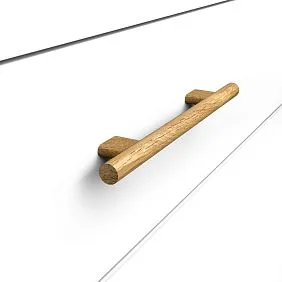
Wooden handles occupy a special place in furniture design, combining eco-friendliness with the unique aesthetics of natural materials. Modern 3D milling technologies allow creating handles of complex shapes from hardwoods with high dimensional accuracy.
Oak and beech remain the most popular materials due to their strength and beautiful grain. Special stains and coatings provide resistance to moisture and temperature fluctuations without compromising the natural wood structure. Understanding this,What new-generation furniture is made of — a question customers must receive comprehensive answers to. Eco-friendliness, durability, ease of care — specific advantages speak louder than abstract 'innovation'., helps correctly combine different materials in one project.
Composite Materials and Innovations
Advancements in materials science have led to the emergence of composite handles, combining the advantages of various materials. Polymer composites with natural fiber fillers provide high strength at low weight. Some modern composites have antibacterial properties and self-cleaning coatings.
Using recycled materials in furniture hardware production is becoming an important trend, meeting ecological responsibility requirements. These materials do not fall short of traditional ones in technical characteristics but have a smaller carbon footprint.
Technical Aspects of Integrating Handles into Projects
Mounting systems and installation solutions
Choosing the right mounting system is critically important for ensuring the longevity and reliability of furniture. Standard 4 mm euro screws provide secure fastening for most handle types. Screw length is determined by the door panel thickness, taking into account the screw thread depth of the handle.
For heavy handles or soft material panels, special anchors or sleeves are used, distributing the load over a larger area.Furniture hardwareIncludes a wide range of fasteners for various operating conditions.
Load Calculation and Strength Characteristics
Calculating allowable loads on furniture handles includes analyzing static and dynamic impacts. Standard handles are designed for an opening force up to 15 kg, corresponding to a door panel weight of about 8-10 kg. For heavy doors, reinforced models or additional mounting points are used.
Cyclic tests show that quality handles withstand more than 50,000 opening-closing cycles without losing functional characteristics. This corresponds to approximately 15-20 years of intensive use in household conditions.
Features of Installation in Different Materials
Installing handles in panels made of different materials requires an individual approach. MDF and particleboard are easily processed with standard tools but require pre-drilling to prevent coating cracking. Solid wood panels have high strength but may split if drilled across the grain inaccurately.
Glass and stone panels require special drilling technologies and special fasteners. Metal panels are processed using special tools and lubricating cooling fluids.
Design Aspects of Handle Selection
Stylistic compatibility
Choosing furniture handles should harmonize with the overall interior concept and furniture style. Classic interiors prefer handles with refined shapes and noble materials, often with handcrafted elements. Modern styles lean toward minimalism and functionality, preferring simple geometric forms.
Unique InteriorsAre created through attention to detail, including proper selection of front hardware. Handles can serve as unobtrusive functional elements or as striking accents that attract attention and highlight the design’s individuality.
Color Solutions and Finish Coatings
Modern coating technologies allow creating handles in a wide range of colors and textures. Powder coating provides uniform coverage and high resistance to mechanical impacts. Anodizing aluminum handles allows not only various colors but also interesting textured effects.
Popular finishes imitate natural materials: wood, stone, leather. Such solutions allow combining the practicality of metal structures with the aesthetics of natural materials. Chrome and nickel finishes provide a mirror-like gloss and high corrosion resistance.
Ergonomic Requirements
Ergonomics of furniture handles affects the comfort of daily furniture use. A properly designed handle should naturally fit in the hand, not cause discomfort when gripping and provide secure control when opening heavy panels.
Handle bracket diameters are usually 10-16 mm, corresponding to the anatomical features of the human hand. Too thin handles cut fingers under heavy force, while too thick ones are inconvenient to grip. Radii of rounded edges must eliminate sharp edges capable of injuring the user.
Production Aspects and Quality Control
Manufacturing Technologies
Modern furniture handle production uses high-precision CNC equipment. Injection molding allows obtaining complex shapes with high dimensional repeatability. Mechanical processing ensures precision of mounting surfaces and threaded connections.
3D printing is used for manufacturing prototypes and small batches of exclusive handles. This technology is especially valuable during the development of new models, allowing rapid production of samples for testing and ergonomic evaluation.
Quality Control System
Quality control of furniture handles includes checking geometric parameters, strength characteristics, and coating quality. Coordinate measuring machines ensure dimensional control accuracy down to hundredths of a millimeter.
Fatigue strength tests simulate long-term operation in accelerated mode. Coating tests include checking resistance to corrosion, abrasion, and household cleaning agents. Only handles that have passed the full test cycle are allowed for mass production.
Certification and Standards
Furniture handles must comply with national and international safety standards. European EN standards regulate requirements for strength, durability, and safety of furniture hardware. Ecological certifications confirm the absence of harmful substances in materials and coatings.
Special attention is paid to certification of handles for children's furniture, which must exclude the possibility of injury and contain no toxic substances.Materials for FurnitureUndergo additional tests for migration of harmful substances and mechanical safety.
Specialized Solutions for Different Applications
Kitchen Furniture: Special Requirements
Kitchen environment imposes higher requirements on furniture hardware due to exposure to moisture, grease, steam, and cleaning agents. Kitchen handles must be easy to clean, not accumulate dirt, and retain their original appearance under intensive use.
Stainless steel remains the optimal material for kitchen handles due to its hygiene and resistance to aggressive environments. Antibacterial coatings based on silver ions provide additional protection against microorganisms.
Office Furniture: Reliability and Functionality
Office furniture is used significantly more intensively than household furniture, requiring the use of especially strong hardware. Handles must withstand frequent use by many people while maintaining functionality and appearance.
Strict office handle design matches the professional atmosphere and does not distract from work processes. Profiled handles and handle-plates are popular, creating a minimalist furniture appearance. Wear-resistant coatings ensure long-term use without loss of aesthetic appeal.
Children's Furniture: Safety First
Furniture for children's rooms requires a special approach to hardware selection. Handles must not have sharp edges, small detachable parts, or toxic coatings. Bright colors and interesting shapes make furniture attractive to children, encouraging their independence.
Larger handle sizes facilitate gripping with small hands. Special children's collections include handles shaped like animals, toys, and geometric figures, transforming ordinary furniture into elements of play environments.
Innovative Solutions and Development Trends
Smart Hardware
Advancements in Internet of Things technologies lead to the emergence of smart furniture hardware. Handles with built-in sensors can record usage frequency, transmit data about furniture condition, and even control lighting or other smart home systems.
Tactile handles react to touch, automatically opening doors or drawers. Such solutions are especially valuable for people with limited physical abilities, providing them greater independence in daily life.
Ecological Innovations
Growing attention to ecological issues stimulates the development of sustainable solutions in the furniture industry. Using recycled materials, biodegradable coatings, and low-carbon technologies is becoming a priority for manufacturers.
Handles made from certified forests represent an ecologically responsible choice. Modular handle constructions allow replacing worn parts without replacing the entire item, reducing waste volume and conserving resources.
Personalization and Customization
Modern consumers increasingly value individuality and the possibility of customization. Digital manufacturing technologies allow creating unique handles based on individual customer sketches with minimal additional costs.
Laser engraving and 3D printing open up limitless possibilities for creating exclusive hardware. Even standard handle models can be enhanced with personalized elements: initials, logos, or decorative patterns.
Economic Aspects and Cost Optimization
Life Cycle Cost Analysis
When selecting furniture handles, it is important to consider not only the initial cost but also the costs over the entire life cycle. Cheap hardware may require frequent replacement, ultimately costing more than high-quality items with a long service life.
Economic efficiency calculation includes purchase, installation, maintenance, and possible replacement costs. High-quality handles with long warranties often prove to be a more cost-effective solution in the long term.
Procurement Optimization
Planning furniture hardware procurement requires balancing product variety and volume discounts. Standardizing size ranges and color solutions allows obtaining more favorable terms from suppliers.
Just-in-time systems minimize warehouse inventory costs but require reliable suppliers and efficient logistics.furniture legsHardware and other fittings must be delivered in sync with the production schedule.
Impact on Final Product Cost
Hardware cost can constitute 10-20% of the total furniture item cost, making its optimization a crucial factor in competitiveness. Choosing the right suppliers and efficient logistics allow reducing costs without compromising quality.
Using standardized hardware simplifies production processes and reduces error risk. Standard solutions also facilitate service maintenance and replacement of worn components.
Installation and Mounting: Practical Recommendations
Preparation Stage
Quality installation of furniture handles begins with careful preparation. Accurate marking of installation positions ensures uniformity throughout the project. Using special templates and guides eliminates accumulated errors during mass installation.
Checking the fasteners' compatibility with facade thickness prevents mounting issues.Handles for Basis Furniture DesignerFasteners must be provided accordingly, or fastening requirements must be clearly specified in the technical documentation.
Drilling Technology
Drilling holes for handles requires precision and care. The drill bit diameter must exactly match the screw diameter to ensure a tight fit without play. Using depth stops prevents drilling through the facade.
To prevent surface scratches, use special drill bits with chamfered edges or additional counterboring operations. Drilling composite and layered materials may require special tools and reduced cutting speeds.
Mounting Quality Control
After installation, all handles must be checked for secure fastening and correct positioning. Uniformity of placement is controlled throughout the project using measuring tools. Functional testing includes checking ease of grip and absence of sticking.
Final inspection includes visual check for damage to finishes, correct orientation of asymmetric handles, and compliance with project requirements. All identified defects must be corrected before handing over the item to the customer.
Maintenance and Care
Regular Maintenance
Proper care extends the lifespan of furniture handles and maintains their attractive appearance. Regular cleaning prevents accumulation of dirt and corrosion deposits. Periodic checking of fasteners allows timely detection and correction of screw loosening.
Using appropriate cleaning agents is important for preserving finishes. Abrasive agents may damage decorative finishes, so prefer mild formulations. Wooden handles require special wood care products.
Repair and restoration
Most furniture handle damage can be repaired. Scratches on metal surfaces can be polished with special pastes. Wooden handles allow sanding and re-finishing without loss of functional characteristics.
Worn-out components should be replaced with original parts or compatible equivalents. If an exact replacement cannot be found, consider replacing the entire handle set to maintain visual uniformity.
Frequently asked questions
How to determine the optimal handle size for a specific facade?
Handle size is selected based on facade dimensions and ergonomic requirements. For doors up to 400 mm wide, handles 96-128 mm long are suitable; for medium facades 400-600 mm, handles 160-224 mm are optimal; for larger doors over 600 mm, handles 256 mm and above are recommended.
What materials are best suited for handles in humid areas?
For bathrooms and kitchens, handles made of stainless steel, aluminum alloys, or high-quality polymer materials are recommended. Wooden handles require special moisture-resistant treatment. Avoid iron alloys without protective coating.
Can I make a 3D model of a handle for Basis Mebelshchik myself?
Yes, the program allows creating custom hardware models. Knowledge of parametric modeling principles and requirements for the f3d format is necessary. It is recommended to study existing models as examples of proper data organization.
How to ensure uniform installation of handles on a large number of facades?
Use special marking templates, maintain identical distances from facade edges for all handles, apply drill guides. Check horizontal and vertical alignment using a level.
What is the maximum load allowed for standard furniture handles?
Standard handles are designed for opening force up to 10-15 kg, corresponding to facade weight of 6-8 kg. For heavier doors, use reinforced models, additional mounting points, or distribute load among multiple handles.
How to properly care for handles with different finishes?
Chrome and nickel surfaces are cleaned with soft cloth and special polishes. Powder coatings are resistant to most household cleaning agents. Wooden handles require special wood care products and avoidance of excessive moisture.
Is it possible to replace handles on already assembled furniture?
Replacement is possible if new handles have the same center-to-center distance. When switching to another handle type, additional drilling and filling of old holes may be required. It is recommended to plan such changes in advance.
What design trends are current in furniture handles?
Current trends include minimalist shapes, matte finishes, integration of smart home technology, use of eco-friendly materials, and customization options. Hidden and profiled handles are popular, creating a "handleless" furniture effect.
Conclusion
Furniture handles are a key element of modern furniture, combining functionality with aesthetic appeal. Proper selectionhandles for Basis Mebelshchikrequires a comprehensive approach, considering technical specifications, design requirements, and economic factors.
Advancements in design and manufacturing technologies open new opportunities for creating innovative furniture hardware. Integration of digital technologies, use of eco-friendly materials, and customization are becoming key industry trends.
A professional approach to selecting and installing furniture handles ensures durability, functionality, and aesthetic appeal of furniture. Quality hardware becomes an investment in long-term operation and customer satisfaction.
STAVROS, with extensive experience in furniture hardware and decorative elements, offers comprehensive solutions for professional furniture makers. Our products meet the highest standards of quality and reliability, ensuring successful implementation of projects of any complexity. The combination of traditional craftsmanship with modern technologies allows us to create products exceeding the expectations of even the most demanding customers.