Article Contents:
- Historical origins of ceiling and wall rosettes
- Ancient roots of ornament
- Middle Ages and Gothic
- Baroque and Classicism
- Modern era
- Combining wood and polyurethane in a classic interior
- Principles of material separation
- Compositional hierarchy
- Color integration
- Textural interaction
- Geometry, symmetry, and ornamental rhythm
- Types of radial symmetry
- Concentric structures
- Proportional systems
- Dynamics and statics
- STAVROS decorative element arrangement tips
- Ceiling composition
- Wall placement
- Rhythmic sequences
- Functional zoning
- Conclusion - harmony of materials and light

Rosette - an architectural element with radial symmetry, embodying the perfection of geometry and the organic nature of natural forms.polyurethane rosettesanddecorative wooden ornaments- two materials, two approaches to creating decorative expressiveness, which, in harmonious combination, form spaces of exceptional beauty. The smooth plasticity of polyurethane and the living texture of wood complement each other, creating a visual dialogue between modern technologies and centuries-old craftsmanship traditions. Understanding the historical roots of these elements and the principles of their interaction opens the way to creating interiors where every detail is imbued with meaning.







Historical origins of ceiling and wall rosettes
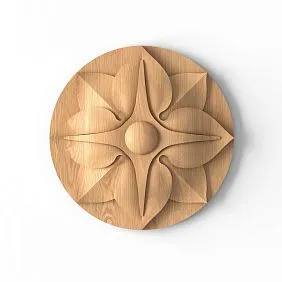
The rosette as a decorative motif has undergone a thousand-year evolution from sacred symbols of ancient civilizations to a universal element of modern interiors. The circular composition with radial symmetry reproduces the natural beauty of a blooming flower, viewed from above. Concentrically arranged petals create visual energy, attract the gaze, and center the space.
Our factory also produces:



Ancient roots of ornament
Ancient Egypt used stylized lotus flowers - sacred plants symbolizing rebirth and eternal life. Rosettes adorned temples, sarcophagi, and household items. Egyptian artisans created rosettes with clear geometric construction - petals arranged with mathematical precision, evoking a sense of cosmic order.
Ancient Greece perfected the art of the rosette. Acanthus leaves, palmettes, and anthemions - stylized plant motifs with radial symmetry - covered friezes of temples, column capitals, and metopes. The Greek rosette embodied the philosophical ideal of harmony - mathematical precision of geometry combined with the organic plasticity of natural forms.
Rome adopted the Hellenistic tradition, enriching it with new forms. Roman rosettes adorned ceiling coffers—square recesses, each featuring a carved rosette at its center. The Pantheon in Rome demonstrates majestic coffers with rosettes, creating a rhythmic structure on the domed ceiling. Byzantium preserved the ancient heritage, passing it on to medieval Europe through the tradition of temple architecture.
Get Consultation
Middle Ages and Gothic
Gothic transformed the rosette into monumental circular windows—roses filled churches with colored stained-glass light. The Gothic rose combined architectural structure with decorative ornamentation—stone tracery formed complex petal geometries, with colored glass panels between them. The symbolism of the Gothic rose is profound—the circle symbolizes God’s eternity, the petals represent rays of divine light, and the colored glass signifies the diversity of creation.
Romanesque architecture used rosettes more modestly—simple circular compositions of concentric circles and radial elements. The massiveness of Romanesque forms required large-scale rosettes with pronounced relief. Stone carving created deep shadows, enhancing the sculptural expressiveness.
The Renaissance revived classical forms, returning the rosette to its ancient harmony of proportions. Italian masters studied Roman examples, recreating coffered ceilings with rosettes at the center of each recess. Wood carving reached its highest mastery—wooden ornamentreproducing the most complex compositions with botanical precision.
Baroque and Classicism
Baroque complicated the rosette with lavish ornamentation. Multiple tiers of petals, volutes, cartouches, and putti surrounded the central rosette. The dynamism of Baroque forms created a sense of rotation, movement from center to periphery. Gilding enhanced the decorative effect—golden rosettes on white ceilings created the grandeur of palace interiors.
Classicism returned strict harmony of proportions. The rosette simplified, purged of the excessive ornamentation of Baroque. Clear circular compositions of symmetrically arranged petals, acanthus leaves, and palmettes embodied rational beauty.ceiling rosettesClassicism became a standard, to which modern designers still refer.
Empire added military symbolism—laurel wreaths, trophies, eagles. Empire rosettes are monumental, with large-scale elements and clear geometry. The French Empire spread this style across Europe, making Empire rosettes a symbol of imperial grandeur.
Modern Era
The 18th century brought a functional transformation to the rosette. The advent of central lighting—chandeliers on ceilings—required concealing mounting hardware and wiring. The rosette became a frame for chandeliers, hiding technical elements while simultaneously enhancing the decorative effect of the fixture. The French were the first to decorate ceilings with symmetrical plant motifs around chandeliers, naming these elements 'rosettes'.
The 19th century democratized the rosette through technological advances. Gypsum casting made complex forms accessible to the middle class. Gypsum rosettes adorned bourgeois apartments, reproducing aristocratic palace forms. The 20th century brought new materials—polyurethane, polystyrene—enabling the creation of lightweight and affordable elements.
Contemporary times reinterpreted the rosette. Minimalism simplified forms to geometric abstractions. Postmodernism ironically referenced historical examples. Eclecticism freely mixes rosettes from different eras and styles.polyurethane rosettesModern production reproduces forms from all historical periods, making the richness of global architectural tradition accessible to everyone.
Combination of wood and polyurethane in a classic interior
A classic interior is built on the harmony of materials, where each reveals the strengths of the other.decorative wooden ornamentsThey carry natural warmth, living texture, and the nobility of tradition.Relief DecorationPolyurethane elements ensure ideal geometry, practicality, and accessibility of complex forms. Their combination creates richness of visual impressions while maintaining rational solutions.
Principles of material differentiation
The scale of the element determines the material selection. Large architectural rosettes with a diameter of 60–100 centimeters are more rational to manufacture from polyurethane. The weight of such wooden elements would be 5–10 kilograms, creating mounting problems and load on the ceiling.ceiling rosettesPolyurethane rosettes weigh 500–1500 grams, mounted with adhesive without additional fasteners.
Medium rosettes with diameters of 30–50 centimeters can be made from both materials. The choice depends on stylistic preferences and budget. Polyurethane ensures perfect symmetry and repeatability—important for Classicism, which venerates geometric precision. Wood adds individuality—each carved rosette is unique due to natural texture and nuances of handcrafting.
Small decorative elements with diameters of 15–25 centimeters are effective in wood.wooden ornamentSuch scale demonstrates the skill of carving, detail, and the nobility of the material. Polyurethane at small scale may appear artificial—the absence of texture becomes noticeable upon close inspection.
Compositional hierarchy
The central ceiling rosette—the compositional center of the room—is made of large-scale polyurethane. A diameter of 70–100 centimeters corresponds to standard ceiling heights of 2.7–3.0 meters.polyurethane rosettesThey ensure perfect geometry, critical for the central element, which attracts maximum attention.
Peripheral rosettes of smaller size are placed at ceiling corners or on walls. These elements with diameters of 30–50 centimeters can be wooden, creating a material contrast with the central polyurethane rosette.decorative wooden ornamentsAdding corners adds warmth and softens the rigidity of geometry.
Wall outlets above doorways, in the spaces between windows, and on fireplace surrounds look great in wood. Placement at eye level allows you to appreciate the details of carving, wood texture, and finish quality.wooden ornamentOn walls, it creates accents that enrich vertical planes.
Color Integration
Monochromatic solution unifies different materials with a single color. White enamel is a classic choice for formal interiors.polyurethane rosettesThey are produced white and ready for installation.wooden ornamentIt is painted with white enamel, hiding the texture. The difference in materials is only apparent upon touch — smooth polyurethane and warm wood.
Tonal solution creates nuances while preserving the overall palette. Polyurethane elements are painted cream or light gray. Wooden elements retain their natural tone with transparent finish or are tinted to similar shades. Light polyurethane outlets serve as a neutral background for more saturated wooden accents.
Contrasting solution highlights the difference in materials. White polyurethane outlets on the ceiling contrast with natural-colored wooden wall elements — from honey to dark brown. This contrast of cool and warm, neutral and saturated, enriches the interior palette.Relief DecorationIt creates an architectural structure, while wood fills it with living energy.
Textural Interaction
The perfectly smooth surface of polyurethane highlights the relief of wood.ceiling rosettesThey have no texture — this is a pure form without visual noise. On this neutral background, the texture of wood with growth rings, pores, and natural variations appears most vividly. The eye perceives the contrast as an enrichment of the composition.
The degree of wood processing affects the textural contrast. Smoothly sanded wood with lacquer finish approaches polyurethane in smoothness, the contrast is minimal — both materials reflect light, creating highlights. Brushed wood with emphasized texture contrasts maximally with polyurethane’s smoothness.decorative wooden ornamentsWith pronounced texture, they create tactile richness.
Patination — a technique applicable to both materials. A base light layer is covered with dark patina, remaining in the recesses of ornamentation. Both polyurethane and wooden outlets with patina appear aged, vintage. This common finishing technique visually unifies different materials, creating the impression of a single origin.
Geometry, Symmetry, and Ornamental Rhythm
A rosette is a geometric organism living by the laws of symmetry and mathematical proportions. Radial symmetry — the basis of rosette structure — creates visual energy emanating from the center. Concentric circles form rhythmic waves spreading from the central point to the periphery.
Types of Radial Symmetry
Four-fold symmetry — the simplest form, based on a cross. Four elements radiate from the center at right angles, dividing the circle into equal quadrants. This geometry is associated with the symbolism of the cross, the four cardinal directions, and the four elements.polyurethane rosettesWith four-fold symmetry, they are minimalist, instantly readable, and suitable for minimalist interiors.
Six-fold symmetry is based on a hexagon — a regular six-sided polygon. Six petals radiate at 60-degree angles, creating a stable, harmonious composition. This geometry is common in nature — snowflakes, honeycombs, and flowers of many plants have six-fold structures. Rosettes with six petals are perceived as natural and organic.
Eight-fold symmetry combines a cross and diagonals, creating complex geometry. Eight elements form a dense structure where the gaps between rays are minimal.ceiling rosettesWith eight rays, they exhibit baroque opulence and fullness of form. The eight-rayed star is a symbol of perfection in many cultures.
Multi-ray symmetry uses 12, 16, or 24 rays, creating almost continuous petal circles. The more rays, the closer the shape is to a perfect circle. Rosettes with multi-ray symmetry have delicate structures, where each petal is slender and elegant.wooden ornamentWith numerous small petals, they demonstrate the virtuosity of the carver.
Concentric Structures
A single-ring rosette consists of a central element and one ring of petals around it. The simplicity of the structure creates minimalism and readability of the form. The center — circle, rosette, star — concentrates attention. Petals frame the center without competing for attention.decorative wooden ornamentsSingle-ring structures are suitable for small spaces.
A two-ring rosette has two tiers of petals. The inner ring of smaller petals surrounds the center. The outer ring of larger petals frames the composition. This hierarchy creates visual depth — the gaze moves from the center through the inner ring to the outer ring. Petal size typically increases from the center to the periphery.
A three-ring rosette is a complex baroque structure with three tiers of petals of different sizes and shapes. The center, inner, middle, and outer rings create a four-level composition. Each level may have a different number of elements, creating a complex visual rhythm.polyurethane rosetteswith three rings reproduce the luxury of palace interiors.
Proportional systems
The size of the central element relates to the diameter of the first petal ring as 1:2 or 1:3. The center occupies one-third or one-quarter of the total rosette diameter. A too large center suppresses the petals, while a too small one disappears.ceiling rosettesof classical proportions create a visual balance between the center and periphery.
The width of the petal relates to its length as 1:2 or 1:3. Narrow, elongated petals create a dynamic, swift form. Wide, short petals create a calm, stable appearance. The ratio determines the character of the rosette — from strict classical to decorative baroque.
The gaps between petals are usually equal to half or one-third the width of the petal. Narrow gaps create a dense, filled structure. Wide gaps create an airy, open appearance.wooden ornamentwith wide gaps demonstrate negative space as part of the composition.
Dynamics and Statics
A static rosette has symmetrical elements arranged radially without any suggestion of rotation. Petals of identical shape and size create calmness, stability, and eternity. Classicism preferred static rosettes, embodying the idea of unchanging perfection.
A dynamic rosette creates an illusion of rotation through asymmetrical elements. Petals curve in one direction, creating a sense of movement. S-shaped curves enhance the feeling of rotation. Baroque used dynamic rosettes, embodying the idea of cosmic whirls and divine energy.
A spiral rosette is the extreme expression of dynamics. Petals are arranged in a spiral from the center to the periphery, creating centrifugal or centripetal motion.decorative wooden ornamentswith a spiral structure hypnotically attract the gaze, guiding it along the spiral toward the center or outward from the center.
Tips for arranging decorative elements STAVROS
Proper placement of rosettes and ornaments creates architectural logic of space. Random placement destroys the composition, making decoration chaotic. Professional design takes into account room proportions, functional zoning, visual axes, and lighting scenarios.
Ceiling Composition
The central rosette is placed strictly at the geometric center of the ceiling. For a rectangular room, this is the intersection of the diagonals.ceiling rosettesshifted from the center create imbalance, perceived as an error. Exception — intentional asymmetry in modern interiors, where center displacement is a deliberate design technique.
The size of the central rosette is proportional to the ceiling area. For a 15–20 square meter room, an optimal diameter is 50–70 centimeters. For 25–35 square meters — 70–90 centimeters. For larger rooms of 40–60 square meters — 90–120 centimeters.polyurethane rosettesof large diameter require high ceilings — minimum 3.2–3.5 meters.
Corner rosettes are placed at a distance from the corners equal to half or one-third the distance from the corner to the center of the ceiling. Four corner rosettes with a diameter of 30–40 centimeters create a symmetrical composition around the central rosette. This scheme is typical for classical interiors with high ceilings.Relief Decorationin the corners visually support the ceiling, creating a sense of constructive logic.
Wall Placement
Above door and window openings, rosettes are placed strictly along the central axis of the opening. The diameter of the rosette is one-third or one-quarter of the opening width. For a standard door 80–90 centimeters wide, an optimal rosette diameter is 25–30 centimeters.decorative wooden ornamentsabove openings create a visual completion of the vertical lines of the window casings.
In pilasters between windows, rosettes are centered on the pilaster width and placed at a height of 180–200 centimeters from the floor — at the level of the upper third of the wall. This height is optimal for perceiving the details of carving at average human height.wooden ornamentat eye level demonstrate craftsmanship.
On fireplace portals, the rosette is placed above the mantel, centered on the portal width. Large rosettes with a diameter of 50–70 centimeters create a compositional accent drawing attention to the fireplace as the center of the living room. Paired rosettes on both sides of the fireplace, at a distance equal to their diameter, create a symmetrical composition.
Rhythmic Sequences
A horizontal row of rosettes along the ceiling cornice creates a rhythmic structure. The interval between rosettes is usually 1.5–2 diameters of the rosette. For rosettes with a 30-centimeter diameter, the interval is 45–60 centimeters. Too frequent placement creates visual crowding, while too sparse placement disrupts the rhythm.polyurethane rosettesElements in a row must be identical to create a monotonic rhythm.
A vertical row of outlets on a pilaster or in a corner of a room creates a vertical axis. The vertical distance between outlets is usually greater than the horizontal distance — 2–3 outlet diameters. This compensates for the visual compression of vertical lines.ceiling rosettesSmall-diameter outlets are used for vertical compositions.
Alternating sizes create a complex rhythm. A large 50 cm outlet alternates with two small 25 cm outlets. Or a large outlet is surrounded by four medium-sized outlets in a cross composition.decorative wooden ornamentsOutlets of different sizes create a visual hierarchy, where main and secondary elements are clearly defined.
Functional zoning
Outlets mark functional zones in open spaces. In a studio, the dining area is marked by an outlet on the ceiling above the dining table. The living area is marked by an outlet above the coffee table. Each zone receives its own compositional center, structuring the space.Relief DecorationCreates visual division without physical partitions.
Outlet size corresponds to the significance of the zone. The main zone — the living room — has the largest outlet. Secondary zones — dining area, workspace — have smaller outlets. This creates a spatial hierarchy where main and secondary elements are defined by decor.wooden ornamentIn the main zone, it emphasizes its status.
Ceiling height affects decor density. Low ceilings (2.4–2.6 meters) require minimal outlets — one central outlet is sufficient. Standard ceilings (2.7–3.0 meters) allow a central outlet plus corner outlets. High ceilings (3.5–4.5 meters) permit complex multi-element compositions with dozens of outlets of various sizes.
Result — harmony of materials and light
An outlet is the meeting point of geometry and nature, mathematics and art, tradition and modernity.polyurethane rosettesThey embody the perfection of modern technology — ideal geometry, practicality, accessibility.decorative wooden ornamentsThey preserve the living energy of natural materials, the uniqueness of each item, the nobility of centuries-old traditions.
The dialogue between these materials creates a richness of visual impressions. Smooth polyurethane plastic contrasts with textured wood surfaces. The whiteness of synthetic material highlights the warmth of natural wood tones. The lightness of polyurethane outlets on the ceiling is balanced by the heaviness of wooden elements on walls.
Light is the primary tool for revealing the beauty of outlets. A central chandelier surrounded by a ceiling outlet creates a play of light and shadow on the relief of petals. Side lighting from wall sconces highlights the depth of carved wooden wall outlets. Directional spotlights reveal the plasticity of polyurethane corner elements.ceiling rosettesThey live in light, changing character from morning to evening lighting.
The geometry and symmetry of outlets structure the chaos of space, creating a visual order. Radial symmetry forms compositional centers — points of visual attraction. Concentric circles of petals create rhythmic waves spreading through space.wooden ornamentWooden and polyurethane moldings work in tandem, creating a multi-level decorative hierarchy.
Correct arrangement of elements is critical for harmony. Centering, proportions, rhythmic intervals — these principles transform a set of decorative elements into an architectural composition. Random placement destroys the beauty of even the most refined outlets. Professional design creates spaces where every element is in its proper place.
Company STAVROS offers a full range ofpolyurethane socketsanddecorative wooden ornamentsA wide range of diameters from 20 to 120 centimeters, styles from strict classicism to lavish baroque, types of symmetry from four-armed to multi-armed allows finding a solution for any interior. High-quality casting of polyurethane elements ensures clarity of details. Mastery of wood carving guarantees expressiveness of each petal.ceiling rosettesandRelief DecorationThey complement each other, creating comprehensive solutions for classic and modern interiors. Professional consultation with specialists helps select the optimal combination of materials, sizes, and styles, creating spaces where outlets and ornaments engage in an endless dialogue between wood and polyurethane, tradition and innovation, geometry and nature.