












































































Article Contents:
- What is Carved Molding
- Russian Motifs: Plant and Geometric
- Embedding in Filigree Walls
- Vintage Finishes
- Project Economics
- Conclusion: Carving as a Link Between Eras
- Frequently Asked Questions

In the arsenal of traditional Russian architecture, wood carving held a special place. It transformed a simple plank into a work of art, an ordinary wall into a decorative panel, a modest dwelling into a terem. Today, when we speak of recreating the Russian style in interiors, carved molding becomes the very tool that allows us to transfer the spirit of tradition into modern space, without turning it into a museum reconstruction.
Wooden Picture FrameThis is not just a decorative plank. It is a carrier of cultural code, an element that carries memories of centuries-old woodworking traditions, folk ornaments, and the philosophy of decorating homes. Each carved swirl, each geometric pattern has its own history, its own meaning, its own energy.
Carved molding in the Russian style is a meeting of the past and the present. Ancient motifs, executed with modern technologies. Traditional ornaments, adapted to today's aesthetics. Handcrafted work of masters, enhanced by the precision of CNC machines. It is precisely this combination that makes carved molding popular in modern interiors, where the focus is not on styling for antiquity, but on thoughtful engagement with cultural heritage.
When discussing the creation of an interior in the Russian style, many imagine either excessive museum-like ornamentation or deliberately simple country house simplicity. Carved molding allows finding a balance between these extremes. It adds the necessary degree of ornamentation without overloading the space. It creates a connection with tradition while remaining modern and functional.


What is Carved Molding
In construction terminology, molding refers to items sold and measured in linear meters: planks, rails, moldings, baseboards, cornices, window and door casings. Carved molding is the same items, but adorned with a three-dimensional pattern carved or milled from solid wood. This can be a simple repeating ornament or a complex composition with plant and geometric elements.
History and Evolution. Wood carving in Russia has a thousand-year history. The earliest examples of carved decoration are found in archaeological layers of Novgorod and other ancient Russian cities. Initially, carving was flat and contour-based — craftsmen simply scratched or cut patterns into the surface of the wood. Later, three-dimensional relief carving emerged, where patterns were formed by triangular indentations, creating play of light and shadow.
By the 17th-18th centuries, carving had reached its highest level of complexity. Through-and-through carving appeared, where the background was completely removed, leaving only an openwork pattern. Applied carving, where carved elements were attached over the base. Three-dimensional sculptural carving, creating almost three-dimensional images. All these techniques were used to decorate houses — casings, gables, porches, shutters.
In the 19th century, with the development of industry, carving became more accessible. Milling machines appeared, allowing to create repeating patterns faster and cheaper than by hand. Carved molding began to be widely used not only in wealthy estates but also in homes of the middle class. Profiles, ornaments, and sizes were standardized.
Modern Production. Today, carved molding is produced using high-precision CNC machines. This allows creating the most complex patterns with perfect repeatability, which is impossible with handwork. At the same time, top manufacturers do not abandon hand finishing — final sanding, trimming small details, patination are done manually, giving the items individuality.
The process begins with selecting wood. For carved molding, dense species are used — oak, beech, ash — which hold fine carving details well and do not splinter. The wood must be carefully dried to 8-10% moisture — only then is it stable and does not deform over time.
The blank is milled on a machine according to a digital model. The cutter passes over the wood, removing material and creating a three-dimensional relief. For complex patterns, several passes with different cutters are required — from large ones for forming the main relief to small ones for detailing. After milling, the item is hand-sanded — first with coarse sandpaper to remove marks, then with fine sandpaper to achieve smoothness.
Types of Carved Molding.Picture frame strip— a narrow plank with decorative relief, used for framing mirrors, paintings, panels, and creating wall frames. Width is usually from 30 to 100 mm, relief depth from 3 to 15 mm.
Carved molding — horizontal wall layout, wider than a bагет, often with an asymmetrical profile (one side wider than the other). Used for zoning walls, creating panels, framing door and window openings. Width from 50 to 150 mm.
Carved baseboard — floor or ceiling, combining functionality (covering joints) with decor. Carving is usually located on the upper part, visible part of the baseboard. Height from 80 to 200 mm.
Carved cornice — top element of a wall, the most massive and decorative type of molding. May have complex multi-level carving. Projection width from 80 to 250 mm.
Carved paneling — thin plank for separating panels, framing inserts, decorating furniture. Width from 15 to 40 mm, carving is usually simple, geometric.
Application in Interiors. Carved molding works on multiple levels. Functionally — it covers joints, hides unevenness, creates boundaries between different materials and planes. Compositionally — it organizes space, divides walls into zones, creates rhythm, directs the gaze. Decoratively — it adds volume, texture, ornamentation, transforming a flat wall into a relief surface.
In the Russian style, carved molding is especially important because here carving is not just decoration, but a way of expressing cultural identity. The ornament on molding can tell stories, carry symbolic meanings, create a connection with folk tradition. This makes the interior not just beautiful, but also meaningful, filled with substance.
Differences from Imitations. On the market, there are many offers of "carved" molding made of polyurethane, polystyrene, MDF with applied decoration. These materials are cheaper, easier to install, and do not fear moisture. But they will never replace real wood. The difference is visible both to the touch and visually — polymers lack the living texture of wood, their relief is mechanical and dead. In interiors of the Russian style, where connection with natural materials and craft tradition is important, only natural wood works to create an authentic atmosphere.
Moreover,Decorative wooden moldingsCarved molding can be restored, repainted, toned, patinated — wood lives and changes along with the interior. Polymer analogs are static; they can only be replaced if they become annoying or damaged.




Our products are used in projects throughout Russia — from private apartments to public spaces, from country houses to restaurants and hotels. We are proud that our carved molding helps create interiors that inspire, are pleasant to live in, and convey cultural heritage to future generations.
In Russian tradition, ornamentation has never been a random collection of beautiful lines. Each element carried meaning, told a story, performed a protective or auspicious function. Understanding this symbolism helps consciously use carved molding in interior design, creating not just a beautiful picture, but a space filled with meaning.
Plant motifs: from realism to stylization. Plant ornamentation is one of the most common in Russian decorative art. These can be recognizable images of specific plants or highly stylized, almost abstract forms.
The grapevine — symbol of fertility, abundance, vital energy. In Christian tradition, grape is associated with Eucharist, spiritual richness. Grape carving is often found in church furnishings, but it is also appropriate in domestic interiors — as a wish for prosperity and well-being. On carved molding, grape is depicted with leaves and clusters, sometimes with climbing tendrils that create a smooth, flowing rhythm.
Oak leaves and acorns — symbols of strength, durability, masculinity, longevity. Oak in Slavic tradition — a sacred tree, embodiment of power and resilience. Oak carving is massive, clear, with pronounced relief. It suits well for masculine spaces — offices, libraries, interiors where solidity and dignity matter.
Birch branches — symbols of purity, light, femininity, connection with ancestors. Birch — the most Russian tree, celebrated in folklore and literature. Birch carving is light, elegant, with fine lines and small leaves. It creates a sense of airiness, freshness, natural authenticity.
Flowers — rose, peony, poppy, daisy, cornflower. Each flower has its own meaning. Rose — love and beauty. Peony — wealth and honor. Poppy — memory and sleep. Floral carving can be realistic, with finely detailed petals and stems, or stylized, where the flower is simplified to a basic rosette.
Geometric patterns: language of symbols. Geometric ornamentation is older than plant-based. Its roots go back to pre-Christian times, when symbols were a means of recording knowledge, protection, and connection with natural forces.
Rhombus — one of the oldest symbols, denoting sown fields, fertility, feminine principle. Rhombuses can be simple or complex — with dots inside, with projections at corners, arranged in chains or grids. On carved molding, rhombic pattern creates a clear, rhythmic design that is easily readable from a distance.
Circle and rosette — symbols of the sun, eternity, cyclicity of time. Circular solar signs protected homes from evil forces, attracting light and warmth. On molding, rosettes can range from simple (circle with radiating rays) to complex (multi-petaled flowers, interwoven circles, wheels with many spokes).
Meander — a continuous broken line forming rectangular spirals. Symbolizes infinity, eternal motion, connection across generations. Meander originated in antiquity but became firmly established in Russian ornamentation, especially during the period of Classicism. On molding, meander runs as a narrow band, creating a graphic border.
Plaited pattern — interwoven ribbons forming a complex design. Symbolizes connection, unity, continuity of lineage. Plaited pattern can be simple (two ribbons) or complex (multi-band, incorporating plant elements). It is one of the most beautiful and intricate ornaments to execute.
Combining plant and geometric motifs. The most interesting examples of carved molding combine both types of ornamentation. Geometric base creates structure, rhythm, order. Plant elements add liveliness, organic quality, connection with nature. For example, a row of rhombuses, each containing a stylized flower. Or a meander from which leaves and shoots grow.
Such combinations are characteristic of Russian Classicism at the end of the 18th — beginning of the 19th century, when European order forms were reinterpreted through the prism of local tradition. Strict symmetry and classical motifs coexisted with folk patterns, creating a unique cultural blend.
Regional characteristics. Russian ornamentation is heterogeneous — different regions developed their own traditions, favorite motifs, and ways of depicting them.
Northern carving — strict, graphic, with predominance of geometric forms. Often uses three-dimensional relief carving technique, where patterns are formed by triangular indentations. Color — natural light wood or white.
Volga carving — more ornate, with abundance of plant motifs and curved forms. Favorite techniques — openwork and applied carving. Often uses bright coloring — red, green, blue, gold.
Siberian carving — powerful, large-scale, with clear, deep incisions. Predominant images — animals, birds, solar signs. Color — dark seasoned wood or natural tone.
When choosing carved molding for a Russian-style interior, determine which tradition you lean toward. This will help create a cohesive, non-contradictory image.
Adapting traditional motifs. Direct copying of old ornaments is not always justified in modern interiors. Often adaptation is needed — simplifying complex patterns, enlarging small details, altering proportions. Modern carved molding takes the essence of traditional ornament — its rhythm, symbolism, energy — but presents it in a more concise, graphic form.
For example, instead of a detailed grape leaf with veins and serrations — a stylized form where the leaf is simplified to a few smooth lines. Instead of a complex multi-tiered rosette — a simple circle with six or eight petals. Such adaptation makes the ornament more universal, allowing it to work in both traditional and modern interiors.
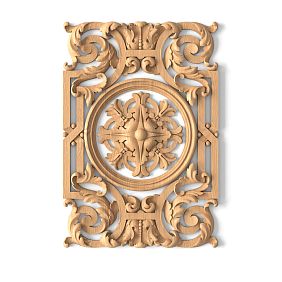
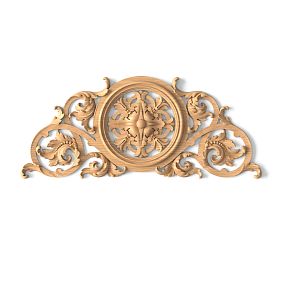
Our factory also produces:




Integrating into panelled walls
Panelled wall — a classic finishing technique where the wall is divided into rectangular or square sections (panels), framed by strips or moldings. This technique originated in European architecture but became firmly established in Russian estate culture in the 18th–19th centuries and is experiencing a new rebirth today.
History of panelled walls. Originally, the panel was a structural element. In wooden panels used to clad walls, the panel was a thin board inserted into a frame of thicker beams. Such a construction allowed wood to expand and contract with changes in humidity without deforming the entire panel.
Over time, the panel became a decorative technique. Even if the wall is plastered or clad with solid sheets, moldings are applied to create the illusion of paneling. This adds structure to the wall, makes it more interesting, breaks up a large surface into manageable fragments for perception.
In Russian estates, panelled walls adorned formal halls, drawing rooms, dining rooms. Panels could be uniform in size or varied — large at the bottom, small at the top. Often, paintings, patterned wallpapers, or textile inserts were placed within panels. Panel frames were made of carved molding, adding volume and richness to the wall.
Principles of creating panelled walls. The first step — marking. Determine how many panels will be on the wall, their size, and how they will be arranged. The classic option — symmetrical grid with equal intervals. More complex — asymmetrical composition, where panels of different sizes and shapes form a dynamic pattern.
It is important to consider room proportions. In rooms with low ceilings, vertical panels are better — they visually elongate the space. In narrow rooms, horizontal panels widen the wall. In spacious square halls, square panels can be used or vertical and horizontal panels can be alternated.
Choosing molding for frames. Here, carved molding comes into play. The frame can be simple, made of smooth molding. It can be profiled, with fillets and protrusions. Or it can be carved, with ornamentation that turns the frame into a self-contained decorative element.
Frame width depends on panel size. For small panels (50×70 cm), a narrow molding of 30–50 mm is sufficient. For large panels (100×150 cm and larger), a more substantial frame of 60–100 mm is needed. Carving on the frame should not be too fine or fragmented — it must be readable from a distance.
Carved molding at panel corners. Special attention should be paid to corners where frame strips meet. You can simply cut the strips at 45 degrees and join them — this gives a clean, neat corner. Alternatively, use special corner elements — carved rosettes, cartouches, which are placed over the joint or inserted into the gap between strips.
Corner rosette — a small square or round element with carved ornamentation that covers the corner of a panel. It may repeat the carving motif on the frame or have its own, but stylistically similar pattern. The rosette adds completeness to the panel, making the corners accent points.
In Russian style, popular corner elements feature plant motifs — stylized flowers, leaves, intertwined branches. Or geometric — multi-rayed stars, rhombuses with protrusions, circular solar signs. Such elements transform a simple rectangular frame into an ornate border worthy of a work of art.
Panel filling. Inside a panel, anything can be placed: paint, wallpaper, fabric, painting, mirror, wooden panel. The choice depends on the interior concept and the room's function.
For grand halls, textile inserts — silk, velvet, tapestry — are suitable. Fabric is stretched over a subframe and inserted into the panel, creating a soft, tactile surface. The fabric color can be neutral (beige, gray) or bright (burgundy, emerald, blue).
For offices and libraries, wooden panels — veneered or solid wood, with wood grain texture — are suitable. They create a sense of solidity, seriousness, and focus. The wood in the panel can be the same tone as the frame or contrasting.
For living rooms and bedrooms — decorative wallpaper with ornament, painting, embossing. The wallpaper pattern should be proportional to the panel: for small panels — small pattern, for large — large. Wallpaper may repeat the carving motifs on the frame or be independent.
Three-dimensional panel. An interesting technique — recessed or protruding panel. The carved molding frame is mounted not flush against the wall, but with a 10-20 mm setback. The inner part of the panel either sinks into the wall (recessed) or protrudes beyond it (protruding). This creates a pronounced volume and play of light and shadow.
A recessed panel is good for embedding lighting — LED strip along the frame perimeter creates a contour glow. A protruding panel is suitable for placing decorative inserts that need to be highlighted and made noticeable. In both cases, carved molding works as an architectural element that shapes space, not merely decorates it.
Panelled doors and walls. Logical continuation of panelled walls — panelled doors. When the door construction repeats the pattern of wall panels, visual unity is created. The door does not appear as a foreign element; it integrates organically into the wall, becoming part of it.
Carved wooden window casingsIt can correspond to the carving on the panel frames. The same ornament, the same motifs, the same relief depth. This creates a system where each element supports the other, and the interior is perceived as a single architectural work.
Get Consultation
Antique finish
New wood, even the highest quality, often looks too fresh, lacking history. For interiors in Russian style, where connection to the past and sense of rootedness in tradition are important, an antique effect is often needed. This is achieved through special surface treatment techniques that mimic natural wood aging.
Brushing: revealing texture. Brushing (from English 'brush' — brush) is mechanical wood processing with a stiff metal brush. The brush removes soft fibers, leaving hard ones. This results in a relief surface where growth rings protrude and become tactile.
Brushed wood looks old, worn, well-lived-in. Such texture is characteristic of boards that have lain for decades — soft wood wears faster, hard wood remains. On carved molding, brushing emphasizes the relief of carving, making it more expressive and three-dimensional.
After brushing, wood is necessarily sanded with fine sandpaper to remove burrs and make the surface pleasant to the touch. Then a toner — dark stain accumulates in the grooves between fibers, while protruding parts remain lighter. Contrast is enhanced, and texture becomes even more pronounced.
Patination: play of colors. Patina is a natural deposit that forms on the surface of old wood or metal. For decorative purposes, patina is imitated by applying paint and partially rubbing it off, creating a layered, historical effect.
Classic technique: carved molding is painted dark (brown, gray-green, black). After drying, a lighter paint — white, cream, silver — is applied. While still wet, it is partially rubbed off with a cloth or sponge. Light paint remains in the recesses of carving, on edges, and in random places. The dark base shows through on protruding parts.
This results in a complex, non-uniform surface that looks as if the molding was painted multiple times, with old layers showing through new ones. Patina adds depth, nobility, and a sense of time. It is especially effective on carving with fine details — each recess and swirl receives its own tone.
Alternative — gold or silver patina. After the base color is applied, a metallic paste — gold, silver, copper — is rubbed into the recesses of carving. This emphasizes the relief and creates a precious effect. Such finish is characteristic of grand, richly decorated interiors.
Staining and toning. Stain penetrates the wood structure and colors it from within, preserving the visibility of texture. This allows changing the wood's color and giving it a noble aged appearance.
For an antique effect, dark stains — walnut, wenge, ebony — are used. Dark wood is associated with age and long-term use. Especially expressively, dark stain settles on oak — its coarse-grained structure absorbs stain unevenly, creating a rich play of tones.
Two-tone staining gives an interesting effect. First, a dark stain is applied, then light sanding removes the tone from protruding parts. Then a light stain is applied. This results in a contrasting surface where recesses are dark and protrusions are light — like old wood worn in areas of frequent contact.
Artificial damage. Wormholes, scratches, cracks, dents — all these are signs of time that can be imitated. Wormholes are made with a fine drill or special tool — shallow winding paths, like those of a wood-boring beetle. Scratches — with a chisel, carefully removing small wood pieces at corners and edges. Cracks — cutting the surface with a knife or burning with a thin soldering iron.
All this should look natural, like real damage, not deliberate stylization. Wormholes are placed randomly, in small groups. Scratches — where they could naturally form: at corners, on protruding carving. Cracks — along the grain, as when wood dries.
After creating damage, they are stained with dark stain or paint — into wormholes, scratches, along crack edges. This creates an illusion that dirt and patina have accumulated in these places over many years.
Effect of charred wood. An ancient technique that has found new life. The wood surface is charred with a torch to light charring. Soft fibers burn more, hard ones less. After charring, the wood is sanded with a metal brush, removing soot and emphasizing the relief.
This results in a dark, almost black surface with pronounced texture. Then it is coated with oil or wax — the wood becomes silky, with a noble matte sheen. On carved molding, charring creates a dramatic, expressive effect — black background and silver relief details.
Charred wood is especially suitable for modern interpretations of Russian style, where traditional motifs are presented in minimalist, graphic manner. Black carved molding on a light wall — this is a strong contrast that attracts attention and creates character.
Importance of moderation. With all these techniques, it is important not to overdo it. Too many artificial damages, too contrasting patina, too dark staining — and the molding will look like theatrical set dressing, not a living room element. Aging should be subtle, a hint, not a loud imitation.
A good finisher knows where to stop. He creates the effect of time, but in such a way that it looks natural, as if the molding had hung on the wall for fifty years. Such work requires experience, material sensitivity, and artistic taste.
Project Economics
Carved molding is not a cheap pleasure. Complex carving requires time, precise equipment, and skilled work. But there are ways to optimize costs without sacrificing quality and aesthetics. Let's break down what makes up the cost and where you can save.
Wood species — the first factor. Pine is the most affordable; oak and beech are 3-4 times more expensive. Exotic species (walnut, wenge, mahogany) are even more costly. For carved molding, oak or beech are typically used — they are dense enough to hold fine carving details.
Carving complexity — the second factor. Simple geometric ornamentation with large elements is cheaper than floral designs with many small details. Deep carving is more expensive than shallow — it requires more passes of the router and more time. Through (open) carving is more expensive than blind (closed) carving — it’s more complex to manufacture and more fragile.
Molding size — the third factor. Wide planks are more expensive than narrow ones (more material). Long items require larger blanks without knots or defects, which increases the price. Standard molding length is 2.2–2.5 meters. If longer planks are needed, they are custom-made and cost more.
Finishing — the fourth factor. Natural oil is the simplest and cheapest option. Patination, multi-color staining, gilding — increase cost by 1.5–2 times. Hand-finishing (individual color matching, accenting details) is even more expensive.
Estimated prices. Simple pine carved molding, 50 mm wide, with uncomplicated geometric ornamentation — from 800–1200 rubles per linear meter. Oak carved molding, 80 mm wide, with medium carving complexity — from 2500–3500 rubles. Beech carved cornice, 120 mm wide, with detailed floral carving and patination — from 5000–7000 rubles.
These prices are estimates; there can be significant variation between manufacturers. It’s important to look not only at price, but also at quality: carving precision, absence of chips or scratches, finish quality, wood stability.
Optimize expenses by combining complex and simple elements. It’s not necessary to make all molding with elaborate carving. You can use carved molding accentually — to frame key zones (fireplace, mirror, doorways), while using simple profiled molding without carving for the rest. This can save 30–50% of the budget, while preserving visual impact.
Choose standard profiles. Many manufacturers have catalogs of ready-made carved molding — this is cheaper than ordering custom designs. Standard molding is produced in batches, reducing cost. Catalogs are usually sufficiently diverse to find a suitable option.
Simplify finishing. Instead of complex three-color patination, use simple oil or single-color stain. Instead of gilding — use bronze powder, which gives a similar effect at a lower cost. The main beauty of carved molding lies in its relief, not in finishing. Even simple natural wood with oil looks impressive.
Do some work yourself. Installing carved molding doesn’t require advanced skills. If you have basic carpentry skills, a miter saw, and care, you can install molding yourself. This can save 30–50% of labor costs. But be careful — mistakes in installing carved molding are very noticeable and can damage expensive material.
Long-term perspective. Carved molding from solid wood is an investment. It lasts for decades without losing its appearance. It can be restored, repainted, or restained — wood lives and evolves with the interior. Polymer analogs are cheaper now, but after 5–10 years they will need replacement, while wooden molding will only improve, acquiring true patina over time.
In addition, carved molding from natural wood increases property value. Apartments or houses with quality wooden finishes, carved elements, and thoughtful design sell for more and faster. This is not empty decoration, but a value that buyers recognize and appreciate.
Full-service project or DIY. The most expensive but also most hassle-free option — order a full-service project. The designer develops the concept, the manufacturer produces the molding, and installers install it. You get the result without hassle. The cost for a 20 m² room ranges from 300,000 to 800,000 rubles depending on complexity.
The cheapest option — do everything yourself: find ready-made drawings online, order molding from a standard catalog, install it yourself. Cost — only materials, approximately 80,000–150,000 rubles for the same room. But it requires time, skills, and willingness to make mistakes and redo work.
The middle ground — buy quality molding and hire a good installer. Design can be done yourself or purchase a ready-made solution from a designer (consultation 10,000–30,000 rubles). Installing carved molding costs 40–60% of the material price. Total project cost — 150,000–350,000 rubles. This is a compromise between quality, control, and economy.
Conclusion: carving as a link between eras
Carved molding in Russian-style interiors is not just decoration. It’s a way to bring back into modern spaces what was lost during the era of industrial construction — craftsmanship, individuality, connection to tradition. Every swirl of carving is an echo of centuries-old woodworking culture, which was the foundation of Russian architecture.
Working with carved molding requires understanding, taste, and sense of proportion. You cannot simply glue carved planks to walls and think Russian style is achieved. You must plan composition, select ornaments that match the spirit of the space, correctly integrate molding into panel systems, choose finishing that enhances rather than diminishes the beauty of wood.
But when everything is done correctly, carved molding transforms the interior. It creates volume, rhythm, character. It turns an ordinary room into a space with history, soul, and unique atmosphere. It makesdecor in Russian stylenot a museum reconstruction, but a living, relevant aesthetic that works here and now.
STAVROS has been producing carved molding from solid wood for over twenty years. We create items that combine traditional Russian carving motifs with modern requirements for quality and functionality. Our catalog features dozens of profiles of carved moldings, moldings, and paneling with floral and geometric ornaments.
We work with the best wood species — oak, beech, ash — and use only material that has undergone kiln drying to 8–10% moisture content. This guarantees shape stability, absence of deformation or cracking. Carving is performed on high-precision CNC machines, ensuring perfect ornament repetition and clear details.
But we don’t stop at machine processing. Each item undergoes hand-finishing: the craftsman polishes the carving, trims small details, removes burrs. Then a final finish — oil, wax, stain, patina — is applied according to the client’s wishes. We offer both standard finishing options and custom solutions with unique color and texture.
Our products are used in projects across Russia — from private apartments to public spaces, from country houses to restaurants and hotels. We are proud that our carved molding helps create interiors that inspire, are pleasant to live in, and convey cultural heritage to future generations.
Our products are used in projects throughout Russia — from private apartments to public spaces, from country houses to restaurants and hotels. We are proud that our carved molding helps create interiors that inspire, are pleasant to live in, and convey cultural heritage to future generations.
Frequently asked questions
Why is carved molding from solid wood better than polyurethane analogs?
Natural wood has a living texture, warmth, noble appearance that cannot be imitated by polymers. Wooden carved molding can be restored, repainted, or restained — it lives with the interior. Polyurethane is cheaper and doesn’t fear moisture, but looks artificial and lacks the cultural value important to Russian style.
What are the most traditional ornaments for Russian style?
Plant-based: grapevine, oak leaves, birch branches, stylized flowers. Geometric: diamonds, rosettes, meander, braiding. Often both types are combined. The choice depends on regional tradition: geometry is typical for the North, while plant motifs are common in the Volga region.
Can carved molding be used in a modern interior?
Yes, if adapted properly. Choose simplified, graphic versions of traditional ornaments. Use carved molding as an accent, not throughout. Combine with modern materials — glass, metal, concrete. Monochrome finishes (white, black, gray) make carving appear more contemporary.
How to care for carved molding?
Wipe regularly with a soft dry or slightly damp cloth. Use a soft brush or vacuum cleaner with a brush attachment to remove dust from carved recesses. Molding with oil finish should be refreshed every 3–5 years: clean, lightly sand, and apply fresh oil. Painted molding requires less care — simply clean with a damp cloth.
How much does carved molding and installation cost?
Cost depends on wood species, carving complexity, and finish. Simple carved molding from pine — from 800 rubles/meter. Oak with detailed carving — from 2500–5000 rubles/meter. Installation costs 40–60% of material cost. For a 20 m² room with panel walls, total cost including materials and labor — from 150,000 to 500,000 rubles.
How to choose a carved molding manufacturer?
Review their portfolio — photos of completed projects show real quality. Request samples — evaluate carving precision, absence of chips, finish quality. Check if the manufacturer has a catalog of ready profiles and offers custom orders. Confirm what wood is used and how it is dried (air-drying to 8–10% is mandatory).
Can you patina carved molding yourself?
Yes, basic patination is accessible with care. Paint molding dark, let dry. Apply light paint, partially rub off with a damp cloth. Seal with varnish or wax. However, complex techniques (multi-color patina, gilding, firing) are better left to professionals — mistakes are hard to fix.
Which wood species is best for carved molding?
For detailed carving, dense hardwoods are optimal: oak, beech, ash. They hold fine details well and don’t chip. Oak is the most durable and expressive, but also the most expensive. Beech is the golden middle ground in price and quality. For simple carving, pine or birch are suitable — cheaper, but less durable.
How to incorporate carved molding into a small room?
Use carved molding sparingly: only to frame one accent wall or mirror. Choose light tones — white, cream, light gray. Avoid overloading with small details —


