






























































Article Contents:
- From Hellenic Temples to Russian Izbas: The History of Pediments
- Typology and Construction: Types of Pediments
- Classification by Shape
- Structural elements
- Carving Techniques
- Decoration and Symbolism: The Language of Carved Pediments
- Solar Symbols
- Plant motifs
- Geometric patterns
- Zoomorphic Images
- Christian Symbolism
- Modern Interpretations
- Manufacturing Technology and Installation
- Choosing Material
- Production process
- Protective Treatment
- Installation on the Facade
- Preserving Beauty: Caring for a Wooden Pediment
- Answers to Common Questions
- How Much Does a Carved Pediment Cost?
- Which Wood is Best for Facade Decor?
- Can a Carved Pediment Be Installed on a Brick or Stone House?
- Is a Permit Required to Install a Carved Pediment?
- How Long Does a Wooden Pediment Last?
- Can a Custom Pediment Design Be Created?
- How Does a Carved Pediment Behave in Winter?
- Conclusion: Create a Unique Facade with STAVROS
- Materials Science: MDF vs. Solid Wood Compared
- MDF: Technological and Accessible
- Natural wood: soul and character
- Range of Decorative Elements
- Baseboards: foundation of composition
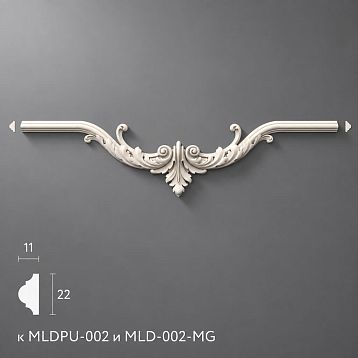
- Moldings: Wall Graphics
- Cornices: Completing the Vertical
- Door Frames: Framing Openings
- Corner Elements and Rails
- Decorative panels
- Design Possibilities and Stylistic Solutions
- MDF Processing
- Solid Wood Processing
- Application in Different Interior Styles
- Classical styles
- Baroque and Rococo
- Modern
- Scandinavian Style
- Loft and Industrial Style
- Modern style and minimalism
- Eclecticism
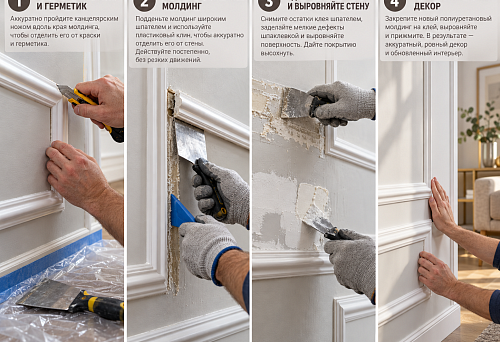
- Installation and mounting
- Surface Preparation
- Marking
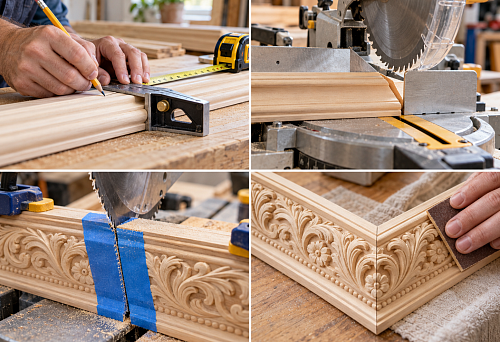
- Corner Trimming
- Fastening
- Finishing
- Maintenance and operation
- Economic Aspects
- Frequently Asked Questions
- Which material is better for humid areas?
- Can MDF Elements Be Painted at Home?
- How High Should a Baseboard Be?
- Is a Ceiling Cornice Needed in a Modern Interior?
- How to create a wall molding composition?
- Should elements from solid wood be purchased with a surplus?
- Can MDF and solid wood be combined in one room?
- How long do decorative elements last?
- Conclusion: create the perfect interior with STAVROS

When your gaze glides over the facade of a house and stops at the roof's completion, where wood seems to come alive in lace patterns — you are looking atCarved pediment. This architectural element transforms the simple triangular plane between roof slopes into a work of art, a statement of the owner's taste, a connection to the history of wooden architecture. In an era of standard construction and faceless boxes,Carved gable of the housebecomes a manifesto of individuality, a way to stand out, to create a unique appearance for a dwelling.
Why does the gable attract such attention from master carvers? It is the most noticeable part of the facade, crowning the building, visible from afar. Located at a height, it is the first to greet the rising sun, the last to bid farewell to the sunset rays. Light glides over the relief of the carving, creating a play of shadows, a constantly changing picture.Decorating the house facade gable with decorative elements— a tradition spanning centuries, but in 2026 it is experiencing a true renaissance thanks to the combination of ancient techniques and modern technologies.



From the temples of Hellas to Russian izbas: the history of gables
The history of the gable begins long before the emergence of wooden architecture — in the stone architecture of Ancient Greece. The classical Greek temple with a gable roof formed a triangular space between the cornice and the slopes — the tympanum. This plane was filled with sculptural compositions telling mythological stories. The Parthenon, the Temple of Zeus at Olympia, hundreds of other sanctuaries demonstrated the skill of sculptors who turned the gable into a narrative canvas.
The Romans adopted the Greek tradition but adapted it to their utilitarian needs. Gables adorned not only temples but also public buildings, triumphal arches, and wealthy villas. The decor became more diverse — in addition to sculpture, relief ornaments, geometric patterns, and plant motifs appeared.
Byzantine architecture, leaning towards domes, used gables less frequently, but in the Romanesque style of medieval Europe, they returned. Romanesque churches with massive walls and semicircular arches often had simple triangular gables decorated with sculptural decor or arcature belts.
Gothic, with its aspiration upward, turned the gable into a pointed gable decorated with openwork stone carving — a wimperg. Crockets (decorative hooks), finials, pinnacles created the most complex composition, where stone seemed like weightless lace. The cathedrals of France, Germany, and England demonstrated virtuoso mastery of stone carving technique.
The Renaissance era revived interest in antique forms. Gables regained classical proportions, triangular shape, and restrained decor. Palladio in Italy created the canon of a villa with a portico and gable, which spread throughout Europe and became the basis of classicism in the 17th-18th centuries.
But parallel to the stone tradition, the wooden architecture of Northern Europe and Russia developed. Here, the gable — the prichelina — performed not only a decorative but also a crucial protective function. It covered the ends of the log house from direct rain and snow, preventing wood rot. At the same time, Russian masters turned a utilitarian detail into a platform for demonstrating skill.
carved wooden gablesof Russian izbas, churches, and terems amaze with the variety of ornaments. Solar signs — circles with diverging rays, symbolizing the sun and protection from evil. Plant motifs — winding shoots, stylized flowers, leaves, reflecting the connection with nature. Geometric patterns — rhombuses, zigzags, meanders, rooted in pagan symbolism. Zoomorphic elements — heads of horses, birds, mythical creatures guarding the dwelling.
The northern regions of Russia — Arkhangelsk, Vologda oblasts, Karelia — have preserved examples of wooden architecture from the 17th-19th centuries, whereDecorative Elements of the Facade Gablereach incredible complexity. House-museums in Kizhi, Malye Korely demonstrate multi-tiered gables with carved prichelins, towels (vertical carved boards at the junction of slopes), and tassels (hanging carved elements).
Art Nouveau of the early 20th century contributed its share: gables became asymmetrical, decorated with stylized plant forms, wavy lines. Wooden mansions of that era in Moscow, St. Petersburg, and Samara have preserved examples of this aesthetic.
The Soviet period interrupted the tradition. Standard construction did not involve decor — functionalism rejected 'excesses'. Wooden houses were built according to standard projects without a hint of carving. Only in remote villages did old izbas with carved gables survive, gradually deteriorating without restoration.
The revival began in the 1990s with the growth of private housing construction. Owners of wooden houses again turned to traditions, orderingCarved Gable on a Wooden Housefrom masters who had preserved the skills. Today, in 2026, the production of carved gables has been put on an industrial basis, yet it retains a connection with manual craftsmanship. Modern equipment reproduces the most complex ornaments with millimeter precision, and the finishing is done by hand, preserving the soulfulness of traditional craftsmanship.




Typology and construction: what types of gables exist
decorative gable— is a broad concept encompassing many constructive and stylistic variants. Understanding this diversity helps in making the right decision when designing or reconstructing a facade.
Our factory also produces:


Classification by shape
Triangular gable — the classic shape formed by two slopes of a gable roof. This is the most common variant, characteristic of traditional architecture. The height of the triangle, the angle of the slopes determine the proportions of the gable. Steep slopes create a tall, elongated triangle — characteristic of northern regions with heavy snowfall. Gentle slopes form a wide, squat gable — a southern variant.
Trapezoidal gable is formed with a mansard roof, where the upper part of the slopes has a smaller angle of inclination than the lower part. The shape resembles a trapezoid truncated from above. This variant is characteristic of houses with a residential attic, where the space under the roof is maximally utilized.
Semicircular or segmental gable has an arched completion instead of a sharp angle. This form came from Baroque architecture, where curved lines were valued more than straight ones. In wooden architecture, semicircular gables are rarer due to the complexity of manufacture, but modern technologies make them accessible.
Broken pediment — a form where the cornices do not meet at the top, leaving an opening. A decorative element — a vase, coat of arms, or sculpture — can be placed in this opening. This solution is characteristic of Baroque and Rococo; it is rarely used in wooden architecture but creates a memorable effect.
Stepped pediment — a form with several horizontal setbacks, creating a stepped silhouette. Characteristic of Dutch and North German architecture; in Russian wooden architecture, it is found in regions influenced by European styles.
Get Consultation
Structural Elements
A completedecorative wooden gableconsists of several interconnected parts, each with a name and function.
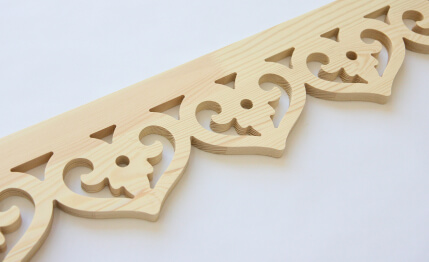
Pricheliny — inclined boards running along the roof slopes and covering the ends of the logs (horizontal logs supporting the roof). It is the pricheliny that become the main field for carving. Their width is usually 200-400 millimeters, and their length corresponds to the length of the slope. The carving can be openwork (pierced), where the pattern is cut through, creating a lace-like effect, or relief, where the ornament stands out against the background.
Polotenets — a vertical carved board at the junction of two pricheliny, at the apex of the pediment. The name is related to its shape — a narrow, long board with carved decoration indeed resembles a towel. The polotenets often ends with a hanging carved element — a tassel, which protects the joint from water seepage and serves as a decorative accent.
Ochelye is a horizontal carved board running along the top of the pediment between the prichelinas. It is not present in all designs, but in complex compositions it creates an additional level of decoration.
Tassel or earrings — hanging carved elements attached to the lower part of the pricheliny or polotenets. They can be shaped like stylized leaves, cones, or geometric figures. In addition to their decorative function, tassels act as additional water drains, directing water flowing from the roof.
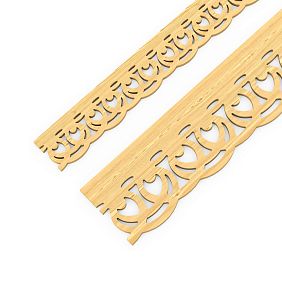
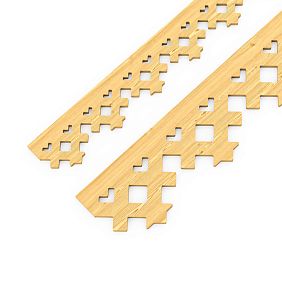
Podzor — an openwork carved board covering the gap between the wall and the roof overhang. The podzor runs horizontally along the entire facade, creating a decorative border. Combined with carved pricheliny, the podzor forms a unified system of facade decoration.
Wood Carving Techniques
The choice of carving technique determines the visual effect and manufacturing technology.carved pediment.
Openwork (pierced) carving — the pattern is completely cut through, turning the board into lace-like openwork. This technique creates maximum decorativeness, especially effective with backlighting when light passes through the openings. Openwork carving requires careful strength calculation — too thin bridges between openings can break. Modern laser machines allow creating openwork carvings of incredible complexity with bridge thicknesses of 2-3 millimeters.
Relief carving — the ornament stands out against the background, which is recessed to a certain depth. There is low relief (bas-relief) with protruding element heights of 5-20 millimeters and high relief (high relief) with heights of 20-50 millimeters or more. Relief carving creates an expressive play of light and shadow, especially under the oblique rays of morning or evening sun.
Applied carving — individual carved elements are made separately and then attached to the main board. This allows creating multi-level compositions with great relief depth. Applied carving is simpler to manufacture and repair — a damaged element can be replaced without dismantling the entire structure.
Contour carving — the ornament is created by thin line-grooves cut into the surface of the board. This is the simplest technique, not requiring deep material removal. Contour carving creates a graphic, laconic decoration, suitable in modern interpretations of traditional forms.
Combined carving combines several techniques. For example, the main pattern is executed in openwork carving, while individual accent elements are in relief. Or the background is treated with contour carving, creating a texture against which openwork openings stand out. Combined technique provides maximum expressiveness but requires high skill from the craftsman.
Decoration and Symbolism: The Language of the Carved Pediment
Decorative Elements of the Facade Gableis not just decoration, but encoded information, a symbolic text that our ancestors knew how to read. Each ornament had meaning, protected the house, attracted prosperity, and told about the owners.
Solar Symbols
The Sun — the central image of Slavic mythology, the source of life, warmth, light. Solar signs on the pediment protect the house from evil and call for prosperity. A circle with diverging rays is the most common solar sign. The number of rays varies: four (for the cardinal directions), six, eight (the most frequent variant), twelve. The rotating solar sign — kolovrat — is depicted as a cross with bent ends, symbolizing eternal movement, the cyclical nature of the seasons.
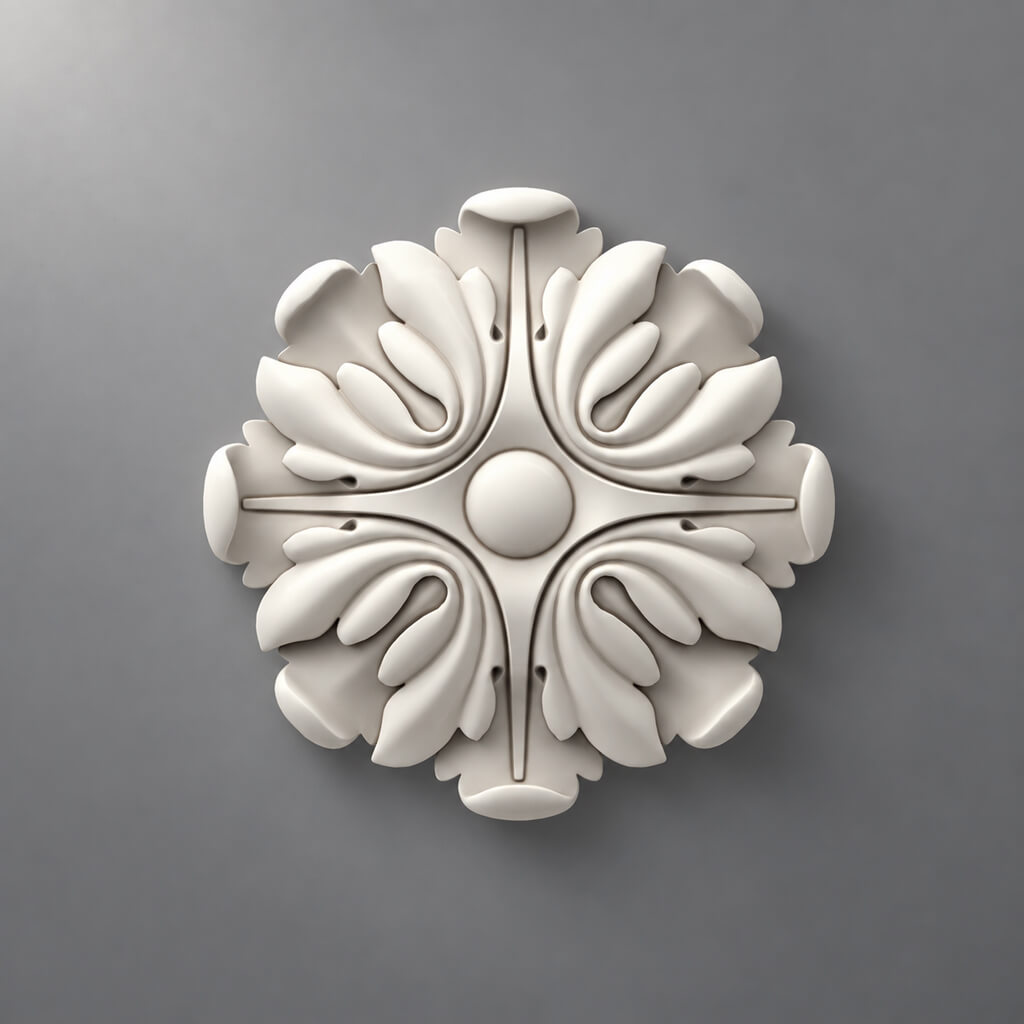
Rosette — a round ornament with symmetrical petals radiating from the center, also a solar symbol. Rosettes can be simple, with 6-8 petals, or complex, multi-level, with dozens of elements. In the center of the pediment, a large rosette becomes the compositional core from which other ornaments radiate.
Plant Motifs
Twining shoots, stylized flowers, leaves symbolize fertility, growth, connection with nature. Grapevine with clusters — a symbol of prosperity, abundance. Oak leaves and acorns — strength, longevity, masculine principle. Birch branches — feminine principle, tenderness, purity. Hops — merriment, celebration. Daisies, cornflowers — simple wildflowers symbolizing Russian nature, modesty, natural beauty.
Tree of Life — a vertical symmetrical ornament with a central trunk and branches extending from it — a universal world symbol connecting heaven, earth, and the underworld. On the pediment, the Tree of Life is placed vertically on the polotenets or central part, becoming the axis of the composition.
Geometric patterns
Diamonds divided into four parts by internal diagonals — the most ancient symbol of a plowed field, fertility. A chain of diamonds creates a repeating rhythm, structuring the space. Zigzags, wavy lines — water, river of life, movement. Meander — a broken line at right angles — came from ancient Greece, symbolizing eternity, infinity. Six-pointed stars — a symbol of harmony, balance of opposites.
Zoomorphic Images
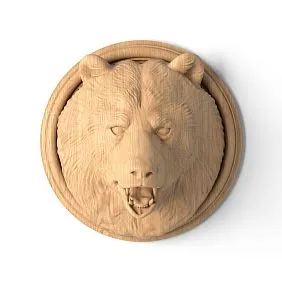
Horse heads on the ends of pricheliny — one of the most recognizable elements of Russian wooden architecture. The horse — a solar symbol, carrying the sun across the sky, protector of the house, embodiment of strength and nobility. A pair of horses looking in different directions guards the dwelling from all directions.
Birds — messengers between worlds, symbols of the soul, freedom. Ducks, swans are associated with the water element, symbolizing fidelity, family happiness. Owls — wisdom, connection with the otherworldly, protection from evil forces. Rooster — a solar bird, driving away night and darkness, a vigilant guardian.
Snakes, dragons — chthonic beings associated with the earth and underground forces. Despite negative connotations in the Christian tradition, in folk culture, the serpent could be a protector of the house, a guardian of treasures. Stylized dragons with intertwined bodies create complex patterns reminiscent of Scandinavian carving.
Christian Symbolism
With the adoption of Christianity, pagan symbols were gradually supplemented or replaced by Christian ones. Crosses of various forms — equilateral, eight-pointed, flourished (with plant shoots at the ends) — were placed in the center of the pediment or at the corners. The grapevine acquired additional Christian meaning related to the Eucharist. Doves became a symbol of the Holy Spirit. Lilies — purity and the Virgin Mary.
Inscriptions—owners' names, construction dates, biblical quotes—were carved on the pediment as a kind of chronicle of the house. The initials of the master carver appeared less frequently, but their presence testifies to the creator's professional pride.
Modern Interpretations
Carved Gable on a Wooden HouseThe 2026 design does not necessarily copy historical models. Modern designers create original ornaments that combine traditional motifs with geometric abstraction, plant forms with minimalist graphics. Laser cutting allows for the realization of any, even the most complex ideas—from precise reproduction of ancient patterns to futuristic compositions.
Monochrome carving, where the ornament and background are painted the same color, creates a subtle play of relief visible only under certain lighting. Contrast painting—dark ornament on a light background or vice versa—enhances graphic quality, making the decor maximally noticeable. Patination, gilding of individual elements gives the pediment a luxurious, palatial appearance.
Manufacturing and Installation Technology
Creationof wooden carved pediments—a process combining modern technology and manual craftsmanship.
Material selection
Wood must possess a complex of specific properties: strength, resistance to moisture and temperature fluctuations, ease of processing, beautiful texture. Larch is the optimal choice for facade decor. Its high resin content makes it practically non-rotting even without additional treatment. The dense structure ensures strength but complicates the carving of fine details.
Oak is a noble wood with a pronounced texture, highest strength, and durability measured in centuries. Oak is heavy, difficult to process, but the result is impressive. Over time, oak darkens, acquiring a noble hue. Ash is similar in characteristics to oak but has a lighter tone and less pronounced texture. It holds its shape well and does not warp.
Pine is the most affordable option, easy to process, has a beautiful texture with contrasting annual rings. The drawback is softness, susceptibility to rot without protective treatment. For pediments, select knot-free pine with dense layers is used. Spruce is softer than pine, less resinous, and resists moisture worse. It is rarely used, mainly for secondary elements.
Siberian cedar combines ease of processing, pleasant aroma, and natural resistance to rot. Beautiful pinkish-yellow color, uniform texture. Used for the premium segment. Wood moisture content is critical. The material must be dried to 12-15 percent—moisture content corresponding to operational conditions on a facade. Under-dried wood deforms after installation, over-dried wood may crack.
Production process
Cutting begins with computer modeling. The ornament is created in specialized CAD programs that account for pediment dimensions, material technological features, and strength requirements. The file is transferred to a CNC machine—a milling machine for relief carving or a laser for through-carving.
Milling is performed by multi-axis machines capable of processing surfaces at any angles. The process is fully automated; the operator controls parameters, changes cutters, and removes processed parts. Accuracy is within tenths of a millimeter. Laser cutting creates perfectly clean edges of cutouts without burrs; the burnt edge is removed with light sanding.
Manual finishing gives the product individuality. The master carver goes over all elements of the ornament, removes sharp edges, emphasizes details that the machine cannot work out. This operation requires years of experience and a subtle understanding of the material. It is the manual finishing that distinguishes a premium product from a mass-produced one.
Sanding is performed in several stages: coarse sandpaper (grit 80-120) removes large irregularities, medium (150-180) evens the surface, fine (220-320) creates smoothness. Deep areas of relief are sanded manually with special tools—flexible sanding pads, abrasive sponges.
Protective treatment
Untreated wood on a facade will last 5-10 years, after which decay will begin. High-quality protective treatment extends service life to 30-50 years. Antiseptic treatment is the first stage. Deep-penetration compounds impregnate the wood to a depth of 3-5 millimeters, destroy fungal and bacterial spores, and prevent biological damage.
Priming creates a base for the finishing coat, evens out the wood's absorbency. Special exterior primers containing UV filters are used. The finishing coat can be transparent (varnishes, oils) or opaque (paints). Transparent compositions emphasize the wood texture but require high-quality material without defects. Exterior varnishes form a hard film that protects against moisture and ultraviolet light.
Oils penetrate deeply into the wood, do not form a surface film, and emphasize the texture. Oil treatment gives the wood a soft, silky sheen. The drawback is the need for regular renewal (every 3-5 years). Paints completely hide the texture, creating a uniform color. Modern acrylic-based facade paints are elastic, breathable, and do not crack. The service life of the coating is 7-10 years.
Mounting on the facade
Installationof the house gablerequires precision and understanding of the structure. Bargeboards are attached to the ends of the rafters (roof sheathing logs) or to specially installed battens. Fasteners are stainless steel self-tapping screws or screws 60-100 millimeters long, which pass through the carved board and enter the load-bearing structure by at least 40 millimeters.
The distance between fastening points is 300-400 millimeters. Fastener heads are countersunk by 3-5 millimeters, holes are covered with wooden plugs or filled with putty, then painted to match the product. The pendant is attached at the junction of the bargeboards and must fit tightly to both sides. For reliability, not only mechanical fasteners are used but also polyurethane-based adhesive, resistant to moisture and temperatures.
The soffit is mounted along the lower part of the roof overhang. It is important to provide a ventilation gap between the soffit and the wall—minimum 20-30 millimeters. This prevents moisture accumulation and ensures air circulation. Tassels and hanging elements are attached last, after installing the main parts. Fasteners must be especially reliable—these parts are subject to wind loads.
Preserving beauty: caring for a wooden pediment
Carved pedimentserves for decades with proper care. An annual inspection after winter allows for early detection of damage. Check the condition of the coating—for any peeling, cracks, areas with loss of gloss. Inspect the fasteners—whether screws have loosened, rust has appeared. Ensure there is no biological damage—dark mold spots, woodworm holes.
Cleaning is performed with a soft brush or sponge moistened with water. To remove stubborn stains, use a weak soap solution. Do not use aggressive detergents, solvents, abrasives—they damage the protective coating. After washing, allow the wood to dry completely.
Coating renewal is necessary when signs of wear appear. Oil coatings require renewal every 3-5 years. The surface is lightly sanded with fine sandpaper, cleaned of dust, and a fresh coat of oil is applied. Varnish coatings last longer—7-10 years. If cracks or peeling appear, the old varnish is removed by sanding, and a new one is applied in 2-3 coats. Paint is renewed as it fades or cracks. The surface is washed, old paint that has lost adhesion is removed with a scraper. Undamaged areas can be left untouched—new paint is applied over the old after priming.
Damage repair is performed locally. Small cracks are filled with exterior wood putty, sanded, and painted. Broken small elements can be restored by making a new part and replacing the damaged one. Serious damage—rotted areas, deep cracks—require replacement of entire sections. This is one of the advantages of the modular design—there's no need to replace the entire pediment, just the damaged element.
Answers to common questions
How much does a carved pediment cost?
The cost depends on size, carving complexity, wood species, and type of finish. A simple pediment with through-carving made of pine for a small house (base 4-5 meters, height 1.5-2 meters) can cost 40-60 thousand rubles. A complex multi-element pediment with relief carving made of larch or oak for a large house—150-300 thousand rubles and above. Exclusive custom works made of premium species with hand carving can cost 500 thousand rubles or more.
Which wood is best for facade decor?
For the climate of central Russia, larch is optimal—natural resistance to moisture, strength, durability. For regions with harsh climates, cedar is suitable—frost resistance, stability. For southern regions, oak is good—resistance to heat and dryness. Pine is suitable with a limited budget but requires high-quality protective treatment and regular care.
Can a carved pediment be installed on a brick or stone house?
Yes, a carved pediment is suitable for any house if the building's style allows it. On a brick or stone house, the pediment is attached to a wooden lathing, pre-installed on the gable wall. This combination creates an interesting contrast of materials — massive walls and an airy wooden finish.
Is a permit required to install a carved pediment?
For a private house that is not an architectural monument, a permit is not required — it is an element of exterior finishing that does not alter the building's structure. If the house is located in a historical zone or is a cultural heritage site, coordination with monument protection authorities is necessary. They may impose requirements regarding style, dimensions, and ornamentation.
How long does a wooden pediment last?
With quality material, proper protective treatment, and regular maintenance, a carved pediment lasts 30-50 years. Historical examples show that wooden carvings can be preserved for 100-150 years — museums of wooden architecture exhibit pediments from the 18th-19th centuries. Modern protective compounds surpass historical ones, allowing for an even longer service life.
Can a custom pediment design be created?
Absolutely. Companies specializing in facade decoration offer custom design services. A designer creates a sketch considering the house's architecture, the client's wishes, and technical possibilities. It is possible to reproduce a historical ornament from a museum collection, adapt traditional motifs, or create a completely original composition.
How does a carved pediment behave in winter?
Quality wood, dried to the required moisture content and protected with modern coatings, withstands frost excellently. Snow and ice do not linger on the inclined surfaces of the bargeboards. Openwork carving promotes ventilation, preventing ice formation. It is important that the roof's drainage system functions correctly, preventing water from running directly down the pediment.
Conclusion: Create a unique facade with STAVROS
Carved Gable on a Wooden House— is an investment in beauty, individuality, and connection with tradition. A facade adorned with quality carving distinguishes the house from standard construction, creates an atmosphere, and tells a story. It is not just decoration, but an expression of the owner's personality, their attitude towards architecture, culture, and craftsmanship.
The company STAVROS specializes in producingfacade decoration from wood, including carved pediments, window surrounds, soffits, brackets, balusters. STAVROS's portfolio includes hundreds of completed projects, from accurate reproductions of historical samples to ultra-modern original compositions.
STAVROS's production base is equipped with high-precision CNC machinery, allowing for carving of any complexity. Multi-axis milling machines reproduce the most intricate reliefs; laser installations create airy openwork carving with connecting bridges as thin as 2 millimeters. At the same time, the final finishing is done manually by experienced master carvers, giving each product individuality.
Materials used by STAVROS — selected wood of larch, oak, ash, cedar, kiln-dried pine with a moisture content of 12-15 percent. Each board undergoes quality control; blanks with knots, cracks, or uneven structure are rejected. This guarantees the durability and stability of the finished products.
Protective treatment is performed with professional compounds from leading European manufacturers. The multi-layer coating includes antiseptic treatment, priming with UV filters, and a finishing layer of varnish, oil, or paint. The client can choose any finishing option — from a transparent coating that emphasizes the wood grain to an opaque enamel in any color from the RAL catalog.
The custom design service is available to all STAVROS clients. An experienced designer will create a pediment sketch considering your house's architecture and your stylistic and ornamental preferences. You will receive a 3D visualization of the future pediment and can make adjustments before production begins. This eliminates the risk of the finished product not meeting expectations.
STAVROS's delivery geography covers all of Russia and CIS countries. The company has experience in reliable packaging and delivery of large-sized products to the most remote regions. If necessary, STAVROS specialists visit the site for final measurements and installation consultation.
Choosing STAVROS means choosing quality tested by time, craftsmanship based on deep knowledge of materials and technology, and beauty born from respect for tradition and a pursuit of perfection. Create facades that will delight you and impress others for decades with carved pediments from STAVROS.
Interior decor details: from MDF to solid wood
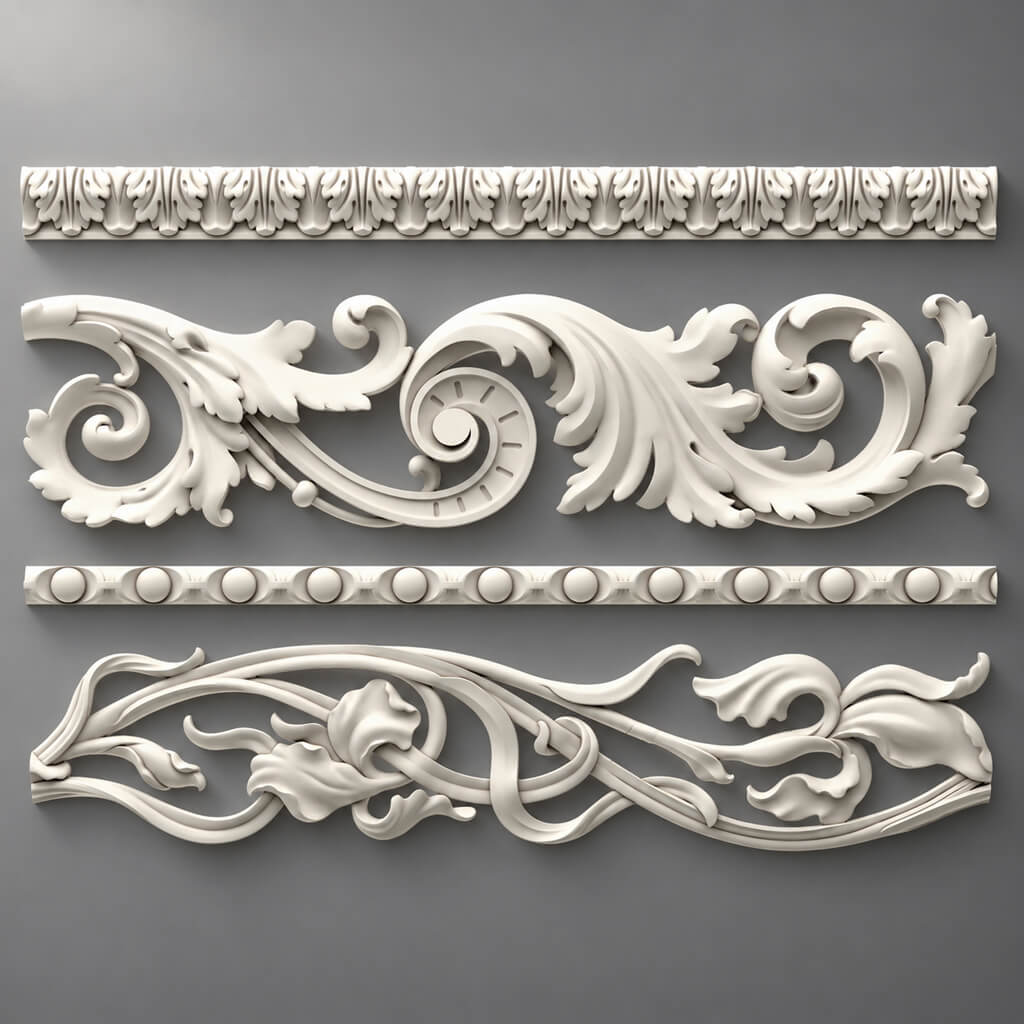
An interior is a symphony where every note matters. Furniture, wall finishes, and textiles create the foundation, but it is precisely the Decorative elements that transform a space into a complete composition, filled with character and individuality. Wall moldings, carved cornices, baseboards with ornamentation, decorative panels — these elements structure the space, create rhythm, emphasize architecture, and make an ordinary room memorable.
Choice of material for of interior decor details — a decision affecting the appearance, durability, and cost of the project. MDF and solid wood are the two main materials, each with its own advantages, limitations, and optimal areas of application. Understanding their characteristics allows for an informed decision, finding a balance between aesthetics, functionality, and budget. In 2026, the production of wooden details for decoration and MDF has reached an unprecedented level of quality and diversity, opening limitless possibilities for designers and homeowners.
Materials science: MDF and solid wood compared
The choice between MDF and solid wood is not a question of 'which is better,' but 'which is suitable for the specific task.' Both materials have their strengths, both are worthy of use, but in different contexts.
MDF: Technological and Accessible
MDF (Medium Density Fiberboard) — a material created by pressing fine wood fibers under high pressure and temperature with the addition of binding resins. The result is a homogeneous, dense board without voids, knots, or structural unevenness characteristic of solid wood.
became a revolutionary solution for those striving for a flawless result that combines aesthetic appeal with practicality and affordability. have dimensional stability — the material does not warp from humidity fluctuations, does not shrink, and does not swell to the extent that solid wood does. This is critically important for long elements — baseboards, cornices — which must maintain straightness along their entire length. The homogeneity of the structure allows milling complex profiles with thin elements — MDF does not chip, crumble, and maintains clear geometry.
The MDF surface is perfectly smooth, without pores, and does not require complex preparation before painting. One layer of primer and two layers of paint yield an impeccable result. Solid wood, however, requires multiple priming, pore filling, and careful sanding — a process that increases labor costs and price.
Environmental friendliness of modernMDF detailsmeets strict European standards. Emission class E1 (formaldehyde content no more than 0.1 mg per 100 grams of material) is safe for use in residential premises, including children's rooms. High-quality MDF is odorless and does not emit harmful substances.
Cost is a significant advantage.MDF details buycan be 2-4 times cheaper than similar elements made of solid oak or beech. This allows for the implementation of large-scale projects with abundant decoration on a limited budget.
The disadvantages of MDF are related to its artificial nature. The material lacks the texture of natural wood—even high-quality veneering does not replicate the tactile feel of solid wood. When damaged—by deep scratches or chips—the uniform structure of pressed fibers is exposed. Repairing such damage is more difficult than with solid wood.
The moisture resistance of standard MDF is limited—prolonged contact with water causes swelling. For wet areas, moisture-resistant MDF with special additives is used, but its cost is higher. Bending strength is lower than that of solid wood—a thin MDF element may break under mechanical stress, whereas a wooden one would bend but not break.
Natural wood: soul and character
Solid wood is a material with a millennia-long history of use, time-tested, possessing unique qualities. Each board has a unique pattern of annual rings, interplay of shades, and texture that cannot be artificially reproduced.Wooden decorative detailsdo not just decorate the interior—they create an atmosphere, filling the space with warmth and living energy.
Oak is the king among hardwoods. Dense structure, pronounced texture with large vessels, noble shades from light yellow to dark brown. Oak is incredibly durable, resistant to abrasion, impacts, and moisture. The service life of oak elements is measured in decades. Over the years, oak darkens, acquiring depth of color. The drawback is high cost and significant weight.
Beech is a hard, light-colored wood with a fine, uniform texture. Color ranges from pinkish-yellow to reddish-brown. Beech is easy to work with and can be polished to a silky sheen. Its strength is comparable to oak, but beech is more sensitive to humidity and requires a stable microclimate. Ideal for interior decor in heated rooms.
Ash is close to oak in strength but has a lighter tone and a clearly defined texture with contrasting stripes. Ash is elastic, bends well, which is valuable for curved elements. It resists impact loads.
Walnut is a premium-segment wood with luxurious shades from gray-brown to chocolate with dark veins. The texture is expressive but not coarse. Walnut is easy to work with and polishes excellently. Used for creating elite decor.
Pine and spruce are soft coniferous species, affordable in price. Light-colored wood with a contrasting pattern of annual rings. Resinousness provides natural moisture resistance. The drawback is softness—dents from impacts form easily. Suitable for decor in low-traffic areas.
Natural wood is absolutely eco-friendly—it is a living material that regulates air humidity and does not emit harmful substances. Wood has antiseptic properties—many species inhibit bacterial growth.
The texture of solid wood is beautiful in itself. Transparent finishing with oil or varnish emphasizes the natural pattern, creating depth. Wood is pleasant to the touch—warm, alive. These qualities cannot be replaced by artificial materials.
Disadvantages are related to its natural properties. Wood reacts to changes in humidity—it absorbs moisture in damp periods and releases it in dry ones. This causes dimensional changes—swelling or shrinkage. Long solid wood elements may warp. Modern drying and stabilization technologies minimize this problem but do not eliminate it completely.
Knots, resin pockets, uneven color—these are natural characteristics of wood. For some, these are flaws; for others, they confirm authenticity. Select-grade material without defects is expensive.
Processing solid wood is labor-intensive. Hardwoods require powerful tools, sharp cutters, and patience. The cost of manufacturing elements from solid wood is higher than from MDF.
Range of decorative elements
Interior decoration detailsincludes a wide range of products, each with its own function and aesthetic role.
Baseboards: foundation of composition
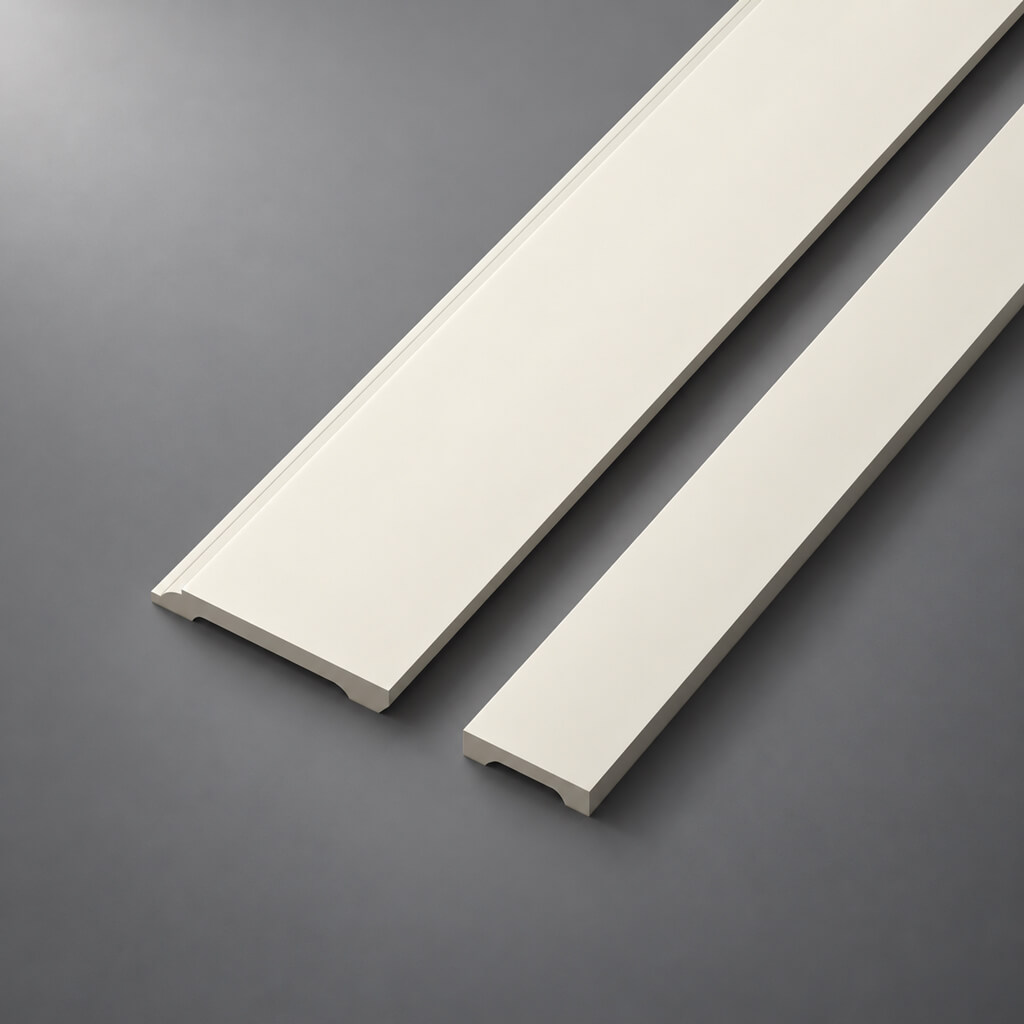
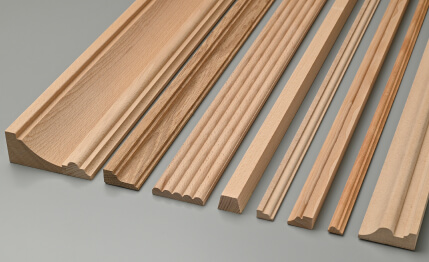
Baseboard covers the joint between wall and floor, protects the lower part of the wall from damage, conceals gaps and cables. But the main role of the baseboard is compositional. It creates a visual boundary, frames the floor, and structures the space. The height of the baseboard affects the perception of the room. Low baseboards (40-60 millimeters) create lightness and are suitable for small rooms. High baseboards (100-200 millimeters or more) add monumentality and are characteristic of classic interiors with high ceilings.
Baseboard profile varies from simple rectangular sections to complex multi-level forms with beads, shelves, and relief decor.MDF furniture partin the form of paintable baseboard allows color adaptation to any interior. Solid wood baseboards with transparent finishing emphasize naturalness and pair well with parquet or solid wood flooring.
Moldings: wall graphics
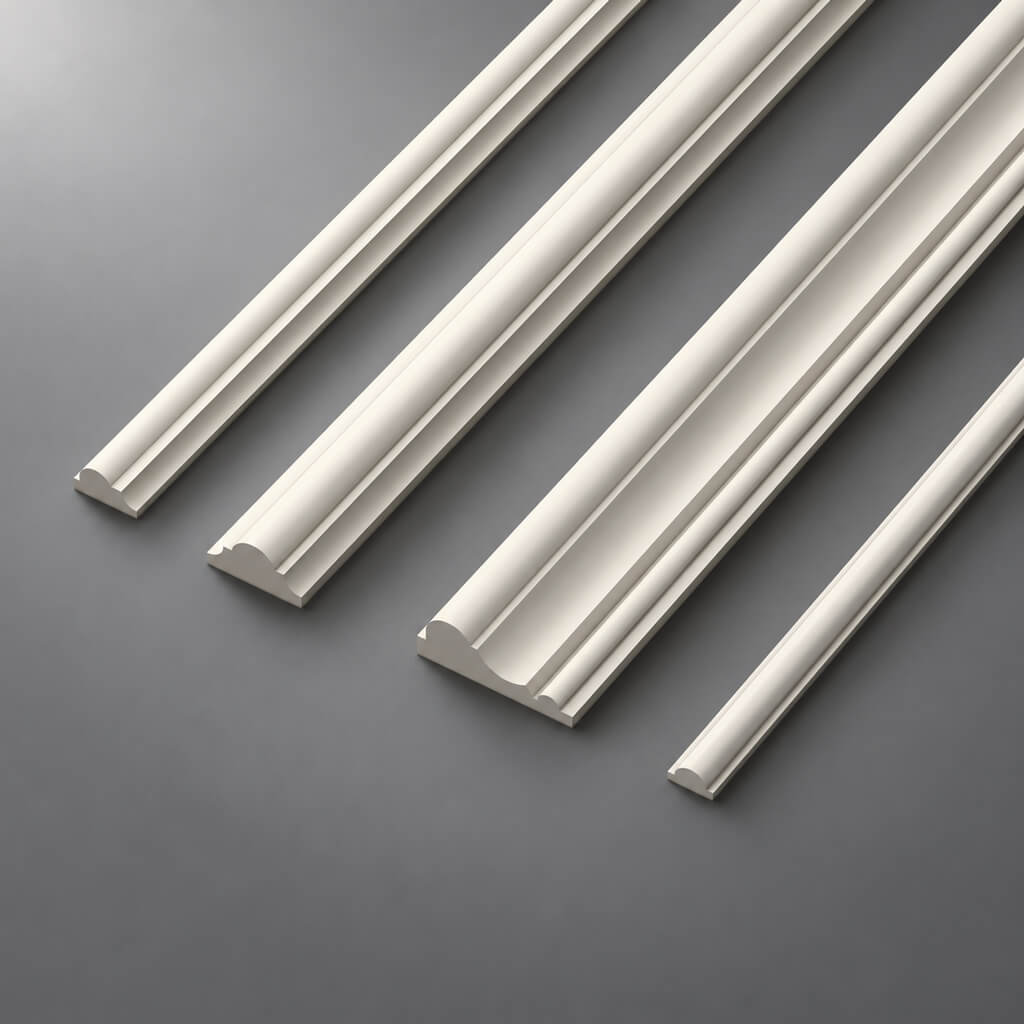
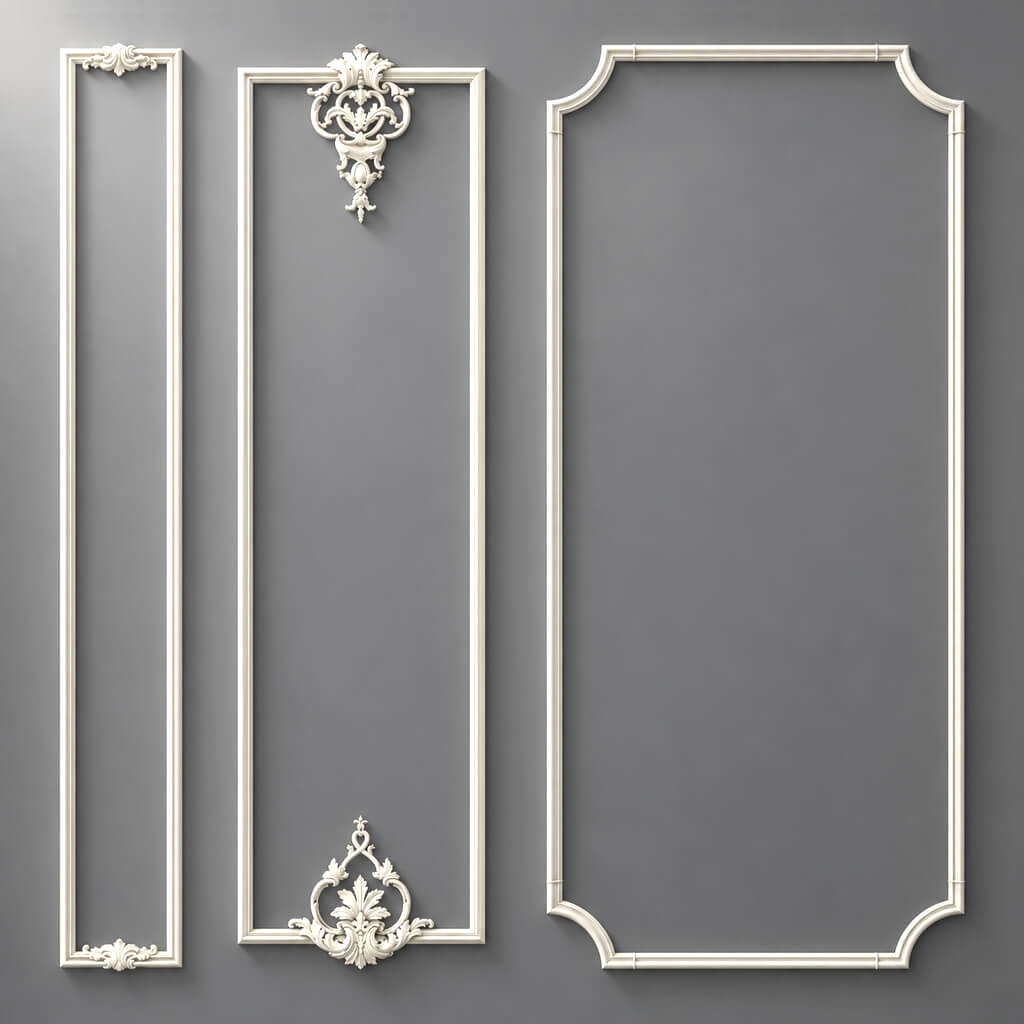
Molding is a decorative strip of various profiles, used to create compositions on walls, doors, and furniture. Moldings are used to form frames on walls, dividing the plane into sections—a classic technique characteristic of palace interiors.MDF furniture detailsin the form of moldings are used for decorating cabinet fronts and creating paneled doors.
Molding width ranges from thin (10-15 millimeters) to wide (80-100 millimeters). Thin moldings create light graphics, while wide ones form substantial compositions. The relief can be simple—one or two beads—or complex—multi-level with geometric or floral ornamentation.
Cornices: Completing the Vertical
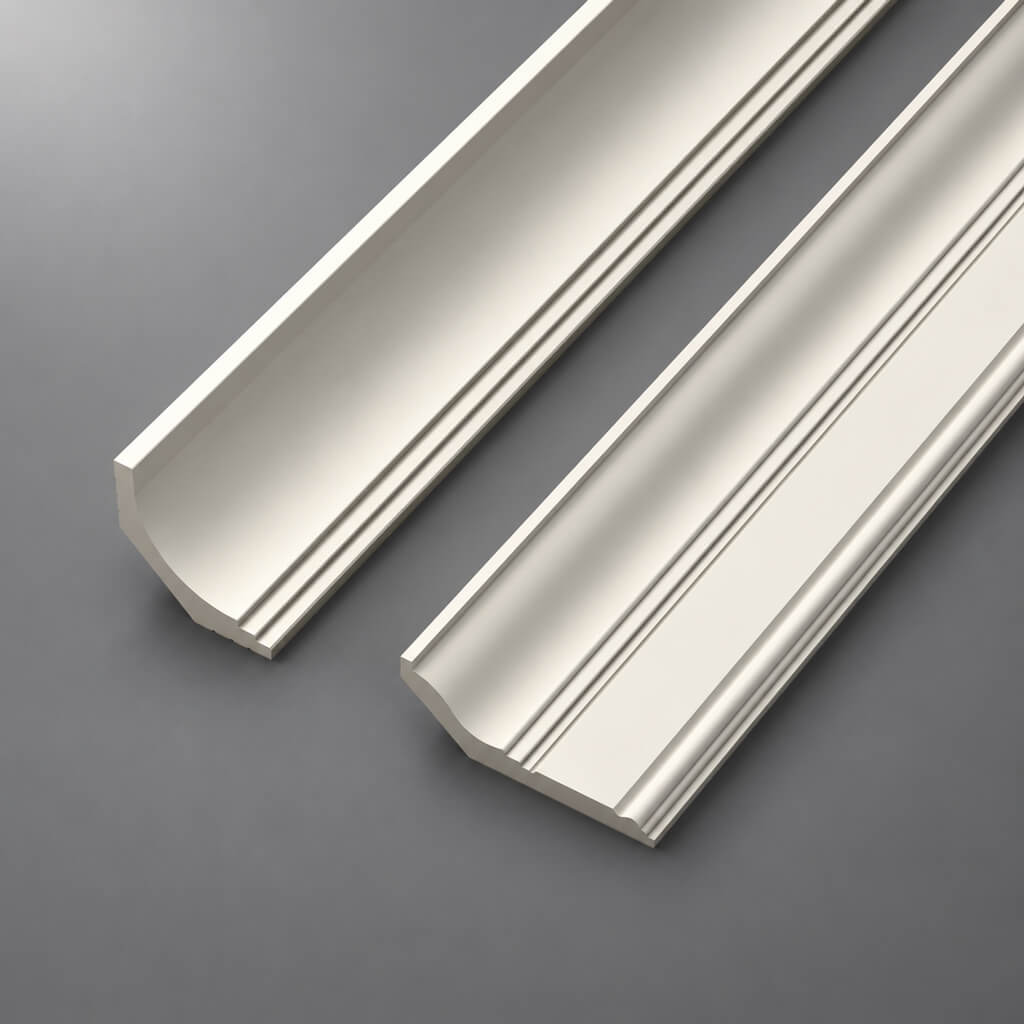
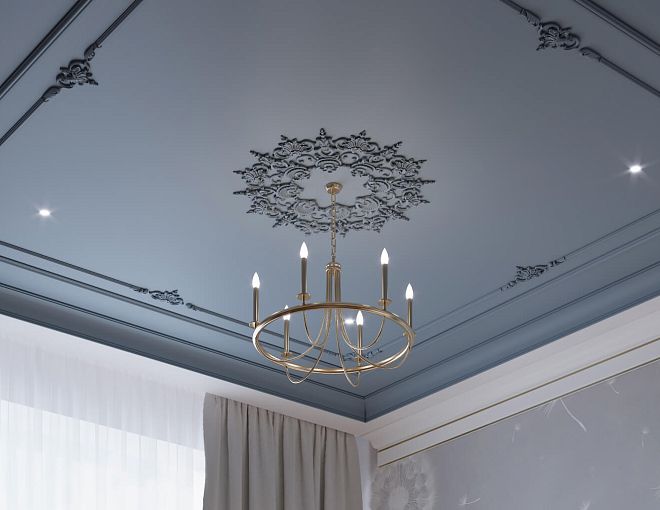
Ceiling cornice is a horizontal profile at the junction of wall and ceiling, creating a clear boundary between planes. Even a simple cornice instantly structures the space. A complex profile with multiple levels of relief gives the room classic elegance.
The functional role of the cornice is to create hidden lighting. An LED strip placed behind a wide cornice reflects light off the ceiling, creating a floating plane effect. The room visually expands, and the atmosphere becomes light.
MDF part manufacturingcornices for painting are economically advantageous for large-scale projects. Solid wood cornices are used in premium interiors where naturalness is valued.
Casing: framing openings
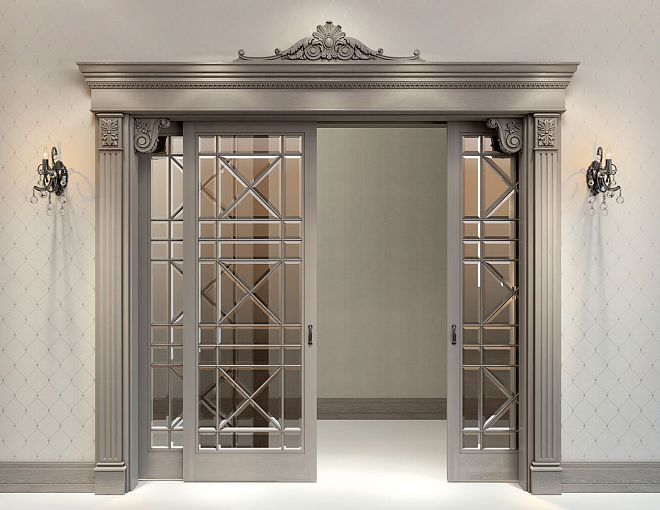
A casing is a vertical plank that frames a door or window opening. Its function is to close the gap between the frame and the wall, creating a visual frame. Casing widths range from narrow 40-50 millimeters to wide 100-120 millimeters. The profile can be flat, rounded, or shaped.
Telescopic casings with a groove allow for adjusting the framing width, adapting to the wall thickness. This is convenient for uneven walls or varying finish thicknesses.Wooden decorative detailscreate exclusive opening designs.
Corner elements and battens
Corner guards protect the external corners of walls from damage while simultaneously decorating them. Material - MDF or solid wood, finish - painting or veneering. Battens of various cross-sections are used to create frame compositions, finish joints, and mount panels.
Decorative Panels
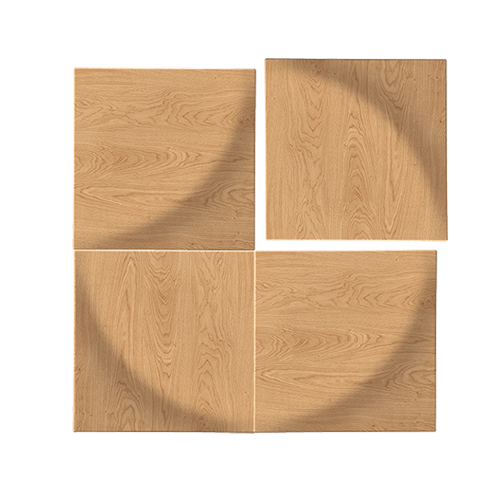
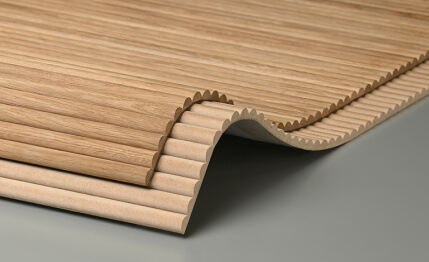
Wall panels are large-format elements for wall finishing. They can be smooth for painting or with relief decor—panels, carving, milled patterns. MDF panels are lightweight, easy to install, and affordable. Solid wood panels are a premium solution, creating an atmosphere of a high-end interior.
Production technologies
Productiondecor detailsis a high-tech process combining automation and manual control.
MDF Processing
The process begins with cutting boards into blanks of the required size. Panel saws with vertical blades are used, ensuring cutting precision. Profile milling is performed on four-sided longitudinal milling machines, processing the blank from all sides in one pass. This guarantees perfect geometry and dimensional accuracy.
Complex profiles with deep relief are created on CNC machines. The computer controls the cutter's movement, reproducing the shape programmed with an accuracy of tenths of a millimeter. This allows for creating ornaments of any complexity.
Sanding is performed by automatic sanding machines with several belts of different grits. The surface becomes perfectly smooth, ready for priming. Priming can be done at the factory by dipping or spraying. Primedbecame a revolutionary solution for those striving for a flawless result that combines aesthetic appeal with practicality and affordability.are ready for painting on-site.
Some manufacturers offer factory painting in any color from the RAL catalog. Painting is done in chambers with controlled climate, applying several layers with intermediate sanding. The quality of factory painting surpasses manual work - even coverage without drips, sags, or unevenness.
Solid Wood Processing
Production begins with drying wood in kilns to a moisture content of 8-12 percent. This is a lengthy process requiring precise control of temperature and humidity. Under-dried wood deforms after installation, over-dried wood cracks.
I will continue the article from where I left off.
Solid wood cutting is performed considering the grain direction, knot placement, and texture. An experienced craftsman selects board sections for the face side so that the pattern is beautiful and uniform. Blanks undergo preliminary processing - planing, thickness calibration.
Milling solid wood requires powerful equipment and sharp tools. Hardwoods - oak, beech, ash - create high load on cutters. Processing is carried out at reduced feed speeds, with periodic replacement of dulled tools. The result is a clear profile without chips, tear-outs, or burns.
Sanding solid wood is performed in several stages with gradual reduction of abrasive grit. Deep profile areas are sanded manually with profile blocks. Wood dust is thoroughly removed with compressed air - it interferes with finish application.
Final processing depends on the chosen type of coating. For transparent finishes, wood can be tinted with stains, impregnations that change color but preserve grain visibility. Oil application is done by rubbing with subsequent removal of excess. Varnishing requires several layers with intermediate sanding. Enamel painting includes priming, pore filling, sanding, applying paint in 2-3 layers.
Application in different interior styles
Interior decoration detailsmust correspond to the overall style of the room. Incorrectly chosen elements will destroy harmony, even if beautiful on their own.
Classic styles
Classicism, Empire, English style require an abundance of architectural decor. Baseboards 120-200 millimeters high with multi-level profiles. Ceiling cornices with ornaments - egg-and-dart, ovolos, meanders. Wall moldings form rectangular frames, dividing the plane into sections.
Material - preferably solid oak, beech, or painted MDF. Color palette restrained - white, ivory, light beige shades. Gilding is applied sparingly, on individual ornament elements.Wooden decorative detailsin a classic interior must be of impeccable quality - any defect is conspicuous.
Baroque and Rococo
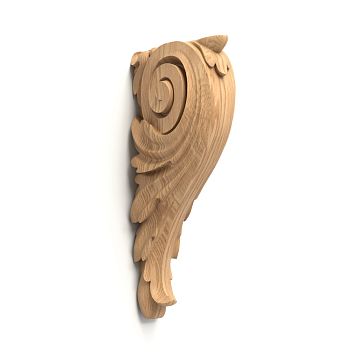
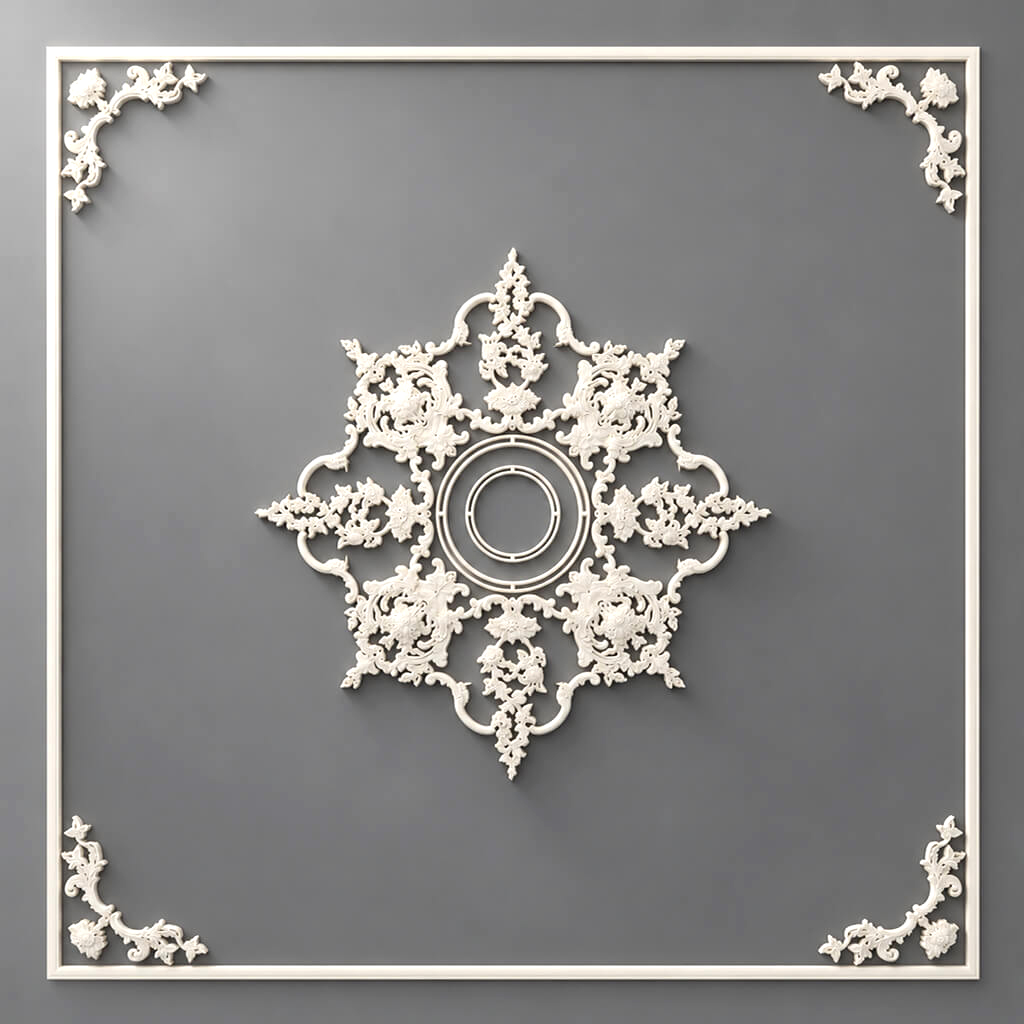
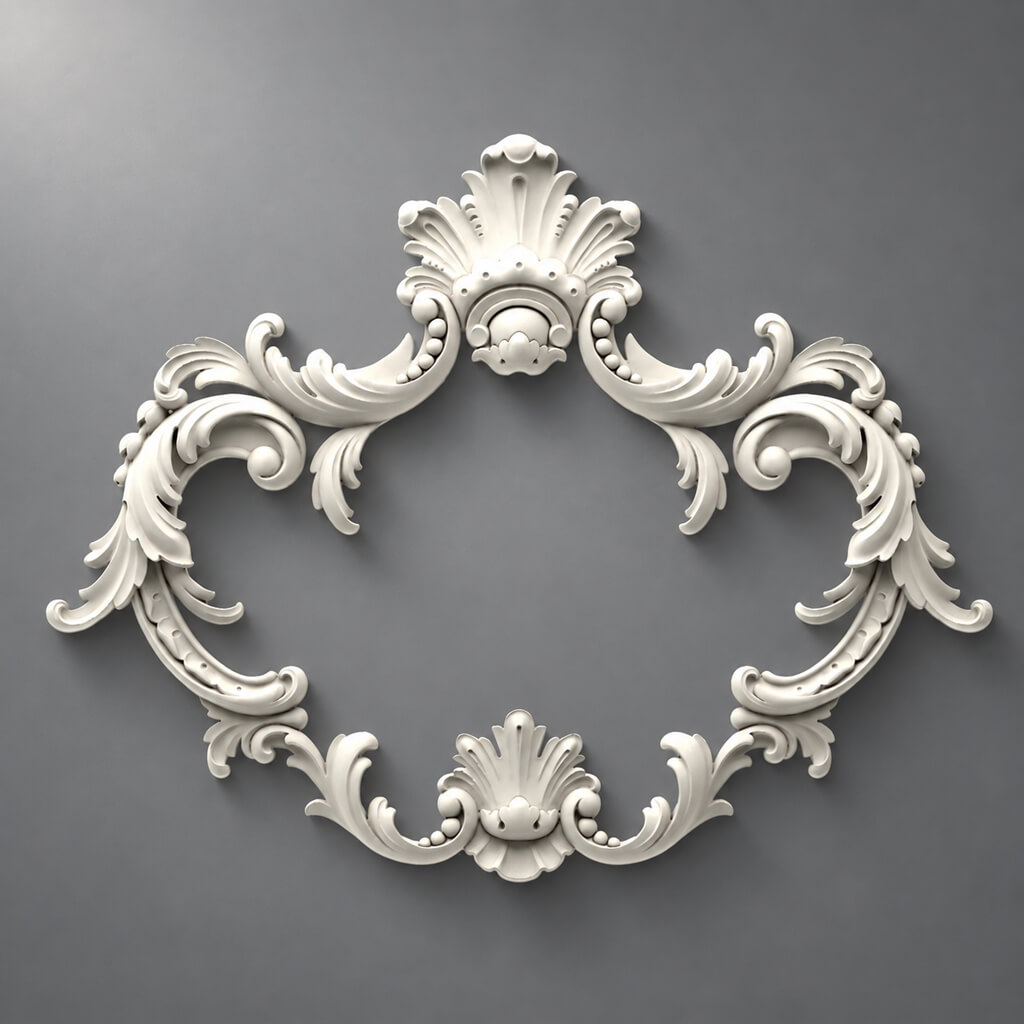
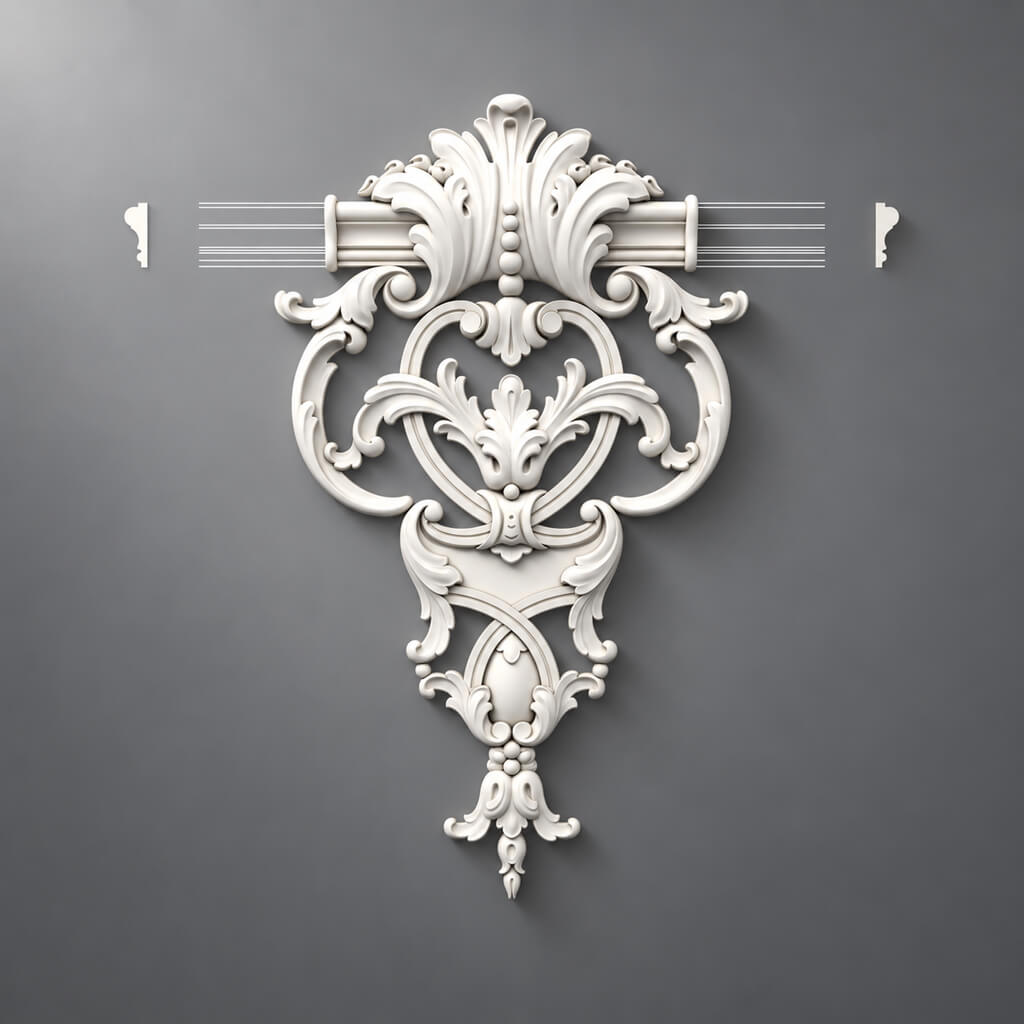
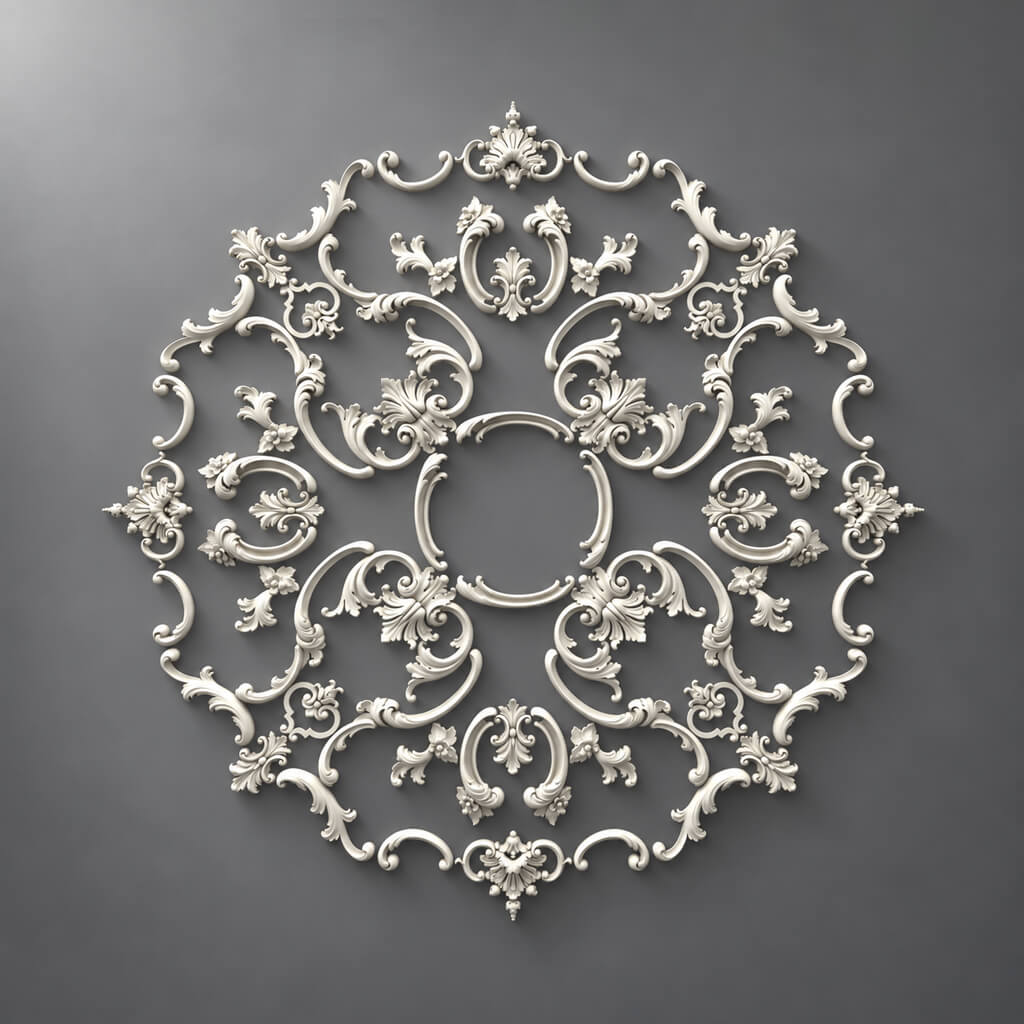
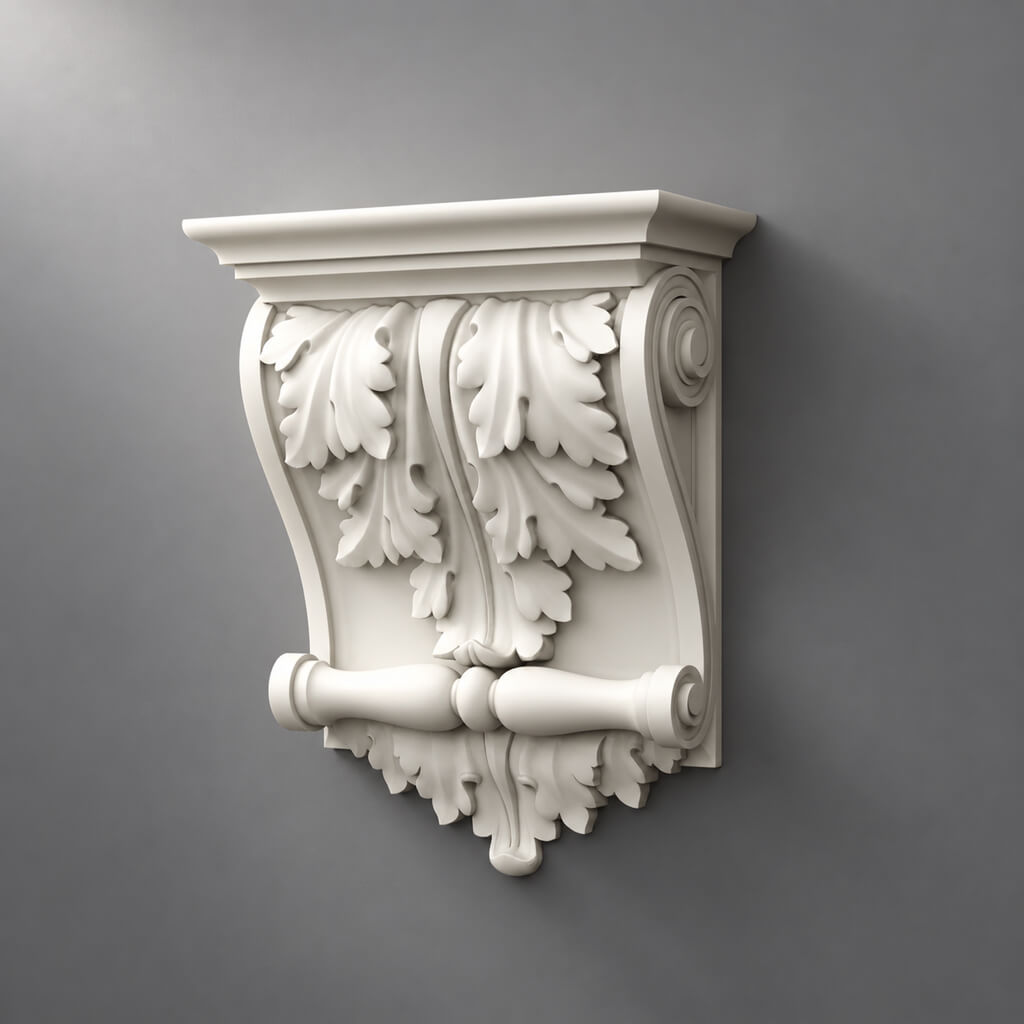
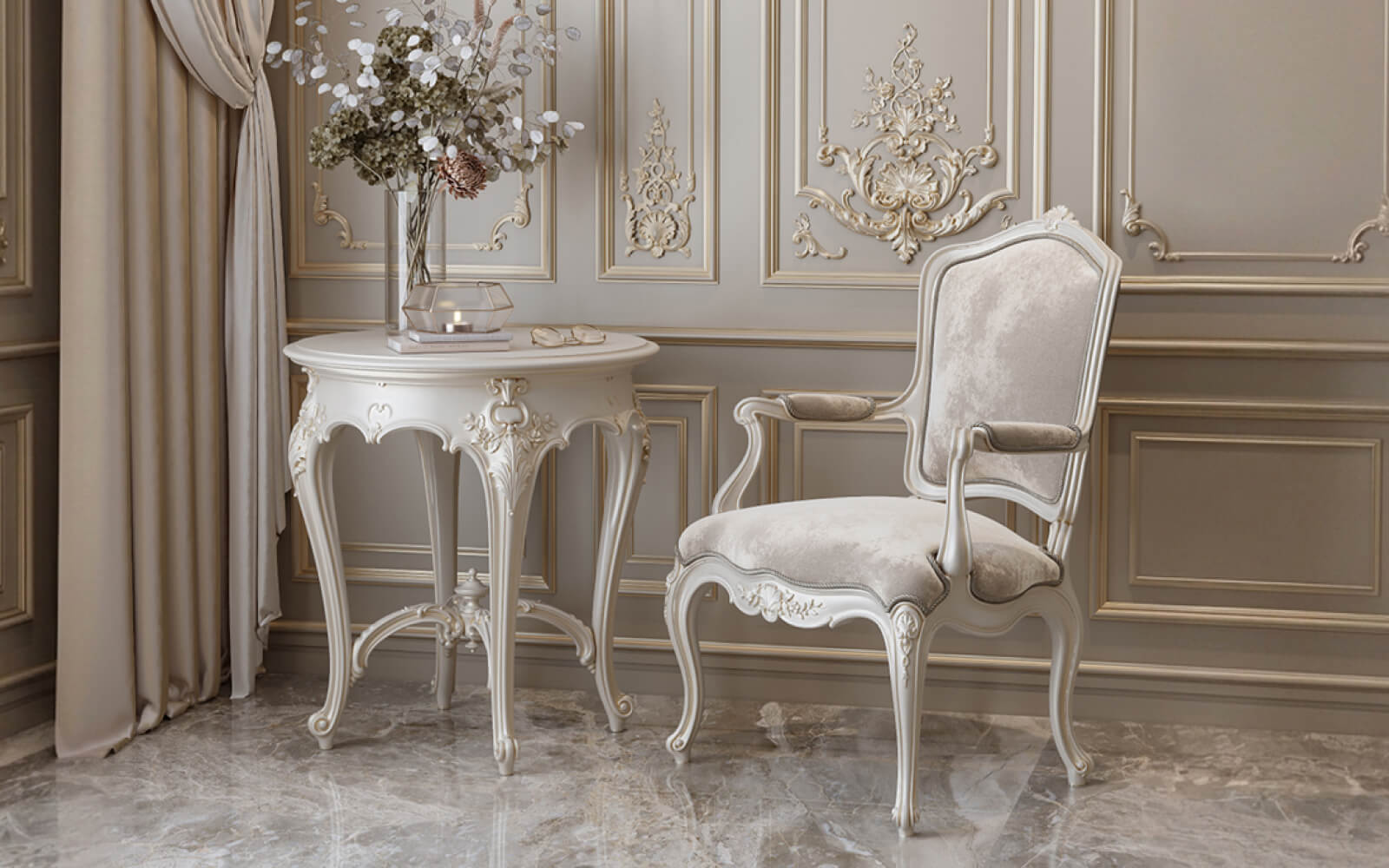
Opulence, abundance of carving, curvilinear forms characterize these styles. Decorative elements have complex relief with plant motifs - acanthus leaves, garlands, scrolls. Baseboards and cornices are wide, massive. On walls - not just molding frames, but complex compositions with consoles, cartouches, carved panels.
Material - solid wood or MDF with deep milling. Finish - white with gilding, pastel tones, patination for an aged effect. These are the most decoratively saturated styles, whereDecorative elementsplay a dominant role.
Modern
Smooth plant lines, rejection of symmetry, stylized natural forms distinguish Art Nouveau. Baseboards and cornices have a wavy profile. Moldings create asymmetrical compositions. Ornament - stylized irises, lilies, climbing vines.
Material - solid wood with pronounced texture under transparent finish or tinting. MDF is less organic for Art Nouveau but acceptable under paint. Colors - natural shades of brown, green, with accents of burgundy, ochre.
Scandinavian style
Conciseness, light tones, natural materials are the foundation of Scandinavian style. Decor is minimal but present. Baseboards of simple rectangular or rounded profile, 60-80 millimeters high. Cornices narrow, without ornament. Moldings are rarely used, mainly for framing doors and windows.
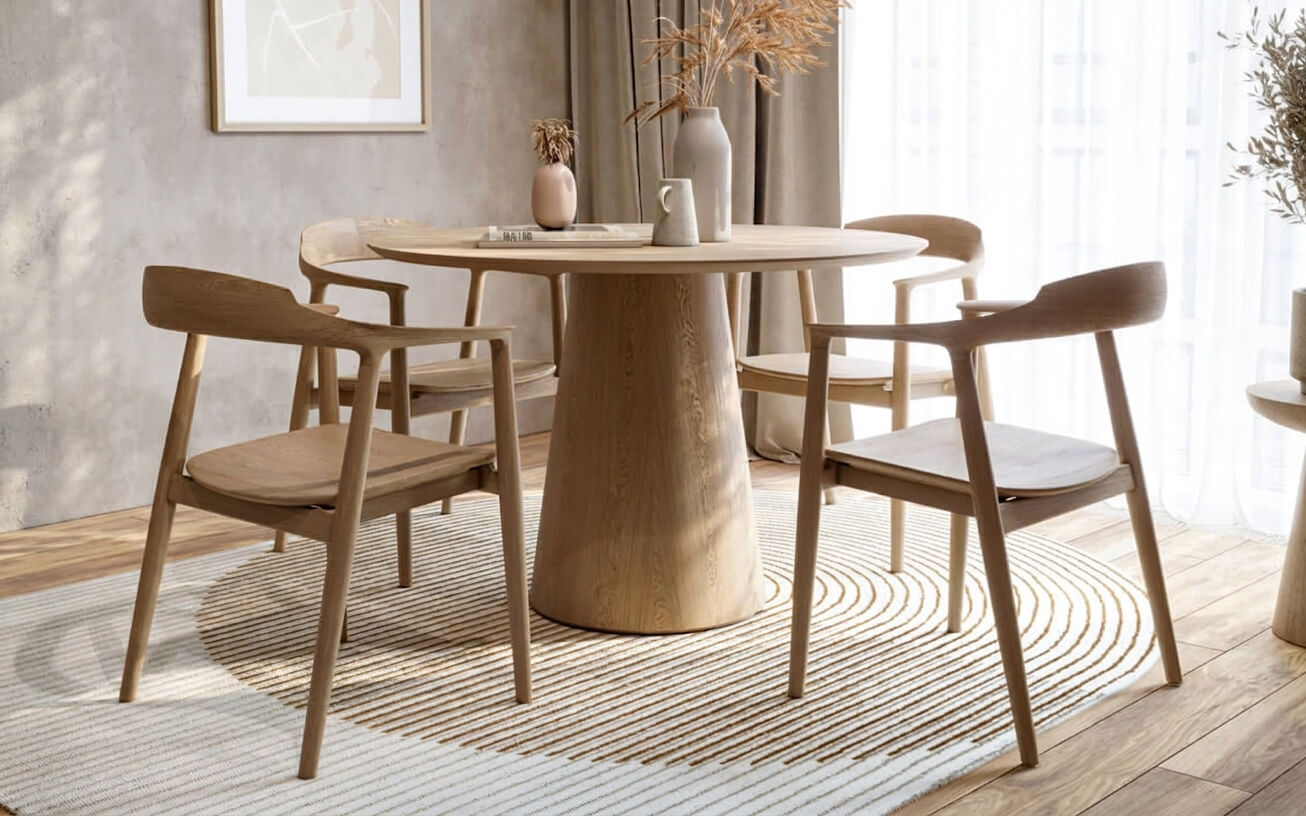
Material—solid pine, spruce, birch with transparent finish or white paint. The wood grain is emphasized, knots are acceptable—they create a sense of naturalness. MDF under white enamel is also appropriate.became a revolutionary solution for those striving for a flawless result that combines aesthetic appeal with practicality and affordability.in Scandinavian interiors should be of simple forms, without excess.
Loft and industrial style
It would seem that styles that reject decorativeness do not need classical details. But the skillful use of laconic elements structures the loft space, makes it more cozy, without destroying its brutality.
Baseboards of rectangular cross-section, painted in dark colors or to resemble metal. Ceiling cornices of the simplest profile, creating a clear boundary between the brick wall and concrete ceiling. Door casings are metal or wooden of simple shape.
Material—MDF for painting in graphite, black, dark brown. Solid wood is used in untreated or roughly processed form—brushed boards with pronounced texture, aged surface. The contrast of rough brick and smooth wooden details creates interesting tension.
Modern style and minimalism
Clean lines, absence of ornament, functionality—the principles of these directions. Decorative elements are present, but in a maximally simplified form. Baseboards—thin profiles 40-60 millimeters without relief or with one simple curve. Cornices—rectangular strips or profiles with a minimal number of facets.
Material—MDF painted to match the walls, creating a seamless effect. Or a contrasting combination—black elements on white walls, white on dark ones. Solid wood is rarely used, mainly in eco-minimalism, where naturalness is valued above geometric purity. Wood texture in minimalism is an accent element, requiring impeccable material quality.
Eclecticism
Mixing styles is the main feature of eclecticism.Interior decoration detailscan be classical in form, but painted in unexpected colors—emerald, indigo, coral. Or modern laconic, but made of solid wood with pronounced texture.
Eclecticism gives freedom but requires a subtle sense of proportion. The unifying factor can be color, repeated in different elements, or material, or the scale of details.MDF details buyand combine with solid wood—a common technique in eclectic interiors, where expensive and budget solutions coexist.
Installation and Mounting
The quality of installation determines the final result no less than the quality of the elements themselves.
Surface preparation
Walls and ceilings must be level, dry, and sturdy. Irregularities exceeding 3-5 millimeters per meter of length must be leveled with putty. Installing elements on uneven surfaces will lead to gaps and distortion of profiles. The surface is cleaned of dust, grease stains, and primed with a deep-penetration compound. This improves adhesive adhesion and strengthens the base.
Marking
Precise marking is critical. For baseboards, a horizontal line is marked at the required height from the floor. A laser level or water level is used to transfer marks around the entire perimeter. For ceiling cornices, a line is drawn at the required distance from the ceiling. For wall moldings, the entire composition is marked using a long ruler and level.
Trimming Corners
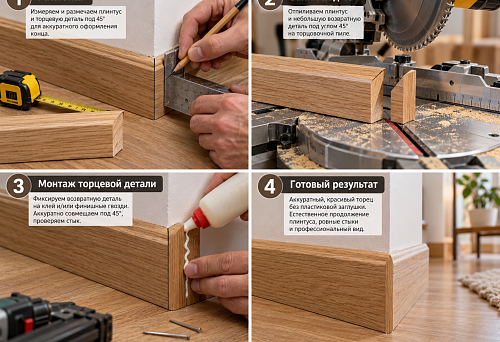
Joining elements at corners is the most critical moment. For internal 90-degree angles, each element is cut at a 45-degree angle. A miter box or miter saw is used. The cut must be perfectly even, without chips. External corners are cut similarly, but in mirror image.
For angles other than 90 degrees, the cutting angle is calculated individually. Before applying adhesive, a dry fit is performed—elements are placed at the installation site, and the tightness of joints is checked. If there are gaps, the angles are adjusted.
Fastening
Lightweight MDF elements are attached with construction adhesive like 'liquid nails.' Adhesive is applied in intermittent lines to the back of the element. The element is placed at the installation site, pressed firmly, and held for 20-30 seconds. Excess adhesive is immediately removed with a damp sponge.
Heavy solid wood elements require additional mechanical fastening with screws or finishing nails. Holes for fasteners are pre-drilled with a slight countersink for the head. After installation, the holes are puttied, sanded, and painted.
Joints between elements are coated with joint adhesive for maximum connection tightness. Small gaps are filled with acrylic sealant, carefully smoothed with a wet finger. After curing, the sealant is sanded with fine sandpaper.
Final finishing
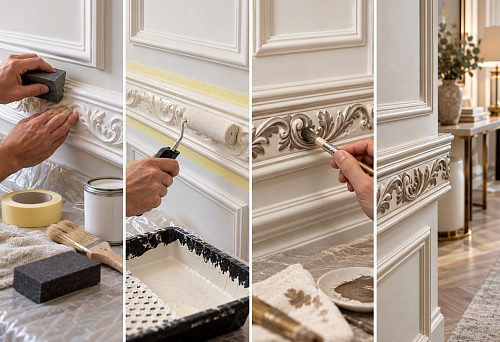
If elements are installed unpainted, finishing is performed after installation. All joints are checked and, if necessary, additionally puttied. After the putty dries, the surface is sanded. Primer is applied, then paint in 2-3 coats with intermediate light sanding.
For solid wood with transparent finish, the process is different. After installation, elements may be tinted with stains to even out color and emphasize texture. Then oil or varnish is applied according to the specific product's technology. It is important to protect adjacent surfaces with painter's tape to avoid staining the walls.
Care and Maintenance
Decorative elementslast for decades with proper care. Dust is removed with a dry soft cloth or brush. For elements with deep relief, use a vacuum with a brush attachment. Stains are wiped with a slightly damp sponge and mild detergent.
Painted MDF elements are low-maintenance. Modern paints form a durable coating resistant to washing. Solid wood elements with transparent finish require periodic renewal of the protective layer. Oil finishes are renewed every 3-5 years—the surface is lightly sanded, and a fresh coat of oil is applied. Varnish finishes last longer—7-10 years, then require complete re-varnishing.
Mechanical damage—scratches, chips—on painted elements are repaired locally. The damaged area is cleaned, primed, and painted to match. On solid wood with transparent finish, deep scratches are sanded, the tinted area is sanded, and a fresh coat of finish is applied.
Economic Aspects
The choice between MDF and solid wood is often determined by the project budget.became a revolutionary solution for those striving for a flawless result that combines aesthetic appeal with practicality and affordability.cost 2-4 times less than similar elements made of solid oak or beech. For an apartment of 80-100 square meters, a full set of decor (baseboards, casings, cornices) made of MDF will cost 80-150 thousand rubles. A similar set made of solid oak—250-400 thousand rubles.
However, a direct price comparison is not always accurate. Solid wood elements last longer, do not require replacement for decades, and can be restored. In case of serious damage, MDF will need to be completely replaced. When considering the service life, the difference in the cost of ownership decreases.
A combined approach is optimal for many projects.MDF furniture detailsare used for elements that will be painted — skirting boards, cornices, wall moldings.Wooden decorative detailsSolid wood is used where natural texture is important — door architraves for formal rooms, furniture elements, decorative panels in the fireplace area.
Frequently asked questions
Which material is better for humid areas?
For bathrooms and kitchens, moisture-resistant materials are preferable. MDF must be of a special moisture-resistant modification (designated as MDF-V or moisture-resistant MDF). For solid wood, species with natural moisture resistance are optimal — larch, teak. High-quality protective treatment is essential — multi-layer varnishing or painting with moisture-resistant enamels.
Can MDF elements be painted at home?
Yes, but the quality will be lower than factory-made. MDF requires thorough priming — at least 2 coats of primer with intermediate sanding. Paint is applied in 2-3 thin coats with light sanding between coats. Use high-quality acrylic paints for interior work. It is better to work with a spray gun or roller — a brush leaves marks on the smooth MDF surface.
What height should a skirting board be?
It depends on the ceiling height and style. For standard rooms of 2.5-2.7 meters, skirting boards of 60-100 millimeters are optimal. For high ceilings from 3 meters — 100-150 millimeters. In classic interiors with ceilings of 3.5-4 meters, high skirting boards of 150-200 millimeters are appropriate. Low skirting boards of 40-60 millimeters are suitable for minimalist interiors and small rooms.
Is a ceiling cornice necessary in a modern interior?
A cornice is not mandatory but desirable. Even a simple, laconic profile creates a clear boundary between the wall and ceiling, structuring the space. In a minimalist interior, a thin cornice of 40-60 millimeters with a simple shape is appropriate. Complete refusal of a cornice is possible but requires impeccable room geometry — the slightest irregularities at the wall-ceiling junction will be noticeable.
How to create a composition of moldings on a wall?
Start with a sketch — draw the wall to scale on paper, mark out frames made of moldings. A classic technique is to divide the wall into 3-5 vertical rectangular sections. Molding width — 30-60 millimeters for standard rooms. Distance of frames from the floor — 20-30 centimeters, from the ceiling (if there is no cornice) — similarly. Between frames — 10-20 centimeters. Transfer the markings to the wall using a level and tape measure, carefully checking verticals and horizontals.
Should solid wood elements be purchased with a surplus?
Yes, a minimum of 10 percent surplus. Consumption increases when cutting angles and correcting mistakes. Solid wood from the same batch has a uniform color and texture. Buying exactly the same material later is difficult — a new batch may differ in shade. For MDF, surplus is less critical — the material is uniform, and buying more is not difficult.
Can MDF and solid wood be combined in one room?
Yes, and it is even recommended for budget optimization. Make painted elements (cornices, skirting boards, moldings) from MDF — after painting, they are indistinguishable from solid wood. Elements with transparent finishing, where texture is important (door architraves, decorative panels) — from solid wood. The main thing is to maintain a uniform profile and color scheme.
How long do decorative elements last?
MDF, with proper use and care, lasts 15-25 years. Solid wood — 30-50 years and more. Historical examples show that quality wooden elements last for centuries. The limiting factor is not material degradation but the moral obsolescence of the design. After 20-30 years, owners often change the decor not due to its wear but from a desire to update the interior.
Conclusion: Create the perfect interior with STAVROS
Interior decoration details— these are the finishing touches that turn a set of furniture and finishes into a harmonious space with character and soul. The right choice of material, profile, color, and competent installation create a result that pleases for years, does not become tiresome, and remains relevant as trends change.
Company STAVROS offers a full range ofdecorative elements made of MDF and solid woodfor any interior solutions. The catalog features hundreds of profiles for skirting boards, cornices, moldings, architraves — from classic to modern laconic forms.
MDF productsmanufactured by STAVROS are made from E1 class boards from leading European manufacturers. Milling is performed on high-precision CNC equipment, guaranteeing perfect profile geometry. Elements are supplied primed, ready for painting, or with factory painting in any color from the RAL catalog.
solid wood elementsare manufactured from selected kiln-dried oak, beech, and ash wood with a moisture content of 10-12 percent. Each blank undergoes quality control; boards with knots, cracks, or uneven texture are rejected. Milling is performed on four-sided machines, ensuring dimensional accuracy and surface quality.
Service ofmanufacturing MDF partsaccording to individual sketches is available for designers and architects working on unique projects. STAVROS technologists will advise on technological capabilities, develop an optimal solution, and calculate timelines and costs. The minimum order quantity for a custom order is from 50 linear meters.
The wide delivery geography covers all of Russia. Established logistics ensure delivery to any region while preserving product quality. Elements are packaged in protective film; long profiles are equipped with rigid inserts to prevent bending during transportation.
STAVROS professional consultants will help you select elements that harmonize with your interior, calculate the required quantity taking into account cutting and waste, and recommend adhesive compositions and finishing coatings. Regular customers receive discounts, and loyalty programs are available.
STAVROS represents over half a century of experience working with wood and wood-based materials, deep technological understanding, and a commitment to excellence in every product. By choosing STAVROS products, you choose quality proven by thousands of completed projects, reliability backed by manufacturer warranties, and beauty born from craftsmanship and attention to detail. Create interiors where every detail contributes to overall harmony with decorative elements from STAVROS.