












































































Article Contents:
- Energy of Natural Materials in Architecture
- Psychological Impact of Ornamental Forms
- Architectural Anatomy: Elements of Carved Decor in Home Building
- Cornices and Friezes: Horizontals of Grandeur
- Casing: Framing Beauty
- Chimneys and Coving: Celestial Symbolism
- Veranda: Grand Entrance to the House
- Material Science: Choosing Wood for Exterior Decor
- Coniferous Species: Durability of Northern Forests
- Stylistic Directions in House Carving
- Hardwood Species: Nobility and Refinement
- Classicism: Strict Harmony of Proportions
- Russian style: return to roots
- From Handicraft to Digital Technologies
- Baroque: Theatrical Grandeur
- Modernism: nature as a source of inspiration
- Technological Innovations in Decor Production
- Protective Coatings: Extending the Life of Beauty
- Regional Characteristics of House Carving
- Northern School: Rugged Beauty
- Volga Tradition: Patterns and Abundance
- Siberian School: Cultural Synthesis
- Practical Aspects of Applying Carved Decor
- Design: Harmony and Proportions
- Installation: Precision and Reliability
- Economic Efficiency of Carved Decor
- Maintenance and servicing: preserving beauty
- Investment in Status and Beauty
- Energy Efficiency of Decorative Elements
- Return on Investment Through Tourist Appeal
- Modern Trends in Home Decor
- Neo-Russian Style: Traditions in Modern Interpretation
- Eco-style: return to nature
- Fusion: Blending Styles
- Psychology of Color in Carved Decor
- Psychology of Color in Carved Decor
- Natural shades: harmony with nature
- Colored finishes: traditions and innovations
- Conclusion: The Legacy of Craftsmanship in the Modern World
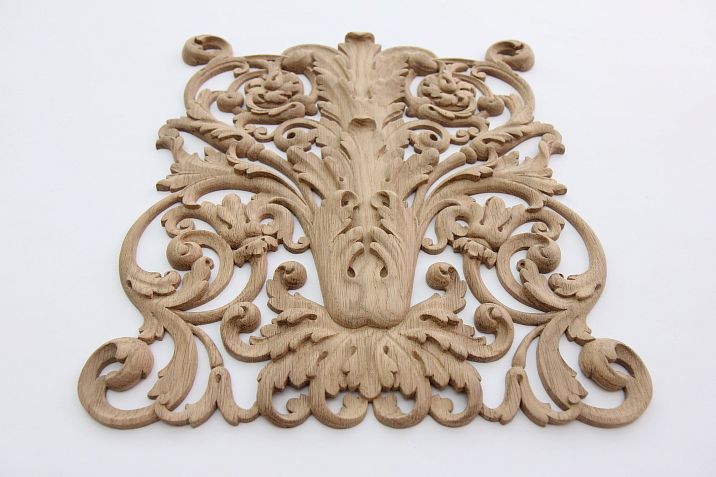
What turns an ordinary house into a true palace? What makes passersby stop and admire the facade? The answer lies in the details — in that remarkable carved decoration of the housethat can transform a typical building into a work of architectural art. In an era of standardization and mass construction, wooden carving remains the magical element that gives the building soul and individuality.
Each swirl, each carved rosette, each ornamental motif tells its own story. This is the language of beauty, understood by the heart, a language that speaks of the homeowner’s taste, their pursuit of the beautiful, their desire to create not just a dwelling, but a true home — a place where one wishes to live, create, and pass on traditions to future generations.


Philosophy of home comfort through the prism of carved art




Energy of natural material in architecture
Wood is not just a building material. It is a living substance that preserves memories of years of growth, sunny days and rainy nights, of winds that swayed branches. When a craftsman takes on the creation of wooden decor for a house, they work with this living memory, releasing the beauty contained within the material.
Modern research confirms what our ancestors intuitively understood: wood creates a special microclimate, regulates air humidity, emits barely perceptible warmth even on the coldest days. Carved window casings do not merely decorate openings — they create thermal bridges that help maintain a comfortable temperature inside the house.
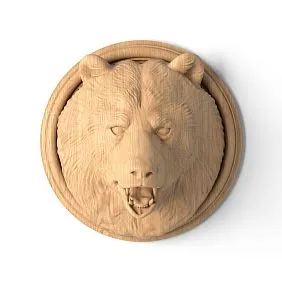
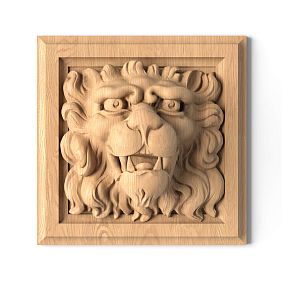
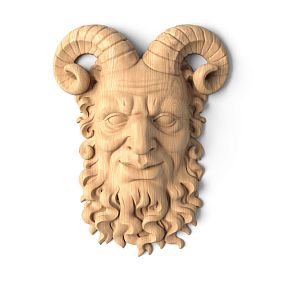
Our factory also produces:



Psychological impact of ornamental forms
Why does the gaze linger on carved surfaces? Psychologists assert: the human brain is evolutionarily tuned to perceive complex natural forms. We subconsciously seek signs of life, growth, and development in our surroundings. Geometric ornaments stimulate the left hemisphere, responsible for logical thinking, while plant motifs activate the right — creative, emotional.
Facade wood carving acts as a natural antidepressant. Contemplating carved elements reduces cortisol — the stress hormone — and promotes endorphin production, creating a sense of calm and security. It is no wonder that in olden times people said: 'The house is a full cup,' implying not only material well-being but also spiritual harmony.
Get Consultation
Architectural anatomy: elements of carved decoration in house construction
Skirting Boards: Framing Beauty
Carved window casings are the house’s calling card, its face turned toward the world. They not only protect the joints between walls and window frames from drafts and moisture, but also create an architectural frame that organizes the perception of the entire facade.
Traditional carved wooden window casings differ in construction and ornamentation. Flat casings with pierced carving create a lace-like effect, especially beautiful under backlighting from sun rays. Three-dimensional casings with solid carving convey a sense of monumentality, emphasizing the status and solidity of the house.
The upper part of the casing — the oculus — is often adorned with a central rosette or cartouche, symbolizing the sun, the source of life and light. The side parts — the columns — may be decorated with plant tendrils, geometric motifs, or stylized depictions of mythological creatures.
Cornices and friezes: horizontals of grandeur
Carved wooden cornices perform an important structural function — they protect walls from rainwater, diverting it away from the building’s surface. But their decorative role is equally significant. The cornice creates a finishing horizontal line that unifies all facade elements into a single composition.
Frieze boards beneath the cornice are traditionally adorned with continuous ornamentation — plant tendrils, geometric motifs, stylized depictions of animals and birds. This ornamental band encircles the house, creating a sense of protection and completeness.
Eaves and friezes: celestial symbolism
The roof eave — the highest point of the house, where sky meets earth. It is no coincidence that the most sacred decorative elements were placed here. A carved roof eave is often crowned with an image of a horse — an ancient symbol of the sun — or a bird — a mediator between worlds.
Friezes — boards covering the ends of rafters — are decorated with ornamentation that continues the celestial theme. Here one may encounter images of clouds, stars, celestial bodies. These elements not only protect the structure from atmospheric influences, but also create a symbolic connection between the house and the cosmos.
Veranda: the grand entrance to the house
The veranda is a theatrical stage, the place of the first encounter between guest and house. Wooden carved columns of the veranda set a solemn tone for the entire architectural ensemble. Here, the most complex and expressive decorative elements are appropriate.
Column capitals may be executed in various styles — from strict Doric to ornate Corinthian. Column bases are often adorned with plant motifs, symbolizing connection with the earth, roots, and family traditions.
Veranda railing — another opportunity for decorative art. Carved balusters create a rhythmic composition, where each element is unique yet subordinate to overall harmony.
Material science: choosing wood for exterior decoration
Coniferous species: resilience of northern forests
Coniferous species are traditionally used for exterior decoration, possessing natural resistance to atmospheric influences. Pine is the most accessible and widely distributed species. Its resin provides natural protection against moisture and pests.
Larch has a more uniform structure, which is important for creating small decorative elements. Its wood is easy to process, holds carving well, but requires mandatory protective treatment.
Larch is the aristocrat among coniferous species. Its wood is so dense and resinous that it can be used without protective coatings for decades. Larch trimmings over time acquire a noble silver tone, becoming even more beautiful.
Deciduous species: nobility and refinement
Oak is the king among species for outdoor decoration. Its dense wood can withstand any climatic hardships. Oak elements can serve for centuries, passed down from generation to generation as family heirlooms.
Ash combines the strength of oak with a beautiful contrasting texture. Its light and dark stripes create a natural decorative effect, especially striking in large architectural elements.
Karelian birch is an exotic material for true connoisseurs. Its whimsical swirls and flows create unique patterns, turning each element into a unique work of art.
Stylistic directions in household carving
Russian style: returning to roots
Russian household carving is a unique phenomenon of world culture, a synthesis of paganism and Christianity, folk wisdom and artistic skill. Traditional motifs — solar signs, tree of life, phoenix birds — carry deep symbolic meaning.
Geometric carving embodies the mathematical harmony of the universe. Triangles symbolize the Trinity — past, present, and future; rhombuses — fertility; circles — the sun, the source of all life. These ancient signs, repeated in ornamentation, create a meditative rhythm, encouraging philosophical reflection.
Plant carving reflects the connection between man and nature. Oak leaves symbolize masculine strength and longevity; birch leaves — femininity and purity; grapevine — abundance and fertility. Each motif has its own meaning and energy.
Classicism: strict harmony of proportions
Classical carving is characterized by strictness and nobility of forms. There is no room for chance — every element is subject to mathematical laws of harmony. Palmettes, meanders, wreaths, garlands — the entire arsenal of ancient decorative art finds application in Russian household carving.
Carved decoration in the classical style requires flawless execution. Approximation and carelessness are not permitted here. Every line must be precisely drawn, every curve — logically justified by composition.
Baroque: Theatrical Opulence
Baroque carving is an art of illusion, the ability of a flat surface to appear three-dimensional, and static forms to seem dynamic. Characteristic motifs — shells, cartouches, acanthus leaves — create a sense of continuous movement, development, and growth.
Asymmetry becomes an artistic technique. Compositions are built not on strict repetition, but on dynamic equilibrium of elements differing in size and complexity. This creates an impression of liveliness, spontaneity, and emotionality.
Modern: nature as a source of inspiration
The modern style brought to decorative arts a cult of nature, but not copied nature, but nature reinterpreted by the artist. Stylized irises, lilies, dragonflies, sea waves — all this finds embodiment in carved decoration of the house the era of modernism.
A characteristic feature of the style is the absence of straight lines. All contours are fluid, organic, reminiscent of natural forms. This creates a sense of unity between architecture and the surrounding landscape, harmony between man and nature.
Technological innovations in decorative production
From handcraft to digital technologies
Modern production of carved decoration is a synthesis of centuries-old traditions and advanced technologies. CNC machines allow reproducing the most complex ornaments with jewel-like precision, but the final life of the piece is given by the master’s hand.
Laser cutting has opened new possibilities for creating delicate lace-like elements of unprecedented thinness. The cut thickness does not exceed 0.2 mm, allowing to create details unattainable by traditional methods.
3D modeling allows creating virtual copies of historical samples, adapting them to modern needs, and creating new compositions based on traditional motifs.
Protective coatings: extending the life of beauty
Modern protective compositions surpass traditional oils and paints by dozens of times in effectiveness. Alkyd lacquers create a semi-transparent coating that protects wood from moisture and ultraviolet radiation, preserving its natural texture.
Oil impregnations penetrate deeply into the wood, creating protection from within. They do not form a surface film, allowing the material to 'breathe,' which is especially important for outdoor elements.
Wax coatings give wood a silk-like sheen, emphasizing the beauty of its texture. Modern waxes contain UV filters, antiseptics, and water-repellent additives.
Regional characteristics of household carving
Northern school: harsh beauty
Russian North gave the world a special school of wooden architecture, where carving serves not only as decoration but also as protection against harsh climatic conditions. Northern masters created a structurally justified decorative system, where each element has practical value.
Church decoration of northern churches impresses with monumentality and expressiveness. Here, carving does not dwell on details, but creates powerful, generalized forms visible from afar. This is an art of large masses, strong contrasts of light and shadow.
Volga Tradition: Ornamentation and Abundance
Volga masters created a unique style of house carving, distinguished by its rich ornamentation and virtuosity. Here, every square centimeter of surface is covered with a pattern, and every detail is meticulously crafted with jewel-like precision.
Characteristic motifs — complex floral compositions where reality intertwines with fantasy. Roses coexist with exotic fruits, Russian birches with palm branches. This is a world of fairy tales, embodied in wood.
Siberian School: Synthesis of Cultures
Siberian house carving absorbed influences from various cultures — Russian, Ukrainian, Belarusian, and local peoples. The result was a unique art form, without parallels in the world.
A characteristic feature — use of large decorative forms designed for viewing from a distance. Siberian expanses demand scale, and carving responds to this requirement.
Practical Aspects of Applying Carved Decoration
Design: Harmony and Proportions
Creating harmonious carved decoration begins with careful design. Each element must correspond to the scale of the building, architectural style, and surrounding landscape.
Golden Rule: The size of a decorative element must correspond to the size of an architectural detail in the proportion of the golden section. A casing cannot be wider than the window opening, but it must not be lost against its background.
Color selection also requires careful consideration. Carved decoration of a house can be executed in contrasting colors, emphasizing its form, or in tonal shades, creating an effect of light and shadow play.
Installation: Precision and Reliability
Correct installation is the guarantee of the longevity of carved decoration. Fixation must be secure, yet allow for natural wood deformation due to changes in humidity and temperature.
For mounting casings, special concealed-head screws are used. Mounting points are carefully filled with wooden plugs matched to the tone of the main material.
Large elements — cornices, friezes — require additional mechanical fastening to load-bearing structures. Hidden brackets are used, ensuring reliability while preserving aesthetics.
Maintenance and care: preserving beauty
Carved decoration requires regular but simple maintenance. The main procedure — cleaning from dust and dirt using a soft brush or vacuum cleaner with a brush attachment.
Periodic renewal of protective coating extends the service life of the decoration. The frequency of renewal depends on climatic conditions — from once every 3-5 years in a mild climate to annually in harsh conditions.
Minor damages — chips, scratches — can be repaired without dismantling elements. Special repair compounds based on wood flour and binders are used.
Economic Efficiency of Carved Decoration
Investment in Status and Beauty
Quality carved decoration is not an expense, but an investment. A house with unique decoration always attracts attention, evokes admiration, and enhances the owner's status. In the real estate market, this is reflected in concrete figures — an increase in property value by 15-25%.
House carving creates added value that grows over time. Antique carved elements are valued by collectors, and their cost may exceed the original by several times.
Energy Efficiency of Decorative Elements
Carved decoration not only decorates the house but also improves its energy efficiency. Casings cover cold bridges at the junctions of window frames to walls. Cornices protect walls from rain, extending the lifespan of insulation.
Carved shutters not only give the house an authentic appearance but also serve as additional thermal insulation in cold weather. In summer, they protect against overheating, creating a comfortable microclimate indoors.
Return on Investment Through Tourist Appeal
Houses with quality carved decoration often become tourist attractions. They are photographed, featured in travel guides, and become landmarks of local settlements.
For owners of guest houses, estates, and restaurants, this becomes an additional source of income. Authentic atmosphere attracts customers, allowing for higher service pricing.
Modern Trends in Home Decoration
Eco-style: Returning to Nature
Modern ecological awareness stimulates interest in natural materials and traditional technologies. Carved decoration from solid wood is perceived as a counterbalance to artificial materials, as a way to return warmth and life to the house.
Simple, minimalist forms are gaining popularity, emphasizing the natural beauty of wood. Minimal processing, preservation of natural texture, use of eco-friendly coatings — these are the main principles of eco-style.
Neo-Russian style: traditions in modern interpretation
Young architects and designers reinterpret traditional forms, adapting them to modern needs. New ornaments are created based on traditional motifs, innovative materials and technologies are used.
A characteristic feature of the neo-Russian style is the enlargement of scale and simplification of forms while preserving symbolic content. This allows traditional elements to be organically integrated into modern architecture.
Fusion: mixing styles
Cultural globalization has led to the emergence of the fusion style, where elements of various traditions are freely combined in a single composition. Russian motifs coexist with Eastern ones, Scandinavian — with African ones.
This approach requires a special sense of proportion and artistic taste. Successful fusion is not eclectic mixing, but the conscious creation of a new aesthetic based on the best achievements of various cultures.
Psychology of color in carved decoration
Natural tones: harmony with nature
The natural color of wood is already a ready-made color palette created by nature. Light-colored woods create a sense of purity, airiness, and spaciousness. Dark woods convey solidity, stability, and protection.
Contrasting combinations — light base with dark decoration or vice versa — create expressive compositions that attract attention. Tonal transitions within a single color palette have a calming effect, creating a sense of harmony.
Colored coatings: traditions and innovations
Traditional Russian house carving often used bright colors — red, green, blue, white. Each color had symbolic meaning: red — life and beauty, green — nature and fertility, blue — sky and eternity, white — purity and sanctity.
Modern colored coatings allow reproducing the traditional palette using durable, non-fading pigments. New technologies open opportunities for creating gradient transitions, metallic effects, and pearlescent shades.
Conclusion: Heritage of craftsmanship in the modern world
In the era of digital technologies and virtual reality carved decoration of the house Carved decoration acquires special value as a manifestation of authenticity, craftsmanship, and connection to traditions. Each carved element is not just decoration, but a materialized memory of the people, their aesthetic ideals, their understanding of beauty and harmony.
Wooden carved elements transform a house from a simple dwelling into a work of art, a place where one wants to live and be proud of. They create that unique atmosphere which distinguishes a true home from a standard building.
Carved balusters for porches, wooden carved columns, carved cornices — each of these elements contributes to creating an architectural symphony. Together they form a unified ensemble, where each detail is in its place, and each element serves the overall idea.
Facade carved decoration is the house’s business card, its face turned toward the world. It tells about the taste of the owners, their cultural level, their attitude toward traditions. In today’s world, where individuality becomes an increasingly valuable quality, carved decoration provides a unique opportunity to express one’s personality through architecture.
Choosing quality carved decoration means investing not only in the beauty of your home, but also in preserving cultural traditions, supporting folk crafts, and creating a beautiful living environment for future generations. This is the choice of those who understand the true value of beauty and are willing to pay for it.
For many years, the company STAVROS has remained faithful to the traditions of quality carved decoration, combining ancient craftsmanship techniques with modern technological possibilities. Each product of the company is a guarantee of quality, durability, and unique beauty that will delight owners for many years and become a worthy heritage for future generations.


