












































































Article Contents:
- Why Wooden Racks Became an Alternative to Complex Moldings
- Types of Wooden Racks: From Sanded Basic to Decorative Interior
- Vertical Compositions: Wooden Racks on Walls and Wooden Racks for Wall Decoration
- Thin Wooden Racks and Creating Fine Rhythm
- Species and Accents: Oak Rack, Interior Oak Rack, Birch Wooden Racks, Solid Birch Rack
- Combining Racks with Patterns and Wooden Profiles for Walls
- Budget Calculation: Wooden Rack Price, Optimizing Material and Cutting
- Case Studies: One Wall — Three Scenarios of Rack-Based 3D Decoration (Minimalism, Neoclassicism, Scandinavian)
- Conclusion: STAVROS Company — Racks, Patterns, Profiles for 3D Relief on Walls
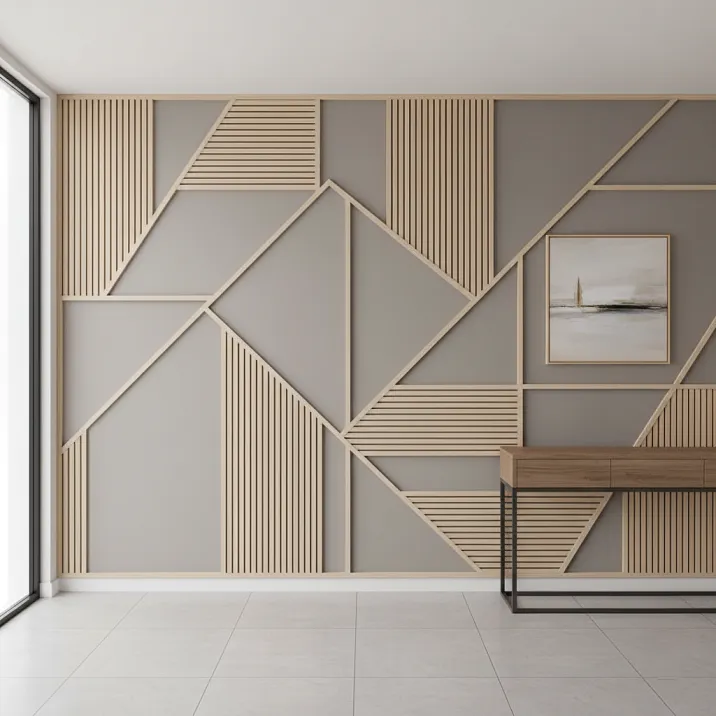
Complex molding is a classic way to create volume on walls, add detail, richness of forms. But molding is expensive (handmade plasterwork costs 5000–15000 rubles per square meter), fragile (plaster is easily chipped or damaged), labor-intensive to install (requires experience, special fasteners, reinforcement).wooden planks on the wall— an alternative to molding that creates 3D relief more simply, faster, and cheaper.Wooden railsForm rhythmic texture, where vertical or horizontal lines alternate with gaps, creating depth, shadow, volume. The relief is not complex (as with molding featuring scrolls, rosettes, capitals), but graphic, modern, and minimalist.Wooden boards in interiorWork on the structure of space: the wall ceases to be a flat surface and becomes a volumetric structure that changes the room’s geometry, controls light and shadow, and creates visual accents.Wooden plank— it is a tool of modern design that allows creating complex spatial effects using simple means.


Why Wooden Racks Became an Alternative to Complex Moldings
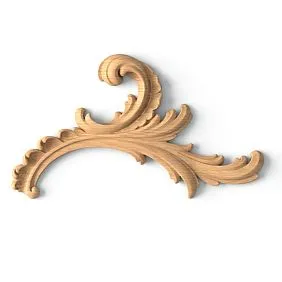
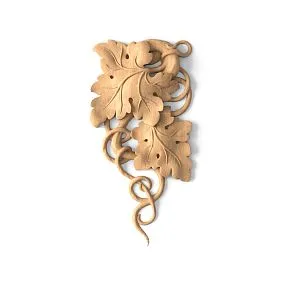
Molding was the dominant way to decorate walls from the 16th to 19th centuries in European architecture: Baroque, Rococo, Classicism used plaster molding to create rich interiors of palaces, mansions, cathedrals. Molding consists of volumetric plaster elements (rosettes, capitals, cornices, moldings, friezes, panels) that are hand-sculpted or cast in molds, attached to walls and ceilings, painted or gilded. Molding creates complex relief, where each element has dozens of details — leaves, scrolls, volutes, geometric ornaments. This relief works on scale, visual richness, and demonstration of craftsmanship. But molding requires: high ceilings (in a room with 2.5-meter ceilings, heavy molding will overload the space), classical style (molding is appropriate for Baroque, Empire, Classicism, but inappropriate for minimalism, loft, Scandinavian style), large budget (handmade molding 5000–15000 rubles per m², polyurethane imitation is cheaper — 1000–3000 rubles per m², but looks cheap).
Wooden railsBecame an alternative to molding in the mid-20th century with the development of modernism, minimalism, Scandinavian style — directions that rejected ornamentation, emphasized simplicity, natural materials, graphic forms. Racks do not imitate molding (do not attempt to be scrolls, rosettes), racks create their own language: rhythm (repetition of the module “rack + gap”), graphics (clear vertical or horizontal lines), volume (rack protrudes from the wall, creates shadow, depth). This language works in modern interiors, where molding would be excessive and inappropriate. Racks are suitable for: low ceilings (vertical racks visually raise the ceiling, horizontal racks widen the wall), modern styles (minimalism, loft, Scandinavian, Japanese), limited budget (racks are 3–5 times cheaper than molding for comparable visual effect).
Functionalities of racks: besides decoration, racks perform practical functions. Sound absorption: behind racks mounted on a lath, you can install sound-absorbing material (mineral wool, acoustic foam), racks allow sound to reach the material that absorbs it — an effective way to improve room acoustics (home theater, music studio, bedroom). Concealing wall defects: if the wall is uneven (10–20 mm deviations), plastering is expensive and time-consuming; racks on a lath hide unevenness (the lath levels the surface, racks are mounted on the lath — the wall appears visually flat). Zoning space: a rack partition (frame with racks) divides the room into zones (living room and kitchen, bedroom and closet), does not isolate (light, air, and view pass through gaps), creates a visual boundary without losing space.
Installation speed of racks: a rack wall is assembled in 1–2 days (lath + racks), molding requires a week (sculpting or casting elements, fitting, mounting, joint spackling, sanding, priming, painting). Repairability: a damaged rack can be replaced (unscrew screws, remove rack, install new one — 10–15 minutes), damaged molding requires restoration (plasterers, special materials, expensive). Weight of the structure: a rack wall weighs 10–15 kg/m² (solid wood is light), molding weighs 20–40 kg/m² (plaster is heavy), which is critical for lightweight partitions (gypsum board may not withstand heavy molding, racks will). All these factors make racks a more practical solution for modern interiors.




Types of Wooden Racks: From Sanded Basic to Decorative Interior
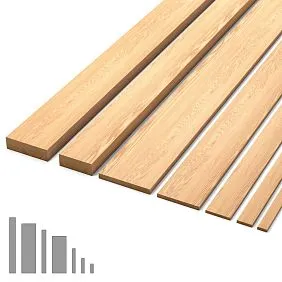
Planed wooden strip— basic type of rack, rectangular cross-section, all four sides flat, smooth, without profile. Standard cross-sections: 20×40 mm, 30×40 mm, 40×20 mm, 50×25 mm (width × thickness, where width is the visible plane, thickness is the protrusion from the wall). Sanded rack is a semi-finished product requiring final finishing: sanding (if surface is not smooth enough after planing), painting or varnishing (protection from moisture, dirt, color). Sanded rack is cheaper than decorative (price 150–400 rubles per linear meter, depending on species: pine is cheaper, oak is more expensive), but requires more work on-site (sanding, painting — time and materials).
Wooden planks for decoration— racks with profile (rounded edges, beveled edges, grooves) that create a more complex play of light and shadow. Profile softens the line, making the rack not a flat plank but a volumetric element. Types of profiles: bevel (45-degree angled edge — rack has trapezoidal cross-section instead of rectangular), rounding (rounded edge — rack feels softer, more tactile), groove (groove along the rack — creates additional shadow, enhances graphics). Decorative rack is 30–50% more expensive than sanded (profile requires milling, additional operation), but looks more elegant, suitable for interiors where detail is important.
Wooden planks for wall decoration— sold sanded (surface smooth, ready for painting or varnishing), sometimes with finish (oil, varnish, paint applied in factory — racks ready for installation without final finishing). Racks with finish are 40–60% more expensive, but save time on-site (no need to paint, dry, sand between layers).Wooden planks on walls and in interiors— available in standard length (usually 2–2.5 meters) or custom (up to 3 meters, minimum order 50 linear meters). Standard length is convenient for walls 2.5–2.7 meters high (one rack covers height from floor to ceiling with a small allowance for trimming). For walls over 3 meters, racks 3+ meters long are needed, otherwise horizontal joints (two racks join vertically — joint is visible, spoils line purity) will be required.
Buy wooden skirting board— depends on: species (pine 150–250 rubles/meter, beech 250–400 rubles/meter, oak 400–600 rubles/meter), cross-section (thicker rack is more expensive — more wood), profile (sanded is cheaper, decorative is 30–50% more expensive), finish (uncoated is cheaper, coated is 40–60% more expensive).Price of wooden stripDepends on: species (pine 150-250 rubles/meter, beech 250-400 rubles/meter, oak 400-600 rubles/meter), cross-section (thicker boards cost more — more wood), profile (sanded is cheaper, decorative is 30-50% more expensive), finish (uncoated is cheaper, coated is 40-60% more expensive).
Our factory also produces:





Vertical Compositions: Wooden Racks on Walls and Wooden Racks for Wall Decoration
wooden planks on the wall— vertical composition, visually raises the ceiling, makes the room taller, slimmer. Vertical lines draw the eye upward, creating the impression of height even in a room with 2.5-meter ceilings. The rhythm of vertical racks is set by the module “rack + gap”: rack 40 mm + gap 40 mm = module 80 mm (rhythm 1:1, dense, many lines), rack 40 mm + gap 60 mm = module 100 mm (rhythm 1:1.5, medium), rack 40 mm + gap 80 mm = module 120 mm (rhythm 1:2, sparse, few lines). Dense rhythm creates an intense texture, where vertical lines dominate, wall appears fully striped. Sparse rhythm creates a light texture, where each rack stands out, and air flows between racks.
Vertical slat installation: a grid (horizontal 30×40 mm or 40×40 mm beams, spaced 60-80 cm apart vertically) is mounted to the wall, and vertical slats are attached to the grid using self-tapping screws (one screw at each intersection of slat and grid beam). The grid levels the surface (if the wall is uneven, the grid is leveled with a spirit level, and slats are mounted on the leveled grid — resulting in a flat slat wall surface). A gap remains between the wall and slats (grid thickness 30-40 mm), into which sound-absorbing material (mineral wool, acoustic foam) can be inserted, or an air gap can be left (improves thermal insulation if the wall is exterior).
Calculating the number of slats for a vertical composition: wall width is divided by the "slat + gap" module, yielding the number of modules, multiplied by wall height to get the slat length. Example: wall 4 meters wide × 2.7 meters high, slat 40 mm, gap 40 mm, module 80 mm. Number of modules = 4000 mm / 80 mm = 50 modules. Slat length = 50 modules × 2.7 meters = 135 linear meters. With 10% allowance for cuts = 148.5 ≈ 150 meters. At a price of 300 rubles per meter (beech, sanded, no finish), slat cost = 150 × 300 = 45,000 rubles. Plus grid (40×40 mm beams, perimeter of wall + horizontal beams every 70 cm ≈ 30 meters of beams, 150 rubles per meter, total 4,500 rubles). Plus screws, sanding, finish (oil or varnish ≈ 5,000 rubles). Total cost of slat wall ≈ 55,000 rubles for materials, plus installation (if hiring installers — 500-700 rubles per m², for 10.8 m² = 5,400-7,560 rubles).
Vertical composition options: slats from floor to ceiling (solid slat wall), slats on part of the wall (e.g., behind a bed headboard, behind a TV — accent zone), slats with alternating thickness (thin and thick slats alternate — rhythm becomes more complex, dynamic effect appears), slats with alternating color (light and dark slats — contrast creates graphic effect).Buy oak wooden planks for wallsMust be calculated precisely in linear meters (extra slats or shortage — both problems are costly), considering length (for a 2.7-meter height, better to use 2.8-3-meter slats to avoid joints).
Get Consultation
Thin wooden slats and creating a fine rhythm
Thin wooden laths(width 20-30 mm, thickness 10-15 mm) create a fine rhythm, where lines are numerous, gaps are narrow, texture is dense, almost like fabric. Thin slats are used where visual lightness and detail are important, where wide slats would appear coarse. Module for thin slats: slat 20 mm + gap 20 mm = module 40 mm (rhythm 1:1, very dense, frequent lines), slat 25 mm + gap 30 mm = module 55 mm (rhythm 1:1.2, dense), slat 30 mm + gap 40 mm = module 70 mm (rhythm 1:1.3, medium). Dense fine rhythm creates a moiré effect, where lines merge into texture, individual slats are not noticeable, only overall striped pattern is visible.
Thin slats visually lighter than thick ones (projection from wall 10-15 mm vs 20-30 mm for thick slats), create a softer relief, less aggressive graphic. Thin slats are suitable for: small rooms (where thick slats would overload space), bedrooms, children’s rooms (where coziness and softness are important), Scandinavian style (where preference is for minimalism, visual lightness). Thick slats (width 60-80 mm, thickness 25-40 mm) are suitable for: spacious rooms (where fine rhythm would be lost and not noticeable), living rooms, hallways (where monumentality and visual weight are important), loft, industrial style (where preference is for brutality, massiveness).
Calculating the number of thin slats: wall 3 meters wide × 2.7 meters high, slat 25 mm, gap 30 mm, module 55 mm. Number of modules = 3000 mm / 55 mm = 54.5 ≈ 55 modules. Slat length = 55 × 2.7 = 148.5 meters, with 10% allowance = 163 meters. Thin slats are cheaper than thick ones (less wood), price for pine ≈ 120 rubles per meter, for beech ≈ 200 rubles, for oak ≈ 350 rubles. Cost of beech slats = 163 × 200 = 32,600 rubles. But number of slats is higher (55 slats vs 38 for 80 mm module), accordingly installation takes longer (each slat must be positioned and screwed — more time).
Problem with thin slats — fragility during installation: thin slats are easier to break (if force is applied during mounting, slat may crack), easier to deform (if slat is uneven, it is difficult to straighten during installation — thin slat bends but may snap). Thin slats require care: precise leveling (if one slat is crooked, against frequent rhythm this is noticeable), uniform gaps (if gaps are uneven, rhythm is broken, looks careless). For thin slats, it is better to hire experienced installers (installation cost is higher — 600-800 rubles per m², as work is more meticulous).
Combination of thin and thick slats: on one wall, thin and thick slats alternate, creating a complex rhythm. Example: two thin slats (25 mm each), gap 20 mm, one thick slat (50 mm), gap 20 mm, repeated. Module = 25+20+25+20+50+20 = 160 mm, within module complex rhythm (thin-thin-thick). Such composition is more dynamic than monotonous rhythm, suitable for accent walls where visual complexity is important. Combination of thin and thick slats is more expensive (different cross-sections, more operations during installation), but more visually interesting.
Species and accents: oak slat, interior oak slat, wooden beech slats, beech solid slat
oak lumber— premium choice for slat walls where showcasing natural wood texture is important. Oak slat has large-pored texture with contrasting growth rings, visible even on narrow 40 mm slat. Under transparent oil or varnish, oak texture works as decoration: each slat has its own fiber pattern, pores, rings — slats are not identical, creating living, natural texture. Oak slats are strong (oak hardness 3.7-4.0 on Brinell), do not scratch, do not deform, last 30-50 years without loss of appearance.Interior oak plankThis is oak board processed for indoor use: humidity 8-12% (stable at room temperature), fine sanding (smooth surface), sometimes with finish (oil or lacquer applied at the factory).
— this is oak slat processed for indoor use: humidity 8-12% (stable at room temperature), fine sanding (smooth surface), sometimes with finish (oil or varnish applied in factory).
Oak parquetColor of oak slats varies from light yellow to dark brown, depending on wood batch and treatment. Oil darkens oak by 1-2 tones (from yellow-brown to rich brown), emphasizes pores, enhances contrast between early and late wood. Stain tones oak in any color (wenge, mocca, black oak, white oak), preserving texture. Paint hides texture (oak slats painted white or gray look like beech or pine — texture not visible, extra cost for oak not justified). Oak slats under transparent finish are used in interiors where showcasing natural wood is important: loft (oak brutal, massive), eco-style (oak natural, warm), neoclassical (oak noble, status).Solid beech parquetHas hardness 3.8 (slightly higher than oak), lasts 20-30 years, price 250-400 rubles per meter (vs 400-600 for oak).
— alternative to oak, 30-40% cheaper, almost equally strong. Beech slat has fine-pored uniform texture, light, rose-beige, calm. Beech does not dominate texture (like oak), works as neutral background, where shape, rhythm, shadow stand out. Beech slats are used in interiors where light wood without aggressive texture is important: Scandinavian style (beech slats under white oil — light, warm, cozy), modern style (beech slats painted white or gray — neutral, graphic).
Species combination: boards of different species alternate on one wall, creating a contrast in texture or color. For example: oak boards (dark, textured) + beech boards (light, uniform) — alternation creates striping not only in shape (board-gap), but also in color (dark-light). Such a composition is more complex to install (need to order two types of boards, monitor sequence during installation), more expensive (two species instead of one), but visually more interesting. Species combination suits accent walls where visual complexity, uniqueness matter.
Combination of boards with wainscoting and wooden profiles for walls
Oak wooden planks for walls + Wooden molding + wooden wall profileA comprehensive system that creates a multi-level relief on the wall. Vertical boards establish the main rhythm (frequent vertical lines), horizontal wainscoting divides the wall into zones (frames, panels), profiles frame boundaries (perimeter of board wall, junction with other surfaces). This system works well in neoclassical and classical interiors, where detail, layering, and visual richness are important.
Example composition: wall 4×2.7 meters, divided by horizontal wainscoting at 100 cm from the floor. Lower section (panel, height 100 cm) covered with vertical boards (board 40 mm, gap 40 mm, module 80 mm). Upper section (main wall, height 170 cm) painted with solid paint (light gray). Horizontal wainscoting (width 50 mm, decorative profile — beveled edge) frames the panel from above, creating a boundary between the board section and the painted area. Around the perimeter of the board panel (left, right, bottom) — profile (width 60 mm, profile similar to wainscoting) frames the panel, creating a frame. Result: the board panel appears as a standalone element, framed by profiles, separated from the main wall by wainscoting — layering, detailing, visual complexity.
form the architecture of walls and ceilings, creating a play of light and shadow. + Decorative wooden moldingHorizontal slats + vertical grid — reverse composition, where slats run horizontally (visually widen the wall, make room wider), grids vertically (divide wall into vertical segments, create rhythm). Horizontal slats are used less often than vertical (vertical visually raises ceiling, which is more important in most rooms with 2.5-2.7 meter ceilings), but in rooms with high ceilings (3+ meters) horizontal slats are justified (reduce visual height, make space cozier). Horizontal slats are mounted on vertical grid (beams mounted vertically, spacing 60-80 cm, slats mounted horizontally to beams).
Horizontal boards + vertical wainscoting — reverse composition, where boards run horizontally (visually widen the wall, make the room wider), wainscoting runs vertically (divides the wall into vertical segments, creates rhythm). Horizontal boards are used less frequently than vertical ones (vertical visually raises the ceiling, which is more important in most rooms with ceilings 2.5–2.7 meters), but in rooms with high ceilings (3+ meters) horizontal boards are justified (reduce visual height, make space cozier). Horizontal boards are mounted on vertical framing (boards are mounted vertically, spacing 60–80 cm, boards are mounted horizontally to the boards).
Combination of slats and profiles in zoning: slat partition (frame with vertical slats) divides living room and kitchen, around partition perimeter (top, bottom, sides) — profile that frames partition, creates frame, visually separates partition from walls and ceiling. Profile should be wider than slats (profile 80 mm, slats 40 mm) to visually dominate, create boundary. Profile + slats from same species and color — unified construction, where slats fill surface, profile frames.
— main cost item when creating a slat wall. For a 4×2.7 meter wall with vertical slats (module 80 mm: slat 40 mm + gap 40 mm) slat length ≈ 150 meters (with allowance). Prices: pine 150-250 rubles/meter (total 22,500-37,500 rubles), beech 250-400 rubles/meter (total 37,500-60,000 rubles), oak 400-600 rubles/meter (total 60,000-90,000 rubles). Difference is significant — oak slat wall is 2.5-4 times more expensive than pine. Species choice depends on: finish (if opaque paint, texture not visible — pine sufficient; if transparent finish, texture critical — beech or oak), budget (if budget limited — pine under paint; if budget allows — beech or oak under oil), durability (pine lasts 10-15 years, beech 20-30, oak 30-50).
Price of wooden strip— main cost item when creating a slat wall. For a 4×2.7 meter wall with vertical slats (module 80 mm: slat 40 mm + gap 40 mm) slat length ≈ 150 meters (with allowance). Prices: pine 150-250 rubles/meter (total 22,500-37,500 rubles), beech 250-400 rubles/meter (total 37,500-60,000 rubles), oak 400-600 rubles/meter (total 60,000-90,000 rubles). Difference is significant — oak slat wall is 2.5-4 times more expensive than pine. Species choice depends on: finish (if opaque paint, texture not visible — pine sufficient; if transparent finish, texture critical — beech or oak), budget (if budget limited — pine under paint; if budget allows — beech or oak under oil), durability (pine lasts 10-15 years, beech 20-30, oak 30-50).
Optimizing linear meterage: precise calculation of slat quantity saves money. Wall width 4000 mm, module 80 mm, number of modules = 4000/80 = 50 modules. Wall height 2700 mm, standard slat length 2500 mm — insufficient (slat shorter than wall by 200 mm, joint or custom slats 2800-3000 mm needed). Slats 3000 mm long are 10-15% more expensive (non-standard length, additional processing), but eliminate joints (joint between two slats vertically noticeable, ruins line purity). For 2700 mm high wall, optimal is to order 2800 mm slats (with 100 mm allowance for trimming), 50 pieces, length = 50×2.8 = 140 meters (vs 150 meters calculated with 10% allowance — saving 10 meters).
Costs for grid, fasteners, finish: grid (40×40 mm beams, length depends on wall area and beam spacing) ≈ 10-15% of slat cost. Fasteners (3.5×45 mm screws, 2-3 per slat) ≈ 1000-2000 rubles. Finish (if painting on-site: oil or varnish, 1 liter per 20-25 m² slat surface, oil price 500-1500 rubles per liter) ≈ 5000-10000 rubles for 10 m² wall. Installation (if hiring installers: 500-700 rubles per m²) ≈ 5000-7000 rubles for 10 m² wall. Total cost of beech slat wall: slats 45,000 rubles + grid 5,000 + fasteners 1,500 + finish 7,000 + installation 6,000 = 64,500 rubles. Slat wall is more expensive than painting (painting wall 500-1000 rubles per m², for 10 m² = 5000-10,000 rubles), but cheaper than molding (molding 5000-15000 rubles per m², for 10 m² = 50,000-150,000 rubles), comparable to premium wallpaper (wallpaper + installation 3000-6000 rubles per m², for 10 m² = 30,000-60,000 rubles).
Slat wall cases: one wall — three scenarios of 3D slat decor (minimalism, neoclassicism, scandi)
Cases: one wall — three scenarios of 3D slat decor (minimalism, neoclassicism, scandi)
For the minimalism case: wall width 4000 mm, module 100 mm, number of modules = 40, height of the rails 2.7 meters, length = 40×2.7 = 108 meters, with 10% reserve = 119 meters. Price of beech rails painted black (on production) ≈ 400 rubles/meter, cost of rails = 119×400 = 47600 rubles. Lathing ≈ 4500 rubles, fasteners 1200, installation 5500. Total ≈ 59000 rubles.
Painted — optimal for minimalism (ready-made rails, no need to paint on-site, immediate installation).Buy wooden planks for decorationPainted — optimal for minimalism (ready-made rails, no need to paint on-site, immediate installation).
Case 2 — neoclassicism: wall 3.5×2.7 meters behind the headboard in the bedroom, vertical rails made of oak under dark oil, framed with horizontal battens and profiles. Rails section 50×25 mm (thicker than in minimalism), gap 50 mm, module 100 mm (rhythm 1:1, dense). Rails not from floor to ceiling, but from height 50 cm (above the bed headboard) to height 200 cm (below the ceiling) — rail panel height 150 cm. Around the panel perimeter (top, bottom, left, right) — oak profile 80 mm wide, decorative profile (two rounded edges), under the same dark oil. Horizontal batten in the middle of the panel (at 125 cm height) divides the panel into two parts (upper 75 cm, lower 75 cm), creating symmetry. Result: detailing, framing, symmetry, visual complexity — characteristic of neoclassicism.
Material quantity for neoclassicism case: panel width 3500 mm, module 100 mm, number of modules = 35, rail height 150 cm, rail length = 35×1.5 = 52.5 meters, with reserve = 58 meters. Price of oak rails with oil finish ≈ 650 rubles/meter, cost of rails = 58×650 = 37700 rubles. Profiles around the perimeter (perimeter of panel ≈ 10 meters) + horizontal batten in the middle (3.5 meters) = 13.5 meters of profiles, price 750 rubles/meter, cost = 10125 rubles. Lathing ≈ 3000, fasteners 800, installation 4500. Total ≈ 56000 rubles. More expensive than minimalism (oak is more expensive than beech, additional profiles), but visually richer.
Case 3 — Scandinavian style (Scandi): wall 3×2.7 meters in the hallway, vertical thin rails made of beech under white oil. Rails section 25×15 mm (thin, visually light), gap 30 mm, module 55 mm (fine, dense rhythm, many lines). Rails from floor to ceiling, without framing (as in minimalism), but light color (white oil on beech gives a light beige tone, warm and cozy). Behind the rails, the wall is painted light gray (gaps are light, creating a soft contrast with light rails — light on light, gentle contrast). Hooks for clothes are mounted on the lathing between the rails (built-in hanger — functionality + decor). Result: light, airy, functional wall, where rails serve not only decorative but also practical purposes — characteristic of Scandinavian style.
Material quantity for Scandi case: wall width 3000 mm, module 55 mm, number of modules = 54.5 ≈ 55, rail height 2.7 meters, length = 55×2.7 = 148.5 meters, with reserve = 163 meters. Price of thin beech rails with white oil finish ≈ 300 rubles/meter (thin rails are cheaper than thick ones), cost of rails = 163×300 = 48900 rubles. Lathing ≈ 3500, fasteners 1000, hooks (5 pcs, built-in, stainless steel) ≈ 2500, installation 5000. Total ≈ 61000 rubles. Comparable to the minimalist case, but more functional (built-in hanger saves hallway space, where every square meter counts).
Conclusion: STAVROS — rails, battens, profiles for 3D relief on walls
wooden planks on the wall, Wooden boards in interior, Wooden rails— an alternative to complex moldings, creating 3D relief with modern methods: rhythm, graphics, volume without ornamentation, without excessive decoration.Wooden plank, Planed wooden strip, Wooden planks for decoration, Wooden planks for wall decoration— all types of rails for creating slatted walls, partitions, screens.
— can be without finish (cheaper, paint on-site) or with finish (oil, lacquer, paint applied on production — more expensive, but faster installation).Buy wooden skirting boardCan be without finish (cheaper, paint applied on-site) or with finish (oil, lacquer, paint applied at the factory — more expensive, but faster installation).Price of wooden strip— pine 150-250 rubles/meter, beech 250-400 rubles/meter, oak 400-600 rubles/meter.
Buy oak wooden planks for walls, Oak wooden planks for walls, form the architecture of walls and ceilings, creating a play of light and shadow., Buy wooden planks for decoration— available in stock in St. Petersburg and Moscow, shipping on the day of order.Thin wooden laths— for fine rhythm,Oak parquet— for Scandinavian style,oak lumber, Interior oak plank, Solid beech parquet— premium species for interiors where showcasing natural wood texture is important.
Wooden molding, Decorative wooden molding, Profile made of wood, wooden wall profile— additional elements for creating multi-level relief, where rails are supplemented with battens and profiles, forming complex compositions. All elements are unified in a collection (rails + battens + profiles from the same family of forms, same species, same finish — guarantee of visual unity).
STAVROS production: kiln-dried to 8-12%, processed on Weinig (accuracy ±0.3 mm), machine-sanded (smooth surface), quality control. Wrapped in stretch film, delivery to St. Petersburg, Moscow, Russia. Consultations: calculating rail length for specific walls, selecting section and module, choosing species and finish, cost estimation. Showrooms in St. Petersburg and Moscow: samples of rails of all sections, species, finishes — can touch and compare. For designers: wholesale prices from 200 linear meters, 3D visualization of slatted walls in projects. Contact: 8 (800) 555-46-75,stavros.ruRails, battens, and profiles: creating 3D relief on walls without complex moldings | STAVROS Company


