Article Contents:
- Economic Factors Affecting the Cost of MDF Planks
- Raw Material Cost as the Basis for Pricing
- Production Technology Costs
- Market Segmentation by Price Categories
- Economic Segment: Reasonable Savings Without Compromising Quality
- Mid-Segment: Optimal Price-Quality Ratio
- Premium Segment: Maximum Quality for Discerning Customers
- Regional pricing characteristics
- Moscow and Moscow Region: Pricing Center
- Saint Petersburg: Alternative Center
- Regional Markets: Balance of Price and Accessibility
- Factors Influencing Retail Price
- Sizes and Cross-Sections: The Mathematics of Cost
- Surface Types and Finishing
- Manufacturer and Brand
- Economic Efficiency of Application
- Analysis of total cost of ownership
- Comparison with alternative materials
- Practical Recommendations for Selection
- Determining the Optimal Price-Quality Ratio
- Seasonal Fluctuations and Timing of Purchase
- Supplier selection criteria
- Market Development and Pricing Forecasts
- Technological Trends
- Ecological requirements
- Market Competition
- Cost Optimization Mechanisms
- Wholesale Purchases and Partnership Relations
- Logistical Optimization
- Alternative Procurement Models
- Quality Control Across Different Price Categories
- Methods for Verifying Price-Quality Alignment
- Documentary Quality Certification
- Claims and Warranty Service
- Conclusion

Money loves accounting, especially when it comes to home renovation and interior finishing. MDF Lathes Price Which are formed under the influence of numerous factors, have become one of the most discussed issues among property owners and designers. In an era when every ruble is worth its weight in gold, understanding the pricing mechanisms for finishing materials transforms from a desire into a necessity.
What determines the cost of this popular material? Why can prices vary by orders of magnitude even with seemingly similar characteristics? How to avoid overpaying for a brand while not falling for questionable quality? These questions require professional answers based on a deep understanding of market mechanisms and production processes.


Economic Factors Affecting the Cost of MDF Planks




Raw Material Cost as the Basis for Pricing
The cost of raw wood accounts for 35-45% of the cost of finished MDF boards. Fluctuations in the price of logs, sawdust, and shavings directly affect the retail price of finished products. Seasonal factors play a significant role: spring floods may disrupt harvesting logistics, summer drought affects wood quality, and winter frosts increase transportation costs.
The quality of raw material determines not only the price but also the operational characteristics of finished products MDF railsConiferous species are 15-20% cheaper than hardwoods, but have lower density. Hardwood species create a stronger base, justifying their higher cost.
The geographical origin of raw material also affects the price. Northern wood, with a denser structure, costs 10-15% more than southern wood, but provides better strength and durability characteristics for finished products.
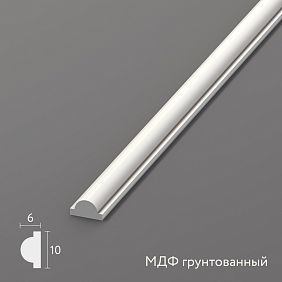
Our factory also produces:


Production technology costs
Modern MDF production requires significant capital investment in equipment. The cost of a production line reaches 50-100 million rubles, inevitably reflected in the product's cost. Energy consumption accounts for 20-25% of the cost structure — the hot pressing process requires maintaining a temperature of 200-220°C.
High-quality binders increase the cost by 8-12%, but ensure ecological safety and material longevity. Saving on binders leads to higher formaldehyde emissions and reduced product lifespan.
Processing accuracy determines the product quality class. High-precision CNC equipment provides tolerances of ±0.1 mm, but increases cost by 15-20%. Less precise equipment provides tolerances of ±0.5 mm at a lower cost.
Get Consultation
Market segmentation by price categories
Economy segment: reasonable savings without compromising quality
Economy-class products account for 40-50% of the market by sales volume. MDF Lathes Price In this segment, it costs 180-350 rubles per linear meter depending on the size. Main features: density 650-750 kg/m³, emission class E1, standard size accuracy ±0.3 mm.
Economy-segment producers save on packaging, marketing, and distribution. Products are often sold through construction hypermarkets with minimal markup. Quality meets basic standard requirements but lacks safety margin.
Target audience of the economy segment — private homebuilders performing DIY repairs, small construction companies with limited budgets. Such products are suitable for projects with low requirements for durability and appearance.
Mid-range segment: optimal price-to-quality ratio
The mid-price segment represents a compromise between accessibility and quality. Cost is 350-600 rubles per linear meter. Material density 750-850 kg/m³, emission class E1 or E0, size accuracy ±0.2 mm.
MDF material Mid-range products undergo additional surface treatment, have stable geometry, and quality packaging. Producers invest in quality control, certification, and technical support for customers.
Mid-range segment consumers — professional builders, interior designers, commercial property owners. They are willing to pay more for guaranteed quality and technical support.
Premium segment: maximum quality for demanding customers
Premium products priced at 600-1200 rubles per linear meter are targeted at the most demanding customers. Density 850-950 kg/m³, emission class E0, size accuracy ±0.1 mm, additional options such as special coatings and profiles.
Premium-class production uses the best raw materials, latest technologies, and multi-stage quality control. Each batch is accompanied by a quality certificate with test results. Packaging ensures maximum protection during transportation.
Premium-segment customers — elite construction projects, high-end design studios, restoration projects. Price is not a decisive factor in selection; the main criteria are flawless quality and exclusivity.
Regional Pricing Characteristics
Moscow and Moscow Oblast: pricing center
The Moscow region traditionally sets pricing trends for the entire Russia. High purchasing power, concentration of elite projects, presence of all leading manufacturers create a unique market environment. MDF interior planks Prices in Moscow are 20-30% higher than the average Russian level.
Logistical advantages of the region are offset by high warehouse rental rates and labor costs. Average retail markup is 35-45% compared to 25-30% in other regions.
Moscow consumers are more demanding regarding quality, willing to pay extra for brand, eco-friendliness, and packaging design. This encourages manufacturers to invest in improving product consumer properties.
Saint Petersburg: alternative center
The Petersburg market features more conservative preferences and moderate pricing. Prices are 10-15% lower than Moscow’s for comparable product quality. Proximity to Baltic ports ensures access to imported raw materials and equipment.
The city’s cultural traditions influence consumer preferences. Classic profiles, natural colors, and quality surface finishing are popular. MDF laths for interior Items in the Petersburg style often have more complex geometry.
Regional Markets: Price and Accessibility Balance
In regions, pricing is determined by logistics costs and local income levels. Distance from production centers increases cost by 15-25%. Low purchasing power limits the development of the premium segment.
Regional distributors often work with a limited assortment, focusing on the most popular items. This simplifies logistics and reduces warehousing costs, but limits consumer choice.
The development of e-commerce gradually eliminates regional price differences. Major online platforms offer nationwide delivery at a fixed cost.
Factors Affecting Retail Price
Sizes and Cross-Sections: The Mathematics of Cost
Geometric parameters of products directly affect material consumption and processing complexity. Thin 10×20 mm profiles cost 150-280 rubles per linear meter, heavy 40×60 mm profiles – 400-800 rubles. The relationship is not linear due to processing technology specifics.
The length of products also affects the price. Standard length 2700 mm is optimal for mass production. Non-standard lengths 3000, 4000, 6000 mm require individual cutting and cost 10-20% more.
Complex profiles with milled elements increase cost by 1.5-2 times. Each additional processing operation adds 5-8% to the cost. Simple rectangular profiles remain the most economical.
Surface Types and Finishes
Unfinished MDF surface for painting – the most economical option at 180-350 rubles per linear meter. Laminate surfaces with wood imitation cost 250-450 rubles. Veneered items – 400-800 rubles depending on veneer species.
Print and embossing quality significantly affects the cost of laminate surfaces. High-resolution digital printing increases cost by 20-30%, but ensures photorealistic wood texture reproduction.
Special coatings – antibacterial, fire-resistant, moisture-resistant – add 15-25% to the cost. Such coatings are in demand in commercial and public interiors.
Manufacturer and Brand
Well-known brands with long-standing reputations set prices 20-40% higher than average market rates. The brand premium includes advertising, certification, warranty service, and dealer network development costs.
Regional manufacturers offer products 10-25% cheaper than federal brands at comparable quality. Savings are achieved through smaller marketing budgets and direct sales.
Imported products cost 30-50% more than domestic ones due to customs duties, logistics costs, and currency risks. Import advantages include a wider assortment, innovative technologies, and prestige.
Economic Efficiency of Application
Analysis of Total Cost of Ownership
Initial material costs constitute only part of the total finishing expenses. Decorative MDF rails Medium-quality products pay for themselves within 3-5 years of operation due to savings on maintenance and repairs.
Installation work costs 40-60% of material cost. High-quality profiles with precise dimensions simplify installation and reduce labor costs. Savings on materials may result in higher labor costs.
Operating expenses include periodic cleaning, minor repairs, and surface renewal. High-quality items require minimal maintenance over 15-20 years of service.
Comparison with alternative materials
Solid wood costs 3-5 times more than MDF but has less dimensional stability. The need for regular treatment with protective compounds increases operating expenses.
Plastic profiles are 20-30% cheaper than MDF but lag behind in aesthetic qualities and durability. Limited color range and inability to paint narrow the application scope.
Metal profiles are comparable in cost to MDF but require anti-corrosion protection and special surface preparation. The cold-to-the-touch metal surface is unpleasant in residential interiors.
Practical Recommendations for Selection
Determining the Optimal Price-Quality Ratio
For residential interiors with moderate load, products of medium segment density 750-800 kg/m³ are sufficient. Premium-class overpayment is not always justified in standard apartments and houses.
Commercial facilities require stronger materials with density 850-950 kg/m³. Intensive use quickly reveals shortcomings of low-cost products, so savings are inappropriate.
Special conditions – high humidity, temperature fluctuations, aggressive environment – require appropriate material grades. MDF Lathes Price Special grades are 20-40% higher, but this is justified by increased service life.
Seasonal fluctuations and purchase timing
The construction season affects pricing. Maximum prices are set in May-July during peak construction activity. Minimum prices are in November-February during reduced demand.
Ordering materials during off-seasons allows discounts of 10-20% off peak prices. Large wholesale purchases offer additional discounts of 5-15% depending on volume.
Planning purchases several months in advance helps avoid shortages of popular items during peak periods. Advance orders are often accompanied by fixed pricing.
Supplier Selection Criteria
Supplier reputation is more important than low prices. Issues with quality, delivery times, or warranty service may result in significant losses.
Proximity to the warehouse reduces logistics costs and delivery times. Regional distributors often offer more flexible cooperation terms.
Product assortment and availability at the warehouse are critically important for maintaining construction schedules. Lack of required items may disrupt the entire work plan.
Market development forecasts and pricing
Technological trends
Production automation gradually reduces labor costs in cost structure. Automated lines pay for themselves in 3-5 years and allow price reductions of 5-10% while improving quality.
Digital quality control technologies eliminate human factors and reduce defects. Savings on reworking defective products amount to 2-3% of turnover.
Energy-saving technologies reduce energy costs in cost structure. Modern lines consume 20-30% less energy at the same productivity level.
Ecological requirements
Stricter environmental standards stimulate development of formaldehyde-free technologies. Biodegradable binders increase cost by 8-12%, but ensure full environmental safety.
FSC and PEFC certification confirms legality of wood origin. Certified raw materials cost 5-10% more, but this is required by export legislation.
Waste disposal is transforming from an expense into a revenue source. Wood dust is used to produce pellets, trimmings are used to make fuel briquettes.
Market competition
Market consolidation leads to producer consolidation and cost optimization. Large companies gain advantages in raw material procurement, logistics, and marketing.
Development of online trade reduces margins of traditional retail-distributor networks. Direct manufacturer sales are becoming increasingly popular.
Import substitution stimulates domestic production development. Localization of foreign technologies allows reducing dependence on imported equipment and raw materials.
Cost optimization mechanisms
Wholesale purchases and partnership relations
Purchase volumes directly affect selling prices. Buying full pallets gives a 3-5% discount, full truckloads – 8-12%, railcar shipments – 15-20%. Consolidating orders from multiple projects helps achieve wholesale volumes.
Long-term partnerships with suppliers provide access to special prices and terms. Annual contracts with fixed volumes offer discounts of 5-10% off list prices.
Advance payment reduces supplier financial risks and may be accompanied by additional discounts of 2-5%. Offset transactions and barter operations also reduce cash expenditures.
Logistical optimization
Self-pickup from the manufacturer's warehouse eliminates dealer markups. Savings may amount to 15-25% if the company has its own transport.
Consolidating shipments with other construction materials reduces per-unit delivery cost. Specialized logistics companies offer consolidated shipments along routes.
Storing materials on-site requires organizing security and creating appropriate storage conditions. Improper storage may lead to material damage.
Alternative procurement schemes
Leasing of construction materials appears as a new form of financing. Leasing payments include the cost of the material and financial services.
Payment deferral from the manufacturer or dealer reduces pressure on working capital. The additional cost for deferral is usually 0.5-1% per month.
Commodity credits secured by real estate or bank guarantees are available to large construction companies. Commodity credit rates are 2-5% lower than cash rates.
Quality control at various price categories
Methods for verifying price and quality compliance
The density of the material can be easily checked by weighing a sample of known dimensions. Deviations exceeding 10% from the declared density indicate violations of the technology.
The geometry of the items is controlled by a caliper or ruler. Deviations in dimensions exceeding ±0.5 mm for the economy class and ±0.2 mm for the premium class are not permissible.
The moisture content of the material is measured by an electronic moisture meter. Exceeding 12% moisture content may lead to deformation after installation. Quality material has a moisture content of 6-9%.
Documentary confirmation of quality
The certificate of conformity confirms compliance with state standards. Absence of a certificate is a sign of illegal production.
Test reports contain actual values of strength, formaldehyde emissions, and moisture. Deviations from declared characteristics are grounds for complaints.
Manufacturer's warranty obligations protect the buyer from hidden defects. Refusal of warranty is a sign of lack of confidence in product quality.
Claims and warranty service
The procedure for handling claims must be specified in the supply contract. Review timelines, expert examination procedures, and dispute resolution options protect the buyer's interests.
Replacement of defective products must be carried out at the supplier's expense, including logistics costs. Compensation for damage caused by using defective materials is subject to negotiation.
Technical support helps correctly apply materials and avoid installation errors. Qualified consultations are included in the cost of premium-class products.
Conclusion
Analysis of pricing for MDF planks shows a complex interplay of multiple factors—from raw material costs to regional consumption characteristics. MDF Lathes Price which are formed under the influence of production, logistical, and market factors, require a professional approach to selecting the optimal solution.
Understanding pricing mechanisms helps make balanced decisions when planning construction project budgets. Saving on materials is not always justified if it is achieved at the expense of quality and durability. A reasonable balance of price and quality is key to successful project implementation.
Market trends show a gradual shift toward higher quality as prices stabilize. Technological progress, production automation, and logistics optimization create conditions for reducing costs without compromising consumer properties.
Regional price differentiation is gradually smoothed out due to the development of e-commerce and improved logistics systems. Consumers gain more opportunities to compare offers and choose the optimal option.
Ecological requirements are becoming an increasingly significant factor in pricing. Investments in environmentally friendly technologies are recouped through increased consumer loyalty and compliance with international standards.
Professional procurement approach includes analyzing total cost of ownership, not just initial costs. High-quality materials with guaranteed characteristics ensure predictable operating expenses and reduce project risks.
Long-term partnerships with reliable suppliers create a foundation for stable pricing and guaranteed quality. Mutual trust and transparent relationships benefit all market participants.
The future of the MDF plank market is linked to further technological advancements, higher ecological standards, and development of digital sales channels. These trends create conditions for more efficient pricing and increased accessibility of quality materials.
Company STAVROS, with its long-standing experience in the construction materials market, continues to set standards for transparent and fair pricing. Each STAVROS product represents an optimal price-to-quality ratio, supported by reliable warranties and professional technical support, making cooperation with the company a profitable long-term partnership for all consumer categories.