












































































Article Contents:
- Concealed door techniques: swing systems
- Sliding systems: space saving
- Integration with the main wall: seamlessness as the goal
- Gaps and shadows: managing perception
- Niches and built-in cabinets: functional voids
- Built-in cabinets: invisible storage
- Concealed storage and open furniture: the dialectic of minimalism
- Color and material consistency
- Lighting for concealed systems: light as a function
- Sound damping: noiseless mechanisms
- Conclusion: appearance and essence

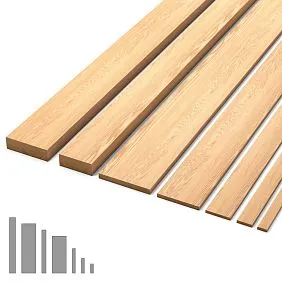
Minimalism demands a paradox — visual emptiness with functional richness, where things exist but are invisible, where space is free yet everything needed is at hand, where the eye encounters no clutter but life is supported by storage systems.Oak wooden planks for wallsWooden slats solve this dilemma, transforming from a decorative element into architectural camouflage — behind the vertical rhythm of slat cladding, wardrobe doors, niches for appliances, bookcases, and storage for household items are hidden, creating the illusion that the wall is solid, decorative, not functional. A slatted door, continuing the wall pattern, opens imperceptibly — the handle is recessed between slats, hinges are concealed, the gap is minimal at 2-3 millimeters, noticeable only up close. From afar, it's a single plane with rhythmic graphics. Up close, knowing its location, you find a barely noticeable cut line, press, the door opens, revealing a 3-square-meter wardrobe with dozens of hangers, shelves, drawers. Close it — again a solid slatted wall. Magic based not on visual deception, but on precision execution, thoughtful details, quality hardware.
Concealed storage systems are critical for small apartments, where every square meter counts, where open cabinets consume visual space, create a feeling of crampedness, clutter even with perfect order. A 35-square-meter studio apartment with a continuous slatted wall 5 meters long, concealing a 2-meter wardrobe, 1.5 meters of kitchen cabinets, 1.5 meters of open bookshelves, appears more spacious than a 45-square-meter apartment with traditional open cabinets, dressers, shelves that fragment the space. The visual continuity of the slatted wall unifies functional zones, masks their utility, creates a single composition where decor and function are fused. This is not a compromise between beauty and convenience, but their synthesis, where one is impossible without the other.



Concealed door techniques: swing systems
A swing concealed door — a slatted panel on concealed hinges, opening outward or inward like a regular door — is the simplest system, requiring no complex mechanisms, suitable for rooms with sufficient opening space.wooden planks on the wallThey are mounted on a frame — a wooden frame made of 40x60 millimeter timber, a plywood or MDF base 16-18 millimeters thick, ensuring structural rigidity. The frame is attached with hinges to a concealed box, flush-mounted into the wall. Hinges are concealed — three-dimensionally adjustable, installed in grooves of the frame and box, invisible when the door is closed. Adjustment allows the door to be set perfectly level, minimizing perimeter gaps to 2-3 millimeters.
Slats are attached to the base vertically or horizontally according to the main wall pattern. Critical — matching the slat spacing on the door and wall. If the wall has 40-millimeter slats with a 30-millimeter gap, the door must have an identical rhythm so that when closed, the door slats visually continue the wall slats. Tolerance ±1 millimeter — more creates visible misalignment, destroying the monolithic illusion. Marking starts from the door edge, the number of slats is counted, aligned symmetrically so the outer slats are full, not cut.
Opening is provided by a push-to-open system — a mechanism that opens the door with a light press on the surface, without visible handles. A magnetic latch holds the door closed, a spring pusher extends it 20-30 millimeters when pressed, allowing it to be grasped and fully opened. Alternative — a concealed handle-profile, recessed between two slats, set back 10-15 millimeters, gripped by fingers. When closed, the handle blends with the gap, unnoticeable from afar, functional up close.




Sliding systems: space saving
A sliding concealed door — a slatted panel on tracks, sliding along the wall parallel or into a pocket within the wall — is optimal for narrow spaces where a swing door would occupy valuable space. The system includes an upper track, attached to the ceiling or a concealed beam in the wall, a roller mechanism on the top of the door, a lower guide profile or pins preventing sway. The door hangs from the upper track, the lower edge slides in the profile or above the floor with a 5-10 millimeter gap.
Wooden planks on walls and in interiorsThe slats of a sliding door must be oriented vertically — horizontal slats when sliding create a diagonal visual intersection with the vertical wall slats, destroying the camouflage. Vertical slats on the door, when sliding, remain parallel to the wall slats, visual unity is preserved. Sliding door width up to 1200 millimeters for single-leaf, up to 2400 for double-leaf — more creates excessive weight, strain on the mechanism, risk of sagging.
Concealed track — a profile recessed into the ceiling or a niche above the opening — ensures mechanism invisibility. Visible track — an aluminum profile attached to the ceiling — simpler to install, but breaks the concealment illusion. For minimalist interiors, concealed track is mandatory. Installation requires preparation — a groove 30-40 millimeters deep, 50-60 wide is milled into the ceiling, the profile is installed, secured, gaps are filled with putty, surface leveled. Result — the track is invisible, the door slides as if by magic.
Pocket system — the door when opening retreats into the wall into a specially created niche — creates maximum visual cleanliness when the door completely disappears. The pocket is formed when building the wall from drywall on a metal frame — a cavity 100 millimeters wider than the door width, 120-150 millimeters deep is created. The door on tracks slides into the pocket, becomes invisible. Disadvantage — the pocket consumes 10-15 centimeters of room width, applicable only with sufficient area.
Our factory also produces:


Integration with the main wall: seamlessness as the goal
Seamless integration of a concealed door with the wall requires three conditions: plane alignment, slat rhythm alignment, wood tone alignment. The door plane must be flush with the wall — protrusion or recession of 2-3 millimeters creates a visual boundary revealing the door. For a swing door, this is achieved by precise installation of the concealed box level with the wall — the box is mounted before wall finishing, wall cladding and door are done simultaneously, planes are aligned. For a sliding door, the panel hangs on tracks with adjustment for projection — rollers allow moving the door closer or farther from the wall, setting it flush.
Rhythm alignment — slat spacing, gap width on the door are identical to the wall. Marking starts from the door opening, slats on the wall and door are arranged so that when closed they visually continue each other. If the opening is asymmetrical relative to the wall, the rhythm on the door may not match the rhythm at the wall edges — this is acceptable, alignment in the contact zone between door and wall is important. The eye reads the local pattern, does not analyze the entire wall, so local alignment is sufficient for the illusion.
Tone alignment is achieved by using wood of the same species, same batch, with identical finishing. Slats for the wall and door are ordered simultaneously, from the same shipment, treated with the same oil or varnish, same color. Wood varies in shade from batch to batch — even the same species, from the same manufacturer, but from different shipments has tone variations of ±5-10 percent, noticeable in direct comparison. A door made from slats of another batch stands out in color, destroying the camouflage. A 10-15 percent surplus of slats from the same batch beyond the calculated amount ensures material for possible repairs, replacement of damaged elements while preserving tone.
Get Consultation
Gaps and Shadows: Managing Perception
The perimeter gap of a hidden door is an inevitability caused by the need for free movement, compensation for wood deformation due to humidity fluctuations, and the possibility of adjustment. A minimum gap of 2 millimeters ensures functionality but becomes noticeable under bright side lighting—light skimming along the wall illuminates the gap, turning it into a bright line that reveals the door's outline. Masking the gap is achieved in several ways. The first is painting the door and wall edges a dark color—black, dark gray—the gap turns into a dark line, less noticeable than a bright one. The second is beveling the door edge inward at a 3-5 degree angle—when viewed perpendicular to the wall, the gap is invisible, the edge is hidden by the bevel.
The third method is magnetic tape around the door perimeter, which attracts the door to the frame when closing, compressing the gap to a minimum of 0.5-1 millimeter. The tape is applied to the door edge and the corresponding surface of the frame; magnetic attraction creates a tight fit without gaps. The fourth is visual distraction: hidden LED lighting along the bottom edge of the slatted wall, directed downward, creates a light line that draws attention away from the gaps, making them unnoticeable against the light. A combination of methods ensures maximum concealment.
Shadows between slats—the depth of the relief—enhance masking by creating visual noise in which the door gaps get lost. Slats 20-25 millimeters thick, protruding 15-20 millimeters from the substrate, create deep shadows under side lighting. A door gap of 2-3 millimeters gets lost among dozens of shadows between the slats; the eye does not register it as a boundary. Flat slats glued directly to the wall without a gap do not create shadows—the door gap is noticeable against their background. Choosing a three-dimensional slatted structure with deep shadows is critical for hidden doors.
Niches and Built-in Cabinets: Functional Voids
A niche behind a slatted wall—a recess in the wall or the space between the wall and the slatted cladding, used for placing equipment, shelves, decorative objects—is created in two ways. The first is a real niche in a load-bearing wall, formed during construction or carved out during renovation. Depth 100-300 millimeters, width and height as needed. Slatted cladding is installed on a frame set back 50-80 millimeters from the wall, leaving the niche partially open or completely covered, with access through removable or opening slatted sections. The second method is a false wall made of drywall on a metal frame, installed 150-300 millimeters from the load-bearing wall, forming a void between them. Slatted cladding is mounted on the false wall; the void is used for niches, cabinets, and utilities.
A TV niche—a recess 100-150 millimeters deep, sufficient to accommodate a screen 50-80 millimeters thick flush with the slatted surface or with a slight protrusion. The TV on a bracket is attached to the load-bearing wall inside the niche; wires are routed behind the slats, exiting at the bottom to outlets hidden behind furniture or in the baseboard. Around the TV, the slats form a frame 100-200 millimeters wide, visually highlighting the screen while integrating it into the slatted composition. When the TV is off, the black screen blends with the dark gaps between the slats, becoming less noticeable.
A book niche—open shelves 200-300 millimeters deep between slatted sections, where book spines are visible, create color spots and enliven the slatted monotony. Shelves made from the same solid wood as the slats are mounted on hidden brackets to the frame or load-bearing wall. Vertical dividers between shelves continue the wall's vertical slats, creating a visual connection. 3-5 shelves over a height of 2.5 meters provide a capacity of 30-50 books per linear meter of niche.Oak wooden planks for wallsframe the niche, integrating it into the overall composition.
Built-in Cabinets: Invisible Storage
A built-in cabinet behind a slatted wall—a full-fledged storage system 400-600 millimeters deep, hidden behind continuous slatted cladding with access through hidden doors—is created in a room niche, alcove, between two walls, or behind a false wall. Internal fittings are standard—hanging rods for clothes, shelves for folded clothing, pull-out drawers for linens and accessories. The front is a slatted panel or several panels on hidden hinges or sliding tracks, visually indistinguishable from the wall. When closed—the cabinet is invisible, the wall appears decorative. When open—access to contents, the function is revealed.
The advantage of a built-in cabinet behind slats over a freestanding one is space saving, visual cleanliness, and integration into the architecture. A freestanding cabinet occupies floor area, has a visible body, sides, plinth, cornice—volume that fragments the space. A built-in one utilizes a niche, alcove, or unused space, has no visible body—only a door that blends with the wall. The room appears more spacious, freer, without compromising functionality. For small apartments, this is critical—a 30-square-meter studio with a 2-meter built-in cabinet behind a slatted wall visually feels more spacious than a 35-square-meter studio with a separate cabinet of the same capacity.
Classic cabinetsSTAVROS solid wood cabinets can integrate into slatted compositions—the cabinet body is installed in a niche, the fronts are made as slatted panels matching the wall finish. Hardware is European—Blum hinges with soft-close mechanisms ensuring smooth closing, Hettich full-extension drawer slides, magnetic latches or push-to-open systems for handleless opening. Internal organization is well thought out—compartments for long clothes 1400 millimeters high, for short clothes 800 millimeters, shelves 350 millimeters high, drawers 100-150 millimeters. This is not improvisation but an engineered system ensuring efficient use of every cubic centimeter.
Hidden Storage and Open Furniture: The Dialectic of Minimalism
Minimalism is built on the contrast of emptiness and saturation—visually empty space with clean walls and a minimum of visible objects is functionally saturated with hidden storage systems, enabling life without displaying utility. A slatted wall with hidden cabinets, niches, and doors creates the appearance of a decorative surface behind which functional infrastructure is concealed.Modern FurnitureSTAVROS—open shelving, consoles, coffee tables—is placed on free walls, creating a contrast of openness and closedness, display and concealment.
An open shelving unit made of solid oak, 2000 mm high, 1200 mm wide, 300 mm deep, with five shelves, no back panel, no sides—only horizontal shelves on vertical posts—displays contents: books, ceramics, plants, decorative objects. It is a visual centerpiece, personalizing the space, showcasing the owner's taste and interests. Opposite it—a slatted wall with a hidden cabinet storing household utility items: bed linens, seasonal clothing, a vacuum cleaner, an ironing board—everything necessary but visually unappealing. The shelving unit shows, the cabinet hides—a balance creating a lively yet orderly space.
A console—a narrow table 300-400 millimeters deep, 700-900 millimeters high, 1000-1500 millimeters long, on slender legs—is placed against a wall without overloading the space. It holds a lamp, vase, books, keys—everyday items requiring accessibility. Under the console is emptiness, visually lightening the furniture and creating a sense of airiness. Opposite the console—a slatted wall with niches for equipment, hidden shelves behind removable panels. The console is open, the wall is closed—a contrast shaping perceptual dynamics, avoiding both the sterile emptiness of absolute minimalism and the clutter of traditional interiors.
Color and Material Coordination
The color of the slatted wall and open furniture should be coordinated through unity of material, wood species, and finish tone. Slats made of solid oak in a natural tone, treated with oil, and a shelving unit made of solid oak treated with the same oil create material unity despite functional differences. Slats are vertical, shelving is horizontal—a contrast in orientation. Slats are solid, shelving is open—a contrast in density. But the wood is the same, the tone is identical, the grain is related—visual connection is maintained, the space is perceived as cohesive.
An alternative is a contrast of light and dark. Slats made of bleached beech, almost white, and furniture made of dark wenge oak create a black-and-white graphic characteristic of contemporary minimalism. Light walls visually expand the space, reflect light, and create airiness. Dark furniture accents, grounds, adds visual weight, and prevents sterility. The contrast works provided there is a balance of areas—70-80 percent light (walls, ceiling, floor), 20-30 percent dark (furniture, accents). The reverse proportion creates gloom and pressure.
Material diversity is permissible through combining wood with other natural materials. A slatted wall made of solid wood, furniture with stone countertops—marble, granite, slate—create a contrast of organic and mineral, warm and cold, soft and hard. Glass shelves on a wooden shelving unit add transparency, lightness, and reflections. Metal legs on a wooden table—black steel, brass, stainless steel—introduce an industrial accent, modernizing traditional wood. The key is naturalness, avoiding plastic, synthetics, and artificial imitations.
Lighting of Hidden Systems: Light as Function
Lighting inside a built-in cabinet behind a slatted door is critical for usability—without light, the cabinet interior is dark, finding items is difficult, especially in deep compartments. An LED strip with cool white light 4000-5000 Kelvin, installed along the top edge of the cabinet and directed downward, provides uniform lighting when the door is open. The strip is connected to a door opening sensor—contact or magnetic—turning on automatically upon opening and off upon closing. Energy consumption of 5-10 Watts and a lifespan of 30-50 thousand hours make the system economical and durable.
Lighting niches behind slats creates light accents, turning a utilitarian shelf into an exhibition. An LED strip with warm white light 2700-3000 Kelvin, installed around the perimeter of the niche behind the slats, illuminates the contents with soft diffused light filtering through the gaps between slats. Books, ceramics, plants in the niche become illuminated objects, attracting attention and creating focal points. Dimmable lighting allows adjusting brightness from 10 to 100 percent—full for functional use, minimal for decorative effect in the evening.
Contour lighting of a slatted wall—an LED strip along the floor or ceiling, directed along the wall—creates a floating plane effect, separating the wall from the floor or ceiling with a light line. Light skimming along the slats emphasizes their relief, creates dynamic shadows, and enhances graphic quality. At night, contour lighting acts as a nightlight, providing orientation light without overload. Colored RGB strips allow changing the lighting color according to mood—cool blue for concentration, warm amber for relaxation, green for meditation. This is not a mandatory function but adds flexibility and interactivity to the space.
Sound Damping: Silence of Mechanisms
High-quality hardware ensures silent opening and closing of hidden doors—critical for bedrooms where the cabinet is used early in the morning or late at night when a partner is sleeping. Hinges with soft-close mechanisms from Blum, Hettich dampen closing speed in the last 10-15 degrees; the door presses against the frame smoothly and silently. Sliding systems on rollers with Teflon coating and ball bearings slide silently—noise level below 30 decibels, inaudible from 2-3 meters away. Cheap hardware creates squeaks, knocks, slams—unacceptable for a quality hidden system.
Cushioning—rubber or silicone pads on door edges, at contact points with the frame—prevents knocking when closing, even if soft-close mechanisms are not installed. A pad 1-2 millimeters thick, glued around the frame perimeter, absorbs impact and creates a soft fit. A magnetic latch holds the door pressed, preventing spontaneous opening from drafts or vibrations. The system operates quietly, smoothly, imperceptibly—as a hidden function in a minimalist interior should.
Acoustic absorption—felt or foam backing on the inner side of slatted panels—reduces resonance, prevents rattling, and improves overall room acoustics. A hollow slatted structure without filling resonates upon impact, sound propagates, creating acoustic discomfort. When filled with absorbing material, it becomes dead, acoustically inert. This is not a mandatory option but enhances perceived quality, especially in spaces with poor acoustics—studios with concrete walls and high ceilings.
Conclusion: Appearance and Essence
Oak wooden planks for wallscombined with hidden storage systems embody the philosophy of minimalism — visual simplicity with functional complexity, apparent calm with hidden richness, aesthetics with engineering precision. This is not an optical illusion, but architectural surgery, where function is not destroyed but invisibly integrated, where utility is not displayed but implied. The result is a space that breathes freedom, not visually overloaded, yet providing everything necessary for comfortable living.
STAVROS Company offers a complete range for creating hidden systems —wooden planks on the wallof different species and cross-sections,Classic cabinetsfrom solid wood with the possibility of slatted facades,Modern Furniture— shelving, consoles, tables — complementing hidden systems with open display. Consultations on designing hidden doors, selecting hardware, calculating dimensions, and integrating with room architecture ensure the feasibility of the concept.
Create interiors whereWooden planks on walls and in interiorswork not only as decor but also as functional camouflage, where walls are alive — they open, conceal, reveal, surprise, where minimalism is not sterile but saturated with hidden life. Guests see clean lines; owners know — behind them lies organized storage, thought out to the smallest detail, providing order without effort, beauty without sacrificing functionality. This is the highest level of interior design, where the visible and hidden are in perfect balance, creating a space worthy of living in, not just photographing.


