Article Contents:
- Features and characteristics of MDF rails
- Structural advantages of the material
- Ecological safety of the product
- Variety of applications for MDF rails
- Decorative finishing of wall surfaces
- Ceiling structures and suspended systems
- Space zoning
- Technological aspects of production
- Manufacturing process of MDF panels
- Final processing and decoration
- Advantages of MDF rails over alternative materials
- Comparison with natural wood
- Advantages over plastic alternatives
- Dimensional series and technical characteristics
- Standard sizes of products
- Physical and Mechanical Properties
- Features of installation and mounting
- Preparatory work
- Mounting methods
- Creating a substructure
- Options for decorative finishes
- Staining and Toning
- Laminating and veneering
- Modern decorative coatings
- Applications in various interior styles
- Modern interior styles
- Classic interior solutions
- Ethnic and exotic styles
- Technical aspects of design
- Thermal Deformations
- Mounting Technologies: Professional Solutions
- Moisture deformation
- Care and operation of products
- Regular Maintenance
- Protection against damage
- Restoration and renewal
- Economic Aspects of Usage
- Material cost and installation
- Long-Term Economic Efficiency
- Technology Development Prospects
- Innovative materials and coatings
- Ecological innovations
- Conclusion
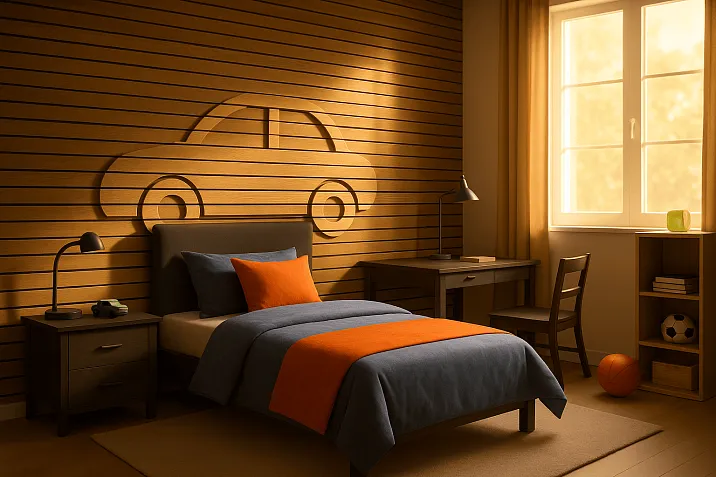
In the modern world of interior design, a special place is occupied by MDF rail — a universal finishing element that combines aesthetic appeal, practicality, and affordability. This innovative material opens up limitless possibilities for creating unique design solutions in any space.


Features and characteristics of MDF rails
MDF (Medium Density Fibreboard) is a medium-density wood fiberboard produced using advanced pressing technology of fine wood particles. The technological process involves treating wood fibers at high temperatures using environmentally safe binding agents.




Structural advantages of the material
The density of quality MDF panels is 600-800 kg/m³, providing an optimal balance between strength and workability. Unlike natural wood, MDF has a uniform structure without natural wood defects — knots, cracks, resin pockets.
Modern MDF rail It features stable geometric dimensions. The material does not warp or crack under moderate fluctuations in humidity and temperature, making it an ideal choice for various operating climatic conditions.
Our factory also produces:


Ecological safety of the product
High-quality MDF strips are produced in accordance with strict ecological standards. The formaldehyde content in modern panels does not exceed the E1 class limits, allowing safe use of the material in residential spaces, including children's rooms and bedrooms.
Get Consultation
Variety of MDF strip applications
Decorative wall surface finishing
Wooden planks MDF strips are ideal for creating accent walls and decorative panels. Vertical installation of strips visually increases ceiling height, making the room appear more spacious and elegant. Horizontal placement, on the contrary, expands the space, which is especially relevant for narrow rooms and corridors.
The play of light and shadow between the strips creates a textured surface on the wall, adding depth and dynamism to the interior. Such a solution allows creating a cozy atmosphere in the living room, a stylish accent in the bedroom, or a modern design in the office.
Ceiling structures and suspended systems
MDF strip ceilings have excellent acoustic properties, reducing noise levels and improving room sound insulation. A suspended strip system allows concealing engineering utilities — electrical wiring, ventilation ducts, heating pipes.
Built-in LED lighting between the strips creates an eye-catching backlighting effect, highlighting the architectural features of the room. Such a structure is ideal for modern interiors in loft, minimalism, or high-tech styles.
Space zoning
MDF strips serve as an excellent tool for visually dividing space without erecting load-bearing walls. Strip partitions preserve the feeling of openness and light while simultaneously creating functional zones within the room.
In studio apartments, strip structures help separate the sleeping area from the living room, the workspace from the relaxation zone. In office spaces, such partitions create privacy for meetings without disrupting the overall open space concept.
Technological aspects of production
MDF panel manufacturing process
Production begins with preparing wood raw material — coniferous and deciduous trees are ground into a homogeneous mass. Wood fibers are treated with steam at 160-170°C, which facilitates their plasticization and removal of natural resins.
On the next stage, binding agents based on urea-formaldehyde or polyurethane resins are added to the prepared mass. Modern technologies allow using environmentally safe binding components, minimizing the emission of harmful substances.
Panel forming occurs under high pressure of 25-40 atmospheres at a temperature of 170-220°C. Hot pressing ensures uniform density throughout the material thickness and creates a strong structure without internal stresses.
Final processing and decoration
After cooling and stabilizing, panels undergo mechanical processing — sanding to achieve a perfectly smooth surface. MDF molding Undergoes additional profiling to create decorative elements of complex shapes.
The final coating may include laminating decorative films imitating various wood species, veneering with natural veneer, painting with enamels, or applying protective varnishes. Each type of coating imparts the product with unique aesthetic and functional characteristics.
Advantages of MDF strips over alternative materials
Comparison with natural wood
MDF strip surpasses natural wood in dimensional stability and absence of natural defects. Moisture deformation, characteristic of solid wood, is practically eliminated when using quality MDF. This ensures the longevity of structures and minimizes the need for regular maintenance.
The cost of MDF products is significantly lower than analogs made from expensive wood species while maintaining high aesthetic quality. The ability to imitate any wood texture allows achieving the desired visual effect without substantial financial expenditure.
Advantages over plastic analogs
Unlike plastic strips, MDF has a natural wood grain structure, creating a warmer and more cozy atmosphere in the room. The material 'breathes,' helping maintain a comfortable microclimate.
MDF strips are easy to repair and restore — they can be repainted, sanded, and refreshed without replacing the entire structure. Plastic products do not offer such flexibility.
Dimensional series and technical characteristics
Standard product sizes
Modern manufacturers offer a wide range of MDF strip sizes. Standard strip length is 2400-3000 mm, allowing coverage of most rooms without joints. Width varies from 20 to 200 mm, thickness from 8 to 50 mm.
The most popular sizes are 40×16 mm and 50×20 mm strips, which provide an optimal balance of strength and visual lightness of the structure. For creating a more pronounced relief, larger section strips up to 80×40 mm are used.
Physical and mechanical properties
The density of quality MDF is 650-750 kg/m³, providing sufficient strength at a relatively low weight. The bending strength reaches 22-25 MPa, exceeding the values of particleboard and some species of natural wood.
The modulus of elasticity is 2200-2500 MPa, providing rigidity of structures under moderate loads. Water absorption within 24 hours does not exceed 8-10%, allowing the material to be used in rooms with increased humidity provided there is an appropriate protective coating.
Features of installation and mounting
Preparatory Work
Before installing MDF strips, it is necessary to thoroughly prepare the base. The surface must be flat, dry, and free of dust and contaminants. Irregularities exceeding 2 mm per linear meter require leveling with putty or installation of a leveling frame.
An important stage is marking the future structure. Using a laser level and a marking string ensures precise installation and ideal geometry of the finished surface. When mounting vertically, special attention is paid to the verticality of the first strip, which serves as the basis for the entire structure.
Methods of mounting
There are several main methods of mounting MDF strips to the base. The most common is mounting with self-tapping screws with pre-drilled holes to avoid cracking the material. Using screws 35-50 mm long ensures secure fixation for strips 16-20 mm thick.
Adhesive mounting is used for installing light structures on flat bases. Modern polyurethane adhesives provide strong bonding with most construction materials. The setting time is 10-15 minutes, allowing adjustment of element positions during installation.
The combined method involves using both adhesive and mechanical fastening, ensuring maximum connection reliability under increased loads or in conditions of temperature and humidity fluctuations.
Creating a subframe
When installing strips on uneven surfaces or when creating an air gap, a framing system is used. The subframe is made from wooden beams 40×20 mm or metal profiles, installed perpendicular to the direction of the strips.
The subframe spacing is determined by the length of the strips and expected loads. For 2400 mm long strips, intermediate mounting points are recommended every 600-800 mm. For heavy structures or where higher rigidity is required, the spacing is reduced to 400-500 mm.
Decorative finishing options
Painting and toning
MDF rail Suitable for painting with various coatings. Acrylic enamels provide even coverage with glossy or matte finish. Water-dispersible paints create an environmentally safe coating suitable for residential spaces.
Staining allows imitation of various wood species while preserving the natural texture of MDF. Water-based stains penetrate the surface layer, creating a deep tone without forming a film. Oil-based stains provide more intense coloring and additional moisture protection.
Laminating and veneering
Laminating with decorative films creates a surface imitating various materials — from exotic woods to natural stone and metal. Modern laminating films have high wear resistance and UV resistance.
Veneering with natural veneer creates a surface virtually indistinguishable from solid wood of valuable species. Veneer thickness is 0.5-0.8 mm, ensuring natural texture and the possibility of multiple surface restorations.
Modern decorative coatings
Innovative coatings include 3D lamination, creating a textured surface, and thermochromic films with high-resolution printing. These technologies allow creating unique designer effects not achievable with traditional materials.
Antibacterial coatings with silver ions provide hygienic safety in medical facilities, kindergartens, and food production. Antistatic coatings prevent dust accumulation on surfaces, which is especially important in IT centers and laboratories.
Applications in various interior styles
Modern interior styles
In minimalist style, MDF strips are used to create clean geometric forms without unnecessary detailing. Monochromatic solutions using white or dark gray strips emphasize the architectural expressiveness of the space.
Scandinavian style implies using light wood tones with natural texture. MDF strips imitating birch, pine, or whitewashed oak create a cozy northern home atmosphere while maintaining minimalist forms.
Loft style allows combining MDF strips with metal elements and exposed utilities. Dark tones with imitation of aged wood or metal emphasize the industrial character of the interior.
Classic interior solutions
In classical interiors MDF moldings Used to create traditional wall panels — boiserie. Profiled elements of complex shapes imitate carved decoration characteristic of palace interiors.
Neoclassical style implies more restrained use of decorative elements while preserving classical proportions. Simple geometric strip shapes are complemented by elegant moldings and cornices.
Ethnic and exotic styles
Japanese interior style actively uses lattice structures made of thin strips, creating play of light and shadow. MDF strips with bamboo or light wood imitation perfectly reproduce authentic atmosphere.
African style implies using strips with exotic wood imitation — ebony, redwood, zebrawood. Contrasting combinations of light and dark elements create expressive ethnic motifs.
Technical aspects of design
Load and Deformation Calculations
When designing structures from MDF strips, it is necessary to consider static and dynamic loads. The self-weight of a 40×16 mm strip with a density of 700 kg/m³ is approximately 0.45 kg per linear meter.
Deflection calculations are performed using standard formulas of resistance of materials, taking into account the modulus of elasticity of MDF. The maximum allowable deflection should not exceed 1/250 of the span for decorative elements and 1/400 for load-bearing structures.
Thermal Deformations
The linear expansion coefficient of MDF is 10-15×10⁻⁶ 1/°C, which requires accounting for thermal deformations in long structures. To compensate for expansion, deformation joints or movable connections are provided.
In rooms with large temperature fluctuations, it is recommended to use special heat-resistant coatings and fasteners that compensate for thermal stresses.
Moisture-related deformations
MDF moisture expansion is significantly less than that of natural wood, but must be considered in precise installation work. A 10% change in humidity causes a 0.1-0.2% linear dimension change.
To minimize moisture-related deformations, it is recommended to acclimate the material in the installation room for 48-72 hours before installation.
Care and maintenance of products
Regular maintenance
MDF strips require no complex maintenance, which is one of their main advantages. Regular dry cleaning with a soft cloth or vacuum cleaner with a soft attachment allows maintaining the surface in ideal condition.
Wet cleaning is performed with slightly damp cloth without abrasive agents. It is important to avoid excessive water entering the joints between strips, as this may cause material swelling.
Protection from Damage
Protection against UV radiation is provided by special lacquer coatings with UV filters. This is especially important for structures located near large windows or in rooms with intense artificial lighting.
UV protection is provided by special coatings with UV filters. This is especially important for structures located near large windows or in rooms with intense artificial lighting.
Restoration and Renewal
One of the main advantages of MDF strips is the possibility of multiple surface renewals. The old coating is removed by sanding, after which a new one — paint, varnish, or decorative film — is applied.
This approach allows changing the interior style without fully replacing the finish, significantly saving money and time on repairs.
Economic aspects of use
Cost of material and installation
MDF strips offer an optimal price-to-quality ratio among finishing materials. The cost per square meter of MDF strip covering is 2-3 times lower than similar natural wood finishing, with comparable aesthetic qualities.
Ease of installation significantly reduces labor and work costs. With basic skills, installation can be performed independently, further reducing the overall project cost.
Long-term Economic Efficiency
The service life of quality MDF strips is 15-20 years under proper usage conditions. The possibility of multiple restorations extends the service life to 25-30 years, ensuring excellent return on investment.
Low operating costs are another factor in the economic attractiveness of the material. The absence of need for special maintenance and care minimizes ongoing expenses for finish maintenance.
Technology development prospects
The development of nanotechnology opens new opportunities for improving MDF properties. Nanocoatings provide self-cleaning surfaces resistant to contamination and requiring no regular cleaning.
Antimicrobial additives incorporated into the material structure create hygienically safe surfaces, which is especially important for medical and educational facilities.
The use of renewable plant-based raw materials and formaldehyde-free binders makes MDF even more environmentally friendly. Biodegradable coatings based on plant components reduce environmental impact during disposal of products.
Ecological Innovations
Closed-loop production technologies allow using recycling waste to manufacture new products, aligning with circular economy principles.
Closed-loop production technologies allow the use of recycling waste to manufacture new products, aligning with the principles of a circular economy.
Conclusion
MDF rail is a universal and highly efficient material for modern interior design. The combination of excellent performance characteristics, aesthetic appeal, and affordable cost makes this material an ideal choice for a wide range of applications.
Technological advantages of MDF — dimensional stability, uniform structure, ease of processing — ensure professional quality results with various installation methods. The ability to create diverse decorative effects allows implementing the most daring design ideas.
The economic efficiency of using MDF strips is confirmed not only by low initial cost, but also by minimal operating expenses, durability, and the possibility of multiple surface renewals.
STAVROS Company offers a wide range of high-quality MDF products, including strips, Moldings and other decorative elements. More than 20 years of experience, participation in the restoration of historical sites, and continuous improvement of production technologies guarantee flawless STAVROS product quality.
Choosing MDF strips from STAVROS, you get not just a finishing material, but a tool for creating a unique and stylish interior that will delight with its beauty and functionality for many years.