Article Contents:
- Philosophy of Universality: When Material Becomes Canvas
- Psychology of Color in Interior Design
- Technical Aspects of Preparing MDF for Painting
- Surface Structural Features
- Primer Systems for MDF
- Coating Materials: Choice of a Professional
- Water-Based Dispersions
- Alkyd Enamels and Their Features
- Polyurethane Systems
- Coloristics: The Art of Creating Color Solutions
- Color Theory in Practical Application
- Modern Trends in Color Solutions
- Painting Technology: From Preparation to Finish
- Conditions for Work Execution
- Paint Application Methods
- Multi-Layer Painting Systems
- Special Effects and Decorative Techniques
- Patina and Aging
- Surface Texturing
- Operational Characteristics of Painted Rails
- Resistance to Mechanical Impact
- Chemical Resistance
- Color Stability and Lightfastness
- Influence of Ultraviolet Radiation
- Protective Additives and Stabilizers
- Repair and Restoration of Coatings
- Local Repair of Damage
- Recoating
- Economic Aspects and Project Planning
- Material Cost Calculation
- Labor and Timeframes
- Comparison with Ready-Made Solutions
- Innovative Painting Technologies
- Electrostatic Painting
- Powder Coatings
- Vacuum Impregnation
- Trends in development and prospects
- Ecological requirements
- Smart Coatings
- Digital Technologies in Coloristics
- Conclusion
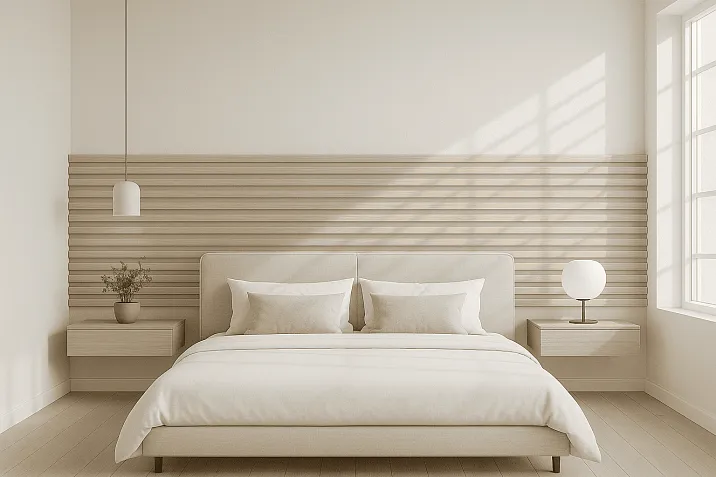
Creativity knows no bounds. Especially when a master’s hands hold a material capable of realizing any designer’s fantasy. MDF Rail for Painting has become a true discovery for those unwilling to compromise with the limitations of ready-made solutions and striving to create something truly unique.
Have you ever wondered why some interiors are unforgettable, while others are forgotten within minutes? The secret lies in the details, in the material’s ability to adapt to the creator’s vision, becoming part of their artistic concept. And it is precisely here that MDF rail for painting demonstrates its true potential.


Philosophy of Universality: When Material Becomes Canvas
Imagine an artist facing a blank canvas. Unlimited possibilities, infinite creative space, freedom to choose every brushstroke. This is precisely the feeling a designer experiences when working with MDF rail for painting. The neutral base transforms into a tool for realizing the boldest ideas.
Unlike ready-made decorative coatings that dictate their own conditions, an uncoated MDF surface offers complete freedom for creative expression. Want to create a Provence-style interior with characteristic pastel shades? Please. Dreaming of a dramatic loft with contrasting black-and-white solutions? No problem. Planning a child’s room with bright, cheerful colors? Everything is in your hands.




Psychology of Color in Interior Design
Color possesses an extraordinary power to influence human psychology. Red activates and energizes, blue calms and soothes, green restores and harmonizes. MDF material for painting allows applying these insights practically, creating spaces that serve specific goals.
In the bedroom, gentle lavender or peach tones of rails promote relaxation and healthy sleep. In the office, restrained gray-blue shades help concentration and productive work. In the living room, warm terracotta or ochre colors create an atmosphere of coziness and encourage conversation.
Our factory also produces:


Technical Aspects of Preparing MDF for Painting
Get Consultation
Surface Structural Features
Painting quality directly depends on proper surface preparation. MDF has a relatively smooth but porous surface that requires a special approach. The pores of the material must be filled with a primer that creates an even base for the final coating.
Sanding before priming is done with P180-P220 grit sandpaper. A coarser abrasive may leave visible scratches, while a finer one won’t provide the necessary roughness for primer adhesion. After sanding, the surface is thoroughly cleaned of dust with compressed air or a sticky cloth.
Primer Systems for MDF
Choosing the primer is critically important for coating longevity. Water-based acrylic primers provide good adhesion and quick drying. They do not lift MDF fibers and create a smooth matte surface, ideal for applying the final coating.
Alkyd primers penetrate deeper into the material structure, providing stronger adhesion. However, they take longer to dry and may have a specific odor, limiting their use in residential spaces. Polyurethane primers combine the advantages of both types but require higher skill from the applicator.
Primer is applied in two coats with intermediate drying time of 4-6 hours. Each coat is applied perpendicular to the previous one to ensure even coverage. Primer consumption is 80-120 g/m² depending on the porosity of the surface.
Coating Materials: Choice of a Professional
Water-Based Dispersions
Acrylic paints on water-based systems have become the standard for painting MDF rail for interior use due to their combination of eco-friendliness, ease of application, and excellent decorative properties. Modern formulations have high covering power, allowing to achieve saturated color already in two coats.
Premium-grade polyacrylic paints contain special additives that increase resistance to abrasion and contamination. Silicone-acrylic compositions have additional hydrophobic properties, which is important for rooms with high humidity.
Latex paints create a denser film with a characteristic silk-like gloss. They are easy to clean, do not fade under UV exposure, and retain their original appearance for many years. Latex content of 15-25% ensures optimal balance between coating strength and elasticity.
Alkyd Enamels and Their Features
Alkyd enamels provide an exceptionally smooth and durable coating with high gloss. They are ideal for MDF rail for paintingthat will be used under conditions of increased mechanical loads.
Phthalic enamel (PF) is characterized by rapid drying and good decorative properties. The "non-tack" drying time is 2-4 hours, and full curing takes 24-48 hours depending on temperature and air humidity.
Glyptal enamels (GF) dry more slowly but form a more elastic coating that better withstands thermal deformations of the substrate. They are recommended for painting long elements subjected to significant thermal expansion.
Polyurethane systems
Two-component polyurethane paints represent the pinnacle of coating technologies. They provide unmatched durability, chemical resistance, and longevity. Hardness on the pencil scale reaches 3H, comparable to automotive-grade coatings.
The working life of the prepared mixture is 4-8 hours, requiring precise planning of work. Application is performed using an air spray gun or roller under strictly controlled temperature (18-25°C) and humidity (not exceeding 70%).
Coloristics: the art of creating color solutions
Color theory in practical application
Creating harmonious color combinations requires understanding the basic principles of coloristics. Itten's color wheel serves as a reliable tool for selecting compatible shades. Complementary (opposite) colors create vibrant, energetic compositions, while analogous (adjacent) colors produce calm and harmonious effects.
Warm colors (red, orange, yellow) visually bring surfaces closer and make rooms feel cozier but smaller. Cool tones (blue, green, purple) create a sense of spaciousness and freshness but may appear uncomfortable in large quantities.
Modern trends in color solutions
Complex, multi-component shades dominate modern design. Instead of pure colors, nuanced tones with gray added — so-called "dirty" colors — are used. They create a more refined and sophisticated atmosphere, do not strain the eyes, and easily combine with each other.
Gradient transitions between shades allow creating dynamic surfaces that change their character depending on lighting. Decorative MDF rails Ideal for implementing such solutions due to the ability to carefully process each element.
Coating technology: from preparation to finish
Working conditions
The microclimate of the room is critically important for coating quality. Air temperature should be maintained between 18-25°C, relative humidity should not exceed 65%. Sudden temperature fluctuations and drafts may lead to uneven drying and coating defects.
Work zone lighting should be sufficiently bright (at least 500 lux) and uniform for quality control. Using daylight lamps or LED fixtures with a color temperature of 4000-5000K ensures accurate color perception.
Paint application methods
Brush application provides maximum control over the process and allows careful painting of complex profiles and recesses. Natural bristle brushes are used for alkyd paints, and synthetic brushes for water-dispersed compositions. Brush width is selected based on the size of the surface being painted: 25-40 mm for rails up to 100 mm wide.
Roller application is more productive than brush application and provides a more uniform surface texture. Mohair rollers made of natural or synthetic fibers create a characteristic "sgraffito" finish, concealing minor substrate defects. A bristle length of 6-12 mm is optimal for most compositions.
Air spray application provides the highest quality and productivity. Spray pressure of 2-3 atm and nozzle diameter of 1.2-1.8 mm are selected depending on paint viscosity. The spray pattern is adjusted to achieve uniform coverage without runs or drips.
Multi-layer coating systems
Professional coating MDF rails Coating implies applying multiple layers with different functions. The primer layer ensures adhesion and equalizes the substrate's absorbency. The base color layer creates the main coating tone. The finish layer protects against external influences and forms the required gloss level.
Intermediate sanding between layers using P320-P400 sandpaper removes minor defects and ensures better adhesion of the next layer. Sanding is performed with light, even movements without heavy pressure to avoid scratching the substrate.
Special effects and decorative techniques
Patina and aging
Artificial aging of the surface creates an effect of long-term use and imparts an elegant vintage appearance to the interior. The patina technique involves applying a base light tone followed by darkening of recesses and relief elements.
Wax patina is applied with a soft cloth or sponge into profile recesses, creating an effect of natural soiling. Excess wax is removed with a clean cloth, leaving dark accents only in the deepest areas. Final polishing with a soft cloth creates a characteristic matte sheen.
Lacquer technique uses semi-transparent compositions applied over the base color and partially removed with cloth or sponge. This creates a complex interplay of shades and depth of color characteristic of antique finishes.
Surface texturing
Creating a relief texture significantly expands the decorative possibilities of painted rails. Structural pastes and gels allow imitation of various materials — from rough plaster to silk fabrics.
Stencil technique uses pre-made or homemade stencils to create repeating patterns. Paint is applied through stencil holes using a sponge or angled brush. Multi-color compositions are created by layering through different stencils.
Dry brush technique involves applying a small amount of paint with a nearly dry brush. This creates an effect of light spraying or wear, especially effective on relief surfaces.
Operational characteristics of painted rails
Resistance to mechanical impacts
Quality painted MDF Rail for Painting capable of withstanding significant mechanical loads without loss of decorative properties. The coating hardness, measured on the pencil scale, ranges from F for water-dispersed paints to 2H for polyurethane enamels.
Abrasion resistance is determined by the number of dry abrasion cycles until visible damage appears. Quality coatings withstand 5000-15000 cycles depending on paint type and test conditions.
Impact resistance characterizes the coating's ability to resist punctual impact loads. Acrylic-based elastic compositions better withstand impacts, distributing the load over a larger area and preventing cracking.
Chemical resistance
Painted surfaces in interiors are exposed to various chemicals — from household cleaning agents to alcoholic beverages. Polyurethane coatings have the highest chemical resistance and do not alter their properties upon contact with most household reagents.
Water-dispersed paints are less resistant to aggressive environments, but they are sufficient for most interior applications. Alkyd enamels occupy an intermediate position, offering a reasonable compromise between durability and cost.
Color stability and lightfastness
Influence of ultraviolet radiation
Color stability over time is critically important for interior coatings. Modern pigments have high lightfastness, but some shades are more susceptible to fading. Organic-based red and blue pigments are less resistant to UV radiation compared to inorganic iron and titanium oxides.
Lightfastness testing is conducted under accelerated conditions using xenon lamps with a power of 6000 W/m². Quality paints withstand 200-500 hours of exposure without noticeable color change.
Protective additives and stabilizers
UV absorbers absorb ultraviolet radiation in the 290-400 nm range, preventing polymer base degradation. Benzotriazoles and benzophenones effectively protect coatings at concentrations of 0.5-2% of the binder mass.
Antioxidants slow down oxidative processes causing color change and gloss loss. Sterically hindered phenols and amine stabilizers provide long-term protection for the coating.
Repair and restoration of coatings
Local repair of damage
Minor scratches and chips on painted surfaces can be easily repaired without full repainting. The damaged area is carefully sanded with fine sandpaper, primed, and painted with a fine brush.
Color selection for repair requires special attention. Paint should be thoroughly mixed, and if necessary, a small amount of tint should be added to achieve an exact match. Glossy finishes may differ in gloss after repair, so it is recommended to repaint the entire rail.
Coating renewal
Periodic coating renewal extends service life and allows changing the interior color scheme. Old paint is tested for adhesion using a simple test: a sticky tape is firmly pressed onto the surface and quickly pulled off. If paint particles remain on the tape, complete removal of the old coating is required.
A well-executed coating can be renewed without complete removal. The surface is lightly sanded to improve adhesion, cleaned of dust, and painted with a new composition. Finishing MDF rails Coating allows unlimited cycles of renewal.
Economic aspects and project planning
Material cost calculation
Budget planning for painting rails includes several cost categories. The cost of the rails themselves accounts for 40-60% of total material costs. Primers, paints, solvents, and auxiliary materials add another 25-35%. Consumables (brushes, rollers, painter’s tape) make up 5-10% of the budget.
Paint consumption is calculated based on the theoretical coverage specified by the manufacturer, adjusted for losses and surface complexity. For smooth rails, the coefficient is 1.1-1.2, for profiled surfaces it may reach 1.5-1.8.
Labor and timeframes
Painting rails requires significant time due to the need for careful preparation and multi-layer application with intermediate drying. Surface preparation (sanding, priming) accounts for 40-50% of total work time.
Painting productivity depends on the application method and surface complexity. Brushing smooth rails: 3-5 m²/hour, rolling: 8-12 m²/hour, spraying: 15-25 m²/hour. Profiled surfaces reduce productivity by 30-50%.
Comparison with ready-made solutions
Painting rails on-site is 15-25% more expensive than factory finishing, but ensures precise alignment with the designer’s concept and allows for local repairs. Factory finishing is more economical but limits color choices and excludes individual solutions.
Long-term economic efficiency of self-painting is demonstrated by the ability to periodically renew coatings without replacing the substrate. The service life of quality paint is 8-12 years in interior conditions.
Innovative coating technologies
Electrostatic coating
Electrostatic spraying technology ensures exceptionally even coating of complex profiled surfaces. The paint acquires an electric charge in the spray gun and is attracted to the grounded part, bypassing obstacles and reaching the most inaccessible areas.
The paint transfer efficiency in electrostatic coating reaches 95-98%, compared to 60-70% in conventional spraying. This not only saves material but also significantly improves the ecological conditions in the working area.
Powder coatings
Powder coating provides coatings of exceptional strength and durability. The powder is applied using an electrostatic method and polymerizes in the oven at 160-200°C. A coating thickness of 60-120 microns ensures the highest corrosion resistance and mechanical strength.
The limitation of the technology is the polymerization temperature regime, which may cause deformation of MDF. Special low-temperature powders polymerize at 130-150°C, but their range is limited.
Vacuum impregnation
Vacuum impregnation technology allows deeply saturating the porous structure of MDF with protective compositions. Parts are placed in a vacuum chamber, from which air is evacuated. Then the chamber is filled with the impregnating composition under a pressure of 2-5 atm.
The penetration depth of the impregnation reaches 3-5 mm, providing protection even in case of mechanical damage to the surface. Hydrophobic compositions reduce MDF water absorption by 5-10 times, and antiseptics prevent biological damage.
Trends in development and prospects
Ecological requirements
Stricter ecological standards are stimulating the development of paints with minimal volatile organic compound (VOC) content. Water-based paints already contain less than 50 g/L VOC, compared to 400-600 g/L in alkyd compositions.
Biodegradable paints based on vegetable oils and resins are gradually entering professional practice. Their ecological advantages are obvious, but their technical characteristics still lag behind synthetic analogs.
Smart coatings
Functional additives transform paint from a simple decorative coating into a multifunctional system. Antibacterial additives suppress the growth of pathogenic microorganisms, self-cleaning coatings break down organic contaminants under the influence of light.
Thermochromic paints change color depending on temperature, which can be used for visual control of the thermal regime in rooms. Magnetic coatings contain ferromagnetic particles, allowing decorative elements to be attached without drilling.
Digital technologies in coloristics
Computer color-matching systems revolutionize the process of creating non-standard shades. Spectrophotometric analyzers accurately determine the color characteristics of a sample and calculate the formulation for its reproduction.
Virtual reality allows designers and clients to evaluate the color solution for interiors even before work begins. This eliminates color selection errors and reduces the number of revisions.
Conclusion
A journey into the world MDF rail for painting opens before us an infinite universe of creative possibilities. This material has become a catalyst for a design revolution, breaking down barriers between dream and reality, between concept and realization.
The technological evolution of coatings has reached a level where limitations are imposed not by technology, but only by the creator's imagination. From the simplest single-tone solutions to the most complex multi-layer compositions with special effects — everything has become accessible thanks to the universality of the uncoated base.
The economic justification for choosing MDF planks for painting is obvious not only in the short term, but also in the long term. The possibility of periodic updating of the color solution without replacing the base makes this material an exceptionally practical investment.
The ecological aspects of modern production meet the strictest safety requirements. The development of water-dispersed systems and biodegradable compositions determines the industry's development vector for decades ahead.
A professional approach to painting remains the key to achieving outstanding results. Understanding the properties of materials, adhering to technological requirements, and using quality tools ensure the creation of coatings that will delight owners for many years.
Innovative development directions promise even more opportunities in the future. Smart coatings, functional additives, digital color technologies — all of this is already changing perceptions about the possibilities of interior finishing.
The design community has duly appreciated the potential of MDF planks for painting. From modest residential projects to ambitious commercial objects — wherever individuality and quality are valued, this material finds its application.
The future of interior design cannot be imagined without materials capable of adapting to any creative task. MDF planks for painting already define the standards of tomorrow, offering boundless opportunities for self-expression.
The company STAVROS, with its rich experience and relentless pursuit of perfection, continues to create materials that become the foundation for implementing the most daring design concepts. Every STAVROS product is an invitation to creativity, an opportunity to create something unique and unparalleled, which will serve as an inspiration for all who value beauty and quality in every detail.