Article Contents:
- History and evolution of MDF rails in modern construction
- Technical specifications and advantages
- Physical properties
- Ecological Aspects
- Applications: From Classic to Avant-Garde
- Decorative functions
- Functional Solutions
- Furniture manufacturing
- Processing and finishing technologies
- Mechanical processing
- Finishing Options
- Assembly and Mounting: Professional Secrets
- Foundation Preparation
- Mounting methods
- Joint and corner processing
- Design solutions and creative approaches
- Creating rhythm and dynamics
- Color solutions
- Comparison with alternative materials
- MDF vs. Natural Wood
- MDF vs. Plastic
- MDF vs. Metal
- Economic aspects and calculations
- Material cost
- Operational cost savings
- Profitability for contractors
- Technical Requirements and Standards
- GOST and technical specifications
- Certification and Quality Control
- Innovative technologies and the future of the material
- New bonding systems
- Functional additives
- Digital technologies in production
- Practical recommendations for selection and application
- Supplier selection criteria
- Storage and transportation
- Preparation for Installation
- Examples of successful projects and case studies
- Residential interiors
- Commercial Buildings
- Public spaces
- Conclusion
In the world of finishing materials, there are numerous solutions capable of transforming any space. However, only a few of them combine practicality, aesthetics, and affordability. MDF Rail 40×40 stands out among other finishing elements due to its exceptional characteristics and wide range of applications.
When it comes to creating an elegant interior, professional designers increasingly turn to time-tested materials. MDF rails have become a true discovery for those who value the balance between quality, functionality, and aesthetics. The 40×40 millimeter size represents an optimal geometry that allows solving the most diverse tasks in decorative finishing.


History and evolution of MDF rails in modern construction
Medium-density fiberboard, known as MDF, revolutionized the construction industry in the last decades. The emergence of this material was the result of the desire to create a product that would combine the best qualities of natural wood with the technological advantages of modern production.
The first MDF panels appeared in the 1960s in the USA, but the material gained widespread recognition much later. The production technology was constantly refined, enabling the creation of products with improved characteristics of strength, moisture resistance, and workability.
Square-sectioned MDF rails of 40×40 millimeters emerged as a response to the growing need for universal finishing elements. This size was chosen deliberately — it provides sufficient strength for most applications while remaining convenient to process and install.




Technical specifications and advantages
Our factory also produces:


Physical properties
MDF Rail 40×40 possesses a number of outstanding technical characteristics. The material density ranges from 600 to 800 kg/m³, ensuring an optimal balance of strength and weight. The moisture content of the finished product does not exceed 8–10%, guaranteeing dimensional stability during operation.
Bending strength reaches 25-30 MPa, allowing the use of planks in load-bearing structures. The modulus of elasticity in bending is 2500-3000 MPa, providing sufficient stiffness for most applications.
Get Consultation
Ecological Aspects
Modern MDF planks are produced using environmentally safe binders based on urea-formaldehyde resins with low free formaldehyde content. E1 emission class guarantees compliance with the strictest European safety standards.
The wood used in production comes from certified forestry operations, confirming commitment to sustainable forestry principles. The ability to recycle used MDF makes it an environmentally responsible choice.
Applications: from classic to avant-garde
Decorative functions
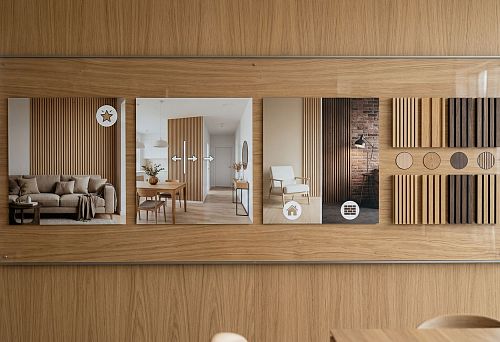
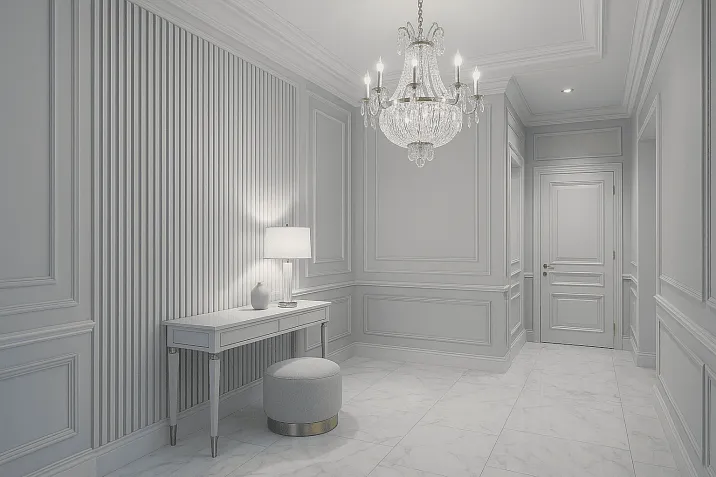
In modern interior design MDF planks 40×40 millimeters Find the most diverse applications. They become the basis for creating decorative panels that add volume and texture to walls. Horizontal or vertical placement of planks allows visually altering the proportions of a room.
Planks look especially striking when creating accent walls. Various placement methods — with or without gaps, in geometric patterns or chaotic arrangements — open up boundless creative possibilities. The play of light and shadow created by the relief surface adds dynamism and depth to the interior.
Functional solutions
In addition to decorative functions, MDF 40×40 planks perform numerous practical tasks. They serve as the basis for creating partitions that zone space without compromising its integrity. Such partitions allow light and air to pass through, creating a sense of openness.
In office spaces, planks are used to create sound-absorbing systems. Properly positioned elements effectively scatter sound waves, improving acoustic comfort in work areas.
Furniture production
Furniture makers highly value MDF planks for their versatility and ease of processing. They become frame elements, decorative overlays, and guides for sliding systems. The precise 40×40 millimeter geometry allows creating structures with a high degree of joint accuracy.
Processing and finishing technologies
Mechanical processing
MDF readily accepts all types of mechanical processing. Planks can be sawn, planed, milled, and drilled without risk of chipping or delamination. Using carbide tools ensures clean and precise cuts.
When milling profiles, it is important to observe optimal cutting parameters. Feed rate should match material characteristics to avoid burning and ensure a quality surface. Coolants are not required due to low friction coefficient.
Finishing options
MDF plank 40 by 40 Provides wide possibilities for finishing. Painting remains the most popular way of decorating. Preliminary priming ensures even paint application and improves adhesion.
For creating textured surfaces, special primers with fillers are used. They allow mimicking various materials — from rough stone to fine leather. Multi-layer painting with intermediate sanding creates an effect of depth and richness of color.
Laminating with wood or other material films opens additional decorative possibilities. Modern films have high resistance to abrasion and fading, maintaining their original appearance for many years.
Installation and mounting: professional secrets
Foundation preparation
Quality installation begins with careful foundation preparation. The surface must be flat, dry, and free of dust and contaminants. Irregularities exceeding 2-3 millimeters require leveling, as they may cause plank deformation during mounting.
Marking is a critically important stage of work. Using a laser level ensures high accuracy in element placement. When creating complex geometric patterns, it is recommended to make a cardboard template to verify calculation accuracy.
Methods of mounting
There are several ways to mount MDF planks to the base. Mechanical mounting with self-tapping screws remains the most reliable method. Pre-drilling prevents material cracking. Drill bit diameter should be 80-90% of the screw diameter.
Adhesive bonding is used when working with perfectly flat surfaces. Polyurethane adhesives provide strong and flexible joints, compensating for minor thermal deformations. Setting time is 15-20 minutes, allowing adjustment of element positions.
Combined method — adhesive plus mechanical mounting — guarantees maximum joint reliability. Screws are installed at 400-500 millimeter intervals, and gaps are filled with adhesive.
Joint and corner processing
Joining planks requires special attention to cutting accuracy. Using a saw with fine teeth ensures a clean cut without chipping. For internal corners, a 45-degree bevel cut is made followed by fitting to the location.
External corners are often finished with special corner profiles that not only conceal the joint but also protect ends from damage. This solution is especially relevant in high-traffic areas.
Design solutions and creative approaches
Creating rhythm and dynamics
MDF Racks 40×40 Allow creating various visual effects through changing the rhythm of their placement. Even spacing creates a calm, meditative atmosphere, suitable for bedrooms and relaxation zones. Variable rhythm adds dynamism and energy, which is especially appropriate for public spaces.
Playing with the density of placement opens up new possibilities. Areas with dense placement of racks create a sense of density and massiveness, while sparse zones appear lighter and more airy. Such contrast can be used for zoning or creating accents.
Color solutions
Monochromatic compositions in neutral tones remain a classic choice for most interiors. White, gray, beige racks easily integrate into any color scheme, serving as a neutral background for other decorative elements.
Contrasting solutions — black racks on white walls or vice versa — create a dramatic effect characteristic of modern minimalist interiors. Such an approach requires caution, as high contrast may visually reduce the space.
Gradient transitions from light to dark tones create an effect of volume and depth. This technique is especially effective on large surfaces, where there is room for smooth development of the color theme.
Comparison with alternative materials
MDF vs. Natural Wood
Natural wood undoubtedly possesses unique charm and texture. However, MDF racks have several significant advantages. They are not subject to warping and cracking, typical of solid wood. The absence of knots and irregularities ensures predictable quality of each element.
The dimensional stability of MDF under various climatic conditions significantly exceeds that of natural wood. This is especially important when creating extended structures, where even minor deformations can disrupt the geometry of the entire system.
MDF vs. Plastic
Plastic racks may seem attractive due to their water resistance and ease of maintenance. However, they significantly lag behind MDF in terms of ecological properties and appearance. Plastic is difficult to paint and does not accept stains or patina.
Tactile sensations from touching MDF are significantly more pleasant than from plastic. This is especially important in living spaces, where people directly interact with finishing materials.
MDF vs. Metal
Metal racks have high strength and durability, but their application is limited to specific interiors in an industrial style. MDF feels warmer to the touch and creates a more cozy atmosphere.
Processing metal racks requires special equipment and skills, while MDF can be processed with standard woodworking tools. This makes it more accessible for DIY use.
Economic aspects and calculations
Material cost
The price of MDF racks 40×40 depends on many factors: raw material quality, production technology, batch size, delivery conditions. On average, the cost per linear meter ranges from 50 to 150 rubles, making the material accessible to a wide range of consumers.
When planning a project budget, it is important to consider not only the cost of the racks themselves, but also expenses for fasteners, glue, and finishing materials. Depending on the complexity of installation, additional materials may account for 20-30% of the cost of the main racks.
Operational cost savings
The durability of MDF racks under proper use is 15-20 years, ensuring low specific costs per square meter of finishing per year. Minimal maintenance requirements — periodic dust cleaning and repainting of the coating every 5-7 years — make this material an economically advantageous choice.
Profitability for contractors
For construction and finishing companies, working with MDF racks is interesting due to high installation speed and predictable results. Standardized dimensions simplify calculations and planning, while ease of processing reduces requirements for installer qualifications.
Technical requirements and standards
GOST and technical specifications
Production of MDF panels and products from them is regulated by GOST 32289-2013, which sets requirements for physical and mechanical properties, dimensions, and surface quality. For 40×40 racks, special attention is paid to the accuracy of geometric dimensions and straightness.
Tolerance for dimensions is ±0.2 mm in thickness and ±1.0 mm in width for planks up to 3 meters long. Curvature must not exceed 2 mm per meter of length. The moisture content of the finished product must not exceed 11%.
Certification and Quality Control
Quality MDF planks must be accompanied by certificates of conformity confirming compliance with safety and environmental standards. Special attention is paid to formaldehyde content, which must not exceed the E1 class limit.
Periodic quality control includes checking geometric dimensions, bending strength, moisture content, density, and formaldehyde emissions. Test results must be documented and accessible to consumers.
Innovative Technologies and the Future of the Material
New Binder Systems
The development of the chemical industry has led to the emergence of new binder types for MDF production. Biopolymers based on soy protein and other natural components promise even greater environmental safety for the product.
Nanotechnology enables the creation of binders with improved water resistance and strength. Adding titanium dioxide nanoparticles imparts photocatalytic properties to the material, aiding in the purification of air from harmful contaminants.
Functional Additives
Modern MDF planks may include functional additives that expand their application range. Antibacterial components make the material suitable for medical facilities and children's rooms. Flame-retardant additives increase the fire safety class.
Incorporating recycled materials into MDF composition aligns with circular economy principles. Using wood processing waste and secondary raw materials reduces pressure on natural resources.
Digital Technologies in Production
Implementing digital control systems at all production stages improves quality stability and reduces scrap. Automated feeding and dosing systems ensure precise adherence to the recipe.
Industry 4.0 technologies allow tracking each batch of product from raw materials to the finished item, ensuring full traceability and enabling rapid response to potential quality issues.
Practical recommendations for selection and application
Supplier Selection Criteria
When selecting a supplier MDF planks 40x40 mm Attention should be paid to the company's reputation, presence of quality certificates, warranty terms. It is important to review feedback from other customers and examples of completed projects.
Technical support and specialist consultations help avoid errors during planning and implementation of projects. The ability to obtain samples for testing allows ensuring the material meets the requirements of a specific project.
Storage and Transportation
MDF planks require careful handling during transportation and storage. They must be stored horizontally on a flat, moisture-protected surface. Vertical storage may cause deformation of long planks.
Storage temperature and humidity conditions must match future operating conditions. Sudden temperature and humidity fluctuations may cause internal stresses in the material and lead to warping.
Preparation for Installation
Before installation, planks must be acclimatized in the installation room for 24–48 hours. This allows the material to reach equilibrium moisture content and avoid deformation after installation.
Pre-sorting planks by shade and surface quality helps achieve a uniform appearance of the finished structure. Planks with defects should be set aside for use in less visible areas or rejected.
Examples of Successful Projects and Case Studies
Residential Interiors
In an 80-square-meter apartment, designers used MDF 40×40 planks to create an accent wall in the living room. Vertical plank arrangement with variable spacing created a dynamic rhythm effect, while hidden backlighting added depth to the composition. Material cost amounted to approximately 15,000 rubles, and the result exceeded the client’s expectations.
Commercial Spaces
In an IT company’s office, planks were used to create acoustic panels in the open space zone. The combination of vertical and horizontal elements not only improved sound absorption but also created a modern, tech-oriented corporate image. The project was completed in two weeks with minimal disruption to the work process.
Public spaces
In the lobby of the business center, designers created an impressive installation from MDF strips of various lengths. The wavy composition, reaching from floor to ceiling, became the building's signature feature and a popular spot for visitors' photo sessions.
Conclusion
The world of modern architecture and interior design constantly evolves, offering new materials and technologies. However, among this diversity MDF Rail 40×40 it holds a special place due to its versatility and reliability. This material became a true discovery for those who value the combination of practicality and aesthetics.
The technical characteristics of MDF strips allow their use in the most diverse projects — from modest home interior decoration to large-scale commercial installations. The stability of dimensions, ease of processing and installation make working with this material comfortable for both professionals and amateurs.
The ecological safety of modern MDF products meets the strictest international standards, which is especially important in an era of growing attention to health and environmental protection issues. The possibility of recycling used material corresponds to the principles of sustainable development.
The economic efficiency of using MDF strips is evident at any project scale. The reasonable cost of the material, combined with its durability, ensures an excellent price-to-quality ratio. Low operating costs make this choice even more attractive.
The creative possibilities offered by 40×40 MDF strips are practically limitless. From classic interiors to avant-garde art objects — this material finds its appropriate application everywhere. Various processing and finishing methods allow creating surfaces of any desired appearance and texture.
The future of MDF strips lies in further improving their properties and expanding their functionality. Innovative bonding systems, functional additives, digital manufacturing technologies — all this promises even higher quality and more universal products.
It is important for professionals in the construction industry to stay abreast of technological developments and new application possibilities for proven materials. 40×40 mm MDF strips remain a reliable tool for realizing the most daring design ideas.
In today's world, where individuality and quality are valued, the right choice of finishing materials becomes a key factor in the success of any project. 40×40 mm MDF strips provide exactly the possibilities needed to create unique and long-lasting interiors.
The company STAVROS, proven as a reliable supplier of quality finishing materials, offers a full range of MDF products for the most demanding clients. Years of market experience, strict quality control, and an individual approach to each project make cooperation with STAVROS a guarantee of successful implementation of any tasks in the field of decorative finishing and furniture production.