Article Contents:
- What is an Interior MDF Rail: Understanding the Basics
- Advantages of MDF Compared to Other Materials
- Design Solutions: How to Transform Walls with Rails
- Creating accent walls
- Practical Installation Aspects: From Theory to Practice
- Methods of Attaching Planks
- Color Solutions and Finishing: Palette of Possibilities
- Textural Solutions
- Stylistic Directions: Rails in Various Interiors
- Classic Interiors and Rails
- Functional Advantages: Not Only Beauty
- Concealment of utilities
- Maintenance and Operation: Longevity Through Care
- Protection against damage
- Economic Aspects: Investment in Beauty
- Long-Term Economic Efficiency
- Trends in development: looking into the future
- Integration with smart technologies
- Choosing a supplier: what to pay attention to
- Service and support
- Conclusion: Choice of Professionals and Connoisseurs of Quality
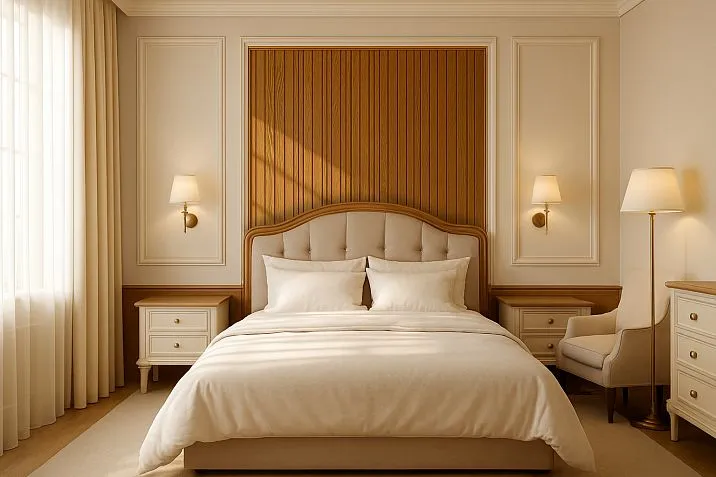
Imagine the moment when you enter your dream home. What catches your eye first? Of course, the walls! It is precisely they that create the first impression, set the mood, and define the character of the entire interior. And what if I told you that there is one simple element capable of turning the most ordinary walls into a work of design art? Meet— Interior MDF Rail for WallsThis amazing material has already won the hearts of millions of homeowners around the world, and today we will find out why.
Have you ever thought about the role details play in creating a harmonious interior? Many of us spend huge sums on furniture, appliances, decorative elements, but overlook the very foundation—the wall surface finishing. After all, they occupy the largest visible space in any room!


What is an Interior MDF Rail: Understanding the Basics
Let’s start from the beginning. MDF is not just an abbreviation—it’s a whole philosophy of modern construction. Medium Density Fiberboard, or medium-density fiberboard, is a composite material made from wood fibers using hot pressing. But what makes this material so special for manufacturing interior rails?
The secret lies in the unique properties of MDF. Unlike natural wood, which may have knots, cracks, and an uneven structure, MDF has an absolutely flat and predictable surface. This means that each MDF Interior Strip will be identical in quality and appearance to the previous one.
What is an interior rail? It is a narrow wooden strip mounted on the wall and performing several functions simultaneously: decorative, protective, and zoning. The thickness of such rails usually ranges from 10 to 50 millimeters, width—from 20 to 100 millimeters, and length can reach three meters. This variety of sizes allows creating various design compositions—from thin, elegant lines to massive, expressive structures.




Advantages of MDF over other materials
Why exactly MDF became the material of choice for producing interior rails? The answer lies in its unique characteristics, which make it ideal for use in residential spaces.
Firstly, dimensional stability. You will never encounter a situation where installed Wall MDF rails will warp or crack due to changes in temperature and humidity. This is especially important in Russian climatic conditions, where fluctuations can be quite significant.
Secondly, ease of processing. MDF is easy to saw, mill, and sand, allowing the creation of rails of various profiles—from simple rectangular to complex shaped ones. The material does not delaminate or crumble during mechanical processing, ensuring clean and neat cuts.
Thirdly, eco-friendliness. Modern MDF production technologies allow using binders with minimal formaldehyde content or even without it. This makes finished products safe for human health, which is especially important for residential spaces.
Our factory also produces:


Design Solutions: How to Transform Walls with Rails
Now, the most interesting part—let’s talk about how interior rails can be used to create amazing design effects. Believe me, the possibilities here are limited only by your imagination!
Classic vertical placement of rails is, perhaps, the most popular way to use them. Imagine a wall with thin vertical strips installed at equal intervals. This solution visually increases ceiling height, which is especially relevant for standard apartments with low ceilings. Moreover, vertical lines create a sense of elegance and slimness, making the interior more refined.
Horizontal Placement MDF rail on the wall It works in the opposite direction — it visually expands the space. This technique is especially effective in narrow spaces such as hallways or small bedrooms. Horizontal rails create a sense of calm and stability, making them an ideal choice for relaxation zones.
Get Consultation
Creating accent walls
One of the most effective techniques for using interior rails is creating accent walls. What is this? It’s when one wall in a room is specially designed to become the focal point of the entire interior. Such a wall draws the eye and sets the tone for the entire space.
To create an accent wall, you can use rails of different widths, creating an interesting rhythmic pattern. For example, alternating wide and narrow planks creates a dynamic, modern composition. And if you add color play — for instance, using rails of different shades of the same color — you get a true work of art!
Another interesting technique — creating geometric patterns. By combining vertical and horizontal rails, you can create squares, rhombuses, and even more complex geometric shapes. Such a solution looks especially striking in modern interiors in the modern or high-tech style.
Practical aspects of installation: from theory to practice
Now that we’ve covered the design possibilities, let’s talk about the practical side of the issue. How do you properly install interior rails so they last long and look flawless?
The first and most important stage — surface preparation. The wall must be perfectly flat, clean, and dry. Any unevenness, cracks, or dirt can affect the quality of rail attachment and their appearance. If the wall has significant unevenness, it must be pre-leveled using plaster or drywall.
The next stage — marking. This is, perhaps, the most responsible part of the work, as the final result depends on the accuracy of marking. Professionals recommend using a laser level to create perfectly straight lines. If such a tool is not available, you can use a standard construction level and chalk line.
Ways to mount rails
There are several ways of mounting MDF panel rails to the wall, each of which has its own advantages and area of application.
Adhesive mounting — the simplest and fastest method. Modern construction adhesives provide reliable bonding of MDF to most surfaces. This method is ideal for lightweight, small-section rails. Main advantages — ease of installation and absence of visible fasteners.
Mechanical mounting using screws or anchors is used for heavier structures or when periodic disassembly is planned. With this mounting method, it’s important to consider concealing the fasteners — they can be sunk into the material and spackled, or use decorative caps.
Hidden mounting — the most professional, but also the most complex method. It involves using special clips or grooves that are milled into the rails during production. This method ensures a perfect appearance without visible fasteners.
Color solutions and finishing: a wide palette of possibilities
One of the main advantages MDF plank finishing offers a wide range of finish options. The choice of finish largely determines the final appearance of the interior and its stylistic direction.
Veneered rails — this is true classic. A thin layer of natural wood veneer applied to an MDF base gives rails a noble appearance and tactile sensation of natural material. Oak veneer creates a sense of solidity and respectability, walnut adds warmth and coziness, and exotic wood veneer gives the interior exclusivity.
Painted rails open up boundless opportunities for color experiments. White rails create a sense of purity and freshness, ideal for Scandinavian style. Black rails add drama and modernity, especially striking in loft style. Colored rails allow creating bright accents and highlighting the interior’s individuality.
Textural solutions
Modern technologies allow creating rails with various surface textures. A relief surface imitating natural wood texture adds naturalness and liveliness to the material. Matte surfaces create a sense of nobility and restraint, while glossy surfaces add shine and grandeur.
Rails with unusual textures — for example, imitating tree bark, stone, or even metal — are especially interesting. Such solutions allow creating unique interiors that cannot be replicated using traditional methods.
Stylistic directions: rails in various interiors
The versatility of MDF interior rails is evident in their ability to seamlessly fit into various stylistic directions. Let’s consider how rails can be used in different interior styles.
Scandinavian style — perhaps the most natural application for wooden rails. Light tones, natural textures, simple forms — all of this perfectly complements the philosophy of Scandinavian design. Interior MDF Rail for Walls in light tones creates a sense of closeness to nature, emphasizing the naturalness of materials and simplicity of forms.
Modern minimalism requires a special approach to details. Here, line purity, absence of unnecessary elements, and functionality of each detail are important. Rails in a minimalist interior should be extremely minimalist — simple rectangular profiles, neutral colors, flawless geometry.
Loft style opens up wide opportunities for experimenting with contrasts. Rough brickwork combines beautifully with elegant wooden rails, creating an interesting texture play. Dark tones, metallic elements, industrial motifs — all of this can be highlighted with properly chosen rails.
Imagine rails that can change color depending on the time of day or the mood of the owners, or rails with built-in speakers for immersive sound in a home theater. All of this is no longer science fiction, but very real prospects for the near future.
It may seem that modern interior planks are not suitable for classic styles, but this is not the case. Properly selected and installed planks can become a wonderful addition even to the most traditional interior.
In classic style, planks are often used to create panel constructions resembling traditional boiserie. Such MDF plank wall finish is especially effective in offices, libraries, and formal living rooms, where it is important to emphasize the solidity and respectability of the setting.
French Provence and English classicism also find expression in decorative planks. Here, preference is given to more delicate, elegant profiles, painted in pastel tones or coated with patina imitating aging.
Functional advantages: not only beauty
MDF interior planks are not just a decorative element. They perform numerous practical functions that make them indispensable in modern interiors.
Protective function — one of the most important. Planks protect walls from mechanical damage, especially in areas with heavy foot traffic. This is especially relevant in hallways, entryways, children's rooms, where walls are subjected to increased loads.
Space zoning — another important function. In the era of studio layouts and open spaces, the ability to visually separate functional zones becomes critically important. Planks excel at this task, creating visual boundaries without compromising the sense of spaciousness.
Acoustic properties
Did you know that properly installed interior planks can improve the acoustic properties of a room? The textured surface created by planks helps disperse sound waves, reducing echo and reverberation.
This is especially important in large rooms with high ceilings, where acoustic problems are particularly acute. Combining planks with sound-absorbing materials can significantly improve the comfort of people in the room.
Maintenance and operation: longevity through care
One of the important advantages of MDF interior planks is their low maintenance requirements. However, this does not mean they require no attention at all. Proper care can significantly extend the lifespan of the planks and preserve their original appearance.
Regular dust cleaning is the foundation of plank care. This can be done by wiping them with a soft dry cloth or using a vacuum cleaner with a soft brush attachment. Avoid using abrasive cleaners and stiff brushes, which may damage the surface.
Wet cleaning is permissible but requires caution. Use a slightly damp cloth and mild cleaning agents. After wet cleaning, be sure to wipe the planks dry with a cloth to avoid streaks and water marks.
Protection from Damage
Despite the high strength of MDF, planks can still be damaged by careless handling. Avoid impacts from sharp and heavy objects, and do not use planks as support for heavy items.
Minor scratches or chips can be repaired using special wax pencils or repair compounds matched to the finish color. More serious damage may require replacing individual elements.
Economic aspects: investment in beauty
The cost of MDF interior planks concerns many potential buyers. This is understandable — everyone wants to get maximum return on their investment in home improvement.
Compared to solid wood planks, MDF options are significantly more affordable, without compromising on quality or appearance. This makes it possible to create a stylish interior even with a limited budget.
Cost savings are achieved not only due to lower material cost, but also thanks to ease of installation. Many plank installation tasks can be done independently, further reducing overall project costs.
Long-term Economic Efficiency
Investments in quality interior planks pay off in the long term. The high durability of MDF means that planks will not require replacement or major repairs for many years. This is especially important when compared to cheaper alternatives that may require frequent replacement.
Moreover, properly executed plank finishing enhances the overall appeal of the interior, which may positively affect the property's resale value.
Trends in development: looking to the future
The world of interior design is constantly evolving, and MDF interior planks are not left behind in this process. What trends are shaping the future of this segment?
Ecology is becoming an increasingly important factor. Manufacturers are actively working on developing fully eco-friendly adhesives and coatings. In the near future, we may expect the emergence of MDF planks that are fully biodegradable.
Personalization is another important trend. Modern technologies allow creating planks to individual sizes and unique textures. Digital printing opens up possibilities for applying any images and patterns to the plank surface.
Integration with smart technologies
The future of interior planks may involve integration with smart technologies. Today, there are already developments allowing LED lighting, temperature and humidity sensors, and even climate control system components to be embedded into planks.
Imagine rails that can change color depending on the time of day or the mood of the owners, or rails with built-in speakers for immersive sound in a home theater. All of this is no longer science fiction, but very real prospects for the near future.
Supplier selection: what to pay attention to
When choosing MDF interior rails, it is important not only to pay attention to appearance and price, but also to a number of other factors that can significantly affect the final result.
Material quality is the foundation. Pay attention to the density of MDF, the quality of the finish coating, and the accuracy of geometric dimensions. Poor-quality rails may deform over time, ruining the entire interior appearance.
The range and customization options are also important. A good supplier should offer a wide selection of sizes, profiles, and finishes, as well as the ability to manufacture rails according to individual requirements.
Service and support
The supplier's service capabilities are equally important. Qualified consultation will help make the right choice, and technical support during installation may prove invaluable.
Logistical capabilities are another important factor. Rails are long goods that require special handling during transportation. A reliable supplier must ensure safe delivery without damage.
Conclusion: choosing professionals and quality enthusiasts
MDF interior rails for walls are not just a trendy fashion, but a practical and aesthetically pleasing solution capable of dramatically transforming any living space. The combination of accessibility, functionality, and limitless design possibilities makes them the ideal choice for those who value quality and style.
Properly selected and professionally installed rails will become a decoration of your home for many years. They not only enhance the interior’s appearance but also improve its functionality, protect walls from damage, and even enhance the acoustic properties of the room.
In the world of interior design and production of high-quality finishing materials, the company STAVROS occupies a special place. Years of experience, commitment to the highest quality standards, and constant striving for innovation make STAVROS products a choice for professional designers and discerning property owners.
Choosing interior MDF rails from STAVROS, you get a guarantee of quality, an extensive assortment, and professional support at every stage — from material selection to completion of installation. This is an investment in the beauty, comfort, and longevity of your home, which will delight you and your loved ones for many years.