Article Contents:
- Main Pricing Factors: What Makes Up the Cost
- Wood Species: From Pine to Oak
- Wood Grade: Presence of Defects
- Dimensions and Cross-Section: Wood Consumption
- Surface treatment quality
- Finish Treatment and Coating
- Price Categories: Navigating the Market
- Economy Segment: 60–150 Rubles per Meter
- Mid-Range Segment: 150–350 Rubles per Meter
- Premium Segment: 350–700 Rubles per Meter
- Luxury Segment: From 700 Rubles per Meter
- Additional Factors Affecting Price
- Geographic Factor and Logistics
- Purchase Volume
- Brand and Manufacturer Reputation
- Economical Configurations: Get Maximum for Minimum
- Configuration One: Plank Wall in the Living Room
- Configuration Two: Substrate for Paneling
- Configuration Three: Decorative Frames on Walls
- How to Calculate the Required Quantity Accurately
- Plank Walls and Ceilings
- Substrates and Frames
- Frames and Trim
- Where and How to Buy Profitably
- Construction Hypermarkets
- Specialized Lumber Bases
- Direct from the Manufacturer
- Online stores
- Conclusion: Smart Savings Without Sacrifices

Wooden plank — a simple material, but not cheap. Come to the store, see price tags ranging from 50 to 500 rubles per linear meter — a tenfold difference. Why? What lies behind this variation? One seller offers pine plank for 70 rubles, another for 120. The same pine, the same cross-section, but different prices. Another sells oak for 400 — and claims it’s a good deal. How to understand where the fair price is, and where you’re overpaying?
When starting a project — plank wall in the living room, substrate for paneling, decorative frames, ceiling structure — you encounter budget questions. How much money is needed? Can you save without sacrificing quality? Which plank configuration offers the best price-to-effectiveness ratio? There are no ready answers in store price lists. There are only numbers, behind which lies complex economics.
This article thoroughly examines pricing for wooden planks. What factors influence cost and by how much. Which species, sizes, and treatments offer the best price-to-quality ratio. How to calculate your project budget accurately. Where and how to buy to avoid overpaying. After reading, you will be able to independently assess the fairness of prices, choose the optimal configuration, and plan your budget without unpleasant surprises.


Main Pricing Factors: What Makes Up the Cost
The price of wooden plank is not a random value. It is the result of adding several components, each contributing its own part. Understanding these components is the key to making an informed choice.




Wood species: from pine to oak
The wood species determines forty-seven percent of the final plank price. This is the main pricing factor.
Coniferous species — budget segment.
Pine is the most affordable. Pine planks with a 20×40 mm cross-section cost from sixty to one hundred twenty rubles per linear meter, depending on grade, region, and processing. Affordability is explained by rapid growth (pine reaches commercial maturity in forty to sixty years), wide distribution in Russia, and ease of processing. Pine is soft, easily sawn, planed, and sanded. Its drawback is softness: pine easily dents under impact and scratches.
Spruce is slightly more expensive — eighty to one hundred forty rubles per meter. The structure is more delicate, less resin, lighter in color. Spruce has better acoustic properties (resonant wood for musical instruments), making it preferable for projects where acoustics matter. However, for ordinary interior planks, the difference from pine is insignificant.
Larch is a transitional category between budget and premium. Larch plank prices range from one hundred fifty to two hundred eighty rubles per meter. The higher cost is due to density (thirty percent denser than pine), natural moisture resistance (high content of natural resin, a natural antiseptic), and longevity (larch does not rot and lasts fifty to one hundred years). Larch grows slower than pine, which increases the cost of raw material. However, for humid spaces (bathrooms, saunas, showers) and outdoor applications (facade, terraces), it is the optimal coniferous species.
Hardwood species — premium segment.
Oak — king of hardwoods. Oak planks cost three hundred to five hundred fifty rubles per meter. The high price is due to slow growth (oak reaches commercial maturity in eighty to one hundred twenty years), difficulty processing hardwood (tools dull quickly, require heavy equipment), exceptional strength characteristics (density seven hundred to eight hundred kg per cubic meter, compared to five hundred for pine), and noble appearance (distinctive texture, deep color). An oak plank lasts fifty to one hundred years without deformation, justifying the initial investment.
Ash — an alternative to oak. Ash plank prices range from two hundred fifty to four hundred fifty rubles per meter. Strength is close to oak, but ash is lighter with a grayish tint, and the texture is softer. It bends well, which is important for curved structures. It is twenty to thirty percent cheaper than oak for comparable quality.
Beech — European classic. Beech planks cost two hundred twenty to four hundred rubles per meter. Hardness and density are close to oak, color is pinkish and light, texture is uniform. Beech is easy to process, stain, and tint. Drawback — sensitivity to humidity (requires protective treatment for humid spaces). For interior planks in dry spaces — an excellent choice.
Exotic species — exclusive.
Walnut, wenge, teak, merbau — rare and expensive species. Prices range from five hundred to one thousand five hundred rubles per meter. Used in exclusive projects where unique texture, color, and material status matter.
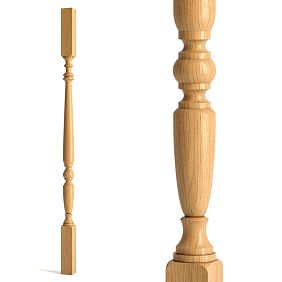
Our factory also produces:



Wood grade: presence of defects
Grade is the second most important factor. It creates a difference of sixty to seventy percent within the same species.
Highest grade (extra, premium). Complete absence of knots, cracks, resin pockets, and rot on visible surfaces. Wood is hand-selected from the best parts of the trunk (butt section, first two to three meters from the root). Color is even, texture is uniform. Geometry is ideal — deviations no more than half a millimeter.
Highest grade pine planks cost one hundred forty to two hundred rubles, compared to sixty to eighty rubles for second grade — a difference of two to two and a half times. For oak: highest grade costs four hundred fifty to five hundred fifty rubles, first grade costs three hundred to four hundred rubles.
Highest grade is necessary for open structures where planks are visible and aesthetics matter — decorative walls, ceilings, furniture facades. For painting with opaque paints, highest grade incurs an extra cost.
First grade (A, A/B). Small healthy knots (up to ten millimeters in diameter) are allowed in limited quantity (two to three per meter length), minor resin pockets, slight color variations. Cracks, rot, and falling knots are not allowed.
First grade price is twenty to forty percent lower than highest grade. For pine: ninety to one hundred thirty rubles, for oak: three hundred to four hundred rubles. Optimal price-to-quality ratio for most projects. Small knots do not spoil the appearance and sometimes even add naturalness and character. First grade is ideal for staining, oil, and transparent lacquer.
Second grade (B, B/C). Knots up to twenty to thirty millimeters, resin pockets, minor cracks (non-penetrating), uneven color are allowed. Falling knots and rot are not allowed, but the wood visually appears non-uniform.
Second grade price is forty to sixty percent lower than first grade. For pine: sixty to eighty rubles. Suitable for hidden structures (underlayment for siding, framing for cladding), for painting with opaque paints, where defects will be concealed. Not recommended for open decorative structures.
Third grade (C). Large knots, falling knots (if they can be spackled), cracks, and blue stain (not rot) are allowed. Geometry may have deviations.
Minimum price — forty to sixty rubles for pine. Application is narrow — rough work, temporary structures, structures that will be hidden. Not used in quality projects.
Get Consultation
Dimensions and cross-section: wood consumption
Plank dimensions affect price through wood consumption and processing complexity.
Thickness and width. Thin planks 10×20 mm or 15×30 mm are cheaper than thick 50×80 mm planks per linear meter — forty-five to seventy rubles versus one hundred eighty to two hundred eighty rubles for first-grade pine.
But when calculated per square meter of finished surface, the difference is neutralized — more thin planks are needed to cover the same area. If installing a plank wall with a thirty-millimeter gap, 20×40 mm planks with a seventy-millimeter spacing (plank plus gap) yield fourteen linear meters per square meter. 40×60 mm planks with the same gap yield nine meters. At eighty rubles for thin and one hundred forty for thick, we get one thousand twelve versus one thousand two hundred sixty rubles per square meter — the difference is no longer significant.
Length. Standard lengths — two thousand, two thousand four hundred, three thousand millimeters. Short planks two meters are often five to ten percent cheaper per linear meter. They are made from lower-quality raw material — defective sections are cut out, leaving short remnants. For projects requiring short planks (frames, small structures), this is advantageous.
Long planks three meters require flawless material throughout their length, which increases price by five to fifteen percent. But if the project requires long planks, buying three-meter planks is more cost-effective than joining two-meter planks — less waste, fewer joints.
Non-standard lengths from five hundred to six thousand millimeters are custom-made with a fifteen to twenty-five percent markup for individual cutting.
Surface Processing Quality
The degree of plank processing significantly affects the price and readiness for use.
Untrimmed plank. Roughly sawn, with bark or remnants of bark, uneven surface. The cheapest — thirty to fifty rubles per meter for pine. Narrow application — scaffolding, temporary structures, rough work. Not suitable for interior projects.
Sawn plank. Processed on a four-sided planer — all four sides are smooth, geometry is precise. This is the basic level for interior planks. Price seventy to one hundred twenty rubles for first-grade pine. Ready for installation and final finishing (painting, staining, varnishing).
Sanded plank. After planing, additionally sanded with grit 120-180 abrasive. Surface is perfectly smooth, without fuzz or roughness. Markup fifteen to twenty-five percent over planed — ninety to one hundred forty rubles for pine.
Sanded planks are optimal for projects with transparent finish (oil, wax, varnish), where smoothness is important. Sanding is not required for opaque paint — paint will cover minor roughness.
Calibrated plank. Planed with high precision — geometric deviations no more than three to five tenths of a millimeter (against 1.5 mm for standard planed). All planks in a batch are strictly identical. Markup twenty to thirty percent. Required for lath structures where planks are mounted with equal gaps — if planks have different thicknesses, gaps will be uneven.
Precision board. Planed with high accuracy — geometric deviations no more than three to five tenths of a millimeter (compared to 1.5 mm for standard planing). All boards in the batch are strictly identical. Markup is twenty-three percent. Required for board-based structures where boards are mounted with equal gaps — if boards have different thicknesses, gaps will be uneven.
Finish treatment and coating
The type of final finish significantly affects the final cost.
Unfinished planed planks — base price without markup for finish. Buyer selects and applies protective finish themselves. Savings thirty to fifty percent compared to ready planks, but requires time and skills for quality finishing.
Planks with oil or wax finish. Treated with oil or oil-wax, protected from moisture and dirt, wood grain is revealed. Markup forty to seventy percent over planed planks. Pine plank with oil — one hundred thirty to one hundred eighty rubles versus eighty to one hundred rubles for planed.
Planks with varnish finish. Coated with acrylic or polyurethane varnish in one to three layers. Most protected, with glossy or matte surface. Markup sixty to ninety percent. Pine varnished plank — one hundred fifty to two hundred rubles.
Varnished planks are optimal for projects requiring maximum protection (kitchens, bathrooms under good ventilation) and glossy appearance. Drawback — finish cannot be repaired (if varnish is scratched, local touch-up is difficult).
Lacquered boards are optimal for projects requiring maximum protection (kitchens, bathrooms provided good ventilation) and a glossy finish. The downside — inability to repair the coating (if lacquer is scratched, it's difficult to touch up locally).
Painted planks. Coated with opaque paint in selected color. Markup fifty to eighty percent. Suitable for interiors where specific color is needed, not natural wood grain.
Price categories: market navigation
Understanding price segments helps navigate offers, avoid overpaying, and avoid purchasing low-quality products.
Economy segment: sixty to one hundred fifty rubles per meter
Budget pine and spruce planks of second to first grade. Typical example — first-grade pine plank 20×40 mm for seventy-five to ninety rubles.
Features: small knots, possible uneven coloring, standard planing without sanding. Geometry allows deviations up to one millimeter.
Application: substructures for paneling, framing for gypsum board cladding, decorative structures for opaque paint, temporary shelters, cabins, rough work. Suitable for open structures with transparent finish only limitedly.
Advantages: affordable price, sufficient quality for hidden work and painting.
Disadvantages: visible defects (knots), possible geometric inaccuracies, requires final finishing (sanding, coating).
Mid-range segment: one hundred fifty to three hundred fifty rubles per meter
Main category for interior projects. Includes high-grade pine and spruce planks, first-grade larch, budget hardwoods (birch).
Typical example — high-grade pine plank 30×50 mm with sanding for one hundred forty to one hundred eighty rubles. Or first-grade larch plank 25×40 mm for two hundred to two hundred forty rubles.
Features: minimal defects or their complete absence, quality processing (planing plus sanding), precise geometry. Often with final finish (oil, wax).
Application: lath walls and ceilings in residential spaces, decorative structures, zoning, furniture facades, framing for mirrors and panels. For humid spaces — larch.
Advantages: good price-to-quality ratio, aesthetic appearance, durability, ready for installation (with finish).
Disadvantages: more expensive than economy segment, but for visible structures, the difference is justified.
Premium segment: three hundred fifty to seven hundred rubles per meter
Premium-grade boards from oak, ash, and beech of the first and highest quality with quality processing. Typical example — oak board 30×60 mm of the highest grade, sanded for 425–550 rubles.
Features: Ideal surface without defects, expressive texture, precise geometry, often with professional-grade finish.
Application: Prestigious interiors, classical and neoclassical styles, projects where durability and material status are important. Living rooms, offices, bedrooms, libraries.
Advantages: Maximum durability (50–100 years), noble appearance, high strength, possibility of multiple surface repairs (sanding, re-coating).
Disadvantages: High price, but for long-term projects, when calculated per service life, it is more cost-effective than cheaper materials.
Luxury segment: from 700 rubles per meter
Exclusive boards from exotic species (walnut, wenge, teak, merbau), hand-carved boards,boards with custom profiles.
Application: Unique design projects, exclusive interiors, museum and exhibition spaces.
Additional factors affecting price
Besides the main characteristics of the board itself, external factors also influence the final cost.
Geographic factor and logistics
The sales region significantly affects the price through logistics costs.
In production regions — Siberia, Ural, North-West (Arkhangelsk, Vologda, Kirov regions) for coniferous species, Caucasus for deciduous — prices are minimal. Spruce board in Arkhangelsk or Irkutsk may cost 60–80 rubles, whereas in Moscow the same board will cost 90–110 rubles due to delivery.
For Moscow and the Moscow region, the markup for logistics is 20–30% for coniferous species (delivery from the North-West and Siberia), 15–20% for deciduous species (production is closer, in Central Russia).
For southern regions without their own timber harvesting (Krasnodar Krai, Rostov Oblast), the markup reaches 30–50% — timber is transported from afar.
How to consider: For large volumes (from 1 cubic meter), it is more cost-effective to order directly from the manufacturer with delivery. For small volumes (tens of meters) look for local suppliers with their own warehouses — they buy wholesale, and the retail price including their markup may be lower than direct delivery.
Purchase volume
Wholesale discounts are significant. When purchasing from 100 meters — discount of 5–10%. From 1 cubic meter (e.g., 500 meters of 20×40 mm boards) — 15–25%. From 5 cubic meters — up to 30–40%.
For private buyers renovating a single apartment, volumes rarely reach 1 cubic meter. However, you can join with neighbors or friends doing renovations — buy wholesale and split the cost.
Brand and manufacturer reputation
Known manufacturerswooden itemsMore expensive than unnamed brands by 10–20%. However, this markup is justified by stable quality, precise geometry, warranty, and the possibility of returning defective items.
Unbranded boards from the market may be cheaper, but risks are high — inaccurate geometry (boards of different thicknesses in a batch), poor drying (wet wood, deforms after installation), higher knot content than declared grade.
Economical configurations: how to get maximum for minimum
Goal — achieve a quality result while minimizing expenses. This does not mean buying the cheapest option. It means selecting the optimal balance of characteristics and price for a specific task.
Configuration one: board wall in the living room
Task: Accent wall 4 by 2.5 meters (10 square meters). Vertical boards with gaps.
Economical solution:
Species — spruce (4 times cheaper than oak, sufficient for interior use).
Grade — first (small knots do not spoil the look, add naturalness).
Cross-section — 20×40 mm (visually sufficient massiveness, wood savings compared to 40×60 mm).
Length — three meters (wall height of two and a half meters, one board covers from floor to ceiling without joints).
Finishing — planed and sanded, but without coating (coating to be applied by you).
Calculation:
Planks with 70 mm spacing (40 mm plank, 30 mm gap). For 4 meters width: 4000 / 70 = 57 planks. Length three meters. Total 171 meters.
Price of first-grade pine 20×40 mm, planed and sanded: 100 rubles per meter. Total 17,100 rubles.
Coating oil: 1 liter per 20 square meters. Area of planks: 171 m × 0.04 m = 6.84 square meters. Plus backside (if painting) — 13.5 square meters. Need 1 liter of oil for 800,000 rubles.
Total: 18,000 rubles.
Premium alternative: oak planks of the same size at 400 rubles — 68,400 rubles. Difference is 3.8 times.
For a standard apartment’s living room, first-grade pine is optimal. Oak is overpayment unless the material’s status or expected lifespan exceeding 50 years is critical.
Configuration two: subfloor for siding
Task: subfloor for siding on walls and ceiling of a sauna. Area 30 square meters.
Economical solution:
Species — pine (subfloor is hidden, aesthetics not important. Lime or aspen for subfloor — overpayment).
Grade — second (defects are acceptable, structure is hidden).
Cross-section — 20×40 mm or 25×50 mm (sufficient strength, cost-saving compared to 50×50 mm).
Length — two meters (cheaper than three-meter planks, for subfloor length is not critical).
Finishing — planed (sanding and coating not required).
Calculation:
Subfloor with 60 cm spacing. For 30 square meters, 50 meters of subfloor are needed (for vertical siding — horizontal subfloor). Multiply by 1.5 (planks for ceiling, vertical supports at corners) — 75 meters.
Price of second-grade pine 25×50 mm, planed: 70 rubles per meter. Total 5,250 rubles.
Cost-saving compared to first grade: First grade would have cost 100 rubles — 7,500 rubles. Savings of 2,250 rubles (30%).
Second grade is a reasonable choice for hidden subfloor. Paying extra for first or top grade does not provide functional advantages.
Configuration three: decorative wall frames
Task: creating decorative wall frames in the bedroom. Ten frames measuring 1 meter by 1.5 meters.
Economical solution:
Species — top-grade pine or spruce (frames are visible, aesthetics matter, but oak is excessive).
Cross-section — 15×30 mm (sufficient width for frames, wood-saving).
Length — two meters (frames 1.5 meters, no waste from 2-meter planks).
Finishing — sanded, with white paint coating (factory coating, time-saving).
Calculation:
Perimeter of one frame: (1 + 1.5) × 2 = 5 meters. Ten frames — 50 meters. Plus allowance for cutting angles (15%) — 57.5 meters, rounded to 60.
Price of top-grade pine 15×30 mm, sanded and white-painted: 180 rubles per meter. Total 10,800 rubles.
Alternative: painting planed planks yourself. Planks at 120 rubles — 7,200 rubles. Paint 1 liter for 800 rubles, primer 500 rubles. Total 8,500 rubles. Savings 2,300 rubles, but plus time for painting (primer, two paint layers, interlayer drying — one day of work).
For those who value time, factory coating is justified. For those willing to paint themselves — 20% savings.
How to calculate the required amount accurately
Incorrect calculation — either insufficient material (additional purchase, wasted time), or excess (overpayment, leftovers). Accurate calculation saves money and nerves.
Board walls and ceilings
Formula: Number of boards = (Surface width / (Board width + Gap)) × Surface height / Board length.
Example: Wall is 4 meters wide, 2.5 meters high. Boards are 40 mm, gap is 30 mm, board length is 3 meters.
Number of boards across width: 4000 / (40 + 30) = 4000 / 70 = 57.14 → 58 boards.
Length of each board: 3 meters (wall is 2.5 meters, board overlaps with allowance).
Total: 58 boards × 3 meters = 174 meters.
Allowance for cutting (5%): 174 × 1.05 = 182.7 → 183 meters.
Lathes and frames
Formula: Number of boards = (Surface area / Lath spacing) × Cross-element coefficient.
Example: Lath for siding on a wall of 20 square meters. Spacing is 60 cm, boards are horizontal.
Wall height is 2.5 meters. Number of horizontal boards: 2500 / 600 = 4.16 → 5 boards. Wall length is 8 meters (20 square meters at 2.5 meters height). Total: 5 boards × 8 meters = 40 meters.
Plus vertical posts at corners and around openings (coefficient 1.3): 40 × 1.3 = 52 meters.
Allowance (10%): 52 × 1.1 = 57.2 → 58 meters.
Frames and trimmings
Formula: Number of boards = Perimeter of one frame × Number of frames + Allowance for corner cuts.
Example: Ten frames sized 1 meter by 1.5 meters.
Perimeter of one: (1 + 1.5) × 2 = 5 meters. Ten frames: 50 meters.
Allowance for corner cuts (each corner — loss of 5–10 cm, four corners per frame): 10 frames × 4 corners × 0.08 meters = 3.2 meters.
Total: 50 + 3.2 = 53.2 → 54 meters.
Plus general allowance of 5%: 54 × 1.05 = 56.7 → 57 meters.
Where and how to buy affordably
The place of purchase affects the price no less than the board’s characteristics.
Construction hypermarkets
Leroy Merlin, Castorama, OBI. Wide assortment, can be seen and touched, and taken immediately. But prices are usually 15–30% higher than at specialized retailers — hypermarkets include rental of trade space, marketing, salaries for large staff in the price.
When to buy: Small volumes (10–20 meters), need urgently, in-person selection is important.
Specialized lumber bases
Wholesale-retail bases selling lumber. Prices are 20–40% lower than hypermarkets. Wider assortment — more species, sizes, grades. Consultants are more knowledgeable.
When to buy: Medium and large volumes (from fifty meters), need optimal price-quality ratio, willing to travel to the base (usually on the city outskirts or outside the city).
Direct from the manufacturer
Sawmills, wood processing enterprises. Minimum price — no intermediaries. Discounts for bulk purchases. Possibility of custom orders (non-standard sizes, cross-sections).
When to buy: Large volumes (from one cubic meter), willing to wait for production and delivery (one to two weeks), need non-standard configuration.
Company STAVROS has been working withsolid wood, offering high-quality products for interior and construction. The assortment includes wooden planks of various species (pine, spruce, oak, beech, ash), sizes, grades, and degrees of processing.
All STAVROS products are made from carefully selected solid wood, dried to a moisture content of 8–10%. This ensures dimensional stability and no deformation after installation. Processing is done on high-precision equipment — geometry is perfect, all planks in a batch are identical.
Custom manufacturing is possible — required length, width, thickness, profile. Consultants will help calculate the required quantity, select the optimal configuration for your task and budget. Delivery available in Moscow, Saint Petersburg, and regions of Russia.
Online stores
Wide selection, ability to compare prices, order from home. Prices are often lower than offline stores (savings on rental space). But you can't see the product in person — risk of receiving something different from what you expected.
When to buy: You know exactly what you need (species, grade, size), price is significantly lower than offline offers, seller has good reviews, return policy is available.
Conclusion: Smart savings without sacrifices
Price of wooden strip— not a random variable. It is the result of adding multiple factors: species, grade, dimensions, processing, finish, logistics, purchase volume. Understanding these factors allows you to stop being a hostage to price lists and consciously choose the optimal configuration.
Economical configuration — not the cheapest. It is a configuration where each characteristic matches the task, with no overpayment for excessive quality and no savings at the expense of results. Pine instead of oak for interior walls — smart savings. Second grade instead of first for hidden framing — smart savings. Second grade instead of first for visible decorative walls — false savings, the result will disappoint.
Accurate calculation of quantity saves money. Purchasing with a 5–10% reserve protects against shortages. Purchasing without reserve — risk of additional purchases, loss of time, mismatch in batch shades. Purchasing with excessive reserve (20–30%) — overpayment, material leftovers.
The choice of where to buy affects final costs no less than the characteristics of the planks. Hypermarket for small volumes, specialized base for medium, manufacturer for large. Compare offers, consider delivery, check seller reputation.
, professional consultations. Help you select the optimal configuration, calculate the quantity, minimize costs without compromising quality. Create a project where every ruble is wisely invested, where the material serves for decades, where the result exceeds expectations.Solid Wood ItemsProfessional consultations. We help you choose the optimal configuration, calculate the quantity, minimize costs without compromising quality. Create a project where every ruble is invested wisely, where materials last for decades, and where the result exceeds expectations.