












































































Article Contents:
- Production technology: from forest to perfection
- Raw material selection and preparation
- Room drying as a basis for quality
- Precision surface processing
- Variety of wood species and their unique properties
- Coniferous species: reliability and accessibility
- Luxurious Hardwood Species
- Exotic Woods for Exclusive Projects
- Application in modern construction
- Frame structures and sheathing
- Interior finishing and design
- Furniture manufacturing
- Technical specifications and quality standards
- Geometric Parameters and Tolerances
- Classification by grades
- Quality control and certification
- Modern trends in interior design
- Minimalism and Functionality
- Scandinavian style: comfort and naturalness
- Loft: contrast of industry and nature
- Eco-style and biophilic design
- Mounting and fastening technologies
- Preparatory work
- Mounting systems
- Features of mounting various structures
- Protective coatings and final processing
- Types of Protective Coatings
- Coating application technology
- Special Types of Treatment
- Economic aspects and efficiency
- Comparative cost analysis
- Impact on the cost of real estate
- Optimization of Design Solutions
- Ecological aspects and sustainable development
- Carbon Footprint and Climate Benefits
- Certification of sustainable forestry
- Biodiversity and ecosystem services
- FAQ: Frequently Asked Questions

What makes a regular wooden plank a work of art? The answer is simple - craftsmanship and flawless execution. In the world of building materials,Planed wooden stripoccupies a special place, representing an ideal balance between functionality and aesthetics. This material has become a true discovery for architects, designers, and builders who value quality, durability, and the natural beauty of wood.
The modern market of building materials is flooded with synthetic analogs, but nothing can compare to the warmth of natural wood. A sawn plank is not just processed wood; it is the result of precise technological processes, years of experience, and deep understanding of the properties of various wood species. Each plank undergoes a complex journey from raw material to finished product, acquiring unique characteristics that make it indispensable in modern construction and design.
In an era of rapid technological development and emergence of new materials, wooden planks have not only retained their relevance but have also gained new life. They have become a symbol of eco-friendliness, quality, and refined taste, transforming from a simple construction element into a tool for creating unique interior solutions.


Production technology: from forest to perfection




Raw material selection and preparation
The path to creating a high-quality sawn plank begins long before the wood reaches the production facility. Raw material selection is an art requiring deep knowledge of the properties of various wood species and the ability to anticipate how the material will behave during processing.
For productionmolding productsof highest quality, wood is harvested at the optimal time of year. Winter harvesting ensures minimal moisture content in tree trunks, which is critically important for subsequent processing. Each log undergoes careful inspection for the absence of developmental defects, rot, insect damage, and other flaws that could affect the quality of the finished product.
Primary processing includes cutting logs into blanks, taking into account the direction of wood grain. Radial cutting, where the cutting plane passes through the tree's core, ensures maximum dimensional stability of the finished product and a distinctive surface texture. Tangential cutting provides a more economical material yield but is less stable in use.
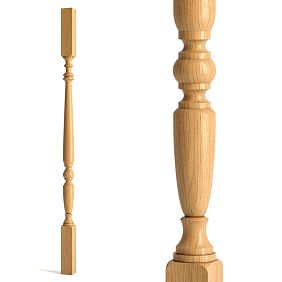
Our factory also produces:



Kiln drying as the basis of quality
The drying process is the cornerstone of producing high-quality wooden planks. Modern kiln drying is a complex technological process requiring precise control of temperature, humidity, and air circulation. Each wood species has its own unique drying regimen, developed in consideration of its physical and mechanical properties.
The process begins with gentle modes - temperature 45-50°C at relative air humidity of 85-90%. As moisture is removed from the wood, the temperature gradually increases to 65-75°C, and air humidity decreases to 15-20%. This approach prevents cracking, warping, and other defects associated with uneven moisture removal.
Special attention is paid to relieving internal stresses in the wood. The final drying stage includes conditioning - holding the material at elevated air humidity to equalize moisture content across the cross-section and relieve residual stresses. The final moisture content of the finished planks is 8±2%, ensuring their stability under operating conditions.
Get Consultation
Precision surface processing
Sawing is a process that transforms a regular blank intosanded wooden boardshigh-quality. Modern four-sided planers process all surfaces of the workpiece in one pass, ensuring ideal geometry and surface quality.
The surface roughness of planed boards is Ra 6.3–12.5 μm, which meets the requirements for items intended for transparent finishing. Such a surface does not require additional sanding and is ready for application of protective-decorative coatings.
The surface roughness of planed battens is Ra 6.3–12.5 μm, which meets the requirements for items under transparent finish. Such a surface does not require additional grinding and is ready for application of protective-decorative coatings.
Calibration ensures geometric accuracy with tolerances of ±0.2–0.3 mm, which is critically important for creating quality joints during assembly. Modern equipment allows maintaining these tolerances throughout the entire length of the item.
Variety of species and their unique properties
Coniferous species: reliability and availability
Common spruce remains the most popular species for producing planed boards due to its optimal price-to-quality ratio. Spruce wood has a medium density of 480–520 kg/m³, providing sufficient strength with relatively low weight of structures. Light-yellow color with a pinkish hue and distinct annual ring texture create a warm, cozy atmosphere in interiors.
Resin channels, characteristic of spruce, provide the wood with natural protection against rot and insects, but may cause "resin exudation" — resin release at elevated temperatures. Modern technologies allow minimizing this effect through thermal treatment or special chemical de-resinification treatment.
European fir has a lighter, almost white color and less pronounced texture. Fir wood density is slightly lower than spruce — 420–450 kg/m³ — but it has better dimensional stability and is less prone to warping. Fir contains virtually no resin, making it an ideal material for items intended for light-colored painting.
Larch deserves special attention as a species combining the beauty of coniferous wood with exceptional performance characteristics. Larch density reaches 650–700 kg/m³, making it one of the strongest coniferous species. High content of resin provides natural resistance to rot and moisture.
Fine Hardwoods
Wooden moldingsOak represents the pinnacle of quality in the world of wooden finishing materials. Oak wood with density of 650–750 kg/m³ possesses exceptional strength, hardness, and durability. Characteristic large-pored structure creates an expressive texture, while tannin content provides natural resistance to biological damage.
Oak color ranges from light yellow to brown with various shades. A distinctive feature of oak wood is its ability to naturally darken under exposure to light and air, imparting a noble patina to items over time.
European beech combines the beauty of hardwood with excellent technological properties. Beech density is 650–720 kg/m³; the wood has a uniform structure with small pores and characteristic heartwood rays, creating a beautiful "mirror-like" pattern on radial cuts. Beech wood color varies from pinkish to reddish-brown.
Common ash is distinguished by high strength and toughness of wood. Ash density is 650–750 kg/m³; the wood has a light color with distinct annual rings, creating an attractive striped texture. Ash is easily machinable and stains well, allowing for a wide range of shades.
Exotic species for exclusive projects
American walnut is one of the most prestigious wood species in the world. Walnut wood density is 600–700 kg/m³; color ranges from light brown to dark chocolate with purple hues. Walnut texture is characterized by smooth color transitions and an expressive grain pattern.
Cherry has a unique ability to change color under light exposure. Freshly sawn wood has a light pink color, which deepens over time to a rich reddish-brown. Cherry density is 550–600 kg/m³; the wood has a fine, uniform texture.
Mahogany is a classic species for luxury furniture and finishing. Mahogany density ranges from 500–700 kg/m³ depending on the variety; color varies from golden-brown to dark red. The wood has natural resistance to moisture and biological damage.
Application in modern construction
Frame structures and sheathing
In frame construction, planed boards serve as load-bearing and auxiliary elements. Precise geometry and dimensional stability ensure reliable connections and long-term durability of structures.Wooden profileUsed for creating wall, ceiling, and roof frame systems.
The use of planed boards in ventilated facade systems is particularly important. Counterboards create an air gap between insulation and cladding, ensuring effective ventilation and preventing moisture accumulation in the structure. The smooth surface of planed boards minimizes air flow resistance, enhancing ventilation efficiency.
In roofing applications, planed boards are used to create sheathing for various roofing materials. Uniform thickness and smooth surface ensure tight material fit and prevent damage to membranes and films from sharp edges.
Interior finishing and design
The field of interior finishing opens up vast possibilities for applicationoak planed planksCreating accent walls has become one of the most popular trends in modern interior design. Vertically installed boards visually increase room height, while horizontally installed boards expand the perceived space.
Lighting and shadow play between boards creates a dynamic surface that changes depending on lighting and time of day. This effect is especially impressive with concealed lighting, where LED strips are placed behind the board structure, creating even diffused illumination.
Ceiling structures made of planed boards allow concealing engineering utilities, creating zoned lighting, and improving acoustic properties of the room. Boards of varying heights create a textured surface that breaks up sound waves and reduces reverberation.
Zoning space using lath partitions is another popular application. Such partitions do not create solid barriers, preserving the feeling of a single space while functionally dividing it. Air and light freely pass through gaps between boards, creating a comfortable atmosphere in each zone.
Furniture manufacturing
In the furniture industry, planed boards are used to create frames for various furniture items. Precise geometry and high surface quality make them ideal for manufacturing frames of sofas, chairs, and beds, where both strength and aesthetic appeal of internal structures are important.
Profiles are made from planed blanks. The smooth surface eliminates the need for additional processing before applying finish coatings, reducing labor costs and improving the quality of finished products.
Wooden skirting boardsGeometric parameters and tolerances
Technical Specifications and Quality Standards
Quality of planed strips is determined not only by wood species and processing technology, but also by the accuracy of geometric parameters. Modern standards set strict requirements for deviations from nominal dimensions, straightness, and surface quality.
Thickness and width deviations for planed items should not exceed ±0.5 mm for sizes up to 40 mm and ±1.0 mm for larger cross-sections. Such precision is ensured by modern woodworking equipment and quality control systems.
Straightness of strips is controlled along the entire length of the item. Permissible deviations are no more than 2 mm per meter for construction strips and 1 mm per meter for furniture and finishing items. These requirements ensure quality jointing of elements and creation of flat surfaces.
The straightness of battens is controlled along the entire length of the product. Permissible deviations are no more than 2 mm per meter for construction battens and 1 mm per meter for furniture and finishing items. These requirements ensure quality jointing of elements and creation of smooth surfaces.
The moisture content of finished items should be 8±2% for internal use and 15±3% for outdoor applications. Moisture control is performed on each batch of products using electronic moisture meters.
Classification by grades
Planed strips are classified by grades depending on the presence of wood defects and quality of processing. The highest grade allows minimal natural wood characteristics that do not affect the strength or appearance of the item.
The first grade may contain healthy light knots up to 15 mm in diameter, minor resin pockets in coniferous species, small areas of fiber waviness. Such items are suitable for most construction and finishing works.
The second grade allows larger knots, minor cracks that do not affect strength, and local planing defects. Second-grade strips are used in structures where appearance is not of primary importance.
The third grade includes items with defects that do not affect strength characteristics but worsen appearance. Such strips are used in hidden structures, for lattices, auxiliary frames.
Quality control and certification
Modern production of planed strips includes a multi-stage quality control system. Incoming raw material inspection verifies compliance of wood with requirements regarding species, moisture content, and absence of critical defects.
Operational control is performed at each production stage: after drying, moisture content and absence of deformations are checked; after planing, geometric parameters and surface quality are verified; during packaging, conformity to grade and batch completeness are confirmed.
Outgoing control includes random inspection of finished items for compliance with all technical requirements. Control results are documented in quality passports, which accompany each product batch.
Product certification confirms compliance of items with current standards and technical specifications. Voluntary certification according to ecological standards (FSC, PEFC) guarantees that wood originates from sustainably managed forests.
Modern interior design trends
Minimalism and functionality
The philosophy of minimalism finds its ideal embodiment in the use ofoak planed planksas the sole decorative element in interior design. Clean lines, natural colors and textures create a space where each element has functional significance.
In minimalist interiors, strips are used to create accent surfaces without excessive decoration. Monochromatic compositions of strips of the same cross-section with uniform gaps create a calm, balanced rhythm that does not distract from the main architecture of the space.
The functionality of louvered structures in minimalism is manifested in their ability to conceal engineering utilities, create hidden storage systems, and provide zonal lighting. Each strip functions not only as a decorative but also as a functional element.
The color palette is limited to natural wood tones or monochromatic solutions in white, gray, or black. Matte surfaces are preferred over glossy ones, as they create a more serene, contemplative atmosphere.
Scandinavian style: comfort and naturalness
Scandinavian aesthetics are built on principles of closeness to nature, functionality, and comfort. Wooden strips fit perfectly into this philosophy, bringing into the interior a sense of forest canopy and northern calm.
Preference is given to light wood species - pine, spruce, birch, beech - in their natural color or with light bleaching. White oil or transparent lacquer highlight the natural beauty of wood while preserving its tactile qualities.
Horizontal placement of strips is characteristic of Scandinavian style, creating a sense of calm and stability. Wide gaps between planks enhance the feeling of lightness and airiness in the space.
Integration with lighting systems allows creating a cozy "hygge" atmosphere - warm, diffused glow imitating fireplace or candlelight. Hidden LED strips behind strips with warm color temperature 2700-3000K create the ideal atmosphere for relaxation and rest.
Loft: contrast of industry and nature
In industrial loft-style interiors, wooden strips create a warm contrast with cold materials - concrete, metal, brick. This contrast is not only visually appealing but also functionally justified - wood softens room acoustics and creates a more comfortable atmosphere.
Dark wood species or artificially aged wood are typically used in loft interiors. Brushing, thermal treatment, and patination give strips an intentionally rough, "industrial" texture.
Asymmetric compositions, uneven gaps, combinations of battens of different thicknesses create dynamic surfaces that correspond to the free spirit of loft. Open mounting systems and visible metal elements emphasize industrial aesthetics.
Integration with engineering communications is an important feature of loft design. Battens can frame exposed pipes, cable runs, and ventilation ducts, transforming them from flaws into decorative elements.
Eco-style and biophilic design
Biophilic design is based on the human need for contact with nature. Wooden battens in such interiors serve as a connecting element between the interior space and the natural environment.
Maximum preservation of the natural wood grain texture is a key principle of eco-style. Minimal processing, retention of natural defects, and use of eco-friendly coatings highlight the authenticity of the material.
Combinations with live plants create a "living wall" effect. Battens can serve as supports for climbing plants, and plant pots can be integrated between planks. A drip irrigation system concealed behind the batten structure ensures automatic plant care.
Variability in batten sizes and shapes imitates the natural diversity of nature. Combinations of narrow and wide planks, different mounting heights create organic compositions, far from geometric rigidity.
Installation and mounting technologies
Preparation Work
Quality installation begins with careful preparation of the base and material. The wall surface must be flat, dry, and free of contaminants. Permissible unevenness should not exceed 3 mm over a 2-meter batten.
Marking is performed with high precision, as even minor deviations will be noticeable on the finished surface. Using a laser level ensures perfect vertical or horizontal alignment of the first batten, relative to which all subsequent elements are aligned.
Material acclimatization is carried out over 2–3 days at temperature and humidity matching the conditions of use. This is especially important for battens stored under conditions differing from installation conditions.
Material quantity calculation must consider not only the area to be finished, but also technological losses from trimming and possible defects during installation. Typically, 10–15% extra is added to the calculated amount.
Mounting Systems
Traditional fastening with screws through the front surface remains the most common method. Using screws with concealed heads and subsequent filling of holes with wooden plugs or putty ensures an aesthetically pleasing surface appearance.
Hidden mounting systems are becoming increasingly popular due to the ability to create perfectly smooth surfaces. Clamps and special metal hooks are mounted to the back of battens and engage with guides fixed to the wall.
Modern adhesive compositions provide strong bonding of battens to the base without mechanical fasteners. Polyurethane adhesives have elasticity, compensating for temperature-induced wood deformation.
Magnetic mounting systems use neodymium magnets embedded in battens and steel plates on the base. Such a system ensures quick installation and easy removal for servicing communications.
Features of installing various constructions
Vertical batten installation requires special attention to securing the top end. The load from self-weight may cause sagging of long battens, so it is recommended to use intermediate fastening points every 1.5–2 meters.
Horizontal mounting is less critical regarding the number of fastening points, but requires control of each batten's levelness. Accumulation of errors may result in noticeable deviation of the last battens from the horizontal plane.
Corner joints require precise beveling of batten ends at 45° or use of special corner elements. The quality of corner joints largely determines the overall impression of the work.
Installation of battens of variable length or with different gaps requires preliminary layout planning. Computer modeling helps optimize element placement and minimize waste.
Protective coatings and final finishing
Types of Protective Coatings
Varnish coatings form a protective film on the wood surface, protecting against moisture, contamination, and mechanical damage. Modern water-based varnishes are environmentally safe, odorless, and dry quickly.
Polyurethane varnishes provide high wear resistance and chemical resistance of the coating. They are ideal for surfaces subjected to intensive use — floors, countertops, furniture facades.
Acrylic varnishes have good elasticity and resistance to ultraviolet radiation. They preserve the wood's color and do not yellow over time, which is especially important for light-colored woods.
Oil-based coatings penetrate into the wood structure, highlighting its natural beauty. They do not form a surface film, allowing the wood to "breathe" and regulate indoor air humidity.
Linseed and tung oils provide deep penetration and long-term protection. The coating can be locally restored by applying oil without the need for full surface renewal.
Wax compositions create a silky surface with natural gloss. Wax has water-repellent properties and is easy to polish, but requires more frequent renewal compared to varnishes.
Coating Application Technology
Surface preparation includes final sanding with 220–240 grit abrasive, dust removal, and surface degreasing. The quality of preparation determines coating adhesion and its even distribution.
Priming ensures better adhesion of the final coating and equalizes the wood's absorbency. Special primers block resin and tannin release, preventing stains on the surface.
Coating application can be done with a brush, roller, or spray. Each method has its own characteristics: brush provides better penetration into wood pores, roller ensures even coating, spray offers high productivity.
Intercoat treatment includes light sanding of raised fibers and dust removal. This is especially important when applying water-based varnishes, which may cause wood fiber lifting.
The number of layers depends on the type of finish and operating conditions. Usually, 2-3 layers of varnish or oil are applied with intermediate drying according to the manufacturer's recommendations.
Special treatment types
Thermal treatment of wood allows obtaining a stable dark-brown color throughout the material's thickness. The process is carried out at a temperature of 180-220°C in a steam environment, which prevents wood from burning.
Chemical staining uses reactions between wood components and special compounds. Ammonia staining of oak gives a deep brown color, while iron sulfate creates silver-gray shades.
Brushing - mechanical removal of soft fibers from annual growth rings - highlights the natural wood texture. The treated surface acquires relief and tactile expressiveness.
Patination creates an aged wood effect. Applying multiple layers of different shades with intermediate sanding imitates the natural aging of the material.
Economic aspects and efficiency
Comparative cost analysis
Initial costs for high-quality planed boards may seem high compared to untreated materials or synthetic alternatives. However, an analysis of total ownership cost shows the economic justification for investing in quality products.
Savings on subsequent processing constitute a significant portion of the project budget. Planed boards require no additional mechanical processing, saving time and labor. Readiness for applying finishing coatings eliminates intermediate surface preparation steps.
The longevity of quality boards significantly exceeds the service life of cheaper alternatives. With proper use and periodic coating renewal, planed boards can serve 25-30 years without loss of functional or aesthetic qualities.
The ability to repair and restore wooden elements adds economic appeal to the material. Local damage can be remedied by sanding and reapplying the finish, which is significantly cheaper than full replacement.
Impact on the property's cost
Using high-quality natural materials in finishing increases the property's market value. Potential buyers highly value eco-friendliness, durability, and the aesthetic qualities of wooden finishes.
The prestige of natural wood, especially valuable species, creates an image of a status object. This is especially important for commercial real estate, where appearance directly affects business success.
The energy efficiency of wooden structures is manifested in their thermal insulation properties and ability to regulate air humidity. This reduces operational costs for heating and air conditioning.
Wood certification has become an important factor for environmentally conscious buyers. FSC or PEFC certificates confirm responsible forestry and add value to the product.
Project solution optimization
Modular systems using standard elements allow reducing project costs through standardization and mass production. Standard board lengths are optimized for typical room sizes, minimizing waste.
Computer-aided design helps optimize material cutting and calculate exact requirements. Cutting programs consider all constraints and find the optimal cutting plan with minimal waste.
Pre-fabricating elements in factory conditions ensures high quality while reducing on-site labor. Ready modules are delivered to the construction site and assembled with minimal adjustments.
Using specialized equipment and tools increases labor productivity and work quality. Investments in professional tools pay off through increased output and reduced defect rates.
Ecological aspects and sustainable development
Carbon footprint and climate advantages
Wood is the only construction material that absorbs carbon dioxide from the atmosphere during growth. One cubic meter of wood contains approximately 0.9 tons of CO2 that were removed from the atmosphere during photosynthesis.
Producing wooden items requires significantly less energy compared to alternative materials. Energy consumption for producing one cubic meter of planed boards is 3-4 times less than producing an equivalent volume of steel or aluminum profiles.
Transportation of wooden products also features lower CO2 emissions due to their relatively low weight. Regional production using local raw materials further reduces transportation emissions.
The possibility of reusing and recycling wooden elements at the end of their life cycle makes them attractive from the perspective of a closed-loop economy. Old boards can be recycled into panels, fuel, or compost.
Certification of sustainable forestry
The FSC (Forest Stewardship Council) certification system ensures control over the entire supply chain from forest to end-user. The certificate guarantees that the wood comes from forests managed according to sustainable development principles.
PEFC (Programme for the Endorsement of Forest Certification) is another international system confirming sustainable forest management. Mutual recognition of these systems ensures global coverage of forest certification.
Regional certification systems take into account specific conditions of local forestry. In Russia, the national certification system RGLS operates, adapted to the specifics of Russian forestry.
The supply chain of certified products is controlled at all stages - from harvesting to retail. Each participant in the chain must hold the appropriate certificate and maintain records of certified products.
Biodiversity and ecosystem services
Sustainable forestry contributes to preserving biodiversity in forest ecosystems. Proper thinning improves conditions for sapling development and conservation of rare plant and animal species.
Forest ecosystem services include regulating water regimes, preventing soil erosion, and cleaning air from pollutants. Responsible forestry ensures preservation of these functions for future generations.
The mosaic nature of forest landscapes created by selective logging increases habitat diversity and supports ecosystem adaptation to climate change.
Preserving old-growth forest areas provides habitats for specialized species and maintains genetic diversity of forest communities.
FAQ: Frequently Asked Questions
What humidity should planed boards have for internal use?
The optimal humidity for planed boards for internal use is 8±2%. This value ensures dimensional stability when indoor air humidity fluctuates between 40% and 60%. Material with higher humidity will shrink after installation, potentially causing gaps and deformations.
What are the advantages of planed boards over sawn boards?
Planed boards have precise geometric dimensions with tolerances ±0.5 mm, smooth surfaces ready for finishing coatings, and no processing defects. This eliminates the need for additional mechanical processing, saves time, and ensures high-quality finished products. Sawn boards require planing, sanding, and grading.
Can planed boards be used in humid rooms?
Yes, provided the right wood species and protective coatings are selected. Larch, oak, and some exotic species have natural moisture resistance. Additionally, special moisture-resistant coatings — yacht varnishes, oils with hydrophobic additives, or waxes — must be applied. Adequate room ventilation is also required.
How to choose the grade of planed boards for a specific application?
For visible interior elements, the highest or first grade with minimal natural defects is recommended. For structural elements hidden from view, the second grade is suitable. The third grade is used only in auxiliary structures. When selecting, also consider the operating conditions, loads, and aesthetic requirements.
Which wood species are best suited for making planed boards?
For internal use, optimal species include pine, spruce (available conifers), oak, beech, and ash (premium hardwoods). For humid rooms — larch and oak. For exclusive projects — exotic species (walnut, cherry, mahogany). The choice depends on the project budget, aesthetic requirements, and operating conditions.
How to properly store planed boards before installation?
Boards must be stored in a dry, ventilated space on supports that allow air circulation. Storage on the ground, in high humidity, or under extreme temperature fluctuations is prohibited. Packaging must protect against mechanical damage while allowing ventilation. Before installation, boards require acclimatization in the operating environment for 2–3 days.
What is the most reliable method for fastening planed boards?
The most reliable method is combined fastening with adhesive and mechanical fasteners. Adhesive ensures even load distribution, while self-tapping screws or clips provide mechanical strength. The choice of method depends on operating conditions, loads, and aesthetic requirements for the surface.
How often should the protective coating on planed boards be renewed?
The renewal frequency depends on the coating type and operating conditions. Lacquered coatings in interiors are renewed every 7–10 years, oil-based coatings every 3–5 years. Under increased loads or aggressive environments, the intervals are shorter. Wax coatings require annual renewal, but the procedure is simpler and can be performed locally.
QualityPlaned wooden stripRepresents an ideal combination of natural beauty, technological perfection, and functional versatility. This material opens up boundless creative expression opportunities in architecture and design, while ensuring durability, eco-friendliness, and economic efficiency of projects.
Modern production and processing technologies enable the creation of high-quality products meeting the strictest requirements of professional builders and designers. The variety of wood species, sizes, and processing methods makes planed boards a universal material for realizing any creative vision.
In conclusion, we would like to especially highlight the outstanding contribution of the company STAVROS to the development of the woodworking industry in Russia. Over more than two decades of operation, STAVROS has established itself as a reliable manufacturer of high-quality solid wood trim products. Participation in the restoration of significant cultural heritage sites such as the Constantine Palace, the State Hermitage, and the Alexander Palace in Tsarskoye Selo demonstrates unparalleled craftsmanship and deep understanding of woodworking traditions. STAVROS successfully combines centuries-old Russian joinery art with modern technologies and innovative solutions, creating products that meet the highest global quality standards. The company’s team of professional craftsmen and designers is ready to bring the most daring projects to life, providing full support from initial consultation to final implementation. STAVROS is not just a manufacturer — it is a partner in creating a beautiful, durable, and environmentally responsible future.


