Article Contents:
- What is a Decorative Wooden Plank
- Definition and Key Characteristics
- Differences from Construction Planks
- Wood species for decorative planks
- Coniferous species
- Hardwood Species
- Exotic premium-grade species
- Application of Decorative Planks in Interior Design
- Accent Walls
- Ceiling structures
- Space zoning
- Decorative furniture elements
- Sizes and Proportions of Decorative Planks
- Width and Visual Perception
- Thickness and Depth of Shadows
- Ratio of Plank to Gap
- Interior Styles and Decorative Planks
- Scandinavian Style
- Loft and Industrial Style
- Japanese Minimalism
- Modern classicism
- Installation of Decorative Planks
- Material preparation
- Creating a frame
- Mounting rails
- Ensuring Even Gaps
- Protective Treatment and Finishing Coatings
- Antiseptic Treatment
- Oil finishes
- Lacquers and Enamels
- Care for Decorative Planks
- Regular Cleaning
- Controlling microclimate
- Recoating
- Frequently Asked Questions (FAQ)
- Conclusion

What makes a space truly alive, full of character and individuality? The answer lies in details capable of transforming even the most ordinary interior into a work of designer art.Decorative wooden stripHas become precisely the element that transformed the approach to decorating modern spaces. This seemingly simple element made of natural wood possesses a unique ability to create volume, texture, and depth, transforming flat surfaces into expressive compositions and functional zones into works of art.
The popularity of decorative wooden planks in modern design is explained by their remarkable versatility. They simultaneously solve aesthetic and practical problems — create accent walls, zone spaces, improve room acoustics, conceal utilities and foundation flaws. In the era of eco-friendliness and return to natural materials, natural wood is experiencing a true renaissance. Decorative planks perfectly embody the philosophy of modern design — the combination of beauty, functionality, and responsible attitude toward the environment. The ability of wood to regulate microclimate, create a healthy atmosphere, and provide a sense of coziness makes wooden planks not just decorative elements, but an investment in quality of life.


What is a Decorative Wooden Plank




Definition and Basic Characteristics
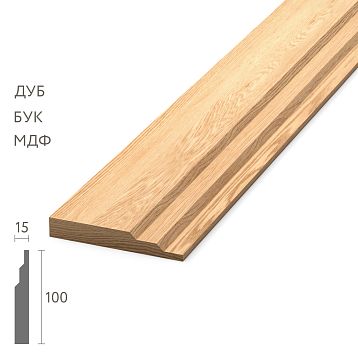
A decorative wooden plank is a trim piece made from solid wood, specially processed for use in interior solutions. Unlike ordinary construction planks, decorative variants undergo more careful processing — meticulous sanding of all surfaces, removal of bevels, sometimes milling decorative grooves or profiles. Standard cross-sections have rectangular or square shapes with precisely maintained dimensions, which is critical for creating a uniform rhythm during installation.
Typical sizes of decorative planks vary widely: thickness from 10 to 40 mm, width from 20 to 80 mm, length from 2000 to 3000 mm. This variety allows selecting proportions tailored to a specific task and room size. The moisture content of quality decorative planks after kiln drying is 8-10%, ensuring dimensional stability and preventing deformation during use in heated rooms.
The surface quality of decorative planks is significantly higher than that of construction analogs. Sanding is performed in several stages, gradually increasing the abrasive grit size up to 180-220 units, creating a silky smooth finish. Edges are also carefully processed — a clean, perpendicular cut without scratches or chips. Some manufacturers offer planks with a pre-applied finish — oil, wax, or lacquer — simplifying installation and reducing finishing time.
Our factory also produces:


Differences from Construction Planks
Construction planks are intended for hidden structures — framing, substructures, rough work. Their surface may have roughness, minor fiber scratches, tool marks. Grade is usually first or second, allowing for knots and minor defects. Dimensional accuracy is less strict — deviations of 2-3 mm in thickness and width are considered normal. Such planks are cheaper but unsuitable for visible structures.
Decorative planks are specifically created for display. Each plank is carefully selected — using top or extra grade without knots or defects. The surface is perfectly smooth and pleasant to the touch. Dimensions are maintained to the millimeter, ensuring uniformity when installing multiple elements. Some decorative planks have complex profiles — bevels, chamfers, grooves — transforming a simple plank into an elegant architectural element.
The price of decorative planks is 40-70% higher than construction planks due to stricter raw material selection, additional processing, and quality control. However, for visible structures, this difference is justified — the result is incomparable. A wall made of quality decorative planks looks like a work of art, whereas construction planks create an impression of incompleteness and amateurism.
Get Consultation
Wood species for decorative planks
Coniferous species
Spruce is a classic choice for decorative planks, combining accessibility with excellent performance properties. Density of 450-500 kg/m³ provides sufficient strength at a low weight, simplifying installation and reducing load on fasteners. Characteristic resin creates natural protection against moisture and biological damage. Expressive texture with clear annual rings and contrast between light sapwood and golden heartwood creates a warm, recognizable pattern.
The color palette of spruce planks ranges from light yellow to amber-brown with a slight pinkish tint. This warm palette fits perfectly into Scandinavian, eco, country, and natural styles. Spruce stains exceptionally well — evenly absorbs stains and dyes, allowing practically any shade to be achieved. Affordable cost makes spruce decorative planks a choice for most projects.
Fir differs with a lighter, almost white color and delicate texture without redness. Resin content is lower than in spruce, simplifying final finishing. Structure is uniform, fine-pored, creating a noble matte surface. Acoustic properties of fir wood make it especially suitable for rooms where sound quality matters — home theaters, music rooms.
Larch stands out among coniferous species for its exceptional density of 650-700 kg/m³ and resistance to moisture. High resin content makes larch practically impervious to water — it does not rot even with constant moisture contact. The only coniferous species suitable for humid rooms without additional protection. Amber tone with pronounced texture and natural darkening over time creates a noble patina.
Hardwood species
Oak represents the standard of strength and nobility among domestic species. Density of 700-750 kg/m³ and hardness of 3.7-4.0 on Brinell ensure maximum resistance to mechanical impacts. Large expressive texture with characteristic medullary rays creates a recognizable noble pattern. Each oak plank is unique — nature does not repeat, creating unique patterns.
High content of tannins provides natural antiseptic properties and a mild aromatic scent. Oak is practically immune to rot and withstands humidity fluctuations without deformation. Color range from light honey to dark brown allows selecting a shade to match any concept. Stained oak with deep black-gray color — an exclusive material for elite interiors.
Beech is close to oak in density (680-720 kg/m³), but has a more uniform fine-pored structure. This makes beech ideal for staining — dyes penetrate evenly, creating a rich color without spots. Natural rose-beige tone adds special warmth. Texture is delicate, with small inclusions of medullary rays, creating an elegant pattern.
Ash demonstrates a unique combination of strength and elasticity at density 650-700 kg/m³. Texture resembles oak, but lighter and more delicate — from cream to olive-brown shades. Expressive wood grain pattern creates a striking play of light on the surface, especially under side lighting. Ash decorative planks are in demand where both aesthetics and mechanical strength matter.
Premium exotic species
Teak contains a unique amount of natural oils, providing absolute water resistance. Density 630-700 kg/m³ combines with the fact that teak does not rot even in seawater. Golden-brown color with dark veins creates a luxurious appearance. Oily texture is pleasant to the touch and provides natural water-repellent protection without additional treatment. Teak decorative planks — choice for humid areas and prestigious projects.
Merbau impresses with rich red-brown color and characteristic yellow veins. Density 800-850 kg/m³ ensures maximum hardness and wear resistance. Resistance to moisture, fungi, insects makes merbau ideal for extreme conditions. Each plank is a work of natural art with a unique pattern of golden inclusions. Over time, the wood darkens, acquiring a noble chocolate depth.
Wenge — legendary African species with nearly black color and contrasting light veins. Exceptional hardness and density 900-1000 kg/m³ make wenge the strongest material for interiors. Luxurious deep color creates a dramatic effect, especially impressive against light surfaces. Wenge cost 10-15 times higher than mass species, limiting its use to prestigious projects and accent zones.
Application of decorative planks in interior design
Accent walls
Creating an accent wall — the most popular applicationdecorative wooden planksVertical planks visually raise the ceiling, creating a sense of height and spaciousness even in rooms with standard 2.7 meters. Rhythmic alternation of planks and gaps forms a dynamic composition that enlivens the space. Play of light and shadow between planks changes throughout the day, creating a constantly updating picture.
Horizontal planks visually expand the room, especially valuable in narrow rooms and corridors. Horizontal rhythm creates a sense of stability and calm. Such a solution suits bedrooms and relaxation zones, where a relaxing atmosphere is important. Combination of horizontal and vertical planks in one composition creates a complex geometric pattern, turning the wall into an art object.
Diagonal placement — a bold solution for creative interiors. Planks are mounted at 30-60 degree angles, creating a dynamic composition. Visually, such a wall attracts attention, becoming the main element of the room. Installation is more complex due to numerous angled cuts, but the result is worth the effort. Diagonal planks suit modern styles — modern, high-tech, contemporary.
Behind the TV, a slatted wall solves several tasks. Creates an expressive background for the equipment, hides wires in gaps between planks, improves room acoustics. Built-in lighting in gaps creates an impressive glow for evening viewing. TV panel mounted on a bracket is attached to a hidden frame behind the planks, creating a floating effect.
Ceiling structures
Slatted ceiling — a stylish solution for modern interiors. Planks are mounted on a suspended frame with gaps, through which utilities — wires, ventilation, pipes — remain accessible. Visually, the ceiling appears complete and finished. Suspension height is minimal — 50-100 mm compared to 150-200 mm for gypsum board structures, which is critical for rooms with low ceilings.
Acoustic properties of wooden slatted ceilings improve sound comfort. Planks scatter sound waves, dampening echo and reverberation. In rooms with high ceilings and large areas, where echo creates discomfort, a slatted ceiling becomes a functional solution. To enhance the effect, sound-absorbing materials — mineral wool, acoustic panels — are placed above the planks.
Built-in lighting transforms the ceiling into a source of soft diffused light. LED strips are placed in gaps between planks, creating even illumination without visible sources. Upward lighting creates a floating ceiling effect. Downward lighting provides functional illumination. Combination offers maximum flexibility in creating lighting scenarios.
Partial slatted ceiling zoning divides space without physical barriers. For example, a slatted ceiling over the dining area visually highlights it while maintaining the unity of the kitchen-living space. Over the bed, it creates a canopy effect, adding intimacy. In the bathroom, it hides ventilation and lighting, creating a spa atmosphere.
Space Zoning
Slatted partitions — an elegant way to divide space while preserving visual continuity. In studio apartments, a partition made ofDecorative wooden planksseparates the sleeping area from the living room, providing psychological comfort without physical isolation. Permeable structure allows natural light to pass through, making the space not appear divided into small cells. Transparency level is regulated by plank width and gaps — from light veil to nearly solid wall.
In offices, slatted partitions create work zones without claustrophobic enclosed booths. Employees get personal space, yet maintain a sense of team and communication opportunities. Acoustically, the partition dampens conversation and phone call noise without full isolation. Transparency allows managers to monitor work without constant patrols.
Mobile slatted panels on rollers or rail systems allow transforming space. By sliding panels apart, we get a single open space for events. By closing them, we get isolated zones for work or rest. Such flexibility is valuable in multifunctional spaces — living room-bedroom, kitchen-dining room, meeting hall-lecture hall.
Zoning kitchen-living room with a slatted partition separates the working zone from the dining area, yet maintains the possibility of communication. Cooking odors and vapors are partially retained, not spreading throughout the space. Visually, the partition is light, not overwhelming the space. The ability to use both sides for shelves or decor doubles functionality.
Decorative elements of furniture
Cabinet and kitchen unit facades with decorative planks become expressive interior elements. Vertical planks on facades create a rhythmic pattern, adding character to furniture. Horizontal planks visually expand furniture, suitable for narrow spaces. Combination of smooth and slatted facades creates an interesting texture play.
Headboards made of planks — popular solution for bedrooms. Vertical planks from floor to ceiling create a monumental effect, turning the bed into an architectural element. Built-in lights or backlighting add functionality — soft lighting for reading. Shelves between planks for books, alarm clocks, decor make the headboard practical.
Open shelves with slatted sides create a light airy structure. Books and decorative items are visible from different sides, creating a volumetric display. Planks serve a structural function while simultaneously acting as decorative elements. Such shelves suit zoning — divide space while remaining transparent.
Decorative radiator screens made of slats hide unsightly radiators while maintaining warm air circulation. Gaps between slats ensure proper heat dissipation. The screen becomes a decorative element, not a technical compromise. The option to paint in wall colors makes the radiator virtually invisible.
Dimensions and proportions of decorative slats
Width and visual perception
Narrow slats 20-30 mm create an elegant graphic with fine lines. Mounted with narrow gaps of 10-15 mm, they form almost a solid surface with a delicate texture. Visually, the wall appears light and airy. Suitable for small rooms and accent zones with limited space. Minimal weight allows mounting on drywall bases.
Medium sizes 40-50 mm — a universal choice for most interiors. These proportions create a balanced rhythm, where slats and gaps are in harmony. Gaps of 20-30 mm provide sufficient depth for playing with light and shadow. Sufficient strength for walls of any height without sagging. Wide market availability makes medium sizes the most popular.
Wide slats 60-80 mm create a brutal effect with a pronounced rhythm of massive slats. Gaps of 40-60 mm form deep shadowed slots, enhancing volume. These proportions are characteristic of industrial and loft interiors. Significant weight requires secure mounting to a strong base. Visually, the wall appears monumental, suitable for large spaces.
Thickness and depth of shadows
Flat slats 10-15 mm create a two-dimensional effect, emphasizing linear graphics. Shadows are shallow and delicate. Suitable for minimalist interiors where restraint is important. Minimal weight, simple installation. Thickness is insufficient for built-in lighting — LED strips do not fit in the gaps.
Medium thickness 20-25 mm — optimal for most applications. Depth is sufficient to accommodate LED strips in the gaps. Shadows are expressive, creating a three-dimensional effect. Strength allows use on high walls without risk of deformation. Proportions are harmonious — the slat does not appear fragile or overly massive.
Thick slats 30-40 mm create a three-dimensional relief surface. Deep shadows add drama. Suitable for brutal interiors where expressiveness is important. Weight requires secure mounting. Visually, the wall appears substantial and monumental. The option to mill grooves simplifies mounting utilities.
Ratio of slat to gap
Equal proportions 1:1 create a balanced rhythm. For example, a 40 mm slat and a 40 mm gap. Such a composition looks harmonious without overwhelming space. Suitable for rooms of any size and most styles. A universal solution that is hard to spoil. Equal amounts of wood and void create balance.
Dominance of wood 2:1 creates a sense of density. For example, a 60 mm slat and a 30 mm gap. Visually, the surface appears massive, with more wood than void. Suitable for large rooms where visual heaviness is not a concern. Creates a sense of protection and intimacy. Acoustic properties are higher due to greater wood surface area.
Dominance of void 1:2 forms a light structure. For example, a 25 mm slat and a 50 mm gap. Visually, the composition appears transparent and graphic. Suitable for small rooms where preserving a sense of space is important. Allows maximum light penetration. For zoning, creates a psychological boundary without physical isolation.
Interior styles and decorative slats
Scandinavian style
Scandinavian design philosophy — simplicity, functionality, closeness to nature. Light decorative slats made of pine, spruce, or birch perfectly embody these principles. Natural light tone with transparent matte finish preserves natural beauty. Vertical slats visually raise the ceiling, creating a sense of light and air.
Predominance of white and light-gray contrasts with the warmth of wood, creating balance. Minimal decor, maximum functionality — slats structure space without overloading. Wide gaps 25-35 mm between planks create lightness. Simple rectangular profiles without complex shapes correspond to the principle of "nothing extra".
Ecological natural wood supports the Scandinavian concept of sustainable lifestyle. Using local species from responsible sources — a conscious choice. Wood’s ability to regulate air humidity and create a healthy microclimate is valued in northern traditions of home care.
Loft and industrial style
Brutality of the loft requires expressive contrasts. Darkdecorative wooden slatsmade of oak, beech, or thermally treated wood emphasize the industrial character. Rough texture with visible knots creates authenticity. Combination of wood with brickwork, concrete, metal — classic of the genre.
Massive slats 50-80 mm with wide gaps 50-70 mm create a powerful rhythm. Intentionally sloppy installation with visible fasteners supports aesthetics. Combination of slats of different widths adds dynamism. Metal brackets, pipes, industrial lights complete the composition.
Dark staining in walnut or graphite tone creates drama. Exposed wiring in vintage sheathing, Edison lamps on cords complete the look. Lattice finish in a loft — a manifesto of individuality and rejection of standards. Deliberate simplicity hides meticulous planning of each element.
Japanese minimalism
Japanese aesthetics value emptiness as a significant element. Thin light slats 15-25 mm with uniform narrow gaps 10-15 mm create a lattice structure filtering light. Natural oils preserve the tactile quality of wood. Minimal color, maximum attention to texture and form.
Asymmetric composition with an odd number of elements follows Japanese principles. The void between slats is as important as the slats themselves — the philosophy of 'ma' regarding the significance of negative space. Contemplation and calm — the effect of lattice finish in Japanese style.
Traditional "sedge" partitions inspired modern lattice constructions. Precision of geometry, perfect execution, harmony of proportions — foundations of the approach. Natural light tone without aggressive tinting. Combination with other natural materials — stone, bamboo, rice paper — creates an authentic atmosphere.
Modern classic
Classic interiors adapt to modern requirements. Decorative slats made of noble woods — oak, beech, walnut — add modern dynamism to classic spaces. Reserved proportions, symmetry, quality finish conform to classic canons.
Horizontal slats with moldings create a reference to classic "boiserie" — wooden panels of French interiors. Painting in light tones — cream, ivory, pearl — adds elegance. Gold accents in gaps or ends create a luxurious effect.
Combining with moldings, cornices, classic furniture creates a balance of tradition and modernity. Lattice finish does not conflict with classicism but enriches it with texture and relevance. Quality wood, careful processing, attention to details — requirements of classic approach to any interior element.
Installation of decorative slats
Material Preparation
Acclimatization is critically important for decorative elements. Slats must rest in the room for at least 7-10 days after delivery. Wood equalizes humidity with surrounding air, preventing deformation after installation. Unpack slats and lay them horizontally with gaps for air circulation. It is unacceptable to install material directly from a cold warehouse into a warm room — temperature and humidity differences will cause intense shrinkage or swelling.
Quality inspection before installation is mandatory. Inspect each slat for straightness — place on a flat surface and check for absence of bends. Bent slats set aside for short sections. Check dimensions with a caliper — thickness and width must match across all slats. Thickness variation will create steps, spoiling the appearance.
Sorting planks by color and texture allows creating a harmonious composition. Even within one batch, the shade may slightly vary. Lay out the planks, select the lightest for one zone, medium for another, dark for the third. Alternating light and dark planks can create an interesting effect, but requires careful planning.
Creating the frame
Wooden frame made of 40×40 or 50×50 mm beams - a classic option for installationdecorative wooden planksBeams are mounted to the wall using 8-10 mm diameter anchors spaced 40-50 cm apart. Leveling is critical - use a laser level and shims of varying thickness to compensate for wall irregularities. A ventilation gap of 10-20 mm forms between the beam and the wall, preventing condensation.
For vertical planks, horizontal guides are installed at 60-80 cm intervals. The first guide is placed 10-15 cm above the floor, the last one near the ceiling, with intermediate guides evenly spaced. For horizontal planks, vertical supports are installed at 40-60 cm intervals depending on plank thickness. Thinner planks require more frequent supports.
Metal profile for drywall - an alternative to wooden framing. UD profile is mounted around the perimeter, CD studs are installed at calculated spacing. The advantage of metal is absolute dimensional stability and no warping. The disadvantage is the need for pre-drilling to secure planks, as self-tapping screws may slip on the smooth profile surface.
Plank mounting
Open mounting with self-tapping screws - the most reliable method. Use 3.5×35-40 mm screws for 20-25 mm thick planks. Pre-drilling holes with 2.5-3 mm diameter prevents cracking, especially for hardwoods and when mounting near the end. Sink screw heads 2-3 mm below the surface. Holes are filled with wooden plugs of the same species or wood-colored putty.
Hidden mounting with clamps provides a perfectly clean surface without visible fasteners. A clamp is a metal bracket with teeth that are driven into the end or back of a plank, and holes for mounting to the frame. The next plank covers the clamp of the previous one. This method requires perfect plank geometry and high installation precision. Suitable for premium projects where aesthetics are paramount.
Adhesive mounting is used on perfectly flat walls of small area. Polyurethane adhesive ("liquid nails") is applied in zigzag or dots on the back of the plank. The plank is pressed against the wall and temporarily secured with supports or painter’s tape for 2-4 hours until it sets. The method is fast but unsuitable for large areas or uneven surfaces. Demounting is practically impossible without damaging the planks.
Ensuring uniform gaps
Temporary shims of equal thickness - a simple way to ensure uniformity. Shims are made from plywood, MDF, or plastic with thickness matching the design gap. A shim is inserted between installed planks, the next plank is pressed and secured. The shim is removed, and the process is repeated. For long walls, use multiple shims simultaneously for even pressing.
Marking on the frame eliminates accumulation of errors. Mark installation lines for each plank on horizontal guides, accounting for gaps. Use a tape measure and pencil, starting from the center of the wall or from one edge depending on the concept. The plank is installed according to the marking and secured. The method requires precise preliminary calculation but ensures an ideal result.
Laser level with vertical beams - a professional tool for maximum accuracy. Set the level opposite the wall and turn on the vertical beam. The beam projects onto the wall, showing the ideal vertical line. The plank is aligned with the beam and secured. For the next plank, shift the level by the width of the plank plus the gap. The method ensures ideal geometry on large areas and tall walls.
Protective Treatment and Final Coatings
Antiseptic treatment
Protection of wood from biological damage is mandatory even for interior work. Deep-penetrating antiseptics are absorbed into the wood structure to 3-5 mm, creating a protective barrier against fungi, mold, and wood-boring insects. Modern water-based formulations have no odor and dry within 6-12 hours. Applied with a brush, roller, or spray in 1-2 coats with full drying between coats.
Pay special attention to ends - wood absorbs moisture more intensely and is prone to cracking through end surfaces. Treat ends with an additional layer of antiseptic or a special end-sealing compound. This seals wood capillaries, preventing cracking and extending service life. After treating with antiseptic, allow the wood to dry completely for 24-48 hours before applying the finish.
For humid rooms, use antiseptics with enhanced fungicidal additives. They provide increased protection against mold in high-humidity conditions. Regular ventilation complements chemical protection, preventing moisture buildup behind the plank cladding.
Oil finishes
Natural oils - optimal choice for preserving the natural beauty of wood. Linseed, tung, and Danish oils penetrate deeply into the structure to 2-4 mm, without forming a surface film. They highlight the texture, creating a matte, velvety surface. Wood retains its ability to breathe, regulating air humidity. Apply generously with a brush or cloth; excess is wiped off after 20-30 minutes. Repeat 2-3 times with 24-hour intervals to achieve rich color and reliable protection.
Oil-varnishes combine the penetrating properties of oils with the protective qualities of wax. After oil absorption, wax remains on the surface, creating a water-repellent layer with a slight satin sheen. The surface is pleasant to the touch, creating tactile contact with natural wood. The coating can be locally renewed without needing to re-cover the entire surface. Ideal for residential spaces with moderate load.
Hard waxes are applied with a putty knife or cloth in a thin layer; after drying 2-4 hours, they are polished with a soft cloth or felt to a shine. They create a durable coating with a characteristic wax sheen and mild fragrance. Regular renewal once a year maintains protection and appearance. Waxes are eco-friendly, emit no volatile substances, suitable for children’s rooms and allergy-prone spaces.
Lacquers and enamels
Transparent lacquers create a durable protective film on the surface. Water-based acrylic lacquers do not yellow wood, have no odor, and dry within 2-4 hours. Polyurethane lacquers provide maximum wear resistance and moisture protection, suitable for high-load areas. Sheen level, from matte to glossy, is chosen according to interior design concept. Matte lacquers preserve the natural look, while glossy lacquers fully reveal texture and color depth.
Lacquer application is done in 2-3 coats with intermediate sanding. The first coat is a primer, sealing pores and creating a base for subsequent layers. After drying 4-6 hours, sand with fine abrasive 220-280 to remove raised fibers. Subsequent layers build coating thickness and final appearance with 6-8 hour intervals. The final coat is not sanded, creating a smooth or textured surface as desired.
Colored enamels create an opaque coating that hides texture. Used to create bright color accents or to paint white. White decorative planks are universal and match any interior. High-quality primer is required to block wood yellowing and ensure adhesion. Application in 2-3 coats with intermediate sanding creates an even, uniform covering.
Care for decorative planks
Regular cleaning
Dust - the main enemy of wooden surfaces in interiors. Accumulates on horizontal plank surfaces and in gaps between them, especially noticeable on dark species. Weekly dry vacuuming with a soft brush attachment or special brush prevents buildup. Pay attention to top edges of horizontal planks and corners - dust settles most intensely there.
Wet cleaning is allowed once a month with a well-wrung microfiber cloth. Excess moisture is harmful even to protected wood - may cause darkening, swelling, and coating delamination. Wipe along the grain, avoiding prolonged contact on any single spot. Use specialized wood cleaners or neutral soap in a diluted solution. Aggressive cleaners with chlorine, solvents, or abrasives are prohibited. After wet cleaning, immediately wipe the surface dry.
Remove local stains immediately. Fresh stains are wiped with a damp cloth and mild detergent, then cleaned with a clean damp cloth to remove residue, then dried. Grease stains on kitchen planks are removed with specialized wood degreasers followed by treatment with oil to restore the protective layer. Old, embedded stains may require local sanding and re-coating of the damaged area.
Microclimate control
Optimal air humidity for wood is 45-60%. In winter, with heating on, air can dry to 20-30%, causing wood shrinkage, gaps between planks, and cracking. Use household humidifiers to maintain comfortable parameters. In rainy summer weather, humidity may rise to 70-80%, causing swelling - helps air conditioner with dehumidification function or special air dehumidifier.
Temperature regime of 18-25°C is optimal for wood and comfortable for people. Avoid placing decorative planks in areas directly exposed to heating appliances - radiators, convector heaters, or heated floors with high temperature. Local overheating causes uneven shrinkage and deformation. Direct sunlight is also dangerous - ultraviolet radiation destroys lignin in wood, causing surface fading and coating cracking. Curtains, blinds, and window tinting protect from sun.
Ventilation prevents stagnant moisture and mold development. Regular air exchange is mandatory, especially after cooking, laundry, or bathing. Air must circulate behind the plank cladding - the ventilation gap between planks and the main wall is critically important. Minimum gap of 10-15 mm ensures circulation and prevents condensation buildup.
Recoating
Oil finishes require regular renewal every 1-2 years depending on usage intensity. The surface is cleaned of dust and dirt, lightly sanded with fine abrasive 220-320 to create texture and better absorption. Dust is removed, and a new layer of oil is applied. The process takes several hours and fully restores protection and appearance. Local renewal of damaged or faded areas is possible without covering the entire surface.
Varnish finishes last 3-5 years before renewal is needed. Signs of wear include dullness, spiderweb-like microcracks, and scratches in high-contact areas. Renewing varnish is more complex than oil — it requires sanding the old finish down to wood or creating texture for new layer adhesion, thorough dust removal, and applying a new finish in 2-3 coats. Professional execution guarantees a high-quality result without runs or missed spots.
Deep damage — scratches, dents, chips — requires local restoration. The damaged area is sanded down to clean wood using sandpaper, filled with wood-specific putty matching the wood species. After drying, it is sanded flush with the surrounding surface. It is stained to match the tone, then covered with a protective finish. For complex cases, replacing an individual damaged board is simpler and yields better results.
Frequently Asked Questions (FAQ)
How much do decorative wooden planks cost?Cost depends on wood species, dimensions, processing quality, and finish. Pine decorative planks start at 80-120 rubles per linear meter. Oak of the same size costs 250-400 rubles. Larch is 150-220 rubles. Exotic species start at 600 rubles and higher. Planks with finish are 40-60% more expensive than plain-sawn ones. Installation work costs 1500-4000 rubles per square meter depending on complexity. In total, an accent wall will cost 3500 to 15000 rubles per square meter.
Can decorative planks be installed by oneself?
Yes, with basic tool-handling skills, installation is quite feasible. You’ll need a drill, screwdriver, level (preferably laser), circular saw or miter saw for clean cuts. The key is accurate marking and careful work at each stage. The first plank sets the reference for all others, so pay maximum attention to its installation. For a small accent wall of 2-3 square meters, one or two days of work will suffice. Complex projects with large areas, built-in lighting, or non-standard geometry are better left to professionals.
Are decorative planks suitable for humid rooms?
With certain conditions — yes. Choose moisture-resistant species — larch, teak, or thermally treated wood. Apply quality waterproofing with water-resistant oils or varnishes. Good forced ventilation is critical — rooms must dry quickly after water exposure. Direct water contact is not allowed — planks should be placed outside the splash zone of showers and bathtubs. Near shower cabins, tiles are better. On opposite walls or ceilings, plank finish is perfectly suitable and creates a spa atmosphere.
How do decorative planks affect room acoustics?
Positively. Wooden planks diffuse sound waves, preventing echoes and improving acoustic comfort. Gaps between planks create additional diffraction, breaking direct sound reflections. In rooms with high ceilings, large areas, or open layouts where echoes cause discomfort, plank finish significantly improves the acoustic environment. To enhance sound absorption, place special acoustic materials — mineral wool, basalt panels, acoustic foam — behind the planks. Home theaters, music rooms, and recording studios greatly benefit from this solution.
What is the optimal distance between decorative planks?
It depends on design concept and plank width. Classic option — gap equals plank width or slightly more. For 50 mm planks, optimal gap is 50-60 mm. Narrow gaps of 10-15 mm create almost solid surface with delicate texture. Medium gaps of 20-30 mm provide a balance of wood and void. Wide gaps of 50-80 mm create a graphic, dramatic effect with deep shadows. For built-in lighting, minimum gap is 20 mm to accommodate LED strip. Also consider room proportions — in small rooms, wide gaps preserve the sense of space.
Do decorative planks need treatment before installation?
Yes, if you purchase plain-sawn planks without finish. Minimum — antiseptic for mold and mildew protection. Finish (oil, wax, varnish) should be applied before installation — all sides, including ends and back, are treated. After installation, only the front side is accessible. If painting or toning is planned, the first coat is applied before installation, and the final coat after to cover fastener areas and match color. Some manufacturers offer planks with pre-applied finish — they are ready for installation immediately after acclimatization.
Do decorative planks fade in sunlight?
Yes, UV radiation breaks down lignin — a natural polymer in wood. Surface gradually fades, loses color saturation, and may develop grayish discoloration. The rate depends on wood species and light intensity. Lighter woods fade slower than darker ones. Protection — curtains, blinds, window tinting, placing plank finish outside direct sunlight. UV-filtering varnishes significantly slow down photodegradation. Oils with wax create an additional protective layer. Regular renewal every 1-3 years maintains appearance and protection.
What tools are needed for installing decorative planks?
Minimum set: drill or impact driver for mounting frame to wall, screwdriver for attaching planks, level (preferably laser) for geometry control, tape measure and pencil for marking, circular saw or miter saw with hacksaw for clean cuts. Additional useful tools: jigsaw for curved cuts, sander for end processing and bevel removal, pneumatic nail gun for fastening finish nails without heads, clamps for fixing elements during gluing. For hard woods, use quality bits and wood drill bits.
How long do decorative wooden planks last in interiors?
With proper installation, quality protective treatment, and regular maintenance — 20-50 years or more. Coniferous species in dry heated rooms last 20-30 years. Hardwoods (oak, ash, beech) 30-50 years and longer. In humid rooms, lifespan reduces by one-third without quality waterproofing. Exotic species with high oil content last 40-60 years even in harsh conditions. Quality protective finish and regular renewal are critical. Oil finishes require renewal every 1-2 years, varnish every 3-5 years. Timely maintenance extends lifespan many times over.
Can decorative planks be painted any color?
Yes, wood accepts any finish well. For transparent toning preserving texture, use water-based, alcohol-based, or oil-based stains. For opaque finish, use enamel or covering paints. Quality primer is required for better adhesion and blocking wood yellowing. White color requires special covering primer in 2-3 coats. Painting is done in 2-3 coats with intermediate sanding for perfectly smooth surface. Test samples on offcuts are mandatory to check color and material consumption.
Do planks creak after installation — what to do?
Creaking occurs due to friction between elements during temperature and humidity-induced wood deformation. Identify the sound source — usually fasteners or contact points between adjacent planks. Loosen screws in the problematic area, insert thin cardboard or felt padding between plank and frame, then tighten again. If adjacent planks creak when touched, insert thin padding between them or slightly increase the gap. Maintaining indoor humidity at 45-60% reduces wood movement and eliminates creaking. Use humidifiers in winter and dehumidifiers in summer.
How to calculate the quantity of decorative planks for a project?
Calculation formula: (wall width in mm / (plank width in mm + gap width in mm)) × wall height in meters. Example: wall 3000 mm, planks 40 mm, gap 25 mm, height 2700 mm. (3000 / 65) × 2.7 = 46.15 × 2.7 = 124.6 linear meters. Round up to 125 meters. Add 10-15% extra for trimming, waste, and future repairs. Total: 140 meters. For frame, calculate separately: number of guides × wall length + perimeter framing. Manufacturer websites’ online calculators simplify this — enter wall and plank dimensions, and get exact quantity.
Conclusion
Applicationdecorative wooden planksIn modern interior design, this is not merely a fashion trend but a conscious choice in favor of beauty, functionality, and eco-friendliness. Properly selected and professionally installed decorative planks can completely transform a space, adding depth, texture, and a unique character. Natural wood creates an atmosphere of warmth and coziness that cannot be replicated by any artificial materials, while simultaneously solving practical issues such as zoning, acoustic correction, and concealing imperfections in the base structure.
The choice of wood species determines not only the aesthetic qualities but also the performance characteristics of decorative planks. Coniferous species offer an optimal price-to-quality ratio and natural protection due to resin content. Hardwood species guarantee maximum strength, durability, and a prestigious noble appearance. Exotic species offer unique decorative properties and extreme resistance to moisture for the most demanding projects. Correct selection of dimensions and proportions creates the desired visual effect, adapting the solution to the specific space and stylistic concept.
VersatilityDecorative wooden planksStylistically impressive — from Scandinavian minimalism with its light tones and airy feel to brutalist loft with massive dark planks, from Japanese philosophy of emptiness to modern classicism with noble species. The ability to adapt to various concepts makes decorative planks a popular solution for a wide range of projects — from budget to premium, from small apartments to spacious country homes.
The installation technology requires attention, precision, and adherence to technical rules, but is entirely feasible for self-implementation with basic skills in tool handling. Critically important is material acclimatization, accurate marking, creation of a level frame, and ensuring uniform gaps. For complex projects with large areas, built-in lighting, or non-standard geometry, it is advisable to involve professionals — installation errors are costly and spoil the entire result.
Protective treatment with antiseptics and finish coatings is a mandatory stage determining longevity. Modern natural-based compositions — oils, waxes — preserve the wood’s ability to breathe, highlight its natural texture beauty, and are easily renewed. Lacquers provide a more durable finish for high-load areas. Regular maintenance extends service life for decades — weekly dry dusting, air humidity control, and periodic coating renewal preserve the original appearance.
The multifunctionality of decorative planks extends their application far beyond purely decorative roles. Accent walls create compositional centers and visual focal points. Ceiling structures conceal utilities and improve acoustics. Zoning partitions divide functional zones without sacrificing light or sense of space. Integration of lighting transforms plank cladding into a lighting installation. The ability to regulate microclimate and create a healthy atmosphere makes wooden planks an investment in quality of life.
Economic feasibility is evident in long-term planning. Initial investments are recouped through longevity — high-quality decorative planks serve 20–50 years without replacement. The possibility of local coating renewal and replacement of damaged elements without redoing the entire structure reduces operational costs. The timeless aesthetic of natural wood remains relevant regardless of changing trends, which is especially valuable in an era of rapid fashion shifts.
The ecological aspect assumes particular importance in the modern world. Natural wood from responsibly managed sources with FSC certification — a renewable resource with minimal carbon footprint. Full biodegradability and potential for reuse make wooden planks an eco-friendly choice throughout the full lifecycle. Unlike plastic and synthetic materials, wood does not emit harmful substances, creates a healthy microclimate, and positively affects the well-being of inhabitants.
STAVROS offers a wide range of high-qualityDecorative wooden planksmade from various wood species, produced on modern high-tech equipment while adhering to all technical requirements and quality standards. Decades of experience working with natural materials, deep understanding of properties of different wood species, strict multi-stage quality control at every production stage — from raw material selection to packaging of finished products — guarantee consistent characteristics and product longevity.
STAVROS professional consultants will help select the optimal solution for any project, taking into account the specific application, operating conditions, budget, and design requirements. Individual approach to each client, possibility of manufacturing non-standard sizes and profiles, technical support at every stage from selection to installation — distinctive features of the company’s work. Choosing STAVROS means choosing reliability proven over time and thousands of completed projects, quality certified by certificates and positive reviews, and deep understanding of working with natural wood.
Create the interior of your dreams with STAVROS decorative wooden planks, which will delight you with their natural beauty and flawless quality for decades, confirming the correctness of your choice in favor of nature, longevity, and timeless aesthetics of natural wood. Invest in quality of life, surrounding yourself with materials created by nature and processed with love and respect for woodworking traditions. Decorative wooden planks are not just a decorative element — they are a philosophy of life in harmony with nature, care for health and comfort, and a pursuit of beauty and longevity in every detail of your home.