Article Contents:
- Modularity 2.0: Furniture as a Life Constructor
- Next-Generation Magnetic Connections: The Technology of Freedom
- Transformation: From Sofa to Bed in Three Seconds
- What Decor Supports Modularity in 2026?
- What Creates Conflict?
- Sustainable Fabrics: The 2026 Consciousness Revolution
- Linen 2.0: Texture with Technology
- Mushroom Mycelium: The Material of the Future, Available Today
- Recycled Materials: The Status of Consciousness
- What Decor Enhances Sustainability in 2026?
- What Creates Dissonance?
- Biomorphic Forms: When Furniture Becomes Living Sculpture
- Asymmetry as a Philosophy
- Sculpturality: Furniture as a Work of Art
- Decor for Biomorphic Furniture 2026: Fluidity vs. Geometry
- What Kills Biomorpism?
- 2026 Color Trends: Palette Evolution
- 2026 Key Colors: Warm Earthy Palette
- 2026 Newcomer: Soft Lavender
- What Decor Supports the 2026 Palette?
- What Destroys Harmony?
- Technological Integration 2.0: Smart Home and Furniture as a Unified Whole
- AI Adaptation: Furniture That Learns
- How Does Decor Support Technological Integration in 2026?
- What Hinders Technology?
- 2026 Minimalism: Warmth in Simplicity
- Quality as Luxury
- What Decor Supports 2026 Minimalism?
- What Kills Minimalism?
- Conclusion: Harmony as a Necessity

The world of upholstered furniture enters 2026 with radical changes that can no longer be ignored. The sofa has ceased to be just a place to sit, the armchair has abandoned its role as a utilitarian object. Upholstered furniture demands recognition as a source of emotion, comfort, and aesthetic pleasure.Upholstered Furniture Trends 2025, announced last year, have become firmly established in 2026, turned mainstream, transformed from an experiment into the norm. Modularity, eco-friendly fabrics, transformation, biomorphic forms — this is no longer the future, but the present that defines what a modern living room looks like in January 2026.
But here is the paradox that intensifies with each month:Modern Furnituredoes not exist in a vacuum. It is surrounded by walls, ceilings, moldings, overlays—all of thatinterior decoration, which either enhances modernity or enters into a brutal conflict with it. You can buy the most advanced modular sofa with eco-friendly upholstery, place it in a room with gilded Baroque-style stucco — and get a visual cacophony where every element fights for attention, where nothing works together.
In this article, we analyze what is happening with upholstered furniture in 2026, which trends have finally won, which new directions have emerged in recent months, and most importantly — which wall decor, moldings, and architectural elements support this modernity, and which kill it at the root, turning a contemporary interior into a museum display of the past.


Modularity 2.0: Furniture as a Life Constructor
In 2026, modular upholstered furniture has reached a new level. Forget about solid three-seater sofas that sit against a wall for decades without moving an inch. This year's modular systems are a philosophy of flexibility, where the configuration changes not just based on the task, but on mood, on the moment, on how life flows. In the morning, modules form a compact zone for breakfast and reading; during the day, they unfold into a workspace; in the evening, they transform into a spacious lounger for the whole family; at night, they become a full-fledged sleeping system for guests.




Next-Generation Magnetic Connections: The Technology of Freedom
If in 2025 magnetic connections were a novelty, in 2026 they have become the standard. Gone are the days when modular sofas were connected with flimsy hooks or required tools for assembly. The magnetic connections of this generation — powerful neodymium magnets embedded in the sides of the modules — allow you to snap two elements together with the force of one hand. The connection is so strong it doesn't come apart under the weight of three people, yet separates easily when you need to change the configuration.
Moreover, in early 2026, systems with programmable magnets appeared, activated via a smartphone app. Want to lock the configuration for a long time? Increase the magnetic field. Plan to change the arrangement often? Weaken it. This is not just convenience, it's freedom. Invited guests? Added two modules in a minute, expanded the sofa. Guests left? Disassembled it back, freed up space for yoga, dancing, children's games.Living room furniturein 2026 transforms into a living organism that breathes with your life, rather than dictating terms to it.
Our factory also produces:




Transformation: From Sofa to Bed in Three Seconds
Sofa beds have always existed, but the mechanisms were noisy, heavy, and required effort. In 2026, transformation systems have reached perfection — electric drives with artificial intelligence, activated by voice, remote, or gesture, transform a sofa into a full-fledged bed with an orthopedic mattress in three seconds. The mattress is not foldable, not roll-up, but full-fledged, with independent springs and zones of different firmness, which hides inside the structure and extends out whole.
The 2026 novelty — systems with position memory. The sofa remembers your favorite configuration for reading, for watching movies, for sleeping, and transforms into it automatically depending on the time of day or your command. This is critical for city apartments where every meter counts, where the living room during the day must be bright and spacious, and at night transform into a guest bedroom without compromising comfort.
Get Consultation
What Decor Supports Modularity in 2026?
This year's modular furniture requires freedom of movement, visual lightness, and an absence of rigid boundaries.interior decoration, which works with it — is minimalist, geometric, neutral, but with technological functions. Thin rectangular moldings on walls, creating panels without ornate carving. Smooth baseboards 10-15 cm high with built-in cable channels for smart homes, which structure the wall-floor junction without attracting unnecessary attention. Ceiling cornices 6-8 cm wide with a simple profile and hidden lighting — a torus and a shelf — which finish the wall without dominating, but creating lighting scenarios.
The color of decor in 2026 — matching the wall or half a tone lighter, creating structure through shadows, not through contrast. White moldings on a white wall, gray on light gray — this works. Carved overlays, if used, should be laconic — geometric rosettes, straight lines, possibly laser-cut with modern patterns, no acanthus leaves or Baroque swirls. Modularity and Baroque in 2026 — irreconcilable enemies, one kills the other.
What Enters into Conflict?
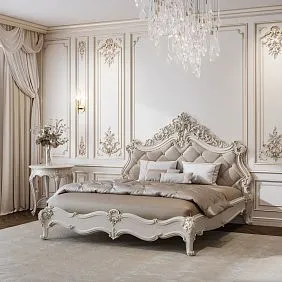
Ornate stucco with plant ornaments, gilded cornices with multi-tiered carving, rosettes a meter in diameter on the ceiling, pilasters with Corinthian capitals — all of this in 2026 instantly kills the modernity of modular furniture. A free-form sofa against a Baroque wall looks random, insufficiently status-worthy, as if it was brought from another apartment and forgotten to be taken away. The style conflict is so obvious that the eye darts between the opulence of the walls and the laconicism of the furniture, finding no peace.
Dark panels in the lower third of the wall, upholstered in velvet or paneled with carved wood, create a heaviness that contradicts the lightness of modular furniture. Modularity is about air, opulent decor is about fullness. They are not friends, and in 2026 this conflict has become more obvious than ever.
Eco-Friendly Fabrics: The Revolution of Consciousness in 2026
If in 2025 eco-friendly fabrics were a trend, in 2026 they have become a necessity. Synthetics are retreating under pressure from new environmental standards and conscious consumption. Polyester, acrylic, nylon — materials that dominated upholstery for decades due to cheapness and practicality — are rapidly losing ground. They are being replaced by natural and innovative materials: linen, organic cotton, wool, hemp fiber, bamboo textile, mushroom mycelium, algae. This is not just eco-friendliness for the sake of a trend, it's a return to tactile authenticity, where the upholstery is pleasant to the touch, breathes, lives with the body, yet is produced with a minimal carbon footprint.
Linen 2.0: Texture with Technology
Linen upholstery in 2026 — is not just a natural fiber, it's a material processed with new technologies that make it resistant to stains, wear, and fading. Special bio-impregnations based on beeswax and plant resins create an invisible protection that repels water, dirt, but does not change the tactility, breathability. Linen in 2026 has a characteristic texture — uneven thread thickening, natural knots that make the surface alive, not stamped, yet it is more practical than the synthetics of the previous generation.
The colors of linen this year — natural, but more saturated thanks to new-generation natural dyes: natural beige, gray-blue, soft green, terracotta, deep indigo. Bright chemical dyes are alien to the material, contradict its philosophy. A linen sofa in dark blue exists, but it's linen dyed with plant pigments, which preserves the texture and eco-friendliness.
Mycelium: The Material of the Future, Available Today
The sensation of early 2026 is upholstery materials made from mycelium, grown in bioreactors in a matter of weeks. The material resembles suede or nubuck—soft, velvety, yet fully biodegradable, grown without harming animals or using toxic chemicals. Its durability is comparable to leather, but production is hundreds of times more eco-friendly. Currently, it's a premium segment and expensive, but the trend is gaining momentum, and prices are expected to drop by the end of 2026.
Recycled Materials: The Status of Consciousness
In 2026, fabrics made from recycled ocean plastic, plastic bottles, and fishing nets are not a compromise in quality but a technological breakthrough and a social status symbol. These materials are stronger than natural ones, more resistant to abrasion, easier to clean, and they carry a story—every meter of fabric has removed a kilogram of waste from the ocean, prevented the death of marine animals, and reduced landfill burden.
When you buy a sofa with upholstery made from recycled materials in 2026, you're not just furnishing your home; you're making a conscious choice for the planet. This is the new status—not the amount of money spent on furniture, but the consciousness of the choice. Eco-friendly furniture in 2026 is more expensive than conventional furniture, but it's a price that those who understand that cheapness is an illusion, costing future generations dearly, are willing to pay.
What Decor Enhances Eco-Friendliness in 2026?
Natural decor materials—solid wood without paint or with natural oils, preserving the texture and color of the wood species. Moldings made of oak, ash, or walnut, not painted with synthetic paints but tinted with natural pigments to emphasize the wood grain. Carved overlays, but laconic—stylized plant motifs, not lush. Baseboards are tall, massive, but simple in profile, creating an organic connection between the floor and the wall.
The color palette for decor in 2026 is neutral, natural, but more saturated than before. Beige, gray, brown, soft green, terracotta. No gilding, silver, or bright synthetic paints. Patina, if used, is graphite-based or made from natural pigments, delicately emphasizing the relief, not garishly.Solid Wood ItemsWood, left in its natural color or slightly tinted with eco-friendly compounds, creates a dialogue with the eco-friendly furniture upholstery, enhancing the feeling of connection with nature.
What Creates Dissonance?
Plastic moldings imitating stucco against a linen sofa—an absurdity that has become even more obvious in 2026. Eco-friendly furniture requires eco-friendly decor; otherwise, the entire message is lost. Polyurethane stucco, polystyrene baseboards are cheap, easy to install, but they are synthetic and contradict the naturalness of the upholstery.
Glossy decor surfaces—varnished moldings, shiny overlays—clash with the matte finish of linen, cotton, wool, and mycelium. Eco-friendly fabrics are matte, textured, alive. Gloss is dead; it reflects light mechanically, without creating depth. Matte decor—oil-wax on wood, matte water-based paint on moldings—works with eco-friendly furniture in 2026, creating a harmony of textures.
Biomorphic Forms: When Furniture Becomes Living Sculpture
Straight lines and sharp angles are gone for good.Upholstered Furniture Trends 2025Biomorphic forms, announced a year ago, have fully blossomed in 2026—a sofa resembles a cloud, an armchair resembles a mollusk shell or a flower petal, an ottoman resembles a pebble smoothed by sea waves. This is not a designer's whim but a response to fatigue from geometry, from the angularity of the urban environment, from the rectangles of offices, subways, and streets. In early 2026, biomorphism reached a new level—forms have become even more organic, fluid, almost alive.
Asymmetry as a Philosophy
Classical furniture is symmetrical—the left side mirrors the right. Biomorphic furniture in 2026 is so asymmetrical that every angle reveals a new form—the backrest curves unevenly, the armrests are not just different heights but different shapes, the seat is not rectangular or oval but a free organic shape that cannot be described in geometric terms. This seems chaotic but is actually meticulously calculated through computer modeling, where every curve is designed for maximum comfort.
Sitting on an asymmetrical sofa in 2026 is more comfortable than on a symmetrical one—the shape adapts to the body anatomically, not the body to the shape. The curves of the backrest support the lower back in different positions, the uneven armrests provide support for various postures—leaning back, leaning sideways, curling up, lying lengthwise. This is ergonomics at a new level, where form follows function but does so beautifully, almost poetically.
Sculptural Quality: Furniture as a Work of Art
A biomorphic armchair in 2026 is not just a place to sit; it's a sculpture that works even when empty. Curves, shadows, and volumes create a visual complexity that is captivating. Such an armchair becomes the focal point of the composition, around which everything else is arranged. It's not a background element but the main character of the interior, and in 2026, more and more people are choosing one biomorphic piece as the focal point of their living room.
The production of biomorphic furniture this year has become more technological thanks to 3D-printed frames and robotic upholstery, but it still requires manual finishing and individual fitting. Each armchair is slightly different from the previous one, like stones on a beach—similar, yet each unique. This is a return to craftsmanship, to the idea that furniture is created by a master, not just by a machine.
Decor for Biomorphic Furniture in 2026: Fluidity vs. Geometry
Biomorphic furniture requires decor that does not contradict its organic nature. Straight moldings, strict panels, and geometric overlays create conflict—the furniture is fluid, the walls are angular, and the eye finds no rest. The solution in 2026 is either to minimize decor, leaving walls almost smooth with delicate plaster, or to use decor with fluid lines and curves that echo the furniture's forms.
Bent moldings—technologically complex, expensive, but more accessible in 2026 thanks to new bending and molding technologies—are the only ones that work organically with biomorphic furniture. They wrap around corners, create wave-like panels, and repeat the furniture's curves. Carved overlays with plant motifs—twining stems, leaves that curve—also support organicness. Geometry is the enemy of biomorphism.
The color of decor in 2026 features smooth transitions, gradients, ombre, not sharp contrasts. A transition from light at the bottom to slightly darker at the top on walls creates a softness that harmonizes with the fluidity of the furniture. Sharp color boundaries and contrasting moldings destroy organicness.
What Kills Biomorpism?
Strict symmetry in decor—panels of the same size, evenly spaced, pilasters dividing the wall into equal parts—contradicts the asymmetry of biomorphic furniture. Industrial decor—metal moldings, concrete panels, exposed utilities—also creates sharp conflict. Biomorpism is about the softness of nature; industrialism is about the hardness of technology. In 2026, this conflict has become even more obvious.
An abundance of straight lines on the walls makes biomorphic furniture seem alien. If the entire room is rectangular and angular, and the sofa is fluid and organic, it looks like an alien from another dimension that won't take root.
Color Trends 2026: The Evolution of the Palette
If 2025 was under the sign of Pantone's Mocha Mousse, the beginning of 2026 brought an evolution of the color palette. Deep coffee remains relevant, but new shades have been added that define the trends of the current year.
Key Colors 2026: Warm Earthy Palette
Terracotta, ochre, clay — natural earth tones have intensified, become richer. This is linked to the eco-trend, a return to natural materials. Soft furniture with terracotta linen upholstery is the hit of early 2026. Walls in ochre tones with matching moldings create a warm space you want to return to after a cold winter day.
Emerald, malachite, olive — green shades remain relevant but have become more complex, multi-layered. An emerald velvet biomorphic armchair against olive walls — a composition that works flawlessly in 2026.
New for 2026: Soft Lavender
An unexpected trend at the start of the year — the return of lavender, but not bright, rather soft, dusty, almost gray with a purple undertone. This color calms, creates an atmosphere of serenity, which is so lacking in a turbulent world. A lavender sofa combined with cream walls and wooden decor in a natural tone — a combination gaining popularity.
What Decor Supports the 2026 Palette?
Moldings painted to match the walls, but half a tone lighter or darker, create tonal harmony. Terracotta furniture, ochre walls, slightly darker moldings — a gradation of one color creating depth. Wooden decor in natural tones — walnut, teak, oak — echoes the earthy palette materially, creating a unity of natural textures.
Patina on decor in 2026 — gold, copper, graphite — adds accents that enhance the main palette. Gold accents with terracotta, copper with olive, graphite with lavender — combinations that work.
What destroys harmony?
Cold decor colors — blue, light blue, silver — clash with the warm earthy palette of 2026. Bright neon accents kill the calm of the natural palette. Black decor creates harshness that contradicts the softness of trending colors.
Technological Integration 2.0: Smart Home and Furniture as a Single Entity
Built-in heating systems, massage, wireless charging, smartphone control — soft furniture in 2026 is so technological that the boundary between furniture and gadget blurs. This year's novelty — integration with smart home systems at a level where furniture itself adapts to your habits.
AI Adaptation: Furniture That Learns
Artificial intelligence in 2026 furniture analyzes your habits — when you usually sit to read, in what posture you watch movies, how long you work on a laptop on the sofa — and automatically adjusts firmness, heating, module positions. You don't even give a command; the furniture itself understands what you need based on the time of day, your schedule, even the weather outside.
How Does Decor Support Technology in 2026?
Hidden cable channels in baseboards, moldings — a mandatory standard. Tall baseboards with internal cavities hide not just charging cables, but entire systems — smart home control wires, sensors, WiFi repeaters. Moldings with cable channels — a technological solution that looks like ordinary decor but contains modern infrastructure inside.
Built-in lighting in cornices, baseboards controlled via smart home creates lighting scenarios synchronized with furniture lighting. A sofa is illuminated from below with soft light, the cornice too — a unified lighting environment is created, controlled by voice or automatically.
USB-C outlets and wireless charging built into moldings at sofa seat level — a 2026 standard allowing device charging without getting up.
What Hinders Technology?
Decor without cavities, without provided cable channels, prevents running communications — wires run along walls, creating chaos. Decor that doesn't account for technology is hopelessly outdated in 2026.
Minimalism 2026: Warmth in Simplicity
Modern soft furniture gravitates towards minimalism, but it's not the cold minimalism of the 2000s. In 2026, minimalism has become warm — simplicity of form is filled with emotional content, natural materials, tactility, where every detail is perfected.
Quality as Luxury
A minimalist sofa in 2026 is more expensive than a lavish Baroque one because simplicity costs more. Perfectly straight seams, impeccable proportions, calibrated to the millimeter, high-quality upholstery from natural fabrics where every thread is in place — this is craftsmanship of the highest level.Furniture and interior itemsin a minimalist style require perfect execution.
What Decor Supports Minimalism in 2026?
Minimal, almost unnoticeable, but high-quality. Thin moldings 3-5 cm wide made of solid wood with perfect geometry. Baseboards 8-10 cm high with a simple profile — one shelf, one bead, impeccably fitted. Ceiling cornices 5-7 cm wide with hidden lighting. Single overlays — one per wall, laconic, geometric, perfectly executed.
Decor color matching the wall — structure is read through shadows. This is the sophistication of 2026, seen by those who understand.
What Kills Minimalism?
Any lavishness. Carved overlays with floral patterns, gilding, multi-tiered cornices — all this contradicts simplicity. Minimalism in 2026 requires discipline, a rejection of excess.
Conclusion: Harmony as a Necessity
Upholstered Furniture Trends 2025, which transitioned into 2026, have firmly established themselves as the new norm. Modularity, eco-friendliness, biomorphism, technological integration, and warm minimalism define what a modern living room looks like at the beginning of 2026. These trends require an appropriate environment whereinterior decoration supports modernity, enhances it, and creates harmony.
The company STAVROS creates Solid Wood Items wood for 2026 interiors includes moldings with built-in cable channels, baseboards with cavities for smart home systems, cornices for hidden lighting, minimalist overlays, curved elements for biomorphic interiors, and natural finishes for eco-friendly spaces. Over 400 models adapt to this year's trends.
Crafted from selected oak and beech with hand-finished processing ensures quality that meets 2026 standards. The ability to paint with natural pigments, patina, tint with eco-friendly compounds, and coat with bio-oils allows for decor that fits contemporary interiors.
Professional consultations help select decor that enhances your furniture trends. STAVROS designers know what's relevant in 2026, what works, and what conflicts. The warehouse program ensures fast shipping, while custom manufacturing provides individual solutions. Delivery across Russia, quality guarantee.
Choosing STAVROS in 2026 means choosing decor that understands modernity, creating an interior without conflicts, where everything is in its place, and each day begins with harmony.