












































































Article Contents:
- Vertical Lines: Why Slats Have Taken Over Modern Interiors
- Corridors and Hallways: The Specifics of Transitional Spaces
- Wooden Baseboard: The Lower Echelon of Protection
- Wall Panels: Enhanced Protection for Critical Areas
- Adding Texture Without Overloading Narrow Spaces
- Combining Smooth and Textured Surfaces
- Visual Proportion Correction Through Decor
- Material Durability: What Withstands Intensive Use
- Lighting Slat Structures: Revealing Texture
- Acoustic Comfort: Slats as Sound Diffusers
- Integrating Functional Storage into Decor
- Color Solutions for Visual Expansion
- Frequently Asked Questions
- Conclusion: An Architectural Approach to Utilitarian Space

A corridor is not just a transitional space. It's the first impression of a home, a daily route, a connecting artery between rooms. Narrow, lacking natural light, subject to mechanical impact—the corridor presents challenges for a designer that cannot be solved with traditional wallpaper or paint.Plank wall claddingtransforms these complex areas, creating architectural rhythm, visually correcting proportions, adding durability where it's critical. Let's explore how the linear geometry of wood turns a problematic space into a stylish hallmark of a home.

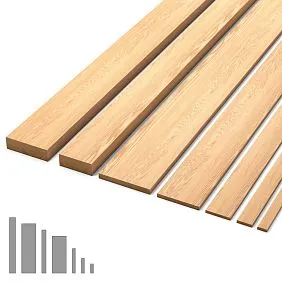
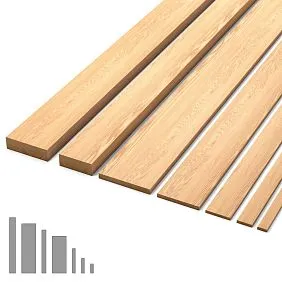


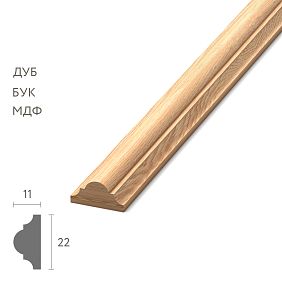
Vertical Lines: Why Slats Have Taken Over Modern Interiors
The trend for vertical lines is not a random fashion, but a response to human psychological needs for structured space. Monotonous flat walls create a visual emptiness that the brain perceives as incompleteness. Slats form rhythm, guide the gaze, create visual dynamics. The vertical orientation of the slats exploits a feature of visual perception—the eye follows the line from bottom to top, which psychologically creates a sense of greater room height.
The linearity of slats simplifies the visual perception of complex space. A corridor with many doors, corners, and niches appears fragmented and chaotic. Vertical slats unify this fragmentation with a single rhythm, creating visual integrity. The gaze slides along the lines, not catching on every door or corner—the space is read as orderly.
The naturalness of the material is a key factor in the popularity of wooden slats. In an era of total synthetics, solid oak or beech brings organic warmth that cannot be imitated. The texture of living wood, its natural grain pattern of annual rings, creates a connection with nature even in a city apartment. This is not a decorative technique, but biophilic design—the conscious introduction of natural elements to improve psychological comfort.
The functionality of slats goes beyond aesthetics. Gaps between the slats create acoustic diffusion, reducing echo in long corridors. Behind a slat structure, you can hide wall imperfections, wiring, ventilation ducts. Integrated lighting between the slats creates a soft glow, compensating for the lack of natural light in transitional areas.
The versatility of application makes slats a solution for any style. In minimalism, they emphasize geometric purity. In Scandinavian interiors, they create cozy naturalness. In lofts, they work as a contrast to concrete and brick. In neoclassicism, they form a modern interpretation of classic panels. The same wooden slats adapt to the style through the choice of wood species, placement spacing, and finish treatment.




Corridors and Hallways: The Specifics of Transitional Spaces
The hallway bears the main load—wet shoes, street dust, contact of outerwear with walls, impacts from bags and suitcases.Decorative corridor wall finishingmust be not only beautiful but also practical. Wallpaper doesn't last long here—it wears out at contact points, absorbs dirt, tears from accidental impacts. Painting requires frequent updates; any scratch immediately catches the eye.
Wooden slats withstand mechanical impacts significantly better than paper or fabric coverings. Solid oak with a density of 700 kg per cubic meter is not afraid of impacts, doesn't dent from touches, doesn't scratch from accidental contact with keys or metal clothing hardware. Protective varnish or oil coating makes the surface resistant to moisture and dirt.
Narrow corridors are a typical problem in apartment buildings. A width of 1.2-1.5 meters creates a feeling of tightness; any massive finish visually narrows the space even more. Vertical slats work in the opposite way—they direct the gaze upward, creating an illusion of height that psychologically compensates for the lack of width. Light wood species—ash, whitewashed oak—enhance the effect by reflecting light and visually expanding the space.
Long corridors suffer from monotony. The gaze finds no focal point; the space seems endless and boring. Slat finishing creates a rhythmic structure that breaks the monotony. Alternating slat sections and smooth wall areas forms visual zones—near the entrance door, in front of room doors, at the end of the corridor. This division makes a long corridor structured and interesting.
Lighting in transitional areas is often insufficient. Lack of windows, a single ceiling chandelier creates either a bright spot under the fixture or deep shadows in corners. Slats with integrated lighting solve this problem. LED strips placed behind the slat structure or between the slats provide soft diffused glow, evenly distributed across the wall. This creates a comfortable light background without sharp contrasts.
Humidity and temperature fluctuations are characteristic of entrance areas. Opening the door in winter lets in cold air; in summer—hot and humid air. Solid wood, properly dried to 8-10% moisture content and coated with a protective compound, stably withstands these fluctuations without deformation. Unlike MDF or plywood, which can swell or delaminate, solid wood maintains its shape for decades.
Our factory also produces:
Wooden Baseboard: The Lower Echelon of Protection
Wooden baseboard— is not a decorative option, but a functional necessity in high-traffic areas. The lower part of the wall takes the brunt of the impact — vacuum cleaners, mops, furniture legs, shoes. Without a protective baseboard, paint or wallpaper quickly wears out, showing scuffs, chips, and stains. A baseboard made of solid oak or beech creates a durable barrier that withstands years of intensive use.
The height of the baseboard in a hallway should be greater than standard. If 50-70 mm is sufficient in living rooms, an 80-120 mm baseboard is justified in an entryway. This additional height provides wall protection from splashes during wet cleaning, from accidental impacts with bags and suitcases, and from scratches from children's toys or pet claws. A wide baseboard visually grounds the lower part of the room, psychologically creating stability and solidity.
The baseboard profile affects cleaning practicality. A simple rectangular profile with minimal relief is easy to wipe down and doesn't accumulate dust in recesses. A classic shaped profile with coves and protrusions requires more thorough cleaning but creates a sense of nobility suitable for classic interiors. Choosing a profile is a compromise between aesthetics and practicality.
The color of the baseboard determines the visual perception of space. A baseboard matching the wall color visually blends in, not breaking up the space with a horizontal line, which is beneficial in low, narrow hallways. A contrasting baseboard — dark on light walls or white on dark — creates a clear floor frame, structures the space, and emphasizes architectural lines. In high-traffic areas, dark baseboards are often chosen as they show less dirt.
Baseboard mounting must be secure. In a hallway, the risk of mechanical impact is higher, so adhesive-only mounting is insufficient. Mechanical mounting with screws or special clips ensures strength; the baseboard won't pull away from the wall even under strong impacts. Mounting points are concealed with wood-colored plugs or filled and painted — the fasteners should be invisible.
Joining baseboards in corners requires a professional approach. Inside corners are mitered at 45 degrees to create a neat joint. Outside corners, which are common in complex hallway geometries, require special attention — they are most vulnerable to impacts. Protective corner overlays made of the same wood reinforce the outside corners of the baseboard, preventing chips and damage.
Get Consultation
Wall Panels: Reinforced Protection for Critical Zones
In particularly high-traffic zones — near the entrance door, along the wall where shoes and outerwear are placed — even a tall baseboard is insufficient. Wall panels at a height of 80-120 cm create a continuous protective zone that withstands any household impact. Panels made of solid wood or MDF with a wear-resistant coating are not afraid of moisture, impacts, or scratches, maintaining a presentable appearance for years without renewal.
Horizontal division of the wall with panels structures the space. The lower protective panel in a dark shade hides dirt, while the upper part of the wall is painted a light color that visually expands the space. The border between the panel and the wall is framed with molding, creating architectural completeness. This solution is both classic and practical.
Vertical panels with a slatted structure combine protective and decorative functions. Instead of a solid smooth panel, vertical slats installed on a base are used. This creates a three-dimensional texture, visually more interesting than a smooth surface. Gaps between the slats provide ventilation, which is important in the humid environment of an entryway. Behind the slatted panel, you can place hooks for clothes, shelves for shoes — functionality is integrated into the decorative structure.
Combining materials optimizes the budget. The lower protective panel, 40 cm high, is made of an especially durable material — solid oak or impact-resistant composite. The middle zone, 40-80 cm, where the load is less, can be made of MDF or painted with wear-resistant paint. Such a gradient of protection ensures strength where it is critical and saves money where less expensive materials can be used.
Concealed storage is integrated into the panel system. Behind hinged doors clad with the same slats or panels, niches for shoes, clothes, and household items are hidden. From the outside, the wall looks like a solid decorative surface; inside, functional storage is concealed. This maximizes the use of the limited hallway space, eliminating the visual chaos of freestanding furniture.
Adding Relief Without Overloading a Narrow Space
Flat walls in a narrow hallway create a box-like feeling. Relief adds depth, visually breaks up monotony, and makes the space architecturally more interesting. But excessive relief in a narrow space creates visual overload, making the hallway seem even narrower. The balance between flatness and volume is the key task.
Shallow moldings — a minimalist solution for adding structure. Vertical moldings 30-50 mm wide, protruding 10-15 mm from the wall, divide the wall into sections without creating bulkiness. They form framed compositions, within which the wall is painted or wallpapered. Such division creates visual complexity while avoiding overload.
Sculptural wall decorationPolyurethane appliqués — an easy way to add classic decorativeness. Small overlays with ornamentation are placed symmetrically — on both sides of a mirror, above a console table, in the center of a panel composition. Polyurethane is lightweight, mounted with adhesive, and doesn't require reinforced walls. After painting to match the wall color or a contrasting shade, the overlays create subtle accents without dominating.
Slats with minimal protrusion work as texture, not volume. Strips 10-15 mm thick, installed directly on the wall without a protruding frame, create visual linearity with minimal physical volume. They don't steal precious centimeters of width in a narrow hallway but transform a flat wall into a relief surface. Painted the same color as the wall, they work as texture, not as a separate element.
3D panels with shallow relief create visual interest without bulkiness. Panels with a geometric pattern 10-20 mm deep add play of light and shadow but don't protrude far from the wall. Placed on one accent wall — for example, the end wall in a hallway — they create a focal point without overloading the side walls.
Horizontal lines in a narrow hallway require caution. They visually expand the space but reduce the perceived ceiling height. If ceilings are 2.7 meters or higher, one horizontal line of molding at one-third of the wall height creates structure without critically lowering the height. If ceilings are lower, it's better to limit yourself to vertical elements.
Combining Smooth and Textured Surfaces
Completely slatted finishing on all hallway walls creates visual overload. The rhythm of lines repeating around the entire perimeter tires the eye and creates visual noise. Combining textured slatted sections with smooth painted zones creates visual balance, allowing the eye to rest.
An accent wall with slats — a classic technique. In a long hallway, the end wall is clad with vertical slats from floor to ceiling. This creates a visual focal point, directing the gaze along the hallway toward that wall. The side walls remain smooth, painted a light neutral color. The contrast between the textured end wall and smooth sides creates visual dynamics, making the hallway less monotonous.
Zoning through alternating materials works in hallways with many doors. Wall sections between doors are clad with slats, creating vertical accents. The doorways themselves are framed with smooth casings, and the wall directly around the door remains smooth. This alternation of textures creates rhythm, visually structures the space, and makes the many doors not a chaotic set but an organized composition.
Lower third slatted, upper two-thirds smooth — a practical solution. Slatted panels 80-100 cm high protect the lower zone subject to maximum wear. The upper part of the wall is painted, which is cheaper and provides visual lightness. The border between the slatted zone and the smooth one is framed with horizontal molding, creating architectural completeness.
Slatted ceiling with smooth walls — the reverse approach. In narrow hallways with sufficient ceiling height, a slatted structure on the ceiling creates linear dynamics, directing the gaze along the hallway. The walls remain smooth, not competing for attention. Integrated lighting between the ceiling slats provides soft, diffused light, compensating for the lack of windows.
Inserts of other materials diversify the composition. Between vertical slatted sections, you can place mirrored panels that visually double the width of the hallway. Or inserts of natural stone, creating a material contrast between cold mineral and warm wood. Metal panels with patina in a loft interior contrast with the organic nature of wooden slats.
Visual Correction of Proportions Through Decor
Hallways rarely have ideal proportions. Too narrow, excessively long, with low ceilings — each type of imbalance requires a specific approach. Decorative elements work as tools for visual correction, changing the perception of space without physically altering its dimensions.
A narrow hallway is visually expanded by several techniques. Light slats made of ash or whitewashed oak on the walls reflect light, creating a sense of airiness. Horizontal elements — molding at one-third of the wall height, a horizontal stripe of contrasting color — visually push the walls apart. Mirrored inserts between slatted sections double the visible width, creating an illusion of spaciousness.
A long corridor requires visual shortening. Painting the end wall in a darker or more saturated color brings it visually closer, making the corridor appear shorter. An accent slatted wall at the end attracts the eye, creating a focal point that breaks the monotony of the length. Transverse elements—arches, beams, changes in floor material—divide the long corridor into sections, psychologically reducing its perceived length.
A low ceiling is visually raised by vertical lines. Slats running uninterrupted from floor to ceiling direct the gaze upward. This is especially effective if the slats continue onto the ceiling, creating a continuous vertical plane. Light tones and the absence of horizontal divisions enhance the effect. Ceiling cornices with hidden lighting visually separate the ceiling from the walls, creating a floating effect.
A high ceiling in a narrow corridor creates a sense of a well. A horizontal molding or a contrasting color strip at a height of 2.4-2.6 meters visually lowers the ceiling, making the proportions more comfortable. A dark ceiling with light walls also reduces the perceived height. A wide ceiling cornice creates a visual boundary that structures the space.
Irregular geometry—slanted walls, non-standard angles—is masked by decorative elements. A slatted structure on a frame evens out visual irregularities, hiding non-right angles behind the rhythm of vertical lines. Asymmetrical molding compositions distract attention from geometric defects, turning them into intentional design solutions.
Material durability: what withstands intensive use
The corridor is the area of maximum traffic. People walk here more often than in any other room, touch the walls, lean on them, place bags and suitcases. Materials must withstand this load without losing their appearance. Not all wood species and not all finishes can handle such intensity.
Solid oak is the benchmark for durability among woods. A Brinell hardness of 3.7-3.9 units makes oak slats resistant to dents and scratches. High tannin content protects against moisture and biological damage. Oak elements in the corridor last for decades, acquiring a noble patina that only enhances the material. The only drawback is the high cost, but it is compensated by longevity.
Beech is close to oak in hardness but less resistant to humidity. In dry, heated corridors of apartment buildings, beech performs excellently. In private homes with temperature and humidity fluctuations near the entrance door, it is better to choose oak or larch. The light natural shade of beech creates a sense of freshness and suits Scandinavian style and modern interiors.
Ash has a pronounced texture and high strength. Its light shade with contrasting annual rings creates visual expressiveness. Hardness is slightly lower than oak, but more than sufficient for domestic loads. Ash takes stains well, allowing it to be adapted to various color concepts.
Larch is a coniferous species combining strength with moisture resistance. High resin content makes larch practically resistant to rot even upon contact with moisture. This is the optimal choice for entry areas of private homes where direct contact with water and snow is possible. The characteristic reddish hue creates a warm atmosphere.
Pine is a budget option, but it is not optimal for corridors. Soft wood scratches easily, dents from impacts, and quickly loses its presentable appearance. If the budget is limited, it is better to use pine slats with a very dense multi-layer varnish coating that compensates for the wood's softness with a protective film.
The finish is critical for durability. An oil finish is natural and pleasant to the touch, but in areas of intensive contact, it requires frequent renewal. Varnish coating, especially polyurethane varnishes, creates a hard protective film resistant to abrasion, moisture, and chemical exposure. Matte varnishes hide minor scratches better than glossy ones. Two- or three-layer varnishing with intermediate sanding creates a maximally durable coating.
Lighting slatted structures: revealing texture
Wooden slats reveal their beauty only with proper lighting. Flat ceiling light makes them visually flat, and the wood texture is lost. Multi-level lighting with accents creates a play of light and shadow, emphasizes the rhythm of lines, and reveals the natural wood grain.
Hidden lighting behind the slats creates a glow-from-within effect. An LED strip placed on the wall behind the slatted structure with a 20-30 mm gap provides soft light that passes through the gaps between the planks. This creates visual lightness; the slats seem to float on a glowing background. The effect is especially expressive at night, turning the corridor into a space with a magical atmosphere.
Side light from wall sconces creates clear shadows from the slats. Sconces placed on smooth sections of the wall direct light along the slatted surface. Each plank casts a shadow, creating a graphic play of light and shadow. This emphasizes the three-dimensionality of the structure, making the relief maximally expressive.
Directional ceiling spotlights accentuate individual areas. Recessed lights directed at the slatted wall at an angle create dramatic lighting with deep shadows. This technique works to highlight accent zones—the end wall with slats, the area near a mirror, a decorative composition.
Light color temperature affects the perception of wood. Warm light (2700-3000K) emphasizes the warmth of the wood, enhances yellow and orange tones, and creates a cozy atmosphere. Neutral white (4000K) provides natural color perception of the wood, suitable for modern minimalist interiors. Cool light (5000K+) makes wood visually gray, robbing it of warmth—not recommended for living spaces.
Dynamic lighting with adjustable intensity adapts the lighting to the time of day. Bright light in the morning helps wake up and get ready. Dimmed lighting in the evening creates a relaxing atmosphere. At night, minimal ambient lighting ensures safe movement without turning on bright lights. Dimmers or smart control systems allow adjusting the lighting to current needs.
Acoustic comfort: slats as sound diffusers
Long corridors with hard surfaces—walls, floor, ceiling—create acoustic discomfort. Sound reflects multiple times, creating echo and amplifying noise. Conversation, music, footsteps echo loudly, creating a sense of emptiness and lack of coziness. Slatted structures partially solve this problem by acting as acoustic diffusers.
The uneven surface of the slats scatters sound waves. Instead of mirror-like reflection from a smooth wall, sound reflects from the many planes of the slats at different angles. This breaks up the sound wave, directs reflected sound in different directions, and reduces echo concentration. The effect is more pronounced the larger the slatted surface area.
Gaps between slats partially absorb sound. Part of the sound energy penetrates the gaps, where it dissipates and does not return to the room. If sound-absorbing material—mineral wool, acoustic foam—is placed behind the slatted structure, the effect is multiplied. Sound penetrates through the gaps, is absorbed by the material, and hardly reflects back.
The rhythm of the slats affects acoustic properties. A regular rhythm with equal spacing can create resonant phenomena at certain frequencies. An irregular rhythm with variable spacing works as a broadband diffuser, scattering sound of all frequencies. In acoustically critical rooms—home theaters, music rooms—specially calculated slat placement patterns are used for optimal acoustics.
Combining slats with acoustic panels creates effective sound insulation. On wall sections where the main noise comes from—a wall adjacent to neighbors, a wall near an elevator—special acoustic panels are installed. They are covered with slats, creating visual unity with the rest of the finish but providing significant reduction of penetrating noise.
Integrating functional storage into decor
Corridors suffer from a lack of storage space. Shoes, outerwear, umbrellas, keys, bags—all require organized placement. Open shelves and hangers create visual chaos. Integrating storage into decorative elements solves the problem while preserving aesthetics.
Slatted panels with hidden niches look like a solid decorative surface. Behind individual slatted sections, hinged or sliding doors provide access to storage. Shoe shelves, clothing hooks, hat shelves are placed inside. Closed doors faced with the same slats make the storage invisible from the outside.
Built-in benches with slatted cladding combine seating and storage. The bench frame, 45-50 cm high, is clad with vertical slats, creating a visual continuation of the wall finish. The top part is a seat with soft upholstery. Inside the frame are shelves or drawers for shoes. Such a bench is functional, aesthetic, does not look like a separate piece of furniture, and integrates into the architecture of the space.
Open niches between slatted sections work for decorative storage. Between two slatted panels, a smooth wall section 15-20 cm deep is left, forming a niche. Inside, shelves for key holders, decorative objects, plants are placed. The back wall of the niche is painted in a contrasting color or illuminated, creating a visual accent.
Hooks and hangers integrate directly into the battens. Hidden hooks are mounted into the ends of horizontal slats or between vertical battens, which extend when needed. Or decorative hooks made from the same wood, which visually blend with the batten surface. This solves the problem of placing clothing without disrupting the visual cleanliness.
Color Solutions for Visual Expansion
Color is a powerful tool for visual space correction. In narrow, dark corridors, the correct choice of color palette can significantly improve perception, create a sense of spaciousness and light where it is physically insufficient.
Light wood species - ash, maple, whitewashed oak - maximize space. They reflect light, create a sense of airiness, visually push the walls apart. In narrow corridors without windows, light battens are critically important. Even a small amount of artificial light, reflecting off the light wood, creates a more comfortable lighting environment.
Monochromatic solutions - battens and walls in a unified color palette - visually unite the space. White or light gray battens on walls of the same shade create a subtle texture without fragmenting the space with contrasts. This visually expands the corridor, makes it cohesive. The relief of the battens is visible due to the play of light and shadow, not color contrast.
Contrast solutions create visual dynamics. Dark battens on light walls or light on dark form a graphic composition. Contrast attracts attention, creates visual accents, makes the space less boring. However, in very narrow corridors, strong contrast can visually narrow the space, so it requires caution.
Gradient transitions from dark to light create visual depth. The lower part of the wall with panels or battens in a dark shade, the middle - a medium tone, the upper part and ceiling - light. Such a vertical gradient directs the gaze upward, visually raises the ceiling, creates a sense of greater volume.
Color accents on the end wall attract the gaze into the distance. The side walls are light neutral, the end wall is a saturated color or with dark battens. The gaze rushes towards the bright point, which visually shortens a long corridor, makes it less monotonous. It is important that the accent color echoes other elements - doors, furniture, textiles.
Frequently asked questions
Can battens be used in a corridor with a low ceiling?
Yes, but only vertical ones and in light shades. Vertical lines visually raise the ceiling, compensating for the lack of height. Horizontal battens in a low corridor are categorically not recommended - they further reduce the perceived height. Light species - ash, whitewashed oak - enhance the effect.
How often should the coating of wooden battens in a corridor be renewed?
With a varnish coating - every 7-10 years or less, depending on the intensity of use. With an oil coating - every 2-3 years. Areas subject to direct contact - near the entrance door, in the clothing placement zone - may require more frequent renewal. Local restoration of damaged areas is possible without dismantling the entire structure.
Are battens suitable for wet zones near the entrance door?
Yes, if moisture-resistant species are used - larch, oak - and high-quality moisture-protective coating. Polyurethane varnishes create a waterproof film that protects the wood from moisture. It is important to ensure ventilation - gaps between the battens allow air to circulate, preventing moisture accumulation.
Can wooden battens be combined with polyurethane decor?
Absolutely. Wooden battens create the main texture, polyurethane overlays or moldings add decorative accents. After painting in a unified color, the difference in materials becomes unnoticeable. The lightness of polyurethane simplifies the installation of decorative elements without the need to reinforce the walls.
How to care for batten structures in a corridor?
Regular dry cleaning with a soft brush or vacuum with a nozzle removes dust from the gaps. Periodic wet cleaning with a slightly damp cloth without excess water. Avoid aggressive cleaning agents, abrasives. For local damage - sanding, touch-up, renewal of the coating on the affected area.
How much does a turnkey batten finishing for a corridor cost?
Depends on the area, wood species, complexity of installation. Approximately: materials (oak battens, fasteners, protective coating) - 3000-5000 rubles per square meter. Installation - 2000-3000 rubles per square meter. For a corridor with 15 square meters of walls - 75,000-120,000 rubles turnkey.
Can battens be installed on uneven walls?
Yes, when mounted on a frame. A system of guides, leveled with a level, is installed on the wall. The battens are attached to the guides. The frame compensates for the unevenness of the base, creates a flat plane. Wiring, sound insulation can be hidden behind the frame. Direct mounting of battens on the wall requires a level base.
What spacing between battens is optimal for a corridor?
Depends on the desired effect. Close spacing of 20-40 mm creates an almost solid surface, works well for zoning and acoustics. Medium spacing of 50-70 mm - a balance between visual density and material savings. Wide spacing of 80-100 mm creates a light graphic texture, saves material, but is less effective for zoning.
Conclusion: an architectural approach to utilitarian space
Corridors and hallways deserve no less attention than formal rooms. This is the first impression of a home, the daily environment through which all family life passes. Batten finishing, the correct choice of materials, thoughtful lighting transform a narrow, dark corridor into a stylish architectural space that pleases the eye and functions comfortably.
The company STAVROS offers comprehensive solutions for designing passage zones.Wooden planks made from solid oak, beech, ash of various cross-sections and lengths are produced with millimeter precision, ensuring perfect geometry during installation. Chamber drying of wood to 8-10% moisture guarantees shape stability without deformation.
Baseboards made from solid noble species with a height from 50 to 180 mm protect the lower part of the wall from mechanical damage. A wide choice of profiles - from minimalist rectangular to classic shaped - allows selecting a solution for any interior style.
Polyurethane overlays and moldings are lightweight, moisture-resistant, with detailed relief elaboration, complementing wooden elements. They are mounted with adhesive, do not require reinforced structures, and after painting visually combine with wood or work as contrasting accents.
STAVROS production provides a full cycle - from design to installation. Specialists consult on material selection, create 3D visualizations of the future interior, take precise measurements on-site. In-house production allows manufacturing elements to custom sizes for non-standard projects.
STAVROS installation crews have years of experience working with wood. Professional installation ensures structural reliability, neat joints, and long-lasting results. The warranty on products and installation provides confidence in quality.
Investing in high-quality corridor finishing pays off through comfort of use and durability. Natural wood lasts for decades without needing replacement, only periodic coating renewal. STAVROS offers materials and expertise for creating passage zones that combine practicality, wear resistance, and aesthetic expression. Contact us for a consultation — together we'll find the optimal solution for your space.


