Article Contents:
- Why Decorative Slatted Panels Work Better Than a Smooth Wall
- What Makes a Slatted Panel Truly Decorative
- Which Materials Provide the Best Decorative Effect
- MDF Decorative Slatted Panels
- Oak Decorative Slatted Panels
- Slat Profile: Why Shape Makes a Wall Decorative
- Light and Shadow as the Main Decorative Effect
- Where Decorative Slatted Wall Panels Look Best
- Decorative Slatted Panels in the Living Room
- Decorative Slatted Panels in the Bedroom
- Decorative Slatted Panels in the Hallway
- Decorative Panels for the Study
- Decorative Panels for Restaurants and Showrooms
- Decorative Panels Covering the Entire Wall or as a Fragment
- Slatted Decorative Panels and Interior Styles
- Flexible Decorative Slatted Panels: When Decorative Needs Require Complex Shapes
- What Spoils the Decorative Effect Even with Good Panels
- How to Choose Decorative Slatted Panels for a Specific Interior
- Where to Look for Decorative Slatted Wall Panels
- About the Company STAVROS
- FAQ: Answers to Popular Questions

There are things in interior design that are harder to explain in words than to feel in space. A decorative slatted wall is one of them. Entering a room where one of the walls is clad with slats, you instantly sense: something has happened here. Something has changed. The space is no longer just a set of four walls and a ceiling. Rhythm, depth, and focus have appeared.
This is precisely why people choosedecorative slatted wall panels— not because it's 'trendy' or 'seen somewhere,' but for the real architectural effect that cannot be achieved with paint, plaster, or smooth panel cladding. Slats create volume, control light, set the rhythm of the surface — and turn a flat wall into a lively, expressive interior element.
But the decorative function of slatted panels is not automatic. It depends on the slat profile, spacing, material, lighting, and application location. Choosing correctly means understanding these parameters before purchase. This article is written precisely for that purpose.


Why Decorative Slatted Panels Work Better Than a Smooth Wall
Ask yourself a simple question: why do the interior photos that caught your eye almost always feature either a textured wall or a relief surface? The answer lies in the nature of human perception. The eye dislikes absolutely flat, uniform surfaces. It seeks details, rhythm, changes in light and shadow.
A smooth painted wall is a neutral background. It exists but does nothing. A slatted surface is an active element: it works even when you're not specifically looking at it. The uniform rhythm of the slats creates orderliness that psychologically organizes the space. The gaps between the slats provide depth. The protruding planes of the slats cast shadows under any non-strictly frontal lighting — and the wall 'comes to life.'
Five specific reasons whydecorative slat wall panelswork more effectively than alternatives:
-
Rhythm as an organizing principle. The repetition of parallel lines creates structure—predictable, cohesive, architecturally convincing. A wall with rhythm looks designed, not merely painted.
-
Physical depth. Relief is a real three-dimensional dimension absent from a flat surface. It's not an imitation, not textured paint—it's a real shadow cast by an actual protrusion.
-
Controlled chiaroscuro. Directed or side lighting fully reveals the slatted surface: each batten casts a shadow into the gap. This is a living, changing pattern—different in the morning and evening, under natural and artificial light.
-
Accent without extra effort. One slatted wall in a room creates a focal point without pictures, decor, or furniture. It's an architectural accent that works on its own.
-
A sense of 'luxurious' space. A slatted surface is perceived as a thoughtful, professional solution—it visually elevates the entire interior's level.




What makes a slat panel specifically decorative
Not every slat on a wall is decorative. This is an important point often overlooked when choosing.
A decorative effect is the result of a specific combination of parameters. Change one of them — and a panel that was expressive becomes dull. Or vice versa: too aggressive.
Slat profile—the shape of the batten's cross-section. The most direct parameter affecting shadow character and visual intensity. A semicircular profile gives a soft, diffused shadow. A rectangular one—sharp, clear. A trapezoidal one—an intermediate, more voluminous effect.
Spacing between slats—the distance between batten centers. Small spacing = dense, rich rhythm. Large spacing = airy, monumental surface. This isn't just aesthetics: spacing determines the wall's visual 'density' and its suitability to the room's scale.
Relief depth—how much the slat protrudes from the substrate. Deep relief = expressive shadow, strong volumetric effect. Shallow relief—more delicate, calmer. For small rooms, deep relief can be excessive.
Color—determines how readable the shadow is. A dark panel with a dark gap—a subtle, delicate play of nuances. A light panel with a dark gap—a contrasting, graphically expressive pattern. Monochrome (panel matching the wall color)—an ultra-delicate effect: relief is visible only through shadow, not color.
Material—affects the surface's tactility and naturalness. MDF for painting—perfect geometry, precise color. Solid oak—living grain, natural variation, tactile depth.
Lighting—perhaps the only parameter thought of last. And in vain: it's precisely light that 'turns on' or 'turns off' the decorative effect of a slatted surface. Without proper lighting, even the most beautiful decorative slatted wall looks like just 'something on the wall'.
Placement on the surface—the entire wall or a fragment. A full slatted surface—a monumental, architectural solution. A fragment (niche, TV zone, accent panel)—a targeted decorative technique that concentrates the effect in one part of the wall.
Our factory also produces:
Which materials provide the best decorative effect
Get Consultation
Decorative MDF slat panels
MDF is an engineered material with a perfectly uniform structure, density 750–850 kg/m³. The main decorative property of MDF is not its own texture (it has none), but how it accepts color and shape. The slat profile in MDF is milled with precision to tenths of a millimeter. Paint applies without deviations. The result—a perfectly smooth surface with clean, predictable geometry.
Decorative MDF slat panels for painting are the best choice when:
-
You need monochrome—a panel matching the wall color, where relief is read only through shadow, without a color break. This is one of the most complex and simultaneously elegant techniques.
-
You need an exact color from the RAL or NCS catalog. A designer project with an agreed palette—this is MDF for painting in 100% of cases.
-
Clean, graphic geometry is important—modern classic, minimalism, Japandi, contemporary.
-
You need flexibility for future color solutions: MDF can be repainted without dismantling.
White decorative MDF slat wall panels are the most popular solution for light, modern interiors. They create relief without color load—the space becomes deeper, not darker.
Decorative oak slat panels
Solid oak with a density of 700–750 kg/m³ is a material with its own decorative language. The grain pattern, the tactility of open pores, natural color variation—all these are decorative properties of the material itself, not the result of industrial processing.
Oak decorative wall panels provide an effect that MDF cannot reproduce: a living, warm, 'breathing' surface with character. With side lighting, an oak slatted wall creates a complex, multi-layered play of light and shadow: both from the slat relief and from the grain pattern.
Wooden decorative slat panels are appropriate in:
-
Scandinavian style — light oak with oil finish, natural tone.
-
Japandi — oak with gray tint or natural color with minimalist profile.
-
Loft — dark oak with matte lacquer, rectangular profile.
-
Organic minimalism — oak + stone + linen + metal.
-
Contemporary premium interior — natural solid wood as a quality marker.
Key difference: MDF is about color and geometry, oak is about material and tactility. Both are correct. The choice depends on what you want your wall to say.
Batten profile: why shape makes a wall decorative
This is the parameter that is talked about the least — and which affects the result the most.
Batten profile is the cross-sectional shape of the molding. You don't see it fully in photos. You feel it when standing before the finished wall under real lighting. This is what distinguishes 'just battens' from a decorative batten surface with character.
Semi-circular profile — rounded cross-section that diffuses light smoothly and softly. No sharp shadows, no harsh graphics. The surface looks warm, pliable, alive. When lit by a spotlight at a side angle, a wall of semi-circular moldings creates a delicate, almost sculptural effect — each batten individually 'glows' from its convex side.
Decorative panels made of semi-circular moldings are the right choice for bedrooms, children's rooms, living rooms with a warm atmosphere, home libraries. This is a delicate, natural surface.
Rectangular profile — sharp edges, clear linear shadows. With side lighting, the wall acquires a strict, disciplined graphic pattern. This is architectural precision: each batten is a separate element with clearly defined edges.
Rectangular profile — for minimalism, neoclassicism, studies, office spaces, loft. It creates a sense of order and professionalism.
Trapezoidal profile — a more active, voluminous relief. The cross-section widening towards the substrate gives a complex, multi-level shadow — more active than a semi-circle, softer than a rectangle. For spaces with an expressive, dynamic character: restaurants, showrooms, contemporary lofts.
Scale rule: the more active the profile and the deeper the relief, the more carefully you need to work with the room size. Aggressive three-dimensional relief in a small room creates tension, not decorativeness.
| Profile | Shadow character | Image temperature | Recommended style |
|---|---|---|---|
| Semi-circular | Soft, diffused | Warm, organic | Scandinavian, Japandi, organic minimalism |
| Rectangular | Sharp, linear | Strict, architectural | Minimalism, neoclassicism, loft, office |
| Trapezoidal | Volumetric, multi-level | Dynamic, expressive | Restaurant, showroom, contemporary accent |
Chiaroscuro as the main decorative effect
Let's talk honestly about what most articles about batten panels avoid. Decorative batten wall panels without proper lighting are a half-baked result. Or less.
Here's why. The decorative effect of a batten surface is created by shadow. Not by color, not by material, not by the profile itself — but by the shadow that the profile casts under directed or side lighting. Without shadow, there is no volume. Without volume, there is no decorativeness.
Side lighting — the most expressive option for a batten surface. A light fixture positioned to the side of the panel (wall sconce, floor lamp, directed spotlight at a side angle) creates long, expressive shadows along each batten. The wall transforms into a sculptural relief.
Hidden LED backlighting along the top or bottom perimeter of the panel is another classic technique. The strip is concealed in a niche, with light 'falling' downward or upward along the slatted surface. This soft, diffused glow accentuates the relief without creating harsh shadows. Decorative slatted panels with such lighting appear as an architectural illuminated detail—without a visible light source, creating a 'floating' surface effect.
LED strips within the gaps between slats—the most technically complex option. Diode strips are placed in the gaps between battens, creating a glowing grid effect. This is no longer just wall decoration, but full-fledged decorative lighting integrated into the surface relief.
What you absolutely must not do: illuminate a slatted wall with strictly frontal, flat light (a central ceiling fixture directly above the wall). With such lighting, there are no shadows, the relief disappears, and you simply see a 'set of slats on a wall' without any decorative expressiveness. This is the most common disappointment with slatted panels—and it's almost always due to incorrect lighting, not the panel itself.
The rule is simple: plan the lighting simultaneously with choosing the panel, not after installation.
Where decorative slatted wall panels look best
Decorative slatted panels in the living room
The living room is a space whereslatted wall panels in interior designunfold to their full potential. The wall behind the sofa or the TV area is the architectural center of the room. It is here that a decorative slatted surface creates the maximum effect: the eye is drawn to the lively rhythmic pattern, and the room instantly gains character.
For a living room of 20 sq.m. or more: wide slats with an expressive spacing—monumental and convincing. For a smaller-scale living room: a thin profile, moderate gap, light tone—so the relief is present but not overwhelming.
Integrating a hidden LED strip behind the top perimeter of a slatted panel in the living room is one of the most popular techniques. In the evening, it's a different space: warm, deep, with illuminated relief.
Decorative slatted panels in the bedroom
The bedroom is a space of delicacy. Here, the decorative effect of a slatted panel should be subtle, unobtrusive. The wall behind the bed headboard: a semi-circular profile, a neutral warm tone, moderate spacing. Backlighting from below the panel—a soft halo that creates a 'hotel effect' without visible fixtures.
Oiled oak in the bedroom with a semi-circular profile is one of the warmest and most natural interior looks. This is a wall that doesn't require paintings or decor: it is itself a complete decorative surface.
Decorative slatted panels in the hallway
The hallway is the first contact. It is here that a decorative slatted panel creates the first impression of the interior. Vertical slats on the end wall or the wall opposite the entrance door: the space immediately gains direction and architectural character.
For a narrow hallway—horizontal slats on the end wall: they visually stop the perspective, making the space more proportionate. Material: oak with a hard lacquer finish or MDF in a durable matte paint—the hallway is a zone of mechanical stress.
Decorative panels for the study
The study is a space of status and concentration. The wall behind the desk: dark MDF in anthracite or oak with a matte lacquer finish and a rectangular profile. This is a collected, professional look that conveys a level without unnecessary words. The slatted surface in the study also partially diffuses sound—less echo, better acoustic comfort for video calls.
Decorative panels for restaurants and showrooms
Decorative slatted panels for a restaurant are not just about aesthetics. It's an atmosphere that guests feel even before sitting down at the table. Oak slats under warm directional lighting, a semi-circular profile, a natural or honey tone—this is warmth and coziness that cannot be created with synthetic materials.
Decorative panels for a showroom—the architectural image of the brand. A neutral slatted surface made of MDF in an exact corporate RAL color or in anthracite—this is branded architecture without prints and banners. Against such a background, any product looks more advantageous.
Decorative panels covering the entire wall or as a fragment
This is a question that has no universal answer. And the correct answer significantly depends on the size of the room, its style, and the task.
A full slatted wall—a monumental architectural technique. Slats cover the surface from corner to corner, from floor to ceiling. This is maximum expressiveness: the room gets a dominant element that organizes the entire space around itself. Suitable for living rooms, large bedrooms, commercial interiors with high ceilings.
An accent panel (fragment)—the slatted surface covers only part of the wall: the area behind the sofa, behind the headboard, a TV niche, a panel from the floor to a certain height. This is a targeted decorative technique that concentrates the effect. For small rooms—often a more correct solution than a full wall.
Decorative slatted panels for a niche—a separate scenario. A niche in the wall (built-in shelf, space for a TV, decorative insert) with a slatted back panel—this is an accent detail that turns a utilitarian recess into an architectural element. Especially effective with lighting inside the niche: the slats are illuminated, the back panel recedes into shadow, the volume of the niche visually increases.
Decorative panels for the TV area—one of the most popular scenarios. The wall under the TV is fully or partially covered with a slatted panel: dark MDF (anthracite, graphite) eliminates the feeling of a 'stuck-on TV' and makes the screen part of the architectural solution. Side directional spotlights accentuate the panel's relief—and the TV area turns into a full-fledged architectural accent.
Practical rule: one decorative slatted surface in a room—that's architecture. Two—possible if there is a logical connection between them. Three or more—an excess that creates visual chaos.
Slatted decorative panels and interior styles
The decorative effect of a slatted panel is not a stylistically neutral tool. Correctly chosen material, profile, and tone work in harmony with the style of the space. Incorrectly chosen ones create conflict.
Minimalism. Paint-grade MDF, rectangular profile, monochrome matching the wall color. The relief is only visible through shadow. No natural variation, no 'warm' materials. Pure geometry.
Japandi. Oak with gray tinting or in a natural light tone. Semi-circular or rectangular profile with moderate spacing. Horizontal installation for a calm horizontal panel. The 'less is more' aesthetic in material terms.
Scandinavian style. Light oak in a natural tone with oil finish. White decorative slatted wall panels made of MDF. Vertical orientation. Warm, delicate relief.
Neoclassical. Paint-grade MDF in soft neutral tones: warm white, beige, light gray. Rectangular profile with large or medium spacing. Possible combination with moldings and cornices to create a classical architectural order.
Loft. Dark oak with matte varnish (wenge, tobacco, anthracite). Rectangular profile, wide spacing, textured surface. A powerful, brutal look. Or — MDF in anthracite with the same profile.
Contemporary premium interior. Solid oak in any tone or MDF in a deep, saturated color. Rectangular or trapezoidal profile. Integration of lighting. This material serves as a marker of quality and level.
Flexible decorative slatted panels: when decorativeness requires complex forms
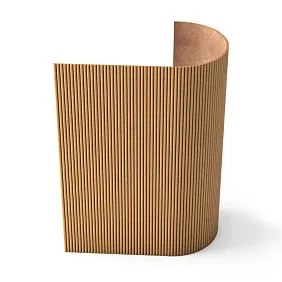
A straight wall is the simplest case. But interiors vary. Columns, arched spans, rounded corners, wave-like decorative partitions — all these are surfaces that cannot be covered with rigid modules without distorting the pattern and disrupting the geometry of the slats.
Flexible decorative slatted panels on a fabric base are the only correct solution for such tasks. The slats are fixed on a fabric base with sufficient gap for bending. The module wraps around any radius: the slat pattern continues through the bend seamlessly, without breaks or visible joints.
Where flexibledecorative panels for radius wallscreate the strongest effect:
-
Columns — the slatted pattern fully wraps around the column, turning a utilitarian structure into a decorative architectural element.
-
Arched spans — the slats pass through the arch without interruption, creating the impression that the panel 'grows' from a straight wall into an arched vault.
-
Rounded corners — one of the most common cases in modern apartments. A flexible panel smoothly transitions from one wall to another through a rounded corner.
-
Decorative curved partitions — wave-like or S-shaped partitions with slatted cladding create a sculptural decorative object in the space.
3D decorative slatted panels — when the combination of a curved surface and a relief profile creates a true sculptural effect. This is the highest level of decorative application for slatted systems.
What ruins the decorative effect even with good panels
An honest and tough block. Because a good panel in the wrong context means money and time spent on redoing it.
Too frequent and dense rhythm in a small room. Thin slats with small gaps in a 10–12 sq.m. space create excessive visual activity. The wall 'noises,' the room feels oppressive. For small rooms — moderate spacing and a thin profile.
Wrong profile for the wrong style. A semi-circular profile in a strict office looks domestic and out of place. A rectangular one in a cozy bedroom feels harsh and unwelcoming. The profile must match the character of the space.
Conflict between slats and furniture geometry. Vertical slats on the wall + strongly horizontal furniture (a long sofa, a wide dresser flush against the wall) — a geometric conflict. Distance or coordination of geometries solves the problem.
Poor side lighting. Strictly frontal, flat lighting kills the relief. Without shadow, there is no decorativeness. This is not a matter of taste — it's physics.
Too much wood. An oak slatted wall + oak flooring + oak furniture without a single tonal logic — an overloaded interior. Either everything is coordinated, or the wall is neutral.
Attempting to make every wall decorative. Four slatted walls in a living room is not 'rich,' it's a 'cage.' One accent surface surrounded by neutral planes — the correct architectural proportion.
Unrelated color. A panel in a random shade that doesn't fit with the floor, walls, or furniture. Choosing the color of a slatted panel is part of the overall color scheme of the interior, not a separate decision.
Lack of logic between the panel and the rest of the finish. Decorative slats in natural oak + plastic baseboards + PVC ceiling panels. A material disconnect destroys any decorative effect. Baseboards, moldings, cornices — everything must be coordinated with the slatted panel. This is why the STAVROS catalog complements slatted panels withwooden moldingmade from the same wood species — to create a unified finishing system.
How to choose decorative slatted panels for a specific interior
Practical selection matrix without unnecessary words:
Need a graphic, concise effect:
→ MDF for painting + rectangular profile + dark or neutral tone.
Need soft, warm, pliable light on the wall:
→ Decorative panels made of semi-circular battens + oak or MDF in a warm tone.
Need a warm natural interior with a natural language:
→ Solid oak + semi-circular or rectangular profile + oil or tinting.
Wall of complex shape: column, arch, radius:
→ Flexible decorative slatted panels on a fabric base — the only correct option.
Need a calm decorative background without an active accent:
→ Wide spacing + light tone + moderate profile. MDF in neutral white.
Need a strong, expressive accent:
→ Dark color (anthracite, graphite, dark oak) + deep relief + local accent lighting with side spotlights.
For minimalism and Japandi:
→ MDF for painting in a neutral tone or oak with gray tinting + clean minimalist profile.
For a restaurant or showroom:
→ Natural oak or MDF in corporate RAL + rectangular or trapezoidal profile + professional directional lighting.
Where to view decorative slatted wall panels
Once the choice is made — the next step is concrete.decorative slatted panels in the STAVROS catalog are available in all formats described in this article:
-
MDF for painting — for precise color, monochrome, modern styles;
-
Solid oak — for natural texture, tactility, warm character;
-
Rigid decorative slatted panels — for all flat surfaces: walls, ceilings, facades;
-
Flexible slatted panels on a fabric base — for columns, arches, radius corners;
-
Panels made of semi-circular battens — for soft, delicate chiaroscuro;
-
Solutions for residential and commercial interiors — from one accent wall to a full-scale commercial project.
Slatted panels can be complemented with solid wood millwork — baseboards, moldings, and wooden frames in the same wood species. A unified material system, not a collection of disparate elements.
About the company STAVROS
Behind the decorative expressiveness of a slatted surface always lies manufacturing precision. Slat spacing, profile geometry, milling quality, substrate stability — all of this determines how well the decorative effect meets expectations.
STAVROS is a Russian manufacturer of MDF and solid wood products for interior finishing. The company produces rigid and flexible slatted panels, paintable MDF and solid oak, as well as a full rangewooden trimfor a complete interior finishing system.
STAVROS production standards include profile accuracy to tenths of a millimeter, pitch control in each module, surface and edge finishing quality. Rigid and flexible constructions, standard and custom formats, MDF and solid wood — all available in one place.
Delivery across Russia. Consultation on selection — before placing an order.
FAQ: Answers to popular questions
How do decorative slatted panels differ from ordinary slats?
A finished slatted panel is a module with slats fixed on a backing with factory-set spacing. During installation, the entire module is mounted. Ordinary slats are installed individually with manual pitch control. The difference: precision, speed, and predictability of the result.
Can you hang pictures or shelves on a slatted wall?
Yes, if the base (wall or frame) allows for load-bearing fastening. The fastener passes through the slat into the base. For lightweight items — use nail anchors. For shelves with load — fasten to the frame or directly into the wall through gaps.
How to care for decorative slatted panels?
Paintable MDF: dry or slightly damp soft cloth. No abrasives. Oil-finished oak: dry cloth, periodic oil renewal every 3–5 years. Lacquered oak — more resistant; for scratches — local restoration.
What slat spacing to choose for a 2.7 m ceiling?
For standard ceiling height: slat width 25–40 mm, gap 15–30 mm — works well in most residential spaces. For an accent wall with LED lighting — can go slightly larger, up to 50 mm slats.
Is special wall preparation needed?
For adhesive mounting — clean, dry wall without crumbling fragments, level variation not exceeding 3–5 mm. For frame mounting — wall condition is not critical, the frame is leveled independently of the base.
Can decorative slatted panels be used in a children's room?
Yes — provided eco-friendly finishes are used. MDF with non-toxic matte water-based paint or oak with water-based oil finish. Rounded profile — for a safe, soft surface without sharp edges.
How to properly illuminate a decorative slatted wall?
Side directional lighting — the most expressive option. Concealed LED strip along the top or bottom perimeter — soft diffused effect. Avoid strictly frontal flat lighting: it kills shadows and the decorative effect.