












































































Article Contents:
- Why MDF is the Optimal Material for Slatted Panels
- Density, Structure, Sanding — Technical Characteristics of MDF
- Types of Slatted MDF Panels: Flat Slats, Semi-Round Mouldings, 3D Relief
- Flat Rectangular Slats
- Semi-Round and Shaped Mouldings
- 3D Relief Panels
- Panels on a Load-Bearing Base — Ready-Made Modules
- Which Enamels to Use for Painting Slatted MDF Panels
- Acrylic Enamels — Affordability and Eco-Friendliness
- Alkyd Enamels — Proven Durability
- Two-Component Polyurethane — Professional Maximum
- Primer — A Mandatory Step, Not an Option
- Popular Color Solutions for Slatted MDF Panels
- White — Timeless Classic with Nuances
- Graphite and Gray — The Dignity of Neutrality
- Black — Absolute Accent
- Accent and Bold Colors
- Sizes and Formats of Slatted MDF Panels
- Application of Slatted MDF Panels for Walls, Facades, and Ceilings
- On Walls of Living Spaces
- On Furniture Facades
- On the Ceiling
- Installation of Slatted MDF Panels: From Preparation to Finish
- Foundation Preparation
- Mounting methods
- Joining and Finish Processing
- Care and Coating Restoration
- Where to Buy Slatted MDF Panels — What to Look for in the Catalog
- Frequently Asked Questions

There are materials that speak for themselves — without unnecessary words, without excessive decor, without pretensions.Lath MDF Panels— belongs precisely to this category. Clean lines, a perfectly smooth surface, ready to accept any color — from polar white to coal black. This material has become a favorite in modern design for a reason: it combines the technological precision of industrial production with endless freedom of creative expression. Paint it in the desired shade — and the wall will speak exactly with the voice you envisioned.
This article is a comprehensive practical guide to paintable MDF slatted panels. We'll cover the material's technical specifications, panel types, paint varieties, color solutions, formats, installation, and maintenance. No fluff, no template enthusiasm—just specifics and an expert perspective from someone with decades of experience with this material.


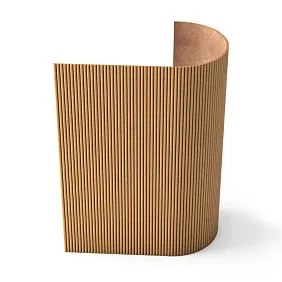
Why MDF is the Optimal Material for Slatted Panels
Ask yourself honestly: what do you need from a material for slatted cladding? Geometric precision—so the slats are perfectly straight. Stability—so the panels don't warp or twist after installation. Adhesion—so the paint applies evenly, without bubbles or drips. Affordability—so the project doesn't become a financial ordeal. MDF meets all these requirements at once, which is precisely why it has taken the leading position in the decorative slatted panel market.
MDF (Medium Density Fibreboard) is produced by hot-pressing fine wood fibers with thermosetting resin binders. The result is a homogeneous, dense, fiber-free board without knots, cracks, or voids. This fundamentally distinguishes MDF from solid wood, where the natural structural heterogeneity always creates a risk of uneven paint absorption.
It is precisely the homogeneity of MDF that is its main advantage for painting. Paint adheres to this surface predictably and evenly. The surface doesn't 'pull' paint in some spots and repel it in others. The final coating turns out smooth, with an even gloss or matte finish—depending on the chosen enamel. Professional painters and furniture manufacturers have long appreciated this fact: most premium-level painted facades are made from MDF, not solid wood.
The second argument is dimensional stability. MDF hardly reacts to seasonal humidity fluctuations in living spaces. Slatted panels made from it don't warp in winter when heating is on and don't swell in summer during high humidity. This means that a wall installed a year later will look exactly the same as on the day of installation.
The third argument is processability. MDF mills, cuts, sands, and paints excellently on automated production lines. The slats come out with perfectly sharp edges, clean ends, and a smooth face surface. This is unattainable with manual fabrication from natural wood with its inherent defects.




Density, Structure, Sanding—Technical Characteristics of MDF
Not all MDF is the same. Board density is the key parameter determining strength, milling quality, and coating durability. The standard density range for MDF is 650 to 800 kg/m³. For paintable slatted panels, a density of 720–780 kg/m³ is optimal: such material holds the slat shape well, doesn't crumble when milling edges, and ensures reliable adhesion of the paint coating.
Boards with a density below 680 kg/m³—so-called 'light MDF'—are cheaper but have a loose structure. When milling ends and edges, such material yields a 'fuzzy' surface that is extremely difficult to sand to perfect smoothness. Paint on loose MDF requires more primer coats, increasing labor intensity and painting costs.
Moisture-resistant MDF (labeled HMR or MR, green in cross-section) is a special modification with increased moisture resistance. It is used for MDF slatted panels in kitchen areas, bathrooms with moderate humidity, and on balconies. Moisture resistance is achieved by adding paraffin additives to the board composition, which slightly reduces paint adhesion—this factor is considered when choosing a primer.
Before painting, the MDF surface is sanded. Production sanding is done with wide abrasive belts of grit P150–P180, providing a surface roughness of Ra 0.8–1.2 µm—ideal for paint adhesion. Manual finishing sanding before the first primer coat is done with grit P220–P240. After primer application—P320–P400. This sequence is not a whim but a technological necessity to achieve a coating without visible substrate texture.
MDF ends require special attention. The fibers on the board's end cut are more porous than on the face surface and absorb paint more intensively. Professional end treatment includes applying a special end primer or two to three additional coats of standard primer with intermediate sanding. Skimping at this stage inevitably leads to coating unevenness—ends will appear darker or more matte than the face surface.
Our factory also produces:


Types of MDF Slatted Panels: Flat Slats, Half-Round Molding, 3D Relief
Decorative MDF slatted panels come in several fundamentally different structural designs, each creating its own visual character and suiting specific design tasks.
Get Consultation
Flat Rectangular Slats
The classic. Slats with a rectangular cross-section, straight edges, and clear corners—this is the basic, most common design. The strict geometry of flat slats fits perfectly into minimalism, Scandinavian style, contemporary, and loft. Slats 30–50 mm wide with an 8–15 mm gap create a light, graphic pattern. Wide slats 70–100 mm with a narrow 5–8 mm gap give a more monumental, weighty feel.
Flat slats are the best choice for furniture facades: their geometry perfectly complements rectilinear furniture in modern styles. Vertical placement on a wardrobe or kitchen unit facade creates a sense of lightness and visually elongates the space.
Half-Round and Shaped Molding
Slats with rounded or shaped profiles—this is a transition from strict geometry to plastic forms. Half-round molding (rounding radius 8–15 mm) softens the rigid pattern, makes the surface more tactilely appealing and visually warmer. Such slats are suitable for bedrooms, children's rooms, living rooms in fusion or organic design styles.
Shaped profiles—trapezoidal, with beveled edges, with a center groove—create a complex play of shadows. With side lighting, each slat casts its own shadow of its shape, and the wall gains a lively, changing relief. This is the highest level of working with light and shadow in slatted design.
3D Relief Panels
Three-dimensional slatted panels are not just slats on a base but a complex multi-level structure. Slats of different heights, protruding to different depths from the supporting plane, create a true architectural relief. The effect is comparable to bas-relief: the surface lives and changes with the lighting angle.
MDF 3D panels for painting gain maximum benefit precisely from monochrome finishing: when all relief elements are painted one color, the form is perceived purely, without color noise. White 3D relief on a white wall is the quintessence of Scandinavian minimalism. Charcoal-black relief is loft in its absolute expression.
Panels on a Supporting Base—Ready-Made Modules
Most manufacturers releaseLath MDF Panelsas ready-made modules: the slats are already fixed on a supporting MDF base 9–12 mm thick with a set spacing. Module width is typically 300 or 600 mm, length—2400, 2700, or 3000 mm. This format radically simplifies installation: there's no need to mark each slat separately, maintain spacing, or control parallelism. The module is installed as a single unit, and joints between modules are practically invisible with proper installation.
Which Enamels to Paint MDF Slatted Panels With
Choosing paint isn't a matter of price or availability at the nearest hardware store. It's a technological decision that determines the appearance, durability, and practicality of the coating. Not all paints are suitable for MDF, and knowing the difference between them is essential.
Acrylic Enamels—Affordability and Eco-Friendliness
Water-soluble acrylic enamels are the most common choice for painting MDF in household conditions and small-scale production. Their main advantages: no strong odor, fast drying (30–60 minutes to dust-free, 4–6 hours to full cure at +20°C), easy tool cleaning with water, and the widest selection of colors from RAL and NCS catalogs.
For slatted panels, choose acrylic enamels with a coating hardness of at least 2H on the pencil hardness scale. Matte and semi-matte finishes (5–30% gloss at 60° glossmeter) are more practical than glossy ones: they hide minor surface defects and show less marking during use. Glossy acrylic enamels give a striking result but require a perfectly prepared surface—any flaw under gloss is twice as visible.
The limitation of acrylic enamels is relatively low resistance to mechanical impacts and chemical aggressors compared to two-component systems. For living room or bedroom walls, this is insignificant. For furniture fronts or panels in high-traffic hallways, it's a reason to consider a more durable coating.
Alkyd enamels – proven durability
Solvent-based alkyd enamels are the traditional choice of professional painters for MDF fronts. They form a harder and more durable coating than water-soluble acrylics, better withstand wiping with a damp cloth and household chemicals. Full cure time is 24–48 hours, odor during work is intense, requiring good ventilation.
Alkyd enamels on MDF are used in the mid-price segment of furniture production. For slatted wall panels, their use is justified in rooms with higher wear resistance requirements: kitchens, hallways, children's rooms. The finish of quality alkyd enamels is semi-gloss or glossy; matte options are less common.
Two-component polyurethane – professional maximum
Two-component polyurethane (2K PU) enamels are the standard in premium-level furniture production. The coating forms as a result of a chemical reaction between the base and hardener, creating a cross-linked polymer film of exceptional hardness, elasticity, and chemical resistance. Such a coating withstands harsh household conditions: wiping with solvents, impacts, scratching with keys.
For professional painting of paintable slatted MDF panels in factory conditions, 2K PU is the optimal choice. Matte two-component open-pore (Open Pore) coatings create a soft, almost tactile surface resembling polished stone. This is exactly the finish used in top-tier furniture.
Limitation: pot life of mixed material is 4–8 hours, work requires professional spray equipment and protective gear. In household conditions, applying 2K PU is practically impossible without special experience.
Primer – a mandatory step, not an option
Regardless of the chosen finish material, priming MDF before painting is not a recommendation but a technological obligation. Specialized MDF primer (acrylic or nitrocellulose) seals surface pores, evens out absorbency, and ensures adhesion of the finish paint to the substrate. Without primer, the paint will apply unevenly, quickly lose gloss, and begin to peel at the edges.
Optimal scheme: 1–2 coats of primer → sanding P320 → 1 coat of finish paint → sanding P400 → final coat. For glossy finishes, add another cycle: sealer primer → wet sanding P600 → final gloss. This takes time but ensures a result that will please for years.
Popular color solutions for slatted MDF panels
Color is the language of space. A correctly chosen tone for slatted panels can change the perception of a room as radically as a re-layout. But color in slatted structures works differently than on a solid plane: gaps between slats create shadow, and the final perception of the tone is always slightly darker and deeper than on a flat sample.
White – eternal classic with nuances
White slatted panels are the absolute leader in demand. But 'white' is not one paint; it's a whole world of shades. Warm white (RAL 9001, NCS S 0502-Y) with a creamy undertone creates coziness and is associated with Scandinavian wooden interiors. Cold pure white (RAL 9010, NCS S 0500-N) is clinical minimalism, appropriate in modern interiors with abundant natural light. White with a gray undertone (RAL 9016, NCS S 0502-B) is a neutral, universal tone that works in any context.
Matte finish on white panels is the correct choice in most cases. White gloss is striking but merciless to dust and fingerprints. White matte is more practical and creates a warmer, softer feel.
Graphite and gray – the dignity of neutrality
The gray palette is experiencing a steady rise in interior design in recent years. Light gray (RAL 7035, NCS S 1500-N) refreshes space, adds airiness. Medium gray (RAL 7040, NCS S 3000-N) is a noble neutral that works equally well with wood, metal, and textiles. Dark graphite (RAL 7024, NCS S 6502-B) is strength and character, a dramatic accent requiring a skillful balance with light surfaces and light sources.
Slatted MDF panels in a graphite tone on an accent wall behind a sofa or desk is a powerful design technique. A dark slatted wall absorbs light, deepens space, and creates a stage backdrop effect, against which everything else gains special expressiveness.
Black – absolute accent
Black slatted panels are for those unafraid of statements. RAL 9005 (Jet Black) in matte finish on MDF is something exceptional in expressiveness. A tactilely soft, visually deep surface absorbs any light and turns the wall into an architectural object. Such a solution requires courage and precise calculation: in a small dark room, black slats will create a claustrophobic effect, but in a spacious living room with high ceilings and large windows—it's an absolute masterpiece.
Black MDF is used in bars, restaurants, home theaters, design ateliers, and corporate meeting rooms that want to convey brand strength through interior.
Accent and bold colors
Slatted MDF panels are an ideal canvas for accent color. Terracotta (NCS S 4040-Y70R), dusty soot, deep blue (RAL 5011), olive (NCS S 4030-G50Y), powder pink—all these tones gain special resonance in slatted execution. Gaps between slats add a dimension of depth to the color: the surface ceases to be flat and begins to live.
Important rule: when choosing an accent color, consider the color of the backing substrate visible through the gaps. If the substrate is white and the slats are colored—gaps will be light stripes, visually lightening the structure. If the substrate is the same tone as the slats—monolithic effect. If the substrate is dark and the slats are light—maximum contrast and graphic quality.
Dimensions and formats of slatted MDF panels
Industrial standard length of MDF boards is 2440 and 2800 mm. Slatted modules are cut from these formats. Length of finished panels in most cases is 2400, 2700, or 3000 mm—to match standard room heights. Module width—300 or 600 mm—is chosen based on installation and transportation convenience.
Slat width depending on model: 20, 30, 40, 50, 60, 80, 100 mm. Gap between slats: 5, 8, 10, 12, 15, 20 mm. Slat thickness (protrusion over backing substrate): 14, 16, 19, 22 mm. Backing substrate thickness: 9, 12 mm. Total structure thickness (panel + slat): 23–34 mm—this is important to consider when designing trims, extensions, and junctions with other surfaces.
Custom formats are made to order: length up to 3600 mm, non-standard module width, special slat spacing. This is relevant for rooms with non-standard dimensions or for design projects where precise fitting without visible seams is important.
Application of MDF slatted panels for walls, facades, and ceilings
On the walls of residential premises
The wall is the main habitat of MDF slatted panels. Living room, bedroom, study, hallway — they work differently everywhere, but convincingly everywhere. An accent wall in the living room with white matte slats on a white base creates a subtle relief effect, almost imperceptible from a frontal view but expressive under side lighting. The same construction in a graphite tone is a completely different statement.
Behind the bed headboard in the bedroom, slatted panels create a soft 'framing' effect — an architectural accent that doesn't require paintings, rugs, or other decor. The wall becomes self-sufficient. In the hallway, vertical slats visually raise the ceiling and add a sense of spaciousness even in a narrow corridor. Importantly, MDF slatted panels for walls are easily combined with other finishing elements: moldings, cornices,MDF floor skirting board, which allows for creating cohesive, complete interior solutions.
On furniture facades
Slatted facades are one of the key trends in furniture production for 2024–2026. A sliding wardrobe with vertical slats in matte enamel, a kitchen with slatted upper facades matching the wall tone, a TV stand with horizontal slatted decor — all this has become the norm in mid- and high-price segment interiors. MDF for painting is the ideal material for furniture facades: it allows for matching the exact tone of the wall or adjacent surfaces, creating monochrome ensembles with minimal color noise.
Decorative MDF slatted panels on furniture are often complemented bywooden furniture handles— this creates an interesting dialogue between the painted surface and natural material, bringing tactile variety and a warm natural accent to the monochrome interior.
On the ceiling
A slatted ceiling made of paintable MDF is not the most obvious, but a very effective solution. A white slatted ceiling with a narrow gap creates a feeling of a light textured surface — not oppressive, but lively. Ceiling panels are mounted on a suspended frame made of galvanized profile; acoustic matting or lighting fixtures can be laid between the slats and the rough ceiling.
A special technique is using a slatted ceiling in the same tone as the walls. When the ceiling, walls, and even slatted structures are painted in a single color, the space acquires the character of a monolithic architectural object — intimate, enclosed, almost theatrical. This solution is popular in home theaters and media rooms, where it is important to eliminate any distracting visual elements. After installing slatted panels on the ceiling, it is logical to finish the trimwooden skirting boardin the same color — this creates a clear boundary between the wall and floor and gives the interior a finished look.
Installation of MDF slatted panels: from preparation to finish
Installation is the moment when material turns into an interior. Sloppy installation can ruin the most expensive material. Precise professional installation reveals even budget panels to their full potential.
Foundation Preparation
The base for MDF slatted panels must be level, strong, and dry. The permissible plane deviation is no more than 3 mm over a two-meter slat. Exceeding this tolerance requires either leveling the base with plaster or mounting on a lath frame with level adjustment.
Base moisture is a critically important parameter. Fresh plaster or screed must dry completely: at least 28 days at +20°C with normal ventilation. Installing MDF on a damp base will lead to deformation and panel delamination. Wall moisture before installation is measured with an electronic moisture meter — the permissible value is no more than 8%.
Material acclimatization: MDF panels must be kept in the room at working temperature and humidity for at least 24–48 hours before installation begins. This allows the material to assume dimensions corresponding to operating conditions and eliminates deformation after installation.
Methods of mounting
MDF slatted panels are installed in several ways depending on the construction and installation conditions.
Adhesive installation is the simplest method for level bases. Mounting adhesive like 'liquid nails' is applied to the back of the supporting base in a zigzag or dots; the panel is pressed against the wall and fixed with temporary spacers until the adhesive fully sets (12–24 hours). The method is convenient but irreversible: panel removal without damage is impossible.
Installation on a lath frame is the professional standard. A lath frame made of 40×20 mm wooden batten or 27×28 mm metal profile is attached to the wall level with a spacing of 400–600 mm. Panels are fixed to the frame with screws through the supporting base or with hidden clips. This method allows for precise leveling of the wall plane and, if necessary, running utilities in the space behind the panels.
Hidden fastening with clips is the most aesthetic solution. Special metal or plastic clips are inserted into the groove on the end of the supporting base and fixed to the frame with screws. The front side of the panel remains absolutely clean — without visible fastening elements.
Joining and finishing
Joints between modules are an area of special attention. With proper installation on a frame, the joint falls on a supporting element, providing rigid support for the ends of both panels. The gap in the joint is no more than 1–2 mm, filled with colored sealant matching the main coating.
Corner junctions are solved in several ways: metal corner profile, wooden corner molding matching the tone, edge banding, or shaped casing. The choice depends on the interior style: metal profile for high-tech and loft, wooden molding for warmer solutions.
After installation, it is recommended to paint the joints, ends, and visible fastening elements to match the main coating — this eliminates all traces of installation and gives the surface a monolithic appearance. A No. 10–12 brush with soft synthetic bristles is the optimal tool for touch-ups in hard-to-reach places.
Care and coating restoration
Paintable MDF slatted panels do not require complex care, but a few simple rules will significantly extend the coating's service life.
Daily care — wipe with a soft dry or slightly damp microfiber cloth. No abrasive sponges, metal brushes, or aggressive cleaning agents — they will damage the paint finish. To remove stubborn stains, use neutral household cleaners without solvents, applying them to the cloth, not directly onto the surface.
Local finish restoration — one of the main advantages of painted MDF over veneered and laminated surfaces. A scratch or scuff is eliminated by spot touch-up: the surface is sanded with fine P320 sandpaper, degreased, and one or two coats of matching paint are applied. With proper color matching, the repair spot becomes invisible.
Complete repainting after 5–8 years — another unique opportunity of paintable MDF. Changing the color of a wall with slatted panels does not require dismantling: it is enough to sand the old finish, prime it, and apply new paint. This radically updates the interior with minimal costs.
Where to buy MDF slatted panels — what to look for in the catalog
The market for MDF slatted panels is huge today, and it's easy to get lost in it. Several practical criteria will help you make the right choice.
First — the quality of the MDF substrate. Ask the seller for a certificate or material data sheet indicating density and formaldehyde emission class. For residential premises, only class E1 (no more than 8 mg of formaldehyde per 100 g of board) or E0 (no more than 3 mg) is permissible. Higher emission classes are unacceptable in enclosed living spaces.
Second — geometric accuracy. A quality panel should have perfectly straight slats without twisting or sagging. Check this right in the store: place a long builder's level against the face surface of several slats. A deviation of more than 1 mm per 1000 mm of length is a reason to refuse the purchase.
Third — the quality of edge finishing. The slat ends should be even, without chips or 'fuzziness'. If the manufacturer claims the panels are ready for painting, the ends should be pre-primed or sanded to the smoothness of the face surface.
Fourth — the availability of certificates and warranties. A serious manufacturer is always ready to provide product documentation and ensure post-warranty support.
Fifth — the possibility of ordering custom sizes. If your room has non-standard height or configuration, the manufacturer's ability to make panels to order is a critically important advantage. Find out if it is possible to order a wooden slat to your required parameters — this often decides the project outcome in favor of a seamless, joint-free result.custom wooden slatThe issue of delivery completeness deserves special attention. Slatted panels are not an isolated product. In an interior project, they work in conjunction with skirting boards, moldings, and cornices. The ability to buy all related elements from one manufacturer is a guarantee of color and stylistic unity for all finishing components.
Can MDF slatted panels be painted independently, without a paint booth?wooden baseboardYes. Acrylic enamel can be applied with a brush, roller, or spray gun under normal conditions. The main thing is to observe the temperature regime (+15...+25°C), avoid drafts and dust. A spray gun gives the most even finish; a brush is acceptable for small areas with proper application technique (always along the direction of the slats, without crosswise strokes).
Frequently asked questions
How many coats of paint are needed on MDF?
Standard scheme: 1–2 coats of primer + 2 coats of topcoat paint. For a glossy finish — up to 3–4 coats with intermediate sanding. It's not worth skimping on coats: a thin finish wears out quickly on the slat edges, which are subject to the greatest mechanical load.
Are MDF slatted panels flammable?
MDF belongs to flammability class G2–G3. For premises with increased fire safety requirements (stairwells, evacuation corridors, public buildings), fire-retardant MDF boards with flame-retardant impregnation are used — class G1 or NG.
Can MDF slatted panels be mounted on drywall?
Yes. Drywall is one of the best substrates for slatted panels: flat, lightweight, allows hiding utilities. Adhesive mounting is preferable on standard thickness drywall (12.5 mm); for heavy panels — mounting on battens through the drywall into the load-bearing profile.
What slat spacing to choose for a low ceiling (2.4 m)?
For rooms with ceiling heights up to 2.5 m, narrow slat spacing (8–10 mm) and their vertical orientation are recommended. This creates an illusion of vertical movement and visually stretches the space upward.
Can MDF slatted panels be glued over old paint?
Only if the old coating is firmly adhered and the surface is degreased. Peeling or chalky paint is a stop factor: it must be completely removed. Check the adhesion of the old coating using the cross-cut test with adhesive tape: if the tape pulls off the paint — the substrate needs to be cleaned.
What color of MDF slatted panels to choose for a small room?
For small rooms, light tones are preferable — white, light gray, pastel neutrals. Dark colors in a small space are appropriate only with high ceilings (from 2.8 m) and good lighting.
Are MDF slatted panels and classic furniture compatible?
Yes, with a skillful selection of profile and color. Slats with a shaped profile — trapezoidal or with a chamfer — fit organically into a classic context. They work especially expressively next to classic furniture.
classic furniture
in the required parameters — this often decides the project outcome in favor of a seamless, joint-free result.classic furniturein a unified color scheme.
STAVROS Company is a manufacturer and supplier of architectural decor made from wood and MDF with over twenty years of experience in the Russian market. The STAVROS catalog featuresLath MDF Panelsfor painting,MDF floor skirting boards, Solid wood skirting boards, Wooden planks, wooden furniture handlesand a full range of related decorative elements for creating cohesive interior solutions. STAVROS works with private clients, design studios, and furniture manufacturers across Russia and CIS countries, ensuring manufacturing precision, documented quality assurance, and expert support at every project stage — from material selection to final installation.


