












































































Article Contents:
- Oak as a material: density, hardness, durability
- How oak differs from veneer and decorative film
- Oak staining and finishing: oil, wax, varnish, stain
- Oil — nature in its pure form
- Wax — softness and tactility
- Varnish — maximum protection at the cost of compromise
- Stains and tinting compounds
- Popular color solutions for oak slat panels
- Scandinavian gray — cold elegance
- Natural oak — honey warmth
- Wenge — deep nobility
- Cognac and tobacco — warm aristocracy
- Brushing and special surface treatments
- Flexible oak slat panels on fabric backing
- Application in residential interiors
- Living room: wall as architectural manifesto
- Bedroom: wood as a cradle
- Kitchen: natural wood in high-demand areas
- Hallway and corridor: meeting the material
- Application in commercial interiors
- Restaurants and cafes: atmosphere as a product
- Boutiques and showrooms: wood as a setting
- Offices: wood as an argument
- Care and protection of oak slat panel surfaces
- Combining oak slat panels with other materials
- Oak and metal
- Oak and stone
- Oak and glass
- Oak and textiles
- Comparison Table: Oak Slat Panel Finishes
- Wooden Slat Panel Catalog: What to Look for When Choosing
- Frequently Asked Questions

Some things need no explanation. Oak is one of them. When your hand touches the surface of an oak board, when your gaze glides over the living pattern of its grain, when your nose catches the faint, distinct woody aroma—everything superfluous fades away. What remains is the essence: matter, time, and beauty.Oak Slat Panelscarry precisely this experience—not an imitation of nature, but nature itself, carefully integrated into the architecture of a modern interior.
Solid oak wooden slat panels are not a seasonal trend or a marketing ploy. They are a conscious choice for people who understand: an interior is created once and for a long time. For those willing to pay not for today's effect, but for quality that will bring joy in ten, twenty, thirty years. This article is for them. Detailed, honest, and professional.


Oak as a Material: Density, Hardness, Durability
Pedunculate oak (Quercus robur) is one of the most common and valuable species in European woodworking. Its reputation has been built over centuries: ships were built from oak, cathedrals were erected, furniture for royal palaces was made. This is no accident—it is the result of a unique combination of physical and mechanical properties that few other species can boast.
The density of oak in air-dry condition is 680–720 kg/m³. This means oak is about 30–40% heavier than pine, but it is precisely this density that provides its outstanding mechanical strength. Hardness on the Brinell scale is 3.7–4.0 units. For comparison: pine is 1.8–2.2, birch is 3.0–3.2. Oak is one and a half times harder than birch. This means thatsolid wood slat panelsmade of oak withstand mechanical loads that would be critical for softwoods: dents, scratches, impacts.
The durability class of oak according to the European standard EN 350 is the first, the highest. This indicates very high natural resistance to rot and biological degradation. Tannins—which are exceptionally abundant in oak wood—create a natural antiseptic barrier. This is precisely why oak has been used for centuries in shipbuilding and in conditions where other species quickly deteriorate.
The structure of oak wood is large-pored, with distinct vessels and clear annual rings. This structure creates that very expressive, recognizable grain pattern that makes an oak surface unique. Every board, every slat is a one-of-a-kind natural 'print' that will never be repeated. No film, no thin-cut veneer can fully reproduce this living uniqueness.
Shrinkage and wood movement are parameters that must be considered when designing slat constructions. Oak has tangential shrinkage of about 7–8% and radial shrinkage of about 4%. With proper drying to 8–10% moisture content and skilled installation with expansion gaps, wooden oak slat panels serve for decades without deformation or warping.




How Oak Differs from Veneer and Decorative Film
This question is often asked, and it must be answered honestly, without condescension towards alternatives and without exaggerating the virtues of solid wood. Each material has its place—it's important to understand exactly how they differ.
Veneer is a thin slice of natural wood, 0.6–3 mm thick, glued onto an MDF or plywood board. A veneered panel has a real wood surface, provides the correct grain pattern and tactile feel of wood. But—only a surface layer. To a depth of 0.6–1.5 mm. Beneath it lies a synthetic board. This means veneer cannot be deeply sanded during restoration: the layer is too thin. It's impossible to create a bevel or deep brushing that exceeds the veneer thickness. The edge of a veneered panel always requires masking—it inevitably reveals the synthetic substrate.
Decorative film (PVC film with wood grain print) is a polymer coating with a printed pattern imitating wood texture. Modern films achieve a high level of realism from a distance, but up close the difference is immediately felt: the pattern is too perfect, repetitive; there is no tactile fiber structure, no living aroma, no uniqueness of grain. If mechanically damaged, the film cannot be restored—only completely replaced.
Solid oak is wood through and through. A solid oak slat has a real grain pattern on its face, edges, and throughout its entire depth. It can be sanded, milled, brushed, and re-stained. After twenty years, a solid wood panel can be completely renewed—sanded and re-oiled, and it will look like new. Film will require replacement in five years. Veneer will require complete removal in ten.
The difference in cost is real, but it must be considered in the context of the product's lifecycle. Solid oak wooden slat panels are economically justified in the long term precisely due to their repairability and service life.
Our factory also produces:


Staining and Finishing Oak: Oil, Wax, Varnish, Stain
Finishing oak is not a final touch, but an independent artistic decision that radically changes the ultimate character of the material. The same oak under different finishes looks like fundamentally different products. Let's examine each option in detail.
Get Consultation
Oil — Nature in Its Pure Form
Oil finish is an impregnation, not a film. Oil penetrates the wood fibers to a depth of 1–3 mm, polymerizes within the wood structure, and protects it from within. The surface remains 'open': you can tactilely feel the living wood fibers, the vessel pattern, the relief. Oil enhances the natural tone of oak, enriches it, and imparts a soft matte sheen.
Oil finishes come in both clear (preserving the natural wood tone) and tinted varieties. Tinted oils offer the widest range of results: from barely noticeable lightening (white oil creates a Scandinavian 'bleached' effect) to deep darkening (black oil—a brutal, almost industrial aesthetic). Oil can be applied independently—it's one of the few professional finishes accessible for skilled DIY.
Maintenance of oil finish: every 1–2 years—application of maintenance oil without sanding. For local damage—spot treatment. The matte surface hides minor scratches. Complete renewal after 5–7 years involves light sanding and re-impregnation. No removal, no replacement.
Wax — Softness and Tactility
Wax finish is similar to oil in principle, but creates a softer, silkier surface feel. Wax forms a thin protective film on the surface of the fibers, giving the surface a deep matte luster—not gloss, but a 'living' light from within. Oak under wax looks especially warm and noble.
Wax compositions can be natural (carnauba, beeswax) or synthetic. For wooden wall slat panels in residential spaces with normal use, natural waxes are the optimal choice. They are environmentally safe, provide a soft natural result, and are easy to renew.
Varnish — Maximum Protection at the Cost of Compromise
Lacquer coating creates a closed polymer film on top of the wood. The wood beneath the lacquer is maximally protected—from moisture, mechanical impacts, and chemicals. The surface becomes hard and durable. Lacquers are available in matte, semi-matte, and glossy finishes. Glossy lacquer on oak is a striking but demanding solution: every scratch is perfectly visible, and maintenance is complex.
A fundamental drawback of lacquer is the loss of tactility. The surface stops 'breathing'; tactically, it feels like glass, not wood. This negates one of the main advantages of solid wood—its living, natural texture. Therefore, professional designers increasingly prefer oil and wax for solid oak in residential interiors, reserving lacquer for heavily used surfaces.
Stain and tinting compositions
Stain (water-based or alcohol-based) penetrates the wood structure and colors the fibers without obscuring the natural grain. Unlike tinted oil, stain provides a more saturated, intense color. Oak particularly well accepts dark stains—wenge, rosewood, ebony: the dark tone emphasizes the large vessels and annual rings, creating a striking graphic effect.
After applying stain, a final sealing coat—oil, wax, or lacquer—is mandatory. Stain itself is not a protective coating, only a coloring layer.
Popular color solutions for oak slat panels
The color of an oak slat in the finished product is the result of the interaction between the wood's natural tone, the type of surface treatment (brushing, planing, sandblasting), and the applied coating. Let's examine the most in-demand combinations.
Scandinavian grey — cold elegance
One of the most requested color solutions for oak slat structures. Achieved using white or grey tinted oil, sometimes combined with preliminary ammonia treatment (fuming), which gives oak its characteristic grey-brown tone through a chemical reaction between tannins and ammonia.
Grey-steel oak with pronounced rings and vessels is the quintessence of Scandinavian interior: cold restraint that paradoxically creates a sense of warmth. Such oak slat panels perfectly combine with white surfaces, linen, sheep's wool, matte concrete, and stainless steel. This is a style where every element serves a function—and there is not a single superfluous one.
Natural oak — honey warmth
Oak in its natural tone—light golden, with a warm honey undertone—is a timeless classic. Coating: colorless or slightly tinted oil, sometimes with a small amount of yellow or brown pigment added to enrich the natural tone. Surface—matte or satin (barely noticeable soft sheen).
Natural oak is a universal solution, equally organic in Scandinavian minimalism, modern classic, fusion style, and eco-style. This is a case where nature has done everything itself, and the designer's task is not to disrupt this balance.
Wenge — deep nobility
Dark oak in the color of wenge—bitter chocolate with almost black veins—is a statement, not a neutral background. Such wooden slat wall panels establish a special atmosphere: enveloping, intimate, rich. Dark oak requires proper lighting—with insufficient light, the surface 'disappears,' losing its pattern. With good directional lighting, it reveals its full beauty.
Achieved with a deep dark stain followed by an oil coating. It is important to preserve the visibility of the grain pattern—this is what distinguishes tinted oak from painted MDF. Dark oak in slat form is a favorite of designers working in the 'hard luxury' style: without superfluous details, focusing on material and form.
Cognac and tobacco — warm aristocracy
Cognac tones—warm, amber, with a reddish-brown undertone—evoke associations with traditional European interiors. English clubs, Italian villas, French castles—everywhere oak is of this very tone. Achieved with warm alcohol- or water-based stains combined with a finishing oil or semi-matte polyurethane lacquer.
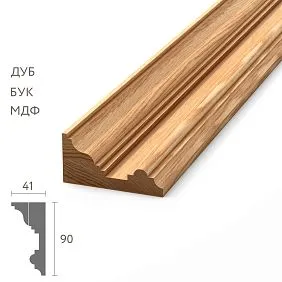
Cognac-colored solid oak slat panels are appropriate in interiors where an atmosphere of history and tradition is important. They are organically complemented bySolid Wood Items—furniture handles, baseboards, moldings made from the same species and in the same tonal range. Unity of material creates that integrity of interior which is impossible to achieve by mixing different bases.
Brushing and special surface treatments
Brushing—removing soft fibers from the wood surface with metal brushes while preserving the hard fibers—creates a textured surface with pronounced annual rings and vessels. Brushed oak is tactually richer than smooth oak: the surface has a tangible relief, and this textured feel intensifies over time with the natural wear of the soft fibers.
Brushing pairs well with dark tinting: after brush treatment, the surface is pigmented, with the dark pigment concentrating more strongly in the depressions of the soft fibers, emphasizing the pattern. The result is a very expressive, almost sculptural texture, which in slat form creates a surface with rare plastic strength.
Sandblasting works on a similar principle but yields a more uniform, soft relief. Thermal treatment (thermowood) changes the chemical composition of the wood: oak acquires a darker, more uniform tone without any pigments, and its stability and moisture resistance increase. A slat panel made of thermo-oak is a premium product with exceptional characteristics.
Flexible oak slat panels on fabric backing
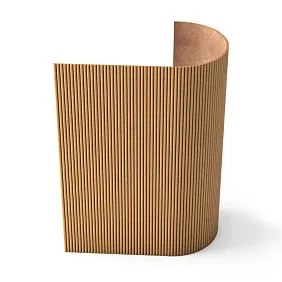
Flat surfaces are not the only territory for wooden slat panels. Modern technologies allow creating flexible slat structures from natural wood on a fabric or mesh backing, capable of taking on curvilinear forms.
A flexible oak slat panel consists of thin oak slats (thickness 6–10 mm, width 20–40 mm), glued at a set pitch onto an elastic fabric or fiberglass backing. Thanks to the minimal thickness of the slats and the flexible backing, the structure bends to a radius from 150–200 mm, allowing for cladding columns, arches, curved partitions, and sloped walls of attic floors.
Flexible oak panels are mounted with adhesive (two-component polyurethane or contact adhesive) with temporary fixation until it sets. Joints between panels are minimized by selecting the slat pitch: with proper installation, transitions are practically unnoticeable. Final treatment—oil or wax—is applied after installation and hides any minor tonal discrepancies between adjacent slats.
This solution enables the realization of architectural concepts impossible with rigid modular systems. A wooden slat panel on a curved surface is the highest level of wooden interior, a testament to the designer's professionalism and boldness.
Application in residential interiors
Living room: a wall as an architectural manifesto
The living room is the main space of a residential house, and it is here that the oak slat paneling reveals its full potential. An accent wall of oak slats behind the TV or sofa is not just decor. It is an architectural gesture that defines the character of the entire room.
Vertical slats of natural oak visually raise the ceiling and create a sense of a tall, spacious hall even in a standard apartment. Horizontal slats expand the space, giving the room the character of an open-plan studio. Combined solutions—slats of varying widths, zoning through changes in spacing—turn the wall into a full-fledged designer object.
In the living room, oak panels often work in tandem with a fireplace or decorative hearth: natural material and fire are a natural pair that has existed for millennia. The warm light of the flame and the amber texture of oak create an atmosphere that cannot be reproduced with synthetic materials. To complete the look, install wooden baseboard from the same wood species and in the same tonal range—this creates an impeccable vertical line from floor to ceiling.
Bedroom: Wood as a Cradle
In the bedroom, wooden slat wall panels work to create a sense of security and coziness. Behind the bed's headboard, oak in a natural tone offers a soft, calming rhythm of vertical lines that sets the mood for rest. This is not random aesthetics: design psychologists have long established a link between the presence of natural materials in the bedroom and sleep quality.
Wooden oak slat panels in the bedroom are preferable in light tones: natural or Scandinavian gray. Dark wenge in the bedroom requires balance—large windows, light textiles, proper lighting. Otherwise, the space can become oppressive. The slat width for the bedroom is moderate, 40–60 mm, with a gap of 8–12 mm. This creates a soft, unobtrusive rhythm, not a rigid graphic pattern.
Kitchen: Natural Wood in a High-Demand Zone
Using solid oak slat panels in the kitchen is a bold but justified decision, provided a number of conditions are met. Oak is not afraid of moisture to the extent that typical kitchen steam poses a threat to most materials. With proper treatment—double oil coating or waterproof varnish—oak slats serve perfectly in the kitchen area for years.
Slat panels in the kitchen are typically installed in the dining area or island zone—not directly above the cooktop, where steam concentration is highest. An oak backsplash between the countertop and wall cabinets requires particularly thorough oil coating with regular renewal. But the result is stunning: natural wood in the kitchen creates a sense of life that no other material provides.
An oak slatted kitchen facade is a special story. Vertical slats on kitchen cabinet facades transform a set of cabinets into a unified architectural structure. Combined with wooden furniture handles from the same oak—this is a perfectly cohesive look without a single synthetic accent.
Hallway and Corridor: The First Encounter with the Material
The hallway is the first thing a guest sees. Oak slat panels in the hallway are an immediate and unmistakable statement about the character of the interior and its owner. A short vertical accent from the floor to a height of 120–150 cm combined with a contrasting wall above is a classic technique that works flawlessly. The lower part made of oak slats is protected from mechanical damage (bags, shoes, umbrellas) and is easy to clean.
To complete the hallway finishing, along with the slat panels, Wooden baseboard is used—it unites the slatted plane with the flooring and creates a clean architectural line at the base of the wall.
Application in commercial interiors
Restaurants and Cafes: Atmosphere as a Product
In the restaurant business, atmosphere is as much a product as the food. And oak wooden slat panels have become one of the main tools for creating the desired atmosphere. Warm oak tones, soft lighting that wood diffuses in a special way—all of this works for the guest, making them feel cozy, stay longer, and return again.
Restaurants use slatted structures as a zoning element—slatted partitions divide the hall into private zones without losing airiness and light. Light, sound, and visual contact pass through the gaps between the slats—yet the space feels separate. This is a subtle architectural technique available only to slatted constructions.
Boutiques and Showrooms: Wood as a Setting
In a boutique, everything is subordinated to one task: to present the product in the most favorable light. Oak slat panels create a neutral yet expressive background—they do not compete with the product but rather set it off. The warm natural tone of wood is especially effective as a backdrop for jewelry, leather accessories, and handmade items.
In jewelry boutiques, dark oak slats in wenge create a contrast that emphasizes the shine of metals and stones. In textile showrooms, natural or Scandinavian gray oak is the perfect neutral background, not entering into color conflict with any fabric.
Offices: Wood as an Argument
A corporate interior with wooden slat wall panels is a serious reputational signal. A company that invests in natural materials in office space demonstrates status, taste, and long-term intentions. Slat panels in meeting rooms, the reception area, and the manager's office are an investment in an image that speaks without words.
From a practical standpoint, wooden slats in a meeting room solve another task: acoustic diffusion. The slatted structure breaks up direct sound reflections, reduces room reverberation, and makes speech more intelligible—which is critically important in business negotiations.
Care and Protection of Oak Slat Panel Surfaces
Proper care for oak slats is not difficult but systematic. A few simple rules will ensure a long life for the finish and preserve the natural beauty of the material.
Daily care includes wiping with a soft, dry, or slightly damp microfiber cloth. The damp cloth should be wrung out—excess moisture on the oak surface is undesirable. A vacuum with a soft brush attachment is a convenient tool for cleaning dust accumulating in the gaps between slats.
Surfaces with an oil finish are renewed every 1–2 years: a thin layer of special maintenance oil is applied to a clean, slightly degreased surface, left for 15–20 minutes, and then wiped dry. The procedure takes 30–60 minutes for a standard wall and restores a fresh, rich appearance to the surface.
Local damage — scratches, scuffs — is addressed through spot treatment: the damaged area is sanded with fine P320 sandpaper, dusted, and treated with oil. On oak with its high density, minor scratches are practically unnoticeable — unlike softwoods, where any mark immediately draws attention.
Wet cleaning with household chemicals — only neutral agents, pH 6–8. Acidic and alkaline compounds degrade the oil finish and cause a chemical reaction with oak tannins, leading to dark stains.
Combining oak slat panels with other materials
The ability to combine — that's what distinguishes a good interior from an outstanding one. Oak in slat form is a material that engages in dialogue with any partner but requires an understanding of its character.
Oak and metal
This is one of the strongest combinations in modern interiors. The warm organic nature of wood and the cold geometry of metal create a tension that makes the space feel alive. Brass and gold alongside dark wenge oak — that's classic 'hard luxury'. Stainless steel with matte natural oak — high-tech with a human face. Wrought iron with Scandinavian gray oak — an instrumental style with depth.
Metal appears alongside oak slats in the form of handles, brackets, end profiles, and light fixtures.Metal furniture handlesor wood combined with oak slat fronts — these are details not immediately noticed, but they create a sense of thoughtfulness and quality.
Oak and stone
Oak and natural stone — an archetypal natural union. Marble, travertine, slate alongside oak slats create the feeling of an interior that uses only nature's primordial elements. Light marble with veining next to natural oak — Mediterranean elegance. Dark slate with brushed oak — a mountain cabin in a modern interpretation.
In practice, stone and oak meet in zoning: a slatted oak wall — a stone countertop — an oak floor. This triad creates an impeccable natural ensemble without a single synthetic element.
Oak and glass
Glass gives oak air. Glass partitions, glass doors, glass inserts in furniture alongside oak slat panels create a sense of lightness and transparency unattainable with solid surfaces. Frosted glass softens the contrast, clear glass reveals the material to the maximum, allowing the oak's texture to be seen through the transparent plane.
Oak and textiles
Textiles are oak's tactile partner. Coarse linen fabric next to natural oak slats — a natural union of two organic materials. Velvet with dark oak — an unexpected but very convincing combination of luxury and nature. Wool with gray brushed oak — the Scandinavian ideal of coziness in its purest expression.
Comparison table: finishes for oak slat panels
| Finish | Tactility | Protection | Maintenance | Durability | Appearance |
|---|---|---|---|---|---|
| Oil | Open, natural | Medium | Every 1–2 years | 5–7 years until renewal | Matte natural |
| Wax | Silky, soft | Medium | Every 1–2 years | 3–5 years until renewal | Satin matte |
| Matte varnish | Closed, film-like | High | Minimal | 8–12 years | Matte even |
| Gloss varnish | Closed, glass-like | Very High | Intensive | 8–12 years | Glossy |
| Stain + oil | Open | Medium | Every 1–2 years | 5–7 years | Tinted matte |
Catalog of wooden slat panels: what to look for when choosing
Choosing solid oak slat panels is a process where it's important not to rush. Let's consider the key parameters to pay attention to in the catalog.
First - wood grade. Manufacturers offer several grades according to GOST or European standards. 'Extra' or 'Premium' grade - knot-free, with uniform grain pattern. 'Natural' grade allows small live knots. 'Rustic' grade - with knots, cracks, inclusions: intentionally rough, characteristic surface. Each grade creates its own visual character - the choice depends on the design concept, not on the quality of the wood itself.
Second - moisture content. Solid oak slat panels should be made from dry wood: 8-10% for residential premises, 12-14% for premises with variable heating conditions. Violation of this parameter guarantees deformation after installation - the slats will warp or crack.
Third - type of cut. Radial cut (radial board) gives a uniform pattern with straight parallel fibers and minimal shrinkage. Tangential cut - more expressive pattern with characteristic 'mountain' annual rings, but higher shrinkage. Tangential slats are used where visual expressiveness is important; radial - where geometric stability is a priority.
Fourth - slat profile. Rectangular, with beveled edges (chamfer), with rounded edges, trapezoidal, with center groove - each profile creates its own character under lighting.
Fifth - availability of certificates and documentation. A serious manufacturer provides data on moisture content, grade, species, emission class (for products with adhesive joints). This is not bureaucracy - it's a quality guarantee that can be verified.
Frequently asked questions
Can oak slat panels be installed in the bathroom?
Oak is allowed in bathrooms provided that waterproof varnish coating is applied and there is good ventilation. Direct contact with water is undesirable. Optimal placement is a decorative wall opposite the shower area.
How to distinguish real solid wood from veneer when purchasing?
Examine the ends of the slat: in solid wood, the grain pattern continues across the entire end cut. In veneered products, the end shows the substrate board with a thin strip of veneer along the front edge. Also run your fingernail over the surface: solid wood has natural vessel texture, veneer is thinner and less pronounced to the touch.
Are oak slat panels suitable for apartments with central heating?
Yes, provided the material is acclimatized before installation (48-72 hours in the room), compensation gaps are left during installation, and indoor air humidity is maintained at no less than 40-45% during the heating season. Air humidifiers are not a luxury but an essential element of proper wooden interior maintenance.
How much do solid oak slat panels cost?
The cost depends on wood grade, type of cut, slat profile, and coating type. Approximate range is from 7,500 to 25,000 rubles per linear or square meter depending on product complexity.
Can oak slats be installed independently?
Assembled systems with wooden slats on battens are available for DIY installation with basic carpentry skills. For complex structures - ceiling systems, flexible panels, multi-level reliefs - professional installation is recommended.
Oak slat panels and classic interior - are they compatible?
Absolutely. Oak slat structures organically combine withclassic furniturewith proper selection of slat profile and tonal palette. Slats with chamfer or rounded edges, in cognac or natural tone, next to carved details of classic furniture - this is a convincing, deep interior with character.
Is it necessary to treat the back side of slats?
It is recommended to apply one layer of primer or oil to the back side of slats before installation - this equalizes moisture exchange through the entire slat cross-section and reduces the risk of warping.
How to care for slats with wax coating?
Wipe with a dry soft cloth. Once a year - wax renewal: applying a thin layer of hard or liquid wax with polishing to shine using a soft cloth. Do not use silicone-based cleaning agents - they destroy the wax film.
Company STAVROS has been engaged in production and supply of architectural decorative products from natural wood and MDF since 2002. The STAVROS catalog presents a complete range of products for creating a holistic wooden interior:solid wood slat panelsoak and other species,Wooden furniture handles, solid wood floor skirting boards, Wooden planksmade to order,Classic Furnitureand much more. STAVROS works with designers, architects, and furniture manufacturers across Russia, providing top-quality materials with documented performance characteristics, professional technical support, and an individual approach to each project. Natural wood requires a partner you can trust. STAVROS is exactly that partner.


