Article Contents:
- What are wooden slat panels and why have they conquered the world of interior design
- Construction and principle
- Why slats are not just 'boards on the wall'
- Historical retrospective
- Oak — aristocrat among species
- Beech — warmth and plasticity
- Ash — wood with character
- Pine — budget-friendly solution
- Larch — for extreme conditions
- Comparative Table of Wood Species
- By design
- By slat direction
- By width and slat profile
- Living room — accent wall
- Entryway and Hallway — First Impression
- Bedroom — headboard wall
- Kitchen — zoning and accents
- Partitions for zoning
- Ceiling — a bold but effective move
- Commercial spaces
- What Are MDF Panels
- Key Differences
- What to choose?
- Slat Width
- Slat Thickness (Depth)
- Spacing Between Slats
- Slat and Panel Length
- Wood oil
- Varnish
- Toning (Stain)
- Painting
- Minimalism
- Scandinavian Style
- Loft
- Eco-style
- Modern classic (neoclassical)
- Japanese style (wabi-sabi)
- Wall preparation
- Method 1: Installation of ready-made panels on a base
- Method 2: Installation of individual slats on a frame
- Method 3: Frameless installation on a flat wall
- Lighting installation
- Step 1: Measure the wall
- Step 2: Determine the parameters of the slats
- Step 3: Calculate the number of slats
- Step 4: Add Extra
- Step 5: Calculate Coverage Area
- Daily care
- Periodic Care (Once a Month)
- Coating Refresh (Every 1–3 Years)
- What to Do If a Slat Is Damaged
- How It Works
- Where it matters
- How to enhance the acoustic effect
- Types of lighting
- Technical nuances
- Combination with flooring
- Combination with Furniture
- Combination with doors and door casings
- Combination with staircase
- Pricing factors
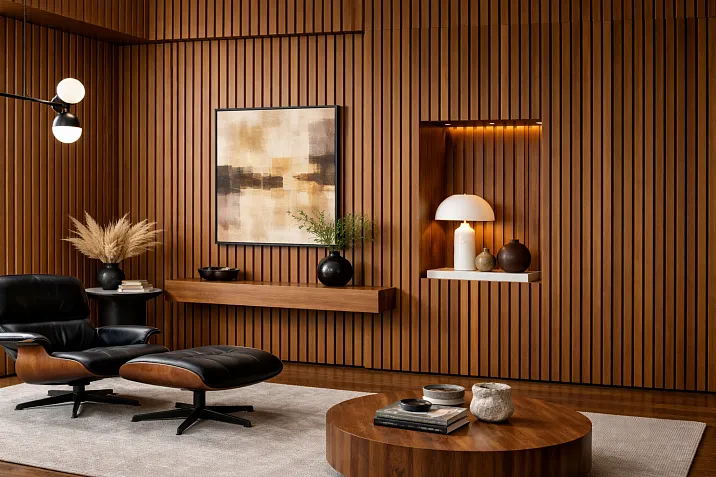
There are solutions that transform a space instantly. They don't require major renovations, don't force you to live for weeks in construction dust, and don't drain your budget completely. One such solution is slatted panels. Simple in construction but incredibly expressive in effect. They turn a smooth, boring wall into a three-dimensional textured surface that catches the eye, sets the rhythm of the room, and speaks more about the owner's taste than any painting.
But don't rush to dismiss wall slats as just another passing trend that will fade in a couple of seasons. Wood in interiors isn't a trend. It's an archetype. Humans have lived in wooden houses for millennia, and touching natural wood still evokes a subconscious feeling of peace and security.Rafter panelsSolid wood slatted panels are a modern interpretation of this timeless material, adapted to meet the demands of contemporary design.
In this article, we'll cover everything you need to know before buying: from choosing the wood species to installation nuances, from style combinations to practical calculations. If you're facing a choice — read carefully. No fluff, just specifics and experience.


What are wooden slat panels and why have they conquered the world of interior design




Construction and principle
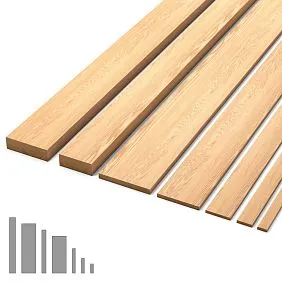
A slat panel is a set of wooden slats (lamelles, baffles) fixed at a certain distance from each other. The slats can be mounted on a prepared base (underlay) or attached individually directly to the wall via guides.
The principle behind the decorative effect is simple: the alternation of protruding elements and recesses between them creates a play of light and shadow. Depending on the width of the slats, the distance between them, and the installation direction (vertical, horizontal, diagonal) — the result can vary from a calm rhythmic pattern to a dynamic avant-garde composition.
Our factory also produces:


Why slats are not just 'boards on a wall'
Let's immediately distinguish the concepts. A solid wood slat panel is not cladding, not blockhouse, not imitation timber. It's a fundamentally different approach to wall finishing:
- Cladding creates a continuous plane without gaps. A slat panel creates a volumetric, airy structure.
- Blockhouse imitates a log wall and leans towards a rustic style. Slats are organic in minimalism, loft, Scandinavian design.
- Imitation timber is a flat surface with a chamfer. Slats have a pronounced three-dimensional effect.
It is the volume, rhythm, and airiness that make decorative wall battens so attractive to designers. They do not overload the space with a mass of wood, but delicately introduce natural material into the interior, leaving a feeling of lightness.
Get Consultation
Historical Retrospective
Reefer constructions in architecture are an ancient phenomenon. Japanese shōji with wooden slats, Mediterranean shutter-blinds, the latticework mashrabiyas of the Arab world—all are variations on the theme of wood organized into rhythmic linear structures. Modern reefer panels for interiors are the direct heirs of these traditions, reinterpreted through the lens of minimalism and functionality.
What Wood Are Reefer Panels Made From: A Comparison of Species
The choice of wood species is a fundamental decision that determines the appearance, durability, tactile feel, and cost. Let's consider the main options used in the production of of solid wood.
Oak — the aristocrat among species
Oak is the first thing that comes to mind when talking about quality wood. And for good reason.
Advantages of oak for reefer panels:
- Hardness on the Janka scale — 1360, which ensures resistance to mechanical damage
- Pronounced texture with a characteristic pattern that is beautiful on its own even without staining
- High moisture resistance after proper treatment
- Noble aging — oak acquires a deeper tone over the years
- Service life — decades with minimal care
Nuances: Oak is a heavy wood species. This must be considered when calculating wall load and selecting fasteners. The cost of oak slat panels is in the upper price segment, but it is an investment that pays off with durability and aesthetics.
Beech — warmth and plasticity
Beech undeservedly lags behind oak in popularity. It is a species with excellent working characteristics.
Why beech is good for slat panels:
- Uniform fine-pored structure provides a smooth tactile surface
- Warm pinkish hue that creates a cozy atmosphere
- Accepts tinting and painting well
- Hardness comparable to oak (1300 on the Janka scale)
- More affordable price compared to oak
Limitation: beech is sensitive to moisture, so it's better not to use it for bathrooms and kitchen areas without special treatment.
Ash is a wood with character
Ash is a species for those who appreciate expressiveness.
Distinctive features:
- Contrasting, bright texture - the annual ring pattern creates an impressive design
- High impact resistance and elasticity
- Light, almost white color in its natural state - ideal for Scandinavian style
- Easily tinted to any shade
- Excellent resistance to deformation
Pine is a budget-friendly solution
Pine is the most affordable option, and with proper handling, it can look quite respectable.
Advantages:
- Low cost
- Lightweight (minimal load on the wall)
- Pleasant coniferous aroma
- Soft texture, easy to work with
Disadvantages:
- Softwood — easily scratched and dented
- Knotty (requires careful sorting)
- Tendency to yellow over time
- Resin release when heated
For residential areas with moderate traffic, pine is a perfectly workable option. But if you want panels that will look flawless in ten years, consider oak or ash.
Larch is for extreme conditions.
Larch is a unique wood species that is not afraid of water. This makes it indispensable in high-humidity areas.
Key properties:
- Natural resin content provides resistance to moisture and fungus
- Hardness is higher than pine, closer to oak
- Beautiful reddish-honey hue
- Does not require antiseptic treatment (natural resistance to rot)
Comparative table of wood species
| Characteristic | Oak | Beech | Ash | Pine | Larch |
|---|---|---|---|---|---|
| Hardness | High | High | High | Low | Medium |
| Moisture resistance | High | Medium | Medium | Low | Very High |
| Texture | Pronounced | Homogeneous | Contrasting | Moderate | Pronounced |
| Weight | Heavy | Medium | Medium | Lightweight | Medium |
| Price | High | Medium | Medium to high | Low | Medium |
| Durability | Very High | High | High | Medium | Very High |
Types of slatted panels: what are they and how do they differ
By construction
Panels on a base (substrate):
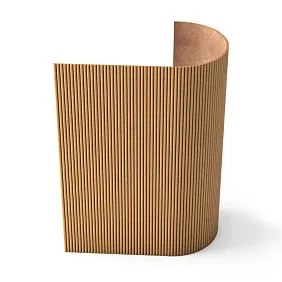
The slats are fixed to a flat base—plywood, MDF, or solid wood board. The finished panel is a module that is attached to the wall as a whole. This simplifies installation, guarantees precise spacing between the slats, and speeds up the work many times over. The optimal choice for those who value their time and want a perfect result without complications.
Individual slats (battens):
Each slat is attached to the wall individually via guides or a frame. This method offers maximum freedom—you can vary the spacing, combine different slat widths, and create non-standard compositions. However, it requires significantly more installation time and high precision.
By slat direction
Vertical slatted panels are the classic option. Vertical lines visually stretch the wall upward, creating a sense of a higher ceiling. Ideal for standard apartments with ceiling heights of 2.5–2.7 m.
Horizontal slats visually expand the space. Suitable for narrow rooms: corridors, hallways, small kitchens. But in rooms with low ceilings, horizontal placement can 'compress' the space.
Diagonal slats create dynamism, energy, and movement. A bold solution that is appropriate in accent zones: behind the TV, at the head of the bed, in the reception area. For decorating an entire wall, diagonal placement may be excessive.
By width and cross-section of battens
The dimensions of battens determine the visual weight of the structure and the character of the space:
- Thin battens (15–25 mm): airiness, lightness, sophistication. Suitable for small rooms, Scandinavian style, minimalism. However, battens that are too thin (less than 15 mm) are prone to deformation and look fragile.
- Medium battens (30–40 mm): a universal option. They create sufficient volume without overloading the space. Work in practically any style.
- Wide battens (50–80 mm): massiveness, solidity, respectability. Appropriate in spacious rooms — country houses, lofts, commercial spaces.
Where batten panels are used: zones and rooms
Living room — central wall
Living room — the first place that comes to mind when thinking about decorative battens. And for good reason. Batten panels in the living room create an accent wall that becomes the visual center of the room. Most often, battens are used to decorate the area behind the TV or sofa.
Tip: if it's the wall behind the TV — use dark tinted battens (wenge, walnut, graphite). They don't distract from the screen and create a noble background. If it's the wall behind the sofa — you can choose a natural wood shade or light tinting to add warmth.
Pay attention toSolid Wood Wall Panels— they organically complement slatted structures, allowing for a comprehensive wall finish that combines different textures.
Entryway and hallway — the first impression
The entryway is the most underrated room in an apartment. Yet, it shapes the first impression of the home. Slatted panels in the entryway solve several tasks at once:
- Create an expressive decorative accent
- Hide wall imperfections
- Visually expand narrow spaces (horizontal slats) or increase height (vertical)
- Serve as a functional base for hooks, shelves, key holders
A practical move: attach clothing hooks directly to the slats — it looks stylish and functional.
Bedroom — bed headboard
A slatted headboard is one of the most striking techniques in bedroom design. Vertical slats behind the bed create a sense of an alcove, a cozy, protected space. Complement the structure with hidden LED lighting — and the bedroom transforms into a boutique hotel room.
The height of the slatted panel in the headboard area can vary: from standard (1.2 m — slightly above the bed headboard) to ceiling height (covering the entire wall). The second option looks more monumental and cohesive.
Kitchen — zoning and accents
In the kitchen, wooden slats are used for:
- Decorating the wall in the dining area
- Zoning space in studios (slatted partition between the kitchen and living room)
- Decorating the backsplash (provided there is protective coating)
Important: for the kitchen, choose species with good moisture resistance (oak, larch) and apply a high-quality protective coating — oil or varnish.
Partitions for zoning
A separate and highly sought-after function is slatted partitions. They divide space without blocking light and air. This is a fundamental difference from solid walls and even glass partitions.
Slatted partitions are ideal for:
- Studios (separation of kitchen and living room)
- Offices (workplace zoning)
- Bedrooms (separation of the wardrobe area)
- Commercial spaces (restaurants, cafes, coworking spaces)
Ceiling — a bold but effective move
Slatted panels for the ceiling — a solution for spacious rooms with sufficient height (from 2.8 m). Ceiling slats create a coffered effect, add architectural depth, and help conceal utility lines.
Commercial spaces
Restaurants, hotels, offices, beauty salons — wooden slats in commercial interiors have become a standard. They create an atmosphere of premium quality and naturalness, which is important for brand image formation.
Solid wood slatted panels vs MDF: fundamental differences
This is a key question that concerns every buyer. Let's examine it without bias.
What are MDF panels
MDF (medium-density fiberboard) is a wood-fiber board made from recycled woodworking waste. The fibers are bonded with resins under high pressure. The surface is covered with film, veneer, or paint.
Key differences
| Parameter | Solid wood | MDF |
|---|---|---|
| Material | Solid natural wood | Pressed wood fibers |
| Ecological | Fully natural | Contains synthetic binders |
| Tactile sensations | Living wood texture | Artificial smoothness |
| Touch sound | Muted, natural | Hollow |
| Moisture resistance | Depends on wood species (oak, larch — high) | Low (swells upon contact with water) |
| Repairability | Can be sanded and restored | Cannot be restored |
| Odor | Natural wood aroma | Absent or chemical |
| Service life | 20–50+ years | 5–15 years |
| Aging | Noble (patina, darkening) | Degradation (chips, film peeling) |
| Price | Higher | Below |
What to choose?
If the budget is limited and panels are needed for a temporary solution — MDF may be suitable. But if you are investing in an interior that will serve and delight for years — solid wood has no alternatives. It's an investment, not an expense.
Another aspect worth considering: solid wood creates a special microclimate in the room. Natural wood 'breathes' — it absorbs excess moisture and releases it when the air is dry, acting as a natural humidity regulator. MDF does not have this property.
Slat panel dimensions: how to choose correctly
Slat width
Slat width is one of the key parameters determining the visual result. Here are guidelines:
- 20 mm — minimum comfortable width. Thin, elegant lines. Suitable for small rooms.
- 30 mm — the golden mean for most interiors. Sufficient volume with visual lightness.
- 40 mm – pronounced volumetric effect. Works excellently in spacious rooms.
- 50–60 mm – massive slats for large spaces, lofts, country houses.
- 80 mm and more – large-format slats, creating the effect of a wooden wall with slots.
Slat thickness (depth)
Thickness determines the 'depth' of the relief:
- 15–20 mm – minimal relief. Suitable for situations where the room area cannot be significantly reduced.
- 25–30 mm – standard depth. Creates sufficient play of light and shadow.
- 40–50 mm – deep relief. Impressive volumetric effect, but 'consumes' space.
Step between slats
Step (distance between slats) – another parameter that fundamentally affects perception:
- A step equal to the width of the slat is a classic proportion. Creates a uniform, calm rhythm.
- A step smaller than the width of the slat — the slats dominate, the gaps work as thin shadow lines. A dense, rich pattern.
- A step larger than the width of the slat — an airy, light structure. The base wall 'shows through' more.
Practical advice: for rooms up to 15 m², slats 20–30 mm with a step of 15–25 mm are optimal. For rooms from 20 m² — slats 30–50 mm with a step of 20–40 mm.
Length of slats and panels
Standard slat length is from 1000 to 3000 mm. For walls from floor to ceiling (2500–2700 mm), choose solid slats of the corresponding length — joints on the visible surface are undesirable.
When custom-made, the length can be any. This is one of the advantages of working directly with the manufacturer — the ability to get panels exactly to the dimensions of your room.
Coating and treatment of wooden slat panels
Untreated wood is beautiful but impractical. Without a protective coating, the slats absorb dirt, become stained, and over time lose their original color. Let's consider the main treatment options.
Wood oil
Oil is the most natural finish. It soaks into the fibers, highlights the texture, and creates a matte surface with a velvety feel.
Advantages:
- Preserves the natural look of wood
- The wood continues to 'breathe'
- Easy to refresh (just apply a new coat of oil)
- Eco-friendly
- Does not create a film that can peel
Disadvantages:
- Less durable than varnish
- Requires periodic refreshing (every 1–3 years)
Varnish
Varnish creates a protective film on the surface that blocks moisture and dirt.
Advantages:
- High resistance to dirt and moisture
- Durability (up to 10 years without renewal)
- Available in matte, semi-matte, and glossy options
Disadvantages:
- Wood stops "breathing"
- If the film is damaged, complete re-sanding and application of a new layer is required
- Glossy varnish can look "plastic-like" on slats
Toning (stain)
Toning allows you to change the color of the wood while preserving the visibility of the grain. Pine can be toned to resemble walnut, oak to resemble wenge, ash to resemble bleached oak.
Important: toning is not an independent coating. After toning, it is essential to apply oil or varnish to protect the surface.
Painting
Painted slatted panels are a distinct direction in design. White slats are the quintessence of Scandinavian style. Black ones are loft and industrial chic. Gray ones are modern classic.
Painting hides the wood grain, so in this case, there's no point in overpaying for valuable species. But painting solid wood (not MDF) is fundamental: solid wood under paint does not warp, delaminate, or release harmful substances.
If you are considering painted wood products, pay attention tosolid wood furniture fronts— they are produced using similar technology and can create a harmonious ensemble with slatted panels.
Interior styles where slatted panels work flawlessly
Minimalism
Minimalism is not emptiness. It is the meaningfulness of every element. Slatted panels in a minimalist interior create texture and tactility that smooth plastered walls lack. Slats made of light ash or beech, natural color, even rhythm—all that is needed.
Scandinavian style
Scandinavian design is unthinkable without wood. Light slatted panels made of ash or pine, coated with white oil or clear matte varnish, are the perfect solution. They bring natural warmth into a light, concise space.
Loft
In a loft, wood coexists with brick, metal, and concrete. Dark tinted oak slats against a brick wall are a classic loft combination. Rough, wide slats with pronounced texture are acceptable.
Eco-style
Here, wood is the main character. Solid wood slatted panels with a natural finish (oil, wax) are a direct hit on the style's aesthetic. Complement the slats with live plants in pots placed on shelves or planters integrated into the slatted structure.
Modern classic (neoclassical)
It would seem that slats are a modern element, while classic requires moldings anddecorative trims. But slatted panels coexist quite well with classic elements if you choose the right proportion. Medium-width oak slats with an aged wood finish, combined with stucco and cornices—this is high-level eclecticism.
Japanese style (wabi-sabi)
Japanese aesthetics are about purity of lines, natural materials, asymmetry, and the beauty of imperfection. Slatted panels made of cedar or ash, treated with oil, with a slight unevenness in tone—fit perfectly into the wabi-sabi philosophy.
Installation of slatted panels: a detailed guide
Wall preparation
Before installation, the wall must be:
- Even. The permissible deviation is no more than 5 mm per meter. If the wall is uneven, you need to either level it with plaster or use a frame installation method that compensates for irregularities.
- Dry. Wall moisture — no more than 12%. Installation on a damp wall will lead to mold formation under the panels.
- Clean. Remove wallpaper, peeling paint, dust, and dirt.
Method 1: Installation of finished panels on a base
This is the simplest and fastest method.
Work sequence:
- Wall marking — determining attachment points
- Installing the panel on the wall
- Fastening through the base (underlayment) with screws into dowels
- Concealing fasteners with decorative caps
Installation time: one or two modules — per hour. The entire wall — in half a workday.
Method 2: Installation of individual slats on a frame
More labor-intensive but flexible method.
Work sequence:
- Installing a frame from timber or metal profile
- Leveling the frame (the frame compensates for wall irregularities)
- Marking the position of each slat
- Attaching Planks to the Frame
Options for attaching slats:
- Screws into the end — reliable, but fasteners are visible (can be masked with wood filler)
- Hidden fasteners (cleats) — clean result, but requires special grooves in the slats
- Glue (liquid nails) — fast, but less reliable for heavy solid wood slats
Method 3: Frameless installation on a flat wall
Suitable only for perfectly flat walls.
Work sequence:
- Marking the position of battens on the wall using a laser level
- Applying mounting adhesive to the back side of the batten
- Pressing the batten against the wall, securing with temporary spacers until the adhesive dries
Limitations: battens must not be too heavy (pine, thin cross-sections). For oak or beech battens, adhesive may not provide sufficient reliability.
Installing lighting
If you plan to install lighting for batten panels, consider it before starting installation. LED strip is placed behind the panel, between the wall and battens. Wires are routed through pre-prepared channels.
Lighting options:
- Contour (around the perimeter of the panel) – creates a floating wall effect
- Between battens (in gaps) – illuminates each batten separately, creating a dramatic light and shadow pattern
- Directed from bottom to top – theatrical effect, suitable for accent zones
How to calculate the number of batten panels for a wall
Accurate calculation saves money and nerves. Here's the algorithm:
Step 1: Measure the wall
- Wall width (m)
- Wall height (m)
- Wall area = width × height (m²)
Step 2: Determine the slat parameters
- Slat width (mm)
- Spacing between slats (mm)
- Total module = slat width + spacing (mm)
Step 3: Calculate the number of slats
Number of battens = wall width (mm) ÷ total module (mm)
Example:
- Wall width: 3000 mm
- Batten width: 30 mm
- Spacing between battens: 20 mm
- Total module: 30 + 20 = 50 mm
- Number of battens: 3000 ÷ 50 = 60 pieces
Step 4: Add a margin
Always order 10–15% more than the calculated quantity. This is a margin for trimming, random defects, and replacing battens damaged during installation.
Step 5: Calculate the coverage area
If panels are sold in m², the calculation is simple: wall area + 10–15% margin.
Ten Mistakes That Turn a Stylish Idea into a Disappointment
Learning from others' mistakes is the cheapest way to avoid them. Here's what most often goes wrong:
1. Skimping on material. Battens made from unsorted pine with loose knots and blue stain are not savings, but wasted money. In a year, you'll still want to redo it.
2. Wrong scale. Thin two-centimeter battens on a huge wall of a country house look comical. Wide five-centimeter battens in a small hallway feel oppressive. The scale of the battens should match the scale of the room.
3. Ignoring wall preparation. A crooked wall = crooked battens. Even a frame won't save you if the wall has variations of more than 10 mm — the frame will compensate, but the fasteners can become loose.
4. Installation without a level. Even a 2–3 mm deviation on the first batten turns into a noticeable skew by the end of the wall. A laser level is a mandatory tool.
5. Lack of a ventilation gap. When installing on an exterior wall, always leave a 5–10 mm gap between the wall and the back of the panel. Without it, condensation and mold can form.
6. Treating only the front side. It is necessary to coat all surfaces of the batten, including the back and ends. An untreated side absorbs moisture, leading to deformation.
7. Mounting heavy panels on drywall without backing. Oak battens over an area of 3 m² can weigh 30–40 kg. Drywall cannot withstand such a load. Backing or through-mounting through the drywall into the load-bearing wall is needed.
8. Incompatibility with the rest of the interior. Dark oak battens in a room with white walls and birch-look laminated chipboard furniture — a conflict of materials and styles. The wood should echo other elements: the floor, furniture,balustersdoors.
9. Ignoring functionality. Slats in high-traffic areas (hallways, passages) will collect dust in the gaps. Plan for easy cleaning or choose a minimal spacing for such zones.
10. Amateur work without experience. Making slats 'on your knees' from edged boards, hand sanding, uneven staining — all of this is visible to the naked eye and devalues the idea. Factory quality is incomparable to makeshift work.
Practical tips from experts: how to get everything right the first time
Tip 1: Start with a design project. Don't buy slats 'by eye'. Even a simple sketch with dimensions will help avoid mistakes. Ideally, a 3D visualization that shows how the panels will look in your specific room.
Tip 2: Order samples. Before paying for a large order, get wood samples with the finish. Evaluate the color, texture, tactile feel under daylight and evening lighting. A monitor screen distorts shades.
Tip 3: Consider lighting. Slatted panels are primarily about the play of light and shadow. With side or top lighting, the relief is enhanced. With frontal lighting, it is smoothed out. Plan the placement of light fixtures relative to the panel.
Tip 4: Combine textures. A slatted panel doesn't have to be the only finishing material on the wall. Combining slats with smoothpaneledplaster, or stone creates a multi-layered, deep interior.
Tip 5: Don't be afraid of asymmetry. A slatted panel doesn't have to cover the wall from corner to corner. Fragmentary placement — an accent zone 1.5–2 m wide behind a bed or TV — often looks more interesting than a solid finish.
Tip 6: Plan for outlets and switches. If a slatted panel covers a wall with electrical points, they need to be brought out through cutouts in the structure. It's better to plan for this before installation.
Tip 7: Order with a surplus. Wood is a natural material. Even within the same batch, shades can vary slightly. If you need to order a few more slats in six months, matching the tone is not guaranteed. It's better to order with a 10–15% surplus from the start.
Tip 8: Inquire about custom manufacturing. Standard sizes don't suit all situations. If you have non-standard ceiling heights, niches, or protrusions — custom manufacturing will solve the problem.
Tip 9: Choose a reputable manufacturer. The quality of slatted panels is determined by the precision of calibration (all slats must be absolutely identical), the quality of drying (solid wood moisture content — no more than 8–10%), the cleanliness of sanding, and the uniformity of the coating. Artisanal production cannot guarantee these parameters.
Tip 10: Don't forget about maintenance. Even the highest quality panels require minimal care. Wipe the slats free of dust with a dry or slightly damp cloth. Renew the oil finish every 1–3 years. Avoid abrasive cleaning agents.
Care for slatted panels made of natural wood
Wooden panels do not require complex care, but minimal attention will extend their life for decades.
Daily Care
- Wiping dust with a soft, dry cloth or a brush with soft bristles
- For gaps between slats, a vacuum cleaner with a narrow attachment is convenient
Periodic maintenance (once a month)
- Wipe with a slightly damp cloth (not wet!)
- Do not use aggressive household chemicals, abrasive sponges, or chlorine-based products
Coating renewal (every 1–3 years)
- For oil-finished panels: apply a fresh coat of oil with a soft cloth, let it absorb, remove excess
- For lacquered panels: renewal is usually not needed for 5–10 years; if the lacquer layer is damaged — local sanding and application of a new coat
What to do if a slat is damaged
Solid wood is a repairable material. A scratch can be polished with fine sandpaper and oil applied. Deep damage — fill with wood putty to match the tone and recoat. As a last resort — replace one slat without touching the others.
Acoustic properties of slatted panels
This is rarely mentioned, and in vain. Slatted panels are not just decor, but an effective acoustic tool.
How it works
A sound wave, hitting the slatted surface, is partially reflected from the protruding slats and partially penetrates the gaps between them. In the gaps, the sound is scattered and absorbed (especially if sound-absorbing material—felt, acoustic foam—is placed behind the slats).
Where it matters
- Home theater — slats on side walls scatter sound, removing unwanted reflections (echo)
- Video conference room — improving acoustics, reducing reverberation
- Restaurant or cafe — reducing overall noise level, creating a more comfortable atmosphere for conversation
- Music room — reflection control
How to enhance the acoustic effect
- Increase the depth of the slats (40–50 mm)
- Use an uneven spacing between slats (slats of different widths with different gaps)
- Place sound-absorbing material behind the slats
- Combine vertical and horizontal slat directions
Slatted panels with lighting: how to create a wow effect
Lighting transforms a slatted panel from just a beautiful element into an architectural attraction. Light penetrating between the slats creates dramatic shadows and turns the wall into a glowing art object.
Types of lighting
Contour lighting – an LED strip is placed along the perimeter of the panel (behind the top and bottom edges). The panel visually 'detaches' from the wall and begins to float. A soft, unobtrusive effect.
Bottom lighting — LED strip only at the lower edge. Light is directed upward along the slats, emphasizing their relief. Creates a sense of height and solemnity.
Top lighting – light falls from top to bottom. A more natural effect (imitating daylight). Softer and calmer than bottom lighting.
Full-area lighting – an LED strip or light panel behind the slats. Every gap becomes a light line. The brightest and most spectacular option, but can be tiring for the eyes with constant use. Ideal with a dimmer for brightness adjustment.
Technical nuances
- Use LED strip with a color temperature of 2700–3000K (warm light) for living spaces
- Provide a gap of at least 30–50 mm between the wall and the panel for strip placement
- Place the LED strip power supply in an accessible location (do not embed it behind the panel)
- Use an aluminum profile for the strip — it provides heat dissipation and extends the lifespan of the LEDs
Slatted panels combined with other wooden interior elements
Slatted panels rarely exist in a vacuum. They interact with other wooden elements — and this interaction needs to be thought through.
Combination with the floor
One common question: should the slats match the floor color? Not necessarily. Two approaches are acceptable:
- Tone-on-tone — creates a sense of unity. Oak slats + oak parquet = a cohesive space.
- Contrast — light slats + dark floor (or vice versa) = dynamism and expressiveness.
The main rule: the wood species and texture should 'get along'. Coarse-grained oak next to smooth beech is a conflict of textures.
Combination with furniture
If the interior has solid wood furniture —dressers, tables, cabinets — the slatted panels should echo it in shade or wood species. This creates a visual connection and a sense of thoughtfulness.
Combining with Doors and Door Frames
Wooden doors andSolid wood casings— another element to consider. If a slatted panel is located next to a doorway, harmony between them is essential. Full matching is not necessary, but stylistic unity is a must.
Combination with a staircase
In country houses, slatted panels often decorate the wall along the staircase. In this case, the slats should 'converse' with thebalustersand railings. Matching the wood species or at least the tint is a prerequisite for a cohesive interior.
Cost of solid wood slatted panels: what determines the price
The question of price is one of the first. Let's figure out what makes up the cost.
Pricing factors
1. Wood species. The most significant factor. Pine is the most affordable. Oak is the most expensive. The difference can be 2–3 times.
2. Batten cross-section. The greater the width and thickness, the more wood is used — and the higher the price per unit.
3. Type of construction. Ready-made panels on a base are more expensive than a set of individual battens, but save on installation.
4. Finish. Unfinished battens are cheaper. Oil, varnish, tinting — additional cost. Painting — even more expensive.
5. Custom sizes. Standard sizes are cheaper. Manufactur