












































































Article Contents:
- Why Wall Slat Panels Are So Photogenic
- Slat Panels on the Wall: What the Classic Solution Looks Like
- Photo: Ten Main Scenarios for Using Slat Panels
- White Slat Panels in a Modern Interior: What It Looks Like
- Oak Slat Panels in the Living Room: Living Texture on the Wall
- Slat Panels in the Bedroom: What Looks Best
- Slat Panels in the Hallway: First Impression Is Everything
- Slat Panels in the TV Zone: Accent Around the Screen
- Slatted panels in the office: a background that speaks of quality
- Interior descriptions by style: what slatted panels look like in different contexts
- Scandinavian interior with slatted panels: the look in every detail
- Neoclassicism with slatted panels: how wood combines with molding
- Minimalism with slatted panels: when less is more
- Loft with slatted panels: warmth against concrete
- Contemporary style and slatted panels: architecture without unnecessary words
- Slatted panels in interior: color solutions and how they look
- White slatted panels
- Gray slatted panels
- Natural wood tones
- Dark tints: walnut, tobacco, graphite, wenge
- Custom painted panels
- Slatted panels and lighting: how it looks in practice
- A well-composed interior with slatted panels: what makes a photo 'wow'
- What to look for in slatted panel photos: an inspiration checklist
- Slatted panels in different rooms: visual descriptions
- Slatted wall in the living room: a focal point or background?
- Slatted panels in the bedroom: intimacy and tranquility
- Slatted panels in the bathroom: spa without neutrality
- Slatted panels in the nursery: bringing nature into a child's room
- Common mistakes when creating slatted walls: what ruins the photo
- How to use interior photos with slatted panels when choosing materials
- Frequently Asked Questions
- Why do interiors with slatted panels look so good in photos?
- Which slatted panels are more photogenic: oak or MDF?
- How to choose slat width from photos?
- Can slatted panels be used in a dimly lit room?
- How important is lighting for the beautiful appearance of slatted panels?
- Can slatted panels be combined with molding?
- What tone of slatted panels is the most universal?
- Conclusion

When someone searches online for 'slatted wall panels photos', they're not looking for a technical datasheet. They're looking for an image. They want to see — how it looks in a real interior, in a real apartment, with real furniture and lighting. Because the visual image makes the decision before any technical specifications. The eye decides first. The mind — afterwards.
This article is a comprehensive visual and conceptual guide to slatted wall panels. Here — specific descriptions of what various options look like in interiors of different types, styles, and rooms. Instead of a thousand photos — a thousand words that will create an image more accurately than any photograph.
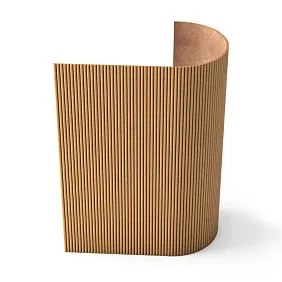
Why slatted wall panels are so photogenic
Before moving on to descriptions of specific solutions, it's worth understanding: why does a slatted wall look so good in photographs? Why do these interiors get thousands of saves on Pinterest and Houzz?
The answer is simple: slats create rhythm, and rhythm creates depth. Parallel lines with regular spacing — this is a graphic pattern on the surface that interacts with light. Each slat casts a shadow into the gap. The gap absorbs light. A play of light and shadow arises, which in a photograph conveys a sense of volume and materiality — something impossible to achieve with a smooth painted wall.
slatted panels for wallsThey are photogenic in any lighting: in daylight through a window — shadows are soft and changeable, shifting throughout the day. Under directed artificial light — sharp, expressive, architecturally clear. Under diffuse light — even, calm, saturating the surface with texture without harshness.




Slatted panels on the wall: what the classic solution looks like
The classic application of slatted panels is an accent wall in the living room. Imagine: a rectangular living room, 20–25 sq. m, ceiling 2.6 m. The wall behind the sofa — the main visual plane, the first thing a guest sees entering the room. This wall is covered with vertical oak slats 40 mm wide, spacing — 60 mm. The slats are finished with clear matte oil: the natural golden tone of oak, the wood grain visible through the coating.
What happens to the space? The gaze of the person entering rises upward along the vertical lines — the room's height is perceived as greater than it is. The sofa looks 'built-in' to the wall — the wall has become a background that organizes the furniture around itself. With side light from a floor lamp — the slats cast even shadows, and the wall becomes alive, three-dimensional. In daylight — the same wall is delicate and calm. This is the power of slatted decor: it changes with the lighting, never remaining static at any moment of the day.
Our factory also produces:
Photo: ten main scenarios for using slatted panels
Get Consultation
White slatted panels in modern interiors: what they look like
White slatted walls are the most sought-after solution in modern design. MDF slats 30–50 mm wide, coated with white matte enamel, mounted vertically with a 50–70 mm gap — this is pure geometry, devoid of color statement. There is nothing superfluous on such a wall: only the rhythm of lines and the play of light and shadow.
What does it look like in a real interior? White slats against a white wall (slats and base are the same tone) create a three-dimensional relief effect: the wall is not white and flat, but white and deep. Shadows in the gaps are the only color contrast. This is a 'Scandinavian' look: purity, air, materiality without color.
White slats against a dark wall is a completely different story. This is a contrasting solution: the slats are light, the base behind them is dark gray, anthracite, deep blue. Shadows disappear — there is only a graphic pattern of white stripes on a dark background. This solution is for those seeking maximum expressiveness and not afraid of accents.
Oak slatted panels in the living room: living texture on the wall
This is the look most often seen in professional interior photographs.Solid oak wall panelswith vertical orientation of slats 40–60 mm wide, tinted in warm cognac or tobacco tones — a wall you want to touch. The natural grain pattern of oak is visible in each slat — not identical, but alive: one slat has straight grain, the neighboring one has a soft curve, the third has a thin knot. This is that very uniqueness that cannot be reproduced by any synthetic material.
In photographs, such a wall looks three-dimensional and tactile — you literally feel the wood texture through the screen. That's why oak slatted panels so often become the 'stars' of interior shoots: they carry natural beauty that doesn't need to be 'pulled out' with angles and light — it's present by itself.
Slatted panels in the bedroom: what looks best
The bedroom is an interior where the visual image contributes to psychological comfort. Photos of bedrooms with slatted panels always create the same feeling: intimacy, security, coziness. Why? Because the vertical slats behind the bed create a 'canopy'—a visual overhang that psychologically 'hugs' the sleeping area.
Specific image: a 2.4 m wall behind a double bed is completely covered with vertical slats made of light oak with a whitewashed oil finish. Slat width is 30 mm, spacing is 50 mm. The slats run from the baseboard to the ceiling. Sconces with soft warm light on both sides of the bed. In the photo: warm whitewashed slats, shadows between them, soft side lighting—the feeling of a Scandinavian cottage. This is exactly what the best bedroom interiors with slatted decor look like.
Slatted panels in the hallway: first impression is everything
The hallway is the space of first impression. Photos of hallways with slatted panels invariably demonstrate one thing: the right wall in the hallway makes the entire apartment interior look 'more expensive' at first glance. What does it look like? A hallway 2×4 m, ceiling 2.7 m. The wall opposite the entrance door is completely slatted: vertical MDF slats with dark gray enamel, narrow spacing—40 mm slat, 20 mm gap. Top lighting—a track spotlight at a 45° angle. In the photo: even dark slats, sharp light shadows in the gaps, a sense of depth and architectural intent. A coat rack and shoe cabinet against this background look like elements of thoughtful design—not just a set of furniture in a corridor.
Slatted panels in the TV area: accent around the screen
A TV wall with slatted panels is one of the most popular search queries with the prefix 'photo'. The TV screen is a rectangle embedded in the wall. The slatted background around it creates a 'frame'—not a literal one, but an architectural one. The TV no longer just 'hangs on the wall'—it becomes part of the wall composition.
Image: a wall 3.5 m wide, a 65-inch TV in the center. Around it—vertical slats made of tinted oak, from floor to ceiling. Below the TV—a wooden cabinet matching the slats. Lighting: an LED strip behind the cabinet provides soft upward glow, track lighting from above—directed at the slats. In the photo: a monumental wall with natural texture, the TV in the center as an architectural element, two levels of lighting create depth. This is an image that 'stops the eye' in an Instagram feed.
Slatted panels in the study: a background that speaks of quality
Video calls have become part of professional life. The background behind you in the frame is your business card. This is precisely why slatted panels in the study are experiencing an unprecedented surge of interest—people search for 'slatted panels for walls photo study' because they want to look professional on camera.
Dark oak slats with rich tinting in graphite or dark walnut—in a photo, they create an image of seriousness and competence. Directional light from a side window emphasizes the relief. A bookshelf flush with the slats on the right—a unified system. This is an image that says: professionals work here.
Interior descriptions by style: what slatted panels look like in different contexts
Scandinavian interior with slatted panels: the look in every detail
Scandinavian style is not just 'white walls and light wood'. It's a very specific system: a monochrome base, natural materials, natural textiles, Scandinavian restraint as a philosophy.decorative slatted panelsin a Scandinavian interior is one of the key details of this system.
Imagine: a living room of 18 sq m. Walls are white, textured plaster. Floors are light oak, parallel to the slats. The wall behind the sofa is slats of bleached oak, 35 mm wide with a 55 mm pitch, from baseboard to ceiling. The top cornice is a thin wooden bead matching the slats. Sofa is gray, linen. Textiles are white and warm beige. Lighting is white matte pendant lights with shades made of natural material.
In such a photo, the slatted wall looks like the most 'natural' element of the interior: warm bleached slats between white walls are not a contrast, but a nuance. A delicate, warm, material nuance that creates the difference between a 'beautiful apartment' and an 'interior where you want to stay'.
Neoclassical with slatted panels: how wood combines with molding
Neoclassical and slatted decor is a combination that seems unexpected but works flawlessly. The key to success is the correct detailing of the perimeter.Cornices and moldings made of polyurethanecreate an architectural frame for the slatted field — and this is precisely what transforms the slats from a 'modern material' into an element of a classic interior.
A specific look: a living room of 30 sq m with 3 m ceilings. The lower third of the wall is classic panels with moldings. The upper two-thirds are vertical slats of tinted oak in a warm walnut tone. The transition between the panels and slats is framed by a horizontal molding. Around the perimeter of the ceiling —a polyurethane cornicewith a moderate classic profile. Ceiling rosette in the center. Chandelier with arms in classic style.
In the photo: an architecturally rich interior where slat decor reads as a modern interpretation of classic wood paneling — organically, without a sense of anachronism. This is a solution you want to look at for a long time.
Minimalism with slat panels: when less is more
A minimalist interior with a slat wall is perhaps the most 'pure' and complex image at the same time. One material, one color, one rhythm — and no compromises.
Image: 16 sq. m bedroom. Walls — pure white. Floor — white microcement. Ceiling — white. Furniture — minimum: bed with white bedding, nightstands made of white MDF. The only decorative element — the wall behind the bed: dense white slats 20 mm wide with a 15 mm gap, MDF under white matte enamel. Slats matching the wall color — shadows in the gaps are barely noticeable in daylight but become expressive with side sconce lighting.
In the photo: a monochrome space where the only 'detail' is rhythm. No color, no contrast, no ornament — only lines. This is an image for those who understand the power of restraint.
Loft with slat panels: warmth against concrete
In a loft with exposed brick walls, concrete ceiling, and metal structures, dark wood slat panels create a thermal and natural counterpoint. This is not soft coziness — it's a balance of two strong images: harsh industrial and warm natural.
Image: A 40 sq. m living room-studio with a 3.5 m ceiling. A brick wall occupies two end walls. The longitudinal walls — one of them is covered with vertical slats made of tinted oak in dark graphite with a barely noticeable brown undertone. The slat width is 50 mm, with a wide spacing — a 30 mm gap. Lighting — track spotlights on metal rails under the ceiling. In the photo: the dark slatted wall creates depth and visually 'grounds' the tall industrial space.
Modern style and slatted panels: architecture without unnecessary words
In modern interiors, a slatted wall is an architectural statement. Not a decorative detail, not a color accent—but a structural declaration of space. Gray or dark slats on gray or white walls, clear geometry, uniform spacing.
Image: a living room in a 35 sq. m. apartment. Ceiling—3 m, exposed concrete beams. Floors—large-format porcelain tiles imitating concrete, 80×80 cm. Wall behind the sofa—MDF slats 40 mm wide, 'mocha' tone—a warm dark brown. Gap between slats—25 mm, the back surface painted in the same tone. Right wall—pure white. In such a photograph, the contrast between the dark slatted wall and the white planes creates maximum expressiveness with minimal means.
Slatted panels in interiors: color solutions and how they look
White slatted panels
White is the most versatile tone for slatted panels. Against a white wall background—a delicate relief accent, shadows barely noticeable in diffused light. Against a dark background—maximum contrast, white slats 'stand out' forward. For apartments with north-facing windows—white slats preserve a sense of lightness, not darkening the space.
Gray slatted panels
Gray in slatted panels—neutral, modern, versatile. Light gray (tones 'ash', 'mist')—a delicate accent in Scandinavian and contemporary interiors. Dark gray (anthracite, graphite)—a monumental accent for large spaces.
Wood in natural tones
Light oak, bleached ash, natural maple—these are warm, natural tones. In photographs, such slats always create a sense of coziness and naturalness. They 'enliven' any interior—even the most strict and minimalist.
Dark stains: walnut, tobacco, graphite, wenge
Dark slatted panels – for those who aren't afraid of an accent. 'Walnut' tone – warm, deep, classic. 'Tobacco' – dark brown with a reddish undertone, very photogenic. 'Graphite' – neutrally dark, versatile. 'Wenge' – maximally dark, practically black with a warm tone. In photographs, dark slats always look expensive – they literally 'pull' the perceived cost of the interior upwards.
Custom-painted panels
MDF slatted panels for paintingopen up the possibility of any color – from pastel powder to rich emerald. In photographs of interiors with colored slatted walls – sage, terracotta, powder blue, deep green – you can see how the color is enhanced by the texture: a flat green wall is one thing, a green slatted wall with shadows in the gaps is quite another.
Slatted panels and lighting: what it looks like in practice
Lighting is the main 'director' of the slatted wall's visual image. The same slats look like different materials under different lighting. This is important to understand when planning an interior – and when searching for inspiration in photographs.
Side directional light – maximum shadow pattern. The slats cast sharp shadows into the gaps. The surface looks sculptural, three-dimensional, expressive. Most of the 'beautiful' photographs of slatted walls are taken in this mode.
Diffused daylight – soft shadows, the surface reads as textured but delicate. The slats are 'calm', they don't dominate the space.
Built-in LED strip behind the slats – diffuse glow, evenly emanating from behind the panel. The slats seem to 'float' in front of a glowing plane. This is especially effective in the evening and in night lighting mode.
Track spotlights directed at the wall – even illumination of the slatted wall. Shadows are less than with side light, but the surface reads as voluminous and textured.
A well-designed interior with slatted panels: what makes a photo 'wow'
What do the most beautiful photos of interiors with slatted panels have in common? Several principles that can be identified from analyzing the best projects.
Material unity in space. Slatted walls, oak flooring, wooden furniture elements — one material in different formats creates a space where everything 'speaks' to each other. A photo of such an interior always reads as cohesive.
One accent plane. In the best photos, the slatted wall is singular. This is a concentrated focal point around which the entire interior is organized. Slats on all walls create chaos, not architecture.
Light that creates shadow. Without shadow, a slatted wall is just 'striped' decor. With shadow — it becomes architectural sculpture. Good photos always show a source of directional light.
A finished perimeter. Slats that are neatly framed by a cornice at the top and a baseboard at the bottom look like part of an architectural system — not like 'glued-on decor'.Polyurethane cornices and moldingsin photos of interiors with slatted decor — a constant component of the best solutions.
What to look for in photos of slatted panels: an inspiration checklist
When browsing photos of interiors with slatted panels, pay attention not only to 'pretty/not pretty'. Look at specific details:
-
Slat width relative to room size — are the slats proportionate to the space?
-
Slat spacing — tight or with wide gaps, what effect does this create?
-
Orientation — vertical or horizontal?
-
Panel height — do the slats run the full height of the wall or only part of it?
-
Slat tone relative to the wall — contrast, nuance, or monochrome?
-
Light source — where is the light coming from, what do the shadows do?
-
Perimeter — how are the top and bottom edges of the panels finished?
-
Adjacent surfaces — how do the slats relate to the floor, ceiling, furniture?
It is precisely these parameters that determine the final look — not just 'having slats on the wall'.
Slatted panels in different rooms: visual descriptions
Slatted wall in the living room: a focal point or a backdrop?
In photos of living rooms with slatted panels, you can see two fundamentally different approaches. The first: the slatted wall as a focal point. Dark slats, contrasting tones, wide gaps, directed lighting — the wall makes a bold statement, and all furniture recedes into the background. This is an image for those who want a 'central element' around which the entire interior is built.
The second approach: the slatted wall as a backdrop. Light-colored slats in a tone close to the walls, narrow gaps, diffused lighting — the wall creates texture but does not dominate. Furniture, textiles, and accessories remain in the foreground. The wall 'supports' the interior rather than 'overpowering' it. Both approaches are valid — it's a matter of the task and what you want to create.
Slatted panels in the bedroom: intimacy and tranquility
In photos of bedrooms with slatted decor, one quality is invariably present — intimacy. The slats create a 'cocoon' around the bed. Vertical lines organize the space around the horizontal plane of the bed — creating a visual tension between the horizontal and vertical, which makes the frame interesting and lively.
The image is especially expressive when the slatted wall behind the bed fully matches the width of the headboard and extends from floor to ceiling — meaning the slats 'guide' the eye from top to bottom toward the bed, creating the feeling that the bed is 'inserted' into an architectural niche.
Slatted panels in the bathroom: spa without neutrality
Photos of bathrooms with slatted panels are one of the most actively searched queries. Why? Because a standard bathroom — tiles, mirrors, white fixtures — is about hygiene, not space. Slatted panels made of thermowood or teak on one wall of the bathroom completely change the image: it's no longer a 'bathroom,' it's a 'spa.'
In the photo: dark-toned wooden slats on the wall opposite the bathtub. The lighting is soft, warm, and directed. Shadows in the gaps between the slats are deep. White sanitary ware against this background looks like a designer item. This is an image that changes the attitude toward ordinary morning and evening rituals.
Slatted panels in the nursery: nature in a child's room
A children's room with light wood slatted panels is an image that evokes a warm response in photographs. Natural material above the child's head, rhythmic lines creating calm — this is an environment where one wants to play and rest. In photos of children's rooms with slatted walls, there's always this feeling: 'it's warm and safe here.'
An important detail: for a children's room, MDF slats under white or pastel paint offer the possibility to easily update the color as the child grows. What was pale blue at age 5 can become gray at 12, and dark blue at 16. The same material — a different look over the years.
Typical mistakes when creating slatted walls: what ruins the photo
Not every slatted interior looks good. What distinguishes a 'beautiful photo' from a 'failure'?
Slats without perimeter finishing. If a slatted panel is mounted without a cornice at the top and a baseboard at the bottom — the ends are open, the transition from the wall to the panel is visually 'broken.' This reads in the photo as incompleteness. A finishing element is always needed — wooden orpolyurethane.
Uncoordinated tone. Warm wooden slats + cold gray floor + furniture with cold chrome — this is a stylistic conflict that creates a feeling of 'something is wrong' in the photo. The tone of the slats should echo other warm elements of the interior: the floor, textiles, wooden furniture details.
Too dense slats without lighting. A solid slatted wall made of tightly packed narrow slats without side lighting is just a 'wooden surface' without a shadow pattern. The rhythm is not readable. In the photo — a visually heavy wall without depth.
Slats on all walls. Photos of rooms where all four walls are covered with slats demonstrate how a good solution loses its power when overused. An accent works only when there is a 'neutral' background against which it is noticeable.
How to use photos of interiors with slatted panels when choosing a material
While browsing inspiring photos, note the parameters that create the desired impression. Create a 'reference board' for yourself—a selection of 10–15 photos that evoke the right response in you. Analyze what they have in common: slat width, tone, orientation, lighting type, panel height.
Next—compare with your actual space: dimensions, ceiling height, window orientation, furniture style. And only after that choose specificslatted panels for walls—by material (solid oak or MDF), tone, width, and slat spacing.
Frequently asked questions
Why do interiors with slatted panels look so good in photographs?
Because slats create rhythm and shadow patterns—the surface becomes three-dimensional. The camera captures volume that smooth walls cannot convey. The texture of wood or painted MDF creates 'materiality'—a sense that there is something to examine in the frame.
Which slatted panels are more photogenic: oak or MDF?
It depends on the task. Solid oak is photogenic due to its natural uniqueness: each slat has a living grain pattern. Painted MDF is photogenic due to its geometric purity: uniform tone, clear shadows, flawless geometry. For natural and warm interiors—oak. For modern and minimalist ones—MDF.
How to choose slat width based on photographs?
Pay attention to the ratio of slat width to room size. Small room—narrow slats (20–35 mm). Large space—medium and wide slats (40–80 mm). In photographs, narrow slats create a delicate, dense rhythm; wide ones—a monumental, architectural one.
Can slatted panels be used in a rather dark room?
Yes, but with caveats. Dark slats in a room with insufficient natural light will make it even 'darker'. For dark rooms, only light-colored slats or white paintable ones. Built-in LED lighting behind the slats is a good way to add light while preserving the slatted decor.
How important is lighting for the beautiful appearance of slatted panels?
Very important. It is the lighting that 'reveals' the shadow pattern and creates a sense of volume. Without directional lighting, the slats look flat. At minimum, one directional light source at a 30–45° angle to the wall.
Can slatted panels be combined with moldings?
An excellent combination, especially in neoclassical interiors. A polyurethane cornice frames the slatted field, giving it architectural completeness. In photographs, such a combination always looks rich and well-considered.
What tone of slatted panels is the most universal?
Light natural oak is the safest and most universal choice. It works in modern, Scandinavian, neoclassical, and biophilic interiors. White paintable MDF is the second universal option with maximum flexibility.
Conclusion
Slatted wall panels are a material that 'lives' in photographs. It creates images that one wants to preserve, reproduce, and bring closer. Behind this lies simple architectural mechanics: rhythm, light and shadow, natural or perfectly pure material—the three pillars upon which any expressive interior rests.
Properly selected in width, tone, orientation, and materialSlatted wall panelscreate an image that works not only in photographs—it works every day, with every change in lighting, in every season. This is not decor—it is wall architecture.
Full range of solid oak and MDF slatted panels, as well asdeorative cornices, moldings, and polyurethane stuccofor professional completion of any interior solution — in the STAVROS company catalog.
STAVROS — production of decorative interior solutions with European quality standards. Slatted panels with precise geometry, rich palette of finishes, professional approach to selection for the tasks of a specific space. For those who create interiors worth photographing — and worth living in.


