












































































Article Contents:
- Slatted ceiling panels: how this fundamentally differs from wall systems
- Gravity as a design challenge
- Slat orientation: a new game with space
- Light integrated into the plane
- Acoustics: horizontal absorber
- Materials for slatted ceilings: MDF and solid oak
- Painting-ready MDF: perfect geometry overhead
- Solid oak on the ceiling: a natural 'sky'
- Types of slatted ceilings: structural solutions
- Closed slatted ceiling: a complete plane
- Open slatted ceiling: gaps as a design element
- Floating slatted ceiling: an illusion of weightlessness
- Slatted ceiling with a lighting niche
- Slat profile for ceilings: what works best
- Slat width and perceived ceiling height
- Slat spacing on ceilings: rhythm that sets the scale
- Slatted ceiling lighting: three working scenarios
- Scenario 1: LED strip in the gaps
- Scenario 2: Built-in Spotlights
- Scenario 3: Floating Backlight Behind the Substrate
- Coordinated System: What to Order with a Slatted Ceiling
- Ceiling Molding: Perimeter as an Architectural Detail
- Slatted Panels on Walls: Vertical Continuation of the Ceiling Theme
- Floor Skirting: The Lower Point of the System
- Extension Rail for Corner Joints
- Decorative Overlays for a Classic Ceiling
- Staircase: Wooden Theme from Top to Bottom
- Furniture Details in the System
- Slatted Ceiling in Different Spaces: Practical Scenarios
- Slatted Ceiling in the Living Room
- Slatted ceiling in the bedroom
- Slatted Ceiling in the Kitchen
- Slatted Ceiling in the Bathroom
- Slatted Ceiling in the Hallway and Corridor
- Slatted Ceiling in Restaurants and Cafes
- Slatted Ceiling in the Office and Meeting Room
- Installation of Slatted Panels on the Ceiling: Technical Requirements
- Frame: Metal Profile as a Mandatory Base
- Fastening Panels to the Frame
- Acclimatization: mandatory stage
- Module docking: rails without interruption
- Wiring: before installation begins
- How to choose a slatted ceiling manufacturer: criteria
- Common mistakes when installing slatted ceilings
- About the Company STAVROS
- FAQ: slatted ceiling panels — answers to popular questions

The ceiling is the most underrated surface in interior design. While designers and homeowners carefully select flooring, contemplate walls, and arrange furniture, the ceiling remains at best white, at worst covered with a stretch fabric without character. Yet it is the ceiling that defines the scale of space, creates a sense of height or coziness, establishes atmosphere — or kills it.
Slatted ceiling panels are not just a finishing material. They are an architectural tool that combines visual space transformation, acoustic improvement, lighting integration, and the natural expressiveness of the material in one solution. A ceiling made of slatted panels turns an ordinary room into an architecturally thoughtful space — without major renovation, without replanning, without compromises.
Why the ceiling? Because no other horizontal surface is so constantly present in a person's field of vision — especially in living spaces where significant time is spent lying down, sitting, resting. A wooden slatted ceiling designed by an architect, not a painter with white paint, offers a qualitatively different spatial experience.
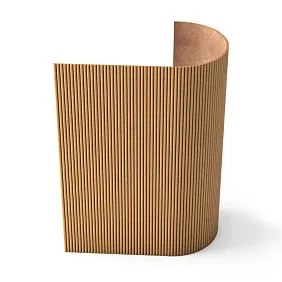
Slatted ceiling panels: how this fundamentally differs from wall systems
First of all — let's understand the specifics.Batten panels for ceilings— this is the same structural system as for walls: battens on a substrate with a specified spacing. But 'upside-down' installation imposes special requirements and opens up special possibilities.




Gravity as a design challenge
On a wall, the panel is held by adhesive and additional fasteners around the perimeter. On a ceiling, gravity works against you — that's the first thing to understand. Adhesive installation on a ceiling without a frame is only permissible for small areas (up to 2–3 sq.m) and with thorough surface preparation. For any serious project — frame installation on metal profiles is mandatory. More details about installation — in a separate section.
Our factory also produces:
Batten orientation: a new game with space
On a wall, vertical battens 'raise' the ceiling, horizontal ones 'expand' the room. On a ceiling, the same logic works differently. Battens oriented along the long axis of the room 'stretch' the space — the room feels longer. Battens across — 'compress' the length and 'widen' the width. Diagonal ones — create a sense of kinetic movement, dynamism for lofts and non-standard spaces.
Get Consultation
Light, integrated into the plane
This is the main advantage of a batten ceiling over any other ceiling solution. The gaps between the battens are natural channels for placing light lines. LED strips in the gaps create diffused side lighting across the entire ceiling area. Directional mini-spots in the gaps — point light accents. The technical frame behind the substrate — space for running cables without chasing the slab. Lighting becomes part of the ceiling system, not a suspended element.
Acoustics: a horizontal absorber
A slatted ceiling with infill in the frame is an acoustic solution that reduces reverberation in a room. The slats mechanically scatter sound waves, while the infill in the gaps (mineral wool, acoustic felt) absorbs them within the frame volume. For restaurants, meeting rooms, home theaters, and children's rooms, this is a practical, not just decorative, solution.
Materials for slatted ceilings: MDF and solid oak
MDF for painting: perfect geometry overhead
MDF with a density of 750–850 kg/m³ is the optimal choice for ceiling systems in most residential and commercial applications. Three key arguments specifically for ceilings:
Lightness. MDF is lighter than solid wood with the same dimensions. For ceilings, this is critical: every extra kilogram is additional load on the floor slab and the frame fasteners.
Geometric stability. MDF slats with the correct density maintain a perfectly straight-line shape for decades. Any 'warping' of a slat on the ceiling is instantly noticeable: the human gaze, directed upward, sharply reacts to the slightest deviations from the plane.
Color freedom. Any RAL or NCS. A monochrome white ceiling (RAL 9010, 9003) is a classic solution that increases the perception of height. A dark ceiling (anthracite, graphite) is a bold design statement that lowers the perceived height to create a cozy 'den'. An accent color is a non-standard technique for spaces with character.
Solid oak on the ceiling: a natural 'sky'
Rafter panelsSolid oak on the ceiling is a solution that completely changes the experience of a space. When a person looks up and sees living wood—not an imitation, not a printed film, but real oak with its grain pattern—it works on the level of a natural instinct. Wood overhead is protection, shelter, a natural refuge.
Oak with a density of 700–750 kg/m³, when kiln-dried to 8–10%, maintains the slat geometry after installation. Toning from light honey to deep graphite—while preserving the natural texture. Oil or varnish protects the surface and emphasizes the grain pattern.
Ceiling feature: with diffused overhead lighting (from LEDs in the gaps), the oak grain pattern on the lower surface of the slat is especially clearly visible. The natural 'ornament' of the ceiling is unique, dynamic, and alive.
Types of slatted ceilings: structural solutions
Closed slatted ceiling: a complete plane
Slats are placed tightly together—there is no gap. The surface appears monolithic. The effect is a clean wooden or painted plane with thin joint lines. An optimal solution for concealing load-bearing structures, utilities, and insulation. The rhythm of the joint lines creates a subtle texture.
Open slatted ceiling: gaps as a design element
Slats with a calculated gap. The space between slats is part of the design: light is directed there, LED strips are installed in the gaps, and behind the gaps is the technical space of the frame. The best choice for integrating lighting and acoustic functions. The most popular type for modern interiors.
Floating slatted ceiling: an illusion of weightlessness
Slats with a wide gap (40–80 mm) and backlighting behind the substrate. Between the slats—glow, the substrate is not visible. Visually, the slats 'float' in a luminous space. For living rooms with high ceilings—a monumental effect. For small rooms—a feeling of opening upward.
Slatted ceiling with a lighting niche
Around the perimeter of the room—a slatted panel with bottom lighting (LEDs behind molding or in the frame). In the center—an exposed ceiling structure or another ceiling solution. The slatted lighting 'frame' around the perimeter creates a theatrical lighting effect—the space appears taller, and the walls are softly lit from below.
Ceiling slat profile: what works best
On the ceiling, the choice of slat profile is particularly important—because a person looks from below upward, seeing the bottom plane and the side edges of the slat simultaneously. This is a different angle of perception than when looking at a wall.
Rectangular profile—the bottom plane is wide, the side edges are vertical. With side lighting (LEDs in the gaps)—a clear horizontal shadow under each slat. A strict, architectural look. For offices, modern classics, minimalism.
Semicircular profile—the bottom edge is rounded. With diffuse lighting—a soft, warm surface without sharp shadows. For living spaces: bedroom, living room, children's room. Natural softness, especially in the oak variant.
Trapezoidal profile—the bottom edge is wider than the base, the side edges are slanted. With directional lighting—a multi-level shadow, a voluminous dynamic pattern. For restaurants, lobbies, commercial spaces.
Slat width and perceived ceiling height
Narrow slat (12–18 mm) with a wide gap—the ceiling appears higher: thin slat lines are perceived as a light superstructure over an open space.
Wide slat (30–50 mm) with a narrow gap—the ceiling feels lower: a massive wooden plane 'presses' downward, creating coziness in a tall space.
For a standard height of 2.7 m—a slat width of no more than 30 mm with a gap of at least 20 mm is recommended.
Ceiling slat spacing: the rhythm that sets the scale
Step — the distance from the center of one rail to the center of the next — controls the scale and visual density of the ceiling surface.
| Step | Rhythm character | Visual effect | Recommended Use |
|---|---|---|---|
| 20–25 mm | Dense, active | Saturated surface, reduces height | High spaces (from 3.5 m) |
| 30–40 mm | Balanced | Universal rhythm, neutral effect | Standard height 2.7–3.0 m |
| 45–60 mm | Wide, airy | Lightness, visually raises the ceiling | Low-height rooms (up to 2.7 m) |
| 80 mm and more | Rare, monumental | Each slat as an architectural element | Spaces with high ceilings |
Slatted ceiling lighting: three working scenarios
Lighting is the main functional feature of a slatted ceiling. Properly integrated lighting in a slatted ceiling system is not an option, but a mandatory project element. It must be planned before the production and installation of panels begin.
Scenario 1: LED strip in gaps
The strip is mounted on a backing in the gaps before the panel is attached to the frame. The wire is routed into the technical space of the frame. The direction of illumination is downward (diffused warm light across the entire ceiling area) or sideways (side lighting emphasizing the relief of the slats).
Result: evenly illuminated ceiling with warm diffused light. With oak tinted to honey and 2700 K lighting — the effect of a shimmering natural 'sky'. Wires — completely hidden in the frame.
Scenario 2: Recessed spotlights
Spotlights in substrate holes — in gaps or at the level of the slat plane. Cable routes — in the frame. Control — dimmer or smart home.
Result: directional lighting accents. Especially effective when combined: background light from LED strip + accent spots in separate zones.
Scenario 3: Floating backlight behind the substrate
For a 'floating' slatted ceiling: LED strip is fixed to the load-bearing ceiling — behind the panel substrate. Light passes through wide gaps from below. The substrate is not visible — only the glow between the slats is seen.
Result: slats 'float' in a luminous space. A monumental lighting effect for living rooms with high ceilings and waiting areas in commercial facilities.
Coordinated system: what to order together with a slatted ceiling
Slatted ceiling — part of an architectural whole. Maximum result is achieved only when the ceiling system is coordinated with the wall finishing system, with perimeter trim, and with wooden interior elements.
Ceiling molding: perimeter as an architectural detail
wooden moldingAround the perimeter of the slatted ceiling — the transition boundary from the ceiling plane to the walls. This is not just 'gap filling'. It is an architectural horizontal that gives the system completeness. Oak of the same tone next to an oak ceiling — natural consistency. MDF in the same RAL — a monolithic color system.
For classic interiors —Wooden cornicewith a profiled front surface: a full-fledged architectural 'roof', separating the ceiling plane from the walls with historical dignity.
Slatted panels on walls: vertical continuation of the ceiling theme
Slatted oak ceiling + slatted walls in the same tone — this is a space where natural material is present on all planes simultaneously. Scandinavian effect: a person finds themselves inside nature, not next to its image. One production program — guarantee of tone matching on ceiling and walls.
Floor skirting: the lower point of the system
Solid oak wooden skirting boardon the floor — the lower point of the wooden system, when the ceiling and walls are of the same species. One material, one tone — architectural monolithicity from floor to ceiling.— is a horizontal element that frames the room at the bottom of the walls where the wall meets the floor. Skirting boards perform several functions: they hide the technological gap between the wall and floor covering (necessary for thermal expansion), protect the lower part of the wall from mechanical damage, create visual completion, and may conceal wiring.in the same RAL for MDF systems: seamless color monolith on all horizontal edges.
Additional slat for corner junctions
wooden plankfrom the same solid wood — an addition at the transition points of the ceiling system to slopes, niches, beams. An inconspicuous organic addition that preserves the continuity of the wooden theme in non-standard junctions.
Decorative overlays for classic ceiling
In classic and neoclassical interiorsDecorative Insertscreate architectural coffers on a slatted ceiling — rectangular frames dividing the ceiling plane into 'panels'. This references historical coffered ceilings in a modern interpretation made of oak or MDF.
Staircase: wooden theme from bottom to top
In a country house: slatted ceiling in the living room + slatted walls in the stairwell +balusters for staircasesmade from the same oak = a continuous natural architectural theme unifying all floors and spaces. This is what distinguishes a 'designed' interior from a 'collected' one.
Furniture details in the system
Furniture Handlesmade from coordinated material on built-in furniture under the slatted ceiling complete the architectural narrative down to tactile details. Not a single random material in the system — this is professional interior design.
Slatted ceiling in different spaces: practical scenarios
Slatted ceiling in the living room
The main space of the house. This is where the slatted ceiling truly shines. Oak with honey-toned oil finish. Slat direction — along the long axis. Open type with 30–35 mm gap. LED strip in the gaps + directional spotlights on a rail.
Wooden molding around the perimeter. Slatted walls in the area behind the sofa — continuation of the ceiling theme. With a ceiling height of 2.7 m — narrow 15 mm slats with a 35 mm gap to visually 'raise' the ceiling.
Slatted ceiling in the bedroom
Here, silence, warmth, and coziness are important. Oak with a soft tint (light gray or natural). Semi-circular profile. Spacing 35–40 mm. Warm diffused light 2700 K from the gaps. No sharp shadows, no architectural strictness.
Optional — a 'floating' ceiling in the niche above the bed. Slats only above the sleeping area: a fragmentary wooden ceiling with lighting, descending towards the headboard, creates a sense of a natural shelter — intimacy within a large space.
Slatted ceiling in the kitchen
Area above the island or dining table — a local slatted ceiling as an accent element. MDF for painting to match the furniture or in an accent RAL color. Rectangular profile. Pendant lights passing through the gaps — integration of lighting fixtures into the ceiling structure.
Important: for the kitchen, choose MDF with a moisture-resistant coating or oak under varnish. Open-pore under oil above the cooking area is not advisable.
Slatted ceiling in the bathroom
Specifics: high humidity. Only MDF with moisture-resistant paint (2-component varnish) or solid oak under waterproof varnish. Closed type: without gaps — less risk of moisture penetration into the technical space of the frame.
Installation: only frame-based on galvanized profile. Do not use black steel profile — it rusts in high humidity.
Slatted ceiling in the hallway and corridor
The hallway is the first thing a person sees when entering a house. A slatted ceiling in the corridor + slatted walls (or their fragments) = a concise architectural greeting. For a narrow corridor — slats placed crosswise (visually widen). For a long one — lengthwise (extend the perspective).
MDF for painting in a neutral warm RAL. Warm LED strip in the gaps — soft welcoming lighting.
Slatted ceiling in restaurants and cafes
Commercial application with maximum requirements for acoustics and atmosphere. Warm-toned oak. Trapezoidal profile. Acoustic filling in the frame (50 mm mineral wool). Directional spotlights 2700 K in the gaps. Result: a warm, natural space with reduced reverberation — guests speak more quietly, hear their interlocutor, and stay longer.
Slatted ceiling in offices and meeting rooms
MDF in corporate RAL or neutral white. Rectangular profile. Acoustic filling (critical for meeting rooms). LED 3500 K neutral white in the gaps. Spotlights over work areas. Closed or semi-closed type with a narrow gap — conceals utilities in the frame.
Installation of slatted panels on the ceiling: technical requirements
Frame: metal profile as a mandatory base
For ceiling installation — a metal frame made of CD 60×27 mm profile is mandatory for an area from 4–5 sq.m. Load-bearing CD profiles are attached to the ceiling via direct hangers (spacing 600–800 mm). UD guides around the perimeter.
Spacing of load-bearing CD profiles: 300–400 mm. Each panel module (600 mm) must rest on at least three load-bearing profiles — at the edges and in the center. This prevents sagging of the substrate under its own weight.
Frame horizontality: a laser level is mandatory. A deviation of 1–2 mm per meter is acceptable. More than 3 mm is visible on the finished surface under side lighting.
Fastening panels to the frame
Combination of adhesive and mechanical fastening: mounting adhesive is applied to the substrate, the panel is pressed against the frame, and additionally secured with finishing nails Ø1.2–1.6 × 30–35 mm through the substrate into the profile. The adhesive ensures uniform adhesion, the nails provide reliable fixation until complete curing.
Without mechanical fastening — strictly not recommended. Adhesive only on the ceiling — risk of panel detachment due to vibration, sudden temperature changes, or incomplete adhesive contact with the surface.
Acclimatization: a mandatory step
48–72 hours in a horizontal position (battens facing down) at the temperature and humidity of the installation room. Without acclimatization — risk of batten deformation after installation. On the ceiling, a deformed batten (sag, bend) is visible under any type of lighting.
Module joining: battens without interruption
Joints between modules should form a continuous rhythm of battens. Modules are laid tightly, battens are aligned. Factory step accuracy ≤ 0.5 mm is a necessary condition. With an unstable step, joints are immediately visible and irreparable.
Wiring: before installation begins
All cable routes (LED, spotlights, electrical) are laid in the frame before installing the first panel. After installation — access to the technical space of the frame is closed. The cable routing diagram is coordinated with the lighting project in advance.
How to Choose a Slatted Ceiling Manufacturer: Criteria
For ceiling applications, the quality requirements for panels are higher than for walls. Any defect—unstable spacing, insufficiently dense MDF, unseasoned solid wood—is fully revealed on the ceiling and is irreparable after installation.
MDF Density. Minimum 750 kg/m³. For ceilings, the upper range limit is recommended—820–850 kg/m³. A denser board maintains its geometry when heated by built-in lights.
Spacing Accuracy. ≤ 0.5 mm—mandatory. Joints on the ceiling with unstable spacing are a disaster.
Solid Wood Moisture Content. 8–10% with climate drying. The ceiling is an area where temperature is higher than at floor level. Unseasoned oak on the ceiling deforms faster than on a wall.
Edge Treatment. Primed or sealed with edge banding film. Moisture condenses to a greater extent on the ceiling—open edges are more critical than on walls.
Availability of Coordinated Linear Profiles.Wooden moldings, Crown Molding, Baseboardsfrom the same production program—guarantees matching toning across all system elements.
Common Mistakes When Installing Slatted Ceilings
Mistake 1. Adhesive installation without a frame over large areas. Critical risk of panel detachment.
Error 2. Carrier profile spacing exceeds 500 mm. Visible sagging of the substrate between profiles.
Error 3. Installation without acclimatization. Deformation of slats — irreversible.
Error 4. Wires not laid before installation. Cables cannot be routed after panel installation.
Error 5. Frame not level. Skewed ceiling — visible under any lighting.
Error 6. Module joints without matching slat rhythm. Result — visible 'seams' across the entire ceiling plane.
Error 7. Uniform overhead lighting without integrated fixtures. Slatted ceiling relief without directional or integrated lighting — flat, unexpressive surface.
Error 8. Black steel profile in bathroom. Only galvanized for humidity above 70%.
About the company STAVROS
Slatted ceiling — one of the most demanding projects in terms of material quality. Geometry is visible when looking upward — under direct lighting — with no way to hide defects. This is why manufacturer selection is especially important for ceiling systems.
STAVROS — Russian manufacturer of MDF and solid wood products for interior finishing and furniture production. Slatted panels of all structural types: rigid on MDF substrate for flat surfaces, flexible on fabric backing for curved surfaces. MDF from European suppliers with density 750–850 kg/m³. Solid oak with climatic drying to 8–10%.
Step accuracy control ≤ 0.5 mm. Two-tier quality control system (Standard and Prestige). Manual processing of decorative elements. Sealed MDF substrate ends. Complete coordinated finishing system: moldings and cornices, solid wood and MDF baseboards, filler strips, decorative overlays, stair balusters, furniture handles, classic furniture. Over 4000 models, 20,000 modifications, 39 product groups.
Shipment from one piece. Delivery across Russia. Professional consultation: system selection, calculation of module quantity and linear footage, recommendations on frame construction and lighting integration — before placing an order.
FAQ: slatted panels for ceilings — answers to popular questions
Can slatted panels be mounted directly on the ceiling slab without a frame?
Only for small areas up to 2–3 sq.m and a perfectly level base. For areas from 4–5 sq.m — frame mounting is mandatory: it prevents substrate sagging and provides technical space for wiring.
How much does a slatted ceiling reduce the room height?
Frame + substrate + slat: from 50 to 100 mm depending on the frame construction. With a standard height of 2.7 m — the ceiling is lowered to 2.6–2.65 m. Narrow slats with wide gaps compensate for this visually.
Oak or MDF — which is better for a ceiling?
MDF is lighter, geometrically more precise, allows any RAL color. Oak creates a natural atmosphere, unique in each slat. For bathrooms — only MDF with moisture-resistant coating. For living rooms and bedrooms — both options, choice based on style.
Is acclimatization of panels needed before ceiling installation?
Mandatory: 48–72 hours horizontally with slats facing down at the room temperature and humidity. On the ceiling, slat deformation is more noticeable than on a wall.
How to integrate lighting into a slatted ceiling?
LED strip is mounted in the gaps on the substrate before fixing to the frame. Spotlights are installed in the substrate holes, cables in the frame. All routes are laid before installing the first panel.
Which type of slatted ceiling is better for low rooms?
Open type with narrow slats (15–18 mm) and wide gap (35–45 mm). Warm light from the gaps is directed downward. Slats are positioned along the long axis. This solution visually 'raises' the ceiling by 15–20 cm.
Slatted ceiling and acoustics — is there a real effect?
Yes, when filling the frame with acoustic material (mineral wool 50–100 mm, acoustic felt). Reduction of reverberation time by 15–30% depending on ceiling area and room volume. For restaurants and meeting rooms — a justified investment with measurable results.


