Article Contents:
- Why molding and trim are needed in interior design and furniture
- Types of wooden molding: from simple to decorative
- Species and accents: oak and beech in molding
- Crown molding and wooden measurement: framing and measurement
- Wooden trim and oak trim: fastening and style
- How to combine molding, crown molding, and trim: a systematic approach
- Practical checklist for selecting and purchasing molding and trim
- Conclusion: STAVROS company — details that make interiors

Wooden molding, wooden trim, wooden molding by the meterThese are thin, long elements that most people don’t even notice in a finished interior. But it is precisely these elements that make an interior "expensive," complete, and professional. Without molding, a panel door looks like a set of glued boards. Without trim, window or door glazing is held by sealant, not mechanical fastening. Without crown molding, a mirror or picture hangs on the wall like a poster, not as a work of art. These small elements contribute to detail, quality of execution, and that difference which distinguishes a good interior from an average one.Wooden moldingWidth of only 10-30 mm, thickness 5-15 mm — but it is precisely this that transforms a flat furniture facade into a framed panel structure, which looks more complex, expensive, and interesting.Buy wooden cleatIt is not luxury, it is necessary for those who value the quality of details.





Why molding and trim are needed in interior design and furniture
Molding as "graphic" joints — this is about transforming a technical necessity into a decorative solution. The joint between two wall panel sheets, between two boards of wainscoting, between two door panels — technically, this is a gap, a clearance that needs to be covered. It can be covered with sealant (looks crude, darkens and cracks over time). Or it can be covered with a thin wooden molding, which turns the joint into a decorative line.Flat wooden plankWidth 15-20 mm, applied to the joint, creates a clear vertical or horizontal line that does not hide the joint, but emphasizes it, making it part of the wall's graphic pattern. Several such lines form a grid, pattern, rhythm — the wall stops being a monotonous plane and becomes segmented, structured.
Framed panels on walls — a classic technique, where molding creates rectangular or square frames, inside which can be wallpaper, fabric, a different color paint, or a mirror insert.Decorative wooden moldingApplied around each frame, forming a border. Molding width 20-30 mm, thickness 8-12 mm, profile can be flat (simple plank) or decorative (with bevel, rounded, grooved). Frames can be identical (repeating pattern, strict rhythm) or different in size (asymmetrical composition, dynamism). Molding color contrasts with the wall (white molding on dark wall or dark on light) or matches (molding stands out only by relief, shadow). Framed panels are characteristic of neoclassicism, American style, classic interiors.
Joint masking — a practical function of molding. MDF, particleboard, and plywood wall panels are mounted as sheets, with gaps of 2-5 mm between sheets (technological, compensating for thermal expansion). Gaps can be spackled and painted (but when the building settles, the spackle cracks, and the gap reappears). Or they can be covered with molding — a thin strip applied to the joint, covering the gap, acting as a decorative joint.Wooden corner veneerUsed for internal and external corners: a corner-profiled strip covers the corner joint of two panels, creating a clear edge. Corner molding protects the corner from chipping, impacts, and abrasion — a function that is not only decorative but also protective.
Trim as a fixing and decorative element performs two functions simultaneously. Fixing function: trim presses glass against the window or door frame, holding it mechanically. Glass is inserted into the rebate of the frame (a recess around the opening), and from the back, it is secured by a trim, which is nailed with small nails or glued. Trim creates a mechanical clamp that holds the glass even under vibrations, impacts, and temperature changes. Without trim, glass is held only by sealant, which is unreliable — sealant loses elasticity over time, and glass may fall out.wooden trimIt is a mechanical safeguard that guarantees the glazing will not break.
Decorative function: trim covers the edge of the glass, creates a transition from frame to glass, visually completing the structure. Without trim, the edge of the glass is exposed, the cut is visible, and it looks unfinished. With trim — the frame smoothly transitions into glass through a thin strip, which can be flat (rectangular profile), rounded (semi-circular profile), or decorative (with bevel, groove). The trim profile affects the style of the structure: flat trim — modern style, rounded — traditional, decorative — classic.Oak trimUsed in expensive wooden windows and doors, where the frame is made of oak — the trim must also be oak, to match the species and color.
Trim in furniture: glass doors of cabinets, display cases, buffets are held by trim. Glass is inserted into the rebate of the door, and from the back, it is secured by a thin trim (width 10-15 mm, thickness 5-8 mm), which is glued or nailed with small nails. Trim is barely noticeable but critically important — without it, glass rattles and may fall out, breaking. In antique furniture, trim is often decorative: with carving, gilding, patina. In modern furniture — simple, flat, as inconspicuous as possible. Restoring old furniture often requires replacing trim — old trim has dried out, cracked, and lost elasticity. New trim is cut according to the pattern of old trim, fitted to the profile, and painted to match the furniture.




Flat trim — the simplest type of trim: a rectangular plank without profile, simply planed small-section timber. Width is usually 10–25 mm, thickness 5–10 mm. Used for covering panel joints, framing simple frames, decorative lines on walls. Flat trim suits modern interiors where minimalism and lack of ornamentation are important. It creates a clear geometric line, does not distract with relief, works as a graphic element. Price is the lowest among trims (from 50 to 150 rubles per linear meter, depending on species). Mounted with glue, painted to match wall color or contrastively.
Flat wooden plankProfiled trim — trim with profile: bevel, rounding, groove, combination of transitions. Width 15–40 mm, thickness 8–15 mm. The profile creates relief, shadow, and adds complexity to the form. Decorative trim is used in classical and neoclassical interiors, where detail and richness of form are important. It frames door panels, creates frames on furniture facades, divides walls into panels. The profile can be simple (one bevel) or complex (multiple transitions, curved sections). The more complex the profile, the more expensive the trim (price from 150 to 400 rubles per linear meter). Mounted with glue, often painted with effects (patina, gilding, silvering).
Decorative wooden moldingCorner trim — L-shaped profile trim for covering internal or external corners. Internal corner (e.g., junction of two walls) is covered with trim angled 90 degrees inward. External corner (e.g., edge of a column, protruding corner of a wall panel) is covered with trim angled 90 degrees outward. Width of the flanges (two contact surfaces) is usually equal: 15×15 mm, 20×20 mm, 25×25 mm. Corner trim protects corners from mechanical damage (impacts, scratches, chips), masks corner irregularities (if the corner is not perfectly straight, the trim hides the defect). Used in furniture, wall panels, door constructions. Price from 100 to 300 rubles per linear meter.
Wooden corner veneerFigured trim — trim with complex curved profile resembling miniature molding. Width 30–50 mm, thickness 10–20 mm, profile multi-step (three to four transitions, protrusions, recesses, rounds). Figured trim is used for framing panels in classical doors and furniture, creating decorative appliqués on facades, decorating mirrors and paintings. It is the most expensive type of trim (price from 300 to 700 rubles per linear meter), as it requires complex processing on milling machines. Mounted with glue, joints in corners at 45 degrees (like a picture frame), often painted with effects (patina, gilding, aging).
wooden veneer with a decorative profileJoining panels with trim — a practical technique in furniture manufacturing and wall finishing. Panels made of MDF, plywood, or particleboard have standard sizes (e.g., 2440×1220 mm). To finish a large wall, several panels are needed, with joints between them. Joints can be made invisible (butt joint, spackling, painting in one color) or intentionally highlighted with trim, turning a technical joint into a decorative element. Trim 20–30 mm wide is glued onto each joint, forming a grid of vertical and horizontal lines. This grid divides the wall into rectangles, creating rhythm, structure, visual complexity. Decorating walls with trim — a classic technique used in neoclassicism, American style, panel interiors.
Panel joining by layout is a practical technique in furniture manufacturing and wall finishing. Panels made of MDF, plywood, or particleboard have standard sizes (e.g., 2440×1220 mm). To cover a large wall, multiple panels are needed, with joints between them. Joints can be made invisible (butt joint, spackling, painting in one color) or intentionally highlighted by layout strips, turning a technical joint into a decorative element. A layout strip 20–30 mm wide is glued onto each joint, forming a grid of vertical and horizontal lines. This grid divides the wall into rectangles, creating rhythm, structure, and visual complexity. Wall decoration with layout strips is a classic technique used in neoclassical, American, and panel-style interiors.
Our factory also produces:


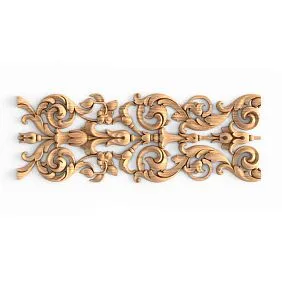


Oak and beech — premium choice for furniture and doors made of solid oak. If the door is oak, the trim on panels should also be oak — otherwise, there will be a visual break, difference in texture and color. Oak has a coarse-grained texture with contrasting growth rings, visible even on narrow trim 20 mm wide. This texture is oak’s hallmark, impossible to confuse with other species. Oak trim costs twice as much as beech trim, 3–4 times more than pine, but for oak furniture or doors, the extra cost is justified — material unity is more important than saving money.
Oak veneerOak trim must be from the same manufacturer as the main elements (doors, furniture) — guaranteeing tonal match, as oak from different batches may vary in color from light yellow to dark brown.Buy oak veneerOak trim is used not only in furniture and doors. In interiors where oak is the main species (oak parquet, oak skirting, oak casings), wall trim is also made of oak to unify all elements into a single system. Wall panels with oak trim, oak flooring, oak doors — this is about material value, status, longevity. Oak lasts decades without losing its appearance if properly treated (oil, lacquer, wax). Oak trim under transparent finish shows the full beauty of the texture; under opaque paint, this beauty is lost — hence oak is rarely painted.
Oak layout is used not only in furniture and doors. In interiors where oak is the main wood species (oak parquet, oak skirting boards, oak architraves), wall layouts are also made of oak to unify all elements into a cohesive system. Walls with oak layouts, oak flooring, oak doors — this speaks to material value, status, and longevity. Oak lasts for decades without losing its appearance if properly treated (oil, lacquer, wax). Oak layouts under transparent finish reveal the full beauty of the grain; under opaque paint, this beauty is lost — hence oak is rarely painted.
Beech trimBeech trimBeech strips for saleBeech trim is often used in Scandinavian interiors, where light wood without aggressive texture is preferred. Wall panels with beech trim, beech rails on walls, beech skirting — all this creates a calm, light, warm atmosphere. Beech is painted more often than oak — white paint on beech trim gives a clean Scandinavian style. But beech is also beautiful under transparent oil: light wood with barely noticeable texture, tactile and warm to the touch. Beech dislikes high humidity (may swell, crack), so beech trim is unsuitable for bathrooms, saunas, but ideal for living rooms, bedrooms, offices.
Beech layout is often used in Scandinavian interiors, where light-colored wood without aggressive grain is preferred. Walls with beech layouts, beech wall strips, beech skirting boards — all of this creates a calm, light, warm atmosphere. Beech is painted more frequently than oak — white paint on beech layouts gives a clean Scandinavian style. But beech is also beautiful under transparent oil: light wood with barely noticeable grain, tactile and warm to the touch. Beech does not like high humidity (may swell or crack), so beech layouts are unsuitable for bathrooms or saunas, but ideal for living rooms, bedrooms, and offices.
Beadboard and wooden metering: framing and measurement
Get Consultation
Beadboard — profiled long-form trim with complex decorative relief, used for framing mirrors, paintings, photographs, panels, as well as creating decorative elements on walls and furniture. Beadboard differs from regular trim in width (beadboard is wider: 30–100 mm vs. 10–30 mm for regular trim) and profile complexity (beadboard always has multi-step relief with protrusions, recesses, rounds).
wooden molding by the meterThis is a profiled trim with complex decorative relief, used to frame mirrors, paintings, photographs, and wall panels, as well as to create decorative elements on walls and furniture. A picture frame differs from a standard layout strip in width (picture frame is wider: 30–100 mm vs. 10–30 mm for layout strips) and profile complexity (picture frame always has multi-level relief with protrusions, recesses, and rounded edges).Beadboard can be purchased by the linear meter (hence the name), cut to required sizes for each specific object (a mirror frame 80×120 cm requires perimeter = 4 meters of beadboard, accounting for 45-degree corner cuts).Beadboard for frames: classic application — framing paintings, mirrors, photographs. Beadboard is cut into four pieces (two vertical, two horizontal), ends are mitered at 45 degrees, pieces are assembled into a frame. The back of the frame has a rebate (recess) into which glass, painting, or mirror is inserted, secured from the back with a backing (plywood, orgalite). Beadboard frame creates framing that separates the artwork or mirror from the wall, making the object self-contained and complete. Beadboard width for frames is usually 40–80 mm, profile complex (multi-step), wood is often painted with effects (gilding, silvering, patina, aging).
Beadboard for walls: decorative application — creating relief elements on walls. Beadboard is glued to walls in the form of frames (rectangular, square), framing areas with contrasting finishes (wallpaper, fabric, mirror). Beadboard can be painted to match wall color (only relief stands out) or contrastively (white beadboard on dark walls, gold on light walls). Beadboard on walls is characteristic of classical interiors (Baroque, Empire, Classicism), where decorative richness, detail, and form complexity are important. In modern interiors, beadboard on walls is used less often (prefer simpler moldings), but remains relevant in neoclassicism.
Picture frame for walls: decorative application — creating relief elements on walls. Picture frame is glued to the wall in the form of frames (rectangular or square), framing areas of the wall with contrasting finishes (wallpaper, fabric, mirror). Picture frame can be painted to match the wall color (only the relief stands out) or contrastingly (white picture frame on dark wall, gold on light wall). Picture frames on walls are characteristic of classical interiors (Baroque, Empire, Classicism), where decorative richness, detail abundance, and complex forms are important. In modern interiors, picture frames on walls are used less often (simpler moldings are preferred), but remain relevant in neoclassical styles.
Wooden metering — term denoting all long-form wooden items sold by the linear meter: skirting, casings, moldings, rails, trim, beadboard, stop, timber. "Metering" is a method of measurement and sale, where the unit of measurement is the linear meter (length of plank regardless of its width and thickness). If skirting costs 300 rubles per linear meter, a 2.5-meter plank costs 750 rubles. If trim costs 100 rubles per linear meter, you need 10 meters — cost 1000 rubles. Metering is convenient for long-form items, where each customer buys different quantities for a specific project.How to calculate metering when ordering trim and beadboard: measure all areas where trim will be used (perimeter of panels, length of panel joints, perimeter of wall frames), add them up to get total metering. For beadboard frames: perimeter of frame + 10% for 45-degree corner cuts (when cutting, 5–10 cm is lost at each corner, four corners = 20–40 cm loss). For wall trim: total length of joints + 10–15% for waste and reserve. Order metering rounded up to whole planks: if you need 12.3 meters, and planks are 2.5 meters long, you need 5 planks (12.5 meters) — better to have a reserve than to buy more (new batch may differ in tone).
How to calculate the meterage when ordering layout strips and picture frames: measure all areas where layout strips will be used (perimeters of panels, lengths of panel joints, perimeters of wall frames), add them up to get total meterage. For picture frame frames: perimeter of frame + 10% for 45-degree miter cuts (when mitered, 5–10 cm is lost at each corner; four corners = 20–40 cm loss). For wall layout strips: total length of all joints + 10–15% for trimming and reserve. Order meterage rounded up to the nearest whole plank: if you need 12.3 meters and planks are 2.5 meters long, you need 5 planks (12.5 meters) — better to have a reserve than to buy more (a new batch may differ in tone).
Functions of stop in window and door constructions: mechanical fixation of glass (stop presses glass against frame, holds it during vibrations, impacts, temperature changes), sealing (stop presses sealing tape or sealant between glass and frame, creating airtight seal), decorative finish (stop covers edge of glass, creates smooth transition from frame to glass, visually completes the construction). Without stop, glass is held only by sealant, which is unreliable — glass may pop out of frame during impact or strong wind. With stop, glass is mechanically fixed, sealant acts as additional safety, but primary load is on stop.
Where stop is required: wooden windows (stop presses glass or glass unit against frame from inside room), glass doors (stop holds glass in door frame), furniture with glass (cabinet doors, display cases, buffets — stop fixes glass in door rebate), decorative constructions (glass partitions, glass inserts in walls — stop holds glass in frame).
Stop must be of the same cross-section as required by the construction: for windows usually 10×10 mm, 12×12 mm, 15×15 mm (depending on rebate depth in frame), for furniture 8×8 mm, 10×10 mm (smaller, as glass is thinner and load is less).Buy wooden cleatFeatures of beech stop: beech stop is used in beech windows and doors, where frame is beech — stop must match species and color. Beech is hard, durable, does not rot or dry out (with proper treatment), lasts decades.
Features of beech stop: beech stop is used in beech windows and doors, where frame is beech — stop must match species and color. Beech is hard, durable, does not rot or dry out (with proper treatment), lasts decades.Oak trimOak trim is 3-4 times more expensive than pine, but for oak structures, it is the only correct choice. Oak trim has a pronounced texture (visible growth rings, pores), making it visually more interesting than pine. Under transparent varnish or oil, the oak texture acts as a decorative element; under paint, it is hidden (then the extra cost of oak is not justified — pine can be used instead).
Installing trim: trim is installed after the glass is inserted into the frame. The glass rests on the sealing tape or sealant in the frame's quarter, is pressed down, and the trim is installed on the reverse side, fastened with small nails (15-20 mm pins, no heads, almost invisible after painting) or glued (liquid nails, polyurethane glue). The trim must fit tightly against the glass and frame, with no gaps — otherwise, air will leak and the glass will rattle. Trim corners join at 45 degrees (at frame corners) or at 90 degrees (butt joint). The 45-degree joint is more elegant but more complex to install.
Replacing trim in old windows and doors: trim over time dries out, cracks, loses elasticity, and stops holding the glass tightly. The old trim is removed (carefully, to avoid damaging the glass), the glass is taken out, the frame is cleaned of old sealant, the glass is washed, and it is reinstalled on new sealing tape, pressed down with new trim. The new trim must match the old one in cross-section (to fit into the frame's quarter), species (to match the texture if the frame is under transparent coating), and color (painted to match the frame). Replacing trim is a standard procedure during restoration of old wooden windows.
How to combine trim, molding, and trim: systematic approach
Wall decoration with trim and molding: classic technique — creating panel walls. The wall is divided into rectangular panels using trim or molding. Option 1: the wall is painted one color, trim is applied on top, forming frames (contrasting trim: white on gray, black on white). Inside the frames, there is nothing — just painted wall — but the frames themselves create graphics and structure. Option 2: inside each frame — an insert (patterned wallpaper, fabric, mirror, different color paint). Trim frames the insert, emphasizing it. Option 3: inside each frame — a recess (depth 10-20 mm), with paint or wallpaper inside. Trim forms a protruding frame, creating relief and shadow.
Door decoration with trim: a panel door consists of a frame (sill) and panels (inserts). Panels are held in grooves of the frame, but a gap is visible between the panel and frame. This gap is covered by trim — a thin strip applied around the panel, covering the joint. Trim can be flat (modern style) or decorative (classic style). Trim width 15-25 mm, thickness 8-12 mm. Trim is painted to match the door color or contrasted (if the door is dark, trim is light, and vice versa). Trim on doors is a sign of quality doors, where every element is carefully finished.
Cabinet facade decoration with trim: a flat facade (MDF, particleboard, plywood) can be transformed into a framed-panel structure using trim. Trim is glued onto the facade, forming a rectangular frame, with a flat surface (panel) inside. Such a facade looks more complex, expensive, and interesting than a simple flat panel. Trim can be painted to match the facade color (only relief is emphasized) or contrasted (white trim on gray facade, black on white). Facades with trim are characteristic of neo-classical furniture, American style, Provence.
Creating panels and patterns on surfaces: trim can be used to create geometric patterns on walls, ceilings, furniture. Rectangles, squares, rhombuses, hexagons — any shapes, assembled from straight trim strips glued onto a surface. For example: a ceiling divided by trim into squares (80x80 cm grid), with different color or texture inside each square. Or a wall with a geometric pattern laid out with trim (chevron, tree, honeycomb). Trim creates lines, lines form shapes, shapes form patterns. This is more complex to install (more cutting, more joints, requires precise marking), but visually striking.
Combining trim, molding, and trim in one project: all three elements must be coordinated by species, color, and style. If doors are oak with oak trim on panels, oak trim on glazing, then molding for mirrors and pictures in this interior should also be oak (or painted to match the doors). If furniture has beech trim on facades, then baseboards, casings, moldings on walls should also be beech (or painted in a single color). Systematic approach: choose one wood species as the main one, use it for all fine elements (trim, molding, trim, rails), coordinate color (single finish: oil, varnish, paint). This creates visual unity, coherence, professionalism.
Practical checklist for selecting and purchasing trim and trim
First point — determining purpose: for what are trim and trim needed? For decorating doors, furniture, walls, windows? Purpose determines type (flat, decorative, shaped), size (width, thickness), species (for transparent finish or paint). For doors and furniture under transparent finish — species must match the main material (oak to oak, beech to beech). For walls under paint — species is not critical, beech or pine will do.
Second point — calculating material: measure all areas where trim or trim will be installed (perimeter of panels, length of panel joints, perimeter of wall frames, perimeter of glazing). Add up, get total length. Add 10-15% for cuts, mitered corners, reserve. Convert length to number of strips: if 25 meters needed, and each strip is 2.5 meters long, 10 strips are required. Order with rounding up.
Fourth point — coordination with main elements: trim and trim must match the species and color of doors, furniture, windows they belong to. If the door is oak, trim is oak. If the furniture is beech, trim is beech. If windows are painted pine, trim is painted pine. Do not mix species under transparent finish — texture difference is noticeable. Under opaque paint, mixing is allowed (texture is not visible).
Fourth point — coordination with main elements: layout strips and trim must match the wood species and color of doors, furniture, and windows they relate to. If the door is oak, the layout strips are oak. If the furniture is beech, the layout strips are beech. If the windows are painted pine, the trim is painted pine. Do not mix wood species under transparent finish — grain differences are noticeable. Under opaque paint, mixing is acceptable (grain is not visible).
Fifth point — quality check upon receipt: trim and trim must be straight (no bends, no warping), with precise dimensions (width and thickness are uniform along the entire length), with smooth surface (no scratches, no chips, no wood splinters), with moisture content 8-12% (if moisture is higher, items will dry out after installation, creating gaps). Check each strip before installation.
Seventh point — storage until installation: store trim and trim in a dry room, horizontally, on a flat surface, wrapped in stretch film or cardboard. Do not store outdoors, even under a canopy — wood will absorb moisture, swell, and then dry out after installation. Do not store vertically leaning against walls — thin strips will bend under their own weight.
Seventh point — installation: trim is installed with glue (liquid nails, carpenter's PVA), pressed down, and secured with painter's tape until the glue dries. Trim is installed with small nails (15-20 mm pins) or glue. Cutting trim and trim — with a miter saw (clean cut, precise angle), not with a hand saw (uneven cut, chips). Corner joints — at 45 degrees for frames, butt joint for straight connections.
These are small elements that work on detail, quality of execution, and completeness. Without them, the interior looks unfinished, random, unprofessional. With them — thoughtful, detailed, expensive.
Wooden molding, wooden trim, wooden molding by the meterThese are small elements that contribute to detail, quality of execution, and completeness. Without them, the interior looks unfinished, random, and amateurish. With them — thoughtfully designed, detailed, and luxurious.Wooden moldingTransforms a flat facade into a framed-panel structure.Buy wooden cleatNeeded for mechanical fixation of glass — this is reliability that serves for decades.
STAVROS produces trim, trim, molding of various cross-sections, profiles, species:Flat wooden plank(width 10-25 mm),Decorative wooden molding(width 15-40 mm, with profile),decorative trim(width 30-50 mm, complex profile),trim(cross-sections from 8×8 mm to 15×15 mm),molding(width 30-100 mm, multi-step profile). Species: pine, beech, ash, oak. Finishes: planed, machine-sanded, hand-sanded. Coatings: unfinished (for painting), oiled (natural texture), painted (ready for installation).
Oak veneer, Beech trim, Oak trimPremium wood species for high-end furniture and doors.Buy oak veneer, Beech strips for saleAvailable by the linear meter, cut to project dimensions.Beadboard can be purchased by the linear meter (hence the name), cut to required sizes for each specific object (a mirror frame 80×120 cm requires perimeter = 4 meters of beadboard, accounting for 45-degree corner cuts).For making mirror and picture frames, for decorative wall finishing.Buy wooden trimAvailable from warehouses in St. Petersburg and Moscow (standard profiles in stock) or order from production (non-standard profiles, custom coloring).
STAVROS Production: precise geometry (tolerance ±0.3 mm), smooth surface (planed or sanded), low moisture content (8-12%, kiln-dried), quality control at every stage. Packaging in stretch film, delivery across Russia. Consultations on selecting trim and molding for your project, material calculation, assistance in choosing wood species and finishes. For furniture manufacturers and carpentry workshops — wholesale prices, custom profiles per drawings. Contact: 8 (800) 555-46-75, websitestavros.ru. STAVROS — details that create quality.