












































































Article Contents:
- Oak - the king among wood species
- Technical specifications of oak veneer
- Dimensional characteristics
- Moisture and Stability
- Grade and processing quality
- Types of oak veneer profiles
- Flat veneer
- Profiled veneer
- Carved veneer
- Corner veneer
- Application of oak veneer in interior design
- Wall compositions
- Doorway decoration
- Baseboards and cornices
- Furniture decor
- Advantages of oak veneer
- Unmatched durability
- Aesthetic superiority
- Ecological and health benefits
- Status and prestige
- Features of installing oak veneer
- Preparation stage
- Mounting methods
- Medium-thickness pieces are attached using a combined method - with adhesive and additional mechanical fixation.
- Finishing
- Maintenance and operation
- Regular Cleaning
- Protection against damage
- Restoration and renewal
- Choosing and purchasing oak veneer
- Quality Criteria
- Calculating required quantity
- Where to buy
- Stylistic solutions
- Classic style
- Neoclassicism
- Loft and modern style
- Scandinavian Style
- FAQ - Frequently Asked Questions
- Conclusion
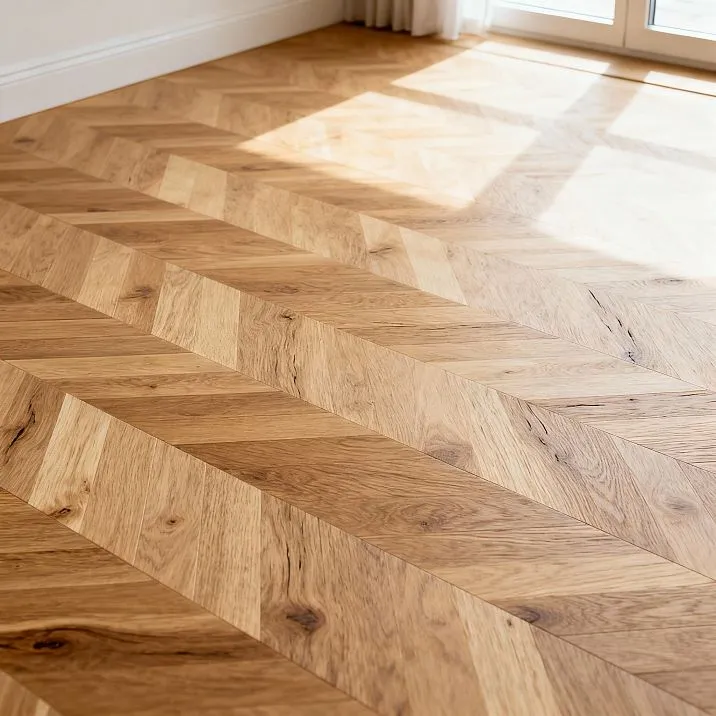
When it comes to creating an interior that will delight the eye and serve for decades, professionals invariably turn to one material.Oak veneer- it is not just a decorative element, but an embodiment of aristocracy, reliability, and natural beauty. This thin plank made from solid oak wood is capable of transforming an ordinary room, adding depth, character, and that special atmosphere only premium natural materials can create. Why exactly oak has become the standard in the worldwood trimThe answer lies in the unique combination of technical characteristics and aesthetic qualities of this legendary species.
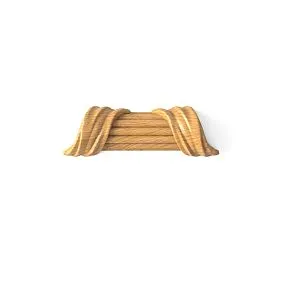
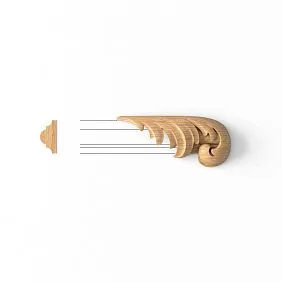
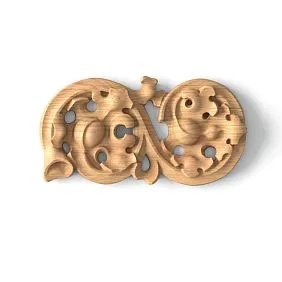



Oak - the king of wood species
For centuries, oak has been considered a symbol of strength, longevity, and nobility. This reputation is not without merit - the physical and mechanical properties of oak wood truly surpass most other species. The density of oak ranges from 700 to 950 kilograms per cubic meter, depending on the tree's age and growing conditions. Such high density ensures exceptional strength and resistance to mechanical stress, which is critically important for longevity.buy oak trimwhich must withstand long-term use.
The hardness of oak on the Brinell scale reaches 3.7-4.2 units, allowing the creation of delicate decorative elements with precise detailing.oak trimmaintains sharp edges and depth of relief even after decades of intensive use. No other available species can boast such an impressive combination of hardness and simultaneous workability.
The structure of oak wood deserves special attention. The presence of medullary rays creates a unique play of light on the surface of finished products. These natural reflectors, penetrating the wood from bark to core, impartoak veneera special depth and expressiveness. When sunlight falls on an oak surface at different angles, the texture literally comes alive, showcasing all the richness of the natural pattern.
The color palette of oak wood is impressive in its range. Young oak has light honey tones with a slight yellow hue. As the wood ages, it darkens, acquiring rich brown tones with characteristic golden highlights.oak trim buyIt can be found in various color variations - from nearly white white oak to deep chocolate tones of marine oak, which has spent years underwater.
Resistance to moisture is another legendary property of oak. Unlike most species, oak wood does not deteriorate upon contact with water; instead, it becomes even stronger. Tannins contained in the oak structure act as a natural preservative, protecting the material from rot and biological damage.Buy oak veneerfor the kitchen or bathroom - a sensible solution guaranteeing longevity.




Technical specifications of oak veneer
Understanding technical parameters helps make the right choice and avoid disappointments.Oak veneerIt is produced in a wide range of sizes, allowing you to select the ideal option for any project.
Our factory also produces:


Dimensional characteristics
The thickness of oak veneer varies from 8 to 25 millimeters. Thin strips of 8-12 millimeters are primarily used for light decoration, creating wall compositions, and finishing furniture facades. The medium thickness of 15-18 millimeters is considered universal and suitable for most tasks - from concealing joints to creating decorative panels. Thick veneers of 20-25 millimeters are used where increased strength is required or to create a pronounced surface relief.
The width of the products ranges from a minimum of 16 millimeters to impressive 120 millimeters. NarrowOak veneerstrips 16-30 millimeters wide are ideal for fine work - framing small elements, creating elegant lines in wall compositions. The medium width of 40-60 millimeters is the most popular category, combining sufficient expressiveness with ease of installation. Wide strips of 80-120 millimeters are used to create large decorative elements, imitating traditional wall panels.
The standard length of strips is 2000-3000 millimeters. This is the optimal size, allowing to minimize the number of joints during installation of long sections. Some manufacturers offer strips up to 4000 millimeters in length, which is especially valued when decorating large spaces.Buy oak trim in St. PetersburgorBuy oak trim in MoscowIt can be ordered in standard sizes with the option to cut to specific requirements.
Get Consultation
Moisture and stability
Moisture content of wood is a critically important parameter determining the stability of the finished product.Production of trim elementsIt includes mandatory kiln drying until the moisture content reaches 8-10 percent. Only at these levels is oak wood in equilibrium with the atmosphere of heated rooms and does not shrink or expand after installation.
Over-dried wood with moisture content below 6 percent may crack after installation, absorbing moisture from the air. Under-dried wood with moisture content above 12 percent will dry out, creating gaps between strips and deforming.Oak casingCorrect moisture content preserves geometry for decades.
Grade and quality of processing
Oak veneer is available in several grades, differing in the number and size of allowable defects. Grade Extra does not allow any visible flaws - knots, cracks, resin pockets, color changes. This veneer is ideal for elite interiors, where every detail must be flawless.natural oak casingGrade Extra - the choice of perfectionists.
Grade A allows small healthy knots up to 10 millimeters in diameter, no more than 2-3 per linear meter. This is the optimal choice for most projects where the natural beauty of wood with its natural grain is appreciated.Oak skirting board for saleGrade A means getting quality material at a reasonable price.
Grade B allows more noticeable natural wood features - knots up to 25 millimeters, small cracks, contrasting stripes. This veneer looks quite presentable after staining or painting and is suitable for high-traffic areas where functionality is important.
Types of oak veneer profiles
The variety of shapes allows solving the most diverse design tasks.
Flat veneer
FlatOak veneerFlat veneer is a simple smooth plank with a rectangular cross-section. Despite its apparent simplicity, this variety is the most versatile and popular in modern design. The clear lines of flat veneer create graphic effects and structure space.
In minimalist interiors, flat oak veneer is used for wall zoning, creating geometric compositions, framing mirrors and panels. The natural color of oak combines beautifully with concrete, glass, and metal, creating a warm contrast with cold industrial materials.Flat wooden plankOak veneer is especially effective in Scandinavian interiors.
In modern classic interiors, flat veneer forms strict rectangular panels on walls, which are then painted or covered with contrasting wallpaper. This technique visually raises the ceiling and adds architectural expressiveness to the room. The plank width is selected depending on the room's scale - in small rooms, narrow planks of 30-40 millimeters are used, while spacious halls suit wider profiles of 60-80 millimeters.
Profiled veneer
Profiled veneer has a three-dimensional cross-section with various relief options. The simplest variant is a rounded edge, which softens the rigidity of lines and creates a more traditional, cozy look. Suchwooden veneer with a decorative profileOak veneer with a decorative profile is often used in Provence and country styles.
More complex profiles include multiple levels of relief - protrusions, recesses, bevels at various angles. The play of light and shadow on such surfaces creates rich plasticity, which brings walls to life and adds depth to the interior.Decorative wooden moldingsMoldings with complex profiles - the hallmark of classical and neoclassical interiors.
Carved veneer
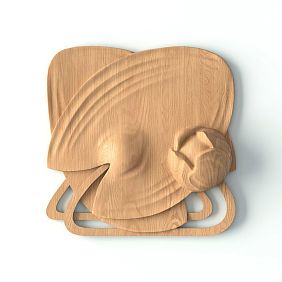
Carved oak veneer is the pinnacle of craftsmanship in producing trim items. Relief patterns - floral ornaments, geometric patterns, classical motifs - are applied to its surface. Creating such items requires high skill and modern CNC equipment, which ensures precision and repeatability of details.
Carvedwooden wall moldingsOak veneer is used as a standalone decorative element, attracting attention and becoming the focal point of the composition. Such planks frame mirrors, fireplaces, and doorways in palace and estate interiors. The hardness of oak allows creating delicate carving elements that retain sharp contours for decades.
Corner veneer
Corner veneer has a cross-section in the shape of a right angle and is intended for decorating external and internal corners of rooms.Wooden corner veneerOak corner veneer not only protects vulnerable areas from mechanical damage but also gives corners a finished, neat appearance.
External corners are the most vulnerable zones in a room. When moving furniture or during accidental impacts, it is precisely the corners that suffer first. Oak corner trim of 15-20 millimeters thickness reliably protects these areas. This is especially relevant in children's rooms, hallways, and high-traffic areas.
Interior angles often have non-ideal geometry after finishing. Corner installation masks these imperfections, creating a clean joint line. In rooms clad with paneling or wall panels, corner installation covers material ends and gives the finish a professional look.
Application of oak paneling in interior design
The versatility of oak paneling opens up limitless creative possibilities.
Wall compositions
Creating decorative wall panels is one of the most effective applications of oak paneling. A classic approach is dividing the wall horizontally with a plank into two sections, then applying different finishes to the upper and lower zones. Traditionally, paneling is installed at a height of 90-100 centimeters from the floor — at chair-back level. The lower section is painted in a darker shade or covered with dense wallpaper, while the upper section is finished in lighter tones.
Forming rectangular panels by creating frames from oak paneling gives walls architectural expressiveness. Panel size is chosen depending on the room’s proportions. In rooms with high ceilings, vertical elongated panels are appropriate, emphasizing height. In low-ceilinged rooms, horizontal proportions are preferred, visually expanding the space.
Geometric compositions made from intersecting planks create a modern graphic pattern on walls.wooden planks on the wallOak planks can be arranged vertically, horizontally, diagonally, or to create complex patterns. Painting planks in contrasting colors enhances the graphic effect.
Doorway Decoration
Oak Door ThresholdTraditional and always relevant application of oak paneling. Door frame trim serves a dual function: it covers the installation gap between the frame and the wall, while simultaneously creating decorative trim.Oak door trimThe trim should harmonize with the door panel in color and style.
For classic doors with panels, profiled trim with smooth curves is suitable. For modern smooth doors, flat rectangular-sectioned trim is appropriate.Buy oak door trimThe trim should be the same width around the entire opening to create a harmonious composition.
Telescopic trim has a special groove into which a filler board fits. This construction allows adjusting the trim width according to wall thickness.Oak door trim for interior doorsTelescopic trim ensures perfect fit without gaps.
Oak capitals and rosettes complement trim, creating complex multi-level framing in palace style. Such compositions are especially effective in spacious rooms with high ceilings.oak door casings for purchaseWith additional decorative elements means creating an accent in the interior.
Baseboards and cornices
Wooden baseboardOak baseboards — the choice of those who value durability and aesthetics. Floor baseboards experience constant mechanical stress — impacts from moving furniture, contact with shoes, and wet cleaning. The strength of oak guarantees that baseboards will retain their original appearance even in areas of intensive use.
wooden baseboardOak baseboards are available in heights from 50 to 200 millimeters. Standard height of 70-100 millimeters suits most residential spaces.Wide Wooden Skirting BoardBaseboards with height of 120-150 millimeters are used in rooms with high ceilings, creating a sense of scale and solidity.
with a classic profile creates a sense of solidity, reliability.Baseboards may have a cable channel for concealed wiring. This practical solution is especially relevant in modern apartments with abundant electronics and gadgets.and paint it to the desired shade — standard practice in modern design. It is important to use special wood finishes that allow the material to breathe.With a cable channel means combining aesthetics with functionality.
Ceiling baseboard woodenOak cornices, also called crown molding, frame the room perimeter at the top.Wooden ceiling baseboardCornices mask the technological gap between wall and ceiling, creating a smooth transition between surfaces.Wooden ceiling baseboardCornices may have a simple triangular profile or a complex multi-step form with carved elements.
Furniture decor
Furniture corniceOak cornices crown cabinets, buffets, and display cases, giving them a classic finished look. Furniture cornices have a pronounced relief profile and protrude from the body by 30-80 millimeters.wooden cornices for furnitureOak is especially effective in classic-style kitchen cabinets.
Wooden molding for furnitureUsed to create panels on cabinet fronts, frame glass inserts, and decorate cabinet cornices. Thin oak veneer applied to a flat MDF or plywood door transforms it into an elegant panel structure.buy wooden cornice for furnitureMade of oak means investing in the longevity of the kitchen set.
Kitchen furniture corniceProtects the upper part of cabinets from dust accumulation and creates a finished look for the set.Buy wooden cornicesAvailable both as pre-painted and in natural color for individual tinting to the desired shade.
Advantages of oak veneer
Why professionals choose oak specifically for making decorative elements?
Unmatched durability
The service life of quality oak veneer is measured in decades. In European homes built 200-300 years ago, oak decorative elements still retain functionality and attractiveness.wood trim itemsMade of oak is an investment that pays off multiple times due to the absence of replacement needs.
Resistance to mechanical damage allows using oak veneer in high-traffic areas without concern for its preservation. The hardness of oak means that its surface practically does not retain dents from accidental impacts. Scratches on oak appear much less frequently than on softer woods, and they can easily be removed by sanding.
Geometric stability is another aspect of durability. Properly dried oak veneer does not warp, crack, or change dimensions after installation.Wooden trimMade of oak maintains tight contact with the base even with fluctuations in room humidity and temperature.
Aesthetic superiority
The texture of oak wood possesses unique expressiveness. Clearly visible annual rings, heartwood rays creating a characteristic sheen, natural color variations — all these elements form an irreplaceable natural pattern. Each plank is unique; there are no two absolutely identical ones.
The tones of oak do not require additional embellishment. The natural color of oak wood is so excellent that the best finish is a transparent lacquer or oil, which enhances but does not conceal its natural beauty.Buy wooden trimMade of oak can be used without final coating for individual processing to the desired shade.
Patination is a natural process of noble aging of oak. Over time, oak wood darkens, acquiring a deep noble tone with a slight golden hue. This patina only enhances the aesthetic value of the item. While artificial materials fade and lose appeal over time, oak becomes even more beautiful.
Ecological and Health Benefits
The naturalness of oak wood guarantees absolute safety for health. Oak does not emit toxic substances under any operating conditions.Wood TrimMade of oak can be safely used in children's rooms, bedrooms, and homes of people with allergies and heightened sensitivity.
The antiseptic properties of oak are due to high tannin content. These natural substances suppress the development of pathogenic microorganisms, fungi, and mold. Bacteria do not multiply on oak surfaces even in humid environments.Wooden profileMade of oak creates a healthy microclimate in the room.
The ability to regulate humidity is a unique property of natural wood. Oak absorbs excess moisture when humidity increases and releases it when humidity decreases, maintaining a comfortable balance in the room.Buy wooden profilesMade of oak means investing in the health of the family.
Status and prestige
Oak has always been a material of the elite. Using oak elements in interior design highlights the owner's status and their commitment to traditional values of quality and durability.Trimming ItemsMade of oak speaks to taste and understanding of the true value of materials.
The versatility of application allows using oak paneling in interiors of any style—from classic to modern minimalism. Oak is equally suitable for a country estate and an urban apartment, a prestigious office and a cozy café.Buy molding SPBorMolding Moscowmade of oak—choice of discerning clients.
Features of installing oak paneling
Correct installation guarantees longevity and aesthetic appearance.
Preparation Stage
Acclimatization of the material before installation is critically important. Oak paneling must be left in the room where it is planned to be installed for at least 48–72 hours. During this time, the wood will reach equilibrium moisture content, matching the room’s microclimate. Installation without acclimatization may result in gaps or warping.
Surface preparation includes leveling, cleaning, and priming the base.Buy oak wooden planks for wallsIf planned to be glued, the wall must be perfectly flat, dry, and primed. On uneven surfaces, a wooden lath is installed beforehandoak planed planks.
Marking is performed with maximum precision. Use a laser level to draw horizontal and vertical lines. Calculate the placement of joints so they are located in the least noticeable areas.buying wooden planks in St. PetersburgAllow an additional 10–15 percent for trimming.
Methods of mounting
Adhesive mounting is used for light, thin paneling up to 12 millimeters thick. Liquid nails, construction adhesive, or special woodworking glue are applied. The adhesive is applied in dots or in a zigzag pattern to the back of the paneling, the plank is pressed against the base and secured with painter’s tape until fully dry.form the architecture of walls and ceilings, creating a play of light and shadow.These are installed precisely this way.
Medium-thickness panels are mounted using a combined method—on adhesive with additional mechanical fastening.Wooden rails Medium-thickness pieces are attached using a combined method - with adhesive and additional mechanical fixation.
Mounting with clips—a modern method of concealed installation. Special metal clip plates are screwed into the base, and the paneling clicks into place. This method allows for disassembly without damaging the elements if necessary.Oak wooden planks for wallswith clip system—choice of professionals.
Trimming and jointing
Trimming corners at 45 degrees is the most difficult operation for non-professionals. Use a hand saw with a miter gauge or a circular saw with an angled blade. Oak wood is hard, so the saw must be very sharp with fine teeth. Cut from the front side to avoid scratches on the visible surface.
Straight sections are joined at a 90-degree angle. The end of each plank must be perfectly perpendicular to the longitudinal axis. Even a slight deviation will create a noticeable gap at the joint. After trimming, the ends are sanded with fine sandpaper to remove burrs.
If usingwooden veneer with a decorative profilewith repeating ornament, plan the joint placement so the pattern aligns. This requires additional material, but ensures a flawless result.
Final finishing
The mounting points are filled with acrylic wood putty matched to the paneling’s tone. The putty is applied with a rubber spatula, excess is immediately removed. After drying, the filled area is sanded with fine sandpaper until completely smooth.buy wooden lumberDark-toned panels are easier to finish—mounting points are less noticeable.
Protective coatings extend service life and simplify maintenance. To preserve the natural oak color, use water-based transparent lacquer or wood oil. Lacquer is applied in 2–3 coats with intermediate sanding. Oil is rubbed in with a soft cloth, excess is wiped off.Interior oak plankWhen oiled, it acquires a noble matte sheen.
Staining is used when changing the paneling’s color. Use special wood paints that do not completely cover the texture. Paint is applied in a thin layer with a brush or spray gun along the grain.Decorative oak plankWell accepts any dyes due to its open porous structure.
Care and Maintenance
Proper care preserves the original beauty of oak parquet for decades.
Regular cleaning
Dry cleaning is performed with a soft dry cloth or a special brush to remove dust. Wipe the parquet once a week along with regular cleaning. Dust accumulating in the relief of profiled parquet is removed with a soft brush or a vacuum cleaner with a furniture attachment.
Wet cleaning is allowed, but with restrictions. Use a slightly damp, well-wrung cloth. Water must not run down the surface or seep into the joints. ForSolid Wood Skirting Boardthe part that contacts the floor, you can use special wood surface care products.
Stain removal should be done immediately upon appearance. Grease stains are wiped with a cloth soaked in a mild dish soap solution, then dried. Stains from fruit, wine, and coffee are removed with diluted vinegar.Oak parquetrequires more careful handling, oak is more resistant to stains.
Protection against damage
Prevention of mechanical damage includes careful handling when moving furniture. Use felt pads on the legs of chairs and tables. When moving large furniture, protect the corners and protruding elements of the parquet with cardboard or plastic film.Wooden corner veneerIt protects walls, but it also requires careful handling.
Protection against moisture is especially important for untreated wood. In bathrooms and kitchens, oak parquet should be treated with moisture-resistant finishes — yacht varnish, oil with water-repellent additives. Immediately wipe away any water. Do not allow even prolonged contact with water, even for moisture-resistant oak.
Protection against direct sunlight prevents fading. Although oak is more resistant to ultraviolet rays than light-colored woods, prolonged exposure to direct sunlight may change the color. Use curtains or blinds on south-facing windows.oak lumberWith UV-protective varnish, it is less prone to fading.
Restoration and renewal
Sanding removes minor scratches and scuffs, restoring the parquet's original appearance. Use fine-grit sandpaper with grit 180-220. Sand along the grain with light strokes. After sanding, remove dust and apply a fresh layer of varnish or oil.Beech parquetis easier to sand due to its softer wood.
Renewal of the finish is performed every 5-7 years depending on usage intensity. Old varnish is removed by sanding or special strippers. The surface is cleaned, degreased, and covered with a fresh protective finish.Beech parquet for saleor oak can be refreshed at any time, restoring their original luster.
Repainting allows changing the color of the parquet when changing the interior. Remove the old finish by sanding until clean wood is revealed. Apply a stain of the desired shade, then cover with varnish or oil once dry.Solid beech parquetdue to its light color, easily tones to any shade; oak has a certain color range.
Choosing and purchasing oak parquet
A thoughtful choice guarantees satisfaction with the purchase and many years of use.
Quality criteria
Color uniformity is the first sign of quality material. Boards from the same batch should have minimal color differences. Check the parquet under natural light — artificial light may hide defects.Oak skirting boards SPBfrom reliable manufacturers are carefully sorted by shade.
The absence of defects is critically important for Extra and A grades. Check each board for knots, cracks, resin pockets, blue stain, mold marks. Even a small defect may grow over time.Oak skirting board in SPB for saleshould only follow visual inspection or from companies with an impeccable reputation.
The geometry of the items is checked visually and with tools. Place the board on a flat surface — it should lie flat across its entire surface without gaps. Check straightness by looking along the board — bends and twists are not allowed.Oak solid casingmust have perfect geometry throughout its entire length.
Humidity is determined by a special hygrometer. Optimal values for interior items are 8–10 percent with a tolerance of plus or minus 1 percent. Too dry or too humid wood will cause problems after installation. Reliablepogonаж manufacturerscontrol humidity at all stages of production.
Calculation of required quantity
Room measurement is performed with maximum accuracy. For wall compositions, draw a layout diagram indicating all dimensions. Take into account door and window openings, niches, protrusions.Wooden planks SPBare calculated based on a specific project.
Waste allowance is mandatory. When cutting corners at 45 degrees, material loss is inevitable. The standard reserve is 10–15 percent of the calculated quantity. For complex compositions with many corners and joints, the reserve increases to 20 percent.Buy wooden planks for decorationshould be purchased with a reserve.
Purchasing from a single batch guarantees uniform color and texture. Boards from different batches may show noticeable shade differences even with the same species and grade. For large volumes, order all material at once.Wooden planks for wall decorationfrom a single batch will create a harmonious composition.
Where to buy
Direct manufacturers offer the best prices and full assortment. Buying directly eliminates retail markup, guarantees fresh material with correct humidity parameters.molding productionusually offer delivery and consultations on selection.
Construction hypermarkets are convenient for accessibility, but their assortment is limited to popular items. Prices are usually higher due to retail markup. Quality may vary depending on the supplier.Molding SPBin hypermarkets are presented in standard profiles.
Specialized stores for purlins offer a wide selection of profiles, species, and sizes. Consultants will help select the optimal option and calculate the quantity. Prices are in the middle range between manufacturers and hypermarkets.Pogonаж pricein such stores depends on the season and purchase volume.
Stylistic solutions
Oak paneling fits organically into interiors of various styles.
Classic style
In classic style, oak paneling is a mandatory element. HighWooden skirting boardswith profiled surfaces, wall panels with oak framing,wooden wall moldingswith carved decoration create an atmosphere of an aristocratic home.wooden oak casingwith capitals frame doorways.
Ceiling cornices made of oak with complex profiles and carving crown the room. Dividing walls horizontally with paneling at two-thirds creates traditional proportions.Ceiling skirting board made of wood, height 100-150 mm, enhances the perception of ceiling height.Ceiling skirting board made of wood, height 100-150 mm, enhances the perception of ceiling height.
Neoclassicism
Neoclassicism uses oak planking sparingly. Minimalist profiles without excessive ornamentation, light shades of white-washed or bleached oak. Wall panels with simple framing create structure without overloading.Wooden profilesform strict geometry.
Floor baseboard woodmedium height 80-100 mm with smooth profile curves. Painted in light tones or white with light brushing, emphasizing texture.wooden skirting board purchasePainted means preserving the nobility of oak while adapting to the interior color scheme.
Loft and modern style
In loft, oak creates a warm contrast with concrete and metal. Wide, heavy planks of aged oak with pronounced texture.Oak beamused for decorative beams,wooden strips, beamsform accent walls.
Dark stained oak tones — wenge, chocolate, graphite — emphasize industrial character. Intentional roughness of finish, preservation of natural defects create authenticity.Buy oak beamsFor loft, it means adding naturalness to industrial space.
Scandinavian style
Scandinavia loves light oak. Bleached or painted white oak planking retains expressive texture. Simple flat profiles without ornamentation.Wooden plankin natural light shade for zoning and decoration.
Functionality prevails over decoration.Wooden boards in interiorcreate storage systems, hooks, shelves.Decorative wooden stripmade of light oak fits perfectly into Scandinavian aesthetics.
FAQ - Frequently Asked Questions
What are the advantages of oak planking over pine?
Oak planking surpasses pine in all key parameters. Oak's hardness is 2-2.5 times higher than pine, ensuring resistance to mechanical damage and scratches. Oak's density (700-950 kg/m³) versus pine's (400-500 kg/m³) guarantees geometric stability under humidity fluctuations. Moisture resistance allows using oak planking in humid areas without concern. Aesthetically, oak surpasses pine in tone nobility and texture expressiveness. Oak products last 2-3 times longer than pine ones. Pine's only advantage is lower cost, but considering longevity, oak is more economical in the long run.
What profile of planking to choose for a classic interior?
For a classic interior, optimal are profiled planks with smooth curves and light relief. Avoid overly complex carved profiles that may overload the interior. Universal choice — planking with a semicircular protrusion and one or two bevels, creating play of light and shadow. Width 50-70 mm, thickness 15-18 mm suits most rooms. For high ceilings, choose wider profiles 80-100 mm. Color — natural oak with transparent lacquer or light tinting in warm brown tones. For neoclassicism, more minimalist profiles with minimal decoration are suitable.
Can oak planking be used in a bathroom?
Yes, oak planking is ideal for bathrooms due to oak's high moisture resistance. However, proper preparation is required. Treat planking with moisture-resistant compound — yacht lacquer in 3-4 layers, oil with water-repellent additives, or special impregnation for humid areas. Avoid direct water contact — do not install planking in shower zone without additional protection. Ensure good ventilation to prevent stagnant moisture. Under these conditions, oak planking will last decades in the bathroom without quality loss. Tannins in oak's structure naturally prevent mold and fungus growth.
How to calculate the required amount of planking?
Measure with a tape measure the length of all areas where planking installation is planned. Add up the values — this is the base linear meter amount. Add 10-15% for trimming at straight joint connections. If 45-degree corner joints are planned, increase reserve to 15-20%. For complex compositions with multiple elements, reserve should be 20-25%. Consider standard plank length — usually 2-3 meters. Plan joint placement in least noticeable areas. Purchase all material from one batch for color uniformity. It’s better to buy slightly more than to discover shortage during installation — purchasing an exact match may be difficult.
Is it necessary to cover oak planking with protective compounds?
Absolutely necessary. Even durable oak requires protective coating to preserve its aesthetic qualities and simplify maintenance. Unprotected wood absorbs dirt, grease, moisture, darkens unevenly, and loses its appeal. The choice of protective coating depends on the desired effect. Water-based transparent lacquer highlights the texture, creates a glossy or matte finish, and is easy to clean. Wood oil gives a natural look, pleasant to the touch, and requires periodic renewal. Wax creates a soft sheen, protects against moisture, but is less resistant to abrasion. In humid areas, yacht varnish or special moisture-resistant coatings are mandatory. Apply 2-3 layers with intermediate sanding for maximum protection.
How to care for oak baseboard?
Regular care is simple and does not require special tools. Wipe the baseboard weekly with a soft dry cloth to remove dust. Monthly, you can perform a damp cleaning with a slightly damp, well-wrung cloth. Do not use abrasive cleaners, stiff sponges, or aggressive chemicals. For lacquered surfaces, use special furniture polishes. For oil-based finishes, use natural oil-based products. Immediately remove any stains - fresh stains are easy to remove, but old ones may become embedded. Avoid prolonged contact with water. Protect from direct sunlight using curtains. Every 5-7 years, renew the protective coating by sanding and applying a fresh layer of lacquer or oil.
Can oak baseboard be painted in another color?
Yes, oak baseboard can be painted in any color, preserving or hiding the wood grain. To change the shade while preserving the texture, use stains or tinting oils. They penetrate the wood structure, coloring it from within. Available shades range from light walnut to black wenge. For complete color change, use opaque wood paints. Acrylic paints create a dense, smooth finish. Alkyd paints are more resistant to abrasion. Before painting, sand the surface, remove dust, and apply primer. Apply paint in thin layers along the grain. A popular trend is painting in white with light brushing, emphasizing the texture.
How does baseboard differ from molding and casing?
These are related terms with some differences. Baseboard is a general term for thin decorative strips, primarily used to cover joints and gaps. It usually has a simple profile and narrow width (16-60 mm). Molding is a broader term for any decorative applied elements. Moldings can have complex relief profiles and be used as standalone decor. Moldings are usually wider - from 40 to 150 mm. Casing is a specialized type of baseboard for framing door and window openings. It has specific dimensions and shape for this purpose. In practice, the boundaries between these terms are blurred, and many manufacturers use them interchangeably. What matters are the actual product characteristics - dimensions, profile, and quality.
What is the lifespan of oak baseboard?
With proper installation and minimal maintenance, quality oak baseboard lasts 50-100 years or more. Oak decorative elements from the 18th-19th centuries in European mansions and castles still retain functionality and appeal. Key factors for longevity: proper wood moisture at installation, quality protective coating, absence of critical defects, regular coating renewal. Oak’s mechanical strength allows baseboard to withstand decades of use without visible damage. Biological resistance protects against mold, mildew, and insects. If needed, oak baseboard can be restored multiple times - sanded, repainted, or recoated. This makes oak products practically eternal. Compare with plastic analogs that yellow and crumble after 10-15 years, or MDF, which cannot be restored.
Is it worth paying extra for oak baseboard?
The question is incorrect - this is not an extra cost, but a proper investment. Yes, oak baseboard costs 2-3 times more than pine or MDF analogs. But consider the long-term perspective. Oak baseboard lasts 50-100 years versus 10-15 years for artificial materials. Over 50 years, you will need to replace cheap analogs 3-4 times, each time paying not only for the material, but also for dismantling the old, preparing surfaces, and installing the new. Total costs will be many times higher than the cost of oak baseboard. Add aesthetic superiority of natural oak, its ability to enhance interiors, eco-friendliness, and restorability. Oak baseboard increases property value - apartments with quality natural material finishes sell faster and at higher prices. This is an investment in comfort, health, prestige, and future property value.
What width of baseboard is suitable for small rooms?
For small rooms up to 15-20 square meters, narrow baseboard 30-50 mm wide is optimal. Too wide planks visually overload the space, making it appear even smaller. Narrow baseboard creates elegant lines, structures the space without pressure. For rooms 20-30 square meters, medium width 50-70 mm is suitable. In spacious rooms over 30 square meters, wide planks 70-100 mm are appropriate, matching the scale of the space. For ceiling baseboards, the rule is: the higher the ceiling, the wider the baseboard should be. At standard height of 2.7 meters, optimal width is 70-90 mm; at 3 meters and above - 100-150 mm. Floor baseboards in small rooms should not exceed 80 mm, in spacious rooms - 100-150 mm.
Conclusion
Oak veneerIt is not just a decorative interior element, but a manifestation of the philosophy of quality, durability, and natural beauty. In a world where disposability is the norm and artificial materials replace natural ones, choosing oak baseboard is a conscious decision in favor of true values. Oak served our ancestors a century ago, serves us today, and will serve our descendants tomorrow.
The unique combination of technical characteristics makes oak an unparalleled material for trim products. Hardness ensures resistance to mechanical damage. Density guarantees geometric stability. Moisture resistance expands application areas. Aesthetic qualities - expressive texture, noble tones, ability to patina - create a unique look.
Universality of application allows using wood trim items made of oak in interiors of any style. Classic and neoclassical styles find traditional nobility in oak. Modern style and minimalism appreciate clean lines and natural texture. Loft and industrial interiors use oak as a warm contrast to cold materials. Scandinavian style loves light oak tones and functionality.
Ecological safety and health benefits make oak baseboard an ideal choice for living spaces. Absence of toxic emissions, antiseptic properties, and ability to regulate humidity create a healthy microclimate. This is especially important for families with children, allergy sufferers, and those with heightened sensitivity.
Economic rationality of choosing oak becomes evident in the long term. High initial cost is offset by exceptional longevity - 50-100 years of service without replacement. Possibility of multiple restorations extends the life of products almost indefinitely. Oak baseboard increases property value, which is especially relevant when selling.
Company STAVROS - recognized leader in production of oak trim products of the highest quality. Using premium raw material from ecologically clean regions, modern European equipment, and time-tested technologies, STAVROS creates products meeting the strictest requirements. Each plank undergoes multi-stage quality control at all production stages.
Production of trim elementsRaw material selection at STAVROS begins with careful selection. Only oak aged 80-100 years or more with dense, uniform structure is used. Kiln drying in modern drying chambers ensures optimal moisture content of 8-10% with precision to 0.5%. Processing on high-precision CNC machines guarantees ideal geometry and surface cleanliness.
Wide range of profiles, from simple flat strips to complex carved moldings, allows selecting the ideal solution for any project. Manufacturer of trim STAVROS offers more than 200 standard profiles and manufactures custom-made items according to customer drawings. This opens up limitless possibilities for implementing unique design solutions.
can be delivered to any region of Russia.Buy molding SPBorMolding Moscowcan be delivered to any region of Russia
Professional consulting support helps clients make the right choice. STAVROS specialists will select the optimal profile, calculate the required material quantity, recommend installation methods and finishing options. Technical documentation and installation instructions are included with each product batch.
ChoosingOak parquet — from STAVROS, you choose quality proven over time. You invest in durability that will eliminate the need for repairs for decades. You create an interior that will delight with the beauty of natural wood and be passed down to future generations as a family treasure. This is the choice of those who understand the true value of quality and do not compromise when it comes to home and family comfort.STAVROS — your reliable partner in creating interiors that will endure through eras and trends, remaining relevant and attractive thanks to the timeless values of natural materials and flawless craftsmanship.
Wooden materials and products: Traditions, modern technologies, and designer solutions


