












































































Article Contents:
- Practical advantages of unfinished wooden frames
- Economic justification of choice
- Flexibility in design solutions
- Materials and technologies: the basis of quality
- Wood species for frame manufacturing
- Technological features of production
- Applications of unfinished frames
- Artwork presentation
- Decorative interior finishing
- Professional use
- Processing and Decoration Technologies
- Surface preparation for painting
- Decorative Finishing Techniques
- Selection and purchase of unfinished frames
- Quality Criteria
- Material requirement calculation
- Transportation and storage conditions
- Tools and consumables
- Basic kit for work
- Materials for finishing
- Modern Trends and Innovations
- Ecological Aspects
- Technological novelties
- Economic aspects and return on investment
- Comparative cost analysis
- Monetization opportunities for skills
- Market development prospects
- Growing demand for individuality
- Technological prospects
- Conclusion
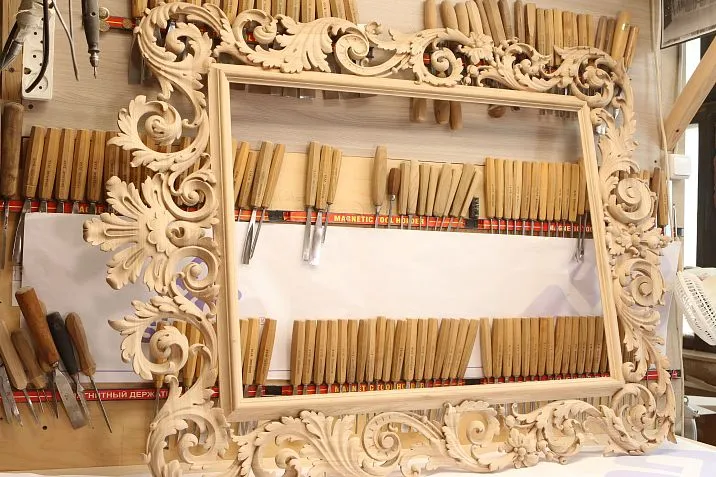
The world of decor and interior design constantly offers us ready-made solutions — bright, shiny, already painted and polished to perfection. But what if you want to become the author of your own style? What if a ready-made solution doesn't fit your concept? Exactly here, on stage, comes unfinished wooden frame — a universal base for realizing the boldest design ideas.
An unfinished wooden frame is a clean canvas for creativity. It is the opportunity to create exactly what your interior, your painting, your mirror needs. It is the freedom to choose color, texture, finish style. But most importantly — it is a high-quality base that will serve for decades, regardless of how many times you decide to change its appearance.


Practical advantages of unfinished wooden frames




Economic justification of choice
The first and most obvious advantage of an unfinished frame is its price. A ready-made painted frame includes not only the material and work to manufacture the base, but also the entire finishing process: priming, painting, varnishing, drying — each stage increases the final cost of the product.
When purchasing an unfinished frame, you pay exclusively for high-quality wood and precise profile processing. Everything else — selection of finishing materials, the painting process — remains at your discretion and can be implemented step-by-step, according to your financial capabilities.
Solid Wood Items Unfinished frames allow you to save 30 to 50% compared to ready-made alternatives, while the quality of the base remains consistently high. Such a purchase becomes especially advantageous when manufacturing several frames in a unified style.
Our factory also produces:


Flexibility in design solutions
An unfinished frame provides absolute freedom in choosing the finish. Want classic gold? Modern matte black? Vintage patina? An imitation of aged wood? All of this becomes possible with a high-quality unfinished base.
Moreover, over time you can completely change the appearance of the frame, adapting it to a new interior or simply following changed tastes. Repainting a ready-made frame is significantly more difficult — it requires removing the old finish, which may damage the wood and greatly complicate the process.
Get Consultation
Materials and Technologies: Basis of Quality
Wood Species for Frame Production
The quality of an unfinished frame is primarily determined by the selected wood species. Each species has its own characteristics that affect both performance and decorative finishing capabilities.
Spruce remains the most popular material due to its optimal price-to-quality ratio. Softwood is easy to process, holds fasteners well, and accepts various coatings excellently. The natural resinous nature of spruce may create certain difficulties during painting, but proper surface preparation fully resolves this issue.
Oak occupies the premium segment of materials for frames. Hardwood with a distinctive texture provides exceptional strength and longevity. Wooden Frames for Artworks Oak frames are capable of bearing significant loads and maintaining geometric stability for decades.
Beech occupies an intermediate position between spruce and oak. Dense, uniform wood with fine grain is ideal for creating smooth finishes. Beech stains well, allowing it to imitate more expensive wood species.
Technological Features of Production
Modern production of unfinished frames uses high-precision equipment to ensure ideal profile geometry. CNC machines allow creating complex profile shapes with minimal tolerances.
Wood moisture is a critically important parameter. Material with moisture above 12% will continue to dry after frame production, leading to warping and cracking. Quality manufacturers use only kiln-dried wood, ensuring stable moisture content of 8-10%.
The quality control system includes checking each element for compliance with geometric dimensions, absence of wood defects, and surface finish quality. Only material that passes all control stages is released for sale.
Applications of Unfinished Frames
Artwork Presentation
The classic application of wooden frames is to frame paintings, engravings, and photographs. An unfinished frame allows creating a frame ideally suited to a specific artwork. Watercolor works require light, airy frames in light tones, while oil paintings require heavier, more substantial framing.
The ability to precisely match color is especially important when framing a series of works. A unified framing style creates a cohesive exhibition, whether in a home gallery or professional show. Factory-made frames often have minor color variations even within the same batch, making it difficult to create a unified ensemble.
Restoration of old paintings often requires creating frames in historical styles. Authentic techniques of gilding, patination, and craquelure are possible only when working with an unfinished base.
Decorative interior finishing
Modern Furniture Designers and decorators actively use wooden frames as decorative elements. Wall panels, niche framing, decorative screens — all these elements can be created based on unfinished frames.
Wooden frames remain a classic in interior design. The ability to create a frame precisely to the mirror size and in accordance with the interior style makes unfinished blanks indispensable for designers and decorators.
Classic Furniture Often includes elements made from wooden frames — door panels, decorative inserts, stained glass framing. Creating a unified style requires precise color and texture matching, which is only achievable through individual finishing of all elements.
Professional Application
Beadwork workshops prefer working with unfinished frames, as this allows offering clients a wide range of finishing options. A standard set of blanks can be transformed into hundreds of different ready-made frames.
Restoration workshops use unfinished frames to recreate historical samples. Multi-layer coatings and complex decorative techniques require special base preparation, which is impossible when working with ready-made items.
Art studios and galleries value the opportunity to create unique solutions for each work. The frame becomes not just a frame, but part of the artwork.
Processing and Decoration Technologies
Surface Preparation for Painting
The quality of the final coating depends 80% on proper surface preparation. Even the highest-quality unfinished frame requires additional processing before applying the coating.
Sanding is the first and most important preparation stage. Initial abrasive treatment with grit 120-150 removes traces of machine processing and minor defects. Gradually reducing grit to 220-320 creates a perfectly smooth surface.
De-greasing is especially important when working with resinous wood species. Special compounds or alcohol-based solutions remove natural oils that may interfere with coating adhesion.
Priming serves several functions: it equalizes the wood’s absorbency, blocks tannin release, and ensures reliable adhesion between the wood and the final coating.
Decorative finishing techniques
Simple painting is a basic technique accessible to any home craftsman. Modern paints allow achieving virtually any color and surface texture. Acrylics dry quickly and have no odor, while alkyd-based paints provide exceptional coating durability.
Patination is an artificial aging technique that creates the effect of an antique frame. A dark compound is applied over the base color and partially removed to simulate natural darkening in profile recesses.
Gilding is a classic frame decoration technique. Modern materials allow achieving the effect of real gold at significantly lower costs. Gold leaf, bronze powders, and special paints open up wide creative possibilities.
Crackle technique creates an effect of paint cracking over time. Special compounds applied between paint layers form a characteristic network of cracks as they dry.
Choosing and purchasing unfinished frames
Quality criteria
When selecting an unfinished frame, prioritize the quality of the wood. The surface should be smooth, free of scratches and marks from blunt tools. Knots, if present, should be healthy and show no signs of shedding.
Geometric accuracy of the profile is critically important for quality frame assembly. Deviations in dimensions exceeding ±0.5 mm may cause problems when joining corners. Check the straightness of the profile — bent elements cannot be assembled to a high standard.
The wood's moisture content must meet technical specifications. Material with excessive moisture will deform after finishing. Quality manufacturers always indicate this parameter in accompanying documentation.
Material requirement calculation
unfinished wooden frame Usually sold by the linear meter. To calculate the required amount, add a reserve for cutting corners and potential defects to the perimeter of the future frame.
Standard calculation formula: (2 × length + 2 × width) + 20% for technological losses. For complex profiles, the loss percentage may increase to 30%. When manufacturing multiple frames simultaneously, relative losses decrease.
Consider the standard delivery length of the material — usually 2.5–3 meters. This may affect the number of joints in the finished frame and the total material consumption.
Transportation and storage conditions
Unfinished wood requires special storage conditions. Sudden changes in humidity may cause profile deformation. Optimal air humidity — 40–60%.
Transportation requires protection against mechanical damage. Profile corners are especially vulnerable to scratches. Packaged material must be protected from atmospheric precipitation and direct sunlight.
Store material horizontally on a flat surface. When stacking, use spacers between layers to ensure ventilation.
Tools and consumables
Basic toolset
A quality miter saw is the foundation for successful work with frame material. Precision cutting at 45 degrees is critically important for tight corner joints. Professional saws provide clean cuts without chipping.
Sanding equipment speeds up surface preparation. Eccentric machines provide high-quality finishing without risk of scratches. For small jobs, handheld sanding blocks are sufficient.
Tools for applying finishes are selected based on the type of materials used. Brushes with natural bristles are suitable for oil-based compounds, synthetic bristles for acrylic paints. Rollers speed up work on large surfaces.
Finishing materials
Primers vary by composition and purpose. Universal primers suit most applications, specialized primers deliver better results under specific conditions. Isolating primers block resin and tannin release.
Finish coatings are selected based on aesthetic requirements and performance characteristics. Oil-based paints provide deep, rich color; acrylics dry quickly and are easily tinted.
Specialized materials for decorative effects are constantly expanding the range. Metallic paints, patinas, and crackle finishes open new creative possibilities.
Modern trends and innovations
Ecological aspects
The modern trend toward eco-friendliness makes unfinished wooden frames especially relevant. Natural material without chemical coatings is completely safe for health and the environment.
New-generation water-based coatings allow creating eco-friendly decorative solutions without compromising quality. Absence of volatile organic compounds makes the work safe even in residential spaces.
Certification of wood according to sustainable forestry standards is becoming an important factor in selection. Furniture and interior items From certified wood confirms the manufacturer's ecological responsibility.
Technological Innovations
Laser engraving allows creating complex decorative elements directly on the frame surface. This technology opens new possibilities for personalizing products.
Nanomaterials in coatings provide unique properties — self-cleaning, antibacterial properties, enhanced UV resistance.
Digital tinting allows precisely reproducing any color and creating custom paint recipes. This is especially important when working on design projects.
Purchasing oak skirting boards should be considered a long-term investment in the quality and prestige of the interior. Despite higher initial cost compared to products made of other materials, oak skirting boards pay for themselves due to exceptional durability and the possibility of multiple restorations.
Cost comparison analysis
Initial costs for an unfinished frame account for 40–60% of the cost of a finished equivalent. Adding the cost of finishing materials and labor, total expenses rarely exceed 80% of the finished product's price.
Long-term savings are achieved through the ability to renew the finish without replacing the base. A quality wooden frame can serve for decades, requiring only periodic refinishing.
Long-term savings are achieved through the ability to renew the finish without replacing the base. A quality wooden frame can serve for decades, requiring only periodic refinishing.
Monetization opportunities for skills
Mastering techniques for working with unfinished frames can become a source of additional income. Custom-made frames are in demand, especially in small towns without specialized workshops.
Restoration of antique frames is a highly paid specialty requiring deep knowledge and practical skills. Demand for such services steadily grows alongside interest in antiques.
Teaching others woodworking techniques can also generate income. Workshops on decorating frames are popular among craft enthusiasts.
Market Development Prospects
Growing demand for individuality
Mass production is giving way to individual solutions. Consumers increasingly seek unique items that reflect their personality and style. Unfinished frames perfectly meet this need.
The growth of DIY culture (Do It Yourself) stimulates interest in self-creative activities. Social networks are full of successful DIY projects that inspire others to create.
The rise of ecological awareness also favors natural materials. Wooden products are perceived as a more eco-friendly alternative to plastic and composite materials.
Technological prospects
The development of 3D printing technology opens new possibilities for creating unique decorative elements. Printed parts can be integrated with traditional wooden frames.
Smart coatings with changing properties will become a reality in the near future. Thermochromic compositions, which change color depending on temperature, are already available for experimentation.
Augmented reality will help visualize the result even before starting work. Smartphone apps will allow users to "try on" different finishes on a real frame.
Conclusion
unfinished wooden frame Represents an ideal combination of practicality, economy, and creative possibilities. In a world of standardized solutions, it remains an island of individuality, allowing each person to create exactly what is needed for a specific project.
Economic advantages are obvious — significant savings when purchasing, the ability to implement the project in stages, long-term return on investment due to the possibility of renewing the finish. However, the main value lies in creative freedom and the ability to create unique solutions.
Technologies are constantly evolving, offering new materials and processing methods. Ecological trends strengthen the position of natural materials. The growth of DIY culture stimulates interest in self-creative activities. All these factors work in favor of unfinished wooden frames.
The importance of choosing quality material from reputable manufacturers cannot be overstated. Saving on the quality of the base material may negate all efforts to create an attractive finish. Investments in good material pay off for many years of flawless service.
The modern market offers a wide selection of unfinished frames in various profiles, sizes, and price categories. This allows everyone to find the optimal solution for their tasks, whether for a single project or mass production.
STAVROS remains at the forefront of producing high-quality solid wood products. Decades of experience, modern equipment, and strict quality control ensure consistently high product quality. STAVROS understands the needs of creative individuals and professionals, offering a wide range of unfinished frames for various applications. Choosing STAVROS products means you are not just getting material, but a reliable base for realizing the boldest creative ideas.


