Article Contents:
- Proportions, Transitions, and Architectural Language of Decoration
- Wooden Baseboard as Finishing of Wall Surfaces
- Polyurethane Ceiling Moldings - Tool for Visual Balance
- Combining in Classical and Modern Interiors
- Color and Textures Under One Concept
- Questions and Answers
- Conclusion - Architectural Framing of Space

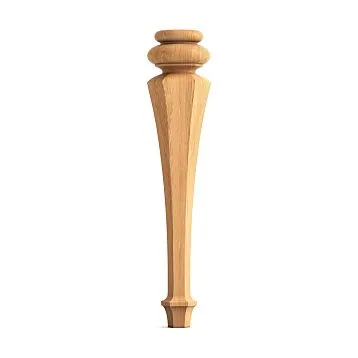
Interior is not a set of separate elements, but a cohesive composition where each detail affects the perception of space.Wooden baseboardandceiling moldingTwo architectural elements working on opposite boundaries of the room create vertical framing of space. A massive baseboard at the floor forms a visual foundation, the base of the composition. Elegant molding under the ceiling creates a finish, the architectural crown of the room. Together they form spatial plasticity - a system of transitions, proportions, visual connections, transforming a simple room into an architectural work.
The philosophy of this combination traces its roots to classical architecture. Ancient temples had a massive stereobate - a stone base - and a light entablature with cornices on top. This system of visual weight distribution - heavy at the bottom, light at the top - corresponds to our experience of gravity, creating psychological comfort. Modern interiors reproduce this principle throughwooden baseboardandpolyurethane decorative molding, adapting thousand-year-old principles to contemporary aesthetics.


Proportions, Transitions, and Architectural Language of Decoration
The proportional relationship between baseboard and ceiling molding determines the visual harmony of the room. The classical rule is that the width of both elements should be approximately equal, or the ceiling cornice should be 20-30 percent wider. For standard ceilings 2.7 meters high, optimal baseboard is 100-120 mm and cornice 120-150 mm. This proportion creates visual balance - the elements read as proportional, complementary.
Ceiling height critically affects the choice of dimensions. For low ceilings 2.4-2.5 meters, use narrow elements - baseboard 80-100 mm, cornice 80-120 mm. Massive elements visually lower the ceiling, creating a sense of pressure. For high ceilings 3-3.5 meters, wide elements are needed - baseboard 120-150 mm, cornice 150-200 mm. Narrow elements will disappear in the scale of the room, not creating sufficient architectural expressiveness.
The area of the room also determines the scale of elements. In a small room 12-15 square meters, a massive baseboard and wide cornice will visually consume space. Use delicate elements 80-100 mm. In a spacious living room 30-40 square meters, thin baseboards and cornices will disappear. Large-scale elements 120-180 mm are needed, creating architectural significance.
The profile of the baseboard and the profile of the cornice should speak the same stylistic language. A classical baseboard with scrolls and fluting requires a classical cornice with Ionic capitals and rosettes. A minimalist rectangular baseboard harmonizes with a simple cornice without ornament. Mixing styles - a baroque ornate baseboard with a minimalist cornice - creates a stylistic dissonance.
The transition from floor to wall through the baseboard should be visually logical.wooden skirting board purchaseConsidering the color of the floor covering. A baseboard in the tone of the floor visually expands it, making the room wider. A baseboard in the tone of the walls visually raises the walls, making the room higher. A contrasting baseboard - dark on light or light on dark - creates a clear boundary, graphic effect.
The transition from wall to ceiling through the cornice creates architectural completion. A cornice in the color of the ceiling visually lowers the ceiling - the ceiling seems to descend onto the walls. A cornice in the color of the walls visually raises the ceiling - the walls appear higher. A contrasting white cornice on colored walls - a classical solution, creating a clear boundary.
Rhythmic interaction of elements creates complexity in composition. If there are molding panels on the walls, their vertical boundaries may coincide with doorways, creating synchronization. The baseboard and cornice frame this system from above and below, forming a frame. Rhythm creates visual order.
Gradual scaling from floor to ceiling - a technique for creating visual lightness. The heaviest element - baseboard at the floor. Medium scale - moldings on walls. The lightest element - cornice under the ceiling. This gradation creates a sense of elevation, aspiration upward, visual weightlessness under the ceiling.
The modularity of the system allows creating complex compositions. The main baseboard is supplemented by an upper plinth-cap, creating a two-level system. The cornice is supplemented by a frieze - an ornamental band below it. These multi-level systems are characteristic of classical interiors of high status.
Functional transitions are masked by decorative elements. The technological gap between floor and wall is covered by the baseboard. The junction between wall and ceiling, often uneven, is concealed by the cornice. Function and aesthetics are unified - a decorative element solves a technical problem.
Visual framing of space through baseboard and cornice creates psychological comfort. A room without these elements is perceived as unfinished, raw. Properly selected baseboard and cornice complete the composition, creating a sense of thoughtfulness, attention to detail.
Architectural language is formed through details. Classical profiles of elements create a classical language. Minimalist forms speak the language of modernity. Eclectic mixing - modern baseboard with classical cornice - creates a dialogue between eras, interesting and ambiguous.




Wooden Baseboard as Finishing of Wall Surfaces
Wooden baseboard performs multiple functions simultaneously. Technical function - closing the gap between floor and wall, necessary to compensate for thermal expansion of floor covering. This gap of 10-15 mm is unattractive; the baseboard turns this technical necessity into a decorative element. Protective function - protecting the lower part of the wall from damage during cleaning, from furniture impacts, from splashes during floor cleaning.
Aesthetic function - creating a visual foundation for the wall, architectural base of the composition. A high baseboard 120-150 mm creates a serious foundation, emphasizing the solidity of the interior. A low baseboard 60-80 mm is more delicate, suitable for modern minimalist spaces. The choice of height determines the character of the room.
The material of the baseboard - solid wood - brings natural warmth, tactile appeal, prestige. Oak - the standard of strength and nobility, its expressive texture creates visual richness. Ash with contrasting light structure suits modern interiors. Walnut with noble brown-purple tones forms a luxurious atmosphere. The choice of species determines the color and texture base.
The profile of the skirting board determines the style. A classic profile with scrolls, quarter-rounds, and flutes is characteristic of neoclassical interiors. An ornate multi-step profile with classical details creates palace-like luxury. A simple rectangular or beveled profile suits minimalism and modern styles. The profile is a stylistic marker.
The height of the skirting board affects the perception of room proportions. A high skirting board (150-180 mm) divides the wall into sections, creating horizontal divisions. This visually lowers the wall height, making the room feel more intimate and cozy. A low skirting board (60-80 mm) has almost no effect on proportions, preserving the visual height of the walls. The choice depends on the desired effect.
Color treatment of the skirting board expands design possibilities. Natural wood color under transparent oil or varnish showcases the beauty of the wood species. Staining with stains creates darker, more saturated tones — wenge, stained oak, mahogany. Painting with enamels in white, gray, black integrates the skirting board into any color scheme. The choice of treatment determines whether the skirting board will be an accent or a background.
The color relationship of the skirting board with the floor and walls creates various effects. A skirting board in the color of the floor visually expands the floor, making the space seem larger. A skirting board in the color of the walls visually raises the walls, making the room appear higher. A contrasting skirting board — dark against light floors and walls — creates a graphic border, a clear boundary. All three strategies work; the choice depends on the goal.
Installing skirting boards requires precision. Joints in corners are made at 45 degrees or using corner elements. Tight fitting against the wall is mandatory — gaps spoil the appearance. Fixing with glue or self-tapping screws, whose heads are hidden under decorative plugs or filled with putty. Quality installation makes the skirting board part of the architecture.
Combination with flooring should be thoughtfully planned. Wooden skirting boards are ideal with parquet, parquet planks, laminate with wood texture. This creates material unity — wood on the floor and on the skirting board. With tiles, stone, or poured floors, wooden skirting boards create a contrast between natural and industrial, warm and cold.
Wooden wall panels 90-120 cm high are finished with a skirting board-capital, creating a classic three-part wall structure. The lower part — panels, the middle — paint or wallpaper, the upper — a frieze under the ceiling. The skirting board at the bottom and the capital of the panels create horizontal divisions, organizing the wall.
The longevity of wooden skirting boards is measured in decades. Hardwoods — oak, ash, beech — are practically eternal with proper care. Softwoods — pine, birch — are less resistant to mechanical damage but cheaper. Quality protective coating — oil, varnish, wax — extends lifespan, protects against moisture and dirt.
Restoration capability is an advantage of wood. Scratches and dents are sanded. Wear marks are touched up. Faded finish is refreshed. Wooden skirting boards can be restored multiple times, unlike synthetic analogs that require replacement upon damage.
Our factory also produces:
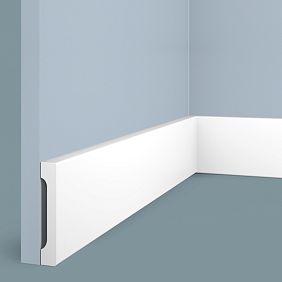
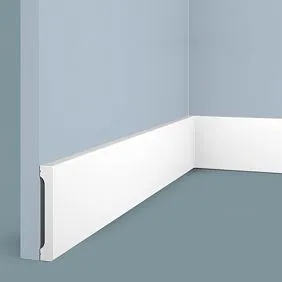
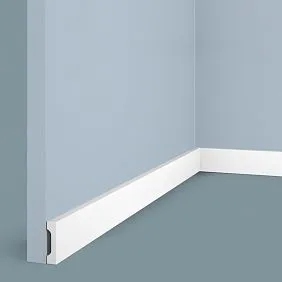
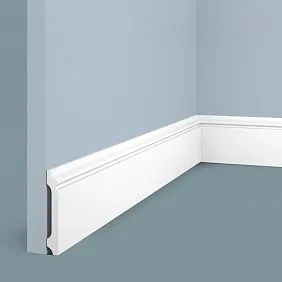


Polyurethane ceiling molding — a tool for visual balance
Ceiling with moldingtransforms a flat surface into an architectural plane, creating expressiveness. The cornice around the perimeter — the main elementceiling molded decorIt forms the boundary between walls and ceiling, visually completing verticals and beginning the horizontal ceiling. The width of the cornice is determined by the height of the room and stylistic concept.
Polyurethane as a material for ceiling molding has several advantages. Lightness — a meter of 150 mm wide cornice weighs 300-500 grams versus 3-5 kilograms of gypsum analog. This simplifies installation, eliminates the risk of collapse, and does not create load on structures. Moisture resistance allows using molding in kitchens, bathrooms, and rooms with high humidity.
Accuracy of reproducing details is phenomenal. The molding method in molds ensures perfect repetition of ornament elements. Each ion, each scroll, each line of the profile is absolutely identical along the entire length. This mathematical precision creates visual perfection, corresponding to classical ideals of harmony.
Variety of profiles is impressive. Manufacturers offer hundreds of cornice models — from minimalist smooth strips 40 mm wide to large carved cornices 250 mm wide. All historical styles — classicism, baroque, empire, modern — are reproduced. Everyone will find a profile for their project.
Cost is democratic. A simple cornice costs from 200 to 500 rubles per meter, a complex one — from 600 to 1500 rubles. This is 3-5 times cheaper than wooden and 5-10 times cheaper than gypsum analogs. Savings allow decorating the entire house without significant expenses, making classical beauty accessible.
Installation is simple and accessible for self-execution. The back of the cornice is treated with special glue — polyurethane or acrylic. The cornice is pressed against the wall-ceiling joint and fixed for several minutes. After the glue dries, it holds for decades. Joints are filled and painted, becoming invisible.
Painting opens up unlimited color solutions. Polyurethane accepts any interior paints — acrylic, latex. Classic white color is universal, suitable for any interior. Painting in wall or ceiling color creates a monochromatic composition. Patination with gold, silver creates palace luxury.
Central rose center frames the fixture mounting point, creating a visual center of the ceiling. The rose diameter 60-120 cm corresponds to room and chandelier size. Rose ornament — classical palmettes, baroque scrolls, geometric patterns — sets the style. The rose acts as a focal point, drawing the gaze upward.
Ceiling moldings create a coffered structure — a system of squares or rectangles dividing the ceiling into sections. Moldings 50-80 mm wide form frames, within which the ceiling can be painted contrastively or decorated with small roses. Coasters create rhythm, scale, visual richness of classical interiors.
Hidden backlighting behind cornices creates a floating ceiling effect. The cornice is installed with a 5-10 cm offset from the ceiling, creating a niche for LED strip. Light is directed upward, reflected off the ceiling, creating soft glow around the perimeter. The ceiling appears to float above the walls, not resting on them.
Visual balance with wooden skirting board is created through proportionality. A wide skirting board 120-150 mm requires a proportional cornice 150-180 mm. A narrow skirting board 80 mm harmonizes with a delicate cornice 100-120 mm. Proportional correspondence creates visual harmony, a sense of thoughtful composition.
The service life of polyurethane molding is practically unlimited. The material does not age, does not yellow, does not deform over time. The only thing that may be required — repainting every 10-15 years. The cornice itself remains in perfect condition, preserving the clarity of relief and geometry of the profile.
Get Consultation
Combining in classical and modern interiors
Neoclassicism is an ideal environment for combining wooden skirting boards and polyurethane molding. Subdued decorativeness, clear proportions, symmetry are characteristic of the style. A white polyurethane cornice 120-150 mm wide with a classic profile frames the ceiling. Wooden skirting board made of oak or ash, 100-120 mm high, natural color or stained, creates the base. The color palette is calm — white, gray, beige, natural wood.
Classicism requires strictness and proportionality. Cornices with ionic profiles and ovals, roses with palmettes set the style. Wooden skirting board with a classic profile and flutes corresponds in complexity. Colors are traditional — white molding, oak or walnut skirting board. Gilding is used delicately — only in ornament details.
Empire with imperial grandeur uses military symbolism. Cornices with laurel wreaths, eagles, swords. Wooden skirting board is massive, often painted black with gold or left as dark red wood. The color palette is contrasting — white with gold, black with gold, rich fabric colors on walls.
Baroque allows maximum decorativeness. Luxurious cornices with abundant ornament, large roses with asymmetrical scrolls. Wooden skirting board carved, with plant motifs, often gilded. Colors are rich — gold, burgundy, emerald. This is a style of palaces and grand halls.
Scandinavian style requires minimalism. Simple cornice without ornament, white color, 80-100 mm wide. Wooden skirting board made of light woods — ash, birch, pine — painted white or left light natural. Colors are neutral — white, gray, beige. Decorativeness is minimal, beauty lies in the purity of lines.
Modern classic balances between tradition and contemporaneity. Classic cornices, simplified, without excessive ornamentation. Wooden skirting boards with clear lines. Color palette is restrained — gray, beige, natural wood. Technologies are integrated subtly — hidden lighting behind cornices.
Loft uses contrasts. Rough concrete walls or brickwork combine with classic polyurethane cornices and wooden skirting boards made of aged wood. This eclectic mix creates an interesting tension between industrial and classic styles.
Eco-style values naturalness. Wooden skirting boards made of solid wood without aggressive staining, under transparent oil. Polyurethane cornices are painted in natural tones — beige, cream, light brown. Connection to nature through natural materials and colors.
Minimalism uses combinations extremely sparingly. Thin skirting boards 60-80 mm with simple rectangular profiles. Minimalist cornices 80-100 mm without ornamentation. Monochromatic color — everything white or shades of gray. Beauty lies in perfect proportions and lines.
Eclecticism freely mixes elements. Baroque ornate cornices with minimalist skirting boards. Or vice versa — carved wooden skirting boards with simple cornices. The key is to find a unifying element: color, scale, materiality. Thoughtful eclecticism creates interesting interiors.
Art Deco values geometry and luxury. Cornices with geometric forms — stepped profiles, zigzags. Wooden skirting boards made of exotic woods — padauk, wenge — often with metal inlays. Colors are contrasting — black with gold, white with silver.
Coloristics and textures under one concept
Monochromatic white concept creates classic elegance. White ceiling, whiteCeiling molding, white walls, white wooden skirting board. Difference is only through texture — smoothness of the ceiling, relief of molding, texture of the skirting board wood. This restrained solution is characteristic of Scandinavian style, visually expanding space.
Contrast of natural wood and white — classic solution. White polyurethane molding on ceiling and walls creates freshness. Wooden skirting board in natural color — oak, ash, walnut — adds warmth. This contrast of warm and cool, natural and man-made, creates visual richness.
Tonal gradients of gray create modern sophistication. Light gray ceiling, white molding, medium gray walls, dark gray skirting board. Gradient from light at the top to dark at the bottom creates visual stability. This nuanced harmony requires a refined sense of color.
Dark skirting board on light background creates graphic framing. White walls and ceiling, white molding, dark wenge or stained oak skirting board. This contrast emphasizes the floor line, creates a clear boundary. Graphic quality is characteristic of modern interiors.
Colored walls with neutral skirting boards and molding — popular solution. Walls painted in saturated color — emerald, blue, terracotta. Ceiling white with white molding. Skirting board white or matching wall color. Wall color becomes accent framed by neutral elements.
Patina on molding creates historic character. White base of cornice is covered with gold, silver, or dark patina in recesses of relief. Wooden skirting board is also patinated, creating an antique effect. This solution is characteristic of classic interiors aiming for palace luxury.
Painting wood to match wall color integrates skirting board into plane. Skirting board is painted with enamel to match wall color, becoming its continuation. Visually, walls appear higher — colored plane rises from floor. Molding remains white, creating contrast. This is a visual trick to increase height.
Gloss and matte affect perception. Glossy surfaces reflect light, create highlights, visually expand. But on wooden skirting boards and polyurethane molding, gloss looks cheap. Matte finishes create nobility, velvet texture, emphasize relief. Always choose matte or semi-matte finishes.
Wood texture appears with transparent treatment. Smoothly sanded surface under transparent oil creates silkiness. Brushed surface with emphasized annual rings forms pronounced relief. Rough texture suits styles like country, rustic.
Combining different wood tones creates visual richness. Light ash skirting board with dark oak door casings forms contrast. Main rule — do not use more than three wood tones in one space, otherwise visual chaos occurs.
Unifying color unites disparate elements. If skirting board is dark and molding is white, add intermediate tone elements — gray moldings on walls, gray doors. This transitional tone creates smoothness, links contrasts.
Seasonal changes in natural lighting affect color perception. In summer, abundance of light makes colors vivid, contrasts sharp. In winter, under artificial lighting, colors dull. When designing color schemes, consider both scenarios — daylight and evening light.
Questions and answers
What width should the skirting board be at a ceiling height of 2.7 meters?
For standard height of 2.7 meters, optimal skirting board height is 100-120 mm. This creates sufficient architectural expressiveness without visually consuming space. Ceiling cornice at this point 120-150 mm — slightly wider or equal to skirting board. If ceiling is below 2.5 meters, reduce to 80-100 mm. At 3 meters and above, increase to 120-150 mm.
Can a dark skirting board be used in a small room?
Yes, if walls and ceiling are light. Dark skirting board on light background creates graphic framing, visually not reducing space. Main point — avoid making large wall surfaces dark. Dark skirting board alone is a line, not consuming volume. Combine with white ceiling molding for balance of light and dark.
Is color coordination between skirting board and cornice mandatory?
Not mandatory, but proportional coordination is important. Classic solution — white cornice with natural-colored wooden skirting board. Modern — both elements white or both matching wall color. Contrasting — dark skirting board, white cornice. All three strategies work. Main point — scale correspondence and stylistic unity of profiles.
How much more expensive is wooden skirting board compared to MDF or plastic?
Solid wood skirting board is 3-5 times more expensive. MDF skirting board costs 150-300 rubles per linear meter. Plastic — 80-200 rubles. Solid oak skirting board — 600-1200 rubles. But durability, prestige, and restorability justify the cost. Wooden skirting board lasts decades, MDF requires replacement every 10-15 years.
Can a polyurethane cornice be installed by oneself?
Yes, the technology is simple. Special adhesive, 45-degree angle cutting tool, joint filler, paint are needed. Surfaces must be flat and primed. Adhesive is applied to the back of the cornice, element is pressed onto the wall-ceiling joint for 2-3 minutes. Joints are filled with filler, after drying the cornice is painted. Main point — precision in cutting angles.
How to choose a cornice profile for a wooden skirting board?
Profiles should match stylistically. A classic skirting board with scrolls requires a classic cornice with Ionic elements. A simple rectangular skirting board harmonizes with a minimalist cornice. Carved skirting board pairs well with an ornate cornice. The complexity of profiles should be approximately equal. Dissonance — a lavish cornice with a simple skirting board — destroys harmony.
Is hidden backlighting behind the cornice necessary?
Not mandatory, but effective. Hidden LED lighting creates the effect of a floating ceiling, visually raising it and adding modernity. For this, the cornice is mounted 5–10 cm away from the ceiling. An LED strip is placed in the recess. Light is directed upward and reflected off the ceiling. The effect is especially impressive at night. However, it requires additional expenses for LEDs and power supplies.
How to care for wooden baseboard?
Care is simple: periodically wipe with a damp cloth. Avoid excessive moisture and aggressive cleaning agents. If the skirting board is oiled, it is advisable to renew the finish every 2–3 years — light sanding with fine-grit sandpaper and applying a fresh layer of oil. Lacquered skirting board requires only wiping. Scratches are touched up with touch-up pencils.
Can gypsum molding be combined with a wooden skirting board?
Yes, this is a classic combination. Gypsum molding has a noble matte finish and clear details. Gypsum pairs perfectly with natural wood — both materials are associated with classicism, craftsmanship, and tradition. Drawbacks of gypsum — weight, fragility, high cost. Polyurethane is a practical modern alternative, visually indistinguishable from gypsum when matte painted.
Will such a combination become outdated in 10 years?
Will not become outdated with proper execution. Classic molding is timeless — it has hundreds of years of history and remains relevant. Wooden skirting board — a natural material, also outside fleeting fashion. Their combination creates timeless elegance. In 20 years, such an interior will look noble, unlike trendy solutions that become outdated within 3–5 years. Classicism is a safe choice for long-term prospects.
The result — architectural framing of space
Combinationwooden baseboardandceiling moldingscreates an architectural frame for space, enclosing the room from below and above. These are not merely decorative elements, but a system of spatial plasticity, forming transitions, proportions, and visual connections. A massive skirting board at floor level creates a base, the foundation of the composition. Elegant molding under the ceiling forms a completion, an architectural crown.
Vertical distribution of visual weight — heavy wood at the bottom, light polyurethane at the top — corresponds to the laws of gravity, creating psychological comfort. This is an ancient architectural principle reproduced in modern materials. Wooden skirting board brings natural warmth, tactile appeal, and prestige. Polyurethane molding adds classic refinement and architectural expressiveness.
Proportional harmony is ensured by the correspondence of element sizes to room dimensions and to each other. A wide skirting board requires a proportionally sized cornice. High ceilings require large elements, low ceilings — delicate ones. Violation of proportions destroys harmony, creating visual discomfort. Professional design by STAVROS guarantees correct proportions.
Stylistic correspondence of profiles ensures unity of architectural language. A classic skirting board harmonizes with a classic cornice. Minimalist forms speak the language of modernity. Mixing styles is permissible in eclecticism, but requires a delicate sense of balance. Dissonance of profiles destroys integrity.
Color strategies expand design possibilities. Monochromatic white creates Scandinavian freshness. Contrast of natural wood and white forms classic warmth. Tonal gradients of gray create modern refinement. A dark skirting board on a light background adds graphic contrast. Choosing a color strategy determines the character of the interior.
Functionality of elements is no less important than aesthetics. Skirting board covers technological gaps and protects walls from damage. Cornice masks the junction between wall and ceiling, may conceal a recess for lighting. Function and beauty are unified — decorative elements solve technical tasks.
Durability of quality materials is measured in decades. Wooden skirting board made of hardwoods lasts for centuries with proper care. Polyurethane molding does not age, retaining its original appearance. This is an investment in long-term quality, in space that will delight generations.
Accessibility of the combination makes classic beauty attainable. Wooden skirting board is more affordable than full-wall wooden panels. Polyurethane molding is more democratic than gypsum. Selective use of prestigious materials within a reasonable budget creates a luxurious appearance.
Universality of approach allows implementing projects in any style. From strict classicism to bold eclecticism — the combination of skirting board and molding works everywhere. Variability of profiles, colors, and scales creates boundless possibilities.
Psychological comfort of a completed space is important for well-being. A room without skirting board and cornice is perceived as unfinished and raw. Properly selected elements create a sense of completion, thoughtfulness, attention to detail. This creates psychological comfort, making a house feel like home.
Company STAVROS offers a full spectrum of solutions for creating an architectural frame of space.Wooden skirting boardsmade of oak, ash, walnut in various profiles and sizes.Polyurethane Ceiling Moldings— hundreds of cornice, rose, molding models. From consultation and design to material delivery and professional installation. Experience of hundreds of completed projects, understanding of proportions, sense of style — the foundation for creating spaces where skirting board and molding form spatial plasticity, transforming a room into an architectural masterpiece.