












































































Article Contents:
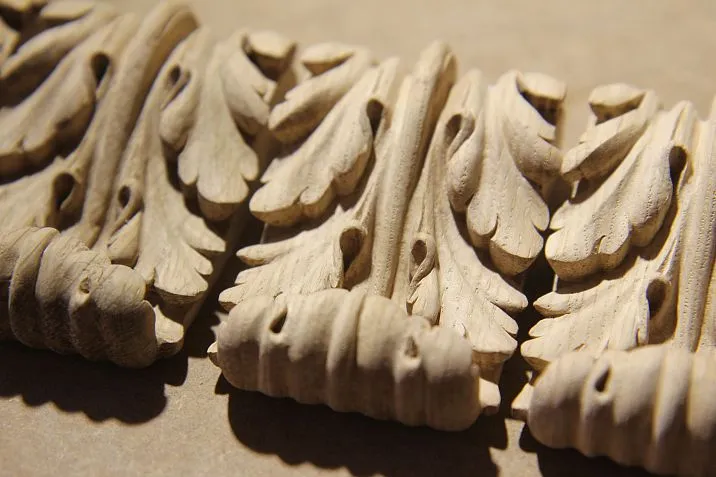
In the professional environment, there is no disputable thesis: oak furniture production — discipline where artistic idea must be supported by technology. Oak is not merely a "beautiful material", but an engineering platform: dense structure, stable geometry, predictable processing, and long-lasting finish. In this article — full cycle: anatomy of the species, sawing, drying, joint construction, milling, sanding, coatings, quality control, installation of built-in solutions, and maintenance schedule. Parallel — practical links with interior integration assortment: solid wood items, profiled moldings, cornices, skirting boards for portals and panels, specialized wooden skirting board for lower "trim" of niches and built-ins, ornamental accents from section house carving, and also lightweight complementary solutions polyurethane items and point polyurethane inlays where pattern is needed without extra weight.
From the first lines, we fix the meaning: oak is not merely a "expensive wood species", but a means to retain form, shadow, and tone in real use. Therefore, about oak furniture production we must speak the language of specific parameters, tolerances, and solutions, not replacing material texture with advertising promises.
Oak as an engineering species: properties that convert into service life


Density, hardness, grain
Oak belongs to dense and hard species. For furniture production, this means: edge holds bevel, fasteners "seat" firmly, end-cut with proper tool is clean, pores after sanding are readable, but do not "tear" under coating. Radial rays provide characteristic "silver" sheen on radial sawing — this is not decorative for decoration, but visual "honesty" of structure.




Humidity and Stability
The key to the geometry of items — balanced moisture of blanks and stable drying. Over-dried oak will give brittle edges and cracks; under-dried — "creep" panels, dowel joints, and facades. In practice, drying is done in stages: soft start for leveling, main stage for removing bound moisture, finish — bringing to technological 8–12% with resting. In oak furniture production this is not "formality", but insurance against future deformation of carcasses and facades.
Our factory also produces:


Sawing and grade
— Radial sawing: stable geometry, expressive rays, more subdued pattern — optimal for countertop panels, premium-level facades.
— Tangential sawing: bright wave of annual rings, more economical yield — rational for carcasses, blocks, structural elements.
— Sort 'select' - smooth surface, minimum knots.
— Rustic - allows healthy knots, contrast, suitable for interiors with artisanal texture.
Lumber and panel: the foundation of planes, determining the entire geometry
Get Consultation
Cutting plan and selection of lamellas
A proper panel begins with a cutting plan: zones with stressed fibers, edge knots, and uneven moisture are excluded. Lamellas are selected by tone, grain direction, and density. Wide lamellas are visually appealing but require experienced control for stability; narrow lamellas provide high stability but a more 'frequent' optical appearance.
Gluing: adhesive, press, pressure
For furniture panels, D3/D4 systems with optimal viscosity and open time are selected. Pressing must be even, and pressure must be sufficient to 'squeeze out' adhesive film without starving the joint. Important detail: the joint must be thin and uniform; 'overfed' adhesive will result in a brittle line, while 'starved' adhesive will produce a weak joint.
Calibration, stabilization, drying
After pressing — calibration to the target thickness, then drying to relieve internal stress. Only after stabilization is final sanding and profiling allowed.
Furniture construction: frame, joints, connections
Frame: foundation, not 'interior details'
The frame determines not only strength but also quietness. Furniture remains silent when parasitic play and 'squeaks' are absent. For oak, typical are carcass schemes, dowel frames under facades, diagonal reinforcements. Important principle: load passes through the wood, fasteners merely secure the connection.
Joints: functional solutions
— Dowel-slot - basic method for frames and carcasses, holds cut edges and prevents twisting.
— Shank/Domino - speeds up assembly, ensures alignment, requires precise jig system.
— Butterfly joint - premium drawers: aesthetics + durability for extraction.
— Micro-dowel/mini-dowel - for panels and blocks in mass production.
Any joint with oak requires pre-drilling for screws: this is not a whim, but a precaution against cracking.
Profiling and edges: clean edge — clean shadow
Tooling and modes
Carbide blades, stable spindles, proper feed. Goal — eliminate 'fraying' and tear-out on the opposing side. On facade routers, geometry must be maintained: millimeter deviations will result in gaps at long joints, which will immediately manifest in furniture.
Facade profiles and edges
Classic frames with dados, minimalist straight bevels, rounded transitions, recesses for inserts — oak tolerates complex relief, but at thin areas requires micro-bevels to prevent brittle edges under finish.
Sanding and undercoat for finish: when texture 'sings', not 'shouts'
Grain sequence — from removing saw marks after milling to preparation for oil or lacquer. In oak, pores are large; they are cleaned to prevent the finish from clogging. Insufficient sanding will reveal "dirt" under angled light; excessive sanding will "smear" the texture. Balance is key to a lively surface.
Finishes: tactile quality, durability, color
Oil-based systems
Oil with hard wax opens the pore and provides a silky-matte skin contact. Repairability is high: local sanding and layer restoration — without full repainting. Suitable for countertops, handles, and facades subjected to tactile stress.
Lacquer systems
Semi-matte polyurethane lacquers — for high-traffic and heavily loaded surfaces. Plus — stable protection; minus — more complex local restoration. It is important to observe interlayer sanding and curing time.
Staining
From "white" to "graphite": oak accepts color evenly, but requires a test on the same piece. Goal — not to hide the grain, but to emphasize it. Dark tones enhance relief; light tones cool the surface; natural warm tones create intimacy.
Thermo-treatment is justified in some applications: higher stability against humidity, deeper tone; however, this is a separate technological process.
Furniture joints: countertops, facades, drawers, supports
Countertops
Panel, glued along the grain map, compensatory cuts at the bottom, correct fixation to the base through elongated holes — oak needs freedom for seasonal movement across the grain. Rigid "fixed" fixation inevitably causes cracks.
Facades
Frame + panel or solid panel with correct lamella layout. On wide facades — stabilizing rails/tenons to relieve "sail". Hinge zones — drilling, quality fasteners to avoid fiber tearing.
Drawers
Swallowtail — aesthetically and reliably. On sides, lamella orientation is set so that the main expansion "plays" within allowable limits. Bottom — in the groove, not on glue, with clearance for expansion.
Supports
Precision or glued blocks. Important to correctly orient the grain and avoid weak spots at the base where knots are located. Finish — durable, with emphasis on impact resistance.
Built-in furniture: niche architecture and coordination with finishes
Built-in cabinets, portals, buffet zones, and fireplace compositions must speak the same language as the room. Here, profiled solutions are convenient: oak furniture frames connect with panels and portals via moldings, cornices, baseboards, and the lower perimeter "connects" to the floor, resting on wooden skirting board. This is not "additional decor", but a tool for building volume: floor line, wall rhythm, shadow under the ceiling — a unified system.
Ornamental layer is applied selectively: appliqués, capitals, medallions from the house carving support the style without compromising structure. If upper sections require lightness — appropriate point elements from the polyurethane items and local polyurethane inlays: pattern is preserved, load on the base — minimal.
Styles and artistic language of oak
Modern minimalism
Surfaces — clean, profiles — thin, baseboard — low. Staining — light, gloss — minimal. Oak plays with tactile quality, not ornament. Moldings — as a means to impose discipline, not to "decorate".
Neoclassical
Step profiles, secure cornice, high skirting, panel layout. Warm natural tones, semi-matte lacquer. Ornament — along the axis: fireplace arch, mirror, door arches.
Crafted texture
Rustic facades, pronounced grain, hand-finished edges. Moderately applied carving ornament. Oil with hard wax — to allow the surface to "breathe" and age gracefully.
Light and acoustics: invisible quality parameters
Oak dislikes excessive gloss on trim in residential interiors: semi-matte and matte finishes provide a "dry" shadow and calm appearance. In long walls, acoustic issues are resolved with slatted panels: oak lamellas function as diffusers, reducing echo and organizing speech. Cornices with backlighting are better constructed from stable profiles: light should "slide" along the step, not reveal defects.
Quality control: entry, operation, exit
Incoming inspection
Humidity, geometry, absence of critical defects at edges and in future connection zones. Sorting by tone and grain to prevent batch disintegration during assembly.
Operational
After routing — geometry and edge cleanliness. After gluing — seam uniformity. After sanding — absence of scratches and "marring". Before finishing — clean grain, no dust.
Final
Finish is even, without drips or "shagreen" outside tolerance; geometry — within tolerance; hardware — sits without play; facades — maintain gap and do not "drag" the plane.
Installation and climate: conditions under which oak remains oak
Acclimatization
Items are held in room until installation. Fluctuations in humidity and temperature cause "movement" — a natural property of wood. "Cold fitting" without acclimatization leads to future gaps and warping.
Fastening and compensation
Countertops — through elongated holes; facades — with adjustable hinges; large surfaces — with hidden compensation. Built-in furniture incorporates gaps for seasonal movement.
Integration with finishing
Skirting, arches, panels — within a single profile system. This is where variety proves useful moldings, cornices, and skirting, to maintain a consistent line language.
Care and service: how to extend lifespan without "rituals"
Dust — soft dry cloth. Wet cleaning — moderately, with neutral wood-specific cleaners. Oiled surfaces — renewal of layer in tactile zones; lacquer — local touch-ups and polishing for surface defects. Harsh chemicals and abrasives on glossy edges — taboo.
Common mistakes and ways to avoid them
— Installing on raw base without acclimatization — guaranteed gaps and warping.
— Fastening "in oak" without drilling — risk of cracking.
— Joints without micro-shoulders on trim — side light will reveal the line.
— Playing with gloss across entire surface — tiresome glare and "plastic" optics.
— Repainting without recoating the same oak — dirty tone.
Table of estimated parameters for key nodes
|
Node/Operation |
Mode/Parameter |
Comment |
|
Workpiece Moisture |
8–12% |
Equilibrium for Residential Interiors |
|
Panel Gluing |
D3/D4, Uniform Press |
Fine, Uniform Joint |
|
Sanding for Oil |
P120 → P150/180 → Port Cleaning |
Preserve Live Grain |
|
Sanding for Lacquer |
P120 → P150/180 → P220 |
Interlayer Sanding is Mandatory |
|
Bevels on Edges |
0.3–0.7 mm |
Fills Scratches and Highlights |
|
Countertop Mounting |
Oval Holes |
Seasonal Compensation |
|
Facade Gap |
2–3 mm Around Perimeter |
For Blade Operation |
|
Trim Joints |
"In the Shape of a V" + Microbevel |
Clean Shadow in Corner |
Furniture ↔ Interior Linkage: Why Without This Oak Loses Part of Its Meaning
Oak furniture truly unfolds within supporting architecture: base (skirting board), walls (panels, frames), top (cornice), accents (inlays, ornament). Therefore, in comprehensive projects, it is reasonable to rely on solid wood itemsa unified "language" of the space — without eclecticism or improvisation on-site. Built-in compositions with a fireplace or buffet group gain coherence when furniture facades "match" compatible profiles and confident wooden skirting board at the bottom.
Practical Cases: Three Typical Scenarios
Kitchen with oak facades and countertop
— Countertop panel is glued with radial/mixed sawn veneer, lower compensating chamfers, mounting through elongated holes.
— Facades — frame + panel or solid with stabilizing chamfers.
— Wainscoting and portals — supported with moldings and cornices, to "close" the ceiling joint and establish wall rhythm.
— Room skirting — oak, from linear stock wooden skirting board; in walkway zones — reinforced covering.
Office with panel walls and bookcase
— Panel layout — stepped profiles, equal fields, semi-gloss lacquer.
— Built-in bookcase — facades with swallowtail on drawers, oil system on manual zones.
— Ceiling perimeter — cornice, compatible with profile; ornament — sparingly, along axis, from section house carving.
Living room with fireplace zone and buffet group
— Fireplace portal and buffet facades work in one profile; transitions — through Moldings.
— Upper part of fireplace composition is lightened by point light elements made of polyurethane, to avoid overloading the load-bearing plane.
— Lower part of room — wooden skirting board, absorbs impact and defines the line.
Answers to practical questions without "high-flown words"
How to avoid cracks on oak countertop
Free cross-grain mounting, elongated holes, controlled moisture of the panel, finish on all sides, including underside. Aggressive "permanent" fixation — technical error, not a "wooden whim".
How to maintain a flat shadow on profiles
Micro bevels at joints, matte/semi-gloss finishes, clean sanding without marks. Light — your controller: run side lighting to the finish.
Why is ornament justified?
Only sparingly and only from one ornamental family. Oak provides depth, but does not tolerate "carpet" carving. Choose compatible elements in domestic carving.
Summary for technologist and designer: check sheet
- Workpiece moisture is within normal limits, batch has been air-dried.
- Cutting plan excludes stress zones and weak spots.
- Panel gluing — fine seam, even pressing.
- Routing — clean edge, no tear-outs.
- Sanding — no "swell", surface thoroughly cleaned.
- Finish — appropriate for usage conditions.
- Assembly — with allowances, no "rigid" fixations.
- Connection with architecture — profiles from one system of solid wood.
- Bottom — confident wooden skirting board; top — coordinated cornice.
- Ornament — moderate, from wooden carving, without stylistic "mixture".
Result: why oak gives not "effect", but order
Furniture lives at joints, corners, edges, and in shadows. Oak — the only species widely used, which confidently holds these zones for decades, without turning into "plastic" under finish and without losing tactile truth. When honest technology is applied, oak furniture production it stops being "about beautiful texture" and becomes about predictable result: clean shadow, straight line, quiet surface, repairable finish.
Final connection is simple and clear. Construction — from responsibly prepared solid wood. Room architecture — based on compatible of solid wood, including profiled moldings, cornices, baseboards and lower line wooden skirting board. Accent — through properly selected wooden carving. Upper complex areas — relieve with lightweight solid wood items and local polyurethane overlays. Thus, a complete image is assembled without compromises.
About the manufacturer
STAVROS — a company for which oak is not an excuse for "beautiful words", but a material of strict responsibility. Profile accuracy, clean routing, stable geometry, disciplined finish, and systematic compatibility of product lines allow assembling projects in which furniture and interior work in one language. In this logic oak furniture production — not a stylistic statement, but a technological norm: result is visible in daylight, audible in silence, and tested by time.


