Article Contents:
- Genealogy of molding: from protection to decoration
- Ancient roots: when function mattered more than form
- Renaissance: birth of molding art
- Baroque and Rococo: Peak of Ornamentation
- The universe of molding: diversity of forms and purposes
- Molding for paintings: framing art
- Ceiling molding: architectural harmony
- Decorative moldings: universal solutions
- Technology of creation: from idea to masterpiece
- Choice of wood: the soul of future molding
- Drying: laying the foundation of stability
- Profiling: birth of form
- Carving: bringing the tree to life
- Final finishing: last touches
- Styles and eras in molding art
- Gothic: reaching upward
- Renaissance: harmony and proportion
- Baroque: triumph of decoration
- Rococo: elegance and lightness
- Classicism: return to antiquity
- Modernism: nature as a source of inspiration
- Art Deco: Geometry and Luxury
- Modern Production: Traditions and Innovations
- CNC technologies: precision and reproducibility
- Laser technologies: new possibilities for decoration
- Preparation for Installation: Foundation of Quality Installation
- Molding in interior: philosophy of space
- Interior role of molding
- Molding as a carrier of style
- Perception Psychology
- Production nuances: secrets of craftsmanship
- Quality control: every detail matters
- Packaging and transportation
- Warehouse Storage
- Installation and Operation: Practical Aspects
- Preparation for Installation
- Jointing in corners
- Fastening and Fixation
- Maintenance and restoration: preserving beauty
- Regular maintenance
- Restoration of coatings
- Restoration of Damage
- Economic Aspects of Production
- Market and Competition: Struggle for Quality
- Market and competition
- Development prospects
- Frequently Asked Questions

Imagine a world without frames. Paintings hang on walls bare and unprotected, ceilings meet walls with rough joints, mirrors reflect reality without proper framing. Something is wrong with this picture, isn't it? Molding is that magical boundary that transforms the ordinary into the beautiful, the functional into the exquisite.
Every picture frame carries a story. The story of the craftsman who poured his skill into it. The story of the tree that grew for decades to become the foundation of beauty. The story of traditions passed down from generation to generation. But above all — the story of how a simple wooden plank becomes a bridge between art and viewer, between architecture and human being.
What makes a picture frame a true work of art? Why do some frames elevate artworks, while others diminish them? The secret lies in understanding thatpicture frame production— it is not simply the manufacture of decorative strips. It is the art of creating bridges between worlds: the world of creativity and the world of everyday life.


The genealogy of the picture frame: from protection to decoration




Ancient roots: when function mattered more than form
Like many great inventions, the picture frame was born out of practical necessity. In ancient times, people realized: artworks need protection. Not only from external influences, but also from careless handling, from time, which mercilessly erases colors and destroys foundations.
The first 'picture frames' were more like protective ledges — simple wooden strips that held painted panels in special niches of temples and palaces. No one at the time thought about the beauty of these elements. Their task was simpler: to preserve what was created by human hands and inspiration.
But human nature is such that even the most utilitarian objects eventually begin to be adorned. The first decorative elements on picture frames appeared in medieval monasteries, where monks-illuminators not only preserved knowledge but also created illuminated manuscripts adorned with miniatures.
Our factory also produces:


Renaissance: the birth of picture frame art
A true revolution in the world of picture frames occurred during the Renaissance. Italian masters, inspired by ancient architecture, began creating frames that were artworks in themselves. Carving, gilding, inlaying — all of this transformed a simple frame into a luxurious complement to painting.
Florentine masters took picture frame art to unprecedented heights. They understood: a frame is not merely the boundary of a painting, but its continuation, its voice, its character. Each picture frame was crafted specifically for a particular artwork, taking into account its style, content, even its mood.
Picture frame production for paintingsin those times was true art. Masters worked with precious wood species — oak, walnut, ebony. Each plank underwent dozens of operations, each decorative element was carved by hand.
Get Consultation
Baroque and Rococo: peak of ornamentation
The XVII-XVIII centuries became the golden age of picture frame art. Baroque frames amazed with their ornate decoration and complex composition. These were true architectural structures in miniature, with columns, pediments, intricate carving, and abundant gilding.
French masters of the Louis XIV period created a distinctive picture frame style, still considered a model of elegance. Versailles frames combined grandeur and refinement, power and grace. Each frame was unique, created for a specific interior, for a specific artwork.
Rococo brought lightness and playfulness to picture frame art. Asymmetric compositions, floral motifs, pastel tones with golden accents — all of this created a special atmosphere of delicacy and elegance.
The universe of picture frames: diversity of forms and purposes
Picture frame for paintings: framing art
A classic picture frame for paintings is a whole philosophy. It must not merely hold the canvas or paper, but complement the artwork, highlight its merits, create the appropriate mood. Just as one chooses perfumes according to mood, so too a picture frame is chosen according to the character of the painting.
For classical painting — portraits, landscapes, still lifes — traditionally richly decorated picture frames are used. Wide profiles, intricate carving, gilding or patination create a sense of significance, emphasizing the value of the artwork.
Modern art requires a different approach. Minimalist picture frames, often entirely without decoration, allow the viewer to focus on the artwork itself. Here, the picture frame is silence, allowing one to hear the artist’s voice.
A special category comprises picture frames for watercolors and graphics. These techniques require particular delicacy in framing. Thin profiles, light tones, absence of aggressive decoration — all must emphasize the airy and light nature of the artworks.
Ceiling picture frame: architectural harmony
picture frame production for ceilings— it is a completely different philosophy. Here, the picture frame becomes an element of architecture, part of the space. Its task is not to frame something specific, but to create transitions, rhythm, proportions.
A ceiling picture frame can be almost invisible — a thin line that simply emphasizes the boundary between wall and ceiling. Or it can be a dominant interior element — a powerful architectural accent that defines the character of the entire space.
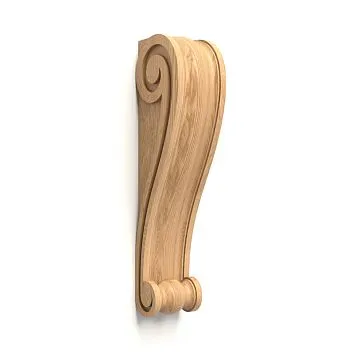
In classical interiors, ceiling picture frames often repeat motifs of ancient architecture. Ionic volutes, Corinthian leaves, meanders and rosettes create a sense of connection with great traditions of the past.
Modern interiors prefer more restrained solutions. Simple geometric profiles, minimal decoration, emphasis on material quality and flawless execution. Sometimes, the ceiling picture frame becomes a lighting element — LED strips are embedded into it, creating an eye-catching backlighting effect.
Decorative picture frames: universal solutions
There is an entire category of moldings that have no specific functional purpose but are used as decorative elements. They can frame mirrors, create decorative wall panels, or highlight separate zones in interior design.
Such moldings give designers complete creative freedom. They can be of any size, any shape, any color. The main thing is that they harmonize with the overall interior concept, support its style and mood.
Technology of creation: from idea to masterpiece
Choice of wood: the soul of the future molding
Production of wooden moldingIt begins with material selection. And here there are no small details. Each wood species has its own character, possibilities, and limitations.
Oak— the king among materials for molding. Its hardness allows for delicate carving that will last for centuries. The beautiful texture creates a unique pattern, enhanced by transparent finishes. Oak moldings are an investment in eternity.
Beech— a noble alternative to oak. More uniform texture, rose-colored tone, excellent workability. Beech moldings are especially suitable for classic interiors, where elegant restraint is important.
Walnut— embodiment of warm luxury. Its chocolate tones and expressive texture create a sense of coziness and nobility. Walnut moldings pair beautifully with dark interiors, accentuating the richness of the setting.
Linden— material for carvers. Soft and pliable, it allows for the creation of the most intricate carved compositions. Linden moldings are often used to create exclusive, original works.
Drying: laying the foundation of stability
The process of producing quality molding begins long before the wood reaches the craftsman. Proper drying is the foundation of future product quality.
Kiln drying is carried out according to special regimes for each wood species. Temperature, humidity, and time are calculated with precision down to the degree and percentage. The goal is to reduce the wood’s moisture content to 8–12%, at which point the finished items will remain stable under any operating conditions.
Incorrectly dried wood may present unpleasant surprises: cracking, warping, changes in geometry. For molding, where profile accuracy is crucial, this is unacceptable.
Profiling: birth of form
Creating the profile is the moment of truth in molding production. It is here that an ordinary board transforms into an element with character and purpose.
Simple profiles are created on four-sided planers. Special knives, manufactured according to individual drawings, form the required geometry in a few passes. Precision here is critical — even a deviation of tenths of a millimeter can ruin the entire appearance.
Complex multi-element profiles require several operations. Each element requires a separate pass, separate machine setup, and separate set of knives. Such work requires the highest level of machine operator skill and equipment precision.
Carving: bringing wood to life
Carving is the soul of molding art. Here, the cold precision of mechanical processing gives way to the living creativity of the master carver.
Modern CNC machines can reproduce the most complex carved elements, but they create only the base. Final finishing, giving the carving life and expressiveness, is still performed by hand.
Hand carving remains the pinnacle of craftsmanship. Each element turns out slightly different from the others, giving the item individuality. The master carver reads the wood, understands its structure, and works with its natural characteristics.
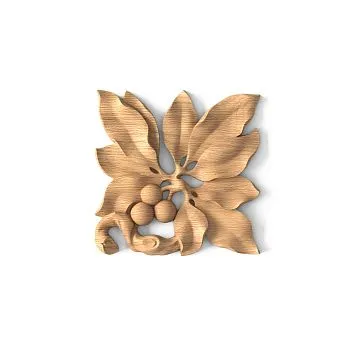
Classic carving motifs — acanthus leaves, grapevines, rosettes, palmettes — require a deep understanding of proportions and composition. Each element must be in its proper place, every line justified.
Final finishing: the last touches
Molding sanding is a special art. A profiled surface with numerous curves requires a special approach. Each profile element is sanded separately, using different tools and abrasives.
Carved elements are sanded only by hand. Here, it is not only important to bring the surface to the required smoothness, but also not to damage delicate carving details, not to round off sharp edges, not to alter the carver’s intent.
Priming creates the foundation for finish coatings. Modern primers not only ensure adhesion but also equalize the wood’s absorption capacity across different areas, protecting against biological damage.
Styles and eras in molding art
Gothic: reaching upward
Gothic moldings reflect the main idea of the style — striving towards the heavens. Tall, narrow profiles, sharp angles, pointed arches in decoration create a sense of elevation and spirituality.
Gothic molding carvings often include architectural elements — miniature buttresses, roses, pointed arches. The color palette is restrained — natural wood tones, sometimes with gilded accents on individual elements.
Renaissance: harmony and proportion
Renaissance moldings embody ideals of harmony and perfection of proportions. Classical orders, ancient motifs, strict symmetry — all are governed by principles of mathematical beauty.
Renaissance moldings often include architectural elements — pilasters, capitals, entablatures. The carving is more restrained than in Baroque, but each element is carefully crafted and has its place in the overall composition.
Baroque: triumph of decoration
Baroque moldings are the peak of decorative art. Complex multi-level profiles, abundant carving, rich gilding create a sense of luxury and grandeur.
Plant motifs dominate Baroque decoration. Acanthus leaves, grapevines with clusters, roses and tulips intertwine in complex compositions. Images of putti — small angels playing among flowers and leaves — are often found.
Gilding is an essential part of Baroque moldings. It highlights every curve of the carving, creates play of light reflections, and gives the piece a festive quality.
Rococo: elegance and lightness
The Rococo style brought new principles to molding art. Asymmetry, lightness, playfulness replaced the solemn symmetry of Baroque.
Characteristic Rococo motifs — rocaille (stylized shells), cartouches, asymmetrical scrolls. The color palette became lighter — pink, blue, green tones combined with gold create a sense of airiness.
Classicism: return to antiquity
Classical moldings are distinguished by strictness and noble restraint. Antique motifs — meanders, palmettes, acanthus — are used in strict accordance with canonical proportions.
The color palette of Classicism is built on contrasts — white with gold, dark green with gold, black with bronze. These combinations create a sense of solemnity without extravagance.
Modern: nature as a source of inspiration
The Modern style revolutionized molding art. Rejection of historical styles, turn towards natural forms, use of new materials and technologies created a completely new aesthetic.
Modern moldings often include images of real plants — irises, lilies, sunflowers. Smooth, flowing lines create a sense of movement and life. Asymmetry becomes not an exception but a rule.
Art Deco: geometry and luxury
The Art Deco style of the 1920s-30s introduced geometric strictness into molding art. Straight lines, stepped profiles, contrasting combinations created an image of modernity and technological progress.
Art Deco motifs — sun rays, zigzags, stylized plants — were executed in a strict geometric manner. Materials were often combined — wood with metal, mother-of-pearl, colored glass.
Modern Production: Traditions and Innovations
CNC technologies: precision and reproducibility
Modern CNC machines have revolutionized the production of molding. Now it is possible to reproduce the most complex classical profiles with precision unattainable by hand.
Programming CNC machines for molding production is a complex task. Each profile element must be converted into digital code, the specific wood species' processing characteristics must be considered, and optimal cutting parameters must be selected.
3D milling opens new possibilities for creating volumetric decorative elements. Reliefs that previously required hours of manual labor can now be produced in minutes.
But full automation has its limitations. To create truly exclusive items, the involvement of a master carpenter capable of infusing the wood with soul is still necessary.
Laser Technologies: New Decoration Possibilities
Laser engraving allows for the finest patterns, inscriptions, even photographic images to be applied to the molding surface. The precision of the laser enables the creation of details impossible with traditional processing methods.
Laser cutting opens possibilities for creating intricate moldings. Any complexity of openwork patterns, the finest interweavings — all of this becomes possible thanks to laser technologies.
New Materials: Expanding Possibilities
Modern molding production is not limited to traditional materials. Fiber-based composites allow for the creation of items with unique properties.
High-density MDF ensures geometric stability and allows for the execution of the most complex profiles. Special moisture-resistant compounds make it possible to use such moldings even in high-humidity conditions.
Polyurethane moldings imitate wood but offer several advantages: lightness, moisture resistance, ease of installation. Modern coloring technologies allow for finishes indistinguishable from natural wood.
Molding in Interior: Philosophy of Space
Interior Role of Molding
Molding in interior design is not just a decorative element. It is a tool for organizing space, creating rhythm, and directing attention. Properly placed moldings can visually alter room proportions, highlight important zones, and create the desired atmosphere.
Horizontal moldings visually expand space, making it more calm and cozy. Vertical moldings raise ceilings and add dynamism. Diagonal moldings create a sense of movement and energy.
Moldings can unite various interior elements into a single composition. Identical profiles on different items — picture frames, mirrors, furniture — create visual connections and organize space.
Molding as a Style Carrier
Each interior style has its preferences for moldings. Classic interiors require traditional profiles with rich ornamentation. Modern minimalism prefers simple geometric forms. Country style loves rough, deliberately simple moldings.
But molding can not only support existing styles but also define them. Luxurious Baroque moldings can transform the simplest interior into a palace. Strict neoclassical profiles can bring order and structure to a chaotic space.
Psychology of Perception
Moldings influence our perception of space on a subconscious level. Warm wood tones create a sense of coziness and safety. Gold adds grandeur and significance. Carving draws attention, compelling one to examine details.
The size of molding also matters. Wide profiles create a sense of solidity and stability. Narrow profiles convey lightness and airiness. Tall moldings raise ceilings, while low ones create intimacy.
Production Nuances: Secrets of Craftsmanship
Quality Control: Every Detail Matters
The production of quality moldings requires constant control at all stages. Incoming material inspection reveals wood defects even before processing begins. Operational control monitors adherence to technological parameters.
Special attention is given to profile geometry control. Modern measuring systems allow control of dimensions with precision down to hundredths of a millimeter. Any deviation may affect the quality of element joints during installation.
Surface quality control includes not only visual assessment but also measurement of roughness using specialized instruments. This is especially important for moldings that will be coated with transparent lacquers.
Packaging and transportation
Finished moldings require special care during packaging. Protective films prevent surface damage, and special spacers prevent profile deformation.
Transporting moldings is a separate art. Long planks require special transport vehicles, careful stacking, and protection from vibrations and impacts. Damage to moldings during transport may nullify all previous work.
Warehouse Storage
Proper storage of moldings is no less important than their production. Air humidity, temperature, and ventilation must all be under control. Moldings are stored horizontally with spacers placed at regular intervals.
Carved moldings require special storage conditions. They cannot be stacked on top of each other, and each item must be protected from accidental damage. Special racks with individual compartments are often used.
Installation and Operation: Practical Aspects
Preparation for Installation
Quality installation begins with preparation. Surfaces must be flat, clean, and dry. Marking must be done with great care — an error here can ruin the entire appearance.
The tool for cutting moldings must be in good condition and properly adjusted. Dull saws leave chips, inaccurate miter saw settings result in gaps at joints. Professional installers use special crosscut saws with fine-toothed blades.
Jointing at Corners
Quality jointing of moldings at corners is a sign of professional installation. Internal corners are mitered at 45 degrees. The cut must be perfectly clean, without chips or scratches.
External corners are often finished with special corner elements. This is not only easier to install but often looks more attractive, especially on complex profiles with rich ornamentation.
Complex profiles require a special approach. Each profile element must fit precisely with the corresponding element of the adjacent plank. Sometimes manual fitting with fine tools is required.
Fastening and Fixation
The choice of fastening method depends on the size and weight of the molding, as well as the material of the base. Lightweight moldings can be glued, while heavy ones require mechanical fastening.
Modern adhesives provide reliable bonding, but require proper application. Surfaces must be clean, adhesive must be applied evenly, and the curing time must be strictly observed.
Mechanical fastening is performed with hidden screws or special brackets. Fastening locations are later masked with putty or decorative plugs.
Maintenance and Restoration: Preserving Beauty
Regular Maintenance
Proper care extends the life of moldings and preserves their original appearance. Regular dry cleaning with a soft brush removes dust from carving recesses, preventing its accumulation.
Wet cleaning is permissible only with special cleaners designed for treated wood. Ordinary household cleaning agents may damage the finish, especially if it contains gold.
Carved moldings require special attention. Dust and dirt accumulate in the fine details of carving, which are difficult to remove by ordinary means. Sometimes soft brushes or even toothbrushes are needed.
Restoration of Finishes
Over time, protective coatings on moldings may fade or become damaged. Restoration requires a professional approach — the original coating type must be identified, the surface properly prepared, and appropriate materials selected.
Gold leaf — especially delicate finish. Its restoration requires special skills and materials. Sometimes it is simpler to completely re-gild the molding rather than attempt to restore individual areas.
Modern coatings are more durable, but they are not eternal. Regular renewal of the protective layer is the key to a long life of the molding.
Restoration of Damage
Mechanical damage to moldings — chips, cracks, broken carving elements — requires professional restoration. Simple spackling with putty usually looks like a patch.
Restoration of carved elements — a special art. A master restorer must not only restore the lost fragment but also precisely reproduce the original carving style, its character, and execution manner.
Sometimes it is simpler to manufacture a new element than to restore a severely damaged one. Modern scanning and CNC processing technologies allow for the precise reproduction of even the most complex carved details.
Economic Aspects of Production
Pricing: Influencing Factors
The cost of molding depends on many factors. Material is one of the main ones. Moldings from valuable wood species cost significantly more than those from ordinary wood.
Profile complexity and decoration significantly affect the price. A simple rectangular molding may cost much less than a complex multi-element one with carving. Hand carving increases the cost several times.
Order volume also affects the price. Large batches are produced more cheaply due to savings on equipment setup and material procurement.
Urgency of production is another factor. Standard items from stock cost less than custom-made ones. Urgent orders may cost significantly more than standard ones.
Market and Competition
The molding market is quite competitive. Consumers can choose between products from different manufacturers, imported and domestic items.
Competition is not only about price, but also about quality, assortment, and service. Manufacturers strive to find their niche — some specialize in mass production of inexpensive items, while others focus on exclusive, custom-made works.
Imported products compete with domestic ones. Each has its advantages: imports often offer a wider assortment and sometimes higher quality, while domestic manufacturers offer lower prices and the ability to quickly respond to market needs.
Development Prospects
The molding market shows steady growth. Development of construction, increased interest in interior design, and rising household incomes — all of these stimulate demand.
Technological development opens new possibilities. CNC machines make it possible to produce complex profiles in small quantities. New materials expand the application range of moldings.
Individualization is becoming an important trend. Consumers increasingly want unique solutions, items created specifically for their projects.
Frequently asked questions
Which wood is best suited for making a picture frame?
The choice of wood depends on the purpose of the frame and budget. For picture frames, hardwoods — oak, beech, ash — are best, as they allow fine carving and are durable. For ceiling moldings, softer woods — pine, linden — can be used, as they are easier to work with. Linden is especially good for carved elements due to its softness and uniformity.
Can MDF molding be used instead of wooden molding?
MDF is an excellent alternative to natural wood for many applications. It is more geometrically stable, does not crack or warp, and is cheaper. High-density quality MDF allows creating complex profiles and even imitating carving. However, for exclusive items where naturalness and unique texture are important, wood is irreplaceable.
How to choose the right picture frame?
Choosing a picture frame is an art. The main rule — the frame should complement the artwork, not compete with it. For classical paintings, ornate frames are suitable; for modern art, simpler frames are preferred. The frame size should match the painting size and room scale. Color can be chosen to match the painting’s main colors or neutral tones.
How long do wooden frames last?
With proper manufacturing and maintenance, wooden frames can last for decades. Frames made from hardwoods with quality finishes last 25–50 years or more under normal conditions. Service life depends on wood species, finish quality, usage conditions, and maintenance frequency.
Can damaged frames be restored?
Yes, most frame damages can be restored. Minor scratches and finish wear are removed by polishing and touch-up. More serious damage — chips, cracks, broken carved elements — requires