Article Contents:
- Evolution of Safety Concept in Architecture
- Functional Diversity of Wall-mounted Systems
- Materials and Technologies: Wood in the Age of Innovation
- Normative requirements and safety standards
- Design Solutions and Stylistic Integration
- Features of Installation and Operation
- Handrails in the Context of Accessible Environment
- Guardrails as an Element of Safe Space
- Round Handrail: A Universal Interior Element
- Round Handrails: Aesthetics and Functionality
- Trends 2026: What’s New in the World of Handrails and Guardrails
- Psychology of Safety and Comfort
- Economic Viability and Long-term Perspective
- Regional characteristics and climatic conditions
- Integration with "Smart Home" Systems
- Social Responsibility and Corporate Ethics
- FAQ: Answers to Popular Questions
- Conclusion: Choosing Safety and Quality

Modern society is increasingly moving toward creating an environment where every individual feels protected. Wall-mounted handrails and guardrails have become an indispensable element of safe architecture — they not only prevent injuries but also shape spaces comfortable for all categories of the population. Today, as accessibility issues take center stage, handrails transform from simple functional elements into full-fledged design solutions that seamlessly integrate into the interiors of homes, offices, and public buildings.


Evolution of Safety Concept in Architecture
Why are wall-mounted handrails for staircases so popular now? The answer lies in changing social priorities and regulatory norms. In the 2020s, public and private spaces began actively adapting to the needs of people with disabilities, elderly citizens, and families with young children. The introduction of the "Accessible Environment" program required developers to equip buildings with handrails, ramps, and other elements ensuring free movement for everyone.
A round handrail with a 50 mm diameter has become something of a golden standard — such thickness ensures a secure grip for any hand size, while the round shape eliminates sharp edges and reduces the risk of injury. The ergonomics of this solution have been confirmed by decades of research: a round handrail evenly distributes load on the wrist, does not create pressure points, and allows the palm to slide easily while moving along the wall. STAVROS offers a wide range ofround handrailsmade from high-quality solid wood, combining ergonomics, durability, and aesthetic appeal.




Functional Diversity of Wall-mounted Systems
Wall-mounted handrails and guardrails perform numerous tasks beyond simple support. They structure space, guide people’s movement, create visual accents, and protect walls from damage. In public buildings — hospitals, schools, shopping centers — handrails become part of the navigation system, helping visually impaired visitors orient themselves and marking safe movement routes.
For private homes, wall-mounted stair handrails take on special significance. Detached cottages with multi-level layouts, townhouses with narrow staircases, apartments with attics — in all these spaces, a handrail mounted on the wall provides an additional point of support and reduces the risk of falling. This is especially relevant for families with young children or elderly relatives. Round wooden stair handrails with a 50 mm diameter made from beech or oak not only function well but also add a touch of natural warmth and elegance to the interior. STAVROS products are distinguished by precise processing and the option to choose wood species, allowing one to selectround wooden handrail 50 mmto match any design style.
Our factory also produces:


Materials and Technologies: Wood in the Age of Innovation
When discussing wall-mounted handrails, it is impossible to ignore the issue of material selection. Traditionally, three categories lead: metal (stainless steel, brass), plastic (polyurethane, PVC), and wood (oak, beech, ash, pine). Each of these materials has its advantages, but wood remains the favorite for those who value naturalness, tactile comfort, and aesthetic expressiveness.
Round wooden handrails are pleasant to the touch — they do not chill the hand in winter and do not overheat in summer, unlike metal counterparts. The wooden surface is slightly textured, ensuring reliable grip and preventing palm slippage even under wet conditions. Modern processing technologies allow achieving perfect smoothness without losing natural texture: high-precision CNC lathes turn round 50 mm handrails with millimeter accuracy, while multi-stage sanding eliminates the slightest irregularities.
Special attention deservesround handrails made of beech— this species is characterized by high density, wear resistance, and even light texture. Beech is easily stained and varnished, allowing handrails to be created in any color scheme—from natural honey tone to deep wenge or noble walnut shade. Round oak handrails are even more durable and feature a distinct grain pattern, giving the item a special elegance. ChoosingRound oak handrail— you invest in an interior element that will serve for decades without losing its functional and aesthetic qualities.
Get Consultation
Normative Requirements and Safety Standards
Installation of wall-mounted handrails is regulated by construction norms and rules, as well as special standards for accessible environments. According to current regulations, handrails must be installed at a height of 900 mm from the step or floor level, ensuring a comfortable grip for an average-height adult. In public buildings, it is recommended to install two-level handrails — upper at 900 mm and lower at 700 mm, allowing support for people of different heights and children.
The handrail diameter is also regulated: the optimal range is from 40 to 60 mm. Round handrails 50 mm in diameter fall exactly in the middle of this range, ensuring universality and comfort for most users. It is important that there is a gap of at least 45–50 mm between the handrail and the wall — this is necessary for free hand movement and secure grip. During installation, special brackets are used, which withstand a horizontal load of no less than 100 kg, guaranteeing safety even in case of sudden jerking or a person falling.
Wooden handrails for home, manufactured by STAVROS, fully comply with all regulatory requirements. The company offers not only the handrails themselves but also mounting accessories — brackets, caps, and connecting elements. This allows creating a reliable and aesthetically pleasing structure that will serve for many years.Buy round wooden handrail— can be delivered throughout Russia, making the product accessible to customers from any region.
Design solutions and stylistic integration
Wall-mounted handrails have long ceased to be purely utilitarian elements — today they actively contribute to interior design. A round wooden handrail can become an accent in a minimalist space, emphasize classic elegance, or add a cozy natural touch to a modern loft. Everything depends on the wood species, finish type, and mounting method.
In Scandinavian interiors, light handrails made of beech or ash, coated with matte varnish or oil preserving the natural wood texture, are popular. Such round wooden handrails 50 mm harmonize with white walls, light parquet, and simple furniture forms, creating an atmosphere of calmness and purity. In classic interiors, walnut handrails with rich staining — in walnut, mahogany, or wenge tones — are appropriate. They complement heavy staircases, wooden wall panels, and antique furniture, emphasizing the decor’s respectability and solidity.
For modern interiors in loft or industrial design, an interesting solution would be combining a wooden handrail with metal brackets made of blackened steel or brass. In this case, the round wooden handrail of the staircase acts as a contrast element — warm wood softens the coldness of metal and concrete, adding humanity and coziness to the space. STAVROS offers a wide selection of wood species and finish options, enabling the realization of any design ideas andbuy round wooden handrail— perfectly suited for a specific project.
Installation and operational features
Installing a wall-mounted handrail is a process requiring precision and adherence to technology. The first stage is marking: it is necessary to determine the installation height, taking into account the staircase’s slope and anthropometric parameters of users. Then, the mounting points for brackets are marked — usually installed at 80–100 cm intervals to prevent sagging and ensure structural rigidity.
Brackets are mounted using anchor bolts or dowels designed for the wall material (concrete, brick, wood). It is important that the mounting is secure and withstands dynamic loads. After installing the brackets, the handrail itself is mounted — it can be solid or composed of several sections connected by special couplings. Round wooden handrails 50 mm can be purchased in standard lengths — 2, 2.5, or 3 meters — allowing to select the required configuration for any staircase.
Maintenance of wooden handrails does not require complex care. It is sufficient to regularly wipe them with a damp cloth, removing dust and dirt, and periodically (once a year) renew the protective coating — wax, oil, or varnish. This will preserve the handrail in its original state and protect the wood from drying out and cracking. Wooden handrails for balustrades round from STAVROS undergo a multi-stage treatment, including impregnation with antiseptics and fire retardants, significantly increasing their durability and resistance to external influences.
Handrails in the context of accessible environments
Creating an accessible environment is not just fulfilling formal requirements, but expressing respect for every member of society. For people with mobility impairments, elderly citizens, and those with temporary mobility restrictions (after injuries or surgeries), wall-mounted handrails for staircases become literally essential elements. They allow maintaining independence, confidence in movement, and a sense of safety.
For visually impaired individuals, handrails serve an orientation function — tactile contact with the support helps understand the direction of movement, sense the beginning and end of the staircase. Some manufacturers offer handrails with tactile markers — grooves or inserts indicating important points along the route. For wheelchair users, handrails serve as support when crossing ramps — they allow controlling movement speed and ease ascent on inclined surfaces.
In public spaces — clinics, libraries, educational institutions, shopping centers — installing handrails has become mandatory. A round wall-mounted handrail is installed not only along staircases but also in corridors, restrooms, lobbies — anywhere a person may need additional support. STAVROS actively collaborates with architects and designers, offering solutions for social facilities, and suppliesround handrails 50 mm— for large-scale projects to create accessible environments.
Railings as elements of safe space
Wall-mounted railings are more complex structures, including not only the handrail but also vertical posts (spindles), infill, and support elements. They are installed on open staircases, balconies, terraces, walkways, and other areas where there is a risk of falling from height. Unlike a simple handrail, a railing creates a visual and physical barrier, preventing accidental falls and marking the boundary of a safe zone.
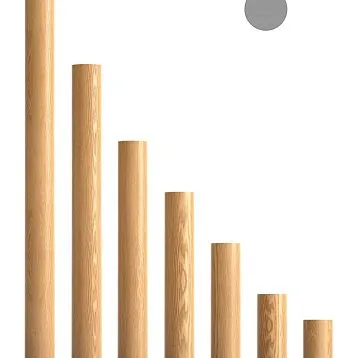
Modern wall-mounted railings can be executed in various styles — from classic ones with turned spindles to ultra-modern ones with minimalist glass panels. Wooden railings withround spindlesand round handrail create a harmonious ensemble, where all elements correspond in shape and material. Such constructions are especially popular in country houses, where wood naturally blends into the natural surroundings and creates an atmosphere of warmth and coziness.
The choice of railing configuration depends on the architectural features of the object and safety requirements. In homes with small children, railings with frequent spindle spacing (no more than 100 mm) are recommended to prevent the risk of a child’s head getting stuck. In public buildings, the railing height should be at least 900 mm, and in some cases (kindergartens, hospitals) — up to 1200 mm. STAVROS offers a full cycle of staircase structure manufacturing — from design to installation — enabling the creation of a safe and beautiful railing fully tailored to the client’s individual needs.
Round molding: a universal interior element
When talking about handrails, one cannot fail to mention round molding — a universal profiled element used not only as a handrail but also as a decorative interior detail. Round wooden molding is used to manufacture rods in closets, curtain rails, furniture elements, decorative grilles, and much more. It is a simple in shape, yet incredibly functional detail, finding application in various fields.
wooden round balusters— is manufactured on high-precision equipment, guaranteeing ideal geometry and smooth surface. Round molding 50 mm — the most popular diameter, universal for most tasks. STAVROS offersbuy round moldingcan be made from various types of wood — oak, beech, ash, pine. This allows selecting the material to match specific usage conditions and design requirements.
Round oak handrails are distinguished by high strength and expressive texture, making them ideal for classic interiors and luxury projects.Round beech balustradehas a uniform structure and light tone, making it suitable for Scandinavian and modern interiors. Pine handrails are the most cost-effective option, appropriate for country houses, saunas, and utility buildings. All types of handrails undergo careful drying and treatment, which prevents deformation and cracking during use.
Round Handrails: Aesthetics and Functionality
Handrails encompass a broader concept, including the handrail, guardrail, and all structural elements ensuring safety on staircases or balconies. Round wooden handrails are a classic solution, time-tested and never outdated. They combine simple form, reliable construction, and the natural beauty of wood.
Round wooden handrails 50 mm — standard size, providing comfortable grip and sufficient strength. Such handrails are suitable for both indoor and outdoor staircases, provided the wood is properly protected. For outdoor use, oils and varnishes with UV filters are used to prevent fading and degradation from sunlight and precipitation. For indoor spaces, standard interior finishes are sufficient, enhancing the natural wood texture and providing a silky smooth surface.
buy round wooden handrailscan be purchased ready-made or custom-ordered to individual dimensions. STAVROS offers not only standard solutions but also develops exclusive projects, taking into account the architectural features of the object and the client’s preferences. The ability to choose wood species, treatment type, and configuration allows creating handrails that will become a true decoration of the home and serve for many years.
Trends 2026: What’s New in the World of Handrails and Guardrails
The industry of architectural elements is not standing still — new materials, technologies, and design approaches are emerging. In 2026, we observe several key trends defining the development of the stair and guardrail segment.
The first trend — eco-friendliness and naturalness. Consumers increasingly prefer natural materials, rejecting plastic and synthetic alternatives. Wooden handrails are experiencing a true renaissance — they are perceived as elements of healthy, eco-friendly housing, creating a favorable microclimate and positively influencing people’s emotional state. STAVROS actively develops the production of solid wood items, offering a wide selection of wood species and finishing options.
The second trend — individualization and customization. Standard solutions are giving way to unique projects reflecting the owner’s personality and the specific characteristics of the space. Clients want handrails and guardrails specifically designed for their homes, taking into account architectural features, interior style, and functional needs. The company is ready to develop an individual project and manufactureRound wooden handrail 50 mm buyaccording to an exclusive sketch, opening boundless creative possibilities.
The third trend — integration of technology. Modern handrails can be equipped with lighting, built-in motion sensors, heating systems for outdoor installations. A wooden handrail with integrated LED lighting not only ensures safety at night but also creates an eye-catching decorative lighting effect for staircases. Such solutions are especially popular in country homes and luxury public spaces, where functionality is important, but so is visual appeal.
Psychology of Safety and Comfort
Why does the presence of a handrail so strongly influence our sense of safety? Psychologists explain this as a basic human need for support and control. When we move along a staircase, especially a steep or narrow one, our brain continuously assesses risks and seeks ways to minimize them. A handrail provides us with an additional point of contact, reduces anxiety, and allows us to focus on movement rather than fear of falling.
For elderly people and those who have suffered injuries, the psychological value of a handrail cannot be overestimated. It becomes a symbol of independence — the ability to move around the house independently, without relying on external help. The round shape of the handrail has special significance: it is associated with softness, safety, and the absence of sharp edges. The wooden texture adds a sense of warmth and natural organic quality, positively affecting emotional state.
Interestingly, properly designed handrails and guardrails can even influence the speed of movement of people in public spaces. In shopping centers, office buildings, and airports, thoughtfully placed handrails guide visitor flows, prevent collisions and congestion, and create a comfortable environment for all user categories. This is an example of how a functional element becomes a tool for managing space and human behavior.
Economic Justification and Long-Term Perspective
Installing quality handrails is an investment that pays off many times over. Reducing the risk of falls and injuries, especially among the elderly, has not only humanitarian but also economic value. The cost of treating a femoral neck fracture or a head injury is incomparable to the cost of installing reliable handrails. For owners of public buildings, the presence of handrails also reduces insurance risks and fulfills legal requirements, violations of which incur significant fines.
Wooden handrails from STAVROS are distinguished by exceptional durability. With proper care, they serve for decades without losing their functional or aesthetic qualities. Wood is a material that can only become more beautiful with age, acquiring a noble patina and deeper color tones. Unlike plastic or metal handrails, which fade over time, scratch, and require replacement, woodenRound wooden handrail 50 mm buycan be easily renewed — simply lightly sand the surface and apply a fresh protective coating.
The economic justification for choosing wooden handrails also lies in their versatility and restorability. If a handrail is locally damaged (scratch, chip), there is no need to replace the entire structure — it is sufficient to restore the damaged area. Wood is easy to repair, unlike plastic or composite materials. This makes wooden handrails a cost-effective solution for the long term, especially in private homes, where owners plan to live for many years.
Regional characteristics and climatic conditions
The choice of material and handrail construction largely depends on regional climatic conditions. For a humid maritime climate, resistance to corrosion and rot is crucial — here, oak, larch, teak, and other moisture-resistant species are preferred. For a continental climate with significant temperature fluctuations, geometric stability is important — the wood must be thoroughly dried and impregnated with protective compounds to prevent cracking.
In northern regions, the issue of ice formation on outdoor handrails is relevant. Wooden handrails have an advantage over metal ones — they are not as cold to the touch and do not ice up as much. Nevertheless, for outdoor installations, it is recommended to use special anti-icing coatings or heating systems. In southern regions with intense sunlight, UV protection is critical — wooden handrails must be coated with varnishes or oils containing UV filters.
STAVROS takes regional specifics into account and offers solutions adapted to particular climatic conditions. The company supplies products to all regions of Russia — from Kaliningrad to Vladivostok — and in each case selects the optimal wood species, treatment type, and protective coatings.Round handrails can be purchased in St. Petersburgcan be delivered, with all items packed with maximum protection against damage during transport.
Integration with "Smart Home" Systems
Modern "smart home" technologies open new opportunities for enhancing safety and comfort. Handrails can be integrated into the building’s overall control system, equipped with motion, pressure, and temperature sensors. Such "smart handrails" can automatically turn on lighting when a person approaches, send an alarm signal in case of a fall, and adjust surface temperature based on external conditions.
Such solutions are especially relevant for homes where elderly people or individuals with disabilities live. The system can track the frequency of handrail use, the time a person spends on the stairs, and other parameters that allow assessing health status and promptly detecting changes. In case of an abnormal situation (prolonged inactivity, sudden impact), the system automatically alerts family members or emergency services.
Wooden handrails easily integrate into a smart home system — wiring for LED lighting can be installed inside them, sensors can be mounted on brackets, and wireless communication modules can be embedded. At the same time, the handrail’s exterior appearance remains unchanged — all technological elements are concealed within the structure. STAVROS collaborates with smart home system manufacturers and is ready to offer comprehensive solutions combining traditional wooden products with modern safety and comfort technologies.
Social Responsibility and Corporate Ethics
Production and installation of wall-mounted handrails is not only a business, but also a contribution to creating a comfortable and safe environment for all members of society. Companies engaged in this field bear social responsibility for the quality of their products, compliance with regulations, and real effectiveness in ensuring people’s safety.
STAVROS views its activities through the prism of social responsibility. The company participates in programs for creating accessible environments, supplies handrails for social facilities — hospitals, schools, kindergartens, elderly care homes. Special attention is paid to product quality — each handrail undergoes a multi-stage check for compliance with standards of strength, safety, and eco-friendliness. Use of certified raw materials, modern protective coatings, strict adherence to technology — all this guarantees that STAVROS products truly ensure safety and serve for many years.
The company also implements educational programs, training architects, designers, and developers in proper handrail and railing design and installation. Seminars, webinars, and methodological materials are conducted to help specialists create truly safe and comfortable spaces. This is an important contribution to improving overall design culture and understanding the significance of seemingly simple elements, such as wall-mounted handrails.
FAQ: Answers to popular questions
What diameter of handrail is considered optimal?
A diameter from 40 to 60 mm is considered optimal. The most universal size is 50 mm, which provides a comfortable grip for most adults and meets regulatory requirements.
What type of wood is better for handrails?
For indoor spaces, beech, oak, ash, and pine are ideal. For outdoor structures, oak and larch are preferable — they are more resistant to moisture and temperature fluctuations.
At what height should a wall-mounted handrail be installed?
The standard installation height is 900 mm from the step or floor level. In public buildings, it is recommended to install two handrails — at 900 mm and 700 mm heights.
How to care for wooden handrails?
It is sufficient to wipe them regularly with a damp cloth and renew the protective coating — wax, oil, or varnish — once a year. Avoid using aggressive cleaning agents.
Can wooden handrails be installed outdoors?
Yes, provided they are properly protected. Use wood species with high moisture resistance (oak, larch) and cover them with special exterior coatings with UV protection.
How long do wooden handrails last?
With proper care and quality treatment, wooden handrails can last several decades. Oak and beech products are particularly durable.
Can I order a handrail of non-standard length?
Yes, STAVROS manufactures handrails to custom sizes. Production of items up to 3 meters and longer is possible, taking into account transportation specifics.
What distance should be between the handrail and the wall?
The minimum distance is 45–50 mm. This is necessary for free hand movement and secure grip on the handrail.
Will a wooden handrail withstand the weight of an adult person?
Yes, when properly installed, a wooden handrail withstands horizontal load exceeding 100 kg, which meets safety regulatory requirements.
How to choose the handrail color to match the interior?
Match the handrail color to the stairs, floor, and doors. The handrail should harmonize with the main wooden elements of the interior. STAVROS offers various toning and finishing options.
Conclusion: Choosing safety and quality
Wall-mounted handrails and railings have long ceased to be secondary architectural elements — today they play a key role in creating a safe, comfortable, and aesthetically pleasing space. Choosing quality wooden handrails means investing not only in your own safety, but also in the health of your loved ones, the longevity of your interior, the ecology, and the aesthetics of your home.
For over twenty years, STAVROS has specialized in producing wooden products for interiors and exteriors. Experience, modern equipment, quality control at every stage, a wide selection of wood species and finishing options — all this allows us to offer products of the highest quality.stair railingsBalusters, trim, decorative elements from STAVROS — this is a combination of traditional craftsmanship and advanced technologies, natural beauty of wood and functional reliability.
Choosing STAVROS means choosing a partner who values not only commercial results but also customer satisfaction, user safety, and contribution to creating high-quality architectural environments. Consult professionals, and your home will become a truly safe, cozy, and beautiful space, where every element serves people and delights the eye for many years.