Article Contents:
- Philosophy of reasonable luxury in modern interior
- Oak skirting boards — the foundation of interior durability
- MDF frames with carving: decorative splendor without breaking the budget
- Strategy for smart budget allocation in decor
- Painting MDF to look like natural wood: craftsmanship secrets
- Comparative analysis: when solid wood is irreplaceable, when MDF is preferable
- Wide price range of STAVROS products
- Practical tips for installing combined decor
- Common mistakes when selecting and combining materials
- Care and operation: how to maintain pristine appearance for decades
- Trends in interior decor: where the market is heading
- Psychology of perception: why the combination works
- Frequently asked questions about combined decor
- Can oak skirting board be combined with MDF architraves?
- How long does an MDF mirror frame last?
- How to determine the quality of an MDF product when purchasing?
- Can an MDF frame be repainted?
- Does oak skirting board darken over time?
- Which skirting board is better — solid oak or veneered MDF?
- Will an MDF frame support a heavy mirror?
- What to use for finishing oak skirting board — oil or varnish?
- Economic calculation: real benefits of the combined approach
- Hidden costs when using cheap materials
- Impact of quality decor on property value
- Seasonality of purchases: when it's more profitable to buy
- Regional pricing characteristics
- Environmental certificates and standards: what to look for
- Working with a designer: when professional help is justified
- DIY installation or professional installation
- Geography of Production: Russian vs. Imported
- Conclusion: The Art of Balance in Modern Interior Design
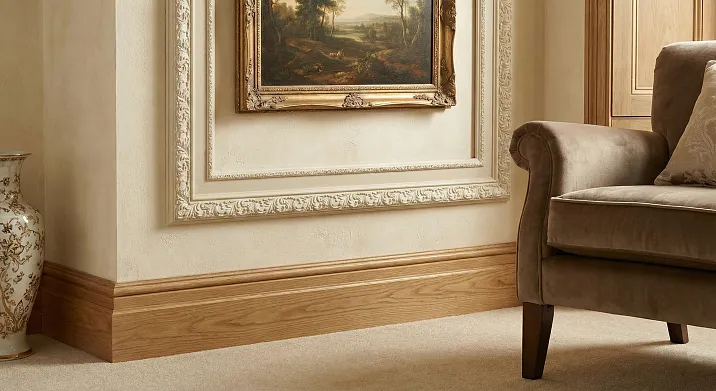
Interior richness is not always about millions. True luxury today lies in the ability to create a status atmosphere without insane spending. When a home combines naturalWooden baseboard pricewhose value is justified by decades of service, and elegantMDF frameswith filigree carving at an affordable cost — this is the art of a rational approach. People have learned to distinguish true value from marketing tricks, to understand where saving turns into losses in a year or two, and where a smart decision allows for an outstanding result within a reasonable budget.




The Philosophy of Reasonable Luxury in Modern Interior Design
The world has changed. The times when prestige was determined by the amount spent are becoming a thing of the past. They have been replaced by an era of conscious consumption, where every ruble is invested not just for the sake of it, but with an understanding of the return. This trend has manifested itself especially brightly in interior design — instead of the total use of expensive materials, combined solutions have appeared, where premium elements work in tandem with technological analogues. Does it make sense to overpay for a carved frame made of solid wood if modern MDF technology creates an absolutely identical visual picture for a third of the price? Meanwhile, a floorSolid wooden skirting board pricewhose initial cost may seem high, will last half a century without replacement, withstand dozens of repaintings, and outlive three generations of laminate and parquet.
So what is this balance between luxury and rationality? It is an understanding of the nature of materials, their strengths and weaknesses, the ability to correctly distribute the budget between functional elements and decorative accents. An oak baseboard takes on serious loads — vacuum cleaner impacts, accidental furniture bumps, humidity during cleaning. Here, the strength of solid wood is needed, its ability to resist deformation and mechanical damage. But aframed mirroron the wall is a completely different story. A frame is not subjected to physical impact; it works exclusively for aesthetics. And if MDF can reproduce any, even the most complex carving with impeccable clarity of lines, why overpay?
Modern production technologies for wood fiber board products have reached such perfection that it is impossible to visually distinguish high-quality MDF carving from solid wood even upon close inspection. High-precision CNC milling machines reproduce the smallest details of an ornament, create deep recesses and the thinnest edges, which until recently were only possible for the hand of a master carver. After professional painting or patination, such a frame acquires the nobility of an antique item and becomes a true decoration of the space. At the same time, the cost remains democratic — savings compared to solid wood reach 40-60%, which for comprehensive room decoration means tens of thousands of rubles of additional budget for other furnishings.




Oak Baseboards — The Foundation of Interior Durability
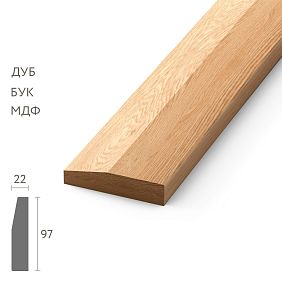
Why oak? This question arises regularly, especially when looking at the price tag. Indeed, oak molding costs noticeably more than pine analogues, not to mention composite materials. However, behind this difference lies a completely different level of performance characteristics. The density of oak wood is 650-750 kg/m³, hardness on the Brinell scale reaches 3.7-4.0 units — this means phenomenal resistance to scratches, dents, and chips. Softwood species after a couple of years of active use become covered with traces of mechanical impact, lose their original appearance, and require replacement or restoration. Oak, however, maintains impeccable condition for decades, turning a one-time expense into a long-term investment.
A feature of oak wood structure — pronounced porosity and medullary rays — creates a unique visual effect that cannot be imitated by artificial materials. This living texture changes shade depending on lighting, creates a play of highlights and shadows, and gives the space natural warmth. Whenoak baseboardis painted with translucent compositions or coated with oil, each plank acquires an individual pattern — there are no two absolutely identical elements. This is that very handcrafted quality that has always been valued, that naturalness that no printed imitation can replace.
The most important aspect is geometric stability. Oak wood, after proper kiln drying (moisture content 8-12%), practically does not react to seasonal humidity fluctuations in the room. The baseboard does not twist like a screw, does not form gaps in the corners, and does not pull away from the wall. This is critically important for long-term aesthetics — after five to seven years of use, oak molding looks just as impeccable as on the day of installation, while composite analogues may show deformations, swelling, and cracks. Considering that replacing baseboards is a labor-intensive operation requiring dismantling, material selection, repainting, and installation, saving at the purchase stage turns into multiple costs in the future.
The ability to be restored multiple times is another weighty argument in favor of solid oak. A scratch or dent on an oak baseboard can be sanded, repolished, and touched up — the product will return to its original appearance. Such manipulations are impossible with composite materials — the damage remains forever or requires replacement of the entire element. Over several decades of an interior's life, this possibility of local repair saves significant funds, not to mention comfort — there's no need to undertake a major renovation because of one damaged section.
wooden baseboard pricewooden skirting board pricebecomes a secondary factor against the understanding that the home is filled with living, safe materials.
Our factory also produces:
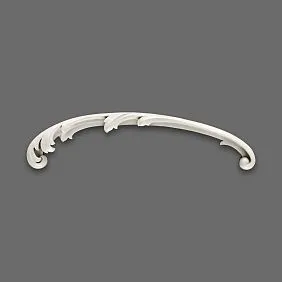
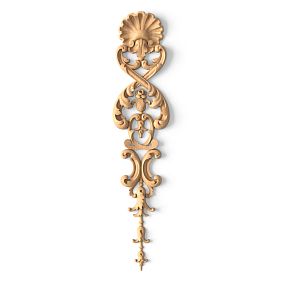


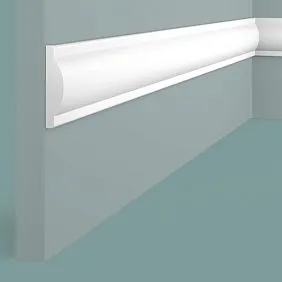
MDF Frames with Carving: Decorative Splendor Without Breaking the Budget
Mirrors, paintings, panels — elements that create the character of an interior. A correctly chosen frame turns an ordinary mirror into a work of art, draws attention, and sets the mood for the entire space. Traditionally, solid wood frames with hand carving were used for such purposes — an expensive pleasure accessible to few. The emergence of high-tech MDF panels with precise milling has revolutionized this sphere, making luxurious carved frames a mass product at an affordable cost.
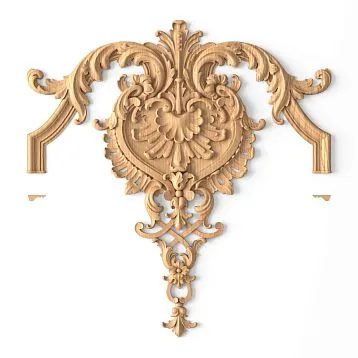
What is a modern MDF frame? It is not just a pressed board, but a high-quality composite material made from fine wood fibers bonded with natural binders. The density of quality MDF reaches 700-850 kg/m³, which is comparable to the density of oak. A homogeneous structure without knots, cracks, or resin pockets makes the material ideal for deep milling — the cutter moves smoothly, does not catch on irregularities, and creates clear edges and filigree details. Programmable CNC machines can reproduce any, even the most complex ornament with millimeter precision — classic grapevines, Baroque swirls, Renaissance palmettes, Modernist geometric motifs.
The question of strength often arises when discussing MDF products. Can a composite really compete with solid wood? In reality, for wall decor, mechanical strength is not a critical parameter.A mirror in a frame to buywhich is planned for wall mounting, is not subjected to impact loads, does not experience pressure or abrasion. The frame hangs motionless, performing an exclusively aesthetic function. Under such conditions, MDF demonstrates absolute stability — it does not dry out, crack, or warp from humidity fluctuations. Once mounted, a carved frame maintains its impeccable appearance for decades without any changes in geometry or texture.
The finishing of MDF frames opens up limitless creative possibilities. The smooth, homogeneous surface of the material perfectly accepts any paint and varnish compositions — enamels, acrylic paints, oil impregnations, wax coatings. Patination looks especially impressive — a technique where the recesses of the carving are darkened with special compounds, creating an effect of noble antiquity. Gilding, silvering, copper patina, artificial wormholes — all these decorative techniques turn a modern product into an antique treasure, indistinguishable from genuine old frames. At the same time, the cost of work and materials remains quite democratic — unlike natural gold leaf on solid wood.
The widest range of profiles and sizes allows selecting a frame for any task. Compact frames 30×30 cm for small mirrors in the hallway, medium 60×80 cm for full-length mirrors in the bedroom, large-scale compositions 120×180 cm for living rooms and halls — each format is available in dozens of carved decor options. Classic moldings with floral ornaments, strict geometric profiles for modern interiors, luxurious Baroque frames with an abundance of stucco decor — the variety of styles will satisfy the most discerning taste. And all this at a cost that is 2-3 times lower than similar solid wood products.
A practical aspect of using MDF frames is their lightness. The composite material weighs less than natural wood, which is critically important for wall mounting. A heavy solid wood frame requires serious fasteners, reinforced anchors, and often additional wall reinforcement. An MDF frame of the same size weighs 30-40% less, allowing the use of standard fasteners even on drywall partitions. Installation is simplified, and the risk of the fastener pulling out under the structure's own weight is eliminated.
Get Consultation
Strategy for Smart Budget Allocation in Decor
Where can you save money, and where is it absolutely unacceptable? This question is fundamental to creating a truly high-quality interior without unnecessary expenses. Understanding the nature of materials, their operating conditions, and long-term prospects allows for making the right decisions and avoiding typical mistakes that end up being costly.
Flooring trim is an area where saving is unacceptable. Baseboards, coving, and thresholds experience constant mechanical stress, contact moisture during cleaning, and are subjected to temperature fluctuations from heating systems. Using cheap composite materials or soft wood species here leads to rapid wear, loss of appearance, and the need for premature replacement. Investing in qualityoak wood baseboardpays off many times over through years of trouble-free operation. An additional benefit is the possibility of multiple repaintings when changing the interior's color scheme, which is practically impossible with composite materials.
Wall decor is an area for reasonable savings.decorative moldingsPicture frames, mirror frames, and decorative panels are not subjected to mechanical loads. Here, MDF, polyurethane, and composite materials perform excellently, providing an appearance identical to solid wood at a much more affordable price. A carved MDF frame for 8-12 thousand rubles looks absolutely the same as an oak one for 25-30 thousand. The difference is threefold, yet the visual effect is identical—this is precisely where the principle of reasonable savings works.
Ceiling cornices, moldings, decorative elements for painting—another area where modern materials outperform traditional solutions in terms of price-quality ratio.Polyurethane Crown MoldingPolyurethane or MDF are significantly lighter than wooden ones, easier to install, and do not require complex fitting in corners. Moreover, after professional painting, they are indistinguishable from plaster or wooden counterparts. Budget savings reach 40-50%, freeing up funds for truly important interior elements.
Door framing requires an individual approach. If it's an entrance door subject to intensive use, it makes sense to choosesolid oak architraves—they will withstand accidental impacts, furniture moving, and frequent touching. For interior doors in bedrooms, studies, and living rooms, MDF architraves veneered with wood veneer are quite acceptable—they will cost 2-3 times less than solid wood with visual identity.
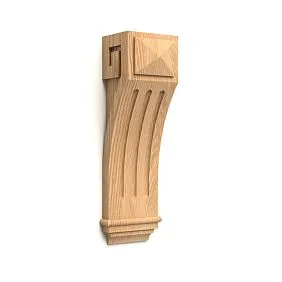
Furniture decor — carved elements, overlays, pediments — is optimally made from MDF. Furniture is not subjected to the same loads as floor elements, but requires geometric precision and dimensional stability. MDF performs perfectly here — it doesn't dry out, doesn't swell, and maintains its shape for decades. Carved MDF overlays cost 3-5 times less than solid wood counterparts, while the quality of detailing is often even higher — modern CNC machines provide fantastic precision.
The general rule is: the more intensive the use and physical impact, the more important it is to choose a durable natural material. The more decorative the function of an element, the more opportunities there are for savings through the use of modern composite materials. By applying this principle consistently to all interior elements, you can reduce overall costs by 25-35% without the slightest loss in the perceived quality of the space.
Painting MDF to look like natural wood: secrets of craftsmanship
The visual indistinguishability of MDF products from solid wood is achieved through proper finishing. Modern painting and patination technologies turn composite material into a perfect imitation of noble wood species. A professionally painted MDF frame cannot be distinguished from an oak one even upon close inspection—the secret lies in the multi-layer application of dyes, the use of special compounds, and the correct sequence of operations.
The first stage is surface preparation. MDF has a smooth, dense structure that poorly absorbs liquid compounds. Without priming, the paint applies unevenly, runs, and forms drips. A quality acrylic primer, applied in a thin layer and dried, creates an ideal base for subsequent operations. The primer fills micropores, evens out absorbency, and ensures reliable adhesion of the final coatings. Some craftsmen use shellac primer—a natural resin diluted with alcohol, which creates an especially strong and smooth base.
The base color is applied as the second layer. To imitate wood, acrylic paints in earthy shades are used—ochre, umber, sienna. It's important not to strive for a uniform coating; on the contrary—slight unevenness, patches, darker areas in the recesses of the carving create naturalness. Real wood never has an absolutely even color; its shade varies from fiber to fiber, from area to area. By imitating this natural variability, the artist brings the composite material closer to living wood.
Patination is the key stage in creating an antique effect. Dark patina (black, dark brown, green) is applied to the protruding parts of the carving and immediately wiped off with a soft cloth, remaining only in the recesses. This contrast between light protrusions and darkened depressions creates volume, emphasizes carving details, and gives the product the depth and nobility of an antique. The degree of contrast is regulated by the amount of patina left—for classic interiors, a soft, delicate effect is appropriate; for Baroque or Empire style, a dramatic, pronounced contrast is acceptable.
The wear effect adds realism. In places where gilding or paint would naturally wear off on a real antique frame (corners, protruding parts of the ornament), artificial wear is created—the top layer of paint is partially removed with fine sandpaper, revealing the underlying layer of a different color. This technique is called distressing and is widely used in decorative painting. Skillfully executed distressing makes a new product visually indistinguishable from an antique one that has passed through centuries.
The final coating protects the decor and gives the desired degree of shine. Matte varnish creates the effect of waxed wood, silky semi-matte imitates oil coating, glossy varnish gives the elegance of a polished surface. Modern acrylic and polyurethane varnishes do not yellow over time, are resistant to UV radiation, and create a strong protective film. Two or three thin layers with intermediate sanding form a perfectly smooth, pleasant-to-touch surface that does not require renewal for decades.
Imitating wood texture is the highest level of decorative finishing. Using special tools—combs, brushes, sponges—a pattern resembling wood fibers is created on fresh paint. Oak is characterized by pronounced radial rays and a large-pored structure, walnut by wavy dark veins, ash by contrasting ring-like texture. An experienced artist can recreate the characteristic pattern of any wood species, turning a featureless MDF surface into a convincing imitation of exotic wood.
Comparative analysis: when solid wood is irreplaceable, when MDF is preferable
When deciding on the material for a specific interior element, it is useful to be guided by clear criteria that allow for an optimal choice. A comparative table of characteristics helps structure information and see the real ratio of advantages.
| Criterion | Solid oak | MDF with carving |
|---|---|---|
| Cost per linear meter | 2500-4500 rub | 800-1500 rub |
| Weight of 1 linear meter of 120mm baseboard | 1.8-2.2 kg | 1.2-1.5 kg |
| Impact resistance | Good | Medium |
| Stability at humidity | High | Very High |
| Restoration possibility | Multiple | Limited |
| Ecological | Maximum | High (E1) |
| Durability | More than 50 years | 20-30 years |
| Installation difficulty | Medium | Low |
Analyzing operational conditions helps make the right decision. For elements located in high-traffic areas—entryways, hallways, children's rooms—it is wiser to choose solid wood. Its ability to withstand mechanical damage justifies the additional cost. In formal rooms with low traffic—living rooms, bedrooms, studies—MDF performs excellently, providing a luxurious appearance with moderate investment.
The climatic features of the room also matter. In bathrooms, saunas, and rooms with high humidity, neither solid wood nor pure MDF are suitable—here, moisture-resistant materials like polyurethane or specially treated composites are needed. In ordinary living spaces with normal humidity, both materials show excellent stability.
Interior style dictates its own requirements. Classic, vintage, retro interiors psychologically demand the naturalness of materials—here, oak molding creates the right sense of authenticity of the era. Modern styles—minimalism, Scandinavian, loft—are more tolerant of composite materials; here, the clarity of lines and quality of finishing are more important than the nature of the base.
The project's budget constraints often become the deciding factor. Comprehensive apartment decoration with solid wood elements may require 300-500 thousand rubles. A combined approach—solid wood where strength is critical, MDF for decorative elements—reduces costs to 150-250 thousand without visual compromise. The freed-up funds can be directed towards quality furniture, lighting, textiles—elements that directly affect living comfort.
Wide price range of STAVROS products
Choosing quality molding and decorative elements requires a reliable supplier with its own production, quality control, and diverse assortment. The company STAVROS offers a full range of solutions for interior decor—from budget options to premium products made from rare wood species.
Baseboards made of solid oakThe STAVROS catalog features dozens of profiles—from laconic rectangular sections for minimalist interiors to richly ornamented coves with carved elements for classic spaces. Profile heights range from compact 60 mm to impressive 180 mm, allowing for proportionally correct solutions for rooms of any height. The wood undergoes multi-stage processing—selection by color and texture, chamber drying to 8-10% moisture content, milling on high-precision equipment, sanding, and geometry control.
Mirror and picture frames made of MDF with carving constitute a separate production direction. The collection includes over a hundred different profiles—from strict classic moldings to luxurious Baroque frames with abundant stucco decor. The size range covers the entire in-demand spectrum—from miniature 20×30 cm to monumental 150×200 cm. Custom-sized and configured frames—oval, round, polygonal—are possible for specific design projects.
decorative moldingsMoldings made from various materials allow for creating complex compositions on walls and ceilings. Wooden moldings made of oak, ash, and beech are suitable for interiors where naturalness is important. MDF moldings for painting offer freedom in color solutions at an affordable cost. Polyurethane profiles are optimal for wet rooms and complex curved surfaces. The variety of widths (from 20 to 200 mm) and reliefs (from smooth to intricately ornamented) ensures solutions for any decorator's tasks.
Ceiling cornicesCeiling cornices are presented in materials of different price categories. Polystyrene cornices—a budget solution for paintable interiors, costing from 80 rubles per linear meter. Polyurethane profiles are denser and more durable, priced at 200-600 rubles per meter. Wooden cornices made of solid wood—a premium option for elite interiors, costing from 1500 rubles per meter. Each category includes dozens of profiles of varying complexity and height.
Interior door casings made of MDF with natural veneer facing combine the economy of a composite base with the naturalness of the face layer. Visually, such casings are indistinguishable from solid wood, while costing 2-3 times less. A wide palette of veneers—oak, ash, walnut, wenge—allows for precise color matching to existing doors and flooring. The standard width of 70 mm fits most openings, with custom sizes possible.
STAVROS's pricing policy is characterized by transparency and flexibility. Retail customers receive fair prices without the multiple markups typical of intermediary trading networks. Professional decorators, designers, and construction companies can count on wholesale discounts for bulk orders. A bonus system for regular clients makes cooperation mutually beneficial and long-term.
Practical tips for installing combined decor
Successful implementation of the concept combining oak baseboards and MDF frames requires proper installation. Even the highest quality materials will not reveal their potential with careless installation. A professional approach to installation work guarantees the durability of the structure and impeccable appearance.
Installation of oak baseboards begins with thorough preparation of the base. The wall must be level, cleaned of dust, and primed. Irregularities exceeding 3-5 mm are compensated with plaster—the baseboard cannot hide serious wall defects; tight fit is critical for airtightness and aesthetics. Marking is done with a laser level, ensuring perfect horizontality around the entire perimeter of the room.
Mounting solid oak baseboards is done using a combined method. Finish nails 50-60 mm long are driven in at an angle with a spacing of 400-500 mm, the heads are countersunk 2-3 mm and covered with a wax pencil matching the wood color. Additionally, mounting adhesive like liquid nails is applied to the back of the baseboard—double fixation prevents detachment due to seasonal building movements. In corners, a 45-degree miter cut is used with a fine-toothed miter saw—a quality cut ensures tight fit of parts without gaps.
Installation of MDF mirror frames requires precision and care. The weight of a mirror in a frame can reach 10-15 kg, requiring reliable fastening. For brick and concrete walls, 8-10 mm diameter dowels with expansion screws are used. For drywall partitions, special butterfly anchors or metal inserts installed in the frame during mounting are used. Two fasteners for frames up to 80 cm, three fasteners for frames larger than 80 cm—such a scheme ensures reliability and prevents warping.
Final finishing after installation includes filling gaps in corners with acrylic sealant. White sealant for paintable elements, clear for items with a finish coating. Excess sealant is immediately removed with a damp sponge before it sets—cured acrylic is difficult to remove and leaves marks. After sealant polymerization (24 hours), seams can be touched up to match the main material, ensuring visual monolithic integrity of the structure.
Integrating oak baseboards with flooring requires consideration of expansion gaps. Modern floating floors (laminate, engineered board) leave a 10-15 mm expansion gap around the room perimeter, which is covered by the baseboard. It is important that the baseboard is attached to the wall, not the floor—this allows the flooring to move freely with temperature and humidity changes. Pressing the baseboard against a floating floor causes the flooring to swell or the baseboard to detach.
Common mistakes when choosing and combining materials
Even understanding the concept of reasonable economy, it is easy to make mistakes that will devalue correct decisions. Let's examine the most frequent errors that can spoil the result or lead to unjustified expenses.
First mistake—total economizing. The desire to reduce the budget leads to choosing composite materials where they are categorically inappropriate. Plastic baseboard in a living room with expensive parquet, MDF casings on an entrance door, polystyrene cornices in a room with high ceilings—all this creates dissonance, devalues expensive finishes, and reveals a desire to save at any cost. A combined approach requires a sense of proportion and understanding of appropriateness.
Second mistake—style mismatch. A carved Baroque frame made of MDF looks great in a classic interior but is absurd in a minimalist apartment. Oak baseboard with a complex profile conflicts with the industrial aesthetics of a loft. When choosing decor elements, it is necessary to consider the overall style of the space, maintaining unity in the language of forms and proportions. Even quality materials look out of place in an alien context.
Third mistake—saving on finishing. An expensive MDF frame with poor-quality painting looks worse than a budget but professionally painted one. Peeling patina, varnish drips, uneven color can ruin any product. If there is no confidence in one's own painting skills, it is better to order finishing from professionals—the costs will be justified by impeccable results.
Fourth mistake—incorrect proportions. A wide, massive baseboard in a low room visually lowers the ceiling even more. A thin, elegant frame on a large mirror looks disproportionately fragile. The rule is simple—the higher the ceilings and larger the room, the more large-scale decor elements are appropriate. For compact spaces, choose laconic, non-wide profiles.
Fifth mistake—ignoring technical requirements. Installing a solid baseboard with liquid nails without additional mechanical fixation will lead to detachment within a few months. Mounting a heavy frame on one dowel will end with it falling and breaking the mirror. Following installation technology is no less important than choosing quality materials.
Care and Operation: How to Preserve the Pristine Look for Decades
Proper care extends the life of interior decor, preserves its aesthetics, and prevents premature aging. Natural wood and composite materials require different maintenance approaches, but the general principles are universal.
Oak baseboards are low-maintenance. Regular dry cleaning with a soft brush or vacuum with an attachment removes dust and prevents it from being ground into the wood texture. Wet cleaning is acceptable, but without excess water—a slightly damp cloth is sufficient for removing dirt. After wet cleaning, it is advisable to wipe the baseboard with a dry cloth, leaving no water droplets. Every six months to a year, you can renew the protective coating—apply a thin layer of special oil or wax for wood, which maintains color depth and protects against minor scratches.
MDF frames with a lacquered surface are even less demanding. Dry or slightly damp wiping with a soft cloth is all the necessary care. Avoid abrasive agents that scratch the lacquer coating. To remove stains, use a weak soap solution, then dry the surface thoroughly. The lacquer coating protects MDF from moisture, but prolonged contact with water is undesirable—moisture can penetrate through the ends and cause the material to swell.
Polyurethane cornices and moldings practically require no care. The polymer material is not afraid of moisture, does not absorb dirt, and is easily washed with any non-abrasive agents. The only limitation—aggressive solvents like acetone can damage the surface, so use mild detergents.
Local repair of damage extends the life of decorative elements. A scratch on an oak baseboard can be sanded with fine sandpaper, tinted with a retouch marker matching the wood color, and coated with wax. A chip on an MDF frame is filled with acrylic putty, sanded after drying, and touched up. Professional restorers can even restore serious damage, returning the item to its original appearance.
UV protection is important for color preservation. Direct sunlight causes fading of natural wood and makes painted surfaces dull. Curtains, blinds, and window tinting on the south side of the room prevent color degradation. Modern UV-protective varnishes partially solve the problem but cannot fully replace mechanical protection.
Humidity control in the room prevents deformations. The optimal relative humidity for wooden decor is 40-60%. During the heating season, the air becomes too dry, which can cause solid wood to crack. Using air humidifiers solves the problem. Excessive humidity (above 70%) provokes MDF swelling and mold growth. Quality ventilation maintains a healthy microclimate.
Trends in Interior Decor: Where the Market is Heading
Understanding current trends helps make a decision that will remain relevant for years. Interior fashion is cyclical, but some directions demonstrate stability and promise.
Eco-friendliness and naturalness—a megatrend of recent years, gaining strength. Consumers increasingly choose materials with confirmed environmental safety, prefer wood from responsible sources, and are interested in the carbon footprint of production. FSC certificates, E1 labeling for composite materials, and the use of safe water-based paints and varnishes are becoming important selection factors. Companies demonstrating transparency in production processes and environmental responsibility gain a competitive advantage.
Minimalism of forms with luxury of materials—a characteristic feature of modern aesthetics. Simple, concise profiles without excessive decor, but made from premium materials with impeccable processing. An oak baseboard with a rectangular cross-section and perfectly rounded bevels looks restrained and elegant, emphasizing quality without ostentation. This is the opposite of Baroque opulence, where an abundance of decor was meant to impress and astonish.
Combining materials and textures creates depth in the interior. Combining natural wood with metal, stone, glass, and painted MDF forms a multi-layered, interesting space. A sense of proportion is important—two or three main materials, echoing in various interior elements, create harmony. Excessive diversity turns into visual chaos.
Personalization and uniqueness are displacing mass solutions. The ability to order a non-standard size baseboard, an individual frame profile, or an exclusive finish color is valued more than choosing from a standard catalog. Manufacturers offering flexibility and willingness to implement author's ideas win the loyalty of demanding clients.
Durability as the new luxury—a concept opposing the culture of disposability. Buying quality items designed for decades of service becomes a sign of maturity and responsibility. This is opposite to the strategy of frequent cosmetic updates with replacement of finishes every 3-5 years. Investing in an oak baseboard that will outlast several generations of floor coverings looks wiser than regularly replacing cheap analogs.
Psychology of Perception: Why the Combination Works
Why does the combination of expensive solid wood on the floor and more affordable MDF on the walls feel harmonious, without creating a sense of cheapness? The answer lies in the psychology of space and material perception.
Tactile contact concentrates on floor elements. We walk on the floor, touch the baseboard with our feet, and handle it during cleaning. Subconscious quality assessment occurs through touch—heavy, dense wood, smooth, pleasant texture, the characteristic smell of natural wood. All this forms a sense of solidity, reliability, and sturdiness. Wall elements are assessed visually—precision of forms, quality of finish, and elegance of carving are important. There is no tactile contact, so the nature of the base material does not affect the perception of quality.
Attention distribution in the interior is uneven. The first glance glides over large objects—furniture, windows, paintings, mirrors. Baseboards come into focus during detailed inspection; mirror frames become focal points. Meanwhile, the brain does not analyze the base material of the frame—the visual impression of elegance and quality execution is sufficient. An oak baseboard, located in the peripheral vision zone, creates a background sense of the space's solidity.
Contextual pricing influences perception. Surrounded by quality furniture, solid parquet, and expensive textiles, even MDF elements are perceived as premium—the brain completes the picture, assuming a corresponding level for all components. The reverse effect—expensive oak decor in a cheap interior looks out of place, creating a sense of misplaced priorities.
The integrity of the stylistic solution is more important than the nature of the materials. When all elements are united by a common style, color scheme, and proportions—differences in materials are neutralized. An MDF frame painted to match the oak baseboard is perceived as part of a single ensemble. Mismatched, disparate elements, even made from expensive materials, create visual conflict and a sense of poor taste.
Frequently Asked Questions about Combined Decor
Can oak baseboards be combined with MDF architraves?
Absolutely acceptable, especially for interior doors. MDF architraves with oak veneer facing are visually indistinguishable from solid wood, while being more geometrically stable and 2-3 times cheaper. It is important to correctly match the veneer shade so it harmonizes with the baseboard color—not necessarily an identical tone, a similar color temperature is sufficient.
How long does an MDF mirror frame last?
With correct operation under normal conditions—20-30 years without changes in appearance. Quality lacquer coating protects MDF from moisture and mechanical damage. It is critical to avoid direct contact with water, especially on the ends—this is the only vulnerable area of the composite material.
How to determine the quality of an MDF product when purchasing?
Pay attention to material density—quality MDF is heavy, dense, and emits a dull sound when tapped. The surface should be smooth, without blisters, delamination, or chips on the edges. Carving—with clear edges, without blurred details or fuzziness. Smell—neutral or faintly woody; a sharp chemical odor indicates the use of cheap binders with high formaldehyde content.
Can an MDF frame be repainted?
Yes, if necessary to change the color, the frame can be easily repainted. The old lacquer coating is lightly matted with fine sandpaper to improve adhesion, then a new layer of paint is applied. Preliminary priming ensures even coverage. The number of repaints is unlimited, allowing the decor to be adapted to a changing interior.
Does oak baseboard darken over time?
Natural oak tends to darken under exposure to light and oxygen — this is a natural process of tannin oxidation in the wood. The rate depends on the oak species and type of finish. Light European oak darkens slower than American red oak. Oil and wax finishes preserve the natural color dynamics, while polyurethane varnishes slow down oxidation. This is not a flaw, but a characteristic feature of a living material, giving it a noble patina of age.
Which baseboard is better — solid oak or veneered MDF?
For residential spaces with normal traffic, solid oak is preferable for durability and the possibility of multiple restorations. Veneered MDF is 40-60% cheaper, but the 0.6-1 mm thick veneer does not allow for repeated sanding of damaged areas. After 1-2 restorations, the veneer wears through to the base. For temporary housing or rental apartments, the veneered option is justified; for your own home, intended for decades — only solid wood.
Will an MDF frame hold a heavy mirror?
The frame itself will hold — the strength of quality MDF is sufficient. Proper wall mounting is critical. For a mirror weighing 15-20 kg, a minimum of three mounting points using 10 mm expansion anchors in brick/concrete walls or special inserts in drywall is necessary. The load is distributed to the wall, not the frame.
What to use to finish oak baseboard — oil or varnish?
Depends on the desired effect and operating conditions. Oil preserves the natural texture, gives a matte surface, is easy to renew, but requires periodic application (every 1-2 years). Varnish creates a more durable coating, does not require regular renewal, but imparts a slight sheen and seals the wood pores. For high-traffic areas, varnish is preferable; for bedrooms and studies — oil.
Economic calculation: real benefit of the combined approach
Numbers are more convincing than words. Let's consider a real cost calculation for decorating a standard three-room apartment with an area of 75 m² with two options: entirely from solid oak and a combined approach.
Option 1: Entirely from solid oak
-
Oak baseboard, height 100 mm — 70 linear meters × 3200 rub/m = 224,000 rub
-
Oak architraves — 12 sets × 8,500 rub = 102,000 rub
-
Oak mirror frames with carving — 3 pcs × 28,000 rub = 84,000 rub
-
Oak ceiling cornices — 65 m × 2200 rub/m = 143,000 rub
-
Total: 553,000 rubles
Option 2: Combined approach
-
Oak baseboard, height 100 mm — 70 m × 3200 rub/m = 224,000 rub
-
Veneered MDF architraves — 12 sets × 3,200 rub = 38,400 rub
-
MDF frames with carving — 3 pcs × 9,500 rub = 28,500 rub
-
Polyurethane cornices — 65 m × 450 rub/m = 29,250 rub
-
Total: 320,150 rubles
Savings: 232,850 rubles (42%)
The saved funds can be redirected to truly significant improvements — quality furniture, lighting, textiles. Or invested in more expensive flooring — parquet from exotic species, natural stone, premium-class porcelain stoneware. The result — a visually luxurious interior with reasonable costs for decorative elements.
An important nuance — operating expenses. An oak baseboard over 30 years of service will not require replacement, at most 2-3 coating renewals costing 15-20 thousand rubles each. Composite architraves and cornices also do not require maintenance for decades. The total cost of ownership of combined decor over 30 years will be about 350-370 thousand rubles, including periodic maintenance. The entirely solid wood option will require 580-620 thousand rubles over the same period. A difference of almost 250 thousand rubles — a serious argument in favor of a rational approach.
Hidden costs when using cheap materials
The temptation to save radically by choosing plastic baseboard and polystyrene frames results in unexpected costs. After 3-5 years, such decor loses its presentability — plastic yellows, polystyrene crumbles, joints separate. Replacement requires demolition, purchase of new materials, and reinstallation. Over 30 years, 5-6 renewal cycles will be needed, each costing 80-100 thousand rubles. Final costs reach 450-500 thousand — more than with the initial choice of quality materials, plus constant inconvenience of repairs.
The influence of quality decor on property value
When selling an apartment, the quality of finishing directly affects the appraised value. Professional appraisers consider the materials used, the condition of decorative elements, and the overall level of execution. An apartment with oak baseboard, carved MDF frames, and thoughtful decor is valued 8-12% higher than a similar area with budget finishing. For a three-room apartment costing 15 million rubles, this adds 1.2-1.8 million — a multiple return on investment in quality decor.
Seasonality of purchases: when it's more profitable to buy
The interior decor market is subject to seasonal fluctuations in prices and product availability. Understanding these cycles allows for cost optimization without compromising quality.
Peak demand occurs in spring (March-May) and early autumn (September-October) — the traditional renovation seasons. During these periods, manufacturers are busy with orders, production lead times increase to 4-6 weeks, and discounts are minimal. Prices remain at their highest level, and popular profiles may be out of stock.
The winter period (December-February) is characterized by a slowdown in activity. Construction work slows down due to the cold, and demand drops. Manufacturers are interested in utilizing their capacity and are more willing to offer 10-20% discounts on bulk orders. Production lead times are reduced to 1-2 weeks. If a renovation is planned for spring, purchasing materials in winter provides significant savings.
The summer period (June-August) shows moderate activity. Many people are on vacation, and renovations are postponed. July-August is a good time to negotiate discounts and order custom-made items without rush. Manufacturers have time to pay attention to details, and the quality of execution for complex elements is often higher than during peak periods.
Sales of display samples usually take place at the end of the calendar year (November-December) and in the middle of summer. Display items with a 30-50% discount are an excellent opportunity to purchase an expensive carved frame or a set of oak skirting boards at the price of an MDF equivalent. It is important to carefully inspect the samples for damage — minor scratches can be fixed by restoration, but serious chips and cracks make the purchase impractical.
Regional pricing features
Geography affects the cost of interior decor more than it might seem. Logistics, regional demand, and the level of competition create price differences of up to 40-60% between regions.
Moscow and St. Petersburg show the highest prices with the widest selection. High competition among manufacturers is offset by metropolitan markups on real estate and services. However, it is here that all leading manufacturers are represented, any profiles and sizes are available, and the best craftsmen for finishing work operate.
Regional centers (Yekaterinburg, Novosibirsk, Kazan, Nizhny Novgorod) offer prices 15-25% lower than the capital's with a decent assortment. Local manufacturers operate with lower overhead costs, which is reflected in the price. Logistics from large manufacturers adds 10-15% to the price, but the final cost is still more attractive than in Moscow.
Small towns and remote regions face limited choices and high transportation surcharges. The paradox is that the manufacturer's base price may be low, but delivery to a remote locality adds 30-40% to the cost. The solution is to combine orders from several buyers to optimize transportation costs or arrange for self-pickup if possible.
Online trade levels regional differences, allowing residents of any city to order products directly from the manufacturer. The STAVROS website offers uniform prices for all of Russia, with only the delivery cost varying. For large orders, the manufacturer often provides free delivery, making purchases from any region economically justified.
Environmental certificates and standards: what to look for
Environmental safety of interior materials is not a marketing gimmick but a health issue. Official certificates confirm that products comply with strict standards for the emission of harmful substances.
The E1 labeling for MDF products guarantees minimal formaldehyde content — no more than 8 mg per 100 g of dry material. This is a safe level, permissible for residential premises, including children's rooms. Cheaper E2 class products contain up to 30 mg of formaldehyde and are intended only for technical premises. When purchasing MDF frames and architraves, always request an E1 class certificate.
The FSC (Forest Stewardship Council) certificate for solid oak confirms that the wood is sourced from responsibly managed forests where restorative planting is carried out. This is a guarantee of environmental friendliness at the raw material level, with no contribution to the destruction of natural forest areas. Manufacturers working with FSC-certified wood demonstrate social responsibility.
Quality certificates for paints and varnishes are no less important than for the base material. Water-based emulsion paints and varnishes contain almost no volatile organic compounds (VOCs) and are safe for use in residential premises. Alkyd and polyurethane compositions based on organic solvents emit VOCs during the drying process and require thorough ventilation. Modern manufacturers are switching to water-based systems that ensure environmental friendliness without compromising coating durability.
Radiation control of natural stone and some types of wood is necessary when using exotic materials. Granite, marble, and some African wood species may have elevated radiation levels. Products from reliable suppliers are always accompanied by radiometric reports confirming safety.
Working with a designer: when professional help is justified
Independent selection of decorative elements requires developed visual thinking and an understanding of proportions. Mistakes are costly — a skirting board bought in the wrong style will have to be replaced, and an ill-fitting frame will be useless. A professional interior designer prevents such mistakes, saving not only money but also nerves.
A basic designer consultation costs 5-15 thousand rubles and includes an analysis of the space, style recommendations, and the selection of specific profiles and colors. For a standard apartment, this is sufficient — having a clear list of materials with article numbers, you can place an order yourself. The savings from preventing mistakes far outweigh the cost of the consultation.
A comprehensive design project includes 3D visualization, detailed drawings, material specifications, and author's supervision of installation. The cost of 2-5 thousand rubles per square meter may seem high, but for complex, non-standard interiors, this is a justified investment. The designer sees the whole picture, coordinates all elements, and anticipates problems at the planning stage.
Working with a decorator is a more specialized focus, concentrating specifically on the selection of decorative elements, textiles, and accessories. The service is relevant when the main renovation is completed, but the space lacks completeness. The decorator will selectMirror Frames, wall moldings, cornices, creating a harmonious composition from individual elements.
Online consultations are becoming a popular alternative to in-person meetings. For 3-5 thousand rubles, a designer, having received photos of the space and a technical assignment, will prepare recommendations, create a collage with selected elements, and provide links to specific products. Convenient for regions where qualified specialists are not available.
DIY installation or professional installation
Saving on installation work is attractive — professional services account for 40-60% of the material cost. However, DIY installation without skills often leads to damage to expensive materials, the need for rework, and final costs exceeding the price of professional installation.
Installing straight oak skirting boards is within the capabilities of a home craftsman with basic skills. The necessary tools are a miter saw, drill, nail set, and level. The difficulty arises in the corners — precise cutting at a 45-degree angle requires experience. A mistake of a millimeter creates a noticeable gap, and a ruined piece of skirting board costing 3-4 thousand rubles goes to waste. If you are not confident, it is better to entrust the work to professionals.
Installing MDF frames for mirrors requires precise marking and the correct choice of fasteners. A mistake in determining the type of wall (brick, concrete, drywall) leads to a heavy frame with a mirror falling — damage worth tens of thousands of rubles plus the risk of injury. A professional installer will determine the type of base, select the correct fasteners, and ensure the reliability of the structure. The service cost of 1.5-3 thousand rubles per frame is justified by safety and guarantee.
Installing ceiling cornices and moldings is the most complex operation, requiring precise corner joints, work at height, and skills in filling joints. The slightest gaps, unevenness, and level differences are noticeable and spoil the impression of expensive materials. Here, saving on professional installation is impractical — the master's work costs 200-400 rubles per linear meter, but the result is incomparable to amateur work.
A compromise option is partial involvement of specialists for complex operations. Install straight sections of skirting boards yourself, and entrust corners and joints to a professional. Hang frames for mirrors yourself on lightweight structures, and entrust heavy ones to installers. This approach saves up to 50% of service costs while minimizing risks.
Geography of production: Russian vs. imported
The origin of materials affects cost, quality, and delivery times. A balanced analysis of advantages and disadvantages helps make the right decision.
Russian manufacturers of oak moldings offer the optimal price-to-quality ratio. Domestic oak matches European oak in characteristics, while costing 30-40% less due to the absence of customs duties and lengthy logistics. Modern equipment at Russian enterprises ensures processing accuracy that meets global standards. Company STAVROS uses chamber drying with digital humidity control, milling on German CNC machines, and multi-stage quality control.
Imported moldings from Italy, Germany, and Spain attract with a variety of design solutions. European manufacturers offer exclusive profiles unavailable on the Russian market. However, costs 2-3 times higher than domestic counterparts plus delivery times of 6-12 weeks make imports justified only for unique design projects where precise alignment with the concept is more important than budget.
Chinese-made MDF products flooded the market in the 2000s, creating a reputation as cheap, low-quality material. Modern Chinese MDF from large factories meets European standards for density and eco-friendliness, but problems arise with geometric accuracy and thread quality. Russian manufacturers using imported MDF sheets and performing milling on their own equipment ensure better quality control.
Turkish products occupy a middle niche between Russian and European in terms of price and quality. Good selection of profiles, decent processing, but logistics adds 15-20% to the price. For exclusive elements unavailable from Russian manufacturers, Turkish decor is a reasonable alternative to expensive European.
Conclusion: The art of balance in modern interior
Creating a luxurious interior without ruinous expenses is the art of understanding materials, their appropriate application, and smart budget allocation. OakSolid wooden skirting board pricewhich is justified by decades of trouble-free service, combined with elegantMDF framesdemonstrates the philosophy of reasonable luxury — spend on what's important, save on what's secondary.
Natural wood where strength, durability, and tactile contact are critical. Composite materials where aesthetics, complexity of forms, and decorativeness are important. This principle, consistently applied to all interior elements, reduces costs by 30-40% without the slightest visual loss of quality. The saved funds are invested in truly significant things — quality furniture, lighting, appliances that create daily comfort.
Modern MDF product manufacturing technologies have reached such perfection that visual difference from solid wood is almost impossible. The precision of CNC milling, quality of finishing, variety of decorative techniques turn composite frames and moldings into full-fledged works of decorative art. At the same time, the accessibility of such products opens opportunities for creating impressive interiors to a wide range of people, not limited to the elite segment.
Understanding where you can save and where you absolutely cannot comes with experience or knowledge. Floor moldings, door frames for entrance groups, elements subject to mechanical impact — here, saving turns into multiple future costs. Wall decor, ceiling elements, mirror frames — the sphere of reasonable application of modern materials, where overpaying for solid wood does not provide tangible advantages.
Company STAVROS offers a full range of solutions for implementing the concept of combined decor. The widest assortment ofoak skirting boards, carved MDF frames, decorative moldings, cornices, and architraves allows implementing projects of any complexity and style. Own production guarantees quality control at all stages, from raw material selection to finishing. Flexible pricing policy, ability to manufacture non-standard elements, professional consultations from specialists make cooperation with STAVROS comfortable and effective.
Choosing between total luxury of solid wood and a reasonable combination of materials, the modern person demonstrates maturity of thinking, understanding of the true value of things. Expensive-rich without overpayment is not an oxymoron, but a formula for a successful interior, where every ruble is invested meaningfully, every element performs its function, creating a space for living, not for demonstrating status. It is this approach that forms genuine comfort, durability, and aesthetic satisfaction from one's own home.