












































































Article Contents:
- Why a slatted panel ceiling is more than just a trend
- What happens to space when the ceiling gains rhythm
- Types of slatted panel ceilings: classification by design
- Solid slatted ceiling
- Slatted ceiling with gaps
- Suspended slatted ceiling
- Slatted ceiling with lighting
- Ceiling with diagonal slats
- Multi-level slatted ceiling
- Materials for slatted panel ceilings
- Solid oak
- MDF for painting
- MDF with wood-tone finish
- Alternative materials
- How slat direction affects spatial perception
- Slatted panel ceilings in different rooms
- Living Room
- Bedroom
- Kitchen
- Hallway and corridor
- Bathroom
- Office and Library
- Children's room
- Slatted panel ceilings in commercial spaces
- Combining slatted ceilings with other finishing elements
- Ceiling and walls: creating a system
- Ceiling and Lighting
- Ceiling and Polyurethane Molding
- Ceiling and Floor
- Interior Styles and Slat Panel Ceiling
- Scandinavian Style
- Japanese Minimalism
- Neoclassicism
- Modern style
- Loft
- Biophilic design
- Installation Technology for Slat Panel Ceiling
- Preparation stage
- Framed and Frameless Installation
- Sequence of work
- Material Reserve
- Finishing the Perimeter
- Maintenance of Slat Panel Ceiling
- Acoustics and Slat Panel Ceiling
- Cost of Slat Panel Ceiling: What Determines the Price
- Slatted panel ceiling: typical mistakes
- Frequently Asked Questions
- Is a slatted panel ceiling suitable for rooms with low ceilings?
- Which slats are better for a ceiling: oak or MDF?
- Is a frame needed when installing a slatted ceiling?
- Can a slatted ceiling be installed by yourself?
- How to combine a slatted ceiling with molding?
- How difficult is it to maintain a slatted ceiling?
- Is a slatted ceiling suitable for a bathroom?
- Conclusion

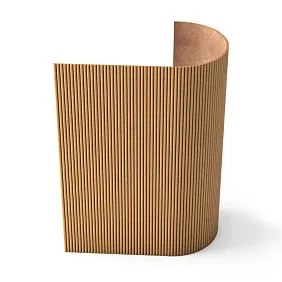
The ceiling is the fifth wall. That's what it's called in the professional design community. And it's this wall that most often remains untreated: white, smooth, neutrally boring. Meanwhile, the ceiling occupies exactly as much visual space as any other plane in the room—and works with it in exactly the same way. A slatted panel ceiling is a solution that returns to the upper plane what it deserves: character, depth, architectural rhythm, and a living texture.
Why slats? Because slats are not just decor. They are lines. And lines on the ceiling work fundamentally differently than on walls. They guide the eye, create perspective, and regulate the perceived proportions of a room. The correctly chosen direction of the slatted pattern on the ceiling can visually lengthen a room, widen it, or, conversely, create a sense of cozy intimacy. It's a tool for managing space—powerful, precise, and yet aesthetically flawless.
Why a slatted panel ceiling is more than just a trend
Trendy solutions come and go. Slatted ceilings have existed in architecture for decades—and aren't going anywhere. Why? Because they have an inherent logic that doesn't depend on seasonal trends. Rhythmic lines on a ceiling are an architectural technique with a thousand-year history. Renaissance coffered ceilings, wooden beam ceilings in Scandinavian homes, slats in Japanese interiors—all are variations on a theme: a linear structure on the ceiling creates order and depth simultaneously.
Modernslatted panel ceiling—is the distillation of this principle in a pure, concise form. Without Baroque overload, without the archaism of wooden beams. Only rhythm, only line, only material. This is what makes a slatted ceiling organic both in a Scandinavian apartment and in a neoclassical mansion, both in a modern office and in a cozy country house.




What happens to a space when the ceiling gains rhythm
Ask yourself: what do you feel when entering a room with a white drywall ceiling? Neutrality. Emptiness above. The gaze goes down—to the furniture, to the details, to the floor. The ceiling doesn't participate in the interior—it simply 'covers' the space.
Now imagine the same room with a slatted ceiling made of light oak. The gaze rises upward and meets rhythm: parallel lines of slats receding into perspective. This is movement. This is depth. Between the slats—shadows creating volume. The ceiling ceases to be a lid on a box and becomes part of the architectural concept. The space gains vertical connectivity—top and bottom cease to exist separately.
This isn't a subjective feeling—it's architectural mechanics. The lines of the slats create perspective, which works exactly like linear perspective in a painting: parallel lines receding into the distance increase the perceived depth of space. On the ceiling, this principle works in a direction perpendicular to the line of sight—and is felt as an expansion or elongation of the room.
Our factory also produces:
Types of slatted panel ceilings: classification by construction
Get Consultation
Solid slatted ceiling
The slats are mounted flush against each other without gaps — the ceiling creates a single continuous surface of wooden or MDF planks. This is the most 'warm' feeling solution: the surface resembles a plank deck, just on the ceiling. It fits especially organically in Scandinavian interiors, country houses, baths, saunas, and eco-style spaces.
Slatted ceiling with gaps
The slats are mounted with uniform spacing — leaving space between them. It is precisely this gap space that creates a shadow pattern and a sense of depth. The gap can be used functionally: to hide utility lines, cables, ventilation ducts behind the panels, or to integrate lighting. This is the most technically functional and visually rich option.
Suspended slatted ceiling
The slats are suspended from the base ceiling on a system of guides or individual hangers. This allows lowering the ceiling to the desired level, creating horizontal zones or different heights within a single room. All utility systems — lighting, ventilation, air conditioning, fire alarms — are concealed behind the suspended slats.
Slatted ceiling with lighting
Built-in LED strip behind or between the slats — transforms the ceiling from a decorative element into a lighting system. Soft diffuse glow between the slats creates a special atmosphere — exactly the kind that cannot be achieved with recessed spotlights in drywall. Slatted ceiling with lighting is one of the most in-demand scenarios in modern restaurant and hotel design.
Ceiling with diagonal slats
Non-standard orientation of slats — at a 30°, 45°, or 60° angle to the walls — creates dynamics and movement on the ceiling. The diagonal pattern visually 'opens up' corner areas and makes the ceiling more lively. Used in design projects where an accent, memorable image is needed.
Multi-level slatted ceiling
Combining different levels of slat planes—stepped, with height variations, transitions between zones. This is an architectural technique for zoning open layouts: the ceiling above the kitchen is one height, above the living room another, the boundary marked by a step or a transition in the slat pattern.
Materials for slat panel ceilings
Solid oak
Oak—a material with an ideal balance of density, stability, and aesthetics. On the ceilingSolid oak slat panelsit creates a sense of natural luxury: a living grain pattern, warm golden tone, tactile richness that cannot be replicated by any synthetic material. Oak holds its shape well, does not warp under normal operating conditions, and lasts for decades.
When choosing oak for a ceiling, the thickness of the slat is important: too thin a slat (less than 10 mm) may sag over long spans without intermediate fastening. The recommended thickness for ceiling slats is 12–20 mm.
MDF for painting
MDF with a density of 750–850 kg/m³ and a uniform structure is an ideal base for painting with any water-dispersion or alkyd enamels. A ceiling made of MDF slats with matte white enamel is a classic modern solution. For tinting in neutral gray, pastel, or rich accent tones—the widest possibilities for color schemes.
MDF slats are geometrically precise, have no surface defects, and accept any coating without priming. This is especially important on a ceiling: uniformity of color across the entire plane is the key to a perfect visual result.
MDF with wood-grain tinting
Tinted MDF mimics the natural tone of wood—oak, walnut, ash, wenge. It's a compromise between the aesthetics of natural wood and a more affordable cost. On the ceiling, especially when viewed from a low point, the visual difference from solid wood is less noticeable than at eye level. This is a rational choice for budget solutions with good visual results.
Alternative Materials
Aluminum slats—for commercial premises with fire safety requirements (flammability class NG). Plastic PVC slats—for rooms with high humidity (bathrooms, swimming pools). Steel slats with polymer coating—for industrial and loft interiors.
How the direction of slats affects the perception of space
This is one of the most important architectural questions when designing a slatted panel ceiling, and the answer to it determines the entire visual result.
Slats along the long axis of the room—the gaze follows the slats into the depth of the space, the room is perceived as longer. This works in corridors, elongated living rooms, enfilade layouts. The direction of the slats creates a perspective effect, literally 'pulling' the gaze to the far wall.
Slats across the long axis—create a sense of transverse movement, visually 'widen' the room. This is a solution for rooms that are perceived as too narrow: slats across break up the elongation and add horizontal 'breathing' to the space.
Slats at a 45° angle—create diagonal dynamics. The gaze does not follow in any of the main directions—it 'scatters' along the diagonal. This makes the ceiling more lively and unconventional but requires greater confidence in the design decision.
Slats from the center to the edges (fan-shaped)—for round and polygonal spaces. The slats radiate from a central point, creating a radial pattern. The center of the ceiling becomes a visual focus.
Slatted panel ceiling in different rooms
Living Room
Living room—the main space for applying a slatted ceiling. Here it reveals all its possibilities: creates architectural character, works with lighting (recessed spotlights between slats, LED strip behind slats), establishes a visual connection with slatted walls, if present. In a living room with an open plan, a slatted ceiling is a zoning tool: different orientations of slats above the kitchen and above the sofa area visually separate the space without physical partitions.
Bedroom
The bedroom ceiling is the surface a person sees most often: while lying down, upon waking. That's why a slatted ceiling in the bedroom is a solution that contributes to psychological comfort. Warm wooden slats above the bed create a sense of coziness and intimacy. The soft glow of LED strips between the slats is perfect for night lighting. In the bedroom, a slatted ceiling is especially good over the bed area—as a central accent that doesn't extend across the entire ceiling.
Kitchen
The kitchen is a space with high humidity, steam, and odors. A ceiling made of slatted panels is appropriate here in the dining table area, over an island, or in an open-plan kitchen-living room. In the work zone, only moisture-resistant materials with reliable coatings should be used. A slatted ceiling over the dining area creates an intimate table setting—a 'canopy' feeling that psychologically unites people during meals.
Hallway and corridor
The hallway is a long, narrow space often lacking natural light. A slatted ceiling with slats running along the longitudinal axis and built-in lighting between them completely solves the problem: lighting is distributed evenly along the entire length, the slats create a rhythm that makes the hallway visually significant rather than just a 'passageway.' This is especially relevant for entryways: the first impression of an interior is often formed here.
Bathroom
A slatted ceiling in the bathroom is a specific but very expressive task. Natural wood is not applicable here without reliable waterproofing and special treatment (it's better to choose thermally modified wood or teak boards). An alternative is moisture-resistant MDF with a polymer coating or PVC slats. Teak or thermally modified wood slats in the bathroom evoke spa aesthetics, naturalness, and tactile richness. This will make the bathroom a completely different space.
Office and library
In a workspace, a slatted ceiling creates an atmosphere of focus and quality. Dark wooden slats in a study with bookshelves, leather furniture, and directed lighting—this is an image instantly perceived as a 'serious, well-thought-out space.' It is precisely such a ceiling that creates the right context for work and thinking.
Children's room
Light-colored slats in a child's room—a natural, safe, eco-friendly material above a child's head. Wood does not emit toxins, creates a warm natural feeling, and is suitable for children's drawings (on painted MDF slats). A slatted ceiling in a child's room is a long-term solution that remains relevant throughout growing up, unlike 'childish' themed ceilings.
Ceiling made of slatted panels in commercial spaces
It is in commercial architecture that the slatted ceiling reveals its full potential. A restaurant with warm wooden slats over the dining hall—an atmosphere that encourages repeat visits. An office with white MDF slats—modernity and professionalism. A hotel with an oak ceiling in the lobby—the first impression that speaks to the quality of the entire establishment.
In commercial spaces, a ceiling made of slatted panels solves several tasks simultaneously: it decorates, conceals utility lines, provides acoustic comfort, and is part of the lighting system. This is not a decorative element—it is interior infrastructure.
Waiting areas deserve special attention: medical centers, dental clinics, beauty salons. A slatted ceiling made of light oak in a waiting area reduces anxiety levels in patients and clients—this is architectural psychology that works toward results.
Combining slatted ceiling with other finishing elements
Ceiling and walls: creating a system
The most powerful solution is when slatted ceiling and slatted walls work together. The slats from the ceiling 'flow' onto the walls, creating a continuous architectural rhythm. The space gains internal unity—a 'shell' made of one material. This is a technique popular in Scandinavian, Japanese, and biophilic interiors.
If a slatted ceiling is combined with flat walls, it's important to work out the transition:a polyurethane cornicearound the perimeter of the ceiling creates a clear architectural frame that formalizes this transition and adds completeness to the space. In neoclassical and classical interiors, this is a mandatory element.
Ceiling and lighting
Slatted ceiling and lighting are an inseparable pair. Options for integrating lighting:
-
Built-in spotlights in the gaps between slats—uniform accent lighting
-
LED strip behind slats—soft diffuse glow, 'floating' effect
-
LED strip between slats—linear light pattern, enhancing the rhythm of the slats
-
Bottom lighting of a slatted ceiling with directional track lights creates an expressive shadow pattern
Ceiling andPolyurethane moldings
In classic and neoclassical interiors, a slatted ceiling in the central area of the room is combined with molding framing around the perimeter. The cornice forms a 'frame' for the slatted field, giving the entire ceiling composition architectural logic. A polyurethane ceiling rosette in the center of the slatted field under the chandelier is an architectural accent that unites the ceiling and lighting into a single system.
Ceiling and floor
The principle of 'echoing materials': oak slats on the ceiling + oak parquet or engineered wood flooring on the floor creates a vertical natural frame for the entire space. The material 'encloses' the space from above and below, creating a sense of an enveloping natural environment. The direction of the slats on the ceiling is perpendicular to the direction of the parquet—this is a classic rule that ensures proper counterpoint of directions.
Interior styles and slatted panel ceilings
Scandinavian style
Scandinavia and wood are inseparable. Light pine or birch slats on the ceiling, white walls, natural textiles—this is the quintessence of Scandinavian interior. A solid or slightly gapped ceiling made of light wood creates a feeling of a natural refuge: warmth, purity, material connection with nature.
Japanese minimalism
In Japanese interiors, the ceiling is traditionally a place for rhythmic decoration. Thin slats with minimal gaps made of light wood treated with oil—naturalness, meditativeness, tactile depth. Wabi-sabi allows imperfections: visible knots, tone transitions—this is the beauty of the imperfect, which Japanese aesthetics considers the highest form.
Neoclassicism
In neoclassical interiors, slatted ceilings play the role of a modern interpretation of coffered ceilings. Warm oak tone, strict rectangular profile of the slats, perimeter framinga polyurethane cornicewith moderate relief—this is an architectural solution that reads as 'modern classic' rather than archaic.
Modern style
White MDF battens on the ceiling in a modern interior represent pure architectural geometry without material associations. A white ceiling with batten relief is visually richer than a smooth one while maintaining neutrality. This is a choice for spaces where rhythm and depth are desired without introducing the 'warmth' of wood.
Loft
In a loft with brick walls and metal details, dark wooden battens on the ceiling create a natural counterbalance to industrial austerity. This counterpoint is one of the foundations of loft aesthetics: warm versus cold, natural versus industrial.
Biophilic Design
Biophilic design is the maximum connection of the interior with nature through materials, forms, and color. A ceiling made of natural wooden battens is a central element of the biophilic approach to the upper plane. Combined with living plants, natural stone, and water, it creates a space that literally 'breathes' nature.
Installation technology for batten panel ceilings
Preparation Stage
Before installation — assessment of the base ceiling: presence of utilities, surface evenness, load-bearing capacity. If recessed lighting is planned — electrical wiring is laid before installing the battens. Marking of guides on the base ceiling or along the frame level.
Framed and frameless installation
Frameless installation — battens are attached directly to the base ceiling with adhesive and screws. Applicable for even ceilings with minor deviations. Saves room height — the panel 'takes up' only its own thickness (10–25 mm). Suitable for rooms with limited height.
Framed installation — wooden battens or metal profiles form a lathing to which decorative battens are attached. Advantages: ability to level any ceiling, conceal utilities, create height variations, integrate lighting systems. Height loss: from 50 to 150 mm depending on configuration.
Suspended system — battens are suspended from the base ceiling on individual hangers. Used in commercial spaces. Allows creating various ceiling levels, placing lighting at any point.
Work sequence
Marking axes and batten direction considering the room geometry is the first and fundamentally important step. Errors at this stage are uncorrectable. Next — frame installation (if necessary), electrical wiring, installation of the first batten along the control line, sequential installation of remaining battens maintaining the specified spacing, perimeter and end treatment — with skirting, cornice, or molding.
Material reserve
Standard reserve for trimming and unforeseen losses — 10–15%. For rooms with non-standard geometry (slanted walls, columns, protrusions) — 15–20%. Important: order all material from the same batch to avoid color mismatch.
Perimeter Completion
The joint between a slatted ceiling and the wall is a place that can either 'bring together' the entire solution or 'ruin' it. Finishing options:
-
Wooden skirting board/cornice matching the slats — natural uniformity
-
Polyurethane cornice— architectural frame with the possibility of any profile
-
Hidden light cornice — slats extend behind the cornice shelf, behind which an LED strip is hidden: the slatted ceiling appears to 'float'
Care for slatted panel ceilings
The ceiling is a surface that has the least contact with direct contamination. This simplifies maintenance compared to slatted walls and floors. Dust on the horizontal surfaces of the slat ends is the main type of contamination. A soft brush attachment for a vacuum cleaner every few months is sufficient care for most rooms. In the kitchen area — grease condensation: use a neutral cleaning agent and a soft cloth. For wooden slats with oil finish — periodic (every 1–3 years) renewal of the oil layer.
Acoustics and slatted panel ceilings
This is an important functional aspect that is often overlooked when planning a slatted ceiling. Wooden slats with gaps between them act as an acoustic diffuser. The surface scatters sound waves, reducing concentrated echo. The effect is especially noticeable in rooms with hard, smooth surfaces (glass, concrete, tile): a slatted ceiling significantly improves acoustics, making the sound environment more comfortable. To enhance the acoustic effect, sound-absorbing material — acoustic mineral wool or a special foam absorber — is laid behind the slats. This is especially relevant for restaurants, meeting rooms, home theaters, and audiophile living rooms.
Cost of slatted panel ceilings: what determines the price
Cost is one of the key factors in decision-making. What shapes the price?
Material of slats: solid oak is more expensive than MDF. The difference can be significant — 2–3 times. For ceilings, considering their lower visibility up close compared to walls, MDF with high-quality tinting is often a rational choice.
Type of construction: frameless installation is cheaper than framed. Suspended systems are more expensive than both options due to components.
Lighting integration: built-in lighting increases cost due to electrical work, LED components, and additional structural elements.
Room complexity: non-standard geometry, columns, protrusions, level transitions — all of this increases labor and material consumption.
Installation: hiring specialists is an additional cost. DIY reduces the budget but requires experience and tools.
Slatted panel ceilings: common mistakes
Incorrect slat direction — the most common mistake. Slats along the long axis in an elongated room make it appear even longer. You need to think about the effect you're creating, not just 'what's easier to install.'
Too dark slats in a low room — a dark wooden ceiling 'lowers' and creates pressure. For rooms with ceilings less than 2.7 m — only light or white slats.
Lack of thoughtful lighting – a slatted ceiling without lighting loses half its potential. Lighting should be built into the structure or carefully planned in relation to it.
Ignoring the perimeter – slats without a finishing cornice or skirting look incomplete. The perimeter must be worked out – it's the 'signature' of the entire solution.
Inconsistency with the rest of the interior – a dark walnut slatted ceiling in an apartment with Scandinavian furniture, white walls, and linen textiles is a stylistic conflict. The material, tone, and style of the slatted ceiling should organically fit into the overall concept of the space.
Frequently asked questions
Is a slatted panel ceiling suitable for rooms with low ceilings?
Yes, with the right choice of material and installation. Frameless installation 'takes up' minimal height – only the thickness of the slat (10–20 mm). Light or white slats on a low ceiling do not visually 'press down' – they add texture without reducing the perceived space.
Which slats are better for a ceiling: oak or MDF?
It depends on the task. Oak is a living natural material with a unique texture, durable and tactilely rich. MDF for painting offers flexibility in color, affordability, and perfect geometry. For rooms where the ceiling is high and not viewed up close, MDF with good tinting is a rational choice. For interiors with high requirements for material quality – only solid wood.
Is a frame needed when installing a slatted ceiling?
A frame is necessary if you need to level an uneven base ceiling, hide utilities, or integrate lighting systems. If the base ceiling is level and utilities are pre-installed, frameless installation is possible.
Can a slatted ceiling be installed independently?
On flat surfaces without integrated lighting — quite suitable. Straight-line installation using a frameless method is technically straightforward. For frame structures, built-in lighting, or non-standard geometry — it is recommended to involve a specialist.
How to combine a slatted ceiling with molding?
A slatted field in the center of the ceiling + a polyurethane cornice around the perimeter — a classic and very effective combination. The cornice 'frames' the slatted ceiling, giving it architectural completeness. In neoclassical interiors, this is a must-have solution.
How difficult is it to maintain a slatted ceiling?
Easier than walls — the ceiling has less contact with direct contaminants. Dust is removed with a soft brush or vacuum every few months. For wooden slats with an oil finish — periodic oil renewal every 1–3 years.
Is a slatted ceiling suitable for a bathroom?
Yes, provided the correct materials are used: thermally modified wood, teak wood with oil impregnation, MDF with a moisture-resistant polymer coating, or PVC slats. Natural wood without special treatment is not suitable for bathrooms.
Conclusion
A ceiling made of slatted panels is not just a fashionable technique. It is an architectural solution with internal logic: lines create perspective, material creates atmosphere, rhythm creates order. When the upper plane ceases to be neutral and begins to 'speak' — the interior gains a vertical integrity that cannot be achieved by any other means.
Properly chosen material, direction of the slats, integration of lighting, and a well-designed perimeter transform a ceiling made of slatted panels into a powerful architectural element of the space. And unlike many design trends, this technique does not become outdated — because behind it lies not fashion, but geometry and natural material.
Full rangesolid oak and MDF slat panelsfor finishing ceilings, walls, and columns, as well asdecorative cornices, moldings, and polyurethane stuccofor the architectural completion of any space — in the STAVROS company catalog.
STAVROS — production of decorative interior solutions with European quality standards. Slat panels with precise geometry, a wide selection of wood species and finishes, polyurethane decor for perfect completion — everything for creating interiors where architectural precision matches aesthetic intent. For designers, architects, and everyone who creates spaces with character.


