Article Contents:
- Wooden Slat Ceiling — Style, Function, and Visual Effect
- Physics of Light and Shadow on Slats
- Acoustic Function of Slat Ceiling
- Function of Concealing Utilities
- Coffered Effect from Slats — How to Imitate Coffers Without Drywall
- Principle of Coffer Imitation
- Parameters for Coffer Imitation
- Two-Level Grid: Maximum Effect
- Coffered Ceiling in Different Styles
- Calculation: Slat Spacing, Quantity, Length of Strips for Ceiling
- Calculation for Parallel Slats (Simple Layout)
- Calculation for Coffered Grid (Perpendicular Slats)
- Table: Standard Parameters for Different Rooms
- Considering Ceiling Height When Choosing Parameters
- Battens: Mounting Profiles or Wooden Beams
- Wooden Beam as Batten
- Metal Profile as Batten
- Adjustable Hangers: Levelness in Any Situation
- Wall Corner — Final Touch of Battening
- Attaching Slats to Ceiling — Screws, Hidden Fasteners, Clips
- Method One: Countersunk Screw Through
- Method Two: Hidden Fastener Through Groove
- Method Three: Mounting Clips
- Method Four: Mounting Adhesive + Screw (Hybrid)
- Hidden LED Lighting Between Slats — Mounting Diagram
- Three Lighting Placement Options
- Technical Parameters of LED Strip for Slat Ceiling
- Aluminum Profile for Strip — Mandatory
- Controlling backlighting
- Painting a slatted ceiling — white, dark, natural color
- White slats on the ceiling: Scandinavian lightness
- Natural oil: texture takes center stage
- Dark slats: loft and neoclassical
- Two-tone solution: rails and background
- Wooden slatted ceiling in different rooms
- Slatted ceiling in the living room: the main accent
- Wooden slatted ceiling in the kitchen
- Slatted ceiling in the bedroom
- FAQ - answers to popular questions
- About the Company STAVROS

The ceiling is the only surface in a room not covered by furniture, textiles, or shelving. It is always open, always visible, always working — either for or against the interior. A smooth white plane works neutrally: it doesn't interfere, but it doesn't add anything either.A ceiling made of wooden planks— is already an architectural statement: rhythm, warmth, volume, play of light and shadow.
Installing wooden slats on the ceiling yourself is a task manageable for someone without professional construction training, provided they have a screwdriver, level, miter saw, and a clear plan of action. This article provides exactly such a plan — systematic, detailed, with specific numbers. From concept to the final coat of oil on the last slat.
Photos of wooden slats you see in interior magazines and on design websites are not studio fantasies. They are real projects implemented in ordinary apartments with ordinary floor slabs. And each of them started the same way yours will: with calculation, marking, and the first slat attached to the ceiling strictly level.


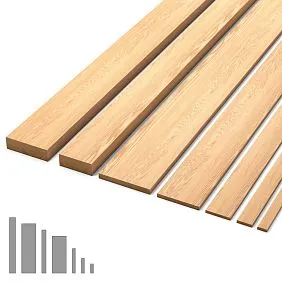
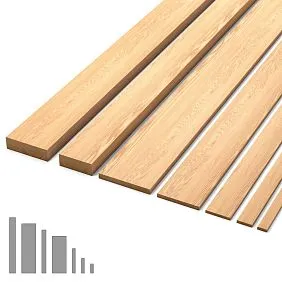


Wooden slatted ceiling — style, function, and visual effect
Before moving on to the technology, it's worth understanding: what exactly makes a slatted ceiling so in demand? Not 'it looks nice' — that's a superficial answer. What lies behind this beauty?




The physics of light and shadow on slats
A slatted ceiling works fundamentally differently than a smooth one. A smooth surface reflects light evenly — the ceiling looks 'flat' visually. Slats create relief: each slat casts a shadow on the adjacent one and on the wall. This pattern of shadows 'animates' the ceiling, giving it a depth that a smooth surface fundamentally lacks.
With side lighting (wall sconces, floor lamps), slats cast long horizontal shadows that emphasize the rhythm of the structure. With overhead lighting (spotlights in the cells), each light source creates a local spot — the ceiling becomes a 'starry sky' of relief. With hidden backlighting behind the slats — light strips breaking through the gaps make the ceiling appear floating.
Our factory also produces:





Acoustic function of a slatted ceiling
A wooden slatted ceiling improves room acoustics — and this is not a marketing claim, but a physical regularity. A textured surface scatters sound waves, preventing the formation of standing waves and echo. Wood as a material absorbs high-frequency sound components.
In large rooms with high ceilings — studio living rooms, open-plan kitchens, home offices — a slatted ceiling reduces reverberation, making the sound environment more comfortable. To enhance the acoustic effect, acoustic material — mineral wool or special absorbing panels — is placed behind the slats.
Get Consultation
Function of concealing utilities
A ceiling made of wooden planks— in a suspended version — is also a way to conceal utilities. Behind the slats go: electrical cables, low-voltage system cables, ventilation ducts, air conditioning pipes, ceiling bulkheads — everything that, when exposed, ruins the ceiling's aesthetics.
This is precisely why a slatted ceiling in a 'suspended' format — with a gap of 80–150 mm between the base slab and the lower edge of the slats — is especially popular in kitchens, bathrooms, and rooms with active engineering systems.
Coffered effect from slats — how to imitate coffers without drywall
A coffered ceiling is the quintessence of architectural luxury. A geometric grid of protruding beams forming recessed cells — this technique has been used in palaces and mansions for centuries. Traditionally, coffers were made of stone, concrete, or drywall — these are heavy, costly structures.
Wooden planks— allow you to imitate the coffered effect — quickly, inexpensively, without wet work and without overloading the floor slabs.
Principle of coffer imitation
A real coffer is a recess in the slab between beams. Imitation of a coffer using slats is a protruding grid over a flat ceiling, which visually creates the same effect of division into cells.
The mechanics of the optical illusion are as follows: the brain perceives the protruding slats as 'beams,' and the space between them as 'coffer cells.' If the cells are painted differently than the slats (e.g., dark ceiling — light slats), the illusion of depth is enhanced.
Caisson simulation parameters
For a convincing caisson effect, proportions are important:
Cell size relative to room size: the cell should occupy 1/5–1/7 of the room's short side. In a room 4 meters wide — cell 60–80 cm. In a room 6 meters wide — cell 80–100 cm.
Batten height ("beam" depth): minimum 40 mm to create pronounced relief, optimum — 60–80 mm. With batten height less than 40 mm, the "caisson" effect disappears — it looks like a flat grid, not like volumetric beams.
Batten width ("beam width"): 60–100 mm. Too narrow batten (20–30 mm) looks like a decorative strip, not a beam. Batten 80–100 mm with height 60–80 mm — a convincing "beam".
Two-level grid: maximum effect
The most convincing caisson imitation is achieved with a two-level batten system:
-
First level (closer to the base ceiling): 100×40 mm battens, forming the main grid
-
Second level (20–30 mm below the first): narrower 60×20 mm battens, framing the cells around the perimeter — an analogue ofmolding in a classic caisson
Final relief: from base ceiling to lower edge of second level — 60–70 mm. The cell between battens is "recessed" relative to the second level by 20–30 mm — a very convincing imitation of a real caisson.
Caisson ceiling in different styles
In classic and neoclassical interiors, the caisson grid of battens is complemented bydecorative moldings around the perimeter of cells and a central ceiling rosette in the central cell under the chandelier.
In modern interiors — the same battens, but without additional decor. Clean geometry, dark tone battens on a white ceiling or white battens on a dark background.
In Scandinavian style — light battens, light background, maximally "airy" caisson: cells 100×100 cm, battens 60×40 mm — a light, almost transparent structure.
Calculation: batten spacing, quantity, length of strips for the ceiling
Before visiting the store or sending an order to the manufacturer, precise material calculation is necessary. An error at this stage costs time and money.
Calculation for parallel battens (simple layout)
The simplest batten ceiling — parallel battens in one direction with equal spacing.
Algorithm:
-
Measure the room: length L, width W.
-
Choose batten direction (along length or along width).
-
Choose batten width (b) and gap (g).
-
Spacing: s = b + g.
-
Number of battens: n = (W + g) / s — round to whole number.
-
Length of each batten: L (or multiples of L, if joints are used).
-
Total length: n × L + 12% reserve.
Example: ceiling 4.2 × 5.8 m. Battens along the long side (5.8 m). Batten width 40 mm, gap 40 mm. Spacing 80 mm. Quantity: (4200 + 40) / 80 = 53 battens. Length of each: 5,800 mm (single piece) or two 3,000 mm pieces (with joint in center). Total: 53 × 5.8 = 307.4 linear meters + 12% = 344 linear meters.
Calculation for caisson grid (perpendicular battens)
Longitudinal battens (along room length L) and transverse battens (along width W):
-
Cell spacing: a (e.g., 800 mm).
-
Longitudinal battens: (W / a) + 1 — quantity, each length = L.
-
Transverse battens: (L / a) + 1 — quantity, each length = W.
-
Total: (number of longitudinal × L) + (number of transverse × W) + 12%.
Example: 4 × 5 m, cell spacing 800 mm. Longitudinal: (4000 / 800) + 1 = 6 battens of 5 m = 30 lm. Transverse: (5000 / 800) + 1 = 7.25 → 7 battens of 4 m = 28 lm. Total: 58 lm + 12% = 65 lm.
Table: standard parameters for different rooms
| Room | Batten width | Gap/cell spacing | Batten height | Style |
|---|---|---|---|---|
| Living room ≥ 20 m² | 60–80 mm | 60–100 mm | 60–80 mm | Coffered or parallel |
| Living room < 20 m² | 40–60 mm | 40–60 mm | 40–50 mm | Parallel |
| Bedroom | 30–50 mm | 30–50 mm | 35–50 mm | Parallel |
| Kitchen | 40–60 mm | 40–60 mm | 40–60 mm | Parallel or coffered |
| Office | 60–100 mm | 60–100 mm | 60–80 mm | Coffered |
| Corridor | 20–40 mm | 20–40 mm | 30–40 mm | Parallel |
Considering ceiling height when selecting parameters
Ceiling height is a key constraint in design. Every 10 mm of batten height "steals" 10 mm from the room height.
| Ceiling Height | Maximum batten height | Comment |
|---|---|---|
| 2,400–2,500 mm | 30–40 mm | Minimal relief, use caution |
| 2,500–2,700 mm | 40–50 mm | Standard for typical apartments |
| 2,700–3,000 mm | 50–70 mm | Good margin, full effect |
| 3,000–3,500 mm | 70–100 mm | Pronounced coffered, complete freedom |
| > 3,500 mm | 100–150 mm | Monumental beams, maximum |
Battens: mounting profiles or wooden bars
Battens for a slatted ceiling are the load-bearing frame to which decorative slats are attached. The quality of the battens determines the evenness of the entire ceiling.
Wooden bar as batten
Classic option: battens made of 40×50 mm or 50×50 mm wooden bars. Mounted perpendicular to the decorative slats with a spacing of 500–600 mm. The bars are attached to the base ceiling with dowels through straight hangers (allow for level adjustment) or directly through a drilled hole with a dowel.
Advantages of wooden bars:
-
Perfectly accepts screws — slats are fastened without pre-drilling
-
Good adhesive adhesion for hybrid mounting
-
Natural material, no 'cold bridges'
Limitations:
-
Requires pre-treatment with antiseptic
-
Can warp in high humidity — metal profile is preferable in kitchens and bathrooms
Metal profile as batten
CD-profile 60×27 mm — a standard component of drywall ceiling systems. Mounted on straight hangers to the ceiling. Main advantage: geometric precision — the profile does not warp, does not dry out, ensures a perfectly flat plane for years to come.
Wooden slats are attached to the metal profile with 3.5×35 mm metal screws — through the body of the slat into the metal of the profile. A conical countersink hole is drilled in the slat under the screw head.
Advantages of metal profile:
-
Durability, not susceptible to biological damage
-
Precise geometry, convenient level adjustment
-
Optimal in rooms with variable humidity
Adjustable hangers: evenness in any situation
The base ceiling — especially in old houses — is rarely perfectly level. A variation of 10–30 mm across the ceiling area is normal for pre-revolutionary housing stock. Adjustable hangers are the only way to get a level slatted ceiling on an uneven ceiling.
A straight hanger allows adjusting the batten level within a range of 40–130 mm from the ceiling. A vernier hanger — 120–400 mm (for creating a significant gap for utilities).
Leveling algorithm: stretch strings around the perimeter of the room at the desired height using a level. Align each bar/profile of the batten to the stretched string — adjust with the hanger. Check the plane with a 2 m straightedge — tolerance no more than 2 mm.
Wall corner — the finishing touch of the batten
Around the perimeter of the room, at the height of the lower edge of the slats, a wallmolding or corner— a wooden or metal strip that 'covers' the ends of the decorative slats at the wall. Without a wall corner, the ends of the slats are visible — if the cut is not perfect, irregularities are noticeable. With a corner — a neat, finished perimeter.
Wooden cornice or STAVROS moldingas a wall corner — an ideal solution when a slatted ceiling is combined with other wooden interior elements. One wood species, one finish tone — the system looks like a single whole.
Attaching slats to the ceiling — screws, hidden fasteners, clips
Ceiling mounting is more difficult than wall mounting: slats work in tension under their own weight, gravity is their constant opponent. The choice of fastening method directly determines the durability of the structure.
First method: through screw with countersunk head
The simplest and most reliable method. The screw passes through the body of the slat into the batten. The head is countersunk 2–3 mm below the surface of the slat and covered with a wooden plug or filler.
Fastening parameters:
-
Screw: diameter 3.5 mm, length = slat thickness + 35–40 mm into the batten body
-
Fastening pitch: 400–500 mm along the length of the slat
-
At the ends (first and last 100 mm) — mandatory, to prevent edges from "lifting"
Plugs made from the same wood grade + tinted to match the slat — indistinguishable on the finished ceiling. Plugs are sold in sets and fit standard diameters of 6, 8, 10 mm.
Second method: hidden fastening through a groove
For slats with a longitudinal groove (for a clip), invisible fastening is used — the clip is fixed in the slat's groove and attached to the batten with a screw. The next slat overlaps the clip — the fastener is completely hidden.
This same principle is used when installingwooden baseboards from STAVROS— clip fastening without a single visible screw.
Condition: the slat must have a factory-made groove of precise size for the clip. A handmade groove with a manual router is possible but requires skill.
Advantages: perfectly clean slat surface, with no traces of fasteners. Disadvantages: slats with grooves are only specialized products; ordinary construction slats are not suitable.
Third method: mounting clips
Metal clips for wooden slats work on the "spring clamp" principle: the clip is attached to the batten with a screw, the slat "snaps" into the clip without additional fasteners. Removal is done by pressing a screwdriver on the clip's leg.
Mounting clips are the optimal choice if the ceiling is "serviceable": utilities run behind the slats requiring periodic access. Without disassembly — with one motion.
Limitation: clips are designed for specific slat cross-sections. Non-standard sizes require fitting or ordering custom-sized clips.
Fourth method: mounting adhesive + screw (hybrid)
Optimal balance of reliability and speed for most slatted ceilings. Adhesive is applied to the back surface of the slat in a "snake" pattern with a 200 mm pitch, the slat is pressed against the batten and secured with 1–2 screws at the extreme points to ensure stability while the adhesive dries.
After 24 hours — remove the temporary screws (or leave them and cover with plugs). The adhesive ensures uniform adhesion of the slat along its entire length, preventing "sagging" in the middle.
Hidden LED lighting between slats — installation diagram
Hidden lighting in a slatted ceiling is one of the most effective lighting techniques in modern interiors. Slats transform from "just decor" into a luminous architectural element.
Three lighting placement options
Option A: LED strip on the base ceiling, between slats. The strip is adhered to the base ceiling in the gaps between slats. Light is directed downward — diffused in the gaps between slats, creating uniform diffuse lighting with black "strokes" of slats on a luminous background. Soft, cozy light — ideal for a bedroom.
Option B: LED strip on the side edge of the slat. The strip is adhered along the lower side edge of each slat (or every other, every two — depending on desired intensity). Light is directed horizontally into the gap and diffused onto the base ceiling. Slats "float" — a luminous ceiling with clear dark lines of slats.
Option C: LED strip in a wall cornice. The strip is mounted in a cornice profile around the perimeter of the ceiling, light is directed upward — "washing" the base ceiling. The slatted structure is illuminated from below by reflected light. The "floating" ceiling effect is maximized.
Technical parameters of LED strip for slatted ceilings
| Parameter | Recommendation | Reason |
|---|---|---|
| Power | 9.6–14.4 W/m | Sufficient brightness without overheating |
| Color temperature | 2700–3000 K (warm white) | Complements natural wood |
| Color rendering index | CRI ≥ 90 | Accurate wood color reproduction |
| LED spacing | 60 LEDs/m or more | Uniform line without 'dotting' effect |
| Diffuser | Matte profile | Hides individual LEDs |
Aluminum profile for LED strip — mandatory
LED strip without a profile — overheating, reduced lifespan, visible LED 'dotting'. An aluminum profile serves three functions: heat dissipation, diffusion (with a matte screen), and aesthetic protection.
For mounting along the side edge of a slat — 14×14 mm corner aluminum profile. Attached to the slat's side edge before installation, the strip is inserted into the profile, and the screen snaps on.
Lighting control
Dimmer — an essential system component. A slatted ceiling with dimmable LED lighting provides full control over the atmosphere: from bright task lighting to soft evening illumination.
For RGB strip option — controller with remote or smartphone. Changing the backlight color behind the slats changes the mood of the entire room.
Slatted ceiling painting — white, dark, natural color
The slat finish determines the final visual result — perhaps even more than the geometry of the structure.
White slats on the ceiling: Scandinavian lightness
White slatted ceiling — the most popular option in modern interiors. White slats on a white ceiling create a monochrome effect: the structure is perceived only through relief and shadows — subtly, intelligently.
White slats on a dark ceiling background (anthracite, dark gray) — a bright contrast. The slats 'come forward' to the foreground, becoming a graphic element. The effect is more aggressive, expressive.
White painting technology for softwood slats:
Pine and spruce contain resins that 'bleed through' water-based paint after 6–12 months — yellow spots appear. Mandatory procedure:
-
Sanding P120 → P220.
-
Shellac-based isolating primer — apply with a brush, dry for 1 hour.
-
Matte acrylic paint — 2 coats with intermediate drying of 2–4 hours.
For oak slats, shellac primer is also recommended: oak tannins can cause yellowing through white paint.
Natural oil: texture takes center stage
Oil-wax forwooden strips — a solution for those who chose a natural wood ceiling precisely for its texture. The oil penetrates the wood structure, opens the pores, highlights the grain pattern, and enhances the tone.
Oak with natural oil — golden-honey hue, large pores. Oak with tinted 'gray' oil — cool ash tone, modern and strict. Larch with oil — rich orange-brown tone, a 'warm' ceiling.
Applying oil to wooden productsis performed before installation: slats horizontally, oil is applied with a brush or cloth, rubbed in, excess is removed after 30 minutes. After 24 hours — second coat. Two coats of oil — full protection and maximum color saturation.
Dark slats: loft and neoclassical
Dark slatted ceilings — slats in "wenge", "black walnut", "dark oak" tones or painted in RAL 8022 (black-brown) — create a fundamentally different mood.
In loft: dark larch or oak slats on a gray or white ceiling — "industrial beams". The effect is enhanced by exposed black metal light fixtures.
In neoclassical: dark coffered slats with a ceiling rosette and crystal chandelier — "London club library". Dark wood + dark tones on walls + 100 mm skirting of the same species — an interior system aspiring to eternity.
Dark wooden skirting boards STAVROSandmoldings in dark toneperfectly complement dark slatted ceilings — unity of material and tone around the entire perimeter of the room.
Two-tone solution: slats and background
The most "designer" option — slats of one color, ceiling background another. The most effective combinations:
-
White slats + dark green ceiling — botanical style
-
Natural oak + white ceiling — Scandinavian style
-
Black slats + white ceiling — loft graphics
-
Whitewashed oak + graphite ceiling — contemporary minimalism
The background is painted before slat installation — this is more convenient and allows painting the ceiling without risk of staining the slats. After installation — if necessary, lines at the base of the slats can be corrected with a thin brush.
Wooden slatted ceiling in different rooms
Slatted ceiling in the living room: main accent
The living room is the space where the slatted ceiling manifests itself most fully. Large area provides scope for a coffered grid. High ceilings allow making slats expressively tall. The central chandelier integrates organically into a coffered cell.
Parameters for a living room 5 × 6 m, ceiling 3,000 mm: coffered grid 1,000 × 1,000 mm, oak slats 80×70 mm, "tobacco" tone. Central cell 1,200 × 1,200 mm for the chandelier.Decorative moldings STAVROSaround the perimeter of each cell. Wall cornice with a niche for LED strip.
Wooden slatted ceiling in the kitchen
Kitchen — a room with variable humidity and grease aerosols. Requirements for ceiling slats here are stricter:
-
Species: oak or larch (moisture-resistant)
-
Coating: oil with high wax content or yacht varnish — does not absorb grease
-
Construction: lathing from metal profile (does not warp with humidity)
-
Gap behind slats: minimum 80 mm — for air exchange and ventilation ducting
Simple parallel layout of slats above the dining area — popular zoning for kitchen-living room: wooden ceiling "island" above the table separates the dining area from the living room.
Slatted ceiling in the bedroom
In the bedroom, the ceiling literally 'looms' over a person — it's seen every morning and every evening. Here, monumentality is not important, but atmosphere is.
Recommended solution for the bedroom: parallel ash or 'bleached' oak slats, width 40 mm, gap 40 mm, slat height 40 mm. LED strip behind the slats — warm white 2700 K, dimmable. The slats run across the bed — 'embracing' the space above it.
The same wood species as thedoor casingsandwooden baseboardin the bedroom — a unified system where the ceiling, walls, and floor 'speak' the same material language.
FAQ — answers to popular questions
Can wooden slats be mounted on a stretch ceiling?
No: the stretch fabric cannot bear the load. Mounting points for the slatted ceiling are installed in the base ceiling before mounting the stretch ceiling. Or a fundamentally different scheme is chosen: there is no stretch ceiling, the slats are attached to the battens on the ceiling.
Which slats are better for a slatted ceiling — oak or pine?
For a decorative ceiling in residential spaces — oak or ash. Best geometric stability, beautiful texture, surface hardness. Pine is cheaper but requires careful material selection (excluding wavy and heavily knotted slats) and mandatory shellac primer for white painting.
How many slats are needed for a 20 m² room ceiling?
Depends on the layout scheme. Simple parallels with an 80 mm pitch in a 4×5 m room: about 50 slats 5 m long = 250 linear meters. A coffered grid with an 80 cm cell pitch: about 65 linear meters (calculation above). A 12% reserve is mandatory in both cases.
How to hide slat joints when the length is less than the room length?
Joints of two slats are placed on the body of the batten (not in the gap between the bars). Joints of adjacent slats are staggered — not in one line. With the same tone, joints are practically invisible. To minimize joints, order slats with a length equal to or a multiple of the room length.
Is a vapor barrier layer needed behind the slats on the ceiling?
In apartments — typically, no. In wooden private houses where there is an attic or insulation above the ceiling, vapor barrier before installing the slatted ceiling is mandatory. This protects the wooden slats from condensation passing through the ceiling from the warm room to the cold one.
Can a slatted ceiling be dismantled without destroying it?
With a clip or cleat mounting method — yes, the slats can be removed without damage. With glue + screw mounting — screws are unscrewed, slats are removed, glue traces are cleaned. In this case, the slats are preserved in 80–90% of cases.
About the company STAVROS
A slatted ceiling is an architectural solution that lasts for decades. Wood ages beautifully: it develops a patina, deepens in tone, acquires character that cannot be bought for any amount of money right away. But for this, it's important to start with the right material.
STAVROS — a Russian manufacturer of wooden architectural decor made from solid oak and beech.STAVROS decorative slatsfor ceilings are produced with a cross-section calibration of ±0.2 mm, kiln-dried to 8–10% moisture content, and final sanding with P320 grit. This is a material that does not warp after installation and does not require on-site fitting.
In the complete STAVROS system, the slatted ceiling organically combines withmoldings and cornices, wooden skirting boards, door casings, decorative slats for wallsandfurniture elements— all from the same wood species, all under a unified finish. An interior where the ceiling, walls, and floor speak the same language.
STAVROS: wood with character — for ceilings with history.