












































































Article Contents:
- Polymer Revolution: Why Polyurethane Exceeded All Expectations
- Diversity of Forms: Which Elements Will Transform Your Ceiling
- Ceiling Cornices: The Boundary Between Planes
- Rosettes: Framing the Light Source
- Moldings: Creating Architectural Compositions
- Coffers: Depth and Volume
- Corner Elements: Solving Technical Challenges
- Decorative Domes: Accent and Focus
- Corbels and Decorative Elements
- Trends 2026: How Ceilings Are Designed Today
- Minimalist Classicism
- Contrasting solutions
- Color Moldings
- Asymmetry and Non-Standard Geometry
- Combining materials
- Hidden Lighting
- Monochromatic Luxury
- Eclecticism and Mixing Styles
- Hassle-Free Installation: How to Install Molding Correctly
- Preparation: foundation of success
- Tools and Materials
- Cornice Installation Process
- Installing Rosettes
- Creating Compositions from Moldings
- Finishing
- Where to Purchase Quality Decor
- Why Professionals Are Chosen
- Supplier selection criteria
- Frequently Asked Questions About Polyurethane Ceiling Molding
- Can polyurethane molding be installed in a bathroom?
- What weight can a ceiling support when installing molding?
- How Long Does Installation Take?
- Are special tools needed for installation?
- Can polyurethane molding be painted?
- How to care for molding during use?
- Does polyurethane molding differ in appearance from plaster molding?
- What is the service life of polyurethane molding?
- Can moldings be installed on a suspended ceiling?
- How to choose the size of a cornice for your room?
- What polyurethane density is considered optimal?
- Conclusion: Create Your Dream Interior with STAVROS

An interior that exudes an atmosphere of sophistication and aristocracy is unimaginable without ceiling moldingsThis architectural element, which has journeyed from palace halls to modern apartments, is experiencing a new wave of popularity today thanks to a revolutionary material — polyurethane. In 2026, the design community recognized itpolyurethane ceiling moldingsas one of the main trends capable of transforming a space beyond recognition.
Why has polyurethane become the number one material for creating decor for the upper plane of a room? The answer lies in a unique combination of characteristics: weightlessness, perfect detailing of relief, absolute moisture resistance, and astonishing durability. While plaster products of the past required reinforced ceilings and the labor of an entire team of craftsmen, modern onesCeiling molding elementsare installed in a matter of hours and last for decades without the slightest sign of deformation. This is a solution where practicality and beauty merge in flawless harmony.
Stepping over the threshold of an apartment or house where the ceiling is adorned with elegant cornices, rosettes, or coffers, one immediately senses the difference. The space gains volume, depth, character. Light plays on the relief, creating a lively interplay of shadows. The room seems to rise higher, pushing boundaries. This is precisely why the decisionBuy ceiling moldingis made not only by owners of classic interiors but also by those who strive for eclecticism, modern neoclassicism, or even lofts with elements of academicism.
Today, we will analyze all aspects of using polyurethane decor for the upper plane of a living space: from the material's technical characteristics to installation nuances, from the relevant trends of 2026 to practical selection advice. This article will be your guide to a world where architectural classicism meets cutting-edge technology.
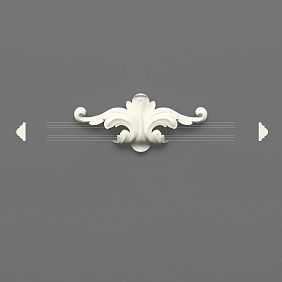
The Polymer Revolution: Why Polyurethane Exceeded All Expectations
The material in question is not just plastic. Polyurethane is a complex polymer with a spatial three-dimensional structure, possessing unique physical and mechanical properties. Unlike polyvinyl chloride or polystyrene, it combines rigidity and elasticity, which is critically important for decorative elements subjected to constant temperature fluctuations and loads.
The material's structure is isotropic — meaning equal strength in all directions. Plaster, on the contrary, has a crystalline lattice with natural stress lines along which cracks inevitably form.Polyurethane Ceiling Moldingsis free from this drawback: it does not crack, crumble, or flake even after decades of use.
The weight of polyurethane decor is 6-8 times less than its plaster counterpart. A one-meter cornice 120 millimeters wide weighs only 300-400 grams, whereas a plaster element of the same dimensions would weigh 2.5-3 kilograms. This means absolutely no load on the building structures, the possibility of installation on any base — from concrete to drywall, from wood to stretch ceilings.
The hydrophobicity of polyurethane borders on miraculous. The molecular structure of the material prevents moisture penetration: water absorption over 24 hours is a mere 0.1 percent. You can install itCeiling molding elementsin a bathroom, kitchen, pool, or sauna — it will not swell, become moldy, or peel from the base. After direct contact with water, the decor dries quickly without the slightest consequences, retaining its original geometry and appearance.
Temperature stability expands application possibilities. Polyurethane withstands a range from -40 to +80 degrees Celsius without changing its properties. This is especially important for private houses with seasonal heating, for rooms near external walls, for unheated verandas and terraces. The material does not deform from summer heat and does not become brittle from winter frost.
Impact resistance and resilience to mechanical stress exceed expectations. An accidental ball hit, contact with furniture during a move, a careless movement with a stepladder — none of this will leave marks on polyurethane decor. Plaster molding in a similar situation would suffer chips and cracks requiring restoration.
Processability opens limitless possibilities for design. Polyurethane allows for the reproduction of the finest details of classical ornaments — acanthus leaves fractions of a millimeter thick, the thinnest rococo swirls, the most complex compositions of Baroque garlands. At the same time, each element comes out of the mold perfectly identical, without the slightest geometric deviations characteristic of manual work with plaster.
The surface of a quality polyurethane product is smooth, dense, without pores or cavities. This means minimal costs for finishing: one coat of primer and two coats of paint are enough for a flawless result. Plaster, however, requires multiple priming, filling of minor defects, careful sanding — a process that multiplies the time and cost of work.
The environmental safety of modern polyurethanes is confirmed by certificates. The material does not emit volatile substances, has no odor, and is absolutely inert in residential conditions. This is important for people with heightened sensitivity, for children's rooms, for bedrooms where a third of life is spent.
Durability is measured not in years, but in decades. Manufacturers offer a 25-30 year guarantee, but the actual service lifeof polyurethane ceiling moldingsexceeds half a century. The material does not age, does not lose its properties, does not require renewal. The only thing that might be needed is repainting to change the interior's color scheme, and polyurethane withstands this procedure multiple times without damage to the relief.




A Multitude of Forms: Which Elements Will Transform Your Ceiling
The assortment of decorative items for the upper plane of a room is astonishingly diverse. Each element performs its own function, solves a specific task, creates a certain visual effect. Understanding the purpose and possibilities of each type of decor allows for the creation of harmonious, well-thought-out compositions.
Our factory also produces:


Ceiling Cornices: The Boundary Between Planes
Ceiling corniceis a horizontal profile installed at the junction of the wall and ceiling. This is the basic element from which the transformation of an interior begins. Even the simplest cornice instantly structures the space, creating a clear boundary between vertical and horizontal planes.
The width of cornices varies from modest 40 millimeters to impressive 200 millimeters and more. For standard rooms with a height of 2.5-2.7 meters, profiles of 60-100 millimeters are optimal. They create a noticeable accent without visually 'pressing down' on the space. In rooms with ceiling heights from 3 meters, one can afford cornices of 120-180 millimeters — they will fill the volume, making the room more intimate and cozy.
The cornice profile can be simple geometric or richly ornamented. Concise forms with smooth curves suit modern interiors, minimalism, Scandinavian style.Polyurethane Crown Moldingwith classical ornaments — egg-and-dart, bead-and-reel, Greek key, acanthus leaves — are necessary for creating an atmosphere of classicism, Empire, or English style.
The most important function of wide cornices is creating hidden lighting. Behind a profile 80 millimeters wide or more, an LED strip can be placed, whose light, reflecting off the ceiling, creates the effect of a floating plane. The room visually increases in height, the atmosphere becomes light and airy. This technique is especially valuable in rooms with low ceilings.
Get Consultation
Rosettes: Framing the Light Source
ceiling molding rosette— is a decorative element installed at the mounting point of a chandelier or other central light fixture. The functional purpose of a ceiling medallion is to conceal wires, junction boxes, and mounting hardware. However, its decorative role is significantly more important: the medallion becomes the visual center of the composition, a focal point that draws the eye.
The diameter of medallions ranges from compact 300 millimeters to monumental 1200 millimeters and more. The choice of size depends on the room's area and the dimensions of the chandelier. For rooms of 15-20 square meters, medallions of 500-700 millimeters are optimal. For spacious living rooms and halls with an area from 30 square meters, large medallions of 800-1000 millimeters are appropriate.
The shape of medallions reflects the interior's style. Simple round medallions with concentric rings and restrained relief suit neoclassical and modern styles. Baroque medallions with lush multi-level decoration, scrolls, garlands, and angels create an atmosphere of palace luxury. Art Deco medallions with geometric patterns, rays, and zigzags bring the aesthetic of the 1920s.
A special type is the domed medallion, which creates a recess in the ceiling. The dome adds vertical dimension and depth to the space. The interior of the dome can feature painting, gilding, or contrasting colors. A chandelier descending from the center of the dome creates the effect of a light crown. This solution is characteristic of historical interiors but is experiencing a new wave of popularity in an adapted form in 2026.
Moldings: Creating Architectural Compositions
A molding is a decorative strip of various profiles and widths, used to create compositions on a flat ceiling surface. Using moldings, rectangular or square frames are formed, dividing the ceiling into sections. This is a classic technique characteristic of formal interiors.
The width of moldings is typically 20-80 millimeters, with a relief height of 5-25 millimeters. Thin moldings create light graphics without overloading the space. Wide profiles with pronounced relief form a more substantial, monumental composition.
The application of moldings on the ceiling is limitless. A single frame around a central medallion accentuates the lighting zone. Several concentric frames create an effect of layering and depth. Dividing the ceiling into equal rectangles or squares forms a classic coffered system. Diagonal placement of moldings introduces dynamism, breaking the static nature of right angles.
Coffers: Depth and Volume
A coffer is a recessed ceiling section framed by moldings or special profiles. A classic coffered ceiling consists of repeating square or rectangular cells, creating a textured three-dimensional surface. This architectural technique originated in antiquity, adorned cathedrals and palaces, and is experiencing a renaissance today.
Ceiling molding elementsComponents for creating coffers include framing beams, corner elements, and decorative inserts. The depth of a coffer is typically 30-100 millimeters — sufficient to create an expressive play of light and shadow.
The interior space of a coffer can be decorated in various ways. The simplest option is to paint it the same color as the main ceiling, allowing the relief to speak for itself. Contrasting colors — where the interior part of the cells is darker or lighter than the main tone — enhance the sense of volume. Installing a small medallion or ornament in the center of each coffer creates a rhythmic, rich composition.
Modern interpretations of coffers allow for non-standard geometry. Hexagonal cells, trapezoidal sections, alternating different shapes — all are possible thanks to the technological capabilities of polyurethane. Designers in 2026 are actively experimenting with asymmetrical coffers, creating unique authorial compositions.
Corner Elements: Solving Technical Problems
Installing cornices and moldings requires precise joining at corners. One can miter profiles at 45 degrees, fitting the joint by hand — a process requiring skill and time. But there is a more elegant solution — ready-made corner elements.
A corner element is a fragment of a cornice or molding that reproduces the profile with a 90-degree bend. Installing it in a room corner ensures a perfect joint without the need for precise cutting of straight profiles. This speeds up installation, guarantees impeccable results, and saves material by eliminating waste from cutting.
Decorative Domes: Accent and Focus
A dome is a large-scale decorative element that creates the illusion of a recessed or raised ceiling. The diameter of domes varies from 800 millimeters to 2 meters and more, with a depth from 100 to 400 millimeters. This is a monumental decoration, suitable for spacious rooms — living rooms, halls, formal dining rooms.
The interior surface of a dome can be smooth, coffered, or adorned with radial ornamentation. Contrasting colors, gilding, imitation painting — all enhance the dome's impressiveness. Perimeter lighting, hidden behind the dome's cornice, creates the effect of a floating element, emphasizes depth, and turns the dome into an independent light source.
A chandelier is usually placed in the center of the dome. The combination of a dome and a chandelier forms a powerful visual accent, a dominant feature of the interior. This solution, characteristic of palace halls, is now accessible thanks to the lightness of polyurethane — dome installation is possible even on drywall constructions without reinforcing the frame.
Corbels and Decorative Elements
A corbel is a protruding decorative element that can serve as a visual support for beams, cornices, and arches. In the context of ceiling decor, corbels are used as accent details, placed in room corners or at the junctions of ceiling beams with walls.
Decorative inserts, ornaments, panels — these are elements of arbitrary shape, used to create unique compositions. They are placed inside molding frames, in the center of coffers, or along the room's perimeter. The variety of shapes and styles allows for the realization of any designer's ideas.
Trends 2026: How Ceilings Are Decorated Today
Interior design is a living, constantly evolving field. What was relevant yesterday may look outdated today. But there is also the flip side: many techniques considered forgotten are returning in new interpretations. The year 2026 has given interior fashion several bright trends in ceiling decoration using decorative elements.moldings from polyurethane.
Minimalist Classicism
This is not an oxymoron but a reality of modern design. Classical elements — cornices, medallions, moldings — are used in a maximally restrained version. Simple profiles without ornamentation, laconic geometric shapes, and an absence of excess. This approach allows introducing the structure and completeness of classicism into the interior without overloading the space with details.
The color palette is white, cream, light shades of gray. No gilding, patina, or contrasts. Monochromaticity creates a sense of calm, purity, and airiness. A ceiling decorated in this aesthetic becomes a quiet, noble backdrop for furniture and textiles.
Contrasting solutions
The opposite trend is playing with contrasts. A dark ceiling with light molding or vice versa — a light ceiling with dark cornices and moldings. This technique creates graphic quality, clarity, and modernity. The molding ceases to be a background element and becomes an active participant in the composition.
The combination of a matte dark ceiling (graphite, anthracite, dark blue) with snow-white molding looks especially effective. The relief becomes maximally expressive, every detail of the ornament is clearly readable. Such a solution is appropriate in studies, libraries, and bedrooms, where an intimate, cozy atmosphere is desired.
Colored molding
For a long time, it was believed that moldings should be white or ivory. The year 2026 debunked this stereotype. Painting decor in bright, saturated colors has become one of the main trends. Emerald, sapphire, burgundy, and terracotta moldings create unexpected, memorable interiors.
It is important to understand that colored moldings require a competent context. They should echo other interior elements—furniture, textiles, decor. The color of the molding can match the shade of curtains, sofa upholstery, or an accent wall. This creates harmony, connecting disparate elements into a unified whole.
Asymmetry and non-standard geometry
Classical symmetry is giving way to freer, non-linear compositions. Ceiling moldings form not strict rectangles, but irregular polygons, trapezoids, and arbitrary shapes. The rosette shifts from the center of the ceiling, creating a dynamic, asymmetrical composition.
This approach is especially relevant for rooms with non-standard layouts—with slanted walls, bay windows, and attic ceilings. Asymmetrical moldings do not try to 'correct' the irregular geometry but emphasize it, turning it into a highlight of the interior.
Combining materials
Polyurethane Ceiling Moldingscombines perfectly with other materials. The combination of polyurethane cornices with wooden beams creates an effective contrast between the smooth white surface and the natural texture of wood. This solution is popular in interiors in the Provence, country, and eco-style.
The combination of moldings and stretch ceilings is another relevant technique. A glossy or satin panel in the center, framed by a drywall box with an installed cornice and hidden lighting—such a structure creates multi-level depth, a play of textures, and visually increases the height of the room.
Hidden Lighting
The trend towards hidden, diffused lighting has reached its peak. WideCeiling Molding, behind which an LED strip is hidden, have become practically a standard in modern renovations. Light reflecting off the ceiling creates soft, eye-comfortable illumination without harsh shadows.
Modern technology allows controlling the color and intensity of such lighting. RGB strips change the lighting hue from warm amber to cool blue, creating different moods depending on the time of day and situation. Dimmers adjust brightness from a barely noticeable night light to full-fledged main lighting.
Monochromatic luxury
A completely white interior—ceiling, walls, moldings, furniture—is a trend that came from Scandinavian design and adapted to classical aesthetics. WhiteCeiling moldingon a white ceiling creates volume not through color contrast, but through the play of light and shadow on the relief.
This solution requires quality lighting. Light should fall at an angle, emphasizing the relief and revealing every detail of the ornament. With proper lighting organization, white-on-white looks not boring, but refined, sophisticated, and aristocratic.
Eclecticism and mixing styles
The year 2026 has finally legitimized eclecticism as a full-fledged style, not a chaotic mixture of incompatible elements.Ceiling molding for chandelierin the Baroque style can coexist with minimalist cornices, classical moldings—with industrial light fixtures. The main thing is a sense of proportion and an overall concept that connects heterogeneous elements.
Eclecticism allows creating unique, authorial interiors that express the individuality of the owner. This is a path for those who do not want to follow the canons of a single style, preferring freedom and creativity.
Installation without problems: how to install moldings correctly
One of the main advantages of polyurethane decor is the simplicity of installation. Installation does not require special skills, complex tools, or hiring professional crews. With basic tool skills and adherence to technology, any homeowner canBuy ceiling moldingand install it independently.
Preparation: foundation of success
The quality of installation is 70 percent dependent on surface preparation. The ceiling and upper part of the walls to which the decor will be attached must be clean, dry, and sturdy. Dust, grease stains, peeling paint, or plaster—all of this impairs adhesive adhesion and leads to element detachment.
Inspect the surface carefully. Cracks and irregularities deeper than 2-3 millimeters must be filled with putty and sanded. If the ceiling is painted with old chalk or lime paint, it should be completely removed—such coatings do not provide reliable adhesion to the glue. Modern acrylic and latex paints, on the contrary, are a good base for installation.
Priming the surface is a mandatory step. Deep-penetration primer strengthens the base, removes dust, and improves adhesive adhesion. Apply the primer with a roller or brush and allow it to dry completely according to the manufacturer's instructions.
Marking is a stage many skip, making a mistake. Before starting installation, it is necessary to mark the installation lines for the elements on the ceiling and walls. For cornices, draw a horizontal line on the wall at a distance equal to the height of the cornice from the ceiling. For rosettes, determine and mark the center of the ceiling. For moldings, mark the entire composition using a long ruler and level.
Tools and materials
A minimal set of tools is required for installation. A miter box or miter saw for precise trimming of elements at the desired angle. A sharp utility knife for trimming small parts. A tape measure, pencil, and level for marking. A 3-5 centimeter wide spatula for applying glue. A caulking gun for glue cartridges. A damp sponge for removing excess glue.
Adhesive composition is a critically important component. Use specialized glue for polyurethane. Universal construction adhesives like 'liquid nails' are suitable for most elements. For heavy cornices and large rosettes, reinforced compounds with increased bonding strength are recommended.
Seam adhesive is a separate product for joining element ends. This composition chemically 'fuses' the polyurethane, creating a monolithic seam without mechanical fastening. Using seam adhesive ensures invisible joints that do not crack over time.
The process of installing cornices
Start installingceiling cornicesfrom the longest wall of the room. Measure the required length of the profile with a small margin. Trim the end that will go into the corner at a 45-degree angle using a miter box. The quality of the cut is critically important—it determines the tightness of the joint in the corner.
Apply adhesive to the back of the cornice. For lightweight profiles, a dotted line every 5-7 centimeters is sufficient. For heavy, wide cornices, apply adhesive in a continuous zigzag pattern. If the cornice width exceeds 100 millimeters, additionally apply adhesive to the wall and ceiling surface — this will increase the contact area and the reliability of the fixation.
Place the cornice against the installation site according to the markings. Check the horizontal alignment with a level — you can still adjust the position at this stage. Press the profile firmly along its entire length. The pressure should be even — use both hands, pressing the element from the center to the edges. Maintain pressure for 20-30 seconds for initial fixation.
If adhesive has oozed out from under the cornice, immediately remove it with a damp sponge. Once the adhesive has cured, it will be significantly more difficult to remove, and traces will remain visible even after painting.
Install cornices on all walls, carefully fitting the corners. Additionally apply joint adhesive to the corner joints — this will ensure a monolithic connection. If the gap in a corner exceeds 1 millimeter, fill it with acrylic sealant and smooth it carefully with a wet finger.
Socket Installation
Ceiling rosette for moldingrequires precise positioning. Mark the center of the ceiling by drawing diagonals from the corners of the room. Their intersection point is the center of the rosette.
If wiring for a chandelier is already routed in the ceiling, you need to test-fit the rosette to determine where to cut a hole for the wires. Most rosettes have a small central hole that can be enlarged to fit the diameter of the chandelier's mounting box.
Apply adhesive to the back of the rosette along the circumference and with radial lines from the center to the edge. Place the rosette against the ceiling, aligning the center of the element with the mark. Press firmly and hold for 30-60 seconds. Large, heavy rosettes with a diameter over 700 millimeters are recommended to be additionally secured with screws until the adhesive fully sets. After the adhesive has cured, the screws can be removed and the holes filled with putty.
Creating compositions from moldings
Marking a molding composition requires precision and attention. Use a long ruler or laser level to draw perfectly straight lines. Symmetry is key: all frames should be the same size, and the distances between them should be equal.
Cut the moldings at a 45-degree angle to form the corners of the frames. The joints must be perfectly precise. Before applying adhesive, do a 'dry' test fit by placing all frame elements against the ceiling and checking the tightness of the joints. If there are gaps, adjust the cutting angles.
Installing moldings on the ceiling is similar to installing cornices: applying adhesive, pressing, holding. Pay special attention to corner joints. Apply joint adhesive to the end faces, connect the elements tightly. Fill any gaps with sealant.
Final finishing
After the adhesive has completely dried (24-48 hours depending on the adhesive type), proceed to the finishing. Inspect all joints. If there are small gaps, fill them with acrylic sealant or putty. After drying, carefully sand with fine-grit sandpaper.
Prime the molding with acrylic primer. This will improve paint adhesion, reduce its consumption, and ensure an even coating. After the primer dries, apply the first coat of paint. Use high-quality acrylic or latex paint with a matte or satin finish. Glossy paint on molding looks unnatural and simplifies the decor.
Apply the first coat of paint carefully, covering all the recesses of the relief. Use a medium-sized brush to thoroughly work the details. After the first coat dries, apply the second. Two thin coats give a significantly better result than one thick one.
If you plan to apply patina or gilding, these techniques are applied after the base painting. Patina is a composition applied to the relief and then partially wiped off, remaining in the recesses. This creates an aging effect, emphasizing the depth of the relief. Gilding with gold leaf or gold paint gives the molding a luxurious, palatial appearance.
Where to purchase quality decor
Supplier selectionof polyurethane ceiling moldings— a decision on which the final result depends. The market offers products of varying quality: from premium European brands to budget samples of questionable origin. How to navigate this diversity?
Quality molding has a number of characteristics that are easy to check when purchasing. The surface should be smooth, without pores, cavities, or drips. The relief should be clear, with fine details. The geometry should be correct, without warping or deformations. The color should be uniform across the entire surface, without stains or streaks.
The material should not have a strong chemical odor. High-quality polyurethane has almost no smell. A strong odor is a sign of using low-quality raw materials or a violation of production technology. Such products may emit harmful substances during use.
Pay attention to the weight of the item. Very lightweight molding is made from low-density expanded polyurethane. Such material is not durable, easily deforms, and does not hold its shape well. Quality products have a dense structure and noticeable weight for relatively small sizes.
Check flexibility. Try to gently bend the edge of the element (don't overdo it to avoid damaging the product). High-quality polyurethane bends elastically and returns to its original shape. Brittle material that breaks or cracks with little effort will not last long.
The presence of quality and safety certificates is a mandatory requirement. A conscientious manufacturer or supplier will always provide documents confirming the product's compliance with standards. A refusal to provide certificates should raise a red flag.
Why choose professionals
Specialized companies operating in the decorative materials market offer not only a wide range of products but also a set of services that make the purchase as comfortable as possible. Professional consultation will help you select elements that match your interior style, calculate the required amount of material, and choose the appropriate adhesive and paint.
The ability to see the products in person is an important advantage. On a website, an item may look different than in reality. By visiting a showroom, you can assess the size, relief, manufacturing quality, and ensure that the chosen decor is exactly what your interior needs.
Delivery is another important point. Molding requires careful transportation and protection from mechanical damage. Professional companies ensure quality packaging and delivery to your door. This is especially important for large-sized elements — large-diameter rosettes, long cornices, decorative panels.
Additional services — tinting to any color, patination, creating complex compositions, installation by specialists — all this makes working with a specialized company profitable and convenient. You get not just a product, but support at all stages: from selection to finishing.
Supplier selection criteria
The company's reputation is the first thing to pay attention to. Customer reviews, a portfolio of completed projects, time in the market — all these are indicators of reliability. A company that has been operating for many years and values its reputation will not offer low-quality products.
The assortment should be wide. The ability to choose from many profiles, sizes, and styles will allow you to find exactly the elements that will perfectly fit your project. A limited assortment forces you to compromise and settle for a less-than-optimal option.
Transparent pricing is important. The price should be clearly stated, without hidden markups or additional payments. The ability to accurately calculate the project budget before purchase eliminates unpleasant surprises.
Product warranties indicate its quality. A manufacturer confident in their product provides a long-term warranty. The absence of warranties is a reason to question the quality.
Frequently Asked Questions about Polyurethane Ceiling Molding
Can polyurethane moldings be installed in a bathroom?
Absolutely yes, and this is one of the main advantages of the material. Polyurethane is hydrophobic, does not absorb moisture, does not swell, and does not develop mold.Ceiling molding elementsPolyurethane moldings are ideal for high-humidity areas — bathrooms, toilets, kitchens, swimming pools. After contact with water, the decor dries quickly without consequences. Plaster molding in similar conditions would deteriorate within a few years.
What weight can a ceiling support when installing molding?
Polyurethane molding weighs 6-8 times less than plaster. A one-meter cornice 100-120 millimeters wide weighs only 300-400 grams. Even large compositions of cornices, moldings, and rosettes create a load of no more than 2-3 kilograms on the entire ceiling. This is absolutely safe for all types of ceilings, including drywall constructions.
How long does installation take?
Decorating a standard room with an area of 15-20 square metersceiling cornicesand a rosette takes 3-5 hours including preparation and fitting. Creating complex compositions with moldings and coffers may require a full working day. This is incomparably faster than installing plaster molding, which requires several days of work by a team.
Are special tools required for installation?
No, a basic set is sufficient: a miter box or miter saw, a utility knife, a tape measure, a level, a putty knife. All these tools are available to any DIY enthusiast or can be found at the nearest hardware store. No complex professional equipment is required.
Can polyurethane molding be painted?
Not only is it possible, but it is recommended. Moldings are painted with water-based acrylic or latex paints. The material holds paint excellently, requiring no special preparation other than priming. Painting can be repeated multiple times when changing the interior design. Any finishing techniques are possible: patination, gilding, silvering, creating an aged effect.
How to care for molding during use?
Maintenance is minimal. Dust is removed with a dry soft cloth or brush. Stains are wiped with a damp sponge and mild detergent. Polyurethane does not absorb dirt, is easy to clean, and does not require special products. It is recommended to avoid aggressive solvents and abrasive cleaners that could damage the painted surface.
Does polyurethane molding look different from plaster molding?
After quality painting, it is practically impossible to visually distinguish polyurethane molding from plaster molding. Modern technology allows reproducing the finest relief details, creating a texture indistinguishable from plaster. The advantage of polyurethane is that each element is identical — there are no variations typical of handcrafted plaster work.
What is the service life of polyurethane molding?
Manufacturers provide a warranty of 25-30 years, but the actual service life is significantly longer — 50 years or more. The material does not age, does not lose its properties, and does not require replacement. The only thing that may be needed is repainting when changing the interior design, and polyurethane withstands this procedure multiple times without damage.
Yes, there are special lightweight polyurethane rosettes for stretch ceilings that are glued directly onto the fabric with a special adhesive that does not damage the material. An alternative option is installation
Yes, but with some nuances.Ceiling corniceIt is attached not to the stretch fabric, but to the wall below the ceiling level. Visually, it creates the impression of framing the ceiling, although the cornice is actually installed on the wall. This technique is widely used and gives excellent results. Rosettes are not installed on stretch ceilings — they require a rigid base.
How to choose the cornice size for your room?
The main criterion is ceiling height. For rooms with a height of 2.5-2.7 meters, cornices of 60-100 millimeters are optimal. For ceilings 3 meters and higher, profiles of 100-150 millimeters can be chosen. A too narrow cornice in a high room will be unnoticeable, a too wide one in a low room will create a feeling of pressure. Also consider the room area: massive cornices are inappropriate in small spaces.
What polyurethane density is considered optimal?
Quality molding is made from polyurethane with a density of 300-400 kilograms per cubic meter. Material with lower density is too soft and easily deformed. Too high density makes the product heavy and brittle. Optimal density ensures a balance between strength, weight, and manufacturability.
Conclusion: Create your dream interior with STAVROS
Polyurethane Ceiling Moldingsis not just a decorative element, it is a way to transform ordinary living space into a luxurious, well-thought-out interior that reflects the owner's individuality. 2026 technology has made this type of decor accessible, practical, durable, while preserving all the aesthetics and sophistication of classical architectural molding.
Choosing quality products and a reliable supplier is the key to your project's success. The company STAVROS offers a full range ofpolyurethane productsfor ceiling decoration: cornices of all sizes and profiles,Outletsfrom classic to avant-garde, moldings for creating any compositions, domes, and decorative elements. Each product meets the highest quality standards, has safety certificates, and is manufactured using advanced technology.
STAVROS is not just products, but a comprehensive approach. Professional consultants will help select elements that harmonize with your interior, calculate the required amount of material, and recommend adhesives and paints. Tinting services to any color from the RAL catalog, patination, creating custom solutions — all this makes working with STAVROS comfortable and effective.
A wide delivery geography covers all of Russia and CIS countries. Quality packaging ensures product safety during transportation. Flexible pricing policy, regular promotions, and special offers make premium products accessible to a wide range of customers.
STAVROS represents over half a century of experience with decorative materials, a deep understanding of client needs, and a commitment to perfection in every detail. By choosing STAVROS, you choose quality, reliability, and beauty that will delight you for decades. Create interiors worthy of admiration with STAVROS products—your path to luxury begins here.


