Article Contents:
- Materials Revolution: From Gypsum to Polyurethane
- Chemical Architecture of Modern Material
- Technological Advantages of Production
- Ecological Safety and Innovations
- Stylistic Universe of Ceiling Decoration
- Classic Heritage in Modern Interpretation
- Baroque Opulence and Theatrical Dynamics
- Modern Interpretations and Futuristic Trends
- Practical Advantages of Modern Solution
- Installation Characteristics
- Operational Advantages
- Durability and Reliability
- Cataloging Diversity: Types and Applications
- Ceiling Cornices and Plinths
- Rosettes and Decorative Centers
- Moldings and Decorative Panels
- Technology of Professional Installation
- Preparation operations
- Adhesive Systems and Mounting Technology
- Jointing Technologies
- Features of Working with Different Types of Ceilings
- Concrete and Brick Foundations
- Gypsum Board Structures
- Stretch Ceilings
- Finishing Systems
- Priming and Preparation for Painting
- Painting Technologies
- Special Decorative Coatings
- Economic aspects of application
- Comparative Cost of Materials
- Installation Costs
- Long-Term Economic Efficiency
- Conclusion: The Art of Accessible Elegance
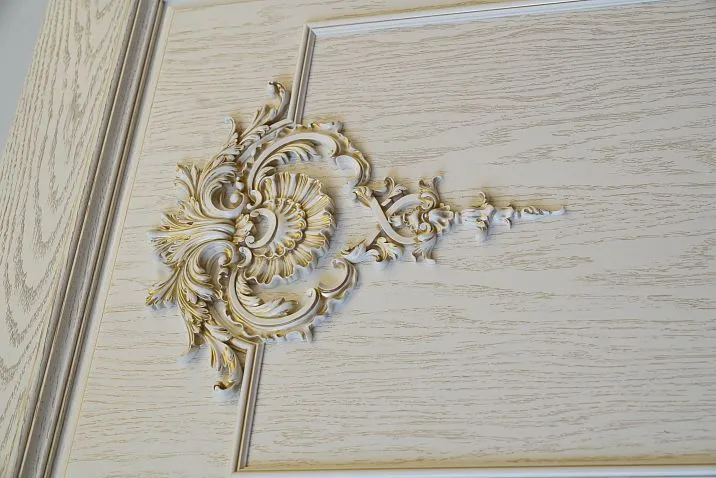
Look at the ceiling. What do you see? A plain white surface that merely finishes the walls? What if you turned it into a work of art that would delight the eye every day and create an atmosphere of sophistication? Polyurethane Ceiling Moldings has become a true revolution in the world of interior design, providing every homeowner or apartment owner with the opportunity to create a space worthy of palace halls.
In an era when technology allows the realization of the most daring design fantasies, polyurethane architectural decoration occupies a special place. This material combines the beauty of classical forms with the practicality of modern life, democratizing luxury and making it accessible to a wide range of consumers.
Each element of ceiling moldings tells its own story. Elegant rosettes under chandeliers create majestic accents, graceful cornices visually increase the height of the room, and decorative moldings allow zoning of space and give it architectural expressiveness. But the main thing — modern polyurethane moldings offer these possibilities without compromising on quality, durability, and ease of installation.




Materials Revolution: From Gypsum to Polyurethane




Chemical Architecture of Modern Material
Behind the apparent simplicity of polyurethane ceiling moldings lies a complex molecular structure created by 21st-century chemical technologists. Polyurethane is a thermosetting polymer with a three-dimensional network structure, where each macromolecule is connected to neighboring ones by multiple cross-links.
The density of finished products varies from 550 to 850 kg/m³ depending on the purpose of the elements. Ceiling cornices are made from lighter compositions to minimize load on load-bearing structures, while large decorative elements require higher density to ensure shape stability.
The compressive strength of modern polyurethane reaches 85 MPa, exceeding the indicators of many construction materials. At the same time, the material retains elasticity, allowing deformation under load up to 15-20% without residual deformation and returning to its original shape.
Our factory also produces:


Technological Advantages of Production
Creating high-quality ceiling moldings begins with the development of a master model. Modern CAD systems allow creating mathematically accurate 3D models with detail down to 0.01 mm, but final artistic adjustments are always performed by experienced sculptors.
Silicone molds are made from special two-component RTV silicones with hardness 28-32 Shore A. Such hardness ensures perfect transfer of the finest ornament details while maintaining sufficient elasticity for multiple uses — up to 500-800 casting cycles.
The casting process occurs under strictly controlled parameters. Component temperature is maintained at 20-22°C, relative air humidity — 50-60%, mixing time does not exceed 60 seconds. Any deviation from the technology may lead to structural defects in the material or inaccuracies in geometric dimensions.
Get Consultation
Ecological Safety and Innovations
Modern polyurethane compositions fully comply with the strictest ecological standards. Formaldehyde, heavy metals, and volatile organic compounds of risk class higher than third are absent in the composition. The material is certified for use in children's and medical facilities.
Hypoallergenicity is confirmed by independent tests in leading European laboratories. Even people with heightened sensitivity to chemical substances can be in rooms with polyurethane decoration without health risks.
Antimicrobial properties are achieved by incorporating silver nanoparticles into the composition, which provide long-term protection against mold, fungi, and bacteria. This is especially important for ceiling decoration, where air circulation may contribute to the accumulation of microorganisms.
Stylistic Universe of Ceiling Decoration
Classic Heritage in Modern Interpretation
Ancient architecture gave the world a system of proportions and ornaments whose relevance has not diminished over millennia. Corinthian capitals with lush acanthus leaves, Doric fluting, Ionic volutes — all these elements have received a new embodiment in ceiling rosettes and cornices made of polyurethane.
Mathematical accuracy of classical proportions is reproduced with extreme precision. The golden section, lying at the basis of ancient orders, is naturally perceived by the human eye as ideal harmony. Modern technologies allow reproducing these ratios with accuracy down to tenths of a millimeter.
Plant motifs of classical architecture carry deep symbolic meaning. Oak leaves symbolize strength and longevity, laurel branches — victory and glory, grapevine — abundance and life energy. In ceiling decoration, these symbols create an atmosphere of solemnity and nobility.
Baroque Opulence and Theatrical Dynamics
Baroque astonishes with its ability to create an illusion of movement in a static material. Complex scrolls and counter-scrolls, asymmetrical compositions, rich play of light and shadow transform polyurethane ceiling moldings into theatrical decoration.
Rococo motifs with their elegant asymmetrical scrolls create an atmosphere of the gallant 18th century. Stylized seashells, interwoven ribbons, floral garlands transform the ceiling into a precious interior ornament.
Modern decorative coating technologies allow imitating any historical materials. Patinated bronze, aged gold, marble with natural veins — all this is achievable using special paints and application techniques.
Modern Interpretations and Futuristic Trends
21st-century Neoclassicism adapts traditional forms to modern aesthetic requirements. Simplification of details, enlargement of main elements, adaptation of proportions to modern room volumes make classicism relevant for a new generation.
Minimalist interpretations of classical forms respond to trends toward functional simplicity. Concise profiles, clear geometric shapes, absence of excessive detailing characterize this approach to ceiling decoration.
Parametric design opens up possibilities for creating forms impossible in traditional architecture. Algorithms generate complex geometric structures that are materialized using modern casting technologies.
Practical Advantages of Modern Solution
Installation characteristics
The ease of installing polyurethane elements drastically simplifies the installation process. A standard ceiling cornice 2 meters long weighs only 800-1200 grams compared to 8-12 kilograms of gypsum analogs. This allows installing decorative elements on any type of ceiling without reinforcing load-bearing structures.
Dimensional stability is ensured by a low coefficient of thermal expansion — only 0.08 mm/m per 10°C. With seasonal temperature fluctuations from -20°C to +30°C, a 2-meter element will change size by less than 1 mm — a dimension practically invisible to the naked eye.
Chemical compatibility with various adhesive systems allows selecting optimal mounting methods. Polyurethane, acrylic, and epoxy adhesives provide reliable adhesion to any type of substrate — concrete, gypsum board, or wooden.
Operational advantages
Polyurethane's climatic resistance is confirmed by tests across a wide temperature range from -50°C to +85°C. The material does not lose its strength characteristics at extreme temperatures, ensuring stability in any climate zone in Russia.
Water resistance eliminates deformation in humid environments. A water absorption coefficient of less than 1.5% by volume over 24 hours allows using ceiling decor in bathrooms, kitchens, and pools without risk of swelling or cracking.
UV resistance is ensured by special stabilizers. Even under intense natural or artificial lighting, elements retain their original color and do not become brittle.
Durability and reliability
The service life of quality of polyurethane ceiling moldings material is 25-30 years under proper operating conditions. During this period, alternative materials may require 2-3 full replacement cycles.
Stability of properties over time is confirmed by accelerated aging tests. The material does not become brittle, does not lose elasticity, and does not change geometric dimensions even after 15-20 years of operation.
Repairability allows eliminating local damage without replacing the entire element. Scratches, chips, and dents are easily restored using special polyurethane-based repair compounds.
Cataloging diversity: types and applications
Ceiling cornices and moldings
Cornices represent the largest group of ceiling decor. Simple smooth profiles suit modern minimalist interiors, while complex ornate cornices create an atmosphere of classic luxury.
The size range includes elements from 30 to 300 mm in height and 25 to 200 mm in width. This variety allows selecting optimal proportions for rooms of any size — from compact apartments to spacious country houses.
Special flexible cornices are designed for curved surfaces. The bending radius can range from 500 mm to several meters, enabling the creation of complex architectural forms — arches, vaults, elliptical ceilings.
Rosettes and decorative centers
Ceiling rosettes serve as compositional centers, emphasizing the placement of main lighting fixtures. The diameter of the items varies from 200 to 1200 mm, allowing selection of an element to match any chandelier or light fixture size.
Thematic collections include rosettes in various styles — from strict geometric to lush floral ornaments. Multi-level compositions create complex light and shadow play, transforming the ceiling into a three-dimensional sculpture.
Special rosettes for recessed lighting fixtures have technological holes for wiring and mounting electrical components. This allows creating striking light compositions with minimal technical complexity.
Moldings and decorative panels
Moldings are used for visually structuring ceiling space. They allow creating geometric compositions, zoning large areas, framing built-in lighting or ventilation elements.
Molding widths vary from 15 to 150 mm, enabling the creation of both delicate accents and expressive architectural elements. Profiles can be symmetrical or asymmetrical depending on the designer's intent.
Decorative panels represent ready-made compositional solutions for decorating large ceiling areas. A modular system allows creating coverings of any size while maintaining the proportionality of the ornament.
Professional installation technology
Preparation operations
The quality of installation depends 90% on the correctness of preparatory work. The ceiling surface must be flat, dry, cleaned of dust, grease, and peeling coatings. The moisture content of the substrate must not exceed 4% by mass.
Marking is performed using high-precision measuring tools. Laser plane builders ensure perfect horizontal alignment, while cross levels help control the perpendicularity of elements.
Material climatic adaptation requires leaving items in the installation room for at least 24 hours. This allows polyurethane to adapt to the temperature and humidity of the surrounding environment, preventing deformation after installation.
Adhesive systems and mounting technology
The choice of adhesive system is determined by the type of substrate, size of elements, and operating conditions. Polyurethane adhesives provide chemical compatibility with the decor material, creating a monolithic bond.
Adhesive is applied in an even layer 2-3 mm thick over the entire contact surface. Notched trowels of various sizes ensure optimal distribution of the adhesive compound.
Open time is 5-15 minutes depending on the type of adhesive and environmental conditions. During this time, partial solvent evaporation and formation of a surface film occur, ensuring optimal adhesion.
Jointing technologies
Connecting elements at corners is performed at precisely calculated angles. For rooms with ideal geometry, a standard 45° angle is used; for real conditions, each angle is measured individually.
Polyurethane-based jointing adhesives provide chemical 'welding' of the joined surfaces. After polymerization, the joint becomes stronger than the base material.
Mechanical fixation of joints is performed using furniture brackets or special clamps. The holding time under load is 2-4 hours depending on the size of the elements and type of adhesive.
Features of working with different types of ceilings
Concrete and brick bases
Mineral bases require preliminary treatment with deep-penetration primers. This ensures surface stabilization and improves adhesive compound adhesion.
Irregularities exceeding 3 mm must be eliminated using leveling compounds. Local defects are filled with putty; extensive irregularities require applying a leveling layer over the entire area.
Temperature and humidity joints in concrete slabs must be considered when planning the placement of decorative elements. Crossing joints with long elements is not allowed.
Gypsum board structures
Suspension gypsum board ceilings provide an ideally flat surface for mounting decor. Joints between sheets must be properly filled and sanded to a perfectly smooth finish.
Mounting heavy elements requires additional reinforcement of the frame. Embedded elements are installed during the gypsum board system assembly at locations where decor mounting is planned.
Screws for mounting to gypsum board must have special threads and coatings. Screw length is calculated to ensure secure mounting in the metal frame.
On stretch ceilings, there are specific features. Decorative elements are mounted to the base ceiling before installing the stretch fabric.
Installation of polyurethane ceiling moldings Stretch ceilings have their own features. Decorative elements are mounted to the base ceiling before installing the stretch fabric.
Technological holes in the film are made using special ring protectors. Hole diameter is calculated taking into account the thermal deformation of the fabric.
Heating guns for stretching the fabric should not be directed directly at polyurethane elements. Heating temperature is limited to 60°C to prevent decor deformation.
Finishing systems
Priming and preparation for painting
Priming polyurethane surfaces is performed using special compounds ensuring optimal adhesion of paint coatings. Universal primers are suitable for most types of paint.
Surface sanding with fine-grit paper P320-P400 creates microtexture, improving coating adhesion. Dust after sanding is removed with a vacuum cleaner and sticky cloth.
Temperature and humidity conditions during priming must comply with manufacturer recommendations. Optimal temperature 18-25°C, relative humidity 40-70%.
Painting technologies
Acrylic water-emulsion paints provide long-lasting coverage with good breathability. Matte finishes conceal minor surface defects, while glossy finishes highlight the ornament's relief.
Sprayers ensure even coverage of complex relief surfaces. Working air pressure, spray nozzle size, and paint viscosity are individually adjusted for each product type.
Brushes are used for detailing deep relief areas and eliminating possible gaps. High-quality natural brushes leave no bristles and provide a smooth finish.
Special decorative finishes
Metallic finishes create the effect of noble metals — gold, silver, bronze, copper. Modern metallic pigment-based compounds provide realistic imitation at affordable cost.
Patina is applied using multi-layer systems with base color and patina compounds. Application technique determines the aging effect — from subtle to pronounced.
Pearl and metallic effects are created using special pigments that change color depending on viewing angle. Such finishes are especially effective under artificial lighting.
Economic aspects of application
Comparative material cost
Polyurethane molding, at comparable detail quality, costs 3-5 times less than high-quality gypsum analogs. Meanwhile, polyurethane products surpass gypsum in most operational characteristics.
Natural materials — carved wood, natural stone — are undoubtedly more prestigious, but their cost is 15-25 times higher than polyurethane analogs. Additionally, they require special care and protection.
Transportation costs for polyurethane items are minimal due to their low weight. A decor set for a standard room can be transported in a passenger car.
Installation costs
The ease of installation significantly saves on mounting work. Installation of a standard ceiling cornice can be completed by one person in 2-3 hours.
Special tools are not required—only a standard set of hand tools. A miter saw for cutting angles and a toothed trowel for applying adhesive are the main specialized tools.
The absence of wet processes eliminates drying time for plaster or putty compounds. The room can be used immediately after installation is complete.
Long-term economic efficiency
Minimal maintenance costs make polyurethane molding a worthwhile long-term investment. The material requires no special care, periodic protective treatment, or restoration.
The ability to repaint multiple times allows updating the interior without replacing decorative elements. This is especially important in commercial spaces, where design concepts may change every 5-7 years.
The impact on property value is 18-30% of the cost of decorative finishing. A well-executed ceiling decoration significantly increases the attractiveness of the property to potential buyers or tenants.
Conclusion: the art of accessible elegance
In a rapidly changing world of modern technologies and design trends, polyurethane ceiling molding has become a symbol of a sensible compromise between beauty and practicality. This material allows everyone to create a dream interior without compromising on quality, durability, or budget.
Every day, thousands of people make the decision to improve the quality of their living space by choosing decorative elements that will delight the eye for many years. Modern polyurethane molding offers this opportunity without limitations on style, size, or complexity of forms.
A technological revolution in materials science has made it possible to create products that combine the beauty of classic forms with the advantages of modern materials. Lightness, strength, water resistance, and ease of installation—all these qualities contribute to creating a comfortable and beautiful living environment.
Investing in quality ceiling decoration is an investment in emotional well-being and improved quality of life. Every time you look up at the ceiling and see the play of light in the elegant curves of molding, you receive aesthetic pleasure that cannot be measured in monetary terms.
Choosing modern materials and proven manufacturers is the choice of people who understand the value of long-term solutions and are unwilling to compromise on mediocrity. This is the choice of those who strive to create a space worthy of their ambitions and life principles.
The future of interior design is inseparably linked with materials that combine aesthetic perfection with functional efficiency. Polyurethane molding already embodies these principles, offering limitless opportunities for creative self-expression.
The STAVROS company embodies the best traditions of Russian entrepreneurship, enriched by European quality standards and advanced technological solutions. Decades of experience in architectural decoration, proprietary high-tech production, strict quality control at every stage of manufacturing, and impeccable customer service have made STAVROS an undisputed industry leader and a reliable partner for thousands of satisfied clients across the country. Every STAVROS product is created with a deep understanding of its role in the overall interior concept, where every detail, every element, and every nuance of lighting is important. Choosing STAVROS means choosing not just quality products, but a philosophy of perfection that transforms an ordinary dwelling into a dream space. Trust the experience of true professionals at STAVROS and discover the incredible world of boundless possibilities, where classical beauty harmoniously combines with modern comfort, creating interiors worthy of the most discerning connoisseurs of beauty.