Article Contents:
- Why choosing handrails and balusters requires special attention
- Functional role of handrails
- Balusters as an architectural element
- Solid wood — classic, time-tested
- Modern Composite Solutions
- Handrail diameter: the golden middle
- Baluster height and spacing
- Classic shapes: timeless elegance
- Modern solutions: minimalism and functionality
- Intermediate styles: country, Provence, Scandinavian
- Raw material selection and preparation
- Turning processing
- Sanding and Final Finishing
- Protective and Decorative Finishing
- Price advantage
- Quality control at all stages
- Option for Custom Orders
- Technical support and consultations
- Delivery organization from the manufacturer
- Delivery Time and Cost
- Unloading and lifting
- Step 1: defining the style
- Step 2: choosing the material
- Step 3: calculating the quantity
- Step 4: finding the manufacturer
- Step Five: Placing the Order
- DIY installation: pros and cons
- Professional installation: guarantee of result
- Regular Cleaning
- Restoration of protective coating
- Protection from Moisture and Mechanical Damage
- Minimalism and Clean Lines
- Naturalness and eco-friendliness
- Production Technology
- What is a Round Handrail
- Using Round Handrails in Interior Design
- Advantages of Handrail Products from the Manufacturer
- High Quality Standards
- Service Capabilities
- Concentration of Manufacturers
- Can I Order a Handrail of Non-standard Length?
- Which Wood Species is Better for Handrails?
- Do Handrails Need Additional Treatment After Purchase?
- How to Calculate the Required Number of Balusters?
- Can Different Wood Species Be Combined?
- What is the Service Life of Wooden Handrails and Balusters?
- How Does a Handrail Differ from Railing?
- Is It Possible to Install Handrails Without Balusters?
- How often should protective coating be renewed?
- What to Do if the Handrail Has Darkened Over Time?

When it comes to creating a staircase that becomes not just a functional element, but a true interior decoration, it is impossible to overlook two key components — handrails and balusters. These elements determine not only the safety of the structure, but also its aesthetic value. In 2026, the Moscow market offers a wide range of solutions, but not all of them meet the requirements of a discerning client. How to find the ideal combination of quality, price, and reliability? How to avoid intermediaries and get products directly from the manufacturer? Let's explore these questions in detail.


Why Choosing Handrails and Balusters Requires Special Attention
The staircase is the heart of a multi-level space. It connects floors, creates rhythm in the interior, sets the tone for the entire house. If steps can be compared to the foundation of this structure, then handrails and balusters are its face and character. Incorrectly chosen elements can ruin even the most thoughtfully designed look, while a well-chosen selection turns the staircase into a work of art.




Functional Role of Handrails
Buy round wooden handrail It is not just a plank to hold onto while climbing. It is a safety element that must withstand significant loads, provide a secure grip under any conditions, and at the same time harmoniously fit into the overall space concept. The handrail takes on the weight of a person, becomes support in case of losing balance, and serves as a guide when moving in the dark.
A quality handrail has several key characteristics. First, its surface should be perfectly smooth, without burrs or roughness that could injure the palm. Second, the diameter should meet ergonomic requirements — a too-thin handrail is uncomfortable to hold, while a too-thick one cannot be fully grasped by the hand. Third, the material should feel pleasant to the touch, neither cold nor slippery.
Our factory also produces:


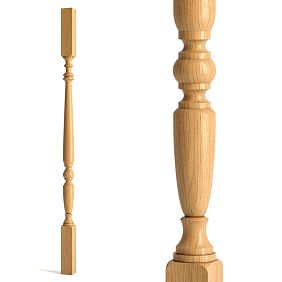

Balusters as an Architectural Element
If the handrail is horizontal, then balusters are vertical, creating rhythm and dynamics. They fill the space between steps and the handrail, transforming the staircase from a utilitarian structure into an interior design element. Balusters can be minimalist or carved, traditional or modern, but in any case, they must match the overall style of the room.
Wooden Balusters Moscow are presented today in an enormous variety of shapes, sizes, and finishing options. From simple cylindrical posts to complex shaped items with multi-stage processing — the choice is limited only by the client's imagination and the manufacturer's capabilities. At the same time, it is important to understand that balusters serve not only a decorative, but also a protective function, especially in homes with children.
Get Consultation
Materials for handrails and balusters: what the modern market offers
Choosing the material is the first and one of the most important stages in creating a staircase structure. It affects not only the appearance but also the durability, strength, tactile sensations, and even the microclimate of the room.
Solid wood — classic, proven over centuries
Wood remains the most popular material for manufacturing handrails and balusters. It is a natural, eco-friendly material that creates a special atmosphere of warmth and coziness in the house. Wood feels pleasant to the touch, it 'breathes', regulating air humidity, and possesses a natural texture beauty that cannot be artificially replicated.
Among the types of wood used for producing staircase elements, oak, beech, ash, and spruce deserve special attention. Oak is a symbol of strength and durability; its wood has high density, resistance to loads, and a luxurious texture with distinct annual rings. Round oak handrail capable of serving for decades while retaining its original appearance and strength characteristics.
Beech does not fall short of oak in strength, but has a more uniform texture and a soft pinkish hue. This species is ideal for manufacturing round beech handrails and balusters with complex shapes, as it is easily workable and holds carving details well. Ash features an attractive grain and high impact resistance, while spruce has natural resistance to moisture and biological influences.
Modern composite solutions
In addition to solid wood, the market offers modern materials — glued laminated timber, high-density MDF, wood-polymer composites. These solutions allow reducing costs without significant loss of quality, ensure dimensional stability of the product, and expand possibilities for implementing complex design solutions.
Dimensions and standards: what to pay attention to when choosing
When you decide buy wooden balusters in MoscowIt is important to understand that there are certain norms and standards regulating the dimensions of staircase elements. These requirements are not merely traditional but are dictated by safety and ergonomics considerations.
Handrail diameter: the golden middle
The optimal diameter for a round handrail is 50 millimeters. This size allows an adult person with any hand size to grip the handrail securely. Round handrail 50 This diameter has become a de facto standard in staircase production. Such a diameter ensures maximum comfort during gripping and sufficient structural strength.
Nevertheless, other options exist. round handrails 50 mm may be supplemented with items of 40 or 60 millimeters in diameter depending on the project's style and the client's preferences. The key is to maintain proportions and ensure ease of use.
Height and spacing of balusters
The height of balusters is determined by the total height of the railing, which, according to construction norms, must be at least 900 millimeters for residential spaces. At the same time, the distance between balusters must not exceed 150 millimeters — this is critical for children's safety, as they must not be able to fit their heads between the balusters.
To create a harmonious composition, it is important to correctly calculate the number of balusters per linear meter of the staircase. Too frequent installation creates a visual heaviness, while too sparse installation compromises safety and appears disproportionate.
Styles and forms: from classic to modern
Choosing wooden balusters in MoscowYou encounter a remarkable variety of stylistic solutions. The staircase can become a continuation of a classic interior with its love for symmetry and ornamentation, support the minimalist aesthetics of a modern home, or fit into an eclectic space where elements from different eras coexist.
Classic forms: timeless elegance
Traditional balusters feature complex turning work. Smooth curves, alternating thickening and tapering, elegant details — all of this creates a sense of refinement and nobility. Such balusters pair perfectly with carved posts, shaped treads, and substantial handrails.
Classic style implies using dark wood species or light tones with patina. Balusters may be adorned with carving, inlay, or gilding. This solution is for those who value tradition and wish to create an atmosphere of aristocratic luxury in their home.
Modern solutions: minimalism and functionality
Modern aesthetics lean toward simple forms and clean lines. round wooden handrails may be represented by smooth cylindrical posts without decoration, square balusters with sharp edges, or even metal cables combined with wooden handrails.
Minimalism in staircase design does not mean simplicity. On the contrary, the simpler the form, the higher the requirements for processing quality and manufacturing precision. Every detail must be flawless; any irregularity or deviation from geometry immediately becomes noticeable.
Intermediate styles: country, Provence, Scandinavian
Between classic and modern, there are many intermediate styles, each of which has its own requirements for staircase elements. Country style implies using rough-hewn wood with preserved natural texture, Provence — light tones and elegant forms, Scandinavian style — combination of white color with natural wood.
Production technologies: how ideal handrails and balusters are made
Behind every beautiful item lies a complex technological process. Understanding how round handrails for stairsis made allows you to assess the quality of the product and make an informed choice.
Raw Material Selection and Preparation
Everything starts with the selection of wood. For producing high-quality staircase elements, only premium material with minimal defects is used. The wood must be properly dried to a moisture content of 8–12 percent — this prevents deformation of the item during use.
After drying, the material undergoes sorting. Boards with large knots, cracks, rot, mold, and other defects are rejected. The remaining raw material is cut into blanks of required sizes, taking into account allowances for processing.
Turning
For creating round wooden handrail The blank is mounted on a lathe, where special cutters give it the required shape. Modern CNC equipment allows achieving ideal geometry and repeatability of the product.
The turning process requires high operator skill. It is necessary to correctly select the spindle speed, tool feed, and cutting depth. These parameters determine the surface quality, absence of vibrations and chips. An experienced turner feels the material, adjusts the processing modes depending on the wood density, grain direction, and presence of knots.
Multi-stage sanding is one of the most important stages of wood processing. It allows achieving a perfectly smooth surface, onto which the final coating is then applied. Sanding is performed using specialized equipment that ensures even removal of irregularities and prepares the surface for further application of protective coatings.
After turning, the item is sent for sanding. This is one of the most important stages, determining the tactile feel of the finished product. Sanding is performed in several stages with gradually decreasing abrasive grit — from rough processing to polishing.
Round wooden handrail 50 must be sanded to an ideally smooth state. Any roughness, remaining burr, or roughness renders the item unsuitable for use. Quality sanding is a labor-intensive process requiring time and attention to detail.
Protective-decorative finishing
The final production stage is applying a protective coating. This may be oil, wax, varnish, or stain combined with varnish. Each type of coating has its own advantages. Oil highlights the natural beauty of wood, creates a pleasant matte surface, and allows the wood to 'breathe'. Varnish provides stronger protection against moisture and mechanical damage, but creates a film on the surface.
Stain is used to change the color of wood without losing visible texture. With its help, you can give inexpensive birch the appearance of noble wenge or turn light oak into dark stained wood. After staining, a protective layer of varnish must be applied.
Advantages of buying directly from the manufacturer
When you decide I buy a round handrail, a logical question arises: where is it better to place an order? The market offers retail stores, trading platforms, distributors, and manufacturers. Each channel has its own features, but working directly with the manufacturer provides several fundamental advantages.
Price advantage
The absence of intermediaries means the absence of intermediary markup. The manufacturer sets the price, including only cost and reasonable margin. When the product passes through a distributor and retail store, each link adds its markup, which can range from twenty to fifty percent. In the end, the buyer pays a significant amount for the same item.
When ordering handrail round 50 mm directly from the manufacturer, you receive the factory price. This savings is especially noticeable for large orders, when it comes to equipping an entire staircase or several objects.
Quality control at all stages
The manufacturer bears full responsibility for the quality of its products. It has no option to shift blame to the supplier or refer to storage conditions at the retail point. This encourages maintaining high standards at all stages — from raw material procurement to packaging of finished products.
When you order Round wooden handrail 50 mm buy from the manufacturer, you can be sure the product is fresh. The item has not been sitting on the shelf for months, has not been subjected to temperature and humidity fluctuations during multiple transports, and has not been damaged during overloading.
Possibility of individual order
Manufacturing companies have flexibility unavailable to trading enterprises. They can produce an item to custom dimensions, select a non-standard wood species, create a unique baluster shape, or apply a special coating.
Want Round oak handrail Three-meter long without joints? Or balusters with custom carving based on your sketch? The manufacturer can realize almost any idea, provided it is technically feasible. The store, however, is limited by the inventory available in stock.
Technical Support and Consultations
Production company employees are technical specialists who know their product inside out. They can provide professional advice on material selection, recommend optimal configurations, calculate required quantities, and advise on installation nuances.
A store seller often relies on general phrases and catalog information. They lack deep understanding of technological processes, cannot assess the specifics of your project, and cannot propose the best solution.
Delivery in Moscow: fast, reliable, convenient
Logistics is an important component when purchasing construction materials and components. Round wooden handrail 50 mm buy — that’s half the job, you still need to deliver it intact to the site.
Delivery organization from the manufacturer
Production companies operating in the Moscow market usually have their own delivery service or partnerships with reliable transport firms. This ensures promptness and predictability of deliveries.
Items are packed according to transportation requirements. the staircase handrail is round wooden Long items are packed in rigid frames to prevent bending and damage. Balusters are packed individually to prevent contact between items.
Delivery timelines and costs
For Moscow and the nearby Moscow region, delivery is usually completed within one to three days from the moment the order is ready. The cost depends on the volume and weight of the cargo, the distance from the warehouse to the address, and the need for lifting to an upper floor.
Many manufacturers offer free delivery for orders above a certain amount. This is advantageous for comprehensive orders, when, in addition to handrails and balusters, you also purchase posts, steps, treads, and other staircase elements.
Unloading and lifting
Staircase wooden elements can be quite heavy and bulky. round wooden handrail 50mm A three-meter-long solid oak handrail weighs about five kilograms, while a full set for a two-story house may weigh several hundred kilograms.
When placing an order, it is important to clarify whether the delivery cost includes unloading and lifting to the floor. Some companies offer 'to the entrance' delivery, meaning you must personally unload the cargo from the vehicle. For large orders, it is advisable to order delivery with laborers who will carry materials directly into the room or to the required floor.
How to choose handrails and balusters correctly: step-by-step guide
The process of selecting staircase elements may seem complex, especially if you are encountering this task for the first time. Following a clear algorithm can help avoid mistakes and achieve a result that will please you for many years.
Step one: determining the style
Start by analyzing the overall interior. What style dominates in your home? Classic, modern, eclectic? The staircase should harmonize with the surrounding space and support the main design decisions.
Collect visual references — photos of staircases you like. Pay attention to details: baluster shapes, handrail thickness, wood color, presence of decorative elements. This will help formulate a clear technical specification when contacting the manufacturer.
Step two: material selection
Determine the wood species. If maximum strength and durability are important, choose oak or beech. If complex carving is needed and cost is a concern, birch is the optimal solution. For humid areas, larch is preferable.
Consider color palette. Light woods (birch, beech, light oak) visually expand space, creating a sense of lightness. Dark woods (wenge, stained oak, walnut) add solidity and elegance.
Step three: quantity calculation
Measure your staircase parameters: number of steps, their width, rise height. Calculate the required handrail length, accounting for curves and turns. Determine the number of balusters based on safe spacing between them.
Don't forget about additional elements: support posts, end caps, connecting elements, fasteners. Prepare a complete specification to ensure no important details are missed when placing the order.
Step four: finding a manufacturer
Study market offers. Pay attention not only to price, but also to the company's reputation, customer reviews, presence of a portfolio of completed works. Contact several manufacturers, request commercial proposals, compare terms.
A good manufacturer is always ready to show product samples, provide quality certificates, offer detailed consultations. Be wary of excessively low prices — they often indicate low-quality raw materials or violations of production technology.
Step five: placing an order
When placing an order for round wooden handrails 50 and balusters, carefully check all contract details. Ensure that exact dimensions, wood species, finish type, manufacturing deadlines, and delivery terms are specified.
Clarify warranty terms and procedures in case of defects found. A reliable manufacturer always provides a warranty on its products and is ready to promptly resolve any issues.
Installing handrails and balusters: do it yourself or hire professionals
After receiving the finished items, the question arises: who will handle the installation? Installing staircase elements requires certain skills and tools, but with basic carpentry skills, it is entirely feasible to do it yourself.
Do-it-yourself installation: pros and cons
The main advantage of self-installation is saving on installation services. Professional team work can cost a significant amount, especially if dealing with a complex structure.
However, there are also risks. Improperly installed wall-mounted round handrail may turn out to be unreliable, and incorrectly calculated spacing between balusters — compromise safety. Installation requires precision, care, and understanding of the staircase's structural features.
If you have experience working with wood, necessary tools (drill, screwdriver, level, tape measure, miter gauge), and time, you can try installing it yourself. The internet offers numerous detailed instructions and video tutorials that will help you understand the process.
Professional installation: guarantee of result
Engaging professional installers ensures quality and speed. An experienced team will install Wooden round handrail for balustrades and all related elements within one or two days, adhering to all technical requirements.
Many manufacturers offer installation as an additional option. This is convenient, as the specialists are familiar with the specific features of the products and have experience working with this particular product. Moreover, in case of problems, it is easier to determine who is responsible — the manufacturer for product quality or the installers for installation quality.
Care for wooden handrails and balusters
After installation, it is important to provide proper care, which will extend the service life of the staircase elements and preserve their original appearance. Wood is a living material, reacting to changes in temperature and humidity, requiring careful handling.
Regular cleaning
Handrails are constantly in contact with hands, accumulate dust, dirt, grease deposits. Regular cleaning prevents contaminants from penetrating the wood structure and preserves the surface's attractiveness.
For daily care, it is sufficient to wipe the round handrail with a slightly damp soft cloth. Do not use abrasive sponges and aggressive cleaning agents — they may damage the protective coating. For more thorough cleaning, use specialized wood surface care products.
Restoring Protective Coating
Over time, the protective coating wears out, especially on handrails that are constantly in contact with hands. Signs of wear — dulling of the surface, appearance of roughness, color change.
Periodically, every few years, the coating needs to be renewed. For oil finish, it is sufficient to apply a fresh layer of oil after light sanding with fine-grit sandpaper. Lacquer finish requires a more complex process: removal of old lacquer, sanding, and application of new lacquer in several layers.
Protection from moisture and mechanical damage
Wood is afraid of excessive moisture and drying out. Maintain a comfortable indoor microclimate with air humidity of 40-60 percent. During the heating season, use humidifiers; in summer — air conditioners or ventilation.
Protect the staircase from impacts, scratches, falling heavy objects. Be careful when moving furniture to avoid damaging balusters and handrails. If damage occurs, it can be repaired — minor scratches are sanded and re-coated; more serious defects may require replacing the element.
Current Trends for 2026
The market for stair components is constantly evolving, with new trends emerging in design and technology. What is relevant in 2026 for those who plan to round wooden handrails or update an existing staircase?
Minimalism and Clean Lines
Modern aesthetics continue to favor simple, minimalist forms. In trend buy round wooden handrails without excessive decoration, balusters of strict geometric shapes, monochromatic color palette.
Contrasting combinations are popular: light wood with black metal elements, white balusters with dark handrails. Such combinations create graphic expressiveness and a modern look.
Naturalness and ecological safety
Demand is growing for solid wood items with minimal processing, highlighting the natural beauty of the material. Matte oil finishes are replacing glossy varnishes; brushing and thermo-treatment are popular, creating expressive textures.
Customers pay attention to the origin of the wood, presence of sustainable forestry certificates, and eco-friendliness of applied finishes. This reflects the general trend toward conscious consumption and care for the environment.
Production Technology
The development of CNC machines and other high-tech processing methods allows creating items with complex geometry and perfect repeatability. New opportunities arise for implementing original projects that were previously technically impossible.
At the same time, the value of handcrafted work is preserved, especially in the premium segment. Carved elements created by hand remain a symbol of exclusivity and luxury.
Handrail and its role in creating a harmonious interior
Speaking about stair components, one cannot overlook the topic Round molding— this is a general term for various profiled wooden items used not only in staircases but also in other interior elements.
What is round handrail
wooden round balusters — these are items of round cross-section of various diameters, made from solid wood. These include not only handrails but also rods for wardrobes, decorative rails, furniture elements, cornices.
Round shape has its advantages: it is pleasant to the touch, has no sharp corners that could cause injury, looks elegant and suits various interior styles. round molding purchase is suitable for creating a unified stylistic solution throughout the house.
Use of round handrail in interior
Besides the obvious application as round wooden handrails 50 mmround handrail finds many other applications. It is used for making door and furniture handles, creating decorative railings, decorating columns and pilasters, as curtain cornices.
Round wooden trim to buy can be of various diameters — from thin strips of ten millimeters to massive elements over one hundred millimeters in diameter. This allows using it in various projects, from miniature furniture elements to large architectural details.
Advantages of handrail products from the manufacturer
Ordering Round wooden balusters from the manufacturer, you get the opportunity to choose any wood species, any diameter and length of the item. Production capacities allow manufacturing to buy a round wooden handrail individual meters or large batches for large-scale projects.
Especially popular Round beech balustradecombining affordable price, excellent performance characteristics, and attractive appearance. Round oak balustrade choose for projects where maximum strength and prestigious appearance are important.
Why Moscow is a special market
The capital region has its own specifics that must be considered when selecting suppliers of stair components. High competition, demanding customers, abundance of new constructions and renovated housing create unique conditions.
High quality standards
Moscow buyers are spoiled by a wide selection and high level of service. They are knowledgeable about materials, aware of modern trends, willing to pay for quality, yet they demand price-value alignment.
Manufacturers operating in the Moscow market are compelled to constantly improve their products, adopt new technologies, and expand their product range. This benefits the buyer, who gains access to the most modern solutions.
Logistical capabilities
Moscow is the country's largest transportation hub. Raw materials can be easily delivered from any region, and finished products can be conveniently shipped out. The developed infrastructure enables fast and reliable delivery to any point in the city and region.
For the buyer, this means a wide selection of suppliers, the ability to compare offers, and prompt order fulfillment. If needed, one can find items made from exotic wood species, order non-standard sizes, and receive products in the shortest possible time.
Concentration of manufacturers
Numerous enterprises specializing in the production of stair components and wooden trim are concentrated in Moscow and the Moscow region. This creates healthy competition, stimulating price reductions and quality improvements.
Buyers can personally visit the production facility, observe the manufacturing process, evaluate the quality of raw materials and finished products, and interact with engineers and designers. This level of transparency increases trust and helps make the right choice.
Questions and Answers: What concerns buyers?
Can I order a handrail of non-standard length?
Yes, most manufacturers produce handrails of any length within technological capabilities. Standard stock lengths are three meters, but longer elements or shorter segments can be ordered as needed. It is important to note that long handrails require special attention during transportation and installation.
Which wood species is best for handrails?
The choice depends on usage conditions and aesthetic preferences. For residential spaces with normal humidity, oak is ideal — strong, durable, with an attractive grain. Beech is cheaper but similar in properties to oak. For humid areas, larch is preferable due to its resistance to moisture. Exotic species (iroke, merbau, teak) have unique properties but cost significantly more.
Do handrails need additional treatment after purchase?
Quality handrails from the manufacturer are delivered fully ready for installation — sanded and coated with protective finish. Additional treatment is not required. However, if you wish to change the color or type of finish, this is possible. Before applying a new finish, the old one must be removed and the surface sanded.
How to calculate the required number of balusters?
The distance between baluster axes is typically 100-150 millimeters. With a baluster width of 40-50 millimeters, 7-10 pieces are needed per linear meter. The exact quantity depends on the staircase configuration. It is best to consult the manufacturer’s specialists, who will help make the correct calculation taking into account all specifics of your project.
Is it possible to combine different wood species?
Yes, combining different wood species is a common design approach. For example, you can install dark oak balusters and a light beech handrail. It is important to note that different species react differently to humidity changes, so it is advisable to use properly dried wood and reliable fasteners.
What is the service life of wooden handrails and balusters?
With proper care and normal usage conditions, quality solid wood items last for decades. Oak elements can retain functionality and appearance for 50-100 years or more. The main enemy of wood is moisture, temperature fluctuations, and mechanical damage. Protect your staircase from these factors, and it will serve several generations.
How does a handrail differ from railings?
A handrail is the top rail of the railing, which is held by hand. Railings encompass the entire railing system, including the handrail, balusters, support posts, and other elements. These terms are often used interchangeably, but technically they refer to different components.
Is it possible to install handrails without balusters?
Yes, there are constructions with handrails directly mounted to walls without intermediate posts. Such wall-mounted handrails are used in narrow spaces or as additional support. Modern solutions also feature glass or metal panels instead of traditional balusters.
How often should protective coating be renewed?
This depends on usage intensity and coating type. On average, oil-based coatings require renewal every 2-3 years, while lacquer coatings last 5-7 years. Handrails wear out first due to constant contact with hands, while balusters last longer.
What to do if the handrail has darkened over time?
Darkening of wood is a natural process, especially characteristic of oak. If this is not to your liking, restoration can be performed: remove the old finish, sand the surface until a light layer is reached, and apply a new finish. Some species (beech, birch) darken more evenly and less than oak.
Conclusion: a choice that will stay with you for a long time
A staircase is an investment in the comfort and safety of your home. Choosing handrails and balusters creates an interior element that will serve for decades, reminding you daily of the correctness of your decision—or, conversely, of the haste and mistakes.
Working directly with the manufacturer allows you to obtain quality products at a fair price, order items precisely tailored to your project, receive professional consultations and technical support. The Moscow market offers many options, but it is important to choose a reliable partner who values their reputation and is willing to take responsibility for the outcome.
STAVROS has been operating in the woodworking industry for many years, specializing in the production of stair components, trim items, and other elements for creating harmonious interiors. In-house production, quality control at every stage, use of only premium raw materials, modern equipment, and skilled personnel—all of this allows us to offer products of the highest quality.
STAVROS understands that every project is unique, and each client has their own requirements and preferences. Therefore, the company is ready to fulfill orders of any complexity—ranging from standard elements to exclusive items based on individual sketches. Direct deliveries from the manufacturer, prompt delivery throughout Moscow and its region, assistance with calculations, and specialist consultations—all of this makes cooperation with STAVROS convenient and beneficial.
By choosing STAVROS, you are not just purchasing a product, but obtaining a comprehensive solution for creating your dream staircase. Let your home be filled with the beauty of natural wood, and every ascent up the stairs be safe and comfortable!