Article Contents:
- Why polyurethane wall molding is in demand in Moscow
- Why wall decor made of polyurethane is convenient in interior
- Why it is chosen for apartments, houses and commercial spaces
- When wall molding looks especially appropriate
- What types of polyurethane wall molding exist
- Moldings for frames and panels
- Inlays and Decorative Elements
- Rosettes and accent inserts
- Profiles for combining wall and ceiling
- Compositions from several types of decor
- Where polyurethane wall molding is used
- In the living room
- In the bedroom
- In the hallway and corridor
- In the study and library
- In offices, salons, and public spaces
- How to choose wall molding to match the interior style
- For classic style
- For neoclassical style
- For Modern Interiors
- For restrained minimalist design
- For an accent wall
- How to select polyurethane molding based on room size
- For small rooms
- For medium-sized rooms
- For high ceilings and large walls
- How to avoid mistakes with molding width
- How to distribute decor on a wall without overloading
- What to choose for different tasks
- If you need classic wall frames
- If you need an accent composition
- If you need a calm background
- If you need to visually complicate the interior
- If you need to hide emptiness on a large wall
- Advantages of polyurethane wall molding
- Lightness and practicality
- Resistance to moisture and changing conditions
- Expressive decorative relief
- Wide selection of shapes
- Convenience for wall compositions
- What mistakes are most often made when decorating walls with molding
- Choosing decor only from photos
- Not considering room dimensions
- Making frames too small
- Overloading the wall with decor
- Mixing incompatible profiles
- How to buy polyurethane wall molding in Moscow without making a mistake
- First, define the zone and task
- Then select the element type
- Check proportions and compatibility
- Assemble the system immediately, not just one element
- Go to the catalog and compare options
- Comparison table by types of wall decor
- Checklist before purchasing polyurethane wall molding
- FAQ: Answers to Popular Questions
- Which polyurethane molding is better suited for walls?
- What to choose for walls: moldings or overlays?
- How to decorate an accent wall with molding?
- Is polyurethane decor suitable for a small room?
- Can molding be used in the hallway and corridor?
- Where to buy polyurethane wall molding in Moscow?
- How to choose decor for neoclassical style?
- How to combine wall molding with ceiling decor?
- Conclusion
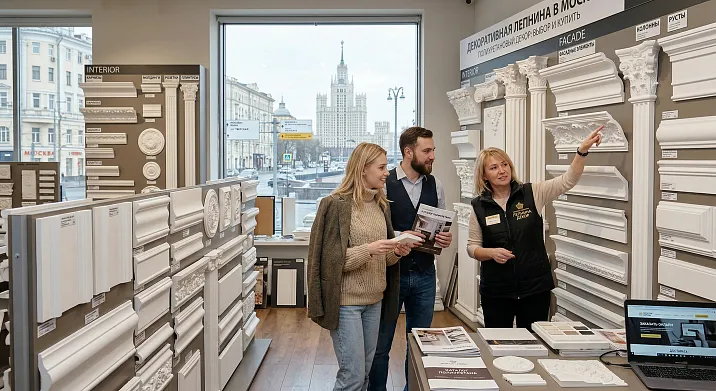
A wall is not just a space enclosure. It's the first thing a person sees when entering a room. It is the walls that set the rhythm, mood, and character. And that's why the question of 'what and how to decorate them with' never loses relevance. Polyurethane wall molding in Moscow today is one of the most sought-after tools for transforming an ordinary plane into an architecturally rich surface. Without plaster, without heavy work, without weeks of waiting.
But for the result to be truly powerful, you need to understand: which elements work on walls, how to select them according to the size and style of the room, and how to avoid typical mistakes that turn a good idea into visual chaos. This is what this article is dedicated to.




Why polyurethane wall molding is in demand in Moscow




Why wall decor made of polyurethane is convenient in interior design
The main reason for the popularity of polyurethane wall decor is the combination of aesthetics and common sense. Where plaster molding requires special fasteners, reinforcement, and long drying times, polyurethane is attached with high-quality mounting adhesive in one working day. An experienced installer can cover a small room in a few hours.
The weight of the elements is another fundamental argument.Polyurethane moldings5–8 times lighter than gypsum counterparts. A two-meter-long molding can be held with one hand — this makes solo work not just possible, but convenient. For walls, especially vertical surfaces, this has direct practical significance.
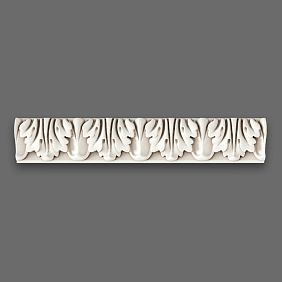
At the same time, the relief of the products is in no way inferior to gypsum: high-precision molds reproduce the finest details of the ornament — leaves, curls, pearl belts, geometric bands. After painting in one or two tones, polyurethane elements on the wall are indistinguishable from historical stucco.
Our factory also produces:


Why it is chosen for apartments, houses, and commercial spaces
The range of applications is determined not only by aesthetics but also by practical properties. The moisture resistance of polyurethane allows it to be usedpolyurethane wall decorin the kitchen, bathroom, and rooms with high humidity — where gypsum would simply deteriorate. Resistance to temperature fluctuations makes the material suitable for loggias and verandas with limited heating.
For commercial facilities — restaurants, hotels, salons, retail spaces — polyurethane decor solves another important task: serial production. One hundred identical molding frames in one hundred hotel rooms — this is realistic, affordable, and visually flawless.
Get Consultation
When stucco on walls looks especially appropriate
There are situations in which wall decor works especially powerfully:
-
High ceilings (from 2.8 m), where empty large walls weigh down with their monotony.
-
Classical and neoclassical interiors where framed panels are an organic part of the style.
-
Modern interiors with an intentional accent — one wall with a molding composition against three minimalist ones.
-
Hallways and corridors where wallpaper wears out quickly: molding creates a visual protective belt and makes narrow spaces more interesting.
-
Living rooms and bedrooms where an accent zone needs to be highlighted — behind the sofa, behind the headboard of the bed.
What types of polyurethane wall moldings are there
This is the key question. Wall decor is not one type of product. It is a system of different elements, each with its own role. Let's break it down by categories.
Moldings for frames and panels
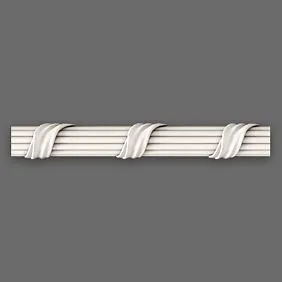
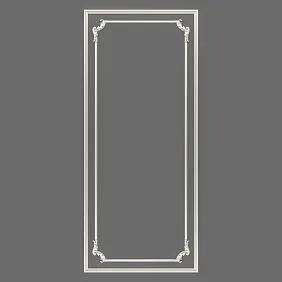
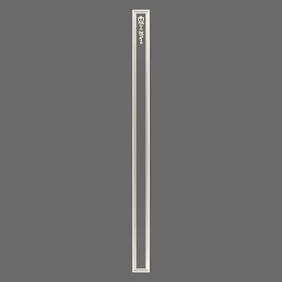
Polyurethane moldings for walls— the foundation of any wall decorative system. This is a profiled strip with a flat back side and a convex front surface with relief. It is from moldings that framed panels are built — a classic technique of wall architecture, coming from the interiors of the 18th–19th centuries and still relevant.
The width of moldings is one of the key selection parameters:
-
Narrow (20–40 mm) — a delicate accent for small rooms and modern interiors. Creates an elegant contour without visual heaviness.
-
Medium (50–80 mm) — a universal range. Suitable for most rooms, works in both classic and neoclassical styles.
-
Wide (90–200 mm) — for high ceilings, formal spaces, rich classic interiors. Provide a sense of architectural monumentality.
In addition to rigid moldings, there are flexible ones — elastic profiles capable of wrapping around curved surfaces: arches, columns, rounded walls. Without flexible molding, decorating an arched opening would become an engineering task; with it — it's a simple and elegant job.
The full catalog of wall decorative profiles with all sizes and style options is collected in the material "Polyurethane Moldings: Complete Catalog of Wall Decorative Strips" — all options are laid out there by profile, width, and purpose.
Overlays and decorative elements
Polyurethane decorative appliques — this is the jewelry layer of the wall decorative system. Corner rosettes for finishing frame panels, medallions, cartouches, acanthus leaves, floral inserts — all these are individual ornamental elements that are integrated into the molding system or exist independently.
Why are overlays so important? A frame panel made of molding without corner overlays is four slats connected at a right angle. Neat, but modest. The same panel with properly selected corner ornaments is already an architectural detail with historical character. The difference in feeling is striking.
Overlays are also used independently — for decorating flat wall sections, decorating built-in furniture, creating point ornamental accents. One medallion in the right place sometimes works more powerfully than an entire system of frames.
Rosettes and accent inserts
Ceiling rosettes are a familiar element. Butpolyurethane rosettesthey are also successfully used on walls: in the center of a framed panel as a medallion, above a mantel shelf as a decorative accent, in a niche as an artistic insert. This is a non-standard but expressive solution that attracts attention and defines the character of the zone.
Smaller diameter wall rosettes are a special category for accent decor. They are mounted in places that require a 'point of attention': above a sofa, above a fireplace, in the center of an accent wall.
Profiles for combining wall and ceiling
The transition zone between wall and ceiling is not just a ceiling cornice. On the wall, this transition is designed usingprofiled moldingswhich create a smooth or clear horizontal belt directly at the ceiling line. In classic interiors, this belt is complemented by a molding system on the wall—and the entire surface gains a harmonious vertical and horizontal organization.
A horizontal wall band at a height of, for example, 80–100 cm from the floor is a technique of 'wainscoting' (historical panel cladding). The lower part of the wall is decorated differently from the upper part—the entire volume is divided and structured with molding. This works even in small apartments.
Compositions of several types of decor
A true professional result is achieved when a wall is decorated not with one element, but with a system. The classic scheme:
-
Horizontal belt at the ceiling—transitional profile or lower cornice.
-
Frame panels made of moldings on the main wall plane.
-
Corner overlays at the points where moldings join.
-
Horizontal baseboard belt at the lower part of the wall.
-
Profiled baseboard at the floor.
Such a system transforms an ordinary wall into an architectural object. The principles of assembling such compositions are described in detail in the article"Polyurethane Wall Molding: Durable Classic Without Complicated Maintenance".
Where Polyurethane Wall Molding is Used
In the living room
Living room — a space for representation. Here, wallPolyurethane wall moldingachieves maximum visual effect: frame panels around the perimeter, an accent wall behind the sofa with decorative molding composition, a transition belt near the ceiling. All together creates a sense of well-thought-out architectural space.
In living rooms with modern furniture, wall decor works as an expressive counterpoint: minimalist furniture against a structured classical wall is not a contradiction, but a stylistic dialogue that is increasingly found in high-quality interiors.
In the bedroom
The bedroom is the most personal space. Here, decor works more quietly but more precisely. A molding frame behind the headboard is a classic technique that creates a 'bed in a niche' without demolishing walls. An accent wall with two or three vertical panels above the bedside tables—symmetry that calms and organizes.
For the bedroom, it's important not to overload. One or two decorative accents on the most visible wall—and no decor on the others. The bedroom should breathe.
In the hallway and corridor
The hallway is the first impression of the home. And at the same time—the most vulnerable spot: walls get rubbed against, bumped, and accidentally hit here. A horizontal molding belt at a height of 90–110 cm creates not only a decorative but also a visual protective element. Below the belt, the wall can be finished with a more durable covering; above—wallpapered or painted.
In narrow corridors, vertical moldings that create rhythmic sections visually 'expand' the space. This is an optical effect tested in historical interiors of noble estates and urban tenement houses.
In the study and library
A business personal space requires one thing: seriousness without heaviness. Strict geometric moldings, framed panels with clear proportions, dark or restrained color schemes—all this creates an atmosphere of concentration. Rich floral ornamentation is generally inappropriate here. Clean profiles, meanders, and geometric friezes work well.
In offices, salons, and public spaces
Commercial interiors operate by different rules: they must make an impression quickly and be remembered for a long time.Polyurethane wall decorallows creating a unified branded look throughout the entire facility: reception, meeting rooms, lobbies, sales floors—all designed with a single decorative logic.
In restaurants and hotels, wall molding panels are a standard technique for creating a classy atmosphere. Guests perceive them as expensive decor—and that's true. However, their cost and labor intensity are incomparable to plaster moldings.
How to choose wall moldings to match the interior style
For classic style
Classical style is about symmetry, hierarchy of details, and rich ornamentation. For walls, choose moldings with plant reliefs—acanthus leaves, floral swirls, palmettes. Medium to wide width. Corner appliqués are mandatory. Framed panels are built around the entire perimeter or on main walls.
Transitional ceiling and wall cornices connect the wall and ceiling into a unified architectural system. The baseboard is tall, profiled, and proportionate to the scale of the rest of the decor.
For neoclassical style
Neoclassicism—restraint, precision, minimal excess detail. Moldings with clean profiles or geometric patterns. Framed panels—correct proportions, impeccable layout. Corner appliqués—laconic, geometric.
Color scheme: monochrome, white-gray palette, sometimes contrasting moldings on a neutral wall background. This works very precisely.
For a modern interior
Contemporary interiors use moldings in a targeted way. One decorative accent on one wall—that's the principle. A thin geometric molding creating a grid frame on an accent surface, or one expressive appliqué in a strategic location.
The main rule: moldings should not 'shout.' They should be noticed with interest—not surprise.
For restrained minimalist design
In minimalist interiors, polyurethane wall decor is used exclusively functionally: a clear molding as a zoning line, a thin horizontal band near the ceiling as a structural element. No ornaments, no appliqués. Only form and line.
For an accent wall
An accent wall is one of the most powerful decorative techniques in modern interiors. All decorative potential is concentrated on one wall: a grid of frame moldings, inside which are patterned wallpaper, decorative plaster, or contrasting paint. The other three walls are neutral, background. The contrast works to the maximum.
How to choose polyurethane molding according to the size of the room
For small rooms
A small space is no reason to give up decor. But it is a reason to be very precise with proportions.
-
Molding no wider than 40–50 mm.
-
Frame panels — on one accent wall, not around the entire perimeter.
-
No massive overlays or wide belts.
-
Vertical molding sections (not horizontal) visually raise the ceiling.
In a small room with a low ceiling, one properly chosen vertical molding rhythm on the wall creates an illusion of spaciousness. This is not magic — it is experience accumulated over centuries of interior design.
For medium-sized rooms
An area of 20–40 sq.m is the most comfortable range for wall decor. Mouldings 50–80 mm wide work here without any reservations. Frame panels can be built on a single accent wall or around the entire perimeter.
Corner overlays and horizontal belts are added to taste — but without violating the principle: decor should structure, not overload.
For high ceilings and large walls
Large spaces require boldness in scale choice. Mouldings 90–150 mm and wider are appropriate here. A multi-tiered system: an upper belt near the ceiling, a middle horizontal divider at a height of 120–150 cm, a lower plinth belt. Between them — frame panels filling the main plane.
In such an interior, the wall ceases to be just a background and becomes an architectural element.
How not to make a mistake with moulding width
Empirical rule: the width of the moulding in millimeters should not exceed 1/30–1/40 of the room height in centimeters. With a ceiling height of 270 cm — moulding up to 70–90 mm. With a height of 350 cm — up to 100–120 mm. This is not a rigid canon, but a reliable starting point.
How to distribute decor on a wall without overloading
The principle of frame proportion: the inner area of the panel should be significantly larger than the area of the moulding itself. A ratio of 1:5 is the minimum acceptable. Optimal is 1:7–1:10. This creates a feeling of a 'frame', not a 'cage'.
The distance between frames is at least one moulding width. Frames placed too closely merge into a single dark stripe.
What to choose for different tasks
If you need classic wall frames
Basic set: medium-width molding with profiled relief + corner overlays. The molding is selected from the section moldings, cornices, baseboards, overlays — from the overlays section. Together they create a complete classic system.
If you need an accent composition
Choose a wider molding, add a horizontal dividing belt, decorative inserts inside the frames. A central medallion — if the size of the panel allows. This is the most saturated scenario, requiring precise marking and attention to proportions.
If you need a calm background
Thin moldings 30–40 mm without pronounced ornament, in the color of the wall. Horizontal rhythm on one plane. Minimum details — maximum structure.
If you need to visually complicate the interior
Two-tier system: vertical molding sections with a horizontal divider. Different types of section fillings: upper sections—paint, lower sections—wallpaper or decorative plaster. This is slightly more technically challenging, but the result looks significantly richer.
If you need to hide emptiness on a large wall
A large empty wall in a spacious room is a typical problem. Solution: a molding grid that divides the wall into logical sections. It's not necessary to fill every section—the structure itself already solves the problem.
Advantages of polyurethane wall molding
Lightweight and practical
Installation without special skills, without heavy tools, without reinforced structures. The main tool is high-quality mounting adhesive, a fine-toothed saw or a miter box for precise corner cutting. Low weight eliminates the risk of falling off vertical surfaces when installation technology is followed.
Resistance to moisture and changing conditions
Moisture resistance—a critically important property for the kitchen, hallway, bathroom, and rooms with periodic condensation. Polyurethane does not swell, deform, or delaminate upon contact with water. This opens up possibilities for decoration where other materials are not feasible.
Expressive decorative relief
Casting in high-precision molds reproduces the finest details. The density of quality polyurethane is 180–250 kg/m³—sufficient for sharp relief and low enough for easy installation. After painting, the relief fully manifests: the play of light and shadow on the profile creates a depth that cannot be achieved with a flat detail.
Wide selection of shapes
From the finest geometric profile for minimalism to rich Baroque ornamentation with acanthus and floral scrolls—the complete STAVROS catalog of wall decorative elements covers all stylistic directions. This means: whatever interior you are creating, the range offers a suitable solution.
Convenience for wall compositions
The ability to cut, fit, join at any angle, work with flexible profiles on curved surfaces—all this makes polyurethane decor an extremely flexible tool for wall solutions. You can assemble any system from it: from the simplest to multi-level.
What mistakes are most often made when decorating walls with molding
Choosing decor only by photo
A photograph does not convey scale. A molding that looks like an elegant thin strip in the photo turns out to be a wide 100 mm profile in reality. Always check the actual dimensions in the description and compare them with the dimensions of your room.
Not considering room dimensions
The most common mistake: choosing elements without preliminary measurement. Brought the molding, tried it—didn't fit. Loss of time and money can be avoided by measuring ceiling height and wall area before starting selection.
Making frames too small
A small panel on a large wall looks like a random sticker. Framed panels should be proportionate to the wall. The optimal panel height is at least 40–50% of the wall height. Width—proportional.
Overloading the wall with decor
More decor doesn't mean more beautiful. Each added element reduces the 'breathing' of the surface. The principle of 'less but more precise' works here without exceptions. Decide in advance: what effect should the wall produce — intimate, formal, modern, strict — and don't go beyond this concept.
Mixing incompatible profiles
Floral ornament and geometric meander in one room are two different decorative languages. They don't coexist well on the same surface. Stick to one stylistic logic throughout the room — and the result will be cohesive.
How to buy polyurethane wall molding in Moscow without making a mistake
First, define the zone and task
Before opening the catalog, answer three questions: which specific wall? What task should the decor solve (structure, decorate, accentuate, conceal)? Is there a placement scheme at least in the most general form?
Then select the element type
Having decided on the task, choose a category: moldings for frames, overlays for details, profiles for belts. See Wall moldingsandDecorative Inserts — they cover most wall decor scenarios.
Check proportions and compatibility
When selecting specific items, ensure: the molding width matches the room scale, the style of all selected elements matches, and the dimensions of framed panels are proportional to the wall area.
Assemble the system immediately, not just one element
Do not order one molding 'to try'. Plan the entire set: molding + corner overlays + possible horizontal profile. A system order saves time and eliminates the risk of element incompatibility when purchasing additional items.
Go to the catalog and compare options
infull catalog of polyurethane productsThe STAVROS website features all categories of wall decor with dimensions, photos, and descriptions. This is the starting point for any project — whether it's a small bedroom or a large commercial facility.
Comparison table by types of wall decor
| Element type | Application on walls | Visual effect | Who it suits |
|---|---|---|---|
| Narrow molding (20–40 mm) | Contour frames, part framing | Light accent, weightless structure | Minimalism, contemporary style |
| Medium molding (50–80 mm) | Frame panels, horizontal belts | Classical rhythm, balance | Neoclassicism, modern classic |
| Wide molding (90–200 mm) | Multi-tier systems, formal walls | Monumentality, richness | Classic, baroque, high ceilings |
| Flexible molding | Arches, columns, curved walls | Smooth contour, organic feel | Non-standard layouts |
| Corner overlays | Molding connection points | Completeness, jewelry-like detail | Classic, neoclassic |
| Medallions and rosettes | Panel center, accents | Focal point of attention | All styles, in moderation |
| Horizontal profile | Wall level separation | Zoning, wainscoting | Classic, hallways, corridors |
Checklist before buying polyurethane wall molding
-
For which room and which wall is the decor needed?
-
What is the ceiling height and wall area?
-
Is one accent element or a system needed?
-
Is the interior style defined?
-
Has the molding width been chosen considering scale?
-
Has the compatibility of the molding and overlays been checked?
-
Has at least a simple layout diagram been prepared?
-
Has the volume been calculated with a 10–15% margin for trimming?
-
Is the surface ready (flat, clean, degreased)?
FAQ: Answers to popular questions
Which polyurethane molding is best suited for walls?
For most tasks, medium molding 50–80 mm with a profiled relief is optimal. For modern interiors — narrow, up to 40 mm. For classic and high-ceilinged spaces — wide, from 90 mm.
What to choose for walls: moldings or overlays?
Moldings are the foundation of the system. Overlays are its completion. The correct answer: moldings plus overlays in combination. Only moldings provide structure, only overlays — a separate accent. Together — a full-fledged decorative system.
How to decorate an accent wall with molding?
Choose one main wall. Form a grid of molding frames proportionate to the plane. Add corner overlays. Inside the frames — contrasting paint or wallpaper. The other three walls — neutral.
Is polyurethane decor suitable for a small room?
Yes, provided the scale is correct. Thin molding on one accent wall of a small room looks elegant and does not overwhelm. A vertical rhythm of sections visually raises the ceiling.
Can molding be used in an entryway and hallway?
It can and should be. An entrance hall benefits from a horizontal belt molding—it protects the walls and creates a decorative rhythm. In narrow corridors, vertical molding sections work to optically expand the space.
Where to buy polyurethane wall molding in Moscow?
In the STAVROS catalog—a full range of wall decor: moldings, profiles, overlays, trim. Online ordering and delivery in Moscow are available. There is consultation on selection for a specific project.
How to choose decor for neoclassicism?
Choose moldings with a clean profile, without overloaded ornamentation. Geometric cornices, fluting, laurel bands are appropriate. Heavy floral Baroque ornamentation is not. Corner overlays should be laconic and geometric.
How to combine wall molding with ceiling decor?
The principle of unity: wall molding and ceiling cornice should belong to the same stylistic logic. If the cornice has a floral ornament, the moldings on the wall are chosen in the same ornamental key. A mismatch is immediately noticeable and perceived as an error.
Conclusion
Polyurethane wall molding is not just decoration. It is a tool that transforms a flat surface into an architecturally organized space. Moldings create rhythm. Overlays complete the system. Horizontal belts establish vertical order. Together, it is a decorative logic that works regardless of the style and size of the room.
Buying polyurethane wall molding in Moscow requires a clear understanding of the task, scale, and style. Not just one beautiful molding — but a system of compatible elements for a specific space. Only then will the result meet expectations and remain relevant for years.
STAVROS Company is a professional supplier of polyurethane molded decor in Russia. The STAVROS catalog features a full range of products for walls, ceilings, and facades: moldings, cornices, baseboards, overlays, trim, rosettes, capitals, brackets. The collections cover all style directions—from Baroque to minimalism. STAVROS works with private customers, design bureaus, architects, and construction companies, providing professional support from selection to delivery. Delivery across Moscow and throughout Russia.