Article Contents:
- Why polyurethane molding is in demand in Moscow
- Why this material is convenient for modern and classic interiors
- Why polyurethane decor is suitable for walls, ceilings and facades
- When to choose polyurethane molding
- What polyurethane molding can be bought in Moscow
- Moldings for walls and decorative frames
- Cornices for decorating the wall and ceiling joint
- Ceiling rosettes for chandeliers and accent decor
- Baseboards and finishing profiles
- Inlays and Decorative Elements
- Facade polyurethane molding
- Where polyurethane molding is used
- In apartment interiors
- In private houses
- In offices and commercial spaces
- For facade design
- For creating accent decorative zones
- How to choose polyurethane molding for the task
- By room type
- By interior style
- By space scale
- By ceiling height
- By decorative task
- By the combination of several elements with each other
- What to buy for different scenarios
- If you need wall decor
- If you need ceiling decor
- If you need an accent element
- If you need facade decor
- If a restrained decorative result is needed
- If a more expressive interior accent is needed
- Advantages of polyurethane molding
- Ease and convenience of application
- Wide range of shapes and profiles
- Expressive decorative relief
- Practicality for interior tasks
- Possibility to use for different decorative scenarios
- How to buy polyurethane molding in Moscow without making mistakes
- Determine which zone needs decoration
- Choose the type of element, not just a beautiful pattern
- Check proportions and dimensions
- Immediately look at element compatibility
- Select not just one item, but a decorative system
- What mistakes are most commonly made when choosing
- Choose a profile that is too small for a large room
- Select decor that is too bulky for a small room
- Do not consider the style of the room
- Mix incompatible elements
- Look only at the photo, not at the task
- Which decor to choose for walls, ceiling, and facade: a mini-guide
- Checklist before buying polyurethane molding in Moscow
- Comparison table of types of polyurethane molding
- FAQ: Answers to Popular Questions
- Where to buy polyurethane molding in Moscow?
- What to choose for walls: moldings or overlays?
- What is better to buy for the ceiling?
- Is polyurethane molding suitable for facades?
- How to choose decor according to ceiling height?
- Can polyurethane molding be used in an apartment?
- What is more important when choosing: size, style, or type of element?
- How to select several elements into a single composition?
- Conclusion

Imagine: you're browsing catalogs, looking at photos of beautiful interiors — and everywhere you see the same thing. Molded cornices on the ceiling, elegant frames on the walls, a rosette under an antique chandelier. It all looks expensive, sophisticated, unattainable. And then you learn that most such interiors are created using polyurethane molding. And that buying it in Moscow is not only possible but also not difficult — if you know exactly what to choose.
This article is not for those who just want to 'learn about molding.' It's for those who are going to take action: choose, order, and get a result that will please for years. We'll break everything down step by step — without fluff, with specifics and a real understanding of how polyurethane decor works in actual interiors.




Why polyurethane molding is in demand in Moscow




Why this material is convenient for modern and classic interiors
Moscow is one of the most active markets for decorative finishes in Russia. The pace of interior updates here is high: people move, do renovations, open new establishments, update offices. And in all this flowpolyurethane moldingshas secured a firm niche — for one simple reason. It allows you to achieve an architecturally rich result without plaster work, without heavy structures, and without the need to hire a team of plasterers.
Modern interior and classic style are two poles between which polyurethane decor operates. In a modern space, it's a subtle structural cornice or a minimalist rosette that creates a light accent. In a classic one, it's a rich cornice profile, framed wall panels, a ceiling rosette with floral ornamentation. One material, diametrically different stylistic results.
Our factory also produces:


Why polyurethane decor is suitable for walls, ceilings, and facades
Versatility is the main competitive advantage of polyurethane over alternative materials. Plaster stucco fears moisture. MDF profiles cannot be used on the facade. Foam products produce unclear relief. Polyurethane is free from all these limitations.
Wall Decor, ceiling decorWall panels, ceiling cornices, facade elements—all of this is one material, one production base, one installation logic. A craftsman who has learned to work with polyurethane moldings on walls will easily handle cornices on the ceiling and window frames on the facade.
Get Consultation
When to choose polyurethane stucco specifically
There are several situations in which polyurethane beats competitors without reservations:
-
You want decor for a bathroom, kitchen, or pool—where plaster is unacceptable.
-
You are limited on time: polyurethane decor is installed with adhesive in one day.
-
You have ceilings with limited load-bearing capacity: polyurethane is 5–8 times lighter than plaster.
-
You are working with a facade and need weather resistance in Moscow's climate conditions.
-
You want maximum visual impact on an optimal budget.
What polyurethane molding can be bought in Moscow?
The variety of assortment is something that can initially confuse an unprepared buyer. Let's break down each category so that no questions remain.
Moldings for walls and decorative frames
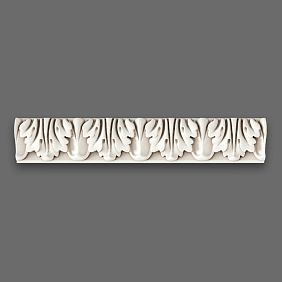
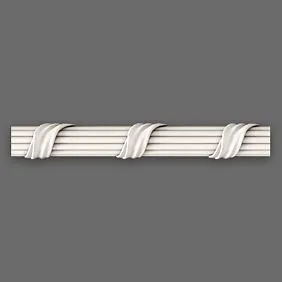
Moldings made of polyurethane— is a fundamental tool of wall decor. Imagine a long profiled strip with decorative relief: it is from such strips that frame panels, horizontal belts, and door and arch trims are assembled.
Why are moldings the foundation? Because they set the rhythm of the wall. A chaotic, empty surface turns into a structured architectural detail as soon as even rectangular frames appear on it. This technique is called 'briser' or 'frame paneling' and came to us from the interiors of the classicism era.
Molding widths: from 20 mm — for delicate contour decor — to 200 mm and more, for rich formal spaces. There are rigid and flexible varieties. Rigid — for flat surfaces. Flexible — for arches, columns, bay windows, and any curved surfaces.
Cornices for decorating the wall and ceiling junction
Polyurethane Crown Molding— is an element that changes the perception of the entire space. The horizontal line of the cornice at the ceiling creates an optical illusion of greater height. This works without any additional tricks: the eye perceives the expressive horizontal as a 'raised ceiling.'
Cornices can be ceiling-mounted (installed in the wall/ceiling corner), transitional (creating a smooth profiled transition), and facade. With hidden LED lighting behind the cornice, the effect becomes cinematic: soft light, receding behind the profile, makes the ceiling literally 'glow.'
Cornice profile widths — from 40–50 mm for small rooms to 200–250 mm for high halls. In a properly selected cornice, there is nothing superfluous — it exists exactly as much as the space needs.
Ceiling rosettes for chandeliers and accent decor
Polyurethane ceiling rosettesA decorative medallion installed in the center of the ceiling. It serves a dual function: decorative (creates an accent) and practical (conceals the chandelier mounting point).
The diameter of rosettes covers a huge range: from 150 mm for a small spot light in the bedroom to 800 mm and more for formal living rooms with massive chandeliers. The ornamental spectrum is equally wide: geometric concentric circles for modern interiors, classical acanthus leaves, Baroque floral scrolls, strict laurel branches.
When the chandelier is on — the rosette's relief comes to life. The play of light and shadow transforms the ceiling from a flat surface into a spatial element. This cannot be photographed to convey the full effect — it must be seen in person.
Baseboards and finishing profiles
Polyurethane Baseboards— the lower 'frame' of the interior. They cover the joint between the floor and wall, create a clean horizontal line at the base of the walls, and complete the vertical composition of the room.
Baseboard height: from 50 mm for concise modern interiors to 150 mm and above for classic styles. The rule: the higher the ceilings and the larger the area, the higher the baseboard can be. In a small room, a high baseboard creates a feeling of tightness. In a spacious hall, a low baseboard gets lost and looks random.
Overlays and decorative elements
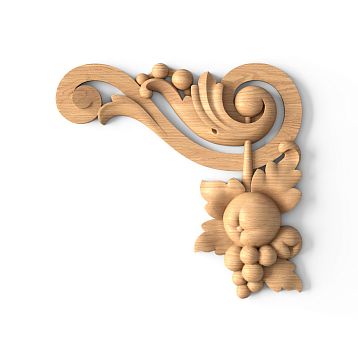
Polyurethane appliqués— the jewelry layer of the stucco system. Corner rosettes, medallions, cartouches, acanthus overlays, floral inserts — all are mounted with adhesive as additions to molding panels or as independent accents.
Look at a framed panel without corner overlays — and at the same panel with them. The difference is colossal. Without overlays, it's just four molding strips. With properly selected corner ornaments — a ready-made classical architectural detail.
When decorating furniture, overlays transform ordinary cabinet doors or nightstand fronts into items styled as classic. This is one of the most budget-friendly ways to radically change the appearance of furniture without replacement.
Facade polyurethane molding
Facade decor is a separate story requiring special attention. The Moscow climate is harsh: frosts down to -25°C in winter, heat in summer, intense temperature fluctuations in the off-season, precipitation. Polyurethane products designed for facade application withstand a temperature range from -60 to +80°C without cracking or deformation.
The facade assortment includes: cornices, pilasters, window and door surround trims, corner overlays, horizontal decorative belts. A house decorated with facade polyurethane decor looks like an architectural object—not like a building from a standard catalog.
Where polyurethane molding is used
In apartment interiors
The apartment is the most common space for using polyurethane molding in Moscow. A living room with cornices and framed panels, a bedroom with an accent wall behind the headboard, a kitchen with a decorative belt—in each of these cases, polyurethane decor solves a specific task.
It is especially valuable that the molding does not require major renovation. It can be installed on already plastered and painted walls—a flat and sturdy surface is sufficient. This turns decoration from a multi-month process into a job of several days.
In a private house
A country house opens up the full spectrum of application: from interiors of all rooms to facade design. A classic house with portal moldings, molded cornices near the ceiling, and decorative elements on the facade looks like a full-fledged architectural object—not ostentatiously, but exactly as a well-designed house should look.
In offices and commercial spaces
The business space should speak of status. Subtle, concise moldings, clean cornices, restrained baseboards—this is a decorative language appropriate for meeting rooms, reception areas, and representative zones. Here, molding is not an ornament but an element of corporate identity, working to create a visual impression.
For facade design
Facade polyurethane decor is one of the most reasonable ways to give individuality to standard architecture. A residential building, commercial property, or administrative building with decorative cornices, pilasters, and window trims is perceived as a custom-designed project, not a standard one. At the same time, the cost of polyurethane facade decor is incomparably lower than stone or plaster molding.
For creating accent decorative zones
Zoning with molding is a technique increasingly entering modern interiors. An accent wall behind the sofa, framed by moldings, highlights the relaxation area. A decorative panel above the desk forms the work zone. A framed panel in the hallway creates a 'portal' entrance that sets the tone for the rest of the space.
How to choose polyurethane molding for the task
This is the most important section of the article. Because the right choice is not about 'what is more beautiful,' but 'what is more correct for the specific task.'
By room type
The function of the room is the first selection criterion. A bedroom requires coziness and intimacy: restrained molding without overloaded ornamentation is appropriate here. The living room is the calling card of the house: the decor here can be richer. A study demands strictness and structure. The hallway is about first impressions: one well-chosen cornice or decorative frame works better than an overloaded molding system.
For bathrooms and kitchens, moisture resistance becomes a mandatory requirement—and here polyurethane is not just good, it is the only reasonable choice among molding materials.
By interior style
Classicism dictates: wide cornices with profiled relief, framed panels with corner overlays, rosettes with floral ornamentation. Baroque adds opulence—more relief, more overlays, a richer profile.
Neoclassicism—restraint while preserving architectural logic. Clean profiles, geometric ornamentation, rosettes without excessive details.
Modern interior and minimalism use molding selectively: a thin cornice as a structural line, one concise rosette as the sole accent. The principle 'less is more' is key here: one correct element is more valuable than five random ones.
Eclecticism is the freest style. Classic rosettes with modern furniture, geometric moldings with ethnic decor — everything is permissible provided there is unity in the color palette and overall conceptual direction.
Based on the scale of the space
The rule of proportions — fundamental and most often broken. The scale of a decorative element must correspond to the scale of the space. This is not an aesthetic whim, but a perceptual regularity.
A thin 30 mm molding in a spacious hall with three-meter ceilings looks like a random scratch on the wall. A wide 180 mm cornice in a small room with a low ceiling creates a claustrophobic effect. Proportion is needed.
Based on ceiling height
Ceiling height is one of the two most important parameters when choosing molding (along with area). Follow this logic:
-
Up to 2.5 m: maximally narrow and lightweight profiles. Cornice up to 50 mm. Rosette up to 200–250 mm. Baseboard up to 60 mm.
-
2.5–3 m: medium profiles. Cornice 60–100 mm. Rosette 300–500 mm. Baseboard 70–100 mm.
-
From 3 m: wide and rich profiles. Cornice 100–200 mm and more. Rosette 500–800 mm. Baseboard 100–150 mm.
Based on the decorative task
Before choosing a specific item, answer the question: what task should the decor solve?
-
Create a sense of completeness → cornice + baseboard around the perimeter.
-
Highlight an accent zone → framed panel or decorative panel.
-
Form a focal point on the ceiling → ceiling rosette.
-
Structure an empty wall → moldings with rhythmic sections.
-
Decorate the facade → cornices, pilasters, window trims.
By combination of several elements with each other
Systematic thinking when choosing moldings is a professional approach. Cornice, molding, rosette, and baseboard belonging to one collection or selected in a unified style create an interior. A random assortment of 'everything beautiful' creates chaos.
Specific example: a wide profiled cornice with a floral ornament and next to it — a thin geometric molding. Two good elements, but they 'speak' different decorative languages. In a finished interior, this is perceived as a design error.
What is better to buy for different scenarios
If you need wall decor
Start with moldings. Choose the profile width to match the scale of the room. Create framed panels on an accent wall or around the entire perimeter. Add corner overlays at the junction points. Result: a wall with architectural character.
Polyurethane trim— a great addition for creating dividing horizontal belts or decorative borders. Flexible profiles — for curved walls and arches.
If you need ceiling decor
Basic set: cornice around the perimeter and a rosette in the center. These are two elements that together create a complete ceiling 'framing'. If desired, add a decorative belt at a distance of 20–30 cm from the cornice — this will create a coffered effect.
If the ceiling is stretch — the cornice is installed around the perimeter before stretching the fabric, the rosette — through a mounting plate. This is standard practice that does not require complex technical solutions.
If you need an accent element
One well-chosen element is more powerful than five mediocre ones. A large-diameter ceremonial rosette in the center of the living room, a cartouche above the mantel shelf, a decorative arch over the doorway — each of these elements can completely change the perception of the space.
Wall rosettes— small decorative medallions — provide a disproportionately large visual effect with minimal cost. One medallion in the center of a framed panel turns a simple structure into an exquisite classical detail.
If facade decor is needed
Choose elements from the facade section — they have appropriate weather resistance. Start with cornices and window trims: these are basic items that provide maximum facade effect with minimal installation complexity.
If a restrained decorative result is needed
Minimalist approach: one cornice of the correct profile around the perimeter, one concise baseboard. No overlays, no framed panels. Pure structural molding that creates completeness without decorative overload.
If a more expressive interior accent is needed
Invest in areas that are in focus: the central ceiling rosette, an accent wall with framed panels, the framing of the main doorway. Background elements — cornice, baseboard — can be more restrained. The contrast of an expressive accent and a calm background works better than a uniformly overloaded molding system.
Advantages of Polyurethane Molded Decoration
Lightness and ease of application
Weight is a factor that is underestimated until one encounters gypsum products. A gypsum rosette with a diameter of 500 mm weighs several kilograms and requires reinforcement during installation. A polyurethane one of the same diameter is 5–8 times lighter. It is attached with adhesive, without dowels, embedded elements, or complex preparation.
Wide range of shapes and profiles
The modern range of polyurethane decorative elements covers several hundred items. Narrow moldings and wide cornices, compact and monumental rosettes, simple baseboards and richly profiled ones — for any style and any scale, there is a suitable solution.
Expressive decorative relief
Polyurethane is cast in high-precision molds that reproduce the finest details of the ornament. Leaves, scrolls, pearl belts, meanders — all of this is conveyed with a clarity unattainable in manual sculpting for serial production. With proper lighting, the relief works as an architectural detail, not as a sticker.
Practicality for interior tasks
Moisture resistance, resistance to temperature fluctuations, the possibility of multiple repainting, easy maintenance (wipes clean with a damp cloth), durability with proper installation — all these qualities make polyurethane decor a practical choice for a modern interior.
Possibility to use for different decorative scenarios
From the bathroom to the facade, from a studio apartment to a restaurant's grand hall — polyurethane decor works wherever stucco is needed. This eliminates the need to search for different materials for different zones of a single project.
How to buy polyurethane stucco in Moscow without making a mistake
Determine which zone needs decor
The first step is not choosing elements, but defining the task. Walls, ceiling, facade? One room or several? A one-time purchase or outfitting the entire project? A clear answer to these questions narrows the choice from 'the entire catalog' to a specific category.
Choose the type of element, not just a beautiful pattern
A common mistake: 'this rosette is beautiful, I'll take it.' But the beauty of a rosette and its appropriateness in a specific space are different things. First determine the type of element needed (cornice, molding, rosette), then the required scale, and then the ornament in the desired style.
Check proportions and dimensions
Always check the actual dimensions in the product description. A photograph does not convey scale — what looks like an elegant, thin cornice on screen may turn out to be wide and massive in reality. Take measurements of the room in advance: perimeter, ceiling height, width of openings.
Immediately look at the compatibility of elements
If you are selecting several types of decor for one room, ensure their stylistic compatibility. Ideally, choose elements from the same collection. When selecting from different collections, check for consistency in scale and ornamental language.
Select not just one item, but a decorative system
A systematic approach is the most reliable. Cornice, molding, rosette, and baseboard, selected as a unified ensemble, create a space with architectural character. Selecting 'one element at a time' often ends in disappointment: beautiful details do not come together into a harmonious whole.
What mistakes are most often made when choosing
They choose a profile that is too small for a large room
Narrow molding in a spacious hall with high ceilings literally gets lost. The eye does not register it—and the entire decorative concept falls apart. Scale is always the first criterion.
They choose decor that is too massive for a small room
A wide cornice with a rich profile in a small room with a 2.5 m ceiling overwhelms the space. Residents begin to feel cramped—even though the room itself hasn't changed. It's optics, but it affects the feeling of living in the space.
They do not consider the style of the room
A classic ornament with acanthus leaves in a loft looks like a historical reconstruction—out of place and random. Molding should speak the same decorative language as the furniture, textiles, and lighting.
They mix incompatible elements
Several decorative scenarios in one room is always a risk. Two or three well-chosen elements work better than seven disparate ones. Restraint in the number of elements is always a plus.
They look only at photos, not at the task
"Looks good in the picture" is not a sufficient criterion. Beautiful and appropriate are different things. Before buying, ask yourself: does this specific socket, this cornice—do they solve my problem in my space?
What decor to choose for walls, ceilings, and facades: a mini-guide
For walls:
-
Moldings → framed panels, horizontal belts, framing of openings.
-
Overlays → corner ornaments of frames, medallions, accent details.
-
Pilasters → vertical articulation, creating rhythm.
For the ceiling:
-
Cornices → perimeter decoration, masking joints, hidden lighting.
-
Ceiling rosettes → accent under the chandelier, central ceiling detail.
-
Decorative belt → additional frame, coffered effect.
For the facade:
-
Cornices → horizontal bands, finishing the roof perimeter.
-
Pilasters → vertical articulation of the facade.
-
Window surrounds → architectural accent around window openings.
-
Corner appliqués → decorative finishing of building corners.
Checklist before buying polyurethane molding in Moscow
Go through the list before placing your order:
-
For which room or object is the decor needed?
-
Is it for walls, ceiling, facade, or all together?
-
Do you need calm structural decor or an expressive accent?
-
What are the room dimensions (wall length, perimeter)?
-
What is the ceiling height?
-
Do you need one element or a system (cornice + molding + rosette + baseboard)?
-
Does the style of the selected elements match the overall interior style?
-
Are the multiple selected elements compatible with each other?
-
Has a 10–15% margin for trimming been accounted for?
-
Have the actual dimensions in the product description been checked?
Comparison table by types of polyurethane molding
| Element type | Where it is used | What effect it gives | Who it suits |
|---|---|---|---|
| Molding | Walls, trims, frames | Structure, rhythm, framed panels | Any interior, all styles |
| Cornice | Ceiling, wall/ceiling joint, facade | Raises the ceiling, creates a perimeter | Classic, neoclassical, any style |
| Ceiling rosette | Ceiling center for chandelier | Accent, finishing, play of light | Classic and representative interiors |
| Baseboard | Floor and wall joint | Finishing, clean horizontal line from below | Any interior |
| Overlay | Frames, furniture, accents | Jewelry touch, system completion | Classic, baroque, neoclassical |
| Facade element | External walls, windows, cornices | Architectural expressiveness of the facade | Country houses, cottages, public buildings |
FAQ: Answers to popular questions
Where to buy polyurethane molding in Moscow?
The STAVROS catalog presents a full range of polyurethane decor: moldings, cornices, baseboards, ceiling and wall rosettes, overlays, trim, and facade elements. Online ordering, delivery in Moscow, and professional consultation on selection are available.
What to choose for walls: moldings or overlays?
Moldings create the foundation — frames and belts. Overlays complete and enrich the system. For walls, the basic element is molding. Overlays are added as a second layer of detailing. If the budget is limited — start with moldings.
What is better to buy for the ceiling?
A cornice around the perimeter is a mandatory basic element. A ceiling rosette for the chandelier is an accent in the center. Together they create a complete ceiling system. If you need to choose just one — start with the cornice: it provides a greater spatial effect.
Is polyurethane molding suitable for facades?
Yes, when selecting elements for facade use. Polyurethane withstands the Moscow climate: frost, heat, temperature fluctuations. Facade molding made of polyurethane lasts 15–25 years with proper installation and quality painting.
How to select decor according to ceiling height?
Use the rule: the lower the ceiling, the narrower and lighter all decorative elements should be. For heights up to 2.7 m — cornice up to 60 mm, rosette up to 250 mm. For heights from 3 m — full-scale profiles can be used.
Can polyurethane molding be used in an apartment?
Yes, this is one of the best options for an apartment. Lightweight (safe for floor slabs), ease of installation (adhesive, no reinforcement required), suitability for use in bathrooms and kitchens, expressive relief—all this makes polyurethane decor ideal for an apartment.
What is more important when choosing: size, style, or type of element?
All three parameters are critically important, but the priority is as follows: first the type (what exactly is needed—cornice, molding, rosette), then the size (scale relative to the room), then the style (ornament matching the interior concept). Violating this sequence is the main source of errors.
How to select several elements for a unified composition?
Choose elements from the same collection or from the same manufacturer within the same stylistic direction. If in any doubt—consult a specialist before purchasing. Correcting a stylistic conflict after installation is significantly more difficult.
Conclusion
Polyurethane stucco in Moscow is not just one decorative element or one style of application. It is an entire system of possibilities: from a lightweight structural cornice in a modern apartment to a rich stucco ensemble in a classic interior, from decorative wall panels to architectural finishing for the facade of a country house.
To buy polyurethane stucco in Moscow correctly means to approach the choice systematically. Define the task. Select the type of element. Check the scale and proportions. Ensure stylistic compatibility. And only then—make the purchase decision.
A good decorative result begins not with a beautiful picture, but with a clear concept.
The company STAVROS is one of the leading suppliers of polyurethane stucco decor on the Russian market. The STAVROS catalog features a full range of products for interior and facade tasks: moldings, cornices, baseboards, ceiling and wall rosettes, overlays, trim, brackets, and capitals. The collections are developed for all stylistic directions—from classic to minimalism. STAVROS works with private buyers, designers, architects, and construction companies, providing professional support at all stages of selection and ordering. Delivery across Moscow and throughout Russia.