Article Contents:
- What is polyurethane ceiling molding and why is it needed
- What tasks does ceiling molding solve
- Where is polyurethane ceiling molding used
- Why choose polyurethane
- What types of polyurethane ceiling molding can be purchased in Moscow
- Polyurethane ceiling cornices
- Polyurethane ceiling rosettes
- Polyurethane ceiling moldings
- Ceiling decor: comprehensive solutions
- How to choose ceiling molding: a simple algorithm
- Step 1. Define the task
- Step 2. Assess the ceiling height
- Step 3. Choose the profile width
- Step 4. Consider the interior style
- What to choose: cornice or rosette — or both elements
- How to choose ceiling molding for the ceiling height
- Ceiling up to 2.5 m
- Ceiling 2.5–3 m
- Ceiling 3 m and above
- How to choose ceiling molding for the interior style
- Classic
- Neoclassicism
- Modern Interior
- Common mistakes when choosing ceiling molding
- Too wide cornice with a low ceiling
- Overloaded decor without composition
- Incorrect socket scale
- Mismatched element styles
- Buying only one element 'to start'
- Lack of joint and corner planning
- How to order ceiling molding in Moscow
- Determine the product type
- Select the size
- Check element compatibility
- Place an order and clarify delivery in Moscow
- How to combine cornice and rosette in one project
- Ceiling molding for different rooms of a Moscow apartment
- Living Room
- Bedroom
- Entry Hall
- Kitchen
- Office
- FAQ: answers to popular questions about ceiling molding
- What is better for the ceiling — cornice or molding?
- Can a Rosette Be Used Without a Chandelier?
- How to choose molding for a low ceiling?
- Which ceiling elements are mandatory and which are optional?
- How to combine cornice and rosette?
- Is polyurethane molding suitable for an apartment?
- How to avoid mistakes with size?
- Conclusion

The ceiling is not just the upper plane of a room. It is the fifth wall, which most people ignore during renovation and later regret. It is the ceiling that sets the height, scale, and mood of the space. And it is here that polyurethane ceiling molding in Moscow today becomes one of the main tools of the designer — and the conscious owner of the interior.
A correctly chosen cornice around the perimeter creates a sense of completeness that no other finishing technique can provide. A ceiling rosette for a chandelier transforms an ordinary light fixture into the center of an architectural composition. Ceiling moldings are geometry, light, shadow, and depth that are otherwise simply unattainable. That is why more and more Muscovites—both those renovating apartments and those building country houses—choose polyurethane ceiling molding as an essential element of final finishing.
In the catalogPolyurethane moldingsSTAVROS offers all key categories for ceiling design: cornices, rosettes, moldings, decorative profiles, and comprehensive solutions. This article details what to choose, how to avoid mistakes with size, and how to assemble a complete ceiling composition from individual elements.




What is polyurethane ceiling molding and why is it needed
Before choosing specific products, it's important to understand: ceiling molding is not decoration for decoration's sake. It is functional decor, where each element has its own role in the overall interior system.
Polyurethane ceiling molding consists of decorative profiles, rosettes, moldings, and trim elements that are mounted on the ceiling or in the wall-ceiling transition zone. The material is expanded polyurethane with a density ranging from 150 to 420 kg/m³ depending on the product type. Externally, the product replicates all the details of classic plaster molding: clear ornamentation, even relief, and a smooth surface ready for painting. Inside, it is a lightweight, resilient material that is resistant to moisture, temperature fluctuations, and mechanical stress.
This is fundamentally important for the Moscow market. Apartments in multi-story buildings vary in height and layout. Country houses experience temperature fluctuations and irregular heating. Offices and commercial spaces have increased requirements for durability and ease of maintenance. Polyurethane ceiling molding covers all these scenarios.




What problems does ceiling molding solve?
Ceiling molding solves several tasks simultaneously, and understanding each of them helps in more accurately selecting the needed element.
Structuring space. A cornice around the perimeter of the ceiling separates the wall and ceiling, creating an architectural boundary. This visually 'pulls together' the room, giving it a finished look. Without a cornice, walls and ceiling blend into an unclear transition zone—especially in apartments with dark or saturated wall colors.
Creating a center. A ceiling rosette for a chandelier forms a visual focal point—a spot that draws the eye. In a room with a correctly chosen rosette, nothing additional needs to be explained: the eye naturally finds the center of the space.
Geometry and rhythm. Ceiling moldings create geometry—frames, coffers, diagonals—that makes a flat white ceiling appear voluminous and multi-level. This works even in the most minimalist modern interiors: a few thin profiles on the ceiling add depth without unnecessary clutter.
Camouflage of equipment. Ceiling cornices with hollow profiles are used for concealed laying of lighting cables, creating a light niche without visible wires. This is a popular technique in design projects in Moscow.
Visual change of proportions. A properly selected cornice can visually raise the ceiling or, conversely, make a spacious hall more cozy. This is not magic—it's geometry: a profile directed upward draws the eye and creates a sense of height.
Our factory also produces:


Where ceiling polyurethane molding is used
-
Residential apartments in Moscow — living rooms, bedrooms, studies, hallways
-
Country houses and cottages — halls with high ceilings, staircase areas, living rooms
-
Commercial properties — offices, restaurants, showrooms, hotel rooms
-
Design projects — where precision of details and stylistic integrity are important
Get Consultation
Why choose polyurethane
This question is natural because there are alternatives: plaster, wood, PVC. But polyurethane has three competitive advantages that are hard to beat.
Weight. Polyurethane cornices and rosettes weigh several times less than plaster ones — installation is possible with ordinary glue without dowels or special fasteners.
Durability. The material is not afraid of moisture, temperature fluctuations, or ultraviolet light. The product will not crack, deform, or absorb odors—and will maintain the clarity of its relief for years.
Visual quality. Clear detailing of the ornament, a smooth surface, perfect geometry—polyurethane molding under paint is indistinguishable from plaster. At the same time, it is easier to paint, allows for patination and the application of decorative effects.
What types of polyurethane ceiling molding can be bought in Moscow
Let's examine each category in detail—not as a dry list, but as a living conversation about what works where.
Polyurethane ceiling cornices
Ceiling Molding—this is the basic element of any ceiling decor. The cornice is mounted at the junction of the wall and ceiling and solves several tasks simultaneously: it masks an uneven joint, sets the style of the room, and creates a line along which the eye moves around the perimeter of the room.
What distinguishes a good cornice from a bad one? First of all—the profile. The cornice profile is its cross-section: width, height, projection (how far the cornice protrudes from the wall). It is these parameters that determine whether the cornice will look appropriate in your space or create a sense of heaviness.
Cornices come in:
-
Smooth—without ornament, with clear geometric lines. Perfect for modern interiors, minimalism, and Scandinavian style.
-
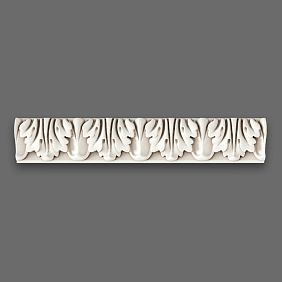
With ornament—leaves, scrolls, geometric motifs, floral patterns. For classic, neoclassical, and art deco styles.
-
Multi-level—a complex profile consisting of several planes, creating an expressive relief. For rich classic interiors and spaces with high ceilings.
-
Lighting cornices — with a cavity for concealed lighting. For creating soft contour lighting along the perimeter of the ceiling.
The width of the cornice is selected strictly according to the ceiling height. For a standard Moscow apartment with a ceiling height of 2.5–2.7 m, the optimal cornice width is from 50 to 90 mm. A cornice wider than 100 mm at such a height will visually 'cut' the ceiling, creating a sense of an overhanging shadow.
An important nuance for Moscow: in new buildings, ceilings are often 2.75–3 m, and here the width range expands to 120–140 mm. In country houses with heights from 3 m and above, you can confidently choose cornices from 150 mm — they won't get lost and will create the necessary sense of scale.
An additional function of the cornice is practical. A cornice with a hollow profile allows creating a niche for a concealed LED strip: contour lighting along the perimeter of the ceiling is one of the most elegant lighting techniques in modern Moscow design.
Ceiling rosettes made of polyurethane
ceiling rosettes— is the central accent of the ceiling composition. It is the rosette that transforms a chandelier from just a light source into an architectural element.
In structure, a rosette is a round (less often oval or rectangular) medallion with a relief ornament, through the center of which the chandelier wire is passed via a mounting hole. Diameter — from 20 to 120 cm and more, depending on the collection and scale of application.
How to choose a rosette correctly?
Here, the ratio of three parameters works:
-
Room area — the larger the room, the larger the rosette can be
-
Chandelier size — the diameter of the rosette should be comparable to or slightly larger than the diameter of the chandelier's base
-
Cornice profile — the rosette and cornice should match in style: ornament, level of detail, scale of the pattern.
To simplify: in a room of 20–25 m² with a 2.7 m ceiling, a rosette with a diameter of 40–55 cm is appropriate. In a living room of a country house with an area of 40–50 m² and a 3 m ceiling, you can confidently choose a rosette with a diameter of 65–80 cm. In spacious halls and lobbies with a ceiling of 3.5 m and higher, large rosettes from 80 to 120 cm are suitable.
A rosette without a chandelier is also an option. If the room has spot lighting, the rosette is placed in the center as an independent decorative element — without a hole or with a plug. In modern interiors with track lighting systems, this is a common technique: a white rosette on a white ceiling creates a relief accent without a light source.
Polyurethane ceiling moldings
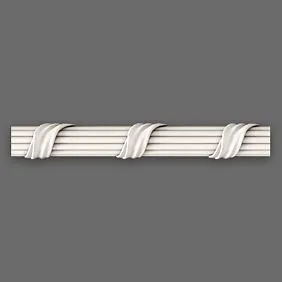
Moldings made of polyurethane— are universal profiled strips used on both walls and ceilings. Applied to ceilings, moldings solve geometry problems: they are used to create frames, coffers, diagonal elements, and other structures on the ceiling plane.
A ceiling with moldings is not just 'beautiful.' It's a different level of spatial perception. Frames divide the ceiling into zones that can be painted in different shades, creating a multi-level effect. A geometric pattern made from moldings with contour lighting along the perimeter of the frames is one of the most impressive solutions for living rooms in modern Moscow apartments.
Ceiling moldings come in:
-
Smooth thin — for geometry in modern interiors
-
Profiled with ornament — for classical and neoclassical solutions
-
Corner and auxiliary — for finishing frames and joining in corners
Ceiling molding width in apartments typically ranges from 20 to 60 mm. Wider profiles are for country homes with high ceilings and spacious living rooms.
Ceiling decor: comprehensive solutions
Sectionceiling decorcombines a wide range of ceiling elements: cornices, rosettes, coffered profiles, decorative inserts, panels, and other products for finishing horizontal surfaces.
This is convenient to work with if you're planning comprehensive ceiling design—not just one or two elements, but a full-fledged ceiling system. In one section, you can find stylistically compatible elements and create a cohesive solution where cornices, rosettes, and moldings work together as a unified decorative family.
Comprehensive ceiling decor is relevant for:
-
Living rooms with high ceilings in country houses in the Moscow region
-
Executive offices and meeting rooms in Moscow offices
-
Designer residential projects with clearly defined style
-
Halls and stairway areas in cottages
How to choose ceiling molding: a simple algorithm
One of the most common requests when buying ceiling decor is 'just explain what I need.' Here is a working four-step algorithm that works in any situation.
Step 1. Define the task
Before looking at the catalog, answer one question: what exactly do you want to do with the ceiling?
-
Decorate the transition between the wall and ceiling around the perimeter → you need a cornice. This is the most common request and the most universal solution.
-
Create an accent around the chandelier in the center → you need a ceiling rosette.
-
Add geometry and structure to the ceiling plane → you need moldings.
-
Create a full-fledged ceiling composition → cornice + rosette + moldings (coffers or frames).
Most apartment projects in Moscow start with a cornice. This is the basic element that provides 80% of the visual effect even on its own. Everything else are additional layers that are added based on desire and budget.
Step 2. Assess the ceiling height
Ceiling height is the main technical parameter when choosing the width of the cornice and the diameter of the rosette. This is not a convention: violating the proportion between ceiling height and decor size creates discomfort that is impossible to explain in words but is immediately felt in the room.
Guidelines:
-
Ceiling up to 2.5 m: cornices up to 60 mm, rosettes up to 30 cm
-
Ceiling 2.5–2.7 m: cornices 60–90 mm, rosettes 30–50 cm
-
Ceiling 2.7–3 m: cornices 90–130 mm, rosettes 45–65 cm
-
Ceiling 3 m and above: cornices from 130 mm, rosettes from 55 cm and more
Step 3. Select the profile width
The width of the cornice profile is not just about aesthetics, it's about geometry. A wide cornice occupies volume near the wall and ceiling. In a narrow hallway or small bedroom, a wide cornice literally narrows the passage and lowers the ceiling. In a large living room, a thin cornice will simply go unnoticed.
An additional parameter is the projection. This is how far the cornice protrudes from the wall. For apartments with ceilings up to 2.7 m, the projection should not exceed 50–60 mm: otherwise, the cornice begins to overhang.
Step 4. Consider the interior style
The interior style determines the ornament of the decor — a smooth profile or a relief one, a geometric pattern or a floral one. More details on this are in the section about selection by style. The main point here is that the chosen elements must be stylistically compatible. A cornice, rosette, and moldings from the same stylistic direction create a cohesive picture — different ones turn the ceiling into a collage.
What to choose: a cornice or a rosette — or both elements
This question arises for most buyers. We'll try to answer honestly and specifically.
| Element | Where it is used | Main task |
|---|---|---|
| Cornice | Along the perimeter of the ceiling | Decorating the wall-ceiling transition, masking the joint, creating a line |
| Ceiling rosette | Center of the ceiling | Accent under the chandelier, creating a visual focus |
| Molding | On the ceiling plane | Frames, coffers, geometry, zoning |
If you need to choose one element — choose a cornice. It provides maximum effect with minimal cost and suits any interior. A cornice along the ceiling perimeter is what instantly 'elevates' the level of finishing, even if everything else remains unchanged.
If you want more — add a rosette. The combination 'cornice + rosette' is a classic and foolproof solution for Moscow apartments and country houses. The cornice defines the perimeter, the rosette anchors the center. Between them — a clean, structured ceiling space.
Moldings are the next level. If you already have a cornice and rosette, and want to add depth — moldings create a geometric grid or individual frames on the ceiling between the cornice and rosette. This looks especially impressive in living rooms with ceilings from 2.9 m.
How to choose ceiling molding according to ceiling height
Ceiling up to 2.5 m
This is the most demanding case. A low ceiling does not forgive scale mistakes, and the first principle here is 'less is more.'
Recommendations:
-
Cornice — smooth or with minimal relief, width no more than 55–60 mm
-
Rosette — compact, 20–30 cm in diameter, with a light ornament
-
Moldings — only thin smooth profiles, if used at all
-
Color — solid, matching the ceiling, to avoid accentuating the boundary
A low ceiling can be visually 'raised' using vertical moldings on the walls, which draw the eye upward. In this case, the cornice should be as laconic as possible to avoid creating a horizontal barrier.
A popular technique for Moscow apartments with ceilings of 2.4–2.5 m: a thin, smooth cornice of the same color as the ceiling — almost invisible, but creating a clean transition line. A rosette — only if there is a chandelier, and even then a small one.
Ceiling 2.5–3 m
This is the most common ceiling height in Moscow apartments and new buildings. There is room for maneuver, and the selection of elements is wider.
Recommendations:
-
Cornice — from 60 to 120 mm, moderate ornamentation is acceptable
-
Rosette — from 35 to 55 cm, ornamentation according to style
-
Moldings — thin or medium, suitable on the ceiling if you wish to create geometry
For this height, the classic combination works well: a medium-width cornice + a chandelier rosette. In a neoclassical interior, moldings are added to this, creating a frame or coffer around the rosette.
Ceiling 3 m and above
Country houses, mansions, high-rise new buildings, and reconstructed buildings in Moscow — ceilings from 3 m open up complete freedom for ceiling decor.
Recommendations:
-
Cornice — from 130 to 200 mm and more, a multi-step profile is appropriate
-
Rosette — from 60 to 120 cm, rich ornamentation for classic or geometric for Art Deco
-
Moldings — full-fledged coffers or frames on the ceiling plane
It is precisely at such heights that the potential of classical and neoclassical ceiling solutions is revealed: a cornice with an elaborate profile along the perimeter, coffers or geometric frames made of moldings on the surface, a large rosette in the center. In the catalogceiling decorfor such projects, there is everything necessary — from basic profiles to extensive collections.
How to choose ceiling molding to match the interior style
Classic
A classic interior is an abundance of ornamentation with strict symmetry. The ceiling decor here carries semantic weight: a cornice with an elaborate multi-step profile, a large rosette with floral or acanthus motifs, coffers or frames made of moldings on the ceiling plane.
Color — most often white or ivory. Sometimes gilding on the details of the ornament. The ornament must be legible and well-drawn — this is the main aesthetic criterion for classicism.
Important: in a classic interior, all elements of ceiling decor must be from the same collection or stylistic direction. Mixing collections with different scales and characters of ornamentation destroys unity.
Neoclassicism
Neoclassicism is the most in-demand style for ceiling molding in Moscow. It combines the expressiveness of classical forms with modern restraint: less ornamentation, cleaner lines, more precise proportions.
The ideal solution for neoclassicism:
-
A cornice with a moderate profile — expressive but not overloaded
-
A medium-diameter rosette with a neat ornament — leaves, geometric motifs, volutes
-
Moldings for a frame around a rosette or simple coffers
Color — white, matte, a slight tint is possible. Sometimes the cornice and rosette are highlighted with a shade — slightly warmer or cooler than the background. This adds depth without excessive decorativeness.
Modern interior
Modern interior and molding — contrary to stereotype, this is not a contradiction. Polyurethane decor works excellently in modern spaces through the principle of minimalism: one or two elements, clean profiles, no ornament.
For a modern interior:
-
Cornice — smooth, with clear geometry, without decorative elements
-
Rosette — simple, geometric, possibly with thin engraving
-
Moldings — smooth, only geometry
The principle of 'light and shadow instead of ornament' works: a thin profile creates a shadow that reads as a line. This is enough to add depth and structure — without excessive decorativeness.
A separate scenario for a modern interior: the cornice is used only for hidden lighting, without a decorative function. A hollow profile with a diffuser creates soft contour lighting along the perimeter of the ceiling — this is both function and decor simultaneously.
Common mistakes when choosing ceiling molding
To speak honestly about mistakes means to speak from real experience. Here are the most common ones.
A cornice that is too wide for a low ceiling
This is mistake number one. A 150 mm wide cornice with a 2.5 m ceiling literally looms overhead. Visually, the ceiling lowers, the room shrinks, and the feeling of pressure builds. Always: first the ceiling height, then the choice of profile width.
Overloaded decor without composition
A separate ceiling rosette + unrelated moldings + a cornice from a different collection = chaos, not an interior. Ceiling decor works as a system. If the elements are not connected by style, scale, or color scheme, they will interfere with each other, not enhance.
Incorrect rosette scale
An 80 cm diameter rosette in an 18 m² living room with a 2.6 m ceiling will occupy a third of the ceiling — that's too much. A 25 cm diameter rosette in a 45 m² hall with a 3 m ceiling will get lost and turn into an unnoticeable dot. The rosette diameter is selected based on the room area and chandelier size — it's not an option, it's a rule.
Incompatible styles of elements
A classic ornamented cornice + a minimalist geometric rosette = visual conflict. Each element pulls in its own direction, and the ceiling loses its stylistic core. Choose elements from the same collection or, at a minimum, from the same stylistic direction.
Buying only one element 'to start'
'I'll install the rosette first, and the cornice later.' This is a path to incompleteness. A rosette without a cornice looks like a ceiling in a state of renovation. Cornice + rosette is a system. If the budget is limited, start with the cornice: it gives the maximum effect and does not require a pair.
No plan for joining and corners
A cornice around the perimeter of a room with non-standard angles (not 90 degrees) requires special corner elements or precise cutting to the required angle. Mouldings are joined at 45 degrees in right angles—this requires precise tools. Plan the installation in advance, before purchase.
How to order ceiling moulding in Moscow
Determine the product type
Based on the task: cornice for the perimeter, rosette for the center, mouldings for geometry. Go to the corresponding section of the catalog—Ceiling Molding, ceiling rosettes, Moldingsor fullceiling decor.
Select the size
Measure the ceiling height and room perimeter. For a cornice, you need linear footage + 10–15% for trimming. For a rosette—the diameter is selected based on the area and chandelier. For mouldings—the length of the perimeter of each frame.
Check element compatibility
Match the selected elements by style and ornament. If you take a cornice, rosette, and mouldings—they should match stylistically. Mixing collections is only possible if all elements are united by a common stylistic direction (e.g., 'neoclassical' or 'classical').
Place your order and specify delivery within Moscow
STAVROS delivers ceiling molding to Moscow and the Moscow region. When placing an order, specify the availability of specific items and delivery times. Order with a small surplus: trimming and possible replacement of parts during installation require slightly more material than the exact linear footage.
How to combine a cornice and a rosette in one project
This is a practical question that arises during the final assembly of a ceiling composition. Let's look at specific combinations.
Cornice + rosette without moldings is a classic, laconic combination. Cornice around the perimeter, rosette in the center, with plain ceiling between them. Works for modern apartments, neoclassical, minimalist interiors. The space between the cornice and rosette is painted the same color or slightly warmer — this creates a depth effect.
Cornice + rosette + a frame of moldings around the rosette is the next level. The molding forms a rectangular or square frame in the central part of the ceiling, inside which the rosette is located. The space inside the frame can be highlighted with a shade. This solution is suitable for neoclassical and classic styles with a ceiling height from 2.8 m.
Cornice + rosette + coffers is a full-fledged ceiling system. Moldings divide the ceiling into cell-like coffers; a small decorative element or lighting can be placed in the center of each. The main rosette is in the central coffer under the chandelier. Such a ceiling is suitable for spacious living rooms in country houses with a height from 3 m.
Cornice for a light niche + rosette is a functional modern technique. A hollow cornice conceals an LED strip, creating soft contour lighting around the perimeter of the ceiling. In the center — a rosette with a chandelier or spot lighting. Two light sources + decor = a full-fledged lighting architecture for the ceiling.
Ceiling molding for different rooms of a Moscow apartment
Living Room
Living room — the main space for ceiling decor. This is where cornices, rosettes, and moldings work to their full potential. For a typical Moscow living room of 20–30 m² with a 2.7 m ceiling, the optimal combination is: an 80–100 mm cornice with a moderate profile + a rosette 45–55 cm in diameter. Optionally — moldings for a frame around the rosette.
Bedroom
In the bedroom, ceiling decor should create calm, not tension. The cornice is neat, with a soft profile. The rosette—if there is a chandelier—is compact, without excessive ornamentation. In modern bedrooms, the cornice is often used only for a light niche—this is both a function and a delicate decorative element.
Entryway
In the hallways of Moscow apartments, the height is often below 2.7 m, and the area is small. A thin, smooth cornice around the perimeter creates completeness without overload. A rosette—only if there is a central light fixture, of small diameter.
Kitchen
In the kitchen, polyurethane ceiling decor is especially appropriate—the material is not afraid of steam and wet cleaning. A cornice around the perimeter of the kitchen gives it an interior character that is otherwise difficult to achieve. Moldings and rosettes in the kitchen are rare, but a cornice as a single element is quite organic.
Office
A study benefits from a cornice with a slightly more expressive profile—this adds status and composure to the space. Moldings for a ceiling frame around the workspace are an additional technique, characteristic of classic and representative interiors.
FAQ: answers to popular questions about ceiling molding
What is better for the ceiling—a cornice or a molding?
These are different elements with different tasks. A cornice is for the perimeter line, decorating the junction of the wall and ceiling. A molding is for geometry on the plane of the ceiling: frames, coffers, dividers. In full-fledged ceiling design, both are used, but if choosing one—start with the cornice: it gives the maximum effect of completeness.corniceit gives the maximum effect of completeness.
Can a ceiling rose be used without a chandelier?
Yes, and this is a common technique. A rosette without a chandelier is an independent decorative medallion. In modern interiors with track or recessed lighting, a central chandelier is not needed, but a rosette adds an architectural accent to the center of the ceiling. Use a blind rosette without a hole or cover the hole with a plug. The full assortment is in the Rosettes section.ceiling rosettes.
How to choose molding for a low ceiling?
Three rules: a thin profile (up to 55–60 mm), a laconic ornament, a small rosette diameter (up to 30 cm). Choose a cornice in the same shade as the ceiling — it creates a transition without an accentuated horizontal line, which reduces the feeling of height. Ceiling moldings are undesirable for ceilings up to 2.5 m high.
Which ceiling elements are mandatory and which are optional?
Mandatory — cornice: it covers the joint and sets the style. Desirable — rosette: if there is a chandelier, the ceiling looks unfinished without it. Optional — moldings: appropriate for ceilings from 2.8 m high and a desire to create a complex ceiling composition.
How to combine a cornice and a rosette?
The main rule: one style — one decorative family. Smooth cornice — simple geometric rosette. Cornice with a floral ornament — rosette with leaves or volutes. Cornice with a geometric pattern — rosette with similar graphics. Style, scale of the ornament, and level of detail must match.
Is polyurethane stucco suitable for an apartment?
Yes, and it is one of the best choices for a city apartment in Moscow. Lightweight — does not overload the floors. Easy installation — adhesive, no dowels. Moisture resistance — suitable for the kitchen and bathroom. Possibility of self-painting — any shade for a specific project. The full catalog of solutions is in the section Polyurethane moldings.
How to avoid mistakes with size?
Three parameters before purchase: ceiling height, room area, chandelier size (for the rosette). For the cornice: profile width = no more than 4–5% of the ceiling height. For the rosette: diameter = approximately 15–20% of the smaller room dimension. And always take a 10–15% surplus in cornice length — for trimming.
Conclusion
Ceiling stucco made of polyurethane is not a decorative whim or a tribute to fashion. It is an architectural tool that changes the proportions of a room, creates lighting effects, builds style, and gives the interior that very sense of completeness, which cannot be achieved by any other means.
The main principle to remember: ceiling decor is a system, not a separate element. Cornice around the perimeter + a rosette in the center — that's already architecture. Add moldings with ceiling geometry — and you get a full-fledged space with character.
Start with the task. Go to the desired catalog section:Ceiling Molding, ceiling rosettes, Moldingsorcomprehensive ceiling decor. If you want to start with a general overview — open the sectionPolyurethane moldingsand move from the task to a specific solution.
STAVROS is a professional manufacturer and supplier of polyurethane stucco for ceilings, walls, and interiors. The STAVROS assortment includes all key categories of ceiling decor: cornices, rosettes, moldings, trim, and comprehensive solutions for apartments, country houses, and commercial properties in Moscow. STAVROS offers high-quality products with precise ornament detailing, a wide selection of collections, and delivery across Moscow and all of Russia — so your ceiling becomes not just a finish, but a full-fledged architectural statement.