Article Contents:
- Why polyurethane is ideal for outdoors
- Water resistance: the main advantage
- Temperature stability from minus 60 to plus 80
- UV resistance
- Lightness as an advantage
- Ease of installation and repairability
- Facade moldings: framing architecture
- Types of facade moldings
- Creating composition on the facade
- Color solutions
- Columns: verticals of nobility
- Construction of polyurethane columns
- Application of columns on the facade
- Half-columns and pilasters
- Balusters for terrace and porch
- Wooden balusters: classic requires maintenance
- Wood-plastic composite
- Polyurethane balusters
- Joints and waterproofing
- Mounting to the facade
- Joint sealing
- Water runoff from elements
- Connection to roof and gutters
- Durability and seasonality of work
- Service life of facade polyurethane
- Seasonality of installation
- Maintenance and care
- Conclusion

You stand before a house with a faceless facade — flat walls, standard windows, a simple porch. No character, no individuality. Now imagine: the same walls, but with elegant moldings framing the windows. A porch with classical columns and carved balusters. Eaves under the roof, rosettes above the entrance, pilasters at the corners. The house has transformed, acquired an architectural look, resembles a mansion from the past century — but with modern quality and durability.
All of this givesfacade decoration made of polyurethane— a material that revolutionized exterior finishing. Twenty years ago, facade molding was a privilege of elite construction: heavy concrete, fragile plaster, expensive natural stone. Installation required wall reinforcement, special equipment, and a team of professionals. Today, polyurethane allows you to create a luxurious facade at reasonable cost, quickly, either by yourself or with minimal professional involvement.
But how does polyurethane behave outdoors? Will it withstand a Moscow winter with minus thirty degrees and summer heat up to forty? Will it not get wet in the rain, not crack in freezing temperatures? How to mount columns so they last for decades? Which balusters to choose for the terrace — wooden or composite? Let’s examine all the nuances of using polyurethane for exterior work.


Why polyurethane is ideal for outdoors




Water resistance: the main advantage
Water is the main enemy of facade materials. Rain, snow, fog, dew—all of this creates constant surface moisture. Traditional materials react differently to moisture, and often poorly. Gypsum molding absorbs water, softens, and becomes covered with mold. Unprocessed wood swells, cracks, and rots. Even concrete, considered strong, eventually deteriorates due to freeze-thaw cycles within its pores.
Polyurethane is fundamentally different. It is a polymer material with a closed-cell structure—water simply cannot penetrate inside. The water absorption of quality polyurethane does not exceed 1-2% by volume, which is dozens of times less than that of gypsum or concrete. In practice, this means thatfacade decoration made of polyurethaneit can be washed with a hose, withstand heavy rains, snow accumulation, and all this without any deterioration of properties.
Important point: water resistance is maintained at any temperature. In winter, when water turns into ice, expands, and breaks porous materials from within, polyurethane remains unharmed—there is no water inside to break anything. This provides frost resistance of more than 300 freeze-thaw cycles, which corresponds to decades of service even in harsh climates.
Our factory also produces:



Temperature stability from minus 60 to plus 80
The climate of Russia's middle belt is characterized by extreme temperature fluctuations. In winter, temperatures can drop to minus 30-35 degrees, and in summer, the southern wall under the sun can heat up to plus 60-70 degrees. Daily fluctuations reach 20-30 degrees. Most materials deform, crack, and detach from the base under such fluctuations.
Polyurethane is thermally stable in the range from minus 60 to plus 80 degrees. This means that even in the harshest winter or hottest summer, the material retains its properties—it does not become brittle in cold, nor softens in heat. Polyurethane's coefficient of thermal expansion is minimal—elements practically do not change size when heated or cooled, which eliminates stresses at mounting points and cracks in the material itself.
For comparison: PVC becomes brittle in cold and may crack from a light impact. Expanded polystyrene softens above plus 60 degrees, which under summer sun heating leads to deformation. Polyurethane is free from these drawbacks.
Get Consultation
UV resistance
Solar ultraviolet light destroys many polymers—they fade, yellow, and become brittle. Early generations of polyurethane products indeed suffered from this. But modern facade compositions contain UV stabilizers—special additives that absorb ultraviolet light, preventing it from damaging polymer chains.
Quality polyurethane for facades does not fade or lose strength for decades, even under intense sunlight exposure. This is confirmed by tests and real-world practice—Polyurethane facade moldingsinstalled 20-25 years ago, still look new with proper painting and maintenance.
It is important to understand: not all polyurethane is equally resistant to UV. Cheap products made from low-quality raw materials without UV stabilizers may yellow or become cloudy within 2-3 years. Therefore, it is important to choose products from reputable manufacturers who use facade compositions with guaranteed light resistance.
Lightness as an advantage
One of the key advantages of polyurethane is its low weight. The density of facade polyurethane is 300-400 kilograms per cubic meter, which is 5-7 times lighter than concrete and 3-4 times lighter than gypsum. In practice, this means that a 20-centimeter wide, 2-meter long polyurethane fascia weighs 8-10 kilograms, while a similar concrete one weighs 60-80 kilograms.
Low weight simplifies installation—no special equipment is needed, just two people. The load on walls is reduced, allowing installation on any base, including gas concrete and frame structures. Transportation is cheaper. For homes with weak walls or facade insulation, polyurethane is often the only sensible option for decoration.
Ease of installation and repairability
facade decoration made of polyurethaneIt is mounted using polymer adhesive and additionally secured with self-tapping screws or anchors. No special skills are required—anyone who can handle a drill and screwdriver can do it. Elements are easily cut with a regular saw, sanded, and adjusted on-site.
If an element is damaged—a chip from impact, a crack—it can be repaired with polyurethane putty or epoxy adhesive. After painting, the repaired area is indistinguishable from the rest of the surface. In case of serious damage, the element can be easily removed and replaced with a new one—no need to call a crew or rent equipment, as with concrete.
Facade moldings: framing architecture
Facade moldings are produced in a vast variety of profiles and sizes. Main types create the architectural language of the building.
Polyurethane facade moldingsFascias are horizontal elements running under the roof along the entire perimeter of the building or framing floors. Width ranges from 10 to 40 centimeters, standard plank length is 2 meters. Profiles range from simple rectangular to complex ones with grooves, modillions, and dentils. A fascia visually completes the building, creating a clear boundary between the wall and roof.
Window and door casings are frame elements. They consist of vertical strips (side casings), horizontal strips (top and bottom), sometimes include keystone stones and sardines—decorative finials above the opening. Casings highlight windows and doors, transforming them from mere holes in the wall into architectural elements.
Rusts are vertical or horizontal strips that imitate joints between stone blocks. They create an effect of a building constructed from large blocks. Corner rusts are especially effective—they visually reinforce corners, making the building appear more substantial.
Inter-floor moldings are horizontal strips running at the level of floors between floors. They divide the facade into tiers, creating rhythm and proportions. In classical architecture, an inter-floor fascia is a mandatory element.
Coping moldings are wide strips (15-25 centimeters) installed at the top edge of the foundation. They emphasize the transition from the foundation to the walls. Often they have a profile with an overhang, creating a drip that directs water away from the foundation.
Creating a composition on the facade
Facade composition creation
Moldings work not individually, but as a system creating architectural composition. Classic approach: cornice under the roof (widest), interfloor cornice (medium width), window casings (slightly narrower), rusts at corners. All elements are coordinated in style — if the cornice has a classical profile with modillions, the casings should also be classical, with volutes or rosettes.
Modern approach allows asymmetry and incomplete framing. For example, casings only on first-floor windows, accenting the entrance zone. Or rusts only on one corner, highlighting the tower volume. The key is to avoid chaos when elements of different styles are mixed without logic.
Scale is critically important: molding width should match building size. On a small house (6 by 8 meters), a 30 cm cornice will look bulky, and 15 cm casings — massive. Optimal: cornice 12–15 cm, casings 8–10 cm. On a large house (12 by 15 meters and more), these elements will disappear — need cornice 20–25 cm, casings 12–15 cm.
Color Solutions
Classic solution — white decoration contrasting with colored walls (beige, yellow, terracotta, gray). White moldings read clearly, creating architectural graphics. This is a time-tested combination, characteristic of historic buildings.
Monochromatic solution — decoration in tone with walls (terracotta decoration on terracotta walls, gray on gray). Creates a more calm, restrained appearance. Decoration is visible due to relief, play of light and shadow, not due to color contrast. Suitable for modern cottages in minimalist aesthetics.
Contrasting solution — dark decoration (brown, graphite) on light walls or vice versa. Creates drama, expressiveness. Requires precise sense of proportions — easy to fall into kitsch.
Facade polyurethane is painted with acrylic, silicone, or polyurethane facade paints. It is important to use paints with UV protection — they extend the coating’s service life. Quality facade paint lasts 10–15 years without renewal, cheap paint — 3–5 years.
Columns: verticals of nobility
Construction of polyurethane columns
Polyurethane columnIt is not a monolithic element, but an assembled structure of three parts: base (lower expanded part), shaft (column body, usually with fluting — vertical grooves), capital (upper decorative part).
The shaft may be solid for columns up to 2.5–3 meters high or assembled — from two to three sections joined together. Inside the shaft is hollow — this reduces weight and allows using the column as a casing for load-bearing structures (metal post, concrete pillar).
Column diameters from 20 to 50 cm, heights from 2 to 6 meters (custom orders available for larger sizes). Profiles — classical orders: Doric (simple, powerful, minimal decoration), Ionic (elegant, with volutes on the capital), Corinthian (luxurious, with acanthus leaves), Composite (combination of elements from different orders).
Application of columns on the facade
Columns are installed at the entrance (portico — projecting canopy on columns over the porch), at building corners (corner pilasters — half-columns, protruding from the wall by a third or half the diameter), along the facade to create rhythm (row of half-columns dividing the wall into sections).
Polyurethane columns usually do not serve load-bearing functions — they are decorative elements. If a load-bearing column is needed (e.g., to support a canopy over the porch), a metal pipe or concrete pillar is installed inside the polyurethane casing. Polyurethane conceals the utilitarian structure, giving it an elegant appearance.
Column installation is done in stages: the base is attached to the foundation (plinth, porch floor) with dowels and adhesive. The shaft is slipped onto the base, joined with adhesive, and additionally secured from the inside with self-tapping screws through pre-drilled holes — exterior fasteners are not visible. The capital is installed similarly. Joints are filled with sealant and sanded. After installation, the entire column is painted.
Half-columns and pilasters
Half-column — a column protruding halfway from the wall. Pilaster — even less protruding, by a quarter of the diameter or even flat (relief imitation of a column on the wall). For private house facades, half-columns and pilasters are more convenient than full columns — they occupy less space, are easier to install (attach to the wall), and cheaper (less material).
Pilasters create vertical rhythm on the facade. For example, on a 12-meter-long wall, four pilasters are installed at 3-meter intervals — the facade is divided into three sections, each with a window. This results in a structured composition instead of a monotonous plane.
It is important to observe proportions: the height of the column or pilaster should be 8–10 times its diameter. For a 6-meter-high wall, the optimal pilaster diameter is 60–75 cm. A thicker pilaster will look squat, a thinner one — fragile.
Balusters for terrace and porch
Wooden balusters: classic requires maintenance
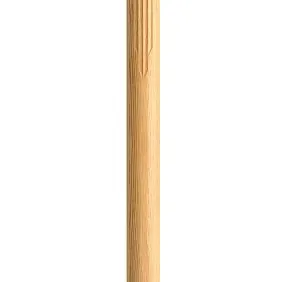
wooden balusters for terraceTraditional choice, beautiful and noble. Precision-cut balusters from oak, larch, or ash create warmth, coziness, harmony with natural surroundings. But outdoor conditions are harsh on wood: rain, snow, temperature and humidity fluctuations, UV — all this requires serious protection.
Best wood species for outdoors:
Larch — optimal choice. Resinous wood with natural waterproofing, does not rot even without treatment. Color golden-brown, fades over time (can be preserved with paint).
Oak — hard, durable, but requires quality moisture protection. Without treatment, it darkens and may crack.
Ash — beautiful texture, but hygroscopic. Requires multi-layer protection for outdoor use.
Exotic species (teak, ipe, kumaru) — ideal for terraces, natural oiliness protects against moisture. Expensive, but long-lasting (30–50 years).
Protection is mandatory for outdoor wooden balusters. Optimal — multi-layer oil-wax for terraces. Applied in 3–4 layers, penetrates into wood, creates a water-repellent film, does not flake like varnish. Renewal every 2–3 years. Well-protected wooden balusters last 15–25 years (larch and exotic species — up to 40 years). Without treatment — 5–10 years, then rotting and cracking begins.
Wood-plastic composite
WPC is a modern material combining wood flour (50-70 percent) and polymer (30-50 percent). It is produced in profile forms — solid or hollow. For balusters, square profiles of 50x50 mm or 60x60 mm, 3 meters long, are used.
Advantages of WPC: does not rot, crack, or require staining and impregnation. Does not fade (quality WPC with UV stabilizers retains color for 10-15 years). Easy to install and cut with a regular saw. Wide range of colors (from light beige to dark brown, mimicking various wood species).
Quality WPC lasts 25-30 years without changes. Cheap WPC lasts 10-15 years, then fades and may start to crumble.
High-quality PVC lasts 25-30 years without changes. Cheap one - 10-15 years, then fades and may start to flake.
Polyurethane balusters
Polyurethane balusters are fully artificial but highly practical. They are resistant to water, frost, and sun. Lightweight (3-5 times lighter than wood), easy to install. Can imitate turned wood, stone, or metal.
Polyurethane balusters are often used together with polyurethane columns on the porch - resulting in a single material, unified style. They are painted with facade paints in any color. Durability is 20-30 years. But quality matters: cheap polyurethane may yellow under the sun within 3-5 years, while quality polyurethane with UV protection retains color for decades.
Joints and waterproofing
Mounting to the facade
Polyurethane elements are mounted to the facade using a combined method: adhesive plus mechanical fasteners. First, a polymer mounting adhesive is applied to the back of the element (cornice, trim, column), ensuring adhesion to the base. Then the element is pressed against the wall and further secured with anchors or self-tapping screws.
For lightweight elements (moldings up to 10 cm wide, up to 2 meters long), adhesive and 3-4 anchors per strip are sufficient. For heavy elements (cornices 20-30 cm, columns), more mounting points are needed — every 40-50 cm. Anchors are plastic spreaders with self-tapping screws; length is selected based on element thickness plus 50-60 mm of wall penetration.
Joints between elements are critical zones through which water can penetrate. Every joint (between molding strips, between column base and stem, between trim and wall) must be sealed.
Joint sealing
Joints between elements are critical zones through which water can penetrate. Each joint (between molding strips, between column base and stem, between casing and wall) must be sealed.
Acrylic or silicone sealant is used for outdoor applications. Acrylic can be painted — after curing, it becomes part of the surface. Silicone cannot be painted, but it is more elastic and better compensates for thermal deformations.
Sealant is applied from a caulking gun into the gap between elements. Excess is immediately wiped away with a damp sponge or putty knife. It is important not to leave voids — the sealant must fill the entire depth of the joint. After drying (24-48 hours), painting can be done.
Water runoff from elements
Water flowing down the facade should not accumulate on horizontal decorative surfaces — this leads to dirt, water stains, and ice formation in winter. Properly designed decoration has slopes and drip edges (protrusions) directing water downward and away from the wall.
During installation, these slopes must be respected. If an element is installed horizontally (without slope), water, dirt, and leaves will accumulate on it. Minimum slope for water runoff — 2-3 degrees (3-5 cm per meter of length).
During installation, it is important to observe these slopes. If an element is installed horizontally (without slope), water, dirt, and leaves will accumulate on it. Minimum slope for water runoff is 2-3 degrees (3-5 cm per meter of length).
Connection to roof and gutters
The cornice under the roof is a complex joint where the roof, gutter, and facade decoration meet. Here, correct installation sequence is crucial. First, the roof with its water drainage system is installed. Then, the cornice is mounted under the roof overhang. A gap for ventilation under the roof (5-10 cm) must be left between the cornice and the roof.
Gutter brackets (gutter holders) are mounted to the wall or rafters before installing the cornice. The cornice is mounted so as not to interfere with water flow from the gutter. Sometimes the cornice is cut with slots for brackets, or the gutter runs directly along the cornice — this requires precise calculations.
Important: water from the gutter must not reach the cornice. The downspout is routed below the cornice, with clearance from the wall. Otherwise, in winter, icicles will form on the cornice, potentially detaching it due to their weight.
Durability and seasonal work
Service life of facade polyurethane
With proper installation and maintenance, facade polyurethane decoration lasts 30-50 years. This has been proven by practical experience in various climatic zones — from hot south to cold north. The material does not lose strength, does not deform, and retains its geometry.
The limiting factor is the condition of the painted coating. Paint fades, gets dirty, and over time may begin to peel. Quality facade paint lasts 10-15 years. After that, renewal is required: surface cleaning, priming, and two-coat painting. The polyurethane beneath the paint remains intact and undamaged.
Mechanical damage (impacts, chips) is also possible, especially on lower elements (foundation moldings, porch balusters). But polyurethane can be repaired: the damaged area is sanded, filled with polyurethane putty or epoxy adhesive, sanded, and painted. The repaired area is not noticeable.
Seasonal installation
Facade decoration installation can be performed within a wide temperature range, but with limitations. The optimal temperature for work: plus 5 to plus 25 degrees. Within this range, the adhesive, sealant, and paint function normally and polymerize within the specified time.
At temperatures below plus 5 degrees, the adhesive and sealant thicken, become harder to apply, and take longer to set. At sub-zero temperatures, most adhesives do not work at all — polymerization does not occur. Installation in winter is possible only using special frost-resistant adhesives (which are more expensive and not always available) or with temporary heating of the work area.
At temperatures above plus 25-30 degrees, the adhesive sets too quickly, leaving no time to adjust the position of the element. Work must be done very quickly, preferably during morning or evening hours when it is cooler.
Humidity is also important. Installation during rain is impossible — water washes away the adhesive, and the element will not stick. After rain, wait for the wall to dry (at least 6-12 hours). Dew or fog also cause problems — the surface must be dry.
The optimal time for installing facade decoration is late spring (May), summer (June–August), and early autumn (September). During these months, the weather is more stable, temperatures are within the required range, and precipitation is less.
Care and Maintenance
Facade polyurethane requires almost no maintenance. It is recommended to inspect it once a year (in spring): check for cracks, peeling, or damage. If defects are found, they should be repaired. Dirt (dust, soot, rain marks) can be washed off with water from a hose, or with a mild detergent and soft brush if necessary. Do not use abrasives, stiff brushes, or aggressive chemicals — they may damage the painted surface.
Every 10–15 years, repainting is required. This is a planned activity, like painting walls. Old paint, if it is peeling, is removed with a scraper. The surface is cleaned, primed, and painted with two layers of high-quality facade paint. After repainting, the decoration looks brand new and is ready to serve for another 10–15 years.
Conclusion
facade decoration made of polyurethaneThis is a technology that makes architectural beauty accessible. What was once a privilege of palaces and mansions — columns, moldings, carved balusters — can now adorn any private home. Not just for a few years, but for decades, enduring rain, frost, and heat without losing shape or color.
Polyurethane facade moldingsColumns, balusters — all this transforms a standard box into a work of architecture. Properly selected, correctly installed, and well-painted elements create a home’s appearance that delights the owner and impresses neighbors.
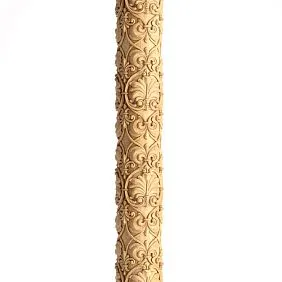
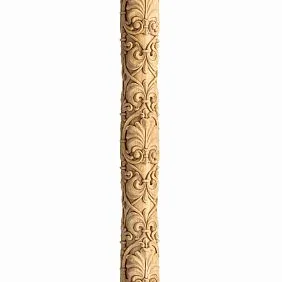
STAVROS offers a full range of facade decoration made from high-quality UV-protected polyurethane. Cornices of all sizes and profiles, window and door casings, corner and inter-floor rusts,columns and half-columnsclassical orders, balusters for porches and terraces. Also availablewooden balusters for terracemade from larch and oak — for those who value natural materials.
All STAVROS polyurethane decoration is produced from facade compositions with a density of 350–400 kg/m³ and frost resistance exceeding 300 cycles. The surface is primed with white UV-protective primer. Element geometry is precise, profiles are sharp, and joint surfaces are flat — installation proceeds without problems. With STAVROS products, your home will acquire an architectural appearance that will delight for decades.