












































































Article Contents:
- Polyurethane: The Chemistry of Nobility
- Why Polyurethane Defeated Plaster and Styrofoam
- Production technology: from master model to batch
- Ceiling Decor: The Sky Above
- Ceiling cornices: border and transition
- Ceiling Rosettes: Framing Light
- Coffers: Depth and Geometry
- Wall Systems: Vertical Architecture
- Moldings: Frames and Divisions
- Wall Panels: Ready-Made Modules
- Baseboards: The Boundary Between Floor and Wall
- Architectural Forms: Columns, Pilasters, Arches
- Columns: Vertical Dominants
- Pilasters: flat columns
- Arches: Spanning Openings
- Furniture Decor: Overlays, Legs, Trims
- Furniture Overlays: Point Accents
- Furniture Legs: Supports with Character
- Fireplace Portals: The Hearth as an Architectural Object
- Structure of a Polyurethane Portal
- Installing fireplace portal
- Creating Compositions: From Elements to Systems
- Principle of Consistency: One Style — One System
- Principle of Rhythm: Repetition and Variation
- Principle of Hierarchy: Primary and Secondary
- Principle of Symmetry: Order and Stability
- Application Ideas for Different Styles
- Classicism: Restrained Harmony
- Baroque: Opulent Luxury
- Minimalism: Concise Graphics
- Eclecticism: Mixing with Intelligence
- Frequently Asked Questions About Polyurethane Moldings
- Can Polyurethane Be Painted?
- Does polyurethane differ visually from plaster?
- How long does polyurethane stucco last?
- Can Polyurethane Molding Be Washed?
- How to Join Elements So That Seams Are Invisible?
- Is special glue needed for polyurethane?
- Can molding be installed independently?
- Conclusion: polyurethane is a material of accessible classic

Imagine: you're standing in an empty room after rough finishing. The walls are leveled, the ceiling is plastered, the floor is ready. Everything is technically flawless — 90-degree corners, smooth surfaces. But the space is dead. There's no character, no history, none of that magic that turns a drywall box into a place where you want to live. What's missing? Decor. Architectural details that create scale, rhythm, accents. Moldings that for centuries have shaped the appearance of palaces, mansions, formal interiors.
Previously, molding meant plaster — heavy, fragile, expensive, requiring months of work by skilled craftsmen. Or wood — carved, piecework, even more expensive. Polyurethane changed the rules of the game.Polyurethane molding for decor— a material that reproduces any complexity of classical ornaments, is installed in hours, weighs tens of times less than plaster, costs 5-10 times less than carved wood, and lasts for decades without cracks. Polyurethane democratized the classic interior — what was once accessible to a select few can now be afforded by the owner of a standard apartment or country house.
This article is a complete guide to the world ofdecorative polyurethane. We will examine the material itself (what polyurethane is, why it's ideal for molding, its advantages over plaster and foam), the typology of elements (ceiling decor, wall systems, architectural forms, furniture overlays, fireplace mantels — all the variety of polyurethane moldings), application methods (how to create compositions from individual elements, turning them into holistic architectural systems), style adaptation (how the same material works in classic, baroque, minimalism, eclecticism). The goal is to provide a tool for transforming an interior from faceless to expressive, from flat to volumetric, from a modern box to a space with history and character.




Polyurethane: the chemistry of nobility
What is polyurethane? From a chemical perspective — a polymer formed by the reaction of polyol (a polyhydric alcohol) and isocyanate (an organic compound with an NCO group). Polyol and isocyanate molecules connect via urethane bonds, forming long chains — polyurethane. Depending on the component ratio, additives, and polymerization conditions, materials with different properties are obtained — from soft foams to hard plastics.
For molding, rigid fine-pored polyurethane with a density of 250-400 kg/m³ is used. This is a material with a closed-cell structure — air bubbles (0.1-0.5 mm in size) are evenly distributed in the polymer matrix, not connected to each other (closed cells). Thanks to this, polyurethane is lightweight (density 2-3 times lower than plaster) but strong (the cells act as microscopic stiffening ribs), and does not absorb water (closed cells do not allow moisture inside).




Why polyurethane defeated plaster and foam
Comparison with plaster:
Weight: a polyurethane cornice 150 mm wide weighs 1.2-2.0 kg/meter, a similar plaster one — 8-12 kg/meter (5-8 times heavier). Installing polyurethane is done by one person with glue in 10-15 minutes per meter, plaster requires two-three people, fastening with dowels, reinforcement, temporary supports, the process takes 1-2 hours per meter.
Strength: plaster is fragile (cracks, chips upon impact), polyurethane is elastic (bends under moderate impact, returns to its original shape without damage). Plaster molding accumulates microcracks during operation (thermal expansion, building shrinkage, vibrations), begins to crumble after 10-20 years. Polyurethane maintains integrity for 30-50 years.
Moisture resistance: plaster is hygroscopic (absorbs moisture from the air, becomes soggy at humidity above 75%, loses strength, gets moldy). Polyurethane is inert to moisture (can be installed in bathrooms, kitchens, swimming pools — does not deteriorate, does not mold).
Price: plaster molding costs 800-2500 rubles/meter for cornices (handmade, small batches), polyurethane — 350-1200 rubles/meter with comparable relief quality.
Comparison with foam (polystyrene foam):
Density and strength: foam for molding has a density of 15-25 kg/m³ (10-15 times lower than polyurethane). Because of this, the relief of foam molding is blurry (ornament details are not reproduced, sharp edges are rounded, depth 3-5 mm vs. 10-20 mm for polyurethane). Foam is easily pressed with a finger, scratched with a nail, breaks when bent.
Edge clarity: polyurethane casting reproduces ornament details down to 0.5 mm (veins on leaves, dentil teeth, pearl beads — all sharp), foam is cut with a hot wire or pressed in molds — technologies do not provide such detail.
Durability: foam yellows in light (ultraviolet destroys polystyrene in 5-10 years), becomes brittle (crumbles when touched). Polyurethane remains stable for decades.
Price: foam is cheaper (200-400 rubles/meter), but the savings are illusory — after 5 years it will need replacing (yellowed, deformed), whereas polyurethane lasts 30+ years unchanged.
Our factory also produces:


Production technology: from master model to mass production
How is polyurethane molding created?
Stage 1: Master model. A sculptor manually models from plasticine, clay, or carves from wood the original element (cornice, rosette, capital) in full size. All ornament details are worked out — every leaf, every bead, every edge. The master model is sanded, brought to perfection.
Stage 2: Mold. A mold (silicone or polyurethane) is taken from the master model. The master model is coated with a release agent, poured with liquid silicone (or polyurethane for molds), after hardening the mold is removed. A negative is obtained — a cavity repeating the surface of the master model.
Stage 3: Casting. The mold is filled with liquid polyurethane composition (mixture of polyol, isocyanate, catalyst, blowing agent). The composition foams (carbon dioxide is released, bubbles form), fills the mold, hardens in 5-15 minutes. The finished element is extracted — an exact copy of the master model.
Stage 4: Priming. The element is coated with acrylic primer (usually white) in 2-3 layers. The primer seals the pores of the polyurethane, creates a smooth surface ready for painting.
Stage 5: Quality control. Dimensions are checked (with calipers, templates), absence of defects (voids, drips, primer skips), relief clarity (visually and by touch).
One mold withstands 500-2000 castings (depends on relief complexity, polyurethane density, mold quality), then wears out (details smooth out, accuracy drops) — a new mold is made from the same master model.
Get Consultation
Ceiling decor: the sky above your head
The ceiling is the fifth wall, often forgotten when decorating. Yet it is the ceiling that determines the scale of a room, its height (visual, not just actual), and its formality.Polyurethane elements for decorationtransform a flat surface into an architectural object.
Ceiling Cornices: Boundary and Transition
Cornice — a horizontal element installed at the junction of the wall and ceiling. Functions: visual separation of the ceiling from the walls (creates a boundary, fixes the transition), masking of joint irregularities (builders rarely make the joint between the ceiling and wall perfectly even — the cornice covers gaps and level differences), placement of hidden lighting (LED strip is laid behind the cornice, light is directed upward — the ceiling is illuminated, visually raised).
Profile types:
Smooth (without ornament) — simple geometric profiles (straight, rounded, stepped lines). Width 30-120 mm, price 280-620 rubles/meter. For minimalist, modern interiors.
Ornamental — with relief decoration (dentils, egg-and-dart, acanthus leaves, meander, garlands). Width 80-250 mm, relief depth 10-30 mm, price 520-1800 rubles/meter. For classical interiors (Classicism, Baroque, Empire).
With a cavity for lighting — the profile contains a channel (width 10-20 mm, height 15-30 mm) where an LED strip is laid. Mounted with a gap of 50-100 mm from the ceiling (the cornice is attached to the wall, leaving a gap between the cornice and the ceiling through which light escapes upward). Width 60-150 mm, price 680-1450 rubles/meter.
Choosing the cornice width:
Ceiling height 2.5-2.7 m → cornice 60-100 mm (wider will overload and visually lower the ceiling).
Height 2.7-3.2 m → cornice 100-150 mm (optimal for most apartments).
Height 3.2-4.0 m → cornice 150-220 mm (country houses, Stalin-era buildings).
Height over 4.0 m → cornice 220-350 mm (mansions, formal halls).
Rule: the cornice width is 3-5% of the room height. Ceiling 300 cm → cornice 9-15 cm.
Ceiling Rosettes: Framing the Light
Rosette — a round decorative element in the center of the ceiling (or at other points), framing the chandelier. Diameters from 200 to 1800 mm, ornaments from simple concentric rings to Baroque compositions with garlands, putti, shells. Prices 1500-35000 rubles depending on diameter and complexity.
The rosette visually increases the scale of the chandelier (a chandelier with a diameter of 70 cm on a rosette with a diameter of 100 cm is perceived as larger, more significant), creates a compositional center on the ceiling (even in a room without a chandelier, the rosette works as a decorative focal point).
Coffers: depth and geometry
Coffer — a recess in the ceiling (square, rectangular, polygonal), framed by relief frames (moldings, beams). Classic coffers — plaster or wooden constructions, complex, expensive. Polyurethane coffers — an imitation created with overlay elements.
Technology: moldings are glued onto the ceiling, forming a grid of rectangles or squares (cell size 60×60 cm, 80×80 cm, 100×150 cm). A rosette or decorative overlay (diameter 15-30 cm) is glued to the center of each cell. The inner surface of the cell (the ceiling between the moldings) is painted in a contrasting color or to match. Result: a depth effect (although there is no actual depth — everything is on one plane, volume is created by relief and play of light).
Application: spacious rooms (living rooms, dining rooms with an area of 40+ m², ceiling height 3.2+ m), classical and neoclassical interiors, commercial spaces (restaurants, hotels, representative offices).
Wall systems: vertical architecture
Walls occupy most of the visual field (when you are in a room, walls are constantly visible, the ceiling and floor are peripheral). Decorating wallswith polyurethane decor in the interiorcreates structure, rhythm, scale.
Moldings: frames and divisions
Molding — an overlay strip (width 20-150 mm, thickness 8-25 mm, section length 200 or 240 cm), installed on the wall vertically, horizontally, or at an angle. Functions: dividing the wall plane into zones (upper, middle, lower — classic tripartite structure), creating frames (rectangular panels — boiserie), framing doors and windows (casings made from moldings), protecting walls from damage (molding at chair-back level prevents wallpaper from abrasion).
Types of molding profiles:
Flat — width 30-80 mm, minimal relief (one or two grooves). For modern interiors, price 180-420 rubles/meter.
Classical — width 50-120 mm, relief with ornament (acanthus, meander, palmettes, dentils). For classical interiors, price 350-850 rubles/meter.
Volumetric (high-relief) — width 80-150 mm, relief depth up to 40 mm, complex compositions (garlands, cartouches, scrolls). For Baroque and luxurious interiors, price 680-1500 rubles/meter.
Boiserie: panel system
Boiserie (from French boiserie — wood paneling) — a system of wall panels formed by moldings. Classic scheme: the wall is divided into rectangular sections (width 60-120 cm, height 80-180 cm), each section is framed by a molding, inside the section — contrasting finish (paint of a different color, wallpaper, fabric) or a decorative element (medallion, overlay).
Boiserie visually structures the wall (instead of a monotonous plane — a rhythmic system of panels), creates depth (relief of moldings + contrast of colors inside and outside the panels), sets the scale (the size of the panels correlates with the size of furniture, doors, windows — everything is tied into a unified system of proportions).
Application: living rooms, studies, dining rooms, bedrooms in classic style, hallways (the lower third of the wall is decorated with panels — practical and beautiful).
Wall panels: ready-made modules
Wall panel — a rectangular or square element (sizes 30×60 cm, 50×100 cm, 60×120 cm), which is mounted on the wall as a whole (unlike boiserie, where the panel is assembled from moldings). The panel contains relief decoration over its entire area (floral ornaments, geometric patterns, abstractions).
Advantage: installation speed (glue the panel — decoration is ready, no need to cut moldings, join corners, calculate composition). Disadvantage: less flexibility (panel size is fixed, may not fit a specific wall perfectly — will have to be trimmed or leave gaps).
Application: accent walls (one wall in a room is fully decorated with panels — behind the bed headboard in the bedroom, behind the sofa in the living room, behind the dining table in the dining room), niches (the back walls of niches are faced with panels — adds depth, detailing).
Baseboards: the boundary between floor and wall
Baseboard — a horizontal element installed at the junction of the wall and floor. Functions: masking the gap (floor and wall rarely join perfectly evenly — the baseboard covers the gap), protecting the lower part of the wall (from kicks, mops, vacuum cleaners), aesthetic completion (an interior without baseboards looks unfinished — hanging in the air).
Height of polyurethane baseboards: 50-200 mm. Low (50-80 mm) for minimalist interiors, medium (80-140 mm) for classic, high (140-200 mm) for palatial.
Ornament: smooth (for modern styles), with grooves and beads (for classic), with floral decoration (for Baroque and Empire).
Feature of polyurethane baseboards: flexible options (for going around columns, curved walls), moisture-resistant (can be installed in bathrooms, kitchens — do not swell, do not mold).
Architectural forms: columns, pilasters, arches
Columns and pilasters — elements of order architecture (ancient Greece and Rome), symbols of monumentality, classical harmony. Polyurethane allows reproducing any historical order — from strict Doric to lush Corinthian.
Columns: vertical dominants
Column — a round vertical element, consisting of three parts: base (lower expanded part, standing on the floor), shaft (cylindrical middle part, can be smooth or fluted — with vertical grooves), capital (upper decorated part, supporting the entablature or ceiling).
Types of orders:
Doric — the simplest and most massive. Base absent or minimal (column stands directly on the floor or on a low base), shaft smooth or with 20 flutes (wide and shallow), capital simple (echinus — cushion in the shape of a truncated cone + abacus — square slab on top). Shaft diameter 25-40 cm, height 200-350 cm, price per set (base+shaft+capital) 8000-22000 rub.
Ionic — more elegant. Base profiled (several beads and coves), shaft with 24 flutes (narrow and deep), capital with volutes (large S-shaped scrolls on two sides). Diameter 20-35 cm, height 220-380 cm, price 12000-28000 rub.
Corinthian — the most luxurious. Base and shaft as in Ionic, capital tall (40-60 cm) with acanthus leaves (two-three tiers of stylized leaves, curling into spirals) and volutes at the corners. Diameter 22-38 cm, height 240-400 cm, price 18000-42000 rub.
Application of columns:
Framing openings — two columns on the sides of a door or arched opening (visually increase the significance of the opening, create a portal).
Zoning space — columns are installed between zones of open space (between living room and dining room, between hall and living room) — separate zones, but maintain openness (unlike walls or partitions).
Decorative function — columns in room corners, along the perimeter (create rhythm, enrich architecture).
Installation: column is hollow inside (wall thickness 10-15 mm), weight 4-12 kg (depending on height and diameter). Base is attached to the floor with glue or dowels (if load-bearing), shaft is placed onto the base (joint coated with glue), capital is placed onto the shaft. Joints are filled with acrylic sealant, sanded, column is painted.
Pilasters: flat columns
Pilaster — a vertical element imitating a column, but flat (projects from the wall by 30-80 mm, whereas a column is volumetric, diameter 200-400 mm). Pilaster consists of the same parts (base, shaft, capital), repeats the order structure.
Advantages of pilasters:
Space saving — pilaster does not occupy floor area (unlike a column), suitable for narrow rooms.
Visual effect of a column — from a distance the pilaster is perceived as a column (creates orderliness, monumentality), but technically simpler (installation easier, weight less, price lower).
Application: framing doors (two pilasters on the sides of the door + horizontal element on top — frieze or pediment — form a door portal), room corners (pilasters in corners visually strengthen corners, create vertical accents), wall sections (between windows, between door and corner).
Arches: Spanning Openings
An arch is a curved span over an opening (doorway, window, or interior passage). Polyurethane arches are not load-bearing structures (they do not support the weight of a wall or ceiling) but decorative overlays that frame an existing opening.
Types of arches:
Semicircular (Roman) – A half-circle arc, the classic form. For wide openings (width 120-200 cm).
Pointed (Gothic) – Two arcs intersecting at the top at an acute angle. For Gothic and Neo-Gothic interiors.
Elliptical – An elliptical arc, shallower than a semicircle. For wide, low openings.
Horseshoe (Moorish) – A horseshoe-shaped arc, characteristic of Arabic and Spanish architecture.
Installation: A flexible polyurethane molding is bent to the arc of the arch and glued to the opening (inner or outer surface of the arc). Alternatively, the arch is assembled from short straight segments forming a broken line approximating a curve (for non-flexible elements).
Furniture Decor: Overlays, Legs, Trims
Polyurethane is used not only on walls and ceilings but also on furniture. Overlays, legs, and trims made of polyurethane transform simple furniture (MDF cabinets, solid wood doors, countertops) into classic pieces.
Furniture Overlays: Accent Details
An overlay is a small decorative element (size from 5×5 cm to 30×40 cm) that is glued onto a furniture facade, door panel, or wall panel. Shapes: round rosettes, corner elements, oval cartouches, garlands, scrolls, leaves, ornamental inserts.
Application:
Furniture Facades – Overlays in the centers of cabinet doors, on drawer fronts (one overlay in the center or four at the corners). A simple MDF cabinet with overlays looks like an antique piece.
Doors – Four to six overlays on a door panel, arranged symmetrically (forming panels). A standard smooth door transforms into a classic paneled door.
Mantelpieces – Overlays on the vertical posts and horizontal shelf of the fireplace surround (enhance decorativeness).
Wall Panels – Overlays in the centers of boiserie panels (complement moldings, create a focal point).
Installation: The overlay is glued with polyurethane adhesive or liquid nails, pressed for 2-3 minutes, and secured with painter's tape for 2-4 hours. After the adhesive dries, the overlay is painted to match the base color or in a contrasting color.
Furniture Legs: Supports with Character
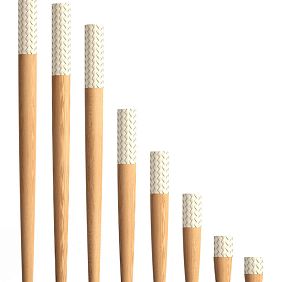
Polyurethane furniture legs (for tables, dressers, armchairs, sofas) reproduce classic forms: turned balusters (cylindrical legs with waists and swellings), cabriole legs (S-shaped curved legs, characteristic of Baroque and Rococo), paw feet (animal paws – lion's, eagle's – symbolizing power).
Advantages of polyurethane legs over wooden ones: Price (a carved wooden leg costs 1500-4000 rubles/piece, a polyurethane one 400-1200 rubles/piece), weight (polyurethane is 2-3 times lighter than wood – furniture is easier to move), moisture resistance (wooden legs in bathrooms or kitchens swell, polyurethane ones do not).
Installation: The leg is attached to the furniture base (tabletop, sofa frame) with screws through an internal channel in the leg or with adhesive + additional fasteners (a metal stud screwed into the leg and the base).
Fireplace Surrounds: The Hearth as an Architectural Feature
A fireplace (functional or decorative) is the compositional center of a room, a symbol of the hearth and coziness. The fireplace surround is the framing of the firebox (a U-shaped structure of vertical posts and a horizontal shelf on top). A classic surround is made of marble, granite, or carved wood (cost 150-800 thousand rubles, weight 200-600 kg, complex installation). A polyurethane surround is an imitation, costing 15-60 thousand rubles, weighing 15-40 kg, installation takes 3-5 hours.
Structure of a Polyurethane Fireplace Surround
Vertical Posts: Two pilasters (or half-columns, or rectangular pillars with decoration), installed on the sides of the firebox. Height 100-180 cm (from floor to mantel shelf), width 15-30 cm. Decoration: fluting, acanthus leaves, ornamental overlays.
Mantel Shelf: A horizontal board (thickness 8-15 cm, width 20-40 cm, length 120-200 cm) resting on the vertical posts. The shelf serves to place decorative objects (clocks, vases, candlesticks, photo frames), fulfilling both practical and aesthetic functions.
Frieze: A horizontal band under the mantel shelf (height 10-25 cm, length equal to the shelf length), containing relief decoration (garlands, meanders, dentils, rosettes). The frieze enriches the surround, creating a transition from the vertical posts to the horizontal shelf.
Base: The plinth part under the vertical posts (height 8-15 cm), widened and profiled. The base creates a visually stable foundation (the surround appears to stand firmly on the floor).
Optional Elements: A pediment above the shelf (triangular or arched decorative element – adds monumentality), corbels under the shelf (brackets that visually support the shelf – enhance the impression of strength), overlays on the posts (cartouches, rosettes, coats of arms – personalize the surround).
Fireplace Portal Installation
Preparation: The fireplace firebox (electric, bioethanol, or decorative niche) is installed and connected. The wall behind the surround is leveled, painted, or clad (tile, stone, plaster).
Installing the Bases: The post bases are glued to the floor on the sides of the firebox (the distance between the inner edges of the bases equals the firebox width + 10-20 cm margin).
Installation of posts: vertical posts (pilasters) are installed on bases and glued to the wall with adhesive. Vertical alignment is checked with a level. Posts are temporarily secured with braces or tape until the adhesive dries.
Installation of frieze and shelf: the frieze is glued horizontally between the upper parts of the posts. The mantel shelf is placed on top, resting on the posts and frieze, and glued. If necessary, the shelf is additionally secured to the wall with hidden brackets (metal angles screwed to the wall and to the inside of the shelf—invisible from the outside).
Sealing joints: all joints between elements (posts-bases, posts-frieze, frieze-shelf) are filled with acrylic putty, sanded after drying, and painted over.
Final finishing: the portal is painted (white, ivory, wood-like, marble-like—using acrylic paints, primers, varnishes) or decorated (gilding, patination, decorative techniques).
Creating compositions: from elements to systems
An individual cornice or rosette is a decorative accent. But true architectural expressiveness emerges when elements work together, forming a composition—a system of interconnected details.
Principle of consistency: one style—one system
All decorative elements in a room (cornices, moldings, baseboards, rosettes, pilasters, overlays) should belong to one style, preferably from one manufacturer's collection. A collection is a set of elements designed by designers as a unified system (patterns echo each other, proportions are coordinated, and the style is consistent).
Mixing styles (classicism + baroque, empire + art nouveau) creates eclecticism—this can be beautiful if done consciously by a professional, but risky for a beginner (easily resulting in stylistic chaos).
Principle of rhythm: repetition and variation
A composition is built on rhythm—repeating elements at equal intervals or with variations.
Examples of rhythm:
Vertical rhythm of pilasters—pilasters are installed on the wall at equal distances (spacing 150-250 cm). The eye perceives a rhythmic row of verticals—creating structure and order.
Horizontal rhythm of moldings—the wall is divided horizontally by moldings into three tiers (lower—up to 90 cm from the floor, middle—from 90 to 180 cm, upper—from 180 cm to the ceiling). Tiers can be equal in height or different (according to the golden ratio rule—the lower tier occupies 38% of the wall height, the middle 38%, the upper 24%).
Rhythm of boiserie panels—rectangular panels on the wall form a regular grid (4-6 panels in a row, 1-2 rows vertically). Panels are identical (creating a uniform rhythm) or alternate large-small (creating a syncopated rhythm).
Principle of hierarchy: primary and secondary
In a composition, there must be a main element (dominant) and secondary (subordinate) ones. The dominant attracts attention, organizes the space around itself, while secondary elements support the dominant without competing with it.
Example of hierarchy:
Ceiling rosette in the center—dominant (large, with rich ornamentation, in the center of the ceiling, with a chandelier around it).
Cornice around the perimeter—secondary element (frames the ceiling but does not compete with the rosette—the cornice ornament is simpler, the scale is smaller).
Corner elements—third level of hierarchy (small rosettes or overlays in the corners of the ceiling—complement the composition without overloading it).
Principle of symmetry: order and stability
Classical interiors are built on symmetry—mirror repetition of elements relative to an axis. The axis of symmetry usually passes through the compositional center (middle of the wall, middle of the ceiling).
Symmetrical wall composition:
Center—door or window (or empty space if the wall is blank).
On either side of the center—two pilasters (at equal distances from the center, mirrored).
Between the pilasters and wall corners—molding panels (two panels on the left, two on the right, mirrored and identical).
In the centers of the panels—overlays (rosettes or medallions, identical in all panels).
Result: absolute symmetry, creating a sense of order, stability, and classical harmony.
Application ideas for different styles
Polyurethane molding for decorUniversal — suitable for many styles. The key is choosing the right elements, proportions, and finishes.
Classicism: restrained harmony
Elements: cornices with dentils and egg-and-dart (width 100-150 mm), moldings with meander and palmette patterns (width 60-100 mm), order-style baseboards (height 100-140 mm), Ionic or Corinthian pilasters, rosettes with acanthus leaves (diameter 400-700 mm).
Color scheme: white + ivory + light beige (monochrome or close shades, moderate contrast).
Composition: strict symmetry, regular rhythm, rectangular boiserie panels, proportions aligned with the golden ratio.
Spaces: living rooms, studies, bedrooms, dining rooms in apartments and country houses, executive-class offices.
Baroque: opulent luxury
Elements: cornices with garlands and volutes (width 150-250 mm), moldings with cartouches and shells (width 100-180 mm), rosettes with putti and floral garlands (diameter 700-1200 mm), Corinthian pilasters with abundant decoration, columns with twisted shafts, fireplace portals with pediments and consoles.
Color scheme: white + gold (gilded ornament), ivory + bronze, pastel tones (pink, blue, green) + gold.
Composition: asymmetry is permissible, curved lines (arches, ovals), abundant decoration (every surface is adorned).
Spaces: formal living rooms, dining rooms in country houses (area 40+ m², ceiling height 3.2+ m), premium commercial properties (restaurants, hotels, wedding halls).
Minimalism: concise graphics
Elements: smooth cornices (width 40-80 mm, geometric profile — straight lines, rounded corners, no ornament), flat moldings (width 30-60 mm, one or two grooves), tall rectangular baseboards (height 80-120 mm, no decoration), simple concentric rosettes (diameter 300-500 mm, 2-3 rings, smooth).
Color scheme: white + white (full monochrome, molding blends with the base, revealed only by relief), white + gray (moderate contrast), black + white (maximum graphic quality — black walls, white molding or vice versa).
Composition: strict geometry (rectangles, squares, circles — no curves), symmetry or asymmetry (both approaches work), minimal decoration (one or two accents on a wall or ceiling, avoid overloading).
Spaces: modern apartments and houses, offices, galleries, showrooms, lofts (polyurethane molding in a loft — an unexpected but effective solution, combining industrial surfaces and classical forms).
Eclecticism: mixing with intelligence
Principle: combining elements from different styles, but with a common thread (color, scale, material — something must unify them).
Example composition: classical pilasters (Ionic) + modern smooth moldings + Baroque rosette on the ceiling. Unifying factors — white color (all elements are white) + gilding (all ornaments are gilded).
Risk: eclecticism requires professionalism (designer or developed taste). Inept eclecticism — chaos, bad taste. Successful eclecticism — freshness, individuality, intellectual play.
Frequently Asked Questions about Polyurethane Moldings
Can polyurethane be painted?
Yes, polyurethane molding is supplied primed with white primer, ready for painting. Use acrylic paints (water-based emulsions for interiors), latex paints, alkyd enamels. Paint with a roller (smooth surfaces) + brush (ornament, recesses). Two coats for even coverage.
Can it be left white? Yes, the primer is snow-white, many leave it unpainted (saves time, classic look).
Does polyurethane differ visually from plaster?
After installation and painting — no, it is not distinguishable (if the polyurethane density is high — 350+ kg/m³, the relief is sharp). From a distance of 1-2 meters, polyurethane molding is indistinguishable from plaster. It can only be told apart by touch (polyurethane feels warmer, plaster is colder; polyurethane sounds duller when tapped, plaster sounds more resonant).
How long does polyurethane molding last?
With proper installation and use — 30-50 years. Polyurethane does not crack (unlike plaster), does not warp from moisture (unlike wood), does not yellow (if high-quality — dense, primed). After 30-50 years, repainting may be needed (if the paint has faded, worn), but the element itself remains intact.
Can polyurethane molding be washed?
Yes, wipe with a damp cloth (removes dust, dirt). Do not use abrasives (powders, stiff brushes — will scratch the paint), aggressive chemicals (solvents, acetone — dissolve polyurethane). Plain water + neutral detergent (soap, dishwashing liquid) — are safe.
How to join elements so that seams are invisible?
Element ends (ends of cornices, moldings) are joined at a 45° angle (for room corners) or butt-joined at 90° (for straight sections). Seams are filled with acrylic putty (white), sanded with fine sandpaper (P180-P240) after drying, and painted. A properly made seam is invisible from a distance of 50+ cm.
Is special glue needed for polyurethane?
Yes, use polyurethane glue (Cosmofen Plus, Cosmofen CA-12, European Plus) or acrylic mounting adhesive (Tytan, Moment Montazh, Quelyd Mastifix). Do not use PVA (holds weakly, polyurethane will detach after months), do not use silicone sealant (does not hold at all, only for filling gaps, not for fastening).
Can molding be installed independently?
Yes, installing polyurethane molding does not require special skills (unlike plaster). Basic tools are needed (tape measure, level, miter box for cutting corners, fine-toothed saw or hacksaw, adhesive, putty), carefulness, following instructions. Cornices and moldings are installed by one person in 1-3 hours per room. Columns, portals — more complex, but feasible (an assistant will be needed to hold elements, 4-8 hours per portal).
Conclusion: polyurethane — the material of accessible classicism
Decorative polyurethanehas revolutionized interior decor. What for centuries was the privilege of aristocracy (plaster and wooden moldings, marble portals, order columns) has become accessible to a wide range of homeowners. Polyurethane reproduces any complexity of classical ornaments (from ancient meanders to Baroque garlands), installs quickly and simply (adhesive, no special skills, within hours), weighs tens of times less than plaster (does not load structures, suitable for any walls and ceilings), costs many times less than traditional materials (cornice 400-1200 rub./meter vs. 1500-3000 rub. for plaster, portal 20-50 thousand vs. 200-600 thousand for marble), lasts for decades without cracks (unlike plaster, which cracks after 10-20 years).
The range of polyurethane decor covers all architectural elements: ceiling decor (cornices width 30-350 mm smooth and ornamental with and without lighting, rosettes diameter 200-1800 mm from simple to Baroque, coffered systems), wall elements (moldings width 20-150 mm for boiserie and framing, wall panels ready-made sizes 30×60 to 60×120 cm, baseboards height 50-200 mm smooth and ornamental), architectural forms (columns height 200-400 cm of all orders — Doric, Ionic, Corinthian, pilasters flat for narrow spaces, arches semicircular, lancet, elliptical for framing openings), furniture decor (overlays sizes 5×5 to 30×40 cm rosettes cartouches scrolls for facades and doors, legs turned and carved for tables dressers armchairs), fireplace portals (sets portal+shelf+frieze+posts for framing fireplaces electric fireplaces bio-fireplaces and decorative niches).
Company STAVROS has been producing polyurethane molding since 2002 at its own factory with European equipment (high-pressure injection molding machines of German production ensure reproduction accuracy of relief up to 0.5 mm, uniformity of polyurethane structure, absence of cavities and voids). STAVROS range includes 2000+ items of polyurethane decor: ceiling cornices (180 models width from 40 to 280 mm density 300-350 kg/m³ prices 320-1650 rub./meter), wall moldings (240 models width from 25 to 140 mm prices 180-920 rub./meter), floor baseboards (110 models height from 50 to 190 mm prices 280-980 rub./meter), ceiling rosettes (95 models diameter from 200 to 1500 mm prices 1600-28000 rub.), columns and pilasters (65 sets of all orders height from 180 to 380 cm prices 8000-38000 rub.), fireplace portals (40 models width from 110 to 185 cm prices 18000-52000 rub.), furniture and decorative overlays (over 500 models sizes from 50×50 mm to 300×400 mm prices 120-3500 rub.).
STAVROS product quality: polyurethane density 320-380 kg/m³ (premium segment of the Russian market, relief detailing maximum — leaf veins, dentil teeth, flower petals reproduced clearly), three-layer snow-white acrylic primer (thickness 0.12-0.18 mm applied by automated sprayers uniformity ideal readiness for painting without additional preparation), dimensional accuracy ±1-2 mm (control at each production stage guarantees perfect joining of elements without gaps and steps), eco-friendliness (polyurethane after polymerization is chemically inert does not emit harmful substances certificates of compliance with sanitary standards of Russia and EU).
STAVROS service: free designer consultations (help select elements according to interior style room area ceiling height budget calculate required quantity offer compositional schemes), element samples (sent for a symbolic fee 300-500 rub. or free for orders from 20000 rub. — physically assess quality of relief polyurethane density whiteness of primer before main order), installation instructions (detailed text manuals and videos on the website explain installation technology for each type of element surface preparation adhesive selection corner joining seam filling painting), delivery across Russia (own logistics to Moscow and Moscow region transport companies to regions professional multi-layer packaging protects from damage during transportation), 24-month warranty (if an element deformed detached or damaged due to production fault — replacement free but in 24 years of operation such cases are single).
Choose STAVROS — choose polyurethane molding of European quality at Russian prices, opening the path to a classic interior without an astronomical budget and months-long renovation. Your home deserves architectural expressiveness — STAVROS polyurethane decor creates it, turning standard rooms into spaces with character, history, nobility of forms.


